

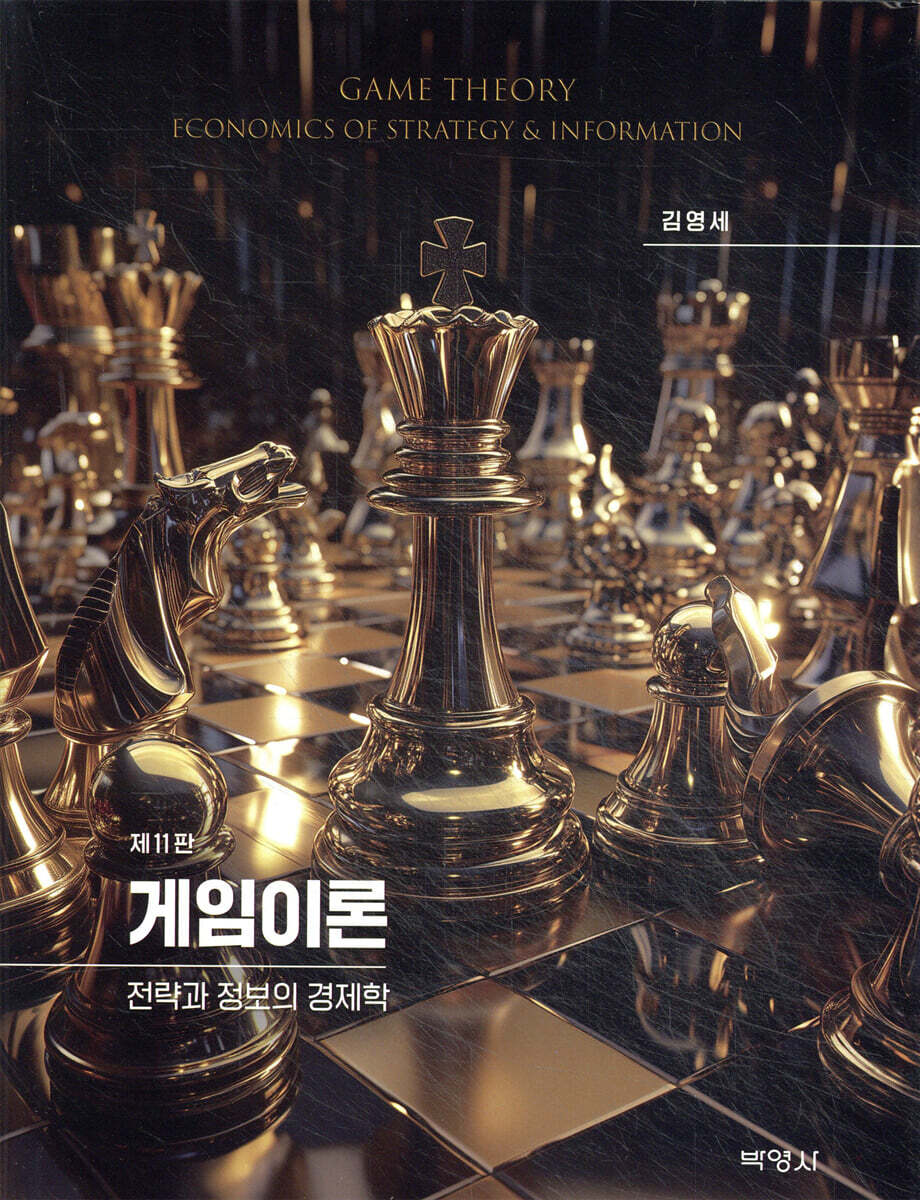
Game theory
 |
Description
Book Introduction
The biggest change in this comprehensively revised edition is that cooperative game theory, which was only briefly explained in the previous edition, has been given an in-depth treatment as an independent three-chapter section in Part 6.
Specifically, the concepts of cooperative negotiation, core and Shapley value as representative solutions in coalition games, social preference function and Arrow's impossibility theorem, social choice function and its application as voting system, social choice function and Gibberd-Satterthwaite impossibility theorem under incomplete information, implementation of social choice through mechanism design, and two-way matching.
Practice problem answers, appendices, and references are separated from the main book and can be downloaded via QR code links.
Additionally, we regularly update the errata table for typos found after the original printing and allow them to be scanned using a QR code.
Specifically, the concepts of cooperative negotiation, core and Shapley value as representative solutions in coalition games, social preference function and Arrow's impossibility theorem, social choice function and its application as voting system, social choice function and Gibberd-Satterthwaite impossibility theorem under incomplete information, implementation of social choice through mechanism design, and two-way matching.
Practice problem answers, appendices, and references are separated from the main book and can be downloaded via QR code links.
Additionally, we regularly update the errata table for typos found after the original printing and allow them to be scanned using a QR code.
index
Entering
1 What is Game Theory? ········································································· 001
2 History and Development of Game Theory ·························································· 003
SECTION 01 Strategy and Competition
CHAPTER 01 The Form and Solution of the Game
1.1 Game Components ··································································· 011
1.2 Game Format ························································································· 018
1.2.1 All types / 018
1.2.2 Strategic Type / 020
1.3 Year of the Game ························································································ 022
1.4 Superior and Inferior Strategies ································································································· 023
1.5 Step-by-step elimination of inferior strategies ······························· 028
1.6 Pure Strategy Nash Equilibrium ················································································ 032
1.7 Various 2x2 Strategy Games ·············································· 036
CHAPTER 02 Applications of Strategy Games
2.1 Production-based oligopoly market ·········································································· 042
2.1.1 Simple Example / 042
2.1.2 Cournot's Double-Tier Model / 044
2.1.3 Cournot Oligopoly Model / 049
2.2 Price-Competitive Oligopoly Market ················································································ 051
2.2.1 Homogeneous Goods / 051
2.2.2 Differentiated Oligopoly / 053
2.2.3 Epson Boomerang / 055
2.3 Product Differentiation ························································································· 057
2.3.1 Hotelling Model / 057
2.3.2 Democratic Elections and Median Voter Theorem / 060
2.4 The Tragedy of the Commons ··················································································· 063
2.5 Cooperative Games and Network Industry ······················································· 071
2.5.1 Network Effects / 071
2.5.2 Positive Feedback / 073
2.5.3 Cooperative Game / 075
2.6 The Cooperative Game and Keynesian Economic Cycles ················································ 080
2.7 Damages Act ·········································································· 083
CHAPTER 03 Concept and Application of Mixed Strategies
3.1 Stage Elimination and Rationalization Strategy ······················································· 087
3.2 Mixed Strategy Nash Equilibrium ················································································ 090
3.2.1 The Nonexistence of a Pure Strategy Nash Equilibrium / 090
3.2.2 Computing the Mixed-Strategy Nash Equilibrium / 091
3.2.3 Properties of Mixed-Strategy Nash Equilibrium / 093
3.3 Department Store Bargain Sales ································································ 096
3.4 Rock, Paper, Scissors ·········································································· 099
3.5 Political and Economic War of Attrition ································································ 102
3.6 The Paradox of Voting and the Pivotal Voting Hypothesis ································································ 107
3.6.1 When the number of supporters of both candidates is the same, k = m / 108
3.6.2 If k<m, where there are more supporters of candidate B than supporters of candidate A / 109
CHAPTER 04 Properties and Alternatives of Nash Equilibrium
4.1 The Relationship Between Nash Equilibrium and Strong-Stage Elimination ································································ 116
4.2 Minimal Maxima and Maximal Minima ····························································· 120
4.2.1 Safety and Minimum Maximum / 120
4.2.2 Maximum Minimum / 122
4.2.3 Mixed Strategy Minimax and Maximum / 123
4.3 Relationships between Minimax, Maximum, and Nash Equilibrium ······················································· 125
4.4 The Traveler's Dilemma ················································································· 128
4.5 Focus and Risk Priority ························································································· 131
4.5.1 Focus / 132
4.5.2 Risk Advantage and Reward Advantage / 134
4.6 Evolutionary Game ································································ 137
4.6.1 Learning, Evolution, and Path Dependence / 137
4.6.2 Evolutionary Stability Equilibrium / 139
4.6.3 Dynamic Evolutionary Stability / 142
4.7 Intuition of Mixed-Strategy Nash Equilibrium ································································ 145
4.8 Correlation Balance ··············································································· 146
SECTION 02 Promises and Credibility
CHAPTER 05 Deployable Game
5.1 Deployment Game ············································································· 155
5.1.1 Concept and Characteristics of Deployment / 155
5.1.2 The Relationship Between Developmental and Strategic Forms / 157
5.1.3 Behavioral Strategies / 159
5.2 Credibility of Threats and Promises ············································································ 161
5.3 Subgame Perfect Equilibrium and Backward Induction ····························································· 164
5.4 Backward Induction and the Reality of Perfect Equilibrium ································ 167
5.5 Strategic Commitments ························································································· 171
5.5.1 Exclusive Sales of Durable Goods / 171
5.5.2 DuPont's Production Capacity Expansion / 173
5.6 Ways to Increase the Credibility of Promises ·················································· 178
5.6.1 How to Increase Credibility by Tying Your Own Hands / 178
5.6.2 How to Increase the Credibility of Promises by Changing the Structure of Conservatives / 181
CHAPTER 06 Application of Deployable Games
6.1 Oligopolistic Markets with Preemptive Effects ················································································ 185
6.1.1 Stackelberg Oligopoly Model / 186
6.1.2 Leader-Follower Relationship / 189
6.2 Bank Run Financial Panic ················································································ 191
6.2.1 The Self-Fulfilling Nature of Bank Runs / 191
6.2.2 Restoring Trust through the Deposit Insurance System / 194
6.3 Consumer Subordination ························································································· 196
6.3.1 Switching Costs and Consumer Subordination / 196
6.3.2 AT&T Switch Installation in Bell Atlantic / 197
6.3.3 Other Cases / 199
6.4 Strategic Trade Policy ··································································· 201
6.5 Geographical Location Selection and Pricing ·················································· 210
CHAPTER 07 Negotiation and Arbitration
7.1 Limited Life Negotiation ························································································· 218
7.2 Ultimatum Negotiations, Dictator Games, and Fair Justice ······································ 226
7.3 Infinite Life Negotiation ······················································································ 231
7.4 The Role of Negotiation Delays, Strikes, Breakdowns, and Insufficient Information ···································· 237
7.5 Arbitration ················································································· 239
7.5.1 General Arbitration / 239
7.5.2 Final Offer Arbitration / 240
SECTION 03 Repetition and Coordination
CHAPTER 08 Repeat Game
8.1 Retaliation, Compensation, and Cooperation ································································ 249
8.2 Elements and Balance of Repeated Games ········································································· 250
8.2.1 History and Strategy / 250
8.2.2 The Concept of Payoff in Repeated Games / 253
8.2.3 Repeated Game Equilibrium / 255
8.3 Finitely Repeated Games ·········································································· 256
8.3.1 Finitely Repeated Prisoner's Dilemma Game / 256
8.3.2 Finite Repetition of Games with Multiple Nash Equilibria / 260
8.4 Prevention of Renegotiation ·························································································· 265
8.5 The Infinite Prisoner's Dilemma ························································· 269
8.5.1 Repeated Game Strategy / 269
8.5.2 Nash Equilibrium / 272
8.5.3 Subgame Perfect Equilibrium / 275
8.6 Theory and Practice of Titfortat ···························································· 278
8.6.1 Balance Analysis / 278
8.6.2 Example of a Tit-Po-Tat / 281
CHAPTER 09 Transmission Summary
9.1 Social Feasibility and Individual Rationality ······································································· 285
9.2 Nash Equilibrium of an Infinitely Repeated Game ······················································· 290
9.3 Subgame Perfect Equilibrium of an Infinitely Repetitive Game ··········································· 291
9.4 Nash Equilibrium in Finitely Repeated Games ················································································· 294
9.5 Various Examples ························································································· 296
CHAPTER 10 Applications of Repeated Games
10.1 Cartels ···························································································· 301
10.1.1 Production Cartel / 301
10.1.2 Price Cartel / 305
10.2 Collusion under Incomplete Information ·········································································· 308
10.3 Examples of Collusion and Cartels ································································································· 312
10.3.1 OPEC Collusion and International Oil Prices / 312
10.3.2 Diamonds Are Forever / 315
10.3.3 Price Leadership / 318
10.3.4 Restricting Competition through Distribution Strategy / 321
10.3.5 Voluntary Reporter Reduction System / 323
10.4 Effective Wages and Productivity Improvement ·························································· 325
10.4.1 Effective Wage Theory / 325
10.4.2 Application of Effective Wage Theory / 331
10.5 Policy Inconsistency and Government Trust ································································ 335
SECTION 04 Information and Systems
CHAPTER 11 Static Incomplete Information Games
11.1 Introduction ············································································· 345
11.2 Bayesian Games and the Concept of Equilibrium ································································ 348
11.2.1 Static Missing Information Game / 348
11.2.2 Bayesian-Nash Equilibrium / 350
11.3 Modified Investment - Entry Game ································································································· 351
11.4 Cournot's Model of Bipolarity Under Incomplete Information About Production Costs ··························· 357
11.5 Public Goods Construction Game ································································· 361
11.6 Is Information Advantage Always Beneficial? ················································ 366
11.7 Near-ground facts and incomplete information games ································································ 368
11.7.1 Coordinated attack / 368
11.7.2 Indentation on the Coin Frame / 369
11.7.3 Muddy Kids / 370
11.7.4 Envelope Exchange Game / 373
11.7.5 The Impossibility of Speculative Trading / 376
CHAPTER 12 Auctions
12.1 Overview ·························································································· 381
12.2 Private Value Auctions ················································································· 387
12.2.1 British Auction / 388
12.2.2 Car Auction / 390
12.2.3 Highest Price Auction / 392
12.2.4 Dutch Auction / 398
12.3 Profit Equivalence Theory and Efficiency ················································································· 399
12.4 Common Value Auctions and the Winner's Curse ································································ 403
12.5 The Impact of Risk Aversion ································································ 409
12.6 Bid Collusion ··························································································· 411
12.7 Appendix A: Properties of the Highest-Bid Equilibrium Strategy ···································· 415
CHAPTER 13 Mechanism Design
13.1 Overview ············································································· 419
13.2 A Simple Model of Customer Differentiation ·················································································· 424
13.2.1 Passenger aircraft seat classes / 424
13.2.2 Optimal Strategy for a Company / 426
13.3 General Model of Customer Differentiation ·················································································· 430
13.3.1 Overview / 430
13.3.2 Examples of Customer Differentiation / 432
13.3.3 General Model / 434
13.4 The Groves-Ledyard Mechanism for the Construction of Public Goods ············ 440
13.4.1 Simple Example / 440
13.4.2 General Model / 442
13.4.3 Credibility of Mechanism Implementation / 444
13.5 Exclusive Distribution Agreement ················································································ 446
13.6 Mechanism Design and Presentation Principle ································································· 449
13.6.1 Mechanism Design / 449
13.6.2 Present Principle / 452
SECTION 05 Signals, Screening, and Contracts
CHAPTER 14: Dynamic Immune Game
14.1 Statement of the Problem ·········································································· 459
14.2 Complete Bayesian Equilibrium ·································································· 461
14.3 Example of Computation of Complete Bayesian Equilibrium ································································· 466
14.4 Dynamic Immune Game ································································································· 469
14.5 Signal Game ··························································································· 473
14.5.1 Definition of the Signal Game / 473
14.5.2 Complete Bayesian Equilibrium in the Signal Game / 476
14.6 Mutual Agreement in Civil Litigation ·························································· 479
14.7 Review ·························································································· 485
14.8 Intuitive Beliefs and Forward Induction ································································· 490
14.8.1 Monopolistic Entry-Rate Pricing Game / 490
14.8.2 Sexual Conflict Games with External Alternatives / 494
CHAPTER 15 Adverse Selection, Signals, and Selection
15.1 Automobile Warranties and Expensive Advertising ································································ 498
15.1.1 The Impact of Incomplete Information on Market Failure / 498
15.1.2 Quality Assurance, Advertising, and Brand Value / 500
15.2 The Positive Effects of Academic Inflation ································································· 506
15.3 Adverse Selection, Credit Allocation, and Financial Structure in Financial Markets ················································ 519
15.3.1 Adverse Selection and Credit Allocation / 520
15.3.2 Share Offering as a Signal / 526
15.4 Various Insurance Products and Consumer Choices ············································· 534
15.4.1 Risk Diversification through Insurance / 534
15.4.2 Model / 535
15.4.3 Adverse Selection and Market Failure / 538
15.4.4 Diversification of Insurance Products / 541
CHAPTER 16 Agency Problems and Inducement Contracts
16.1 Hidden Behaviors and Moral Decay ······································································ 547
16.2 Simple Model ·········································································· 551
16.2.1 Incomplete Information and Moral Hazard / 551
16.2.2 Inducement Contract / 553
16.2.3 When fixed pay is superior to performance-based pay / 557
16.3 Optimal Contracts: Risk Sharing and Incentives ············································ 560
16.4 Generalized Agent Model ····························································· 563
16.4.1 Resource Allocation Under Perfect Information / 564
16.4.2 Incentive Design under Incomplete Information / 565
16.5 Tournament Competition ···································································· 572
16.5.1 Resource Allocation Under Perfect Information / 572
16.5.2 Incentive Contracts Under Incomplete Information / 574
16.6 Co-production System and the Role of the Owner ································································ 578
16.7 Incentive Design and Economic Systems ·········································································· 584
16.7.1 Executive Compensation and Corporate Governance / 584
16.7.2 Tax Collection and Tax Official System / 589
SECTION 06 Cooperative Games and Social Choice
CHAPTER 17 Cooperative Game Theory
17.1 Cooperative Negotiation ······································································· 595
17.2 Cooperative Negotiation ······································································· 598
17.3 Coalition Games ······································································· 600
17.4 Core ················································································· 602
17.5 Shapley Value ·························································································· 604
17.5.1 Concepts and Formulas / 605
17.5.2 Properties of Shapley Values / 608
17.6 Power Index ·············································································· 609
17.6.1 Shapley-Schubig Power Index / 609
17.6.2 Banzhaf-Coleman Power Index / 611
CHAPTER 18 Social Preferences and Social Choice
18.1 Social Preferences ·········································································· 613
18.2 Arrow's Impossibility Theorem ·························································· 614
18.2.1 Arrow's Axiom / 614
18.2.2 Impossibility Theorem / 616
18.3 Social Choice ·········································································· 619
18.3.1 Social Choice Function / 619
18.3.2 Condorcet's Paradox / 621
18.4 Voting System ············································································· 624
18.4.1 Most Votes System / 624
18.4.2 Point Voting System / 626
18.4.3 Approval Voting System / 629
18.4.4 Runoff Voting System / 630
18.5 The Criminal Trial System and the Fate of the Suspect ············································· 632
CHAPTER 19 Social Choice in the Age of Inadequate Information
19.1 The Gibberd-Satterthwaite Impossibility Theorem ······································ 635
19.2 Implementing Social Choice through Mechanism Design ················································· 641
19.3 Stable Matching ······································································· 646
19.3.1 Resource Allocation by Matching / 646
19.3.2 Stable Matching / 648
19.4 Gale-Shapley Algorithm ········································································· 650
19.5 Comparison and Strategic Manipulation Between Matches ··············································· 654
19.5.1 Comparison between Matches / 654
19.5.2 Strategic Manipulation / 654
Search ······················································································· 657
1 What is Game Theory? ········································································· 001
2 History and Development of Game Theory ·························································· 003
SECTION 01 Strategy and Competition
CHAPTER 01 The Form and Solution of the Game
1.1 Game Components ··································································· 011
1.2 Game Format ························································································· 018
1.2.1 All types / 018
1.2.2 Strategic Type / 020
1.3 Year of the Game ························································································ 022
1.4 Superior and Inferior Strategies ································································································· 023
1.5 Step-by-step elimination of inferior strategies ······························· 028
1.6 Pure Strategy Nash Equilibrium ················································································ 032
1.7 Various 2x2 Strategy Games ·············································· 036
CHAPTER 02 Applications of Strategy Games
2.1 Production-based oligopoly market ·········································································· 042
2.1.1 Simple Example / 042
2.1.2 Cournot's Double-Tier Model / 044
2.1.3 Cournot Oligopoly Model / 049
2.2 Price-Competitive Oligopoly Market ················································································ 051
2.2.1 Homogeneous Goods / 051
2.2.2 Differentiated Oligopoly / 053
2.2.3 Epson Boomerang / 055
2.3 Product Differentiation ························································································· 057
2.3.1 Hotelling Model / 057
2.3.2 Democratic Elections and Median Voter Theorem / 060
2.4 The Tragedy of the Commons ··················································································· 063
2.5 Cooperative Games and Network Industry ······················································· 071
2.5.1 Network Effects / 071
2.5.2 Positive Feedback / 073
2.5.3 Cooperative Game / 075
2.6 The Cooperative Game and Keynesian Economic Cycles ················································ 080
2.7 Damages Act ·········································································· 083
CHAPTER 03 Concept and Application of Mixed Strategies
3.1 Stage Elimination and Rationalization Strategy ······················································· 087
3.2 Mixed Strategy Nash Equilibrium ················································································ 090
3.2.1 The Nonexistence of a Pure Strategy Nash Equilibrium / 090
3.2.2 Computing the Mixed-Strategy Nash Equilibrium / 091
3.2.3 Properties of Mixed-Strategy Nash Equilibrium / 093
3.3 Department Store Bargain Sales ································································ 096
3.4 Rock, Paper, Scissors ·········································································· 099
3.5 Political and Economic War of Attrition ································································ 102
3.6 The Paradox of Voting and the Pivotal Voting Hypothesis ································································ 107
3.6.1 When the number of supporters of both candidates is the same, k = m / 108
3.6.2 If k<m, where there are more supporters of candidate B than supporters of candidate A / 109
CHAPTER 04 Properties and Alternatives of Nash Equilibrium
4.1 The Relationship Between Nash Equilibrium and Strong-Stage Elimination ································································ 116
4.2 Minimal Maxima and Maximal Minima ····························································· 120
4.2.1 Safety and Minimum Maximum / 120
4.2.2 Maximum Minimum / 122
4.2.3 Mixed Strategy Minimax and Maximum / 123
4.3 Relationships between Minimax, Maximum, and Nash Equilibrium ······················································· 125
4.4 The Traveler's Dilemma ················································································· 128
4.5 Focus and Risk Priority ························································································· 131
4.5.1 Focus / 132
4.5.2 Risk Advantage and Reward Advantage / 134
4.6 Evolutionary Game ································································ 137
4.6.1 Learning, Evolution, and Path Dependence / 137
4.6.2 Evolutionary Stability Equilibrium / 139
4.6.3 Dynamic Evolutionary Stability / 142
4.7 Intuition of Mixed-Strategy Nash Equilibrium ································································ 145
4.8 Correlation Balance ··············································································· 146
SECTION 02 Promises and Credibility
CHAPTER 05 Deployable Game
5.1 Deployment Game ············································································· 155
5.1.1 Concept and Characteristics of Deployment / 155
5.1.2 The Relationship Between Developmental and Strategic Forms / 157
5.1.3 Behavioral Strategies / 159
5.2 Credibility of Threats and Promises ············································································ 161
5.3 Subgame Perfect Equilibrium and Backward Induction ····························································· 164
5.4 Backward Induction and the Reality of Perfect Equilibrium ································ 167
5.5 Strategic Commitments ························································································· 171
5.5.1 Exclusive Sales of Durable Goods / 171
5.5.2 DuPont's Production Capacity Expansion / 173
5.6 Ways to Increase the Credibility of Promises ·················································· 178
5.6.1 How to Increase Credibility by Tying Your Own Hands / 178
5.6.2 How to Increase the Credibility of Promises by Changing the Structure of Conservatives / 181
CHAPTER 06 Application of Deployable Games
6.1 Oligopolistic Markets with Preemptive Effects ················································································ 185
6.1.1 Stackelberg Oligopoly Model / 186
6.1.2 Leader-Follower Relationship / 189
6.2 Bank Run Financial Panic ················································································ 191
6.2.1 The Self-Fulfilling Nature of Bank Runs / 191
6.2.2 Restoring Trust through the Deposit Insurance System / 194
6.3 Consumer Subordination ························································································· 196
6.3.1 Switching Costs and Consumer Subordination / 196
6.3.2 AT&T Switch Installation in Bell Atlantic / 197
6.3.3 Other Cases / 199
6.4 Strategic Trade Policy ··································································· 201
6.5 Geographical Location Selection and Pricing ·················································· 210
CHAPTER 07 Negotiation and Arbitration
7.1 Limited Life Negotiation ························································································· 218
7.2 Ultimatum Negotiations, Dictator Games, and Fair Justice ······································ 226
7.3 Infinite Life Negotiation ······················································································ 231
7.4 The Role of Negotiation Delays, Strikes, Breakdowns, and Insufficient Information ···································· 237
7.5 Arbitration ················································································· 239
7.5.1 General Arbitration / 239
7.5.2 Final Offer Arbitration / 240
SECTION 03 Repetition and Coordination
CHAPTER 08 Repeat Game
8.1 Retaliation, Compensation, and Cooperation ································································ 249
8.2 Elements and Balance of Repeated Games ········································································· 250
8.2.1 History and Strategy / 250
8.2.2 The Concept of Payoff in Repeated Games / 253
8.2.3 Repeated Game Equilibrium / 255
8.3 Finitely Repeated Games ·········································································· 256
8.3.1 Finitely Repeated Prisoner's Dilemma Game / 256
8.3.2 Finite Repetition of Games with Multiple Nash Equilibria / 260
8.4 Prevention of Renegotiation ·························································································· 265
8.5 The Infinite Prisoner's Dilemma ························································· 269
8.5.1 Repeated Game Strategy / 269
8.5.2 Nash Equilibrium / 272
8.5.3 Subgame Perfect Equilibrium / 275
8.6 Theory and Practice of Titfortat ···························································· 278
8.6.1 Balance Analysis / 278
8.6.2 Example of a Tit-Po-Tat / 281
CHAPTER 09 Transmission Summary
9.1 Social Feasibility and Individual Rationality ······································································· 285
9.2 Nash Equilibrium of an Infinitely Repeated Game ······················································· 290
9.3 Subgame Perfect Equilibrium of an Infinitely Repetitive Game ··········································· 291
9.4 Nash Equilibrium in Finitely Repeated Games ················································································· 294
9.5 Various Examples ························································································· 296
CHAPTER 10 Applications of Repeated Games
10.1 Cartels ···························································································· 301
10.1.1 Production Cartel / 301
10.1.2 Price Cartel / 305
10.2 Collusion under Incomplete Information ·········································································· 308
10.3 Examples of Collusion and Cartels ································································································· 312
10.3.1 OPEC Collusion and International Oil Prices / 312
10.3.2 Diamonds Are Forever / 315
10.3.3 Price Leadership / 318
10.3.4 Restricting Competition through Distribution Strategy / 321
10.3.5 Voluntary Reporter Reduction System / 323
10.4 Effective Wages and Productivity Improvement ·························································· 325
10.4.1 Effective Wage Theory / 325
10.4.2 Application of Effective Wage Theory / 331
10.5 Policy Inconsistency and Government Trust ································································ 335
SECTION 04 Information and Systems
CHAPTER 11 Static Incomplete Information Games
11.1 Introduction ············································································· 345
11.2 Bayesian Games and the Concept of Equilibrium ································································ 348
11.2.1 Static Missing Information Game / 348
11.2.2 Bayesian-Nash Equilibrium / 350
11.3 Modified Investment - Entry Game ································································································· 351
11.4 Cournot's Model of Bipolarity Under Incomplete Information About Production Costs ··························· 357
11.5 Public Goods Construction Game ································································· 361
11.6 Is Information Advantage Always Beneficial? ················································ 366
11.7 Near-ground facts and incomplete information games ································································ 368
11.7.1 Coordinated attack / 368
11.7.2 Indentation on the Coin Frame / 369
11.7.3 Muddy Kids / 370
11.7.4 Envelope Exchange Game / 373
11.7.5 The Impossibility of Speculative Trading / 376
CHAPTER 12 Auctions
12.1 Overview ·························································································· 381
12.2 Private Value Auctions ················································································· 387
12.2.1 British Auction / 388
12.2.2 Car Auction / 390
12.2.3 Highest Price Auction / 392
12.2.4 Dutch Auction / 398
12.3 Profit Equivalence Theory and Efficiency ················································································· 399
12.4 Common Value Auctions and the Winner's Curse ································································ 403
12.5 The Impact of Risk Aversion ································································ 409
12.6 Bid Collusion ··························································································· 411
12.7 Appendix A: Properties of the Highest-Bid Equilibrium Strategy ···································· 415
CHAPTER 13 Mechanism Design
13.1 Overview ············································································· 419
13.2 A Simple Model of Customer Differentiation ·················································································· 424
13.2.1 Passenger aircraft seat classes / 424
13.2.2 Optimal Strategy for a Company / 426
13.3 General Model of Customer Differentiation ·················································································· 430
13.3.1 Overview / 430
13.3.2 Examples of Customer Differentiation / 432
13.3.3 General Model / 434
13.4 The Groves-Ledyard Mechanism for the Construction of Public Goods ············ 440
13.4.1 Simple Example / 440
13.4.2 General Model / 442
13.4.3 Credibility of Mechanism Implementation / 444
13.5 Exclusive Distribution Agreement ················································································ 446
13.6 Mechanism Design and Presentation Principle ································································· 449
13.6.1 Mechanism Design / 449
13.6.2 Present Principle / 452
SECTION 05 Signals, Screening, and Contracts
CHAPTER 14: Dynamic Immune Game
14.1 Statement of the Problem ·········································································· 459
14.2 Complete Bayesian Equilibrium ·································································· 461
14.3 Example of Computation of Complete Bayesian Equilibrium ································································· 466
14.4 Dynamic Immune Game ································································································· 469
14.5 Signal Game ··························································································· 473
14.5.1 Definition of the Signal Game / 473
14.5.2 Complete Bayesian Equilibrium in the Signal Game / 476
14.6 Mutual Agreement in Civil Litigation ·························································· 479
14.7 Review ·························································································· 485
14.8 Intuitive Beliefs and Forward Induction ································································· 490
14.8.1 Monopolistic Entry-Rate Pricing Game / 490
14.8.2 Sexual Conflict Games with External Alternatives / 494
CHAPTER 15 Adverse Selection, Signals, and Selection
15.1 Automobile Warranties and Expensive Advertising ································································ 498
15.1.1 The Impact of Incomplete Information on Market Failure / 498
15.1.2 Quality Assurance, Advertising, and Brand Value / 500
15.2 The Positive Effects of Academic Inflation ································································· 506
15.3 Adverse Selection, Credit Allocation, and Financial Structure in Financial Markets ················································ 519
15.3.1 Adverse Selection and Credit Allocation / 520
15.3.2 Share Offering as a Signal / 526
15.4 Various Insurance Products and Consumer Choices ············································· 534
15.4.1 Risk Diversification through Insurance / 534
15.4.2 Model / 535
15.4.3 Adverse Selection and Market Failure / 538
15.4.4 Diversification of Insurance Products / 541
CHAPTER 16 Agency Problems and Inducement Contracts
16.1 Hidden Behaviors and Moral Decay ······································································ 547
16.2 Simple Model ·········································································· 551
16.2.1 Incomplete Information and Moral Hazard / 551
16.2.2 Inducement Contract / 553
16.2.3 When fixed pay is superior to performance-based pay / 557
16.3 Optimal Contracts: Risk Sharing and Incentives ············································ 560
16.4 Generalized Agent Model ····························································· 563
16.4.1 Resource Allocation Under Perfect Information / 564
16.4.2 Incentive Design under Incomplete Information / 565
16.5 Tournament Competition ···································································· 572
16.5.1 Resource Allocation Under Perfect Information / 572
16.5.2 Incentive Contracts Under Incomplete Information / 574
16.6 Co-production System and the Role of the Owner ································································ 578
16.7 Incentive Design and Economic Systems ·········································································· 584
16.7.1 Executive Compensation and Corporate Governance / 584
16.7.2 Tax Collection and Tax Official System / 589
SECTION 06 Cooperative Games and Social Choice
CHAPTER 17 Cooperative Game Theory
17.1 Cooperative Negotiation ······································································· 595
17.2 Cooperative Negotiation ······································································· 598
17.3 Coalition Games ······································································· 600
17.4 Core ················································································· 602
17.5 Shapley Value ·························································································· 604
17.5.1 Concepts and Formulas / 605
17.5.2 Properties of Shapley Values / 608
17.6 Power Index ·············································································· 609
17.6.1 Shapley-Schubig Power Index / 609
17.6.2 Banzhaf-Coleman Power Index / 611
CHAPTER 18 Social Preferences and Social Choice
18.1 Social Preferences ·········································································· 613
18.2 Arrow's Impossibility Theorem ·························································· 614
18.2.1 Arrow's Axiom / 614
18.2.2 Impossibility Theorem / 616
18.3 Social Choice ·········································································· 619
18.3.1 Social Choice Function / 619
18.3.2 Condorcet's Paradox / 621
18.4 Voting System ············································································· 624
18.4.1 Most Votes System / 624
18.4.2 Point Voting System / 626
18.4.3 Approval Voting System / 629
18.4.4 Runoff Voting System / 630
18.5 The Criminal Trial System and the Fate of the Suspect ············································· 632
CHAPTER 19 Social Choice in the Age of Inadequate Information
19.1 The Gibberd-Satterthwaite Impossibility Theorem ······································ 635
19.2 Implementing Social Choice through Mechanism Design ················································· 641
19.3 Stable Matching ······································································· 646
19.3.1 Resource Allocation by Matching / 646
19.3.2 Stable Matching / 648
19.4 Gale-Shapley Algorithm ········································································· 650
19.5 Comparison and Strategic Manipulation Between Matches ··············································· 654
19.5.1 Comparison between Matches / 654
19.5.2 Strategic Manipulation / 654
Search ······················································································· 657
Publisher's Review
Preface to the 11th Edition
The biggest change in this comprehensively revised edition is that cooperative game theory, which was only briefly explained in the previous edition, has been given an in-depth treatment as an independent three-chapter section in Part 6.
Specifically, the concepts of cooperative negotiation, core and Shapley value as representative solutions in coalition games, social preference function and Arrow's impossibility theorem, social choice function and its application as voting system, social choice function and Gibberd-Satterthwaite impossibility theorem under incomplete information, implementation of social choice through mechanism design, and two-way matching.
Practice problem answers, appendices, and references are separated from the main book and can be downloaded via QR code links.
Additionally, we regularly update the errata table for typos found after the original printing and allow them to be scanned using a QR code.
If this book is taught over two semesters, the guidelines are as follows:
In the tentatively titled "Game Theory I," we will cover Chapters 1 to 11 and Chapter 14, but if time permits, we recommend covering Chapter 12, Auction Theory, and Chapter 15, Economic Applications.
In another subject tentatively named “Game Theory II” or “Information and Game Theory,” you will study Chapter 1, Chapter 2 Sections 2.1-2.3, Chapter 3, Chapter 5, and Chapters 11-19.
There is no need to study the former to learn the latter, and it is okay to study the two subjects separately.
If this book is taught as a one-semester course, chapters 1-3, 5-8, and 10-15 are mandatory, but the remaining content can be selected according to the reader's preference and needs.
Since the author introduced game theory to Korea through his book in 1998, it has been revised ten times.
In each revised edition, we have done our best to reflect the research results and trends of advanced academics and to apply them to explain domestic economic and social phenomena.
In order to preserve its own meaning, the prefaces of all editions are linked to QR codes.
I would like to thank my students who raised the quality of the lecture notes with their keen insights and questions in the classes “Game Theory and Applications,” “Information and Game Theory,” and “Politics and Public Economics” at Yonsei University; my teaching assistants Kim Seong-rae, Kim Myeong-gyu, Seon Yun-seung, and Choi Do-hyeon who meticulously proofread the paper; and Park Young-sa’s Planning Director Cho Seong-ho and Editorial Department Manager Tak Jong-min.
I ask for Kang Ho-je's continued guidance and advice.
On the beautiful campus of Yonsei
August 2025
Kim Young-se
The biggest change in this comprehensively revised edition is that cooperative game theory, which was only briefly explained in the previous edition, has been given an in-depth treatment as an independent three-chapter section in Part 6.
Specifically, the concepts of cooperative negotiation, core and Shapley value as representative solutions in coalition games, social preference function and Arrow's impossibility theorem, social choice function and its application as voting system, social choice function and Gibberd-Satterthwaite impossibility theorem under incomplete information, implementation of social choice through mechanism design, and two-way matching.
Practice problem answers, appendices, and references are separated from the main book and can be downloaded via QR code links.
Additionally, we regularly update the errata table for typos found after the original printing and allow them to be scanned using a QR code.
If this book is taught over two semesters, the guidelines are as follows:
In the tentatively titled "Game Theory I," we will cover Chapters 1 to 11 and Chapter 14, but if time permits, we recommend covering Chapter 12, Auction Theory, and Chapter 15, Economic Applications.
In another subject tentatively named “Game Theory II” or “Information and Game Theory,” you will study Chapter 1, Chapter 2 Sections 2.1-2.3, Chapter 3, Chapter 5, and Chapters 11-19.
There is no need to study the former to learn the latter, and it is okay to study the two subjects separately.
If this book is taught as a one-semester course, chapters 1-3, 5-8, and 10-15 are mandatory, but the remaining content can be selected according to the reader's preference and needs.
Since the author introduced game theory to Korea through his book in 1998, it has been revised ten times.
In each revised edition, we have done our best to reflect the research results and trends of advanced academics and to apply them to explain domestic economic and social phenomena.
In order to preserve its own meaning, the prefaces of all editions are linked to QR codes.
I would like to thank my students who raised the quality of the lecture notes with their keen insights and questions in the classes “Game Theory and Applications,” “Information and Game Theory,” and “Politics and Public Economics” at Yonsei University; my teaching assistants Kim Seong-rae, Kim Myeong-gyu, Seon Yun-seung, and Choi Do-hyeon who meticulously proofread the paper; and Park Young-sa’s Planning Director Cho Seong-ho and Editorial Department Manager Tak Jong-min.
I ask for Kang Ho-je's continued guidance and advice.
On the beautiful campus of Yonsei
August 2025
Kim Young-se
GOODS SPECIFICS
- Date of issue: August 28, 2025
- Format: Hardcover book binding method guide
- Page count, weight, size: 692 pages | 197*248*35mm
- ISBN13: 9791130322582
- ISBN10: 1130322580
You may also like
카테고리
korean


korean

![GQ KOREA Mark (Monthly): December [2025]](http://librairie.coreenne.fr/cdn/shop/files/8ef265dbbfbf186523ed75ba7319009d.jpg?v=1765340328&width=3840)


