

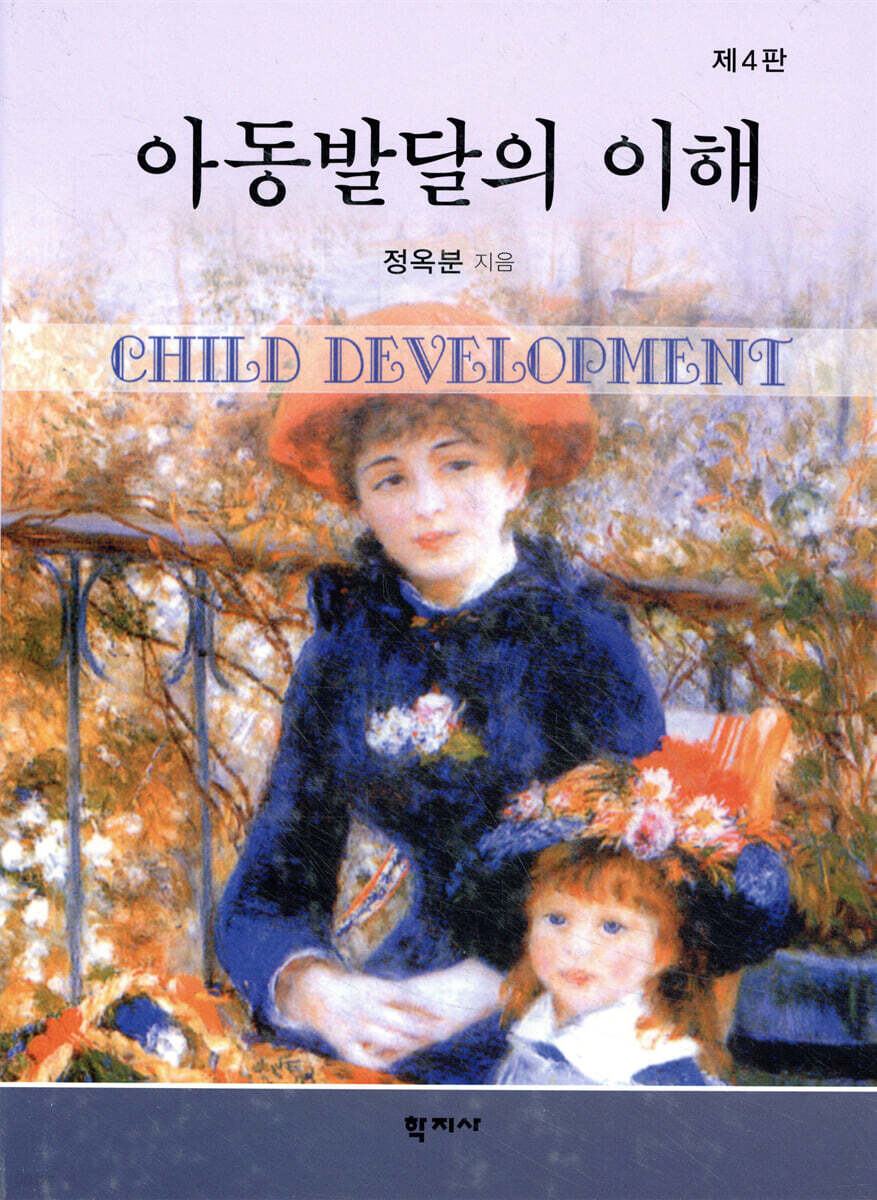
Understanding Child Development
 |
Description
Book Introduction
This fourth edition has particularly focused on revamping and improving upon new domestic and international research conducted over the past five years since the publication of the third edition in 2018.
We have tried to introduce as many recent studies published domestically and internationally in each field of child development as possible.
In particular, in Chapter 2, ‘Theory of Child Development’, Bandura’s term ‘forethought’ was introduced.
Forethought is a key cognitive factor in cognitive social learning theory, which refers to motivating oneself by making plans, setting goals, and envisioning positive outcomes.
And it suggests several ways to apply Vygotsky's theory to the educational field.
Chapter 4, 'Genetic Basis of Development', provides a brief overview of the human genome.
The human genome is a biological map that describes the precise sequence of the approximately 3.5 billion chemical bases that make up the DNA in each human cell.
In recent years, there have been significant advances in efforts to identify specific locations of genes associated with specific functions, a development made possible by the completion of the Human Genome Project.
Chapter 12, 'Social-Emotional Development in Early Childhood', covers media and screen time.
Many children today use TVs, computers, and smartphones from an early age.
Recently, the term 'screen time' has been used to raise awareness about the excessive use of video games, computers, iPads, etc., as well as the effects of TV and DVDs.
Recently, the World Health Organization (WHO) recommended that children aged 3 to 4 have less than one hour of 'screen time' per day.
We have tried to introduce as many recent studies published domestically and internationally in each field of child development as possible.
In particular, in Chapter 2, ‘Theory of Child Development’, Bandura’s term ‘forethought’ was introduced.
Forethought is a key cognitive factor in cognitive social learning theory, which refers to motivating oneself by making plans, setting goals, and envisioning positive outcomes.
And it suggests several ways to apply Vygotsky's theory to the educational field.
Chapter 4, 'Genetic Basis of Development', provides a brief overview of the human genome.
The human genome is a biological map that describes the precise sequence of the approximately 3.5 billion chemical bases that make up the DNA in each human cell.
In recent years, there have been significant advances in efforts to identify specific locations of genes associated with specific functions, a development made possible by the completion of the Human Genome Project.
Chapter 12, 'Social-Emotional Development in Early Childhood', covers media and screen time.
Many children today use TVs, computers, and smartphones from an early age.
Recently, the term 'screen time' has been used to raise awareness about the excessive use of video games, computers, iPads, etc., as well as the effects of TV and DVDs.
Recently, the World Health Organization (WHO) recommended that children aged 3 to 4 have less than one hour of 'screen time' per day.
index
Preface to the Fourth Edition
Preface to the Third Edition
Preface to the Revised Edition
Preface to the First Edition
Part 1: Fundamentals of Understanding Child Development
Chapter 1: The Nature of Child Development
1.
Concept of child development
2.
Issues in Child Development
3.
History of Child Development Research
Chapter 2 Theories of Child Development
1.
Maturity theory
2.
learning theory
3.
psychoanalytic theory
4.
cognitive development theory
5.
ethological theory
6.
ecological theory
7.
Child development theory in our country
Chapter 3: Research Methods in Child Development
1.
Purpose of child development research
2.
The process of scientific research
3.
Elements of scientific research
4.
Sampling problem
5.
Method of data collection
6.
Research design
7.
Approaches to Child Development Research
8.
Ethical Issues in Child Development Research
Part 2: Prenatal Care
Chapter 4: Genetic Basis of Child Development
1.
The mechanism of inheritance
2.
The Law of Heredity
3.
Genetic and chromosomal abnormalities
4.
genetic counseling
5.
Genetics and environment
Chapter 5: Prenatal Development and Prenatal Environment
1.
The beginning of life
2.
Stages of fetal development
3.
Prenatal environment and influencing factors
Chapter 6: Birth and Newborns
1.
Childbirth
2.
newborn baby
Part 3: Infancy
Chapter 7 Physical Development
1.
physical growth
2.
physiological functions
3.
Development of the brain and nervous system
4.
Development of motor skills
5.
Development of senses and perception
Chapter 8 Cognitive Development
1.
Piaget's approach
2.
Information processing approach
3.
Language development
4.
Intelligence tests for infants
Chapter 9 Social and Emotional Development
1.
emotional development
2.
Development of temperament
3.
Development of attachment
Part 4: Infancy
Chapter 10 Physical Development
1.
physical growth
2.
brain growth
3.
Development of motor skills
Chapter 11 Cognitive Development
1.
Characteristics of early childhood thinking
2.
Memory development in infancy
3.
Language development
Chapter 12 Social and Emotional Development
1.
emotional development
2.
Play
3.
Media and Screen Time
4.
Gender role development
5.
Socialization and the influence of family
6.
Changes in family structure
Part 5: Childhood
Chapter 13 Physical Development
1.
physical growth
2.
Development of motor skills
3.
Health Care and Disease
Chapter 14 Cognitive Development
1.
Characteristics of childhood accidents
2.
Attention and memory development in childhood
3.
cognitive style
4.
Intelligence and creativity
5.
Language development
Chapter 15 Social and Emotional Development
1.
Development of self-understanding
2.
emotional development
3.
Moral development
4.
prosocial behavior
5.
Peer relationships
6.
School life
Part 6 Developmental Disorders in Childhood
Chapter 16: Behavioral Disorders
1.
autism spectrum disorder
2.
Attention Deficit Hyperactivity Disorder
3.
Conduct disorder
4.
learning disabilities
5.
eating disorder
Chapter 17 Psychological Disorders
1.
anxiety disorder
2.
school phobia
3.
melancholia
4.
suicide
5.
schizophrenia
References
Search
Preface to the Third Edition
Preface to the Revised Edition
Preface to the First Edition
Part 1: Fundamentals of Understanding Child Development
Chapter 1: The Nature of Child Development
1.
Concept of child development
2.
Issues in Child Development
3.
History of Child Development Research
Chapter 2 Theories of Child Development
1.
Maturity theory
2.
learning theory
3.
psychoanalytic theory
4.
cognitive development theory
5.
ethological theory
6.
ecological theory
7.
Child development theory in our country
Chapter 3: Research Methods in Child Development
1.
Purpose of child development research
2.
The process of scientific research
3.
Elements of scientific research
4.
Sampling problem
5.
Method of data collection
6.
Research design
7.
Approaches to Child Development Research
8.
Ethical Issues in Child Development Research
Part 2: Prenatal Care
Chapter 4: Genetic Basis of Child Development
1.
The mechanism of inheritance
2.
The Law of Heredity
3.
Genetic and chromosomal abnormalities
4.
genetic counseling
5.
Genetics and environment
Chapter 5: Prenatal Development and Prenatal Environment
1.
The beginning of life
2.
Stages of fetal development
3.
Prenatal environment and influencing factors
Chapter 6: Birth and Newborns
1.
Childbirth
2.
newborn baby
Part 3: Infancy
Chapter 7 Physical Development
1.
physical growth
2.
physiological functions
3.
Development of the brain and nervous system
4.
Development of motor skills
5.
Development of senses and perception
Chapter 8 Cognitive Development
1.
Piaget's approach
2.
Information processing approach
3.
Language development
4.
Intelligence tests for infants
Chapter 9 Social and Emotional Development
1.
emotional development
2.
Development of temperament
3.
Development of attachment
Part 4: Infancy
Chapter 10 Physical Development
1.
physical growth
2.
brain growth
3.
Development of motor skills
Chapter 11 Cognitive Development
1.
Characteristics of early childhood thinking
2.
Memory development in infancy
3.
Language development
Chapter 12 Social and Emotional Development
1.
emotional development
2.
Play
3.
Media and Screen Time
4.
Gender role development
5.
Socialization and the influence of family
6.
Changes in family structure
Part 5: Childhood
Chapter 13 Physical Development
1.
physical growth
2.
Development of motor skills
3.
Health Care and Disease
Chapter 14 Cognitive Development
1.
Characteristics of childhood accidents
2.
Attention and memory development in childhood
3.
cognitive style
4.
Intelligence and creativity
5.
Language development
Chapter 15 Social and Emotional Development
1.
Development of self-understanding
2.
emotional development
3.
Moral development
4.
prosocial behavior
5.
Peer relationships
6.
School life
Part 6 Developmental Disorders in Childhood
Chapter 16: Behavioral Disorders
1.
autism spectrum disorder
2.
Attention Deficit Hyperactivity Disorder
3.
Conduct disorder
4.
learning disabilities
5.
eating disorder
Chapter 17 Psychological Disorders
1.
anxiety disorder
2.
school phobia
3.
melancholia
4.
suicide
5.
schizophrenia
References
Search
GOODS SPECIFICS
- Date of issue: August 25, 2023
- Page count, weight, size: 704 pages | 188*255*36mm
- ISBN13: 9788999729492
You may also like
카테고리
korean


korean

![GQ KOREA Mark (Monthly): December [2025]](http://librairie.coreenne.fr/cdn/shop/files/8ef265dbbfbf186523ed75ba7319009d.jpg?v=1765340328&width=3840)


