

Pragmatic Programmer
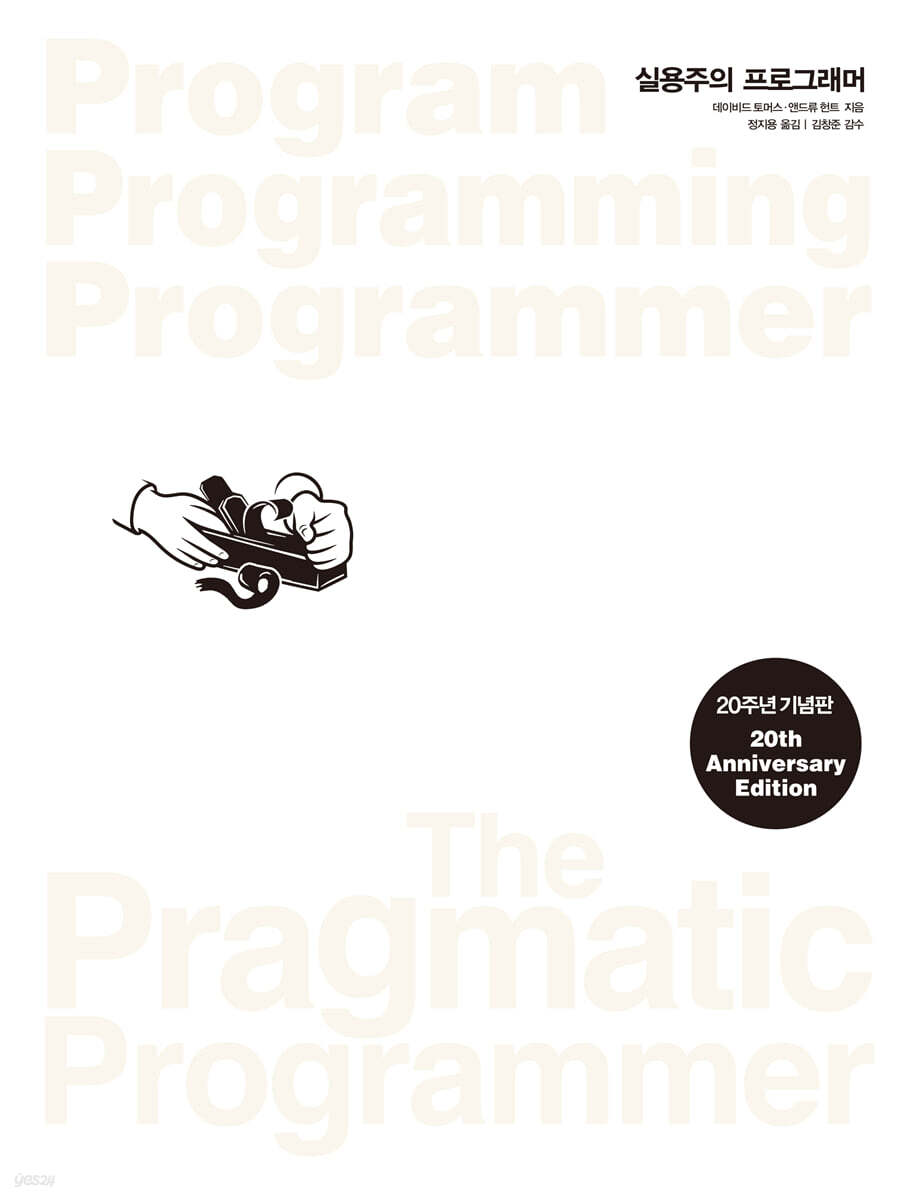 |
Description
Book Introduction
The Pragmatic Programmer is one of the few technical books you'll read again and again, for years to come.
Whether you're new to the field or a seasoned expert, you'll gain new insights every time.
David Thomas and Andrew Hunt wrote the first edition of this book in 1999, which had a major impact on the software industry.
To help customers create better software and rediscover the joy of coding.
The lessons in this book have helped a generation of programmers revisit the fundamentals of software development, regardless of the language, framework, or methodology they use.
And the pragmatic philosophy has spread through hundreds of books, screencasts, audiobooks, and countless career and success stories.
Whether you're new to the field or a seasoned expert, you'll gain new insights every time.
David Thomas and Andrew Hunt wrote the first edition of this book in 1999, which had a major impact on the software industry.
To help customers create better software and rediscover the joy of coding.
The lessons in this book have helped a generation of programmers revisit the fundamentals of software development, regardless of the language, framework, or methodology they use.
And the pragmatic philosophy has spread through hundreds of books, screencasts, audiobooks, and countless career and success stories.
- You can preview some of the book's contents.
Preview
index
Recommendation
Preface to the 2nd edition
Preface to the 1st edition
Chapter 1.
pragmatic philosophy
Item 1.
It's your life
Item 2.
The cat swallowed my source code
Item 3.
Software entropy
Item 4.
Stone Soup and Boiled Frogs
Item 5.
Moderately good software
Item 6.
Knowledge Portfolio
Item 7.
Communicate!
Chapter 2.
pragmatic approach
Item 8.
The Key to Good Design
Item 9. DRY: The Evils of Duplication
Item 10.
Orthogonality
Item 11.
Reversibility
Item 12.
light tracer
Item 13.
Prototypes and Post-it Notes
Item 14.
domain language
Item 15.
calculation
Chapter 3.
Basic Tools
Item 16.
The power of plain text
Item 17.
Playing with shells
Item 18.
Power Editing
Item 19.
Version control
Item 20.
Debugging
Item 21.
Text processing
Item 22.
Engineering Log
Chapter 4.
Pragmatic paranoia
Item 23.
Design by contract
Item 24.
Dead programs don't lie
Item 25.
Deterministic programming
Item 26.
Balance of resource usage
Item 27.
Don't drive ahead of your headlights
Chapter 5.
Bend or break
Item 28.
Reduce coupling
Item 29.
Juggling with the real world
Item 30.
Transformation Programming
Item 31.
inheritance tax
Item 32.
setting
Chapter 6.
Simultaneity
Item 33.
Breaking the temporal bond
Item 34.
The shared state is incorrect
Item 35.
Actors and Processes
Item 36.
blackboard
Chapter 7.
While coding
Item 37.
Listening to the Reptilian Brain
Item 38.
Programming left to chance
Item 39.
Speed of the algorithm
Item 40.
Refactoring
Item 41.
Coding with Tests
Item 42.
Attribute-based testing
Item 43.
Be careful when you're outside
Item 44.
Naming
Chapter 8.
Before the project
Item 45.
The pit of requirements
Item 46.
Solving the impossible puzzle
Item 47.
Working together
Item 48.
The core of agile
Chapter 9.
Pragmatic Project
Item 49.
Pragmatic Team
Item 50.
Coconut alone isn't enough
Item 51.
Pragmatic Starter Tool
Item 52.
Make your users happy
Item 53.
Pride and Prejudice
Conclusion
References
Example answers to practice problems
Translator's Note
Search
Preface to the 2nd edition
Preface to the 1st edition
Chapter 1.
pragmatic philosophy
Item 1.
It's your life
Item 2.
The cat swallowed my source code
Item 3.
Software entropy
Item 4.
Stone Soup and Boiled Frogs
Item 5.
Moderately good software
Item 6.
Knowledge Portfolio
Item 7.
Communicate!
Chapter 2.
pragmatic approach
Item 8.
The Key to Good Design
Item 9. DRY: The Evils of Duplication
Item 10.
Orthogonality
Item 11.
Reversibility
Item 12.
light tracer
Item 13.
Prototypes and Post-it Notes
Item 14.
domain language
Item 15.
calculation
Chapter 3.
Basic Tools
Item 16.
The power of plain text
Item 17.
Playing with shells
Item 18.
Power Editing
Item 19.
Version control
Item 20.
Debugging
Item 21.
Text processing
Item 22.
Engineering Log
Chapter 4.
Pragmatic paranoia
Item 23.
Design by contract
Item 24.
Dead programs don't lie
Item 25.
Deterministic programming
Item 26.
Balance of resource usage
Item 27.
Don't drive ahead of your headlights
Chapter 5.
Bend or break
Item 28.
Reduce coupling
Item 29.
Juggling with the real world
Item 30.
Transformation Programming
Item 31.
inheritance tax
Item 32.
setting
Chapter 6.
Simultaneity
Item 33.
Breaking the temporal bond
Item 34.
The shared state is incorrect
Item 35.
Actors and Processes
Item 36.
blackboard
Chapter 7.
While coding
Item 37.
Listening to the Reptilian Brain
Item 38.
Programming left to chance
Item 39.
Speed of the algorithm
Item 40.
Refactoring
Item 41.
Coding with Tests
Item 42.
Attribute-based testing
Item 43.
Be careful when you're outside
Item 44.
Naming
Chapter 8.
Before the project
Item 45.
The pit of requirements
Item 46.
Solving the impossible puzzle
Item 47.
Working together
Item 48.
The core of agile
Chapter 9.
Pragmatic Project
Item 49.
Pragmatic Team
Item 50.
Coconut alone isn't enough
Item 51.
Pragmatic Starter Tool
Item 52.
Make your users happy
Item 53.
Pride and Prejudice
Conclusion
References
Example answers to practice problems
Translator's Note
Search
Detailed image

Publisher's Review
The Pragmatic Programmer was a mixed bag from the start.
It really covered a wide variety of topics that you wouldn't find in most IT books.
But this time it got a bit more complicated.
For example, in the first edition, tip number 22 said to use one editor well.
But this time, it is said that it is also good to use several.
No matter what editor you use or how many you use, as long as you can write fluently and without hesitation, that's fine.
And see the mention of agile, which wasn't in the first edition.
Everything is contextual, there is no single agile process, and we are told to adapt and improve based on the current situation.
I think the reason pragmatism is powerful is not because it is pure, but because it is miscellaneous.
That way, it can be more flexible and contain more variety.
Pragmatism will survive.
Not in 20 years, but in 200 years.
Because it's miscellaneous.
- Agile Consulting Kim Chang-jun
It really covered a wide variety of topics that you wouldn't find in most IT books.
But this time it got a bit more complicated.
For example, in the first edition, tip number 22 said to use one editor well.
But this time, it is said that it is also good to use several.
No matter what editor you use or how many you use, as long as you can write fluently and without hesitation, that's fine.
And see the mention of agile, which wasn't in the first edition.
Everything is contextual, there is no single agile process, and we are told to adapt and improve based on the current situation.
I think the reason pragmatism is powerful is not because it is pure, but because it is miscellaneous.
That way, it can be more flexible and contain more variety.
Pragmatism will survive.
Not in 20 years, but in 200 years.
Because it's miscellaneous.
- Agile Consulting Kim Chang-jun
GOODS SPECIFICS
- Publication date: February 24, 2022
- Page count, weight, size: 476 pages | 172*225*30mm
- ISBN13: 9788966263363
- ISBN10: 8966263364
You may also like
카테고리
korean


korean

![GQ KOREA Mark (Monthly): December [2025]](http://librairie.coreenne.fr/cdn/shop/files/8ef265dbbfbf186523ed75ba7319009d.jpg?v=1765340328&width=3840)


