

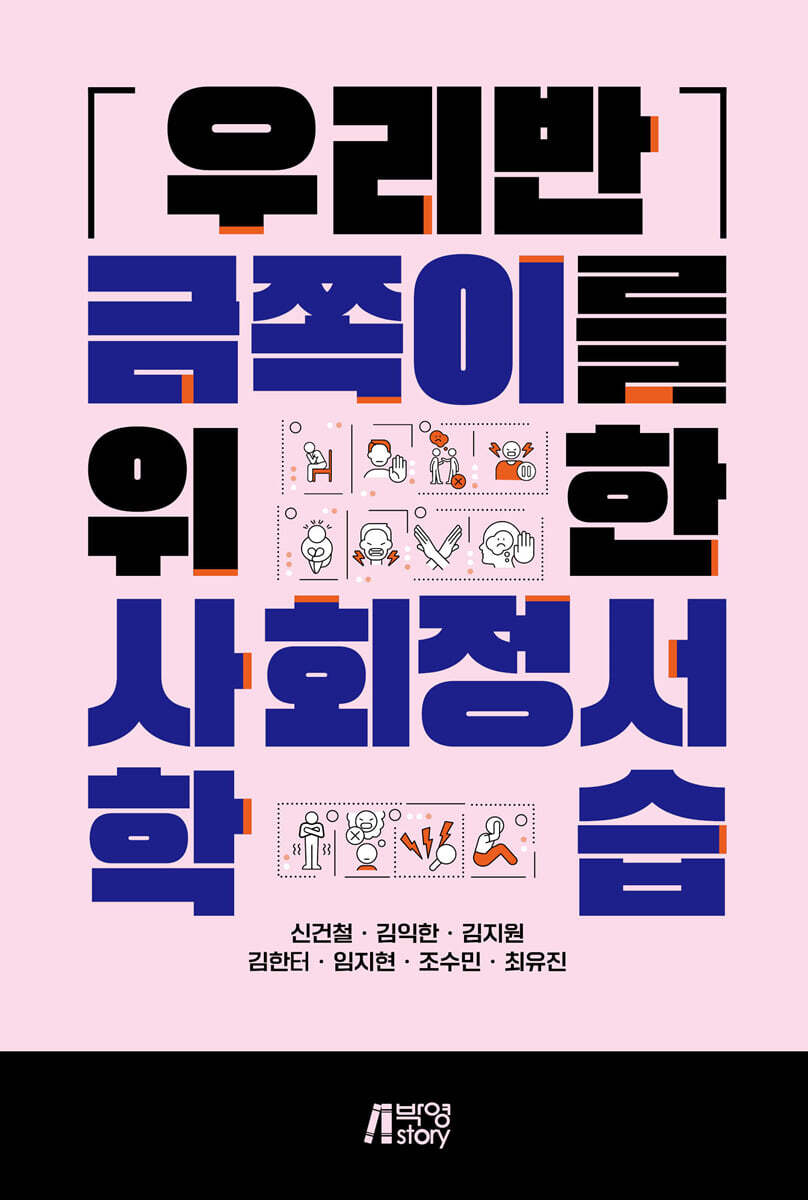
Social and emotional learning for our class's Geumjogi
 |
Description
Book Introduction
The main reason why social emotional learning has been implemented and shown to be effective in the classroom is because it teaches students life “skills.”
Even if it's not about studying, students will have to live with people no matter what they do in the future.
It “repeatedly” cultivates self-management skills that allow one to control oneself, starting with self-awareness (metacognition) that one’s concentration is lacking when living with people.
It is very effective in that it teaches social awareness and relationship skills and provides practical techniques to solve various problems that arise in relationships with others.
Furthermore, as Jean-Paul Sartre said, life is C (choice) between B (Birth) and D (Death), social-emotional learning, which provides the knowledge and skills necessary to make responsible decisions in a series of choices, is an education that is very necessary for individuals and society, and is also relevant to the current situation in Korea.
Even if it's not about studying, students will have to live with people no matter what they do in the future.
It “repeatedly” cultivates self-management skills that allow one to control oneself, starting with self-awareness (metacognition) that one’s concentration is lacking when living with people.
It is very effective in that it teaches social awareness and relationship skills and provides practical techniques to solve various problems that arise in relationships with others.
Furthermore, as Jean-Paul Sartre said, life is C (choice) between B (Birth) and D (Death), social-emotional learning, which provides the knowledge and skills necessary to make responsible decisions in a series of choices, is an education that is very necessary for individuals and society, and is also relevant to the current situation in Korea.
- You can preview some of the book's contents.
Preview
index
Chapter 01
Why SEL is Needed in the Classroom
Life Guidance as a Potential Curriculum................................................................................
7
Why-How-What and SEL..................................................................
10
Why is SEL needed in the classroom?.................................................................
14
How to apply SEL?.............................................................
19
What can you get with SEL?.................................................................
29
Chapter 02
The Reality of SEL
Self-awareness...................................................................................................
41
Self-care................................................................................................................
70
Social awareness................................................................................................................
95
Relationship Skills.................................................................................................
121
Responsible decision making...................................................................................
148
Chapter 03
Classrooms transformed by SEL
SEL (Social Emotional Learning) and Student Growth.................................................
183
Precautions when applying social emotional learning in classes................................................
186
What is needed to integrate social emotional learning into school classes.................................
190
References................................................................................................................
193
Why SEL is Needed in the Classroom
Life Guidance as a Potential Curriculum................................................................................
7
Why-How-What and SEL..................................................................
10
Why is SEL needed in the classroom?.................................................................
14
How to apply SEL?.............................................................
19
What can you get with SEL?.................................................................
29
Chapter 02
The Reality of SEL
Self-awareness...................................................................................................
41
Self-care................................................................................................................
70
Social awareness................................................................................................................
95
Relationship Skills.................................................................................................
121
Responsible decision making...................................................................................
148
Chapter 03
Classrooms transformed by SEL
SEL (Social Emotional Learning) and Student Growth.................................................
183
Precautions when applying social emotional learning in classes................................................
186
What is needed to integrate social emotional learning into school classes.................................
190
References................................................................................................................
193
Publisher's Review
preface
I asked a senior teacher who has been teaching for several decades about the differences between the teaching environment of 10 to 20 years ago and today.
Most, if not all, of the senior teachers I asked unanimously answered that the current educational environment has become more difficult compared to the past.
With declining birth rates leading to fewer students per classroom, shouldn't education be more accessible? While increased workload and outrageous complaints from parents are among the reasons teachers are experiencing increasing difficulties in the classroom, the biggest problem stems from students' declining problem-solving, communication, and emotional management skills.
For example, in schools, they teach us not to run in the hallways.
Unlike the wooden floors in classrooms, most elementary school hallways have hard cement floors.
Students running out of the classroom may collide with other students, which can lead to a major accident.
In fact, while working, I have seen several hallway safety accidents, some of which even led to school violence.
I work as the head of the student affairs department at the school I work at, so when I pass by and see students running in the hallways, I catch them and guide them.
Recently, a first-year student was stopped from running in the hallway and reprimanded to stop running.
The student said he understood with a frightened look on his face and sent him on his way.
And the student ran as soon as I sent him off.
In the past, every classroom had a classroom bell.
When the classroom bell rang, the students had to be quiet and focus on the teacher.
Nowadays, it is common to focus students' attention through classroom focus slogans.
Our classroom has a variety of classroom slogans, from “one” to “four.”
Usually, when you raise one finger and say “one,” the students look at you and say “one.”
Over the past ten years since this slogan was first put into practice, the frequency of chanting “One” has increased until the entire student body looks back.
In the past, if you did it just once, students would immediately turn around and focus on the lesson, but these days, it often happens that you do it more than 10 times.
I believe that teachers reading this article will agree that the phenomenon of students' decreased attention span is not limited to our classroom.
Additionally, one of the things that drains teachers in today's classrooms is mediating conflicts between students.
Likewise, as students' communication skills decline, various conflict situations arise.
If you have low empathy for others or lack communication skills, it can lead to various misunderstandings and conflicts.
If students apologize to each other for something they did wrong, it can sometimes come back as a complaint to parents.
Over the past 10,000 years, the pace of civilization development has been overwhelmingly faster than the pace of human evolution.
Although there is not much biological difference between humans 10,000 years ago and modern humans, the environment has changed dramatically.
In the past, ADHD tendencies might have given us a survival advantage by constantly shifting our interests in our surroundings, but in modern civilized society, where we must develop our own unique skills, ADHD tendencies are of little help.
Moreover, in situations where survival is at stake, the emotions that boil over in an instant help us avoid desperate moments, but in modern times, they become a factor that threatens others or interferes with concentration.
It's not just students who have been struggling with concentration lately.
In “The Harvard Focus Revolution,” author Edward Hallowell introduces Attention Deficit Trait (ADT).
Edward Hallowell, an expert on attention deficit disorder (ADD), says that ADT, which causes problems focusing depending on one's surroundings, is on the rise.
Modern people, accustomed to short videos, are losing patience and concentration as they easily get a dopamine hit with little effort.
The fact that students' concentration has been decreasing inversely since the late 2010s, when shorts were developed, can be said to be a representative example of the speed of civilization development being faster than the speed of human evolution.
As a result, schools are becoming increasingly difficult, even though the number of students per classroom is decreasing due to the low birth rate.
Personally, I am more concerned about the declining quality of individual qualities of the citizens of the Republic of Korea than about the problems that will arise in the future due to the low birth rate.
Social-emotional learning will be one of the solutions to these problems facing our educational field.
The main reason why social emotional learning has been implemented and shown to be effective in the classroom is because it teaches students life “skills.”
Even if it's not about studying, students will have to live with people no matter what they do in the future.
It “repeatedly” cultivates self-management skills that allow one to control oneself, starting with self-awareness (metacognition) that one’s concentration is lacking when living with people.
It is very effective in that it teaches social awareness and relationship skills and provides practical techniques to solve various problems that arise in relationships with others.
Furthermore, as Jean-Paul Sartre said, life is C (choice) between B (Birth) and D (Death), social-emotional learning, which provides the knowledge and skills necessary to make responsible decisions in a series of choices, is an education that is very necessary for individuals and society, and is also relevant to the current situation in Korea.
I asked a senior teacher who has been teaching for several decades about the differences between the teaching environment of 10 to 20 years ago and today.
Most, if not all, of the senior teachers I asked unanimously answered that the current educational environment has become more difficult compared to the past.
With declining birth rates leading to fewer students per classroom, shouldn't education be more accessible? While increased workload and outrageous complaints from parents are among the reasons teachers are experiencing increasing difficulties in the classroom, the biggest problem stems from students' declining problem-solving, communication, and emotional management skills.
For example, in schools, they teach us not to run in the hallways.
Unlike the wooden floors in classrooms, most elementary school hallways have hard cement floors.
Students running out of the classroom may collide with other students, which can lead to a major accident.
In fact, while working, I have seen several hallway safety accidents, some of which even led to school violence.
I work as the head of the student affairs department at the school I work at, so when I pass by and see students running in the hallways, I catch them and guide them.
Recently, a first-year student was stopped from running in the hallway and reprimanded to stop running.
The student said he understood with a frightened look on his face and sent him on his way.
And the student ran as soon as I sent him off.
In the past, every classroom had a classroom bell.
When the classroom bell rang, the students had to be quiet and focus on the teacher.
Nowadays, it is common to focus students' attention through classroom focus slogans.
Our classroom has a variety of classroom slogans, from “one” to “four.”
Usually, when you raise one finger and say “one,” the students look at you and say “one.”
Over the past ten years since this slogan was first put into practice, the frequency of chanting “One” has increased until the entire student body looks back.
In the past, if you did it just once, students would immediately turn around and focus on the lesson, but these days, it often happens that you do it more than 10 times.
I believe that teachers reading this article will agree that the phenomenon of students' decreased attention span is not limited to our classroom.
Additionally, one of the things that drains teachers in today's classrooms is mediating conflicts between students.
Likewise, as students' communication skills decline, various conflict situations arise.
If you have low empathy for others or lack communication skills, it can lead to various misunderstandings and conflicts.
If students apologize to each other for something they did wrong, it can sometimes come back as a complaint to parents.
Over the past 10,000 years, the pace of civilization development has been overwhelmingly faster than the pace of human evolution.
Although there is not much biological difference between humans 10,000 years ago and modern humans, the environment has changed dramatically.
In the past, ADHD tendencies might have given us a survival advantage by constantly shifting our interests in our surroundings, but in modern civilized society, where we must develop our own unique skills, ADHD tendencies are of little help.
Moreover, in situations where survival is at stake, the emotions that boil over in an instant help us avoid desperate moments, but in modern times, they become a factor that threatens others or interferes with concentration.
It's not just students who have been struggling with concentration lately.
In “The Harvard Focus Revolution,” author Edward Hallowell introduces Attention Deficit Trait (ADT).
Edward Hallowell, an expert on attention deficit disorder (ADD), says that ADT, which causes problems focusing depending on one's surroundings, is on the rise.
Modern people, accustomed to short videos, are losing patience and concentration as they easily get a dopamine hit with little effort.
The fact that students' concentration has been decreasing inversely since the late 2010s, when shorts were developed, can be said to be a representative example of the speed of civilization development being faster than the speed of human evolution.
As a result, schools are becoming increasingly difficult, even though the number of students per classroom is decreasing due to the low birth rate.
Personally, I am more concerned about the declining quality of individual qualities of the citizens of the Republic of Korea than about the problems that will arise in the future due to the low birth rate.
Social-emotional learning will be one of the solutions to these problems facing our educational field.
The main reason why social emotional learning has been implemented and shown to be effective in the classroom is because it teaches students life “skills.”
Even if it's not about studying, students will have to live with people no matter what they do in the future.
It “repeatedly” cultivates self-management skills that allow one to control oneself, starting with self-awareness (metacognition) that one’s concentration is lacking when living with people.
It is very effective in that it teaches social awareness and relationship skills and provides practical techniques to solve various problems that arise in relationships with others.
Furthermore, as Jean-Paul Sartre said, life is C (choice) between B (Birth) and D (Death), social-emotional learning, which provides the knowledge and skills necessary to make responsible decisions in a series of choices, is an education that is very necessary for individuals and society, and is also relevant to the current situation in Korea.
GOODS SPECIFICS
- Date of issue: February 28, 2025
- Page count, weight, size: 196 pages | 153*224*20mm
- ISBN13: 9791172790820
- ISBN10: 1172790825
You may also like
카테고리
korean


korean

![GQ KOREA Mark (Monthly): December [2025]](http://librairie.coreenne.fr/cdn/shop/files/8ef265dbbfbf186523ed75ba7319009d.jpg?v=1765340328&width=3840)


