

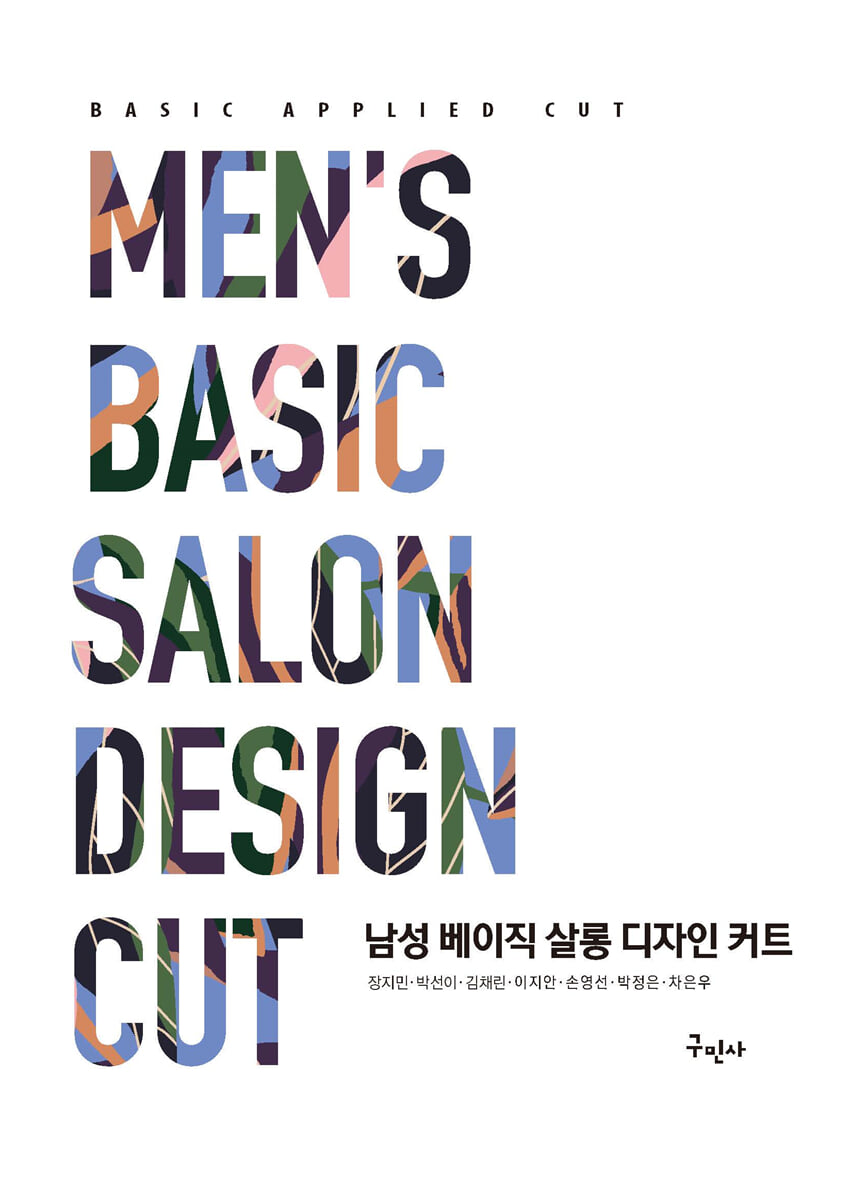
Men's Basic Salon Design Cut
 |
Description
Book Introduction
We are living in an era of uncertainty in all aspects due to the COVID-19 pandemic.
As we experience COVID-19, we see a growing demand for diversity and the blurring of boundaries between men and women.
Rather than using terms like “men’s style” or “women’s style,” a design that can fully express a man’s individuality is required.
Especially due to the Korean Wave, interest in Korean hair design has also increased significantly, and it is becoming more common for men to invest more in fashion and image than women.
With the rise of men's specialty barbershops, I believe there is a growing consensus among everyone that a basic salon design and cut textbook for men is essential for employment, entrepreneurship, and employee training.
Having worked in the beauty industry and education for nearly 30 years, I have consistently pursued innovation and research with a keen interest in systematizing education.
As someone who has been thinking a lot about how to improve the perfection of men's haircuts by obtaining a license as a barber and a barber shop owner, and creating a connection between beauty and barbering as a barber shop owner, I have poured all my passion into this textbook.
As we experience COVID-19, we see a growing demand for diversity and the blurring of boundaries between men and women.
Rather than using terms like “men’s style” or “women’s style,” a design that can fully express a man’s individuality is required.
Especially due to the Korean Wave, interest in Korean hair design has also increased significantly, and it is becoming more common for men to invest more in fashion and image than women.
With the rise of men's specialty barbershops, I believe there is a growing consensus among everyone that a basic salon design and cut textbook for men is essential for employment, entrepreneurship, and employee training.
Having worked in the beauty industry and education for nearly 30 years, I have consistently pursued innovation and research with a keen interest in systematizing education.
As someone who has been thinking a lot about how to improve the perfection of men's haircuts by obtaining a license as a barber and a barber shop owner, and creating a connection between beauty and barbering as a barber shop owner, I have poured all my passion into this textbook.
- You can preview some of the book's contents.
Preview
index
Part 1: Men's Basic Salon Design Cut Theory (Basic Knowledge in this Book)
Chapter 1: Concept and Design Determinants of Men's Haircuts
1.
Characteristics and Definition of Men's Cuts
2.
History of Men's Haircuts
3.
Male face shapes and hairstyles
Chapter 2 Types and Characteristics of Basic Cuts
1.
Types and characteristics of one-length haircuts
2.
Features of the Graduation Haircut
3.
Types and Features of Layered Haircuts
Chapter 3 Design Elements of Men's Haircuts
1.
Head point
2.
Division and names of the skull
3.
Division and naming of the skull
4.
Lifting and Base Features
5.
Cut angle
Chapter 4 Types and Techniques of Cutting Tools and Instruments
1.
Types and techniques of scissors
2.
Types and Techniques of Thinning Scissors
3.
Texturing techniques
4.
Types and techniques of combs
5.
Types and techniques of clippers
6.
Basic cutting techniques according to clipper usage
Chapter 5 Basic Techniques for Men's Haircuts
1.
Cutting techniques according to shape
2.
A cutting technique that controls hair with a comb
3.
Techniques used in trimming or finishing work
4.
Edge smoothing technique
5.
Long-hair cutting technique
Part 2: Men's Basic Salon Design Cut Practice
Chapter 1 Basic
1.
Style number 1 low heel
2.
Style number 2: Medium-high (medium-high)
3.
Style number 3 Sangsanggo (high heel)
4.
Style number 4: Long sports
5.
Style number 5 each sport
6.
Style number 6: Round Sports
Chapter 2 Basic Applications
1.
Style number 7 soft mohawk
2.
Style number 8 short mohawk
3.
Style number 9 two-block upper 1 (lower upper applied)
4.
Style number 10 two-block upper 2 (medium upper high applied)
5.
Style number 11 Two-block upper 3 (upper upper application)
Chapter 3 Salon Design
1.
Style number 12 Dandy cut
2.
Style number 13: Dandy two-block cut
3.
Style number 14 Wolf cut
4.
Style number 15: Wolf to Block Cut
5.
Style number 16 leaf cut
6.
Style number 17 Regent Cut
7.
Style number 18: Gail cut
8.
Style number 19 Ivy League cut
9.
Style number 20 crop cut
Chapter 1: Concept and Design Determinants of Men's Haircuts
1.
Characteristics and Definition of Men's Cuts
2.
History of Men's Haircuts
3.
Male face shapes and hairstyles
Chapter 2 Types and Characteristics of Basic Cuts
1.
Types and characteristics of one-length haircuts
2.
Features of the Graduation Haircut
3.
Types and Features of Layered Haircuts
Chapter 3 Design Elements of Men's Haircuts
1.
Head point
2.
Division and names of the skull
3.
Division and naming of the skull
4.
Lifting and Base Features
5.
Cut angle
Chapter 4 Types and Techniques of Cutting Tools and Instruments
1.
Types and techniques of scissors
2.
Types and Techniques of Thinning Scissors
3.
Texturing techniques
4.
Types and techniques of combs
5.
Types and techniques of clippers
6.
Basic cutting techniques according to clipper usage
Chapter 5 Basic Techniques for Men's Haircuts
1.
Cutting techniques according to shape
2.
A cutting technique that controls hair with a comb
3.
Techniques used in trimming or finishing work
4.
Edge smoothing technique
5.
Long-hair cutting technique
Part 2: Men's Basic Salon Design Cut Practice
Chapter 1 Basic
1.
Style number 1 low heel
2.
Style number 2: Medium-high (medium-high)
3.
Style number 3 Sangsanggo (high heel)
4.
Style number 4: Long sports
5.
Style number 5 each sport
6.
Style number 6: Round Sports
Chapter 2 Basic Applications
1.
Style number 7 soft mohawk
2.
Style number 8 short mohawk
3.
Style number 9 two-block upper 1 (lower upper applied)
4.
Style number 10 two-block upper 2 (medium upper high applied)
5.
Style number 11 Two-block upper 3 (upper upper application)
Chapter 3 Salon Design
1.
Style number 12 Dandy cut
2.
Style number 13: Dandy two-block cut
3.
Style number 14 Wolf cut
4.
Style number 15: Wolf to Block Cut
5.
Style number 16 leaf cut
6.
Style number 17 Regent Cut
7.
Style number 18: Gail cut
8.
Style number 19 Ivy League cut
9.
Style number 20 crop cut
Publisher's Review
We are living in an era of uncertainty in all aspects due to the COVID-19 pandemic.
As we experience COVID-19, we see a growing demand for diversity and the blurring of boundaries between men and women.
Rather than using terms like “men’s style” or “women’s style,” a design that can fully express a man’s individuality is required.
Especially due to the Korean Wave, interest in Korean hair design has also increased significantly, and it is becoming more common for men to invest more in fashion and image than women.
With the rise of men's specialty barbershops, I believe there is a growing consensus among everyone that a basic salon design and cut textbook for men is essential for employment, entrepreneurship, and employee training.
Having worked in the beauty industry and education for nearly 30 years, I have consistently pursued innovation and research with a keen interest in systematizing education.
As someone who has been thinking a lot about how to improve the perfection of men's haircuts by obtaining a license as a barber and a barber shop owner, and creating a connection between beauty and barbering as a barber shop owner, I have poured all my passion into this textbook.
The special feature of this men's basic salon design cut book is that Part 1 explains the theory of men's basic salon design cut.
Part 2 is as follows:
Chapter 1 Basic: Learn the basic techniques of men's haircuts in three styles and three sports styles to easily get started with men's haircuts.
Chapter 2 Basic Application: Understand the design principles and applications of men's cuts with two types of mohawks and three types of two-block hairstyles.
Chapter 3 Salon Design: A total of 20 styles are included, including the Dandy Cut, Dandy Two Block Cut, Wolf Cut, Wolf Two Block Cut, Leaf Cut, Regent Cut, Guile Cut, Ivy League Cut, and Crop Cut designs.
I tried to organize all 20 cuts into a systematic pattern.
In the process of creating the book, I repeatedly modified the difficulty level and pattern while teaching the students, so that it is not easy for anyone to follow, but it is patterned so that any beautician can creatively reconstruct it.
I hope that this will be of great help to those who are currently on this path and those who will be on this path in the future, and that the path of beauty will be filled with more dignity.
As we experience COVID-19, we see a growing demand for diversity and the blurring of boundaries between men and women.
Rather than using terms like “men’s style” or “women’s style,” a design that can fully express a man’s individuality is required.
Especially due to the Korean Wave, interest in Korean hair design has also increased significantly, and it is becoming more common for men to invest more in fashion and image than women.
With the rise of men's specialty barbershops, I believe there is a growing consensus among everyone that a basic salon design and cut textbook for men is essential for employment, entrepreneurship, and employee training.
Having worked in the beauty industry and education for nearly 30 years, I have consistently pursued innovation and research with a keen interest in systematizing education.
As someone who has been thinking a lot about how to improve the perfection of men's haircuts by obtaining a license as a barber and a barber shop owner, and creating a connection between beauty and barbering as a barber shop owner, I have poured all my passion into this textbook.
The special feature of this men's basic salon design cut book is that Part 1 explains the theory of men's basic salon design cut.
Part 2 is as follows:
Chapter 1 Basic: Learn the basic techniques of men's haircuts in three styles and three sports styles to easily get started with men's haircuts.
Chapter 2 Basic Application: Understand the design principles and applications of men's cuts with two types of mohawks and three types of two-block hairstyles.
Chapter 3 Salon Design: A total of 20 styles are included, including the Dandy Cut, Dandy Two Block Cut, Wolf Cut, Wolf Two Block Cut, Leaf Cut, Regent Cut, Guile Cut, Ivy League Cut, and Crop Cut designs.
I tried to organize all 20 cuts into a systematic pattern.
In the process of creating the book, I repeatedly modified the difficulty level and pattern while teaching the students, so that it is not easy for anyone to follow, but it is patterned so that any beautician can creatively reconstruct it.
I hope that this will be of great help to those who are currently on this path and those who will be on this path in the future, and that the path of beauty will be filled with more dignity.
GOODS SPECIFICS
- Date of issue: March 10, 2025
- Page count, weight, size: 185 pages | 188*257*20mm
- ISBN13: 9791168755321
- ISBN10: 1168755328
You may also like
카테고리
korean


korean

![GQ KOREA Mark (Monthly): December [2025]](http://librairie.coreenne.fr/cdn/shop/files/8ef265dbbfbf186523ed75ba7319009d.jpg?v=1765340328&width=3840)


