

neuroscience
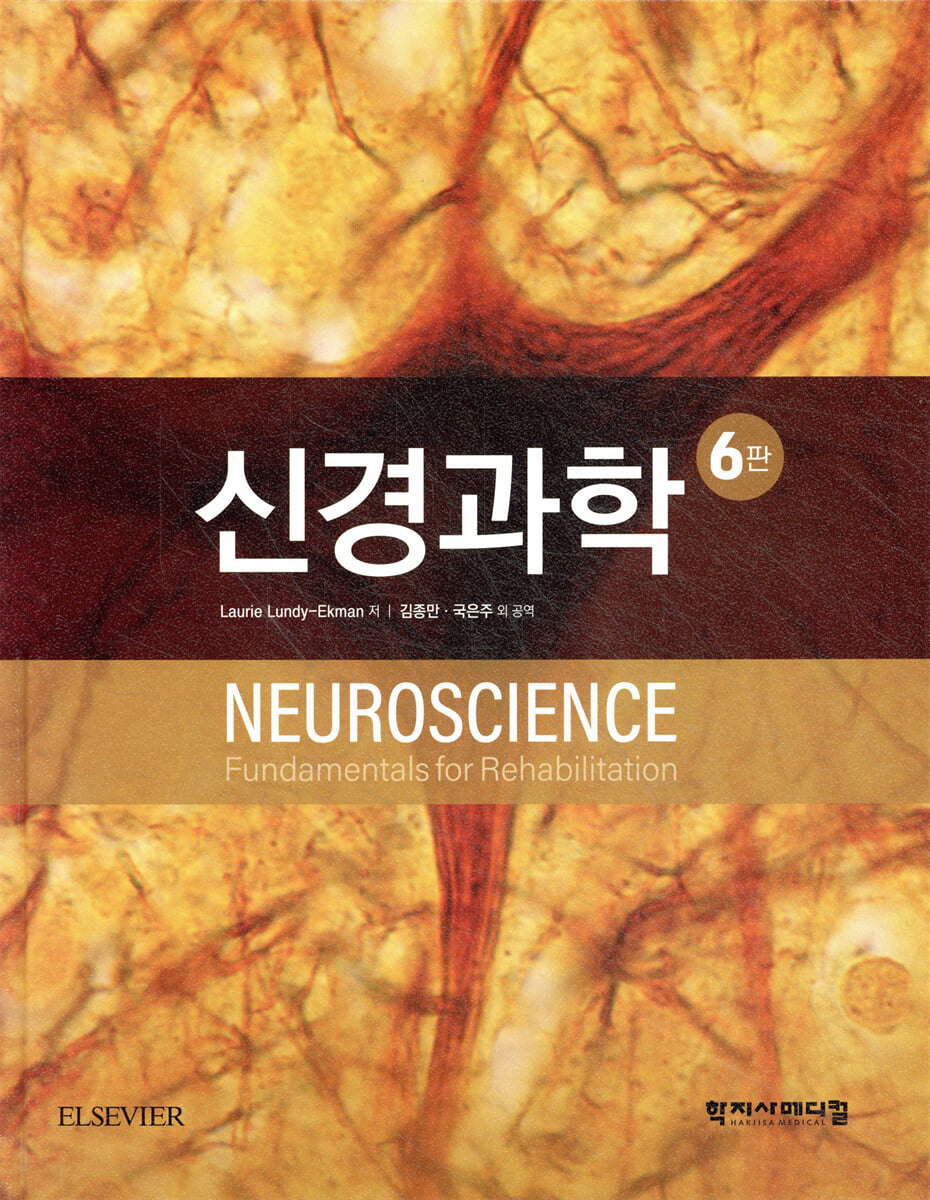 |
Description
Book Introduction
This book provides detailed information on the mechanisms and characteristics of various diseases, including stroke, and also explains how to apply each test to accurately identify the problem.
Therefore, the more movement professionals know about the brain, the better they can understand the altered behaviors and movements of people with brain damage and provide effective interventions accordingly.
Therefore, the more movement professionals know about the brain, the better they can understand the altered behaviors and movements of people with brain damage and provide effective interventions accordingly.
index
Chapter 1: Introduction to Neuroscience
PART 1: Neurological Overview
Chapter 2 Neuroanatomy
Chapter 3 Neurological Disorders and Neurological Examination
Chapter 4 Neuroimaging and Neuroanatomy Diagrams
PART 2 Neuroscience at the Cellular Level
Chapter 5 Physical and Electrical Properties of Cells in the Nervous System
Chapter 6 Neural Connections: Synaptic and Extrasynaptic Transmission
Chapter 7 Neuroplasticity
PART 3 Development of the Nervous System
Chapter 8 Development of the Nervous System
PART 4 VERTICAL SYSTEM
Chapter 9 Autonomic Nervous System
Chapter 10 Peripheral Somatosensory System
Chapter 11 Central Somatosensory System
Chapter 12 Pain Caused by Disease and Symptoms
Chapter 13: Motor System: Lower Motor Neurons and Spinal Motor Function
Chapter 14 Motor System: Gastric Motor Neurons
Chapter 15 Motor, Cognitive, and Emotional Systems: The Cerebellum
Chapter 16 Movement and Mental Function: Basal Ganglia
Chapter 17 Movement Control
PART 5 AREA
Chapter 18 Peripheral Nervous System
Chapter 19 Spinal Cord Areas
Chapter 20 Cranial Nerves
Chapter 21 Brainstem Areas
Chapter 22 The Visual System
Chapter 23 The Courtyard
Chapter 24 Dizziness and Instability
Chapter 25 Cerebrospinal Fluid System
Chapter 26 Blood Supply, Stroke, Cerebrospinal Fluid Dynamics, and Intracranial Pressure
Chapter 27 The Brain
Chapter 28 Memory, Consciousness, and Intelligence
Chapter 29 Behavior, Emotions, Decision-Making, and Personality: The Prefrontal Cortex and the Temporal Cortex
Chapter 30 Communication, Attention, and Spatial Cognition: The Temporal Association Cortex and the Inferior Infracinguland Gyrus
PART 6 NEUROLOGIC EXAMINATION
Chapter 31 Neurological Examination
PART 1: Neurological Overview
Chapter 2 Neuroanatomy
Chapter 3 Neurological Disorders and Neurological Examination
Chapter 4 Neuroimaging and Neuroanatomy Diagrams
PART 2 Neuroscience at the Cellular Level
Chapter 5 Physical and Electrical Properties of Cells in the Nervous System
Chapter 6 Neural Connections: Synaptic and Extrasynaptic Transmission
Chapter 7 Neuroplasticity
PART 3 Development of the Nervous System
Chapter 8 Development of the Nervous System
PART 4 VERTICAL SYSTEM
Chapter 9 Autonomic Nervous System
Chapter 10 Peripheral Somatosensory System
Chapter 11 Central Somatosensory System
Chapter 12 Pain Caused by Disease and Symptoms
Chapter 13: Motor System: Lower Motor Neurons and Spinal Motor Function
Chapter 14 Motor System: Gastric Motor Neurons
Chapter 15 Motor, Cognitive, and Emotional Systems: The Cerebellum
Chapter 16 Movement and Mental Function: Basal Ganglia
Chapter 17 Movement Control
PART 5 AREA
Chapter 18 Peripheral Nervous System
Chapter 19 Spinal Cord Areas
Chapter 20 Cranial Nerves
Chapter 21 Brainstem Areas
Chapter 22 The Visual System
Chapter 23 The Courtyard
Chapter 24 Dizziness and Instability
Chapter 25 Cerebrospinal Fluid System
Chapter 26 Blood Supply, Stroke, Cerebrospinal Fluid Dynamics, and Intracranial Pressure
Chapter 27 The Brain
Chapter 28 Memory, Consciousness, and Intelligence
Chapter 29 Behavior, Emotions, Decision-Making, and Personality: The Prefrontal Cortex and the Temporal Cortex
Chapter 30 Communication, Attention, and Spatial Cognition: The Temporal Association Cortex and the Inferior Infracinguland Gyrus
PART 6 NEUROLOGIC EXAMINATION
Chapter 31 Neurological Examination
Publisher's Review
A textbook that provides opportunities to systematically learn and apply the nervous system.
“How many neurons make up a human brain? According to astronomers, there are about 100 billion stars in a single galaxy in the universe, which is equivalent to the number of neurons in a human brain.
It is an enormous number that cannot be counted even if you count only the number of people from birth to death without eating or sleeping.
Nerve cells form synapses to process information with each other.
How many neural connections make up a single human brain? Astronomers estimate that there are 100 billion stars in a single galaxy, and 100 billion similar galaxies in the universe.
This number becomes 100 (1022).
It is said that the number of stars in the universe is similar to the number of grains of sand on Earth, so it is astonishing that this enormous number of neural connections exist in a single human brain.
“You could say that the universe is contained within the human brain.”
The human brain can be thought of as a complex and difficult-to-understand structure.
But when you study the brain, you learn that the brain maps the body, recognizing its own body and even determining its possibilities for how to act.
Additionally, it mixes with the surrounding environment with other people, with the order and principles that were created.
This book will make learning easier and clearer by providing us with a clearer understanding of the order and principles discussed above.
When a stroke occurs, you may have difficulty moving one side of your body and may not be able to sense touch or pinching.
Also, sometimes they don't notice an acquaintance standing in one field of vision and sometimes they ignore the space.
All these problems are related to the brain.
Therefore, the more we understand the brain in three dimensions, the more we can broadly understand a person's behavior.
This book provides detailed information on the mechanisms and characteristics of various diseases, including stroke, and also explains how to apply each test to accurately identify the problem.
Therefore, the more movement professionals know about the brain, the better they can understand the altered behaviors and movements of people with brain damage and provide effective interventions accordingly.
Today's movement experts plan interventions based on scientific evidence.
Lundy-Ekman's Neuroscience, Sixth Edition, includes new concepts and cutting-edge neuroscience research that movement specialists who care for patients with neurological disorders must understand.
It will be helpful for movement specialists managing patients with neurological disorders and for students who need to learn the pathophysiology of neurological disorders after taking a neuroanatomy and physiology course.
“How many neurons make up a human brain? According to astronomers, there are about 100 billion stars in a single galaxy in the universe, which is equivalent to the number of neurons in a human brain.
It is an enormous number that cannot be counted even if you count only the number of people from birth to death without eating or sleeping.
Nerve cells form synapses to process information with each other.
How many neural connections make up a single human brain? Astronomers estimate that there are 100 billion stars in a single galaxy, and 100 billion similar galaxies in the universe.
This number becomes 100 (1022).
It is said that the number of stars in the universe is similar to the number of grains of sand on Earth, so it is astonishing that this enormous number of neural connections exist in a single human brain.
“You could say that the universe is contained within the human brain.”
The human brain can be thought of as a complex and difficult-to-understand structure.
But when you study the brain, you learn that the brain maps the body, recognizing its own body and even determining its possibilities for how to act.
Additionally, it mixes with the surrounding environment with other people, with the order and principles that were created.
This book will make learning easier and clearer by providing us with a clearer understanding of the order and principles discussed above.
When a stroke occurs, you may have difficulty moving one side of your body and may not be able to sense touch or pinching.
Also, sometimes they don't notice an acquaintance standing in one field of vision and sometimes they ignore the space.
All these problems are related to the brain.
Therefore, the more we understand the brain in three dimensions, the more we can broadly understand a person's behavior.
This book provides detailed information on the mechanisms and characteristics of various diseases, including stroke, and also explains how to apply each test to accurately identify the problem.
Therefore, the more movement professionals know about the brain, the better they can understand the altered behaviors and movements of people with brain damage and provide effective interventions accordingly.
Today's movement experts plan interventions based on scientific evidence.
Lundy-Ekman's Neuroscience, Sixth Edition, includes new concepts and cutting-edge neuroscience research that movement specialists who care for patients with neurological disorders must understand.
It will be helpful for movement specialists managing patients with neurological disorders and for students who need to learn the pathophysiology of neurological disorders after taking a neuroanatomy and physiology course.
GOODS SPECIFICS
- Date of issue: March 15, 2025
- Format: Hardcover book binding method guide
- Page count, weight, size: 672 pages | 188*257*36mm
- ISBN13: 9791194219507
You may also like
카테고리
korean


korean

![ELLE 엘르 스페셜 에디션 A형 : 12월 [2025]](http://librairie.coreenne.fr/cdn/shop/files/b8e27a3de6c9538896439686c6b0e8fb.jpg?v=1766436872&width=3840)


