

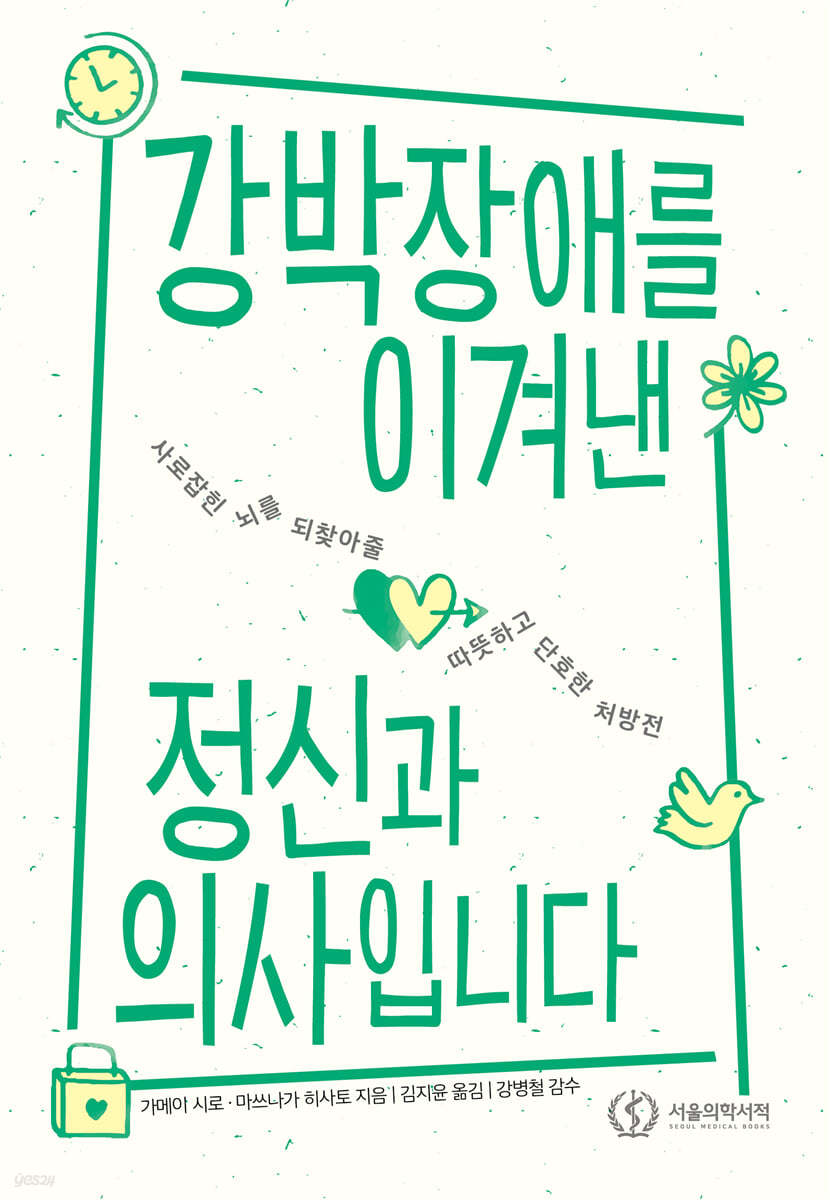
I am a psychiatrist who overcame obsessive-compulsive disorder.
 |
Description
Book Introduction
A Guide to Obsessive Compulsive Disorder Written by a Doctor and Patient
Shiro Kamei is a Japanese psychiatrist.
But after he develops obsessive-compulsive disorder, his life falls into the abyss.
It was a disease I thought I knew well, but I was helpless in the grip of a terrible obsession.
After years of what he describes as "hell on earth," he was driven to the brink of giving up on life, but after meeting Japan's top obsessive-compulsive disorder specialist, he overcame numerous difficulties and finally broke free from his obsessive-compulsive disorder.
This book is a friendly guide and vivid account of the author's struggle with obsessive-compulsive disorder, written by a psychiatrist and former patient, for people and their families who are struggling with the same problem.
This book is different!
There are many books about obsessive-compulsive disorder.
However, it is true that it feels distant from us because it is overly theory-centered and mainly explains using American examples.
Of course, I sympathize with the patient's situation, but my sympathy is purely from the objective perspective of a therapist.
This book is different.
All the suffering, fear, and worry experienced at the moment when obsession 'comes upon' are vividly described from the person's perspective.
At the same time, as a doctor, he carefully explains the causes and coping methods for each process that occurs in the mind.
It is also important to note that his own struggles with illness and the patient cases he experienced as a doctor are all set in Japan, a country with similar culture and way of thinking, making it feel much more relatable.
While no mental illness is without its distressing symptoms, few plague people as persistently as obsessive-compulsive disorder.
Through this book, readers will discover empathy and courage rarely found anywhere else, and will gain practical strategies and countless tips for overcoming obsessive-compulsive disorder.
Shiro Kamei is a Japanese psychiatrist.
But after he develops obsessive-compulsive disorder, his life falls into the abyss.
It was a disease I thought I knew well, but I was helpless in the grip of a terrible obsession.
After years of what he describes as "hell on earth," he was driven to the brink of giving up on life, but after meeting Japan's top obsessive-compulsive disorder specialist, he overcame numerous difficulties and finally broke free from his obsessive-compulsive disorder.
This book is a friendly guide and vivid account of the author's struggle with obsessive-compulsive disorder, written by a psychiatrist and former patient, for people and their families who are struggling with the same problem.
This book is different!
There are many books about obsessive-compulsive disorder.
However, it is true that it feels distant from us because it is overly theory-centered and mainly explains using American examples.
Of course, I sympathize with the patient's situation, but my sympathy is purely from the objective perspective of a therapist.
This book is different.
All the suffering, fear, and worry experienced at the moment when obsession 'comes upon' are vividly described from the person's perspective.
At the same time, as a doctor, he carefully explains the causes and coping methods for each process that occurs in the mind.
It is also important to note that his own struggles with illness and the patient cases he experienced as a doctor are all set in Japan, a country with similar culture and way of thinking, making it feel much more relatable.
While no mental illness is without its distressing symptoms, few plague people as persistently as obsessive-compulsive disorder.
Through this book, readers will discover empathy and courage rarely found anywhere else, and will gain practical strategies and countless tips for overcoming obsessive-compulsive disorder.
- You can preview some of the book's contents.
Preview
index
Entering 4
· A psychiatrist with obsessive-compulsive disorder · A gift from hell · The misfortunes surrounding obsessive-compulsive disorder · The structure of this book
1. The Disease Concept of Obsessive-Compulsive Disorder 19
· The disease called obsession · Obsessive-compulsive disorder is more common than you think · Symptoms of obsessive-compulsive disorder · Diagnostic criteria and the limitations of psychiatry · Three types of obsessive-compulsive disorder · Typical and atypical examples · What happens if it is left untreated? · What happens if it is treated?
2 Psychopathology of Obsessive-Compulsive Disorder 41
normal psychological activity
·What is psychopathology? ·What is anxiety? ·The spark of anxiety, cognition, and ideas ·Anxiety-relieving behaviors, neglect ·Habits, conditioning
The development of obsessive-compulsive disorder
· Increased anxiety, new ideas and behaviors · Conditioning of anxiety-relieving behaviors: cognitive distortion · Fear of anxiety itself: further cognitive distortion · Increased behavior and increased anxiety · Obsessive thoughts, compulsive behaviors, loss of energy
Symptoms that appear as the condition progresses to severe stage
Avoidance: Loss of time, space, and energy; Attraction; Deterioration of insight
3 Treatment Strategies for Obsessive-Compulsive Disorder 79
· A single principle · The light and shade of treatment guidelines · The concept of drug therapy · What is cognitive behavioral therapy? · If you want to receive CBT · CBT for obsessive-compulsive disorder · Why CBT can improve obsessions · CBT practice strategies · Step 1: Recover energy · Step 2: Expand space · Step 3: Pick a fight you can win · Step 4: Introduce ordinary habits · Step 5: Acquire metacognition · Level 1 · Step 6: Start a social life · Step 7: Relax your obsession · Step 8: Acquire metacognition · Level 2
4 Real Cases of Obsessive-Compulsive Disorder: Author 131
·Graduated from medical school, became a psychiatrist ·Spark of anxiety gradually burning ·Precarious state ·First pull ·Recognize the onset of obsessive-compulsive disorder ·Roll down the slope of obsession ·Symptoms subside a little in a new environment ·Maybe I can't work anymore ·Start medication ·Spark of anxiety burning again ·Symptoms explode due to fishing ·Meet my doctor ·Rest and gather energy ·Tackle obsessions step by step ·Start work again ·Symptoms relapse, start CBT again ·Give up the pursuit of perfection ·In summary
5 Different Obsessive-Compulsive Disorders 181
Pollution obsession
Case: Haruko (33 years old) Various entrances to contamination obsession Don't run away Tips to avoid repetition Hospitalization is a last resort What kind of treatment will be provided if hospitalized? Many patients fear hospitalization
obsessive tidying
Case: Natsuki (1st year middle school student) Characteristics of obsessive-compulsive disorder (OCD) CBT tips for obsessive-compulsive disorder (OCD)
Obsessive-compulsive disorder in children
· Case: Akiko (6th grade) · Medication side effects · CBT · Involving parents · What if the parents also have obsessive-compulsive disorder?
magical thinking
·Cognitive distortion appears as a symptom
6 Background of Obsessive-Compulsive Disorder 219
History of Obsessive-Compulsive Disorder
·Freud's obsessive-compulsive disorder ·The emergence of neurobiology ·The emergence of DSM-III ·DSM-5 and OCRD
Obsessive-compulsive disorder (OCRD)-related disorders
· Hoarding disorder · Miscarriage phobia · Trichotillomania, skin picking disorder
Complications other than OCRD
·Tic disorder, Tourette syndrome, anxiety disorder, depression, autism spectrum disorder
Causes of Obsessive Compulsive Disorder
·Genetics ·Infection ·Personality
Neurology of Obsessive-Compulsive Disorder
·Neural circuit: OCD loop hypothesis ·Neurochemistry: Serotonin, dopamine, glutamate
7 Guidelines for Patients and Families 251
Guidelines for Families
· Understand the patient. · The patient is doing their best. · Personality changes under compulsion. · Recognize that the "illness," not the person, is the problem. · How to deal with attraction? · Attraction accompanied by violence. · Let the family become the trainer. · If the patient has become a reclusive loner. · Break down the structure that supports the king.
12 Guidelines for Patients
·① Use the principles ·② Don't make exceptions ·③ Externalize obsessions ·④ When you're worried, think of it as an illusion ·⑤ It's not my responsibility ·⑥ Give up: Even if you pursue perfection, you'll never reach it ·⑦ Don't allow useless things ·⑧ Break the dependence on security ·⑨ Eat or be eaten ·⑩ Crisis is an opportunity ·⑪ Obsessive experiences become food · ⑫ Ultimately, yourself
Going out 284
Reference 288
Translator's Note 292
· A psychiatrist with obsessive-compulsive disorder · A gift from hell · The misfortunes surrounding obsessive-compulsive disorder · The structure of this book
1. The Disease Concept of Obsessive-Compulsive Disorder 19
· The disease called obsession · Obsessive-compulsive disorder is more common than you think · Symptoms of obsessive-compulsive disorder · Diagnostic criteria and the limitations of psychiatry · Three types of obsessive-compulsive disorder · Typical and atypical examples · What happens if it is left untreated? · What happens if it is treated?
2 Psychopathology of Obsessive-Compulsive Disorder 41
normal psychological activity
·What is psychopathology? ·What is anxiety? ·The spark of anxiety, cognition, and ideas ·Anxiety-relieving behaviors, neglect ·Habits, conditioning
The development of obsessive-compulsive disorder
· Increased anxiety, new ideas and behaviors · Conditioning of anxiety-relieving behaviors: cognitive distortion · Fear of anxiety itself: further cognitive distortion · Increased behavior and increased anxiety · Obsessive thoughts, compulsive behaviors, loss of energy
Symptoms that appear as the condition progresses to severe stage
Avoidance: Loss of time, space, and energy; Attraction; Deterioration of insight
3 Treatment Strategies for Obsessive-Compulsive Disorder 79
· A single principle · The light and shade of treatment guidelines · The concept of drug therapy · What is cognitive behavioral therapy? · If you want to receive CBT · CBT for obsessive-compulsive disorder · Why CBT can improve obsessions · CBT practice strategies · Step 1: Recover energy · Step 2: Expand space · Step 3: Pick a fight you can win · Step 4: Introduce ordinary habits · Step 5: Acquire metacognition · Level 1 · Step 6: Start a social life · Step 7: Relax your obsession · Step 8: Acquire metacognition · Level 2
4 Real Cases of Obsessive-Compulsive Disorder: Author 131
·Graduated from medical school, became a psychiatrist ·Spark of anxiety gradually burning ·Precarious state ·First pull ·Recognize the onset of obsessive-compulsive disorder ·Roll down the slope of obsession ·Symptoms subside a little in a new environment ·Maybe I can't work anymore ·Start medication ·Spark of anxiety burning again ·Symptoms explode due to fishing ·Meet my doctor ·Rest and gather energy ·Tackle obsessions step by step ·Start work again ·Symptoms relapse, start CBT again ·Give up the pursuit of perfection ·In summary
5 Different Obsessive-Compulsive Disorders 181
Pollution obsession
Case: Haruko (33 years old) Various entrances to contamination obsession Don't run away Tips to avoid repetition Hospitalization is a last resort What kind of treatment will be provided if hospitalized? Many patients fear hospitalization
obsessive tidying
Case: Natsuki (1st year middle school student) Characteristics of obsessive-compulsive disorder (OCD) CBT tips for obsessive-compulsive disorder (OCD)
Obsessive-compulsive disorder in children
· Case: Akiko (6th grade) · Medication side effects · CBT · Involving parents · What if the parents also have obsessive-compulsive disorder?
magical thinking
·Cognitive distortion appears as a symptom
6 Background of Obsessive-Compulsive Disorder 219
History of Obsessive-Compulsive Disorder
·Freud's obsessive-compulsive disorder ·The emergence of neurobiology ·The emergence of DSM-III ·DSM-5 and OCRD
Obsessive-compulsive disorder (OCRD)-related disorders
· Hoarding disorder · Miscarriage phobia · Trichotillomania, skin picking disorder
Complications other than OCRD
·Tic disorder, Tourette syndrome, anxiety disorder, depression, autism spectrum disorder
Causes of Obsessive Compulsive Disorder
·Genetics ·Infection ·Personality
Neurology of Obsessive-Compulsive Disorder
·Neural circuit: OCD loop hypothesis ·Neurochemistry: Serotonin, dopamine, glutamate
7 Guidelines for Patients and Families 251
Guidelines for Families
· Understand the patient. · The patient is doing their best. · Personality changes under compulsion. · Recognize that the "illness," not the person, is the problem. · How to deal with attraction? · Attraction accompanied by violence. · Let the family become the trainer. · If the patient has become a reclusive loner. · Break down the structure that supports the king.
12 Guidelines for Patients
·① Use the principles ·② Don't make exceptions ·③ Externalize obsessions ·④ When you're worried, think of it as an illusion ·⑤ It's not my responsibility ·⑥ Give up: Even if you pursue perfection, you'll never reach it ·⑦ Don't allow useless things ·⑧ Break the dependence on security ·⑨ Eat or be eaten ·⑩ Crisis is an opportunity ·⑪ Obsessive experiences become food · ⑫ Ultimately, yourself
Going out 284
Reference 288
Translator's Note 292
Into the book
Have you ever had this experience?
① ‘Did you lock the door?’, ‘Did you turn off the gas?’ I suddenly became anxious and went back home to check.
② I have avoided the numbers 4 and 9 because I felt an inexplicable sense of unluckiness.
③ I washed my hands thoroughly because I thought they were contaminated with bacteria.
④ I was concerned that the books on the bookshelf were not the right height, so I rearranged them.
⑤ I didn't like the shape of the letters I wrote in my note, so I erased them and wrote them again.
These are all normal psychological states.
Many people have probably had similar experiences.
You might agree and say, “That’s right, that’s right.”
It doesn't matter if this happens a few times.
But in this psychology, the seed of obsession is hidden.
As with anything, if it goes too far, it becomes a problem.
--- p.21
Once you feel anxious, you have to choose between two paths: take action to resolve it or endure it without doing anything.
If your anxiety is intense, it's a thorny path no matter which way you choose.
But you can run away before anxiety sets in.
Since most of the conditions that make you anxious are set in stone and you are fully aware of them, I think you won't feel anxious if you avoid the places that cause it.
This is evasion.
For example, I avoid places with lots of children because I'm worried that I might bump into them and get hurt.
Avoid areas around elementary schools during school commute times.
Also avoid department stores and stores with lots of families.
You should also avoid subway stations at certain times as they are crowded with children.
There are fewer and fewer places you can go this way.
But the flames of anxiety still burn.
No, on the contrary, the more you avoid it, the more your fear grows and it can easily lead to anxiety.
No matter where you run, you will eventually find the object of your anxiety.
How many places can a child never appear? The pursuit of absolute safety narrows the scope of their activities.
Some people experience it much more frequently, but in any case, they experience a life quite different from that of ordinary people.
--- p.72
This quantifies the various intensities of anxiety.
As long as it's easy to understand, it doesn't matter how you do it, but usually I make a table that lists the numbers in order from 0 to 100.
For reference, here's my anxiety hierarchy chart at the time (I've changed it a bit to make it easier to understand).
It's okay to be rough around the edges at first.
It doesn't matter if you change the order in the middle.
It's important to try making it first.
It makes sense to just visualize the overall picture of your symptoms in a table format.
CBT tasks are determined through consultation with a therapist using the anxiety hierarchy as a reference.
We need to start by addressing the weak anxiety at the bottom of the table.
If we use a mountaineering analogy, it's like climbing properly from the first ridge.
If you keep winning, you will gain confidence.
You have to get into the habit of winning.
As your winning streak continues, you can overcome cognitive distortions.
--- p.104
In the beginning, it was difficult to strictly adhere to the principle of 'not being dragged in'.
Unable to bear his anxiety, he often asked his wife for reassurance.
“Isn’t the outlet on fire?”, “I didn’t drop anyone on the platform, did I?” Before CBT, this kind of dragging was commonplace, so it was difficult to eliminate it all at once.
At this time, my wife's cooperation, who had learned how to respond from her doctor, was of great help.
He saw through my questions and responded calmly every time, knowing that they were pathological demands for guarantees.
They only provide a certain amount of reassurance, such as, “It’s okay! It’s over now!” and never respond beyond that.
Since I also knew that fact, I didn't ask for any more guarantees.
My wife's response was effective and the attraction gradually decreased.
--- p.169
The characteristics of this type are ① the involvement of obsessive thoughts is not noticeable, ② the genetic component is relatively strong, ③ the onset tends to occur at a young age, and 4) it is likely to appear together with tics.
Distinguishing obsessive-compulsive disorder from other types is therapeutically significant.
Because it is helpful in choosing a drug.
In general, it is effective to administer antipsychotic medication in addition to antidepressant medication.
So it's important to know if you have tics.
Neatness obsessions are more ego-friendly than other types.
As the name suggests, ego-compatibility means that symptoms are friendly to the ego.
In other words, they do not feel that the compulsive behavior itself is irrational, but rather accept it as something they do because they want to do it.
This is also due to the fact that obsession with organizing often appears as an extension of a perfectionistic personality.
So, wouldn't the compulsive behavior itself be so difficult? It isn't.
In the end, you will face great difficulties.
--- p.202
Families of people with OCD are exhausted.
Because the consumption caused by attraction is truly enormous.
The behaviors or rules that patients force upon us are often absurd and ridiculous.
When you are swayed by words you don't understand without even knowing the reason, you get angry.
I want to understand because we are family, but I get angry at myself for not being able to understand.
The patient's position is similar.
There is a growing sense of dissatisfaction, thinking, 'Why don't you understand me?'
For example, behind the compulsive behavior of 'I have to clean the refrigerator thoroughly to kill germs when putting items I bought at the store in it', there is a strong will to 'protect not only myself but also my family from infection'.
You may think that you are protecting your family through bone-cutting efforts.
I feel tremendous stress and sadness because my desperate feelings are not conveyed at all and my family does not appreciate me.
This difference in perspective causes strain in family relationships.
In the minds of patients who are exhausted beyond repair, misconceptions such as, "I am not loved," or "I cannot receive help because my family is like this," arise, and a desperate situation may arise for both the patient and the family.
--- p.253
A good primary care physician or clinical psychologist, medication, more promising medications, and strong family support are all important.
But in the end, it is you who succeeds in treating your OCD and freeing yourself from your compulsions.
The most important thing is to understand your illness, face it head on, and take the right action.
It can be a lonely and harsh fight.
Sometimes you may feel overwhelmed by anxiety and fail to respond to treatment.
Some people may have almost given up.
But I still hope that it will rise again.
People with obsessive-compulsive disorder tend to judge every situation in binary terms, either 0 or 100.
If you fail once, you tend to get disappointed and think, 'I'm starting from zero again' or 'I'm wrong now'.
Overcoming such crises is growth.
In the process, you will gain flexibility and resilience.
Let's analyze your symptoms again and develop a treatment strategy with the help of a professional.
There will certainly be a way forward that leads to healing.
This book consistently provides knowledge on how to overcome obsessive-compulsive disorder.
Knowledge is a weapon.
Weapons exist to fight.
I sincerely hope that this weapon will help you in your fight to overcome your compulsion and achieve freedom, and that you and your family will regain true health and a happy life.
① ‘Did you lock the door?’, ‘Did you turn off the gas?’ I suddenly became anxious and went back home to check.
② I have avoided the numbers 4 and 9 because I felt an inexplicable sense of unluckiness.
③ I washed my hands thoroughly because I thought they were contaminated with bacteria.
④ I was concerned that the books on the bookshelf were not the right height, so I rearranged them.
⑤ I didn't like the shape of the letters I wrote in my note, so I erased them and wrote them again.
These are all normal psychological states.
Many people have probably had similar experiences.
You might agree and say, “That’s right, that’s right.”
It doesn't matter if this happens a few times.
But in this psychology, the seed of obsession is hidden.
As with anything, if it goes too far, it becomes a problem.
--- p.21
Once you feel anxious, you have to choose between two paths: take action to resolve it or endure it without doing anything.
If your anxiety is intense, it's a thorny path no matter which way you choose.
But you can run away before anxiety sets in.
Since most of the conditions that make you anxious are set in stone and you are fully aware of them, I think you won't feel anxious if you avoid the places that cause it.
This is evasion.
For example, I avoid places with lots of children because I'm worried that I might bump into them and get hurt.
Avoid areas around elementary schools during school commute times.
Also avoid department stores and stores with lots of families.
You should also avoid subway stations at certain times as they are crowded with children.
There are fewer and fewer places you can go this way.
But the flames of anxiety still burn.
No, on the contrary, the more you avoid it, the more your fear grows and it can easily lead to anxiety.
No matter where you run, you will eventually find the object of your anxiety.
How many places can a child never appear? The pursuit of absolute safety narrows the scope of their activities.
Some people experience it much more frequently, but in any case, they experience a life quite different from that of ordinary people.
--- p.72
This quantifies the various intensities of anxiety.
As long as it's easy to understand, it doesn't matter how you do it, but usually I make a table that lists the numbers in order from 0 to 100.
For reference, here's my anxiety hierarchy chart at the time (I've changed it a bit to make it easier to understand).
It's okay to be rough around the edges at first.
It doesn't matter if you change the order in the middle.
It's important to try making it first.
It makes sense to just visualize the overall picture of your symptoms in a table format.
CBT tasks are determined through consultation with a therapist using the anxiety hierarchy as a reference.
We need to start by addressing the weak anxiety at the bottom of the table.
If we use a mountaineering analogy, it's like climbing properly from the first ridge.
If you keep winning, you will gain confidence.
You have to get into the habit of winning.
As your winning streak continues, you can overcome cognitive distortions.
--- p.104
In the beginning, it was difficult to strictly adhere to the principle of 'not being dragged in'.
Unable to bear his anxiety, he often asked his wife for reassurance.
“Isn’t the outlet on fire?”, “I didn’t drop anyone on the platform, did I?” Before CBT, this kind of dragging was commonplace, so it was difficult to eliminate it all at once.
At this time, my wife's cooperation, who had learned how to respond from her doctor, was of great help.
He saw through my questions and responded calmly every time, knowing that they were pathological demands for guarantees.
They only provide a certain amount of reassurance, such as, “It’s okay! It’s over now!” and never respond beyond that.
Since I also knew that fact, I didn't ask for any more guarantees.
My wife's response was effective and the attraction gradually decreased.
--- p.169
The characteristics of this type are ① the involvement of obsessive thoughts is not noticeable, ② the genetic component is relatively strong, ③ the onset tends to occur at a young age, and 4) it is likely to appear together with tics.
Distinguishing obsessive-compulsive disorder from other types is therapeutically significant.
Because it is helpful in choosing a drug.
In general, it is effective to administer antipsychotic medication in addition to antidepressant medication.
So it's important to know if you have tics.
Neatness obsessions are more ego-friendly than other types.
As the name suggests, ego-compatibility means that symptoms are friendly to the ego.
In other words, they do not feel that the compulsive behavior itself is irrational, but rather accept it as something they do because they want to do it.
This is also due to the fact that obsession with organizing often appears as an extension of a perfectionistic personality.
So, wouldn't the compulsive behavior itself be so difficult? It isn't.
In the end, you will face great difficulties.
--- p.202
Families of people with OCD are exhausted.
Because the consumption caused by attraction is truly enormous.
The behaviors or rules that patients force upon us are often absurd and ridiculous.
When you are swayed by words you don't understand without even knowing the reason, you get angry.
I want to understand because we are family, but I get angry at myself for not being able to understand.
The patient's position is similar.
There is a growing sense of dissatisfaction, thinking, 'Why don't you understand me?'
For example, behind the compulsive behavior of 'I have to clean the refrigerator thoroughly to kill germs when putting items I bought at the store in it', there is a strong will to 'protect not only myself but also my family from infection'.
You may think that you are protecting your family through bone-cutting efforts.
I feel tremendous stress and sadness because my desperate feelings are not conveyed at all and my family does not appreciate me.
This difference in perspective causes strain in family relationships.
In the minds of patients who are exhausted beyond repair, misconceptions such as, "I am not loved," or "I cannot receive help because my family is like this," arise, and a desperate situation may arise for both the patient and the family.
--- p.253
A good primary care physician or clinical psychologist, medication, more promising medications, and strong family support are all important.
But in the end, it is you who succeeds in treating your OCD and freeing yourself from your compulsions.
The most important thing is to understand your illness, face it head on, and take the right action.
It can be a lonely and harsh fight.
Sometimes you may feel overwhelmed by anxiety and fail to respond to treatment.
Some people may have almost given up.
But I still hope that it will rise again.
People with obsessive-compulsive disorder tend to judge every situation in binary terms, either 0 or 100.
If you fail once, you tend to get disappointed and think, 'I'm starting from zero again' or 'I'm wrong now'.
Overcoming such crises is growth.
In the process, you will gain flexibility and resilience.
Let's analyze your symptoms again and develop a treatment strategy with the help of a professional.
There will certainly be a way forward that leads to healing.
This book consistently provides knowledge on how to overcome obsessive-compulsive disorder.
Knowledge is a weapon.
Weapons exist to fight.
I sincerely hope that this weapon will help you in your fight to overcome your compulsion and achieve freedom, and that you and your family will regain true health and a happy life.
--- p.283
Publisher's Review
Obsessive compulsive disorder is painful.
Why can't I stop thinking about it? Why can't I break free from that behavior? I know it's absurd, but I can't stop thinking about it, I can't break free from that behavior.
Thoughts follow us when we leave the house, when we walk down the street, when we work, and even when we go to bed.
Washing your hands for an hour, checking doorknobs dozens of times, and organizing your bookshelf all weekend won't ease your anxiety.
Fatigue and tension can drain not only the person involved but also their family.
Psychiatrists suffer from obsessive-compulsive disorder too.
What, isn't obsessive-compulsive disorder treated in psychiatry? Of course it is.
But mental illness doesn't discriminate.
As his illness became so severe that he could no longer live as a doctor or even as a human being, he overcame his disability by meeting the best specialist after many twists and turns.
And he decides to write a book to get revenge on this terrible disease.
You can beat obsessive compulsive disorder.
There are many books about obsessive-compulsive disorder.
But this book is unique.
It's truly helpful because the author is both a patient and a doctor, because it's full of vivid examples from Japan, a country much closer to us than the West, and, above all, because it shares some principles based on his own brilliant experience.
If you hold this book in your hands, you will have a shield, a spear, and an ally to fight back against the terrifying power of obsessive-compulsive disorder.
Why can't I stop thinking about it? Why can't I break free from that behavior? I know it's absurd, but I can't stop thinking about it, I can't break free from that behavior.
Thoughts follow us when we leave the house, when we walk down the street, when we work, and even when we go to bed.
Washing your hands for an hour, checking doorknobs dozens of times, and organizing your bookshelf all weekend won't ease your anxiety.
Fatigue and tension can drain not only the person involved but also their family.
Psychiatrists suffer from obsessive-compulsive disorder too.
What, isn't obsessive-compulsive disorder treated in psychiatry? Of course it is.
But mental illness doesn't discriminate.
As his illness became so severe that he could no longer live as a doctor or even as a human being, he overcame his disability by meeting the best specialist after many twists and turns.
And he decides to write a book to get revenge on this terrible disease.
You can beat obsessive compulsive disorder.
There are many books about obsessive-compulsive disorder.
But this book is unique.
It's truly helpful because the author is both a patient and a doctor, because it's full of vivid examples from Japan, a country much closer to us than the West, and, above all, because it shares some principles based on his own brilliant experience.
If you hold this book in your hands, you will have a shield, a spear, and an ally to fight back against the terrifying power of obsessive-compulsive disorder.
GOODS SPECIFICS
- Date of issue: December 1, 2024
- Page count, weight, size: 296 pages | 300g | 135*195*17mm
- ISBN13: 9791187313793
You may also like
카테고리
korean


korean

![GQ KOREA Mark (Monthly): December [2025]](http://librairie.coreenne.fr/cdn/shop/files/8ef265dbbfbf186523ed75ba7319009d.jpg?v=1765340328&width=3840)


