

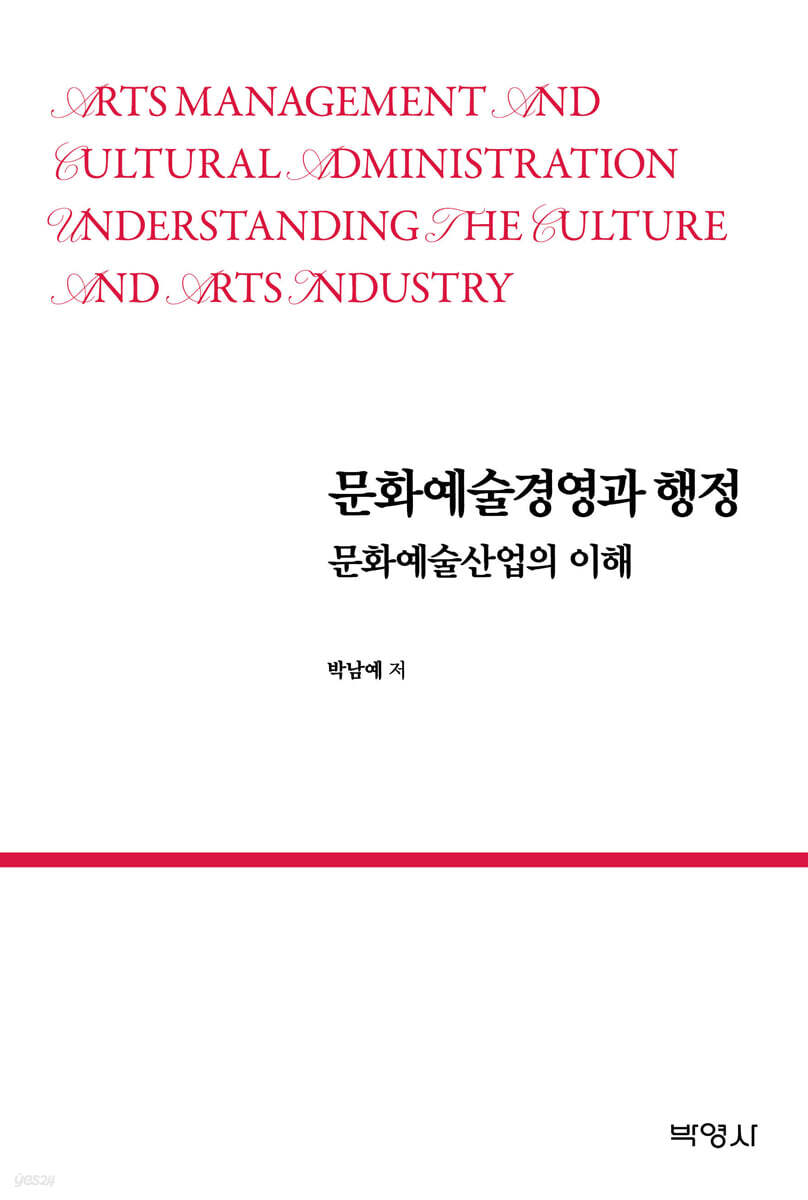
Cultural Arts Management and Administration
 |
Description
Book Introduction
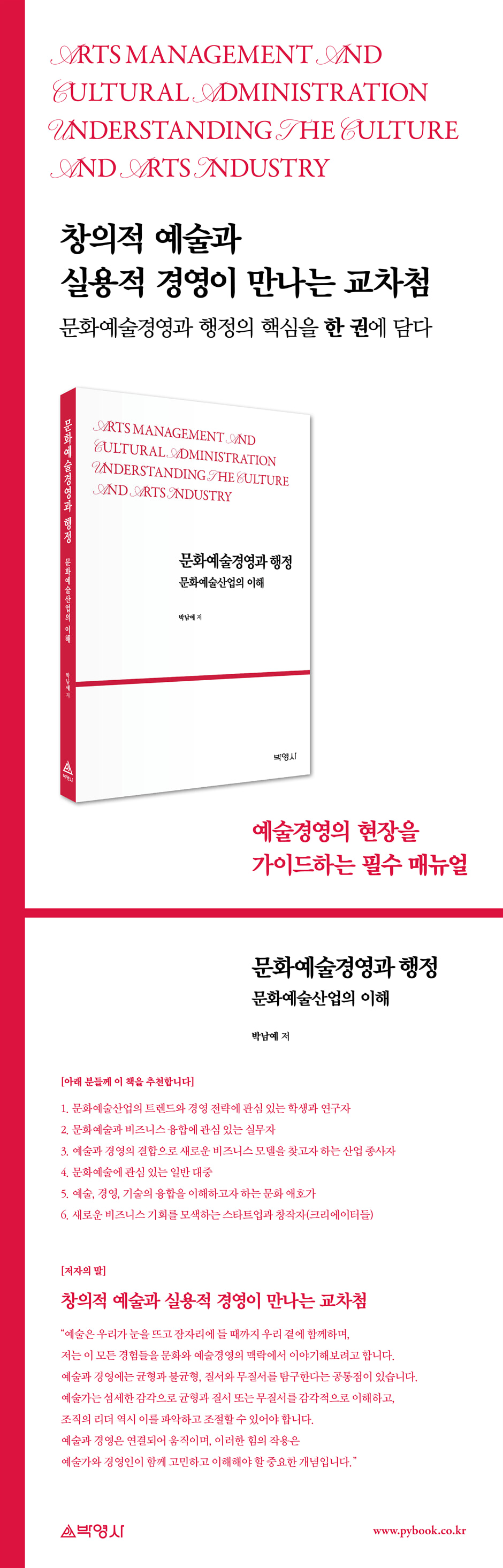
"Cultural Arts Management and Administration" embodies my intention to understand art and management in a harmonious way, transcending existing, fixed perspectives.
The book's core goal is to break down the stale arguments surrounding the relationship between art and creativity, namely the issue of money, and it particularly addresses trends in the art world where digital technology is spurring new creative activities.
The book's core goal is to break down the stale arguments surrounding the relationship between art and creativity, namely the issue of money, and it particularly addresses trends in the art world where digital technology is spurring new creative activities.
index
Part 1 · Cultural Arts Management and Administration
Chapter 1: Research on Arts Management
Concept of Arts Management 3
Research and Development in Arts Management 5
Arts Management Research Fields and Scope 7
Two Perspectives on Arts Management 8
Chapter 2: Concepts and Fields of Arts Administration
11 Essential Differences Between Arts Management and Administration
Concept of Arts Administration 12
Government-Private Cooperation 14
Networks and Governance 16
Chapter 3: An Integrated Approach to Art and Management
The Basic Logic of Art and Management 18
The Economic Logic of Art and Management 20
An Integrated Approach to Arts and Management 23
Chapter 4: Contemporary Values of Cultural and Arts Management
Changes in Cultural Consumption Patterns 24
25 Changes in the Cultural and Arts Ecosystem and Strengthening Self-Reliance
Rome Cultural Declaration 27
Current Status and Policy Considerations of the Cultural Industry 28
Part 2 · Cultural and Arts Institutions and Cultural Policy
Chapter 1 Cultural and Arts Institutions
Type 35 of Cultural and Arts Organizations
37 Central Government Cultural and Arts Institutions
Local Cultural Arts Foundation 39
Chapter 2: The Role and Contribution of Public Arts Institutions
The Legitimacy of Public Arts Support 41
Cultural Policy 42
Social, educational, and economic contributions 43
Artist Support 46
Arms Length Principle 50
Chapter 3: Mobilization and Distribution of Financial Resources for Cultural and Arts Institutions
52 people eligible for financial support
Budgeting and Financial Management 53
Financing and Fundraising 55
Performance Evaluation 56
Chapter 4 Management of Non-Profit Cultural and Arts Organizations
Cultural Arts and Non-profit Organizations 58
Expectations for the Management Role of Nonprofit Organizations 59
Nonprofit Organizations' Resources 60
Artist Support Project 62
Part 3: Urban Regeneration and Festival Management
Chapter 1: Coexistence and Cooperation between Culture, Arts, and the Region
City as Art 67
Cultural Symbolism 69
Urban Regeneration Project Model 70
Artist Villages and Gentrification 72
City and Soundscape 73
Chapter 2: Regeneration of Cultural Cities at Home and Abroad
76 Cases of Domestic Cultural City Regeneration
Artist Residence and Artist Housing 78
80 Different Types of Cultural City Brands
Chapter 3: Cities and Festivals
Escape from the everyday 83
Festival Planning and Operation 84
The Need for Festivals Utilizing Cultural Content 87
Music Festival Status 89
Chapter 4: Public Art Projects and Media Façades
Public Art Project 92
94 Cases of Public Art in Urban Environments
Media Art and Media Façade 95
Part 4: Cultural and Arts Industries and Popular Culture
Chapter 1: The Intersection of Contemporary Cultural Industries and Popular Art
Art, Walking the Path of Industrialization 101
Cultural and Arts Industry and Popular Arts 102
Increase in sales of popular culture and arts 106
Chapter 2 Entertainment Industry
Economic Aspects of the Entertainment Industry 108
Games, Music, Webtoons 110
The Growth and Progress of the Film and Drama Industry 112
Chapter 3: K-Content and the Global Entertainment Industry
The Global Influence of K-Content 115
The gaming industry and Korea's export volume 117
Active M&A in the Gaming Industry 119
K-POP and the Music Business 120
The Current State of the Webtoon Industry and Its Implications 123
Chapter 4: Paid Content Market and the Subscription Economy
Limitations of Existing Revenue Models 125
Expanding content diversity in OTT services 126
Music: Streaming, Not Owning 127
From the public to the individual 129
Part 5: Digital Art, Creation, and Platforms
Chapter 1: Interaction between Digital Content and Platforms
Digitization of Cultural Content 133
The Global Growth of Digital Content and Platforms 134
Changes in Content Producers 135
The Smart Device Era and ASMD (Adaptive Source Multi Device) 136
Chapter 2: Creation and Monetization on Online Platforms
The Growth of Small-Scale Creators 138
The Rise of Private Content 139
Creative tools made even simpler 140
Multichannel Network (MCN) 142
Chapter 3: Creator Economy
The Expansion of Digital Transformation and Content Differentiation 143
Solidarity and Advocacy for Creators 144
Crowdfunding 146
Fandom Economy and Fandom Aesthetics 147
Chapter 4 Content IP and Intellectual Property Rights
Definition and Classification of Intellectual Property Rights 149
IP-Based Business 151
Worldbuilding and Storytelling Reboot 153
IP Expansion through Transmedia 154
Digital Copyright and Protection Issues 155
Part 6: Convergence of Culture, Arts, and Technology
Chapter 1 Digital Archives and Data Analysis
Art Materials Archive 159
Economic Value and International Issues 160
Copyright in Digital Archives 161
Big Data and Data Analytics 162
Cultural and Arts Big Data Case Study 163
Chapter 2: Transaction Methods in the Digital Art Market
Blockchain Technology and Online Transactions 165
Benjamin's Aura and the Authenticity of Technological Reproduction 167
NFTs and Personal Value 168
Marketplace Dynamics 169
Chapter 3: Realistic Content and Virtual Reality
170 Realistic Art Contents
Virtual Reality and the Popularization of Culture and Arts 172
The Transition from Traditional Media to New Media 174
Metaverse Art Activities 175
Chapter 4: AI-Based Art Creation and Interaction
Coexistence of AI and Art 178
AI Makes Music 180
Generative AI in Culture and Arts 182
Part 7: Culture, Arts, and Startups
Chapter 1: The Necessity of Cultural Entrepreneurship and the Entrepreneurship Ecosystem
Artists' Imagination and Business Models 187
The Ministry of Culture, Sports and Tourism's Startup Ecosystem Creation and Support 189
Cultural Startup Support Organization 190
Future Arts Startup Support Policy 192
Chapter 2: IR Pitch Deck for Attracting Investment
Business Plan for Artist Success 194
IR and Pitch Deck 195
Investment and Attraction of Cultural and Arts Startups 198
Chapter 3: Art Entrepreneurship and Rhizome Thinking
Maintaining Artist Sustainability and Identity 200
Arts Entrepreneurship 201
Case Study 203: Entrepreneurship at a Foreign Arts University
Rhizome Thinking 207
Chapter 4: Modern Culture and Arts through Startups
Art Tech Startup 209
The Growth of Music and Performing Arts Startups 210
Leadership and Globalization of K-Content Startups 213
Making art easy and fun with content 215
Part 8: The Interaction Between the Value of Culture and the Arts and Marketing
Chapter 1: Common Goals and Values of Culture, Arts, and Marketing
The Intersection of Marketing and Art 219
Why Focus on Art 221
Communication Tools 222
Chapter 2 Building Brand Identity
Brand Image 224
In Search of Mental Abundance 225
The Logic of Capital Hidden in Emotions 227
Brand Storytelling: Brands with Narratives 228
Chapter 3 Marketing Using Artistic Elements
Psychological Approaches Using Art 230
Types of Art Marketing 232
Art for Identity Enhancement 233
Chapter 4: Art Promotion and Social Media in the Digital Age
Marketing for the Consumption and Production of Art 235
Artist Branding 236
Marketing for Cultural and Arts Institutions 239
Digital Marketing and Performance Marketing for Arts Promotion 240
Part 9: Business and Culture
Chapter 1: The CEO Who Loved Art
Corporate Attitudes toward Art 245
Organizing Across Boundaries 247
CEO 248 who loves art
Chapter 2: Understanding and Cooperation through Mecenat
Mecenat 250
Corporate Sponsorship Case 252
Chapter 3: Open Innovation and the Arts
Boundless Adventure and Experimentation 258
Art and Business Collaboration Project 260
Chapter 4 ESG and Social Art
Realizing ESG Management through Diversity-Inspired Art 263
Green Content Action 265 to Respond to the Climate Crisis
ESG Management of Cultural and Arts Institutions 266
Social Enterprise and Social Art 267
The socialization of art is a catalyst for industrialization and globalization. 269
Going out words
New Trends, Opportunities, Challenges, and Uncertainties 271
Invisible Premium 273
Reference 275
Chapter 1: Research on Arts Management
Concept of Arts Management 3
Research and Development in Arts Management 5
Arts Management Research Fields and Scope 7
Two Perspectives on Arts Management 8
Chapter 2: Concepts and Fields of Arts Administration
11 Essential Differences Between Arts Management and Administration
Concept of Arts Administration 12
Government-Private Cooperation 14
Networks and Governance 16
Chapter 3: An Integrated Approach to Art and Management
The Basic Logic of Art and Management 18
The Economic Logic of Art and Management 20
An Integrated Approach to Arts and Management 23
Chapter 4: Contemporary Values of Cultural and Arts Management
Changes in Cultural Consumption Patterns 24
25 Changes in the Cultural and Arts Ecosystem and Strengthening Self-Reliance
Rome Cultural Declaration 27
Current Status and Policy Considerations of the Cultural Industry 28
Part 2 · Cultural and Arts Institutions and Cultural Policy
Chapter 1 Cultural and Arts Institutions
Type 35 of Cultural and Arts Organizations
37 Central Government Cultural and Arts Institutions
Local Cultural Arts Foundation 39
Chapter 2: The Role and Contribution of Public Arts Institutions
The Legitimacy of Public Arts Support 41
Cultural Policy 42
Social, educational, and economic contributions 43
Artist Support 46
Arms Length Principle 50
Chapter 3: Mobilization and Distribution of Financial Resources for Cultural and Arts Institutions
52 people eligible for financial support
Budgeting and Financial Management 53
Financing and Fundraising 55
Performance Evaluation 56
Chapter 4 Management of Non-Profit Cultural and Arts Organizations
Cultural Arts and Non-profit Organizations 58
Expectations for the Management Role of Nonprofit Organizations 59
Nonprofit Organizations' Resources 60
Artist Support Project 62
Part 3: Urban Regeneration and Festival Management
Chapter 1: Coexistence and Cooperation between Culture, Arts, and the Region
City as Art 67
Cultural Symbolism 69
Urban Regeneration Project Model 70
Artist Villages and Gentrification 72
City and Soundscape 73
Chapter 2: Regeneration of Cultural Cities at Home and Abroad
76 Cases of Domestic Cultural City Regeneration
Artist Residence and Artist Housing 78
80 Different Types of Cultural City Brands
Chapter 3: Cities and Festivals
Escape from the everyday 83
Festival Planning and Operation 84
The Need for Festivals Utilizing Cultural Content 87
Music Festival Status 89
Chapter 4: Public Art Projects and Media Façades
Public Art Project 92
94 Cases of Public Art in Urban Environments
Media Art and Media Façade 95
Part 4: Cultural and Arts Industries and Popular Culture
Chapter 1: The Intersection of Contemporary Cultural Industries and Popular Art
Art, Walking the Path of Industrialization 101
Cultural and Arts Industry and Popular Arts 102
Increase in sales of popular culture and arts 106
Chapter 2 Entertainment Industry
Economic Aspects of the Entertainment Industry 108
Games, Music, Webtoons 110
The Growth and Progress of the Film and Drama Industry 112
Chapter 3: K-Content and the Global Entertainment Industry
The Global Influence of K-Content 115
The gaming industry and Korea's export volume 117
Active M&A in the Gaming Industry 119
K-POP and the Music Business 120
The Current State of the Webtoon Industry and Its Implications 123
Chapter 4: Paid Content Market and the Subscription Economy
Limitations of Existing Revenue Models 125
Expanding content diversity in OTT services 126
Music: Streaming, Not Owning 127
From the public to the individual 129
Part 5: Digital Art, Creation, and Platforms
Chapter 1: Interaction between Digital Content and Platforms
Digitization of Cultural Content 133
The Global Growth of Digital Content and Platforms 134
Changes in Content Producers 135
The Smart Device Era and ASMD (Adaptive Source Multi Device) 136
Chapter 2: Creation and Monetization on Online Platforms
The Growth of Small-Scale Creators 138
The Rise of Private Content 139
Creative tools made even simpler 140
Multichannel Network (MCN) 142
Chapter 3: Creator Economy
The Expansion of Digital Transformation and Content Differentiation 143
Solidarity and Advocacy for Creators 144
Crowdfunding 146
Fandom Economy and Fandom Aesthetics 147
Chapter 4 Content IP and Intellectual Property Rights
Definition and Classification of Intellectual Property Rights 149
IP-Based Business 151
Worldbuilding and Storytelling Reboot 153
IP Expansion through Transmedia 154
Digital Copyright and Protection Issues 155
Part 6: Convergence of Culture, Arts, and Technology
Chapter 1 Digital Archives and Data Analysis
Art Materials Archive 159
Economic Value and International Issues 160
Copyright in Digital Archives 161
Big Data and Data Analytics 162
Cultural and Arts Big Data Case Study 163
Chapter 2: Transaction Methods in the Digital Art Market
Blockchain Technology and Online Transactions 165
Benjamin's Aura and the Authenticity of Technological Reproduction 167
NFTs and Personal Value 168
Marketplace Dynamics 169
Chapter 3: Realistic Content and Virtual Reality
170 Realistic Art Contents
Virtual Reality and the Popularization of Culture and Arts 172
The Transition from Traditional Media to New Media 174
Metaverse Art Activities 175
Chapter 4: AI-Based Art Creation and Interaction
Coexistence of AI and Art 178
AI Makes Music 180
Generative AI in Culture and Arts 182
Part 7: Culture, Arts, and Startups
Chapter 1: The Necessity of Cultural Entrepreneurship and the Entrepreneurship Ecosystem
Artists' Imagination and Business Models 187
The Ministry of Culture, Sports and Tourism's Startup Ecosystem Creation and Support 189
Cultural Startup Support Organization 190
Future Arts Startup Support Policy 192
Chapter 2: IR Pitch Deck for Attracting Investment
Business Plan for Artist Success 194
IR and Pitch Deck 195
Investment and Attraction of Cultural and Arts Startups 198
Chapter 3: Art Entrepreneurship and Rhizome Thinking
Maintaining Artist Sustainability and Identity 200
Arts Entrepreneurship 201
Case Study 203: Entrepreneurship at a Foreign Arts University
Rhizome Thinking 207
Chapter 4: Modern Culture and Arts through Startups
Art Tech Startup 209
The Growth of Music and Performing Arts Startups 210
Leadership and Globalization of K-Content Startups 213
Making art easy and fun with content 215
Part 8: The Interaction Between the Value of Culture and the Arts and Marketing
Chapter 1: Common Goals and Values of Culture, Arts, and Marketing
The Intersection of Marketing and Art 219
Why Focus on Art 221
Communication Tools 222
Chapter 2 Building Brand Identity
Brand Image 224
In Search of Mental Abundance 225
The Logic of Capital Hidden in Emotions 227
Brand Storytelling: Brands with Narratives 228
Chapter 3 Marketing Using Artistic Elements
Psychological Approaches Using Art 230
Types of Art Marketing 232
Art for Identity Enhancement 233
Chapter 4: Art Promotion and Social Media in the Digital Age
Marketing for the Consumption and Production of Art 235
Artist Branding 236
Marketing for Cultural and Arts Institutions 239
Digital Marketing and Performance Marketing for Arts Promotion 240
Part 9: Business and Culture
Chapter 1: The CEO Who Loved Art
Corporate Attitudes toward Art 245
Organizing Across Boundaries 247
CEO 248 who loves art
Chapter 2: Understanding and Cooperation through Mecenat
Mecenat 250
Corporate Sponsorship Case 252
Chapter 3: Open Innovation and the Arts
Boundless Adventure and Experimentation 258
Art and Business Collaboration Project 260
Chapter 4 ESG and Social Art
Realizing ESG Management through Diversity-Inspired Art 263
Green Content Action 265 to Respond to the Climate Crisis
ESG Management of Cultural and Arts Institutions 266
Social Enterprise and Social Art 267
The socialization of art is a catalyst for industrialization and globalization. 269
Going out words
New Trends, Opportunities, Challenges, and Uncertainties 271
Invisible Premium 273
Reference 275
Detailed image
Publisher's Review
The author's story, and to the readers
"Cultural Arts Management and Administration" embodies my intention to understand art and management in a harmonious way, transcending existing, fixed perspectives.
The book's core goal is to break down the stale arguments surrounding the relationship between art and creativity—namely, the issue of money. It also explores trends in the art world, particularly how digital technology is spurring new creative activity.
Arts management may seem simpler than corporate management, but it's actually quite complex. Having experienced its essence within the arts ecosystem, I believe my ability to understand and discuss the management and administration of the arts is limited.
Therefore, this book aims to examine existing arts management from the perspective of the author, who has experienced the creative and production process, rather than from the perspective of an art appreciationr.
Also, the reason I expanded the topic from arts management to cultural arts management is because I hope that the artists who read this book will be active in a wider field.
Art is now able to collaborate with various fields, adding depth and diversity.
Art is with us from the moment we open our eyes until we go to bed, and I want to discuss all these experiences in the context of culture and arts management.
The book tries to avoid emotional arguments as much as possible, using quantitative data, logical evidence, and examples. While the essence of art is rooted in emotion, it strives to convey this logically.
Additionally, we have tried to explain it in an easy-to-understand way so that it can serve as a guide for beginners in arts management.
Through this, we hope to help managers view arts management more from the creator's perspective, and for artists to gain a deeper understanding of their art and grasp the essence of arts management.
"Cultural Arts Management and Administration" embodies my intention to understand art and management in a harmonious way, transcending existing, fixed perspectives.
The book's core goal is to break down the stale arguments surrounding the relationship between art and creativity—namely, the issue of money. It also explores trends in the art world, particularly how digital technology is spurring new creative activity.
Arts management may seem simpler than corporate management, but it's actually quite complex. Having experienced its essence within the arts ecosystem, I believe my ability to understand and discuss the management and administration of the arts is limited.
Therefore, this book aims to examine existing arts management from the perspective of the author, who has experienced the creative and production process, rather than from the perspective of an art appreciationr.
Also, the reason I expanded the topic from arts management to cultural arts management is because I hope that the artists who read this book will be active in a wider field.
Art is now able to collaborate with various fields, adding depth and diversity.
Art is with us from the moment we open our eyes until we go to bed, and I want to discuss all these experiences in the context of culture and arts management.
The book tries to avoid emotional arguments as much as possible, using quantitative data, logical evidence, and examples. While the essence of art is rooted in emotion, it strives to convey this logically.
Additionally, we have tried to explain it in an easy-to-understand way so that it can serve as a guide for beginners in arts management.
Through this, we hope to help managers view arts management more from the creator's perspective, and for artists to gain a deeper understanding of their art and grasp the essence of arts management.
GOODS SPECIFICS
- Date of issue: August 28, 2024
- Page count, weight, size: 300 pages | 153*224*20mm
- ISBN13: 9791130320076
- ISBN10: 1130320073
You may also like
카테고리
korean


korean

![GQ KOREA Mark (Monthly): December [2025]](http://librairie.coreenne.fr/cdn/shop/files/8ef265dbbfbf186523ed75ba7319009d.jpg?v=1765340328&width=3840)


