

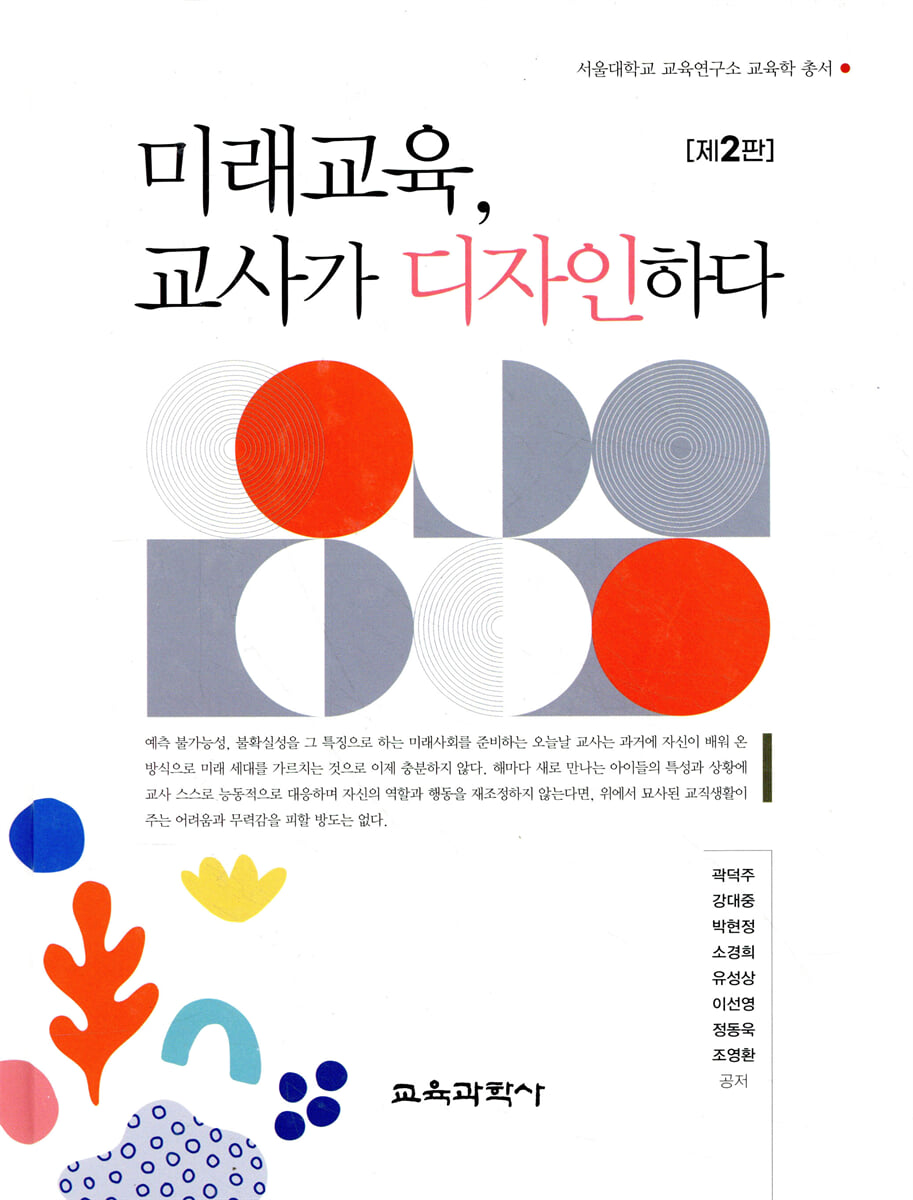
Future Education, Designed by Teachers
 |
Description
Book Introduction
Today, teachers are preparing for a future society characterized by unpredictability and uncertainty, and it is no longer enough to teach future generations the way they were taught in the past.
Unless teachers actively adapt to the unique characteristics and circumstances of the children they encounter each year and readjust their roles and actions, there is no way to avoid the difficulties and feelings of helplessness that come with teaching.
In this sense, the era of the stable and fixed image of the 'teaching profession', described as an 'iron rice bowl', can be seen as having passed.
To achieve a successful and happy life in the teaching profession, teachers must constantly learn and transform themselves. Furthermore, teacher training programs that nurture future teachers must be restructured with new principles and methods.
Unless teachers actively adapt to the unique characteristics and circumstances of the children they encounter each year and readjust their roles and actions, there is no way to avoid the difficulties and feelings of helplessness that come with teaching.
In this sense, the era of the stable and fixed image of the 'teaching profession', described as an 'iron rice bowl', can be seen as having passed.
To achieve a successful and happy life in the teaching profession, teachers must constantly learn and transform themselves. Furthermore, teacher training programs that nurture future teachers must be restructured with new principles and methods.
index
┃Preface to the 2nd Edition┃ / 3
┃Preface to the First Edition┃ / 6
Introduction: How to Introduce Pedagogical Knowledge to Prospective Teachers / 15
Teacher Training for Future Society and Future Education / 15
Theory and Practice in Teacher Education / 17
How to Use This Book / 21
PART Ⅰ: EDUCATIONAL RELATIONSHIPS AND EDUCATIONAL PRACTICES / 25
Introduction / 25
CHAPTER 1 Conditions of Education 29
1.
A Typical Metaphor for the Concept of Education / 32
2.
A New Metaphor for Education: Encountering Art / 35
3.
Teacher Authority, Its Educational Status and Sources / 39
4.
Going Out / 43
CHAPTER 2: Characteristics of Educational Relationships and Teacher Personality 45
1.
Key Features of the Educational Relationship / 48
2.
Teaching and Teacher Character / 53
3.
Teacher Identity / 56
4.
Going out / 60
CHAPTER 3 The Purpose of Education / 63
1.
Competing Educational Objectives and School Education / 67
2.
Nature of Educational Content / 73
3.
Understanding the Political Nature of the Curriculum / 75
4.
Going Out / 78
PART II: Curriculum, Teaching, and Learning / 81
Introduction / 81
CHAPTER 4: Knowledge and Attitudes Teachers Must Have as Classroom Experts / 87
1.
The Context and Characteristics of Classroom Practice: “Can You Teach as Planned?” / 90
2.
The Relationship Between Curriculum and Instruction: “Can the Curriculum Be Planned Before Instruction?” / 92
3.
Teacher Knowledge and Teacher Learning Communities: "Can Teachers Create Knowledge?" "How?" / 96
4.
Going Out / 101
CHAPTER 5: Different Types of Learners and Learning Strategies / 107
1.
Creativity and Creative Students / 110
2.
Learned Helplessness and the Apathetic Student / 116
3.
Going Out / 122
CHAPTER 6 How to Teach Well / 127
1.
What does it mean to teach well? / 128
2.
How can we best teach students with varying levels of prior knowledge? / 141
3.
Going Out / 149
CHAPTER 7 Technology-Based Classes / 153
1.
What is Technology? / 156
2.
Can Advanced Technology Improve Education? / 160
3.
How can we effectively use technology for meaningful learning? / 163
4.
Going Out / 174
CHAPTER 8: Assessment for Learning, Assessment for Learning / 179
1.
What Makes a Good Evaluation? / 182
2.
How can assessments be helpful for learning? / 192
3.
Going out / 200
PART Ⅲ SCHOOL AND SOCIETY / 203
Introduction / 203
CHAPTER 9 The Public Nature of Education / 207
1.
Is Education a Public Good or a Private Good? / 210
2.
What are the roles of government and the market in education? / 214
3.
How should we evaluate market-oriented education reforms focused on competition and efficiency? / 220
4.
Going Out / 224
CHAPTER 10: School and Teacher Accountability / 229
1.
Why are schools and teachers held accountable for student achievement? / 232
2.
To whom, to what, and how are schools and teachers accountable? / 237
3.
Are Accountability Policies Imposed from Outside the School Really Effective? / 245
4.
Can Schools and Teachers Hold Themselves Accountable? / 247
5.
Going out / 250
CHAPTER 11: School Crisis, School Future / 255
1.
The School Crisis / 258
2.
Diagnosis and Prognosis / 264
3.
Going Out / 278
CHAPTER 12 Social Justice and Education / 287
1.
Introduction / 287
2.
How Fair Is Korean Society and Education? / 291
3.
How do social justice and education connect? / 294
4.
Is education a tool for achieving social justice? / 297
5.
Are the Purpose and Practice of Education Just? / 301
6.
Going Out / 304
PART IV Additional Field Cases / 309
Introduction / 309
CHAPTER 13 Multicultural Education Cases / 311
1.
Background and Development of Multicultural Education / 314
2.
Multicultural Education from Diverse Perspectives / 316
3.
Practical Issues for Multicultural Education / 322
CHAPTER 14: Cases of Violent Students / 329
1.
What is Violence? / 331
2.
What is school violence? / 336
3.
How to Guide Students Who Violate Schools / 340
CHAPTER 15: Curriculum and Class Design for the Free Semester System / 347
1.
What is the Free Semester System? / 349
2.
What kind of learning experience does the free semester system intend for students? / 353
3.
How can we design curricula and teach classes that reflect the spirit of the free semester system? / 357
CHAPTER 16: Political Neutrality in Education / 363
1.
Leading the Democratization of Education / 366
2.
Beware of the Politicization of Education / 368
3.
The Dual Status of Teachers / 371
Search / 376
┃Preface to the First Edition┃ / 6
Introduction: How to Introduce Pedagogical Knowledge to Prospective Teachers / 15
Teacher Training for Future Society and Future Education / 15
Theory and Practice in Teacher Education / 17
How to Use This Book / 21
PART Ⅰ: EDUCATIONAL RELATIONSHIPS AND EDUCATIONAL PRACTICES / 25
Introduction / 25
CHAPTER 1 Conditions of Education 29
1.
A Typical Metaphor for the Concept of Education / 32
2.
A New Metaphor for Education: Encountering Art / 35
3.
Teacher Authority, Its Educational Status and Sources / 39
4.
Going Out / 43
CHAPTER 2: Characteristics of Educational Relationships and Teacher Personality 45
1.
Key Features of the Educational Relationship / 48
2.
Teaching and Teacher Character / 53
3.
Teacher Identity / 56
4.
Going out / 60
CHAPTER 3 The Purpose of Education / 63
1.
Competing Educational Objectives and School Education / 67
2.
Nature of Educational Content / 73
3.
Understanding the Political Nature of the Curriculum / 75
4.
Going Out / 78
PART II: Curriculum, Teaching, and Learning / 81
Introduction / 81
CHAPTER 4: Knowledge and Attitudes Teachers Must Have as Classroom Experts / 87
1.
The Context and Characteristics of Classroom Practice: “Can You Teach as Planned?” / 90
2.
The Relationship Between Curriculum and Instruction: “Can the Curriculum Be Planned Before Instruction?” / 92
3.
Teacher Knowledge and Teacher Learning Communities: "Can Teachers Create Knowledge?" "How?" / 96
4.
Going Out / 101
CHAPTER 5: Different Types of Learners and Learning Strategies / 107
1.
Creativity and Creative Students / 110
2.
Learned Helplessness and the Apathetic Student / 116
3.
Going Out / 122
CHAPTER 6 How to Teach Well / 127
1.
What does it mean to teach well? / 128
2.
How can we best teach students with varying levels of prior knowledge? / 141
3.
Going Out / 149
CHAPTER 7 Technology-Based Classes / 153
1.
What is Technology? / 156
2.
Can Advanced Technology Improve Education? / 160
3.
How can we effectively use technology for meaningful learning? / 163
4.
Going Out / 174
CHAPTER 8: Assessment for Learning, Assessment for Learning / 179
1.
What Makes a Good Evaluation? / 182
2.
How can assessments be helpful for learning? / 192
3.
Going out / 200
PART Ⅲ SCHOOL AND SOCIETY / 203
Introduction / 203
CHAPTER 9 The Public Nature of Education / 207
1.
Is Education a Public Good or a Private Good? / 210
2.
What are the roles of government and the market in education? / 214
3.
How should we evaluate market-oriented education reforms focused on competition and efficiency? / 220
4.
Going Out / 224
CHAPTER 10: School and Teacher Accountability / 229
1.
Why are schools and teachers held accountable for student achievement? / 232
2.
To whom, to what, and how are schools and teachers accountable? / 237
3.
Are Accountability Policies Imposed from Outside the School Really Effective? / 245
4.
Can Schools and Teachers Hold Themselves Accountable? / 247
5.
Going out / 250
CHAPTER 11: School Crisis, School Future / 255
1.
The School Crisis / 258
2.
Diagnosis and Prognosis / 264
3.
Going Out / 278
CHAPTER 12 Social Justice and Education / 287
1.
Introduction / 287
2.
How Fair Is Korean Society and Education? / 291
3.
How do social justice and education connect? / 294
4.
Is education a tool for achieving social justice? / 297
5.
Are the Purpose and Practice of Education Just? / 301
6.
Going Out / 304
PART IV Additional Field Cases / 309
Introduction / 309
CHAPTER 13 Multicultural Education Cases / 311
1.
Background and Development of Multicultural Education / 314
2.
Multicultural Education from Diverse Perspectives / 316
3.
Practical Issues for Multicultural Education / 322
CHAPTER 14: Cases of Violent Students / 329
1.
What is Violence? / 331
2.
What is school violence? / 336
3.
How to Guide Students Who Violate Schools / 340
CHAPTER 15: Curriculum and Class Design for the Free Semester System / 347
1.
What is the Free Semester System? / 349
2.
What kind of learning experience does the free semester system intend for students? / 353
3.
How can we design curricula and teach classes that reflect the spirit of the free semester system? / 357
CHAPTER 16: Political Neutrality in Education / 363
1.
Leading the Democratization of Education / 366
2.
Beware of the Politicization of Education / 368
3.
The Dual Status of Teachers / 371
Search / 376
GOODS SPECIFICS
- Date of issue: February 25, 2024
- Page count, weight, size: 388 pages | 176*248*30mm
- ISBN13: 9788925418582
- ISBN10: 8925418584
You may also like
카테고리
korean


korean

![GQ KOREA Mark (Monthly): December [2025]](http://librairie.coreenne.fr/cdn/shop/files/8ef265dbbfbf186523ed75ba7319009d.jpg?v=1765340328&width=3840)


