

Economics of Global Value Chains
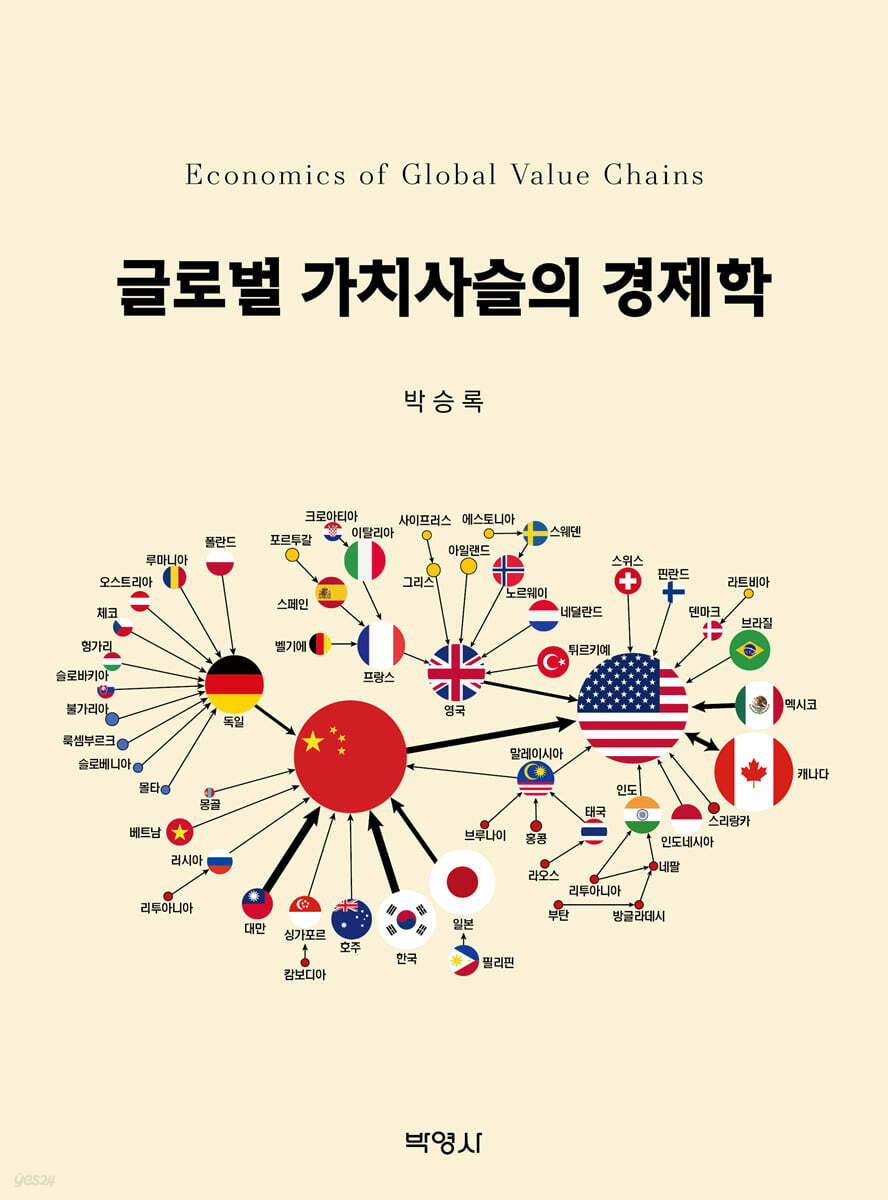 |
Description
Book Introduction
“The global economy is becoming more integrated and interdependent at the global, regional, national, industrial, and corporate levels through global value chains (GVCs), which are the main drivers of structural economic change.
Large multinational corporations have significantly increased intra-corporate international trade by leveraging advances in transportation and information and communication technologies to integrate foreign direct investment (FDI), offshoring, and outsourcing as global strategies.
In the fields of economics, management, and sociology, various analytical methods are being used to study the development of global value chains and their socioeconomic impact on countries, industries, and companies.
This book aims to help many readers understand and study global value chains by integrating materials related to global value chains that have developed over the past several decades and establishing a new system of economics called “Economics of Global Value Chains.” - From the author’s words
Large multinational corporations have significantly increased intra-corporate international trade by leveraging advances in transportation and information and communication technologies to integrate foreign direct investment (FDI), offshoring, and outsourcing as global strategies.
In the fields of economics, management, and sociology, various analytical methods are being used to study the development of global value chains and their socioeconomic impact on countries, industries, and companies.
This book aims to help many readers understand and study global value chains by integrating materials related to global value chains that have developed over the past several decades and establishing a new system of economics called “Economics of Global Value Chains.” - From the author’s words
index
PART 1.
The concept and development of the global value chain
CHAPTER 1 The Concept of Global Value Chains ▶ 3
1.
Value Chain and Supply Chain 3
2.
Global Value Chains and Global Supply Chains 6
3.
Unbundling and Vertical Integration of Companies 9
4.
Type 12 of Global Value Chains
5.
14 Motivations for the Development of Global Value Chains
6.
Multinational Corporations and Global Value Chains 16
CHAPTER 2: Evolution of Global Value Chain Analysis Methodology ▶ 19
1.
The Nature of Business: Applying Contract Theory 19
2.
Development of International Trade Theory 22
3.
Analysis of corporate cost data 24
4.
Case Study 26 at the Industrial Level
5.
Development of a methodology using international input-output tables 30
6.
Impact Analysis of Global Value Chains 38
PART 2.
International Trade Theory and Global Value Chains??
CHAPTER 3 Summary of International Trade Theory ▶ 51
1.
Traditional Trade Theory 54
2.
Modern Trade Theory 56
3.
Economic Growth Theory and Trade 61
4.
International Trade Theory and Policy 63
CHAPTER 4 Classification of International Trade Theories ▶ 65
1.
Classification of International Trade Theory 65
2.
Classification Criteria for International Trade Theory 68
CHAPTER 5 Traditional Trade Theory ▶ 71
1.
Mercantilism Theory 71
2.
Classical Theory 72
3.
Neoclassical theory 82
4.
Trade Policy in a Perfectly Competitive Market 91
5.
Empirical analysis results 92
CHAPTER 6 Modern International Trade Theory ▶ 98
1.
Economies of Scale and Imperfect Competition 98
2.
External Economies of Scale and Perfectly Competitive Markets 100
3.
Internal Economies of Scale and Imperfectly Competitive Markets 106
4.
New-New Trade Theory: Corporate Heterogeneity 121
5.
New Technology Trade Theory 125
CHAPTER 7 Trade Theory in Global Value Chains ▶ 139
1.
The Resurgence of Comparative Advantage 140
2.
Fragmentation of Production and Trade of Work 143
3.
Fragmentation of Production and Trade 145
4.
Trade in Services 149
5.
Trade of Business 156
6.
Limitations of the Global Value Chain Trade Model 160
?? PART 3.
Global value chains and corporate governance??
CHAPTER 8 Types and Determinants of Corporate Governance in the Value Chain ▶ 165
1.
The Meaning and Importance of Governance Structure 165
2.
The Role of Governance in Global Value Chains 166
3.
Types of Global Value Chain Governance Structures 167
4.
Factors influencing changes in corporate governance 170
5.
Changes in Corporate Governance 171
6.
Institutional Factors in Corporate Governance 171
CHAPTER 9 The Nature of Business and the Global Value Chain ▶ 173
1.
New Institutional Economics and Corporate Theory 173
2.
The Need for Corporate Theory 174
3.
Transaction Cost Theory 175
4.
Managerial and Behavioral Theories 178
5.
Asset specificity 182
6.
Outsourcing Theory 183
7.
Grossman-Hart-Moore Theory 184
CHAPTER 10: Corporate Theory and Corporate Governance Strategies ▶ 185
1.
Transaction Costs and Governance 185
2.
Core Competencies and Governance 189
3.
Global Value Chain Governance Strategy 191
?? PART 4.
International Input-Output Tables and Measurement of Value Added Trade ??
CHAPTER 11: Using Global Value Chains and International Input-Output Tables ▶ 199
1.
International Input-Output Table 199
2.
Measuring Value-Added Trade 202
3.
Global Value Chain Participation Index 206
4.
Decomposition of Value Added in Total Exports 209
CHAPTER 12: Fundamentals of Global Value Chain Analysis Using Stata ▶ 214
1.
Basic Example 216
2.
Access to the International Input-Output Table 221
3.
Supply, Final Demand, and the Linkage of Supply and Final Demand 224
4.
Decomposition of Added Value and Participation in Global Value Chains 234
5.
A Conceptual Framework for the Form and Scope of Trade Flows 246
6.
Saving the analysis results to an Excel file 250
7.
Country Group Analysis 251
8.
Iterative Processing Method 251
9.
Importing Excel and CSV data 252
CHAPTER 13: Global Value Chain Analysis Using Stata ▶ 254
1.
Downloading source data and creating CSV data 254
2.
Intermediate Goods Trade 260
3.
Value-Added Trade 269
4.
Total exports, value added by industry, by country 270
5.
Decomposition of total exports 275
6.
Competitiveness based on added value exports (RCA index) 281
7.
Global value chain participation rate: 285
8.
Global Value Chain and Social Network Analysis (Centrality) 290
9.
Trade Relations Between Korea, the US, Japan, and China 298
10.
Korea's final demand's dependence on overseas markets 301
11.
Complete Decomposition of Value-Added Sources and Final Demand 305
12.
Global Value Chain Vulnerabilities: Analysis of the Degree of Import Dependence by Country and Product 310
13.
Global Value Chain and Heatmap 317
14.
World Development Indicator Database 320
15.
Penn World Table, Data 325
16.
Productivity Analysis Data 328 from the Korea Productivity Center
?? PART 5.
Applications of Global Value Chain Analysis?
?
CHAPTER 14: Global Value Chains and Economic Growth and Sophistication ▶ 335
1.
New Growth Theory 335
2.
Evolutionary Growth Theory 348
3.
Global Value Chains and Upgrading 351
CHAPTER 15: Participation in Global Value Chains and Economic and Social Advancement: Preparation and Update of Panel Data ▶ 373
1.
Creating a Panel Dataset for Global Value Chain Research 373
2.
Participation in global value chains and economic and social advancement of major countries 380
3.
Implications for Economic and Social Development 389
4.
Description of the example structure 392
5.
How to update all data 397
CHAPTER 16: Global Value Chains and Economic Instability ▶ 399
1.
Shifts in Skill-Biased Labor Demand 400
2.
Total labor demand 401
3.
Labor share 402
4.
Employment Shift Due to Trade 403
5.
Elasticity of Labor Demand and the Threat Effect 404
CHAPTER 17: The COVID-19 Pandemic and Global Value Chains ▶ 406
1. Issues Raised by the COVID-19 Pandemic 406
2.
Evidence of the Restructuring of Global Value Chains 408
3.
The Effects of Government Intervention in Global Value Chains 414
4.
Export Restrictions and International Cooperation 418
CHAPTER 18: Global Value Chains in Korea and China ▶ 421
1.
Changes in Korea-China Trade Relations 421
2.
Changes in the Sino-Korean Trade Structure 426
3.
Factors Affecting the Future Sino-Korean Trade Structure 448
4.
Desirable Korea-China Trade Structure 458
CHAPTER 19: Global Trade Slowdown and Global Value Chains: Slowbalization ▶ 465
1.
Expanding Global Value Chains and Slowing Global Trade 465
2.
Theoretical Background and Previous Research 467
3.
Data Analysis and Research Methodology 476
4.
Analysis results 481
5.
Conclusion 488
Search 490
The concept and development of the global value chain
CHAPTER 1 The Concept of Global Value Chains ▶ 3
1.
Value Chain and Supply Chain 3
2.
Global Value Chains and Global Supply Chains 6
3.
Unbundling and Vertical Integration of Companies 9
4.
Type 12 of Global Value Chains
5.
14 Motivations for the Development of Global Value Chains
6.
Multinational Corporations and Global Value Chains 16
CHAPTER 2: Evolution of Global Value Chain Analysis Methodology ▶ 19
1.
The Nature of Business: Applying Contract Theory 19
2.
Development of International Trade Theory 22
3.
Analysis of corporate cost data 24
4.
Case Study 26 at the Industrial Level
5.
Development of a methodology using international input-output tables 30
6.
Impact Analysis of Global Value Chains 38
PART 2.
International Trade Theory and Global Value Chains??
CHAPTER 3 Summary of International Trade Theory ▶ 51
1.
Traditional Trade Theory 54
2.
Modern Trade Theory 56
3.
Economic Growth Theory and Trade 61
4.
International Trade Theory and Policy 63
CHAPTER 4 Classification of International Trade Theories ▶ 65
1.
Classification of International Trade Theory 65
2.
Classification Criteria for International Trade Theory 68
CHAPTER 5 Traditional Trade Theory ▶ 71
1.
Mercantilism Theory 71
2.
Classical Theory 72
3.
Neoclassical theory 82
4.
Trade Policy in a Perfectly Competitive Market 91
5.
Empirical analysis results 92
CHAPTER 6 Modern International Trade Theory ▶ 98
1.
Economies of Scale and Imperfect Competition 98
2.
External Economies of Scale and Perfectly Competitive Markets 100
3.
Internal Economies of Scale and Imperfectly Competitive Markets 106
4.
New-New Trade Theory: Corporate Heterogeneity 121
5.
New Technology Trade Theory 125
CHAPTER 7 Trade Theory in Global Value Chains ▶ 139
1.
The Resurgence of Comparative Advantage 140
2.
Fragmentation of Production and Trade of Work 143
3.
Fragmentation of Production and Trade 145
4.
Trade in Services 149
5.
Trade of Business 156
6.
Limitations of the Global Value Chain Trade Model 160
?? PART 3.
Global value chains and corporate governance??
CHAPTER 8 Types and Determinants of Corporate Governance in the Value Chain ▶ 165
1.
The Meaning and Importance of Governance Structure 165
2.
The Role of Governance in Global Value Chains 166
3.
Types of Global Value Chain Governance Structures 167
4.
Factors influencing changes in corporate governance 170
5.
Changes in Corporate Governance 171
6.
Institutional Factors in Corporate Governance 171
CHAPTER 9 The Nature of Business and the Global Value Chain ▶ 173
1.
New Institutional Economics and Corporate Theory 173
2.
The Need for Corporate Theory 174
3.
Transaction Cost Theory 175
4.
Managerial and Behavioral Theories 178
5.
Asset specificity 182
6.
Outsourcing Theory 183
7.
Grossman-Hart-Moore Theory 184
CHAPTER 10: Corporate Theory and Corporate Governance Strategies ▶ 185
1.
Transaction Costs and Governance 185
2.
Core Competencies and Governance 189
3.
Global Value Chain Governance Strategy 191
?? PART 4.
International Input-Output Tables and Measurement of Value Added Trade ??
CHAPTER 11: Using Global Value Chains and International Input-Output Tables ▶ 199
1.
International Input-Output Table 199
2.
Measuring Value-Added Trade 202
3.
Global Value Chain Participation Index 206
4.
Decomposition of Value Added in Total Exports 209
CHAPTER 12: Fundamentals of Global Value Chain Analysis Using Stata ▶ 214
1.
Basic Example 216
2.
Access to the International Input-Output Table 221
3.
Supply, Final Demand, and the Linkage of Supply and Final Demand 224
4.
Decomposition of Added Value and Participation in Global Value Chains 234
5.
A Conceptual Framework for the Form and Scope of Trade Flows 246
6.
Saving the analysis results to an Excel file 250
7.
Country Group Analysis 251
8.
Iterative Processing Method 251
9.
Importing Excel and CSV data 252
CHAPTER 13: Global Value Chain Analysis Using Stata ▶ 254
1.
Downloading source data and creating CSV data 254
2.
Intermediate Goods Trade 260
3.
Value-Added Trade 269
4.
Total exports, value added by industry, by country 270
5.
Decomposition of total exports 275
6.
Competitiveness based on added value exports (RCA index) 281
7.
Global value chain participation rate: 285
8.
Global Value Chain and Social Network Analysis (Centrality) 290
9.
Trade Relations Between Korea, the US, Japan, and China 298
10.
Korea's final demand's dependence on overseas markets 301
11.
Complete Decomposition of Value-Added Sources and Final Demand 305
12.
Global Value Chain Vulnerabilities: Analysis of the Degree of Import Dependence by Country and Product 310
13.
Global Value Chain and Heatmap 317
14.
World Development Indicator Database 320
15.
Penn World Table, Data 325
16.
Productivity Analysis Data 328 from the Korea Productivity Center
?? PART 5.
Applications of Global Value Chain Analysis?
?
CHAPTER 14: Global Value Chains and Economic Growth and Sophistication ▶ 335
1.
New Growth Theory 335
2.
Evolutionary Growth Theory 348
3.
Global Value Chains and Upgrading 351
CHAPTER 15: Participation in Global Value Chains and Economic and Social Advancement: Preparation and Update of Panel Data ▶ 373
1.
Creating a Panel Dataset for Global Value Chain Research 373
2.
Participation in global value chains and economic and social advancement of major countries 380
3.
Implications for Economic and Social Development 389
4.
Description of the example structure 392
5.
How to update all data 397
CHAPTER 16: Global Value Chains and Economic Instability ▶ 399
1.
Shifts in Skill-Biased Labor Demand 400
2.
Total labor demand 401
3.
Labor share 402
4.
Employment Shift Due to Trade 403
5.
Elasticity of Labor Demand and the Threat Effect 404
CHAPTER 17: The COVID-19 Pandemic and Global Value Chains ▶ 406
1. Issues Raised by the COVID-19 Pandemic 406
2.
Evidence of the Restructuring of Global Value Chains 408
3.
The Effects of Government Intervention in Global Value Chains 414
4.
Export Restrictions and International Cooperation 418
CHAPTER 18: Global Value Chains in Korea and China ▶ 421
1.
Changes in Korea-China Trade Relations 421
2.
Changes in the Sino-Korean Trade Structure 426
3.
Factors Affecting the Future Sino-Korean Trade Structure 448
4.
Desirable Korea-China Trade Structure 458
CHAPTER 19: Global Trade Slowdown and Global Value Chains: Slowbalization ▶ 465
1.
Expanding Global Value Chains and Slowing Global Trade 465
2.
Theoretical Background and Previous Research 467
3.
Data Analysis and Research Methodology 476
4.
Analysis results 481
5.
Conclusion 488
Search 490
Publisher's Review
The global economy is becoming more integrated and interdependent at the global, regional, national, industrial, and corporate levels through global value chains (GVCs), a major driver of structural economic change.
Large multinational corporations have significantly increased intra-corporate international trade by leveraging advances in transportation and information and communication technologies to integrate foreign direct investment (FDI), offshoring, and outsourcing as global strategies.
In the fields of economics, management, and sociology, various analytical methods are being used to study the development of global value chains and their socioeconomic impact on countries, industries, and companies.
This book integrates materials related to global value chains that have developed over the past several decades to establish a new, specialized economics framework called "Economics of Global Value Chains," thereby helping many readers understand and study global value chains.
First, we explain the concept of global value chains used in various research literature on global value chains and the various factors that have driven the development of global value chains over the past 30 years.
We also systematically examine the analytical methodologies used in global value chain research in the fields of economics, management, and sociology.
We also examine the impact of the development of global value chains on various areas, including competitiveness, economic development, labor markets, and international trade.
In particular, in analytical methodology, methodologies developed in fields such as industrial organization theory, international trade theory, and input-output analysis in economics will be utilized to assist readers in their research activities.
In recent global value chain research, the methodology using the international input-output table is widely used.
This requires understanding of theoretical methodology as well as processing of vast and complex data.
Many researchers on global value chains find it difficult to approach them due to these difficulties.
This book explains how to deal with this problem very easily.
Through various examples, we will provide easy access to global value chain research even for those without expertise in industry-linked analysis and data processing, and provide data on the relevant website (https://sites.google.com/view/parksr-stata/home) so that related data can be easily accessed and utilized for various studies.
In any case, I hope that many researchers interested in global value chains will utilize this book for their research in this field.
I first became interested in global value chains about 15 years ago.
This was because I was asked by Minister Jeong Deok-gu, who had served as Minister of Trade, Industry and Energy, to conduct research on a vague topic at the time: “The center of the East Asian value-added chain flows counterclockwise.”
While researching related literature, I became very interested and learned that international input-output tables had been created and even a methodology for measuring value-added trade had been developed.
Since then, I have been able to delve deeper into this field through numerous lectures on the global value chain between Korea, Japan, and China, as well as through projects undertaken by the Ministry of Trade, Industry and Energy and the Korea Institute for Industrial Economics and Trade.
In addition, I realized that the empirical analytical thinking methods I learned during lectures on international trade theory, industrial organization theory, Chinese economics, and economic growth theory could be well integrated with the topic of global value chains, and I thought it would be very meaningful to compile them into a single book.
Accordingly, the overall structure of this book is structured around topics from various fields of economics.
This book was conducted with the support of the Ministry of Education of the Republic of Korea and the National Research Foundation of Korea through the Publication Support Program (NRF-2020S1A6A4040942).
This is my second research grant, following my 2018 study on the “Economics of Productivity.”
I would like to express my gratitude to the National Research Foundation of Korea, which provided research funding that made the publication of this book possible, and to the related organizations that provided research funding that allowed me to gain extensive experience on this topic.
I would also like to express my gratitude to the many people, including Chairman Park Young-sa, who permitted the publication of this book.
2023.
3.
Author Park Seung-rok
The author provides useful materials for 『Applied Econometrics Using Stata』 and 『Economics of Productivity』, including this book, through his website and YouTube channel, and provides lectures directly through video lectures to help readers learn.
The addresses of the relevant websites are as follows:
https://sites.google.com/view/parksr-stata/home.
Large multinational corporations have significantly increased intra-corporate international trade by leveraging advances in transportation and information and communication technologies to integrate foreign direct investment (FDI), offshoring, and outsourcing as global strategies.
In the fields of economics, management, and sociology, various analytical methods are being used to study the development of global value chains and their socioeconomic impact on countries, industries, and companies.
This book integrates materials related to global value chains that have developed over the past several decades to establish a new, specialized economics framework called "Economics of Global Value Chains," thereby helping many readers understand and study global value chains.
First, we explain the concept of global value chains used in various research literature on global value chains and the various factors that have driven the development of global value chains over the past 30 years.
We also systematically examine the analytical methodologies used in global value chain research in the fields of economics, management, and sociology.
We also examine the impact of the development of global value chains on various areas, including competitiveness, economic development, labor markets, and international trade.
In particular, in analytical methodology, methodologies developed in fields such as industrial organization theory, international trade theory, and input-output analysis in economics will be utilized to assist readers in their research activities.
In recent global value chain research, the methodology using the international input-output table is widely used.
This requires understanding of theoretical methodology as well as processing of vast and complex data.
Many researchers on global value chains find it difficult to approach them due to these difficulties.
This book explains how to deal with this problem very easily.
Through various examples, we will provide easy access to global value chain research even for those without expertise in industry-linked analysis and data processing, and provide data on the relevant website (https://sites.google.com/view/parksr-stata/home) so that related data can be easily accessed and utilized for various studies.
In any case, I hope that many researchers interested in global value chains will utilize this book for their research in this field.
I first became interested in global value chains about 15 years ago.
This was because I was asked by Minister Jeong Deok-gu, who had served as Minister of Trade, Industry and Energy, to conduct research on a vague topic at the time: “The center of the East Asian value-added chain flows counterclockwise.”
While researching related literature, I became very interested and learned that international input-output tables had been created and even a methodology for measuring value-added trade had been developed.
Since then, I have been able to delve deeper into this field through numerous lectures on the global value chain between Korea, Japan, and China, as well as through projects undertaken by the Ministry of Trade, Industry and Energy and the Korea Institute for Industrial Economics and Trade.
In addition, I realized that the empirical analytical thinking methods I learned during lectures on international trade theory, industrial organization theory, Chinese economics, and economic growth theory could be well integrated with the topic of global value chains, and I thought it would be very meaningful to compile them into a single book.
Accordingly, the overall structure of this book is structured around topics from various fields of economics.
This book was conducted with the support of the Ministry of Education of the Republic of Korea and the National Research Foundation of Korea through the Publication Support Program (NRF-2020S1A6A4040942).
This is my second research grant, following my 2018 study on the “Economics of Productivity.”
I would like to express my gratitude to the National Research Foundation of Korea, which provided research funding that made the publication of this book possible, and to the related organizations that provided research funding that allowed me to gain extensive experience on this topic.
I would also like to express my gratitude to the many people, including Chairman Park Young-sa, who permitted the publication of this book.
2023.
3.
Author Park Seung-rok
The author provides useful materials for 『Applied Econometrics Using Stata』 and 『Economics of Productivity』, including this book, through his website and YouTube channel, and provides lectures directly through video lectures to help readers learn.
The addresses of the relevant websites are as follows:
https://sites.google.com/view/parksr-stata/home.
GOODS SPECIFICS
- Date of issue: March 20, 2023
- Page count, weight, size: 516 pages | 810g | 188*257*20mm
- ISBN13: 9791130316727
- ISBN10: 1130316726
You may also like
카테고리
korean


korean

![GQ KOREA Mark (Monthly): December [2025]](http://librairie.coreenne.fr/cdn/shop/files/8ef265dbbfbf186523ed75ba7319009d.jpg?v=1765340328&width=3840)


