

Amphibian and Reptile Husbandry
 |
Description
Book Introduction
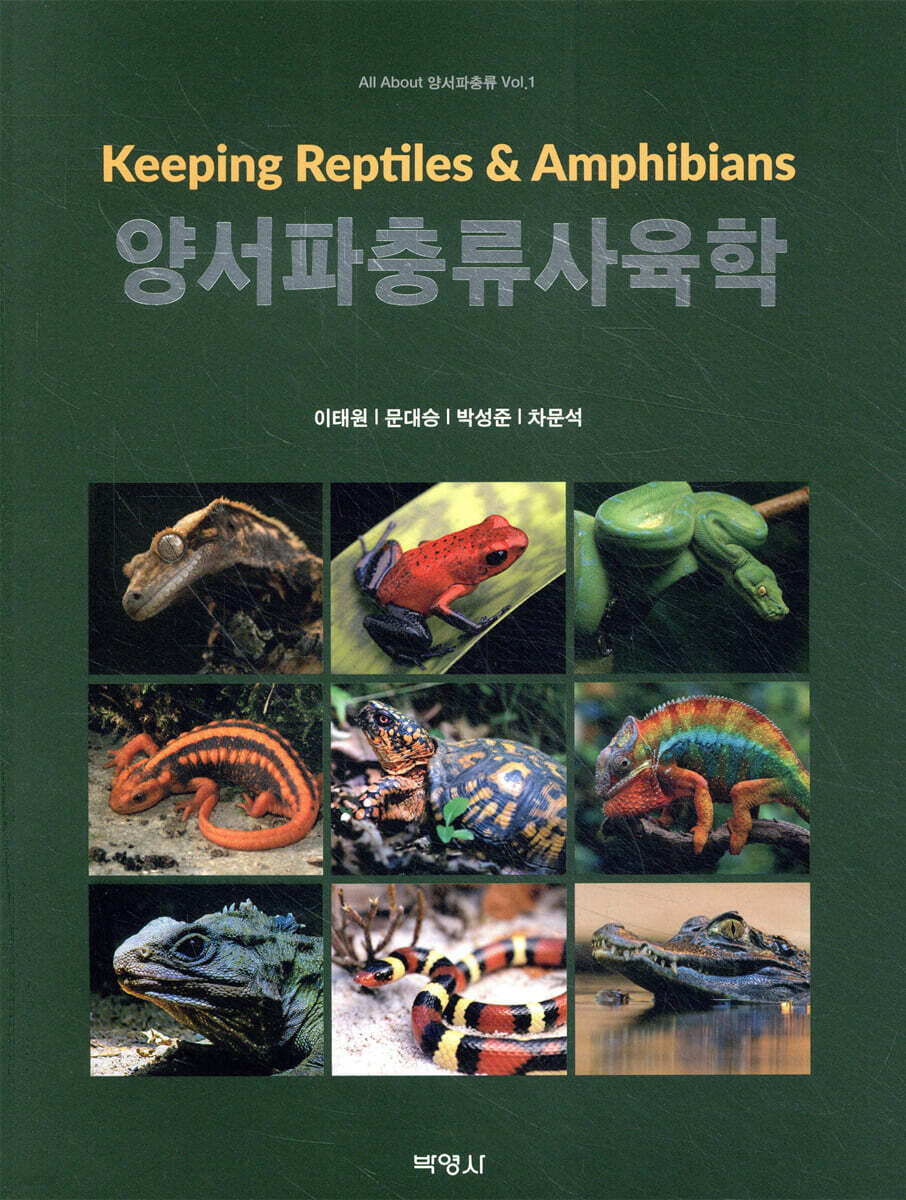
『Amphibian and Reptile Husbandry』 is a textbook covering all aspects of amphibians and reptiles, based on extensive data collection over two years since the first edition was published, various experiences and trial and error, and the needs of the field felt while teaching students at school.
It provides an easy introduction to the biological characteristics of amphibians and reptiles, their significance in the ecosystem, the habits and handling methods of each species, and the suitable breeding environment for each species.
It provides an easy introduction to the biological characteristics of amphibians and reptiles, their significance in the ecosystem, the habits and handling methods of each species, and the suitable breeding environment for each species.
- You can preview some of the book's contents.
Preview
index
Chapter 1: Introduction to Amphibian and Herpetology
1 Evolutionary and ecological features
2 History of amphibian and reptile captivity
3 Physiological characteristics of amphibians and reptiles
4 Understanding the habitat environment of amphibians and reptiles
5. Concept of breeding environment
6 Basic Amphibian and Reptile Care
7. Management of breeding grounds and breeding environment
8 Feeding and Nutrition Management
Chapter 2 Amphibians
1 Physical characteristics of amphibians
2 Classification of amphibians
3. Creating an environment according to habitat
4. Estrus and Reproduction in Amphibians
5. How to tell the sex of amphibians
6. Maternal care for cooling
7 Courtship Behavior of Amphibians
8 Prevention and Treatment of Amphibian Diseases 1
9 Prevention and Treatment of Amphibian Diseases 2
Introduction to 10 major species
Chapter 3 Lizard
1 Evolutionary and ecological features
2 Physical characteristics of lizards
3 Classification of Lizards
4. Creating an environment according to habitat
5 Lizard breeding
6 Major Lizard Diseases and Their Prevention and Treatment
Introduction to the 7 major species
Chapter 4 Snake
1 Evolutionary and ecological features
2 Physical characteristics of snakes
3 Classification of snakes
4. Creating an environment according to habitat
5 Snake Reproduction
6 Major Snake Diseases and Their Prevention and Treatment
Introduction to the 7 major species
Chapter 5 Turtle
1 Evolutionary and ecological features
2 Physical characteristics of turtles
3. Classification of turtles
4. Creating an environment according to habitat
5 Turtle Breeding
6 Major Diseases of Turtles and Their Prevention and Treatment
Introduction to the 7 major species
Chapter 6 Crocodile
1 Evolutionary and ecological features
2 Physical characteristics of crocodiles
3 Classification of crocodiles
4. Creating an environment according to habitat
5 Food and water
6 Diseases
7 Gender distinction
Introduction to the 8 major species
Chapter 7: The Old Lizard
1 Evolutionary and ecological features
2 Physical characteristics of the ancient lizard
3 Specification Management
● References
1 Evolutionary and ecological features
2 History of amphibian and reptile captivity
3 Physiological characteristics of amphibians and reptiles
4 Understanding the habitat environment of amphibians and reptiles
5. Concept of breeding environment
6 Basic Amphibian and Reptile Care
7. Management of breeding grounds and breeding environment
8 Feeding and Nutrition Management
Chapter 2 Amphibians
1 Physical characteristics of amphibians
2 Classification of amphibians
3. Creating an environment according to habitat
4. Estrus and Reproduction in Amphibians
5. How to tell the sex of amphibians
6. Maternal care for cooling
7 Courtship Behavior of Amphibians
8 Prevention and Treatment of Amphibian Diseases 1
9 Prevention and Treatment of Amphibian Diseases 2
Introduction to 10 major species
Chapter 3 Lizard
1 Evolutionary and ecological features
2 Physical characteristics of lizards
3 Classification of Lizards
4. Creating an environment according to habitat
5 Lizard breeding
6 Major Lizard Diseases and Their Prevention and Treatment
Introduction to the 7 major species
Chapter 4 Snake
1 Evolutionary and ecological features
2 Physical characteristics of snakes
3 Classification of snakes
4. Creating an environment according to habitat
5 Snake Reproduction
6 Major Snake Diseases and Their Prevention and Treatment
Introduction to the 7 major species
Chapter 5 Turtle
1 Evolutionary and ecological features
2 Physical characteristics of turtles
3. Classification of turtles
4. Creating an environment according to habitat
5 Turtle Breeding
6 Major Diseases of Turtles and Their Prevention and Treatment
Introduction to the 7 major species
Chapter 6 Crocodile
1 Evolutionary and ecological features
2 Physical characteristics of crocodiles
3 Classification of crocodiles
4. Creating an environment according to habitat
5 Food and water
6 Diseases
7 Gender distinction
Introduction to the 8 major species
Chapter 7: The Old Lizard
1 Evolutionary and ecological features
2 Physical characteristics of the ancient lizard
3 Specification Management
● References
Detailed image

Publisher's Review
It has been about 20 years since amphibians and reptiles, once considered unfamiliar, were introduced to Korea as pets.
Compared to the early days of its introduction, the general public's interest in amphibians and reptiles has grown, and the number of enthusiasts who breed them and those working in related industries has also increased significantly.
Despite this expansion of the base, the reality is that basic theories, treatment methods, and breeding manuals for individual species of amphibians and reptiles have not yet been systematically studied or organized.
Although departments related to amphibians and reptiles are emerging one after another, these limitations are causing difficulties in the educational field.
The Korean Amphibian and Reptile Association has accumulated a lot of information and experience over the years.
Nevertheless, it was not easy to organize this in a way that suited the domestic reality and created a textbook that could be used effectively in both theory and practice.
This textbook, covering the entire spectrum of amphibians and reptiles, was published based on two years of extensive data collection, diverse experiences, trial and error, and the on-the-ground needs I encountered while teaching students at school.
This textbook provides an easy-to-understand introduction to the biological characteristics of amphibians and reptiles, their significance in the ecosystem, the habits and handling methods of individual species, and the appropriate breeding environment for each species.
I hope this textbook will be of some help to students studying amphibians and reptiles, those working in related industries, and those who wish to systematically learn about amphibians and reptiles.
Lee Tae-won, Moon Dae-seung, Park Sung-jun, and Cha Moon-seok
Compared to the early days of its introduction, the general public's interest in amphibians and reptiles has grown, and the number of enthusiasts who breed them and those working in related industries has also increased significantly.
Despite this expansion of the base, the reality is that basic theories, treatment methods, and breeding manuals for individual species of amphibians and reptiles have not yet been systematically studied or organized.
Although departments related to amphibians and reptiles are emerging one after another, these limitations are causing difficulties in the educational field.
The Korean Amphibian and Reptile Association has accumulated a lot of information and experience over the years.
Nevertheless, it was not easy to organize this in a way that suited the domestic reality and created a textbook that could be used effectively in both theory and practice.
This textbook, covering the entire spectrum of amphibians and reptiles, was published based on two years of extensive data collection, diverse experiences, trial and error, and the on-the-ground needs I encountered while teaching students at school.
This textbook provides an easy-to-understand introduction to the biological characteristics of amphibians and reptiles, their significance in the ecosystem, the habits and handling methods of individual species, and the appropriate breeding environment for each species.
I hope this textbook will be of some help to students studying amphibians and reptiles, those working in related industries, and those who wish to systematically learn about amphibians and reptiles.
Lee Tae-won, Moon Dae-seung, Park Sung-jun, and Cha Moon-seok
GOODS SPECIFICS
- Date of issue: March 20, 2023
- Page count, weight, size: 520 pages | 1,280g | 210*297*21mm
- ISBN13: 9791130317366
- ISBN10: 1130317366
You may also like
카테고리
korean


korean

![ELLE 엘르 스페셜 에디션 A형 : 12월 [2025]](http://librairie.coreenne.fr/cdn/shop/files/b8e27a3de6c9538896439686c6b0e8fb.jpg?v=1766436872&width=3840)


