

Understanding popular culture
 |
Description
Book Introduction
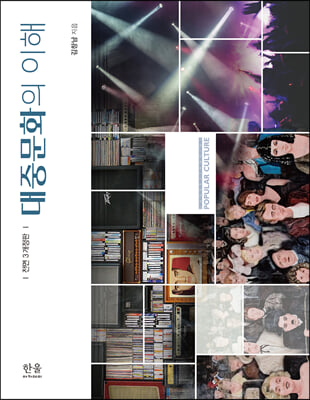
The most faithful and easily understandable treatment of popular culture
An introductory and educational book
??Understanding Popular Culture??, an introductory book for readers taking their first steps into the realm of culture and a general guide for those seeking to understand popular culture, has been loved by many since its first publication in 1998, receiving praise for its most faithful and accessible treatment of popular culture.
In the 12 years since the publication of the second fully revised edition in 2010, Korean society has experienced countless changes like a roller coaster ride, emerging as a global pop culture powerhouse.
The prefaces to each edition, which adorn the beginning of this book, fully capture the changes in Korean society since the first edition was published in 1998, and show the dynamism and potential of Koreans, who have led culture, through the major trends of the past 20 years.
This book, richly illustrated with examples of theoretical arguments on culture and popular culture and practical issues encountered in everyday life, does not satisfy readers' intellectual curiosity; rather, it provides them with opportunities to think and discuss on their own and practice as true cultural subjects.
An introductory and educational book
??Understanding Popular Culture??, an introductory book for readers taking their first steps into the realm of culture and a general guide for those seeking to understand popular culture, has been loved by many since its first publication in 1998, receiving praise for its most faithful and accessible treatment of popular culture.
In the 12 years since the publication of the second fully revised edition in 2010, Korean society has experienced countless changes like a roller coaster ride, emerging as a global pop culture powerhouse.
The prefaces to each edition, which adorn the beginning of this book, fully capture the changes in Korean society since the first edition was published in 1998, and show the dynamism and potential of Koreans, who have led culture, through the major trends of the past 20 years.
This book, richly illustrated with examples of theoretical arguments on culture and popular culture and practical issues encountered in everyday life, does not satisfy readers' intellectual curiosity; rather, it provides them with opportunities to think and discuss on their own and practice as true cultural subjects.
index
time
Part 1 · Culture and Popular Culture
01 What is culture?
02 What is popular culture?
03 Production and Consumption of Popular Culture
04 The Formation and Transformation of Western Modern Popular Culture: From Printing to Digital
05 The Formation and Change of Korean Popular Culture
Part 2 · Theory of Popular Culture
06 Popular Taste and the Aesthetics of Popular Culture: An Elitist Perspective on Popular Culture
07 Cultural Theory of Marxism and the Frankfurt School
08 Structuralism and Semiotics, Theory of Subject Construction
09 Culturalism and Cultural Studies, Hegemony Theory
10. Symbolic Power and Cultural Capital: Pierre Bourdieu's Cultural Sociology
Part 3: Popular Culture and 21st-Century Korean Society
11 Popular Culture and Generations
12 Digital Revolution and Popular Culture
13 Public Intelligence and Civil Society
Korean Wave in the Age of Globalization
15 Popular Culture, Freedom of Expression, and the Issue of Political Correctness
Part 4: Popular Culture, Culture of the Masses
16. The Joy of Popular Culture, Storytelling, and Catharsis
The 17-Star System and the Cultural Politics of Fandom
Sports in the 18th century pop culture era
19 Culture of the Body, Culture of Sex
20 Homo Ludens, to become the subject of culture
Part 1 · Culture and Popular Culture
01 What is culture?
02 What is popular culture?
03 Production and Consumption of Popular Culture
04 The Formation and Transformation of Western Modern Popular Culture: From Printing to Digital
05 The Formation and Change of Korean Popular Culture
Part 2 · Theory of Popular Culture
06 Popular Taste and the Aesthetics of Popular Culture: An Elitist Perspective on Popular Culture
07 Cultural Theory of Marxism and the Frankfurt School
08 Structuralism and Semiotics, Theory of Subject Construction
09 Culturalism and Cultural Studies, Hegemony Theory
10. Symbolic Power and Cultural Capital: Pierre Bourdieu's Cultural Sociology
Part 3: Popular Culture and 21st-Century Korean Society
11 Popular Culture and Generations
12 Digital Revolution and Popular Culture
13 Public Intelligence and Civil Society
Korean Wave in the Age of Globalization
15 Popular Culture, Freedom of Expression, and the Issue of Political Correctness
Part 4: Popular Culture, Culture of the Masses
16. The Joy of Popular Culture, Storytelling, and Catharsis
The 17-Star System and the Cultural Politics of Fandom
Sports in the 18th century pop culture era
19 Culture of the Body, Culture of Sex
20 Homo Ludens, to become the subject of culture
Into the book
In structuralism, what matters is the structure, not the person.
Structure always exists before humans, and humans are merely passive beings created by structures, trapped within the net of structures.
This is the most problematic part of structuralist cultural analysis, including Althusser's.
The meaning of culture is always created by some factor outside of humans, whether it be the relationships between elements within a text, language, or ideology.
Humans exist only as passive objects in relation to these other elements.
If we look at it that way, history, which has been constantly changing through human subjective practice, cannot help but be denied.
As mentioned earlier, structuralism has always focused on the present structure, and has not been interested in historical changes driven by humans and humans.
This is why structuralism is often criticized as being anti-humanistic and ahistorical.
--- pp.
160~161
Above all, we cannot help but point out the pitfalls of the generational discourse itself.
As I said before, it is mostly the established media, intellectuals, politicians, and businesses that call out specific generations by specific names.
They define the younger generation according to their own interests and interests and seek to exploit them politically and economically.
Representative examples include terms such as ‘Ewha man’, ‘Ewha woman’, and ‘MZ generation’ that have been frequently mentioned since the 2020s.
We must not rely on externally defined generational discourse without properly observing the intersecting and antagonistic aspects of categories such as generation, class, and gender within the overall structure of society.
--- p.
204
K-pop's global popularity is closely linked to social media.
The power of social media played a significant role in BTS's growth from handing out flyers on the streets to promoting their US concerts in 2014 to becoming stars who top the Billboard charts with every song they release in just a few years.
Social media has been a means of promoting their music and a space for them to communicate with fans across borders, as they have won Billboard's 'Top Social Artist' award several times.
… … BTS’s fandom, ARMY, goes beyond liking and sharing BTS’s photos on Twitter, Facebook, and Instagram. They also produce and share video content related to them and translate the lyrics of their new songs into their respective languages.
This isn't just about BTS or a few fans.
In the social media age, users don't just consume their favorite stars or content.
They act as producers, producing and actively promoting secondary content related to their favorite stars.
--- p.
219
When there are many people who outsource their thinking like this, collective intelligence cannot be rationally implemented.
The free flow of information using digital technology and the active practice of users themselves do not always create an intelligent public.
If the forum of online discourse is solely shaped by the interests of the media industry and public opinion on the Internet is left solely to the market logic of the attention economy, the formation of rational collective intelligence will inevitably be difficult.
A group cannot be the subject of thought.
The subject of intellectual thought can only be each individual.
Ultimately, what matters is not the collective intelligence itself, but the formation of an intelligent public equipped with critical abilities.
While digital technology undoubtedly guarantees a certain degree of selectivity and agency for its users, whether it will create a democratic and pluralistic cultural situation that is completely different from the mass social aspects of the mass media era ultimately depends on how the social use of that technology is structured.
Structure always exists before humans, and humans are merely passive beings created by structures, trapped within the net of structures.
This is the most problematic part of structuralist cultural analysis, including Althusser's.
The meaning of culture is always created by some factor outside of humans, whether it be the relationships between elements within a text, language, or ideology.
Humans exist only as passive objects in relation to these other elements.
If we look at it that way, history, which has been constantly changing through human subjective practice, cannot help but be denied.
As mentioned earlier, structuralism has always focused on the present structure, and has not been interested in historical changes driven by humans and humans.
This is why structuralism is often criticized as being anti-humanistic and ahistorical.
--- pp.
160~161
Above all, we cannot help but point out the pitfalls of the generational discourse itself.
As I said before, it is mostly the established media, intellectuals, politicians, and businesses that call out specific generations by specific names.
They define the younger generation according to their own interests and interests and seek to exploit them politically and economically.
Representative examples include terms such as ‘Ewha man’, ‘Ewha woman’, and ‘MZ generation’ that have been frequently mentioned since the 2020s.
We must not rely on externally defined generational discourse without properly observing the intersecting and antagonistic aspects of categories such as generation, class, and gender within the overall structure of society.
--- p.
204
K-pop's global popularity is closely linked to social media.
The power of social media played a significant role in BTS's growth from handing out flyers on the streets to promoting their US concerts in 2014 to becoming stars who top the Billboard charts with every song they release in just a few years.
Social media has been a means of promoting their music and a space for them to communicate with fans across borders, as they have won Billboard's 'Top Social Artist' award several times.
… … BTS’s fandom, ARMY, goes beyond liking and sharing BTS’s photos on Twitter, Facebook, and Instagram. They also produce and share video content related to them and translate the lyrics of their new songs into their respective languages.
This isn't just about BTS or a few fans.
In the social media age, users don't just consume their favorite stars or content.
They act as producers, producing and actively promoting secondary content related to their favorite stars.
--- p.
219
When there are many people who outsource their thinking like this, collective intelligence cannot be rationally implemented.
The free flow of information using digital technology and the active practice of users themselves do not always create an intelligent public.
If the forum of online discourse is solely shaped by the interests of the media industry and public opinion on the Internet is left solely to the market logic of the attention economy, the formation of rational collective intelligence will inevitably be difficult.
A group cannot be the subject of thought.
The subject of intellectual thought can only be each individual.
Ultimately, what matters is not the collective intelligence itself, but the formation of an intelligent public equipped with critical abilities.
While digital technology undoubtedly guarantees a certain degree of selectivity and agency for its users, whether it will create a democratic and pluralistic cultural situation that is completely different from the mass social aspects of the mass media era ultimately depends on how the social use of that technology is structured.
--- p.
233
233
GOODS SPECIFICS
- Date of issue: September 9, 2022
- Page count, weight, size: 352 pages | 588g | 173*224*30mm
- ISBN13: 9788946073951
You may also like
카테고리
korean


korean

![ELLE 엘르 스페셜 에디션 A형 : 12월 [2025]](http://librairie.coreenne.fr/cdn/shop/files/b8e27a3de6c9538896439686c6b0e8fb.jpg?v=1766436872&width=3840)


