

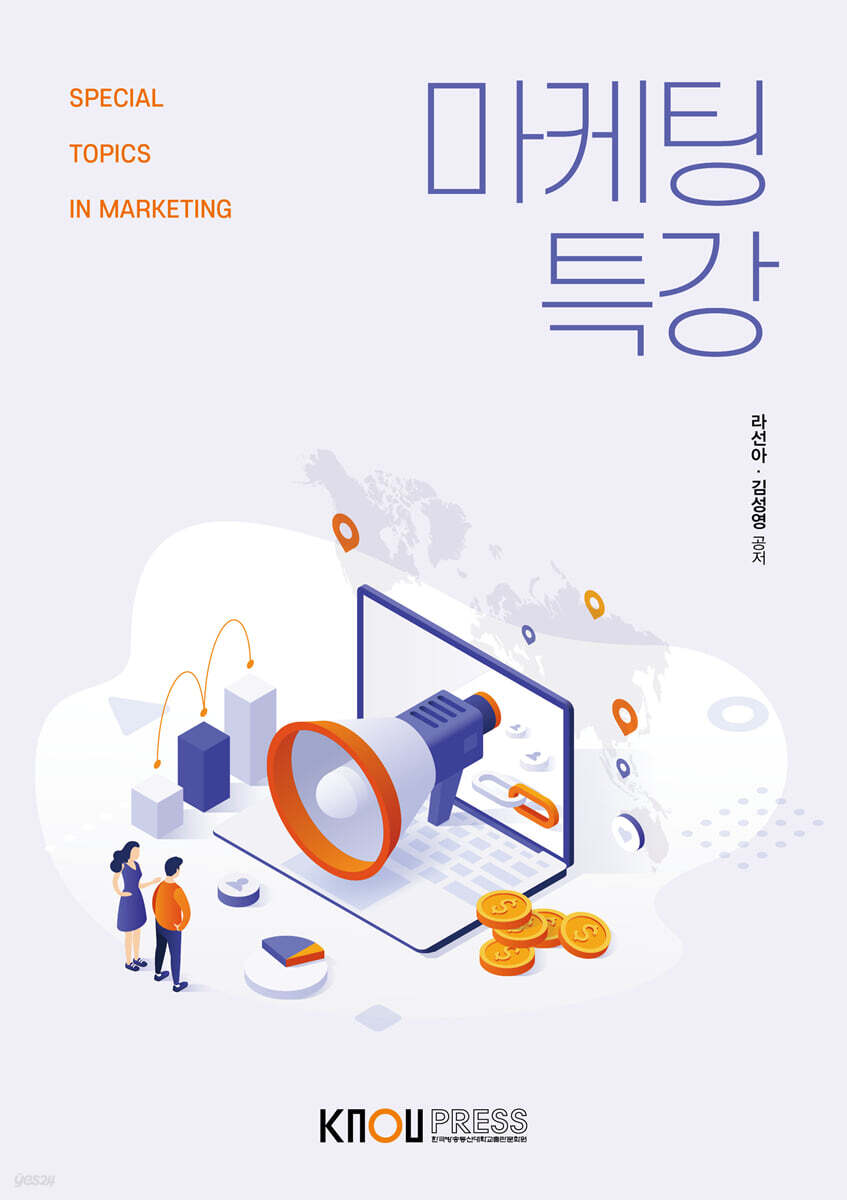
Marketing Special Lecture
 |
Description
Book Introduction
The purpose of 『Marketing Special Lecture』 is to explore topics that have recently gained importance and are attracting attention from academia and industry, among those not covered in basic textbooks such as 『Marketing Theory』, 『Consumer Behavior』, 『Marketing Research』, and 『Marketing Communication Management』, which are included in university marketing curriculums.
As the title suggests, the content covered in this book is expected to contribute to acquiring and deepening the latest knowledge in the field of marketing.
This book is divided into 15 chapters.
Chapter 1 explores the Fourth Industrial Revolution, which is having a profound impact globally and driving the future of humanity. It also examines the rapidly changing economic paradigm and the service-dominant logic that emerged during this process.
Chapters 2 and 3 cover topics helpful to marketing practice, such as service marketing, customer relationship management, service quality, and service failure recovery management, from the perspective of service dominance logic.
Chapters 4 through 8 examine emotional consumption and consumer happiness, experiential marketing and customer experience management, and cultural marketing for internal and external customers from a customer-centric perspective. They also explore interesting ethical topics, including consumer and corporate social responsibility activities pursuing sustainability, as well as ESG management and shared value creation.
Chapters 9 through 11 address the impact of culture and global marketing mix management among marketing issues arising from globalization. Chapter 12 examines innovation and high-tech marketing topics, which are related to the topic of Chapter 1.
Chapters 13 and 14 explore interactive marketing, multichannel marketing, and analytics, which enable the provision of customized and personalized products and services by analyzing customer data accumulated through the web and apps, as well as the development of the internet, mobile devices, and social media.
The final chapter, Chapter 15, examines supply chain and logistics management, a core topic in the field of distribution management and one that is significantly impacted by the Fourth Industrial Revolution.
As the title suggests, the content covered in this book is expected to contribute to acquiring and deepening the latest knowledge in the field of marketing.
This book is divided into 15 chapters.
Chapter 1 explores the Fourth Industrial Revolution, which is having a profound impact globally and driving the future of humanity. It also examines the rapidly changing economic paradigm and the service-dominant logic that emerged during this process.
Chapters 2 and 3 cover topics helpful to marketing practice, such as service marketing, customer relationship management, service quality, and service failure recovery management, from the perspective of service dominance logic.
Chapters 4 through 8 examine emotional consumption and consumer happiness, experiential marketing and customer experience management, and cultural marketing for internal and external customers from a customer-centric perspective. They also explore interesting ethical topics, including consumer and corporate social responsibility activities pursuing sustainability, as well as ESG management and shared value creation.
Chapters 9 through 11 address the impact of culture and global marketing mix management among marketing issues arising from globalization. Chapter 12 examines innovation and high-tech marketing topics, which are related to the topic of Chapter 1.
Chapters 13 and 14 explore interactive marketing, multichannel marketing, and analytics, which enable the provision of customized and personalized products and services by analyzing customer data accumulated through the web and apps, as well as the development of the internet, mobile devices, and social media.
The final chapter, Chapter 15, examines supply chain and logistics management, a core topic in the field of distribution management and one that is significantly impacted by the Fourth Industrial Revolution.
index
Chapter 1: The Fourth Industrial Revolution and the Logic of Service Dominance
1.1.
The Fourth Industrial Revolution and the Shift in the Economic Paradigm
1.2.
The concept of service and the logic of service dominance
1.3.
Characteristics of the service
Chapter 2 Service Marketing and Customer Relationship Management
2.1.
Service Marketing Mix
2.2.
Managing physical clues
2.3.
Service Process Management
2.4.
Customer Relationship Management
Chapter 3 Service Quality and Failure Recovery Management
3.1.
Service Quality Model
3.2.
Service failure and recovery
Chapter 4: Customer Loyalty and Engagement Management
4.1.
Customer loyalty
4.2.
Customer Attrition Management
4.3.
Customer Engagement Management
Chapter 5: Emotional Consumption and Consumer Happiness
5.1.
Theoretical understanding of emotions
5.2.
emotional consumption
5.3.
Consumer Happiness
Chapter 6: Experiential Marketing and Customer Experience Management
6.1.
The meaning and characteristics of experience
6.2.
experiential marketing
6.3.
Design and Implementation of Customer Experience
Chapter 7 Cultural Marketing
7.1.
The significance of cultural marketing
7.2.
Types of corporate cultural marketing
7.3.
The effectiveness of cultural marketing
7.4.
Cultural Marketing Implementation Strategy
Chapter 8 Corporate Social Responsibility and Creating Shared Value
8.1.
Consumer Social Responsibility
8.2.
Corporate Social Responsibility
8.3.
Creating Shared Value and ESG
Chapter 9: Understanding Corporate Globalization
9.1.
The significance of globalization
9.2.
Drivers of globalization
9.3.
Globalization and Corporate Response
9.4.
Internationalization and Changes in Corporate Form
9.5.
Global Marketing
Chapter 10: Globalization and the Impact of Culture
10.1.
The significance of cultural environment
10.2.
Culture and Marketing
10.3.
Forms of cultural expression
10.4.
Classification of culture
Chapter 11: Managing the Global Marketing Mix
11.1.
Global Product Management
11.2.
Global Price Management
11.3.
Global Distribution Management
11.4.
Global Promotion Management
Chapter 12: Characteristics of High-Tech Products and Diffusion Tasks
12.1.
Examples of innovative product diffusion
12.2.
Discontinuous and continuous innovation products
12.3.
Features of high-tech products
12.4.
Diffusion of innovative products and product technology adoption cycle
12.5.
Chasm
Chapter 13: Interactive Marketing and Multichannel Marketing
13.1.
Interactive Marketing
13.2.
Convergence of offline and online
Chapter 14 Web/App Analytics
14.1.
The significance of analytics
14.2.
Online consumer purchasing process
14.3.
User Purchase Process and Analytics
14.4.
Analysis Results Report
14.5.
Customized information analysis
14.6.
Digital Marketing Tools
Chapter 15 Supply Chain and Logistics Management
15.1.
The significance of supply chain and logistics
15.2.
Supply Chain Management Strategy
15.3.
Goals of logistics management
1.1.
The Fourth Industrial Revolution and the Shift in the Economic Paradigm
1.2.
The concept of service and the logic of service dominance
1.3.
Characteristics of the service
Chapter 2 Service Marketing and Customer Relationship Management
2.1.
Service Marketing Mix
2.2.
Managing physical clues
2.3.
Service Process Management
2.4.
Customer Relationship Management
Chapter 3 Service Quality and Failure Recovery Management
3.1.
Service Quality Model
3.2.
Service failure and recovery
Chapter 4: Customer Loyalty and Engagement Management
4.1.
Customer loyalty
4.2.
Customer Attrition Management
4.3.
Customer Engagement Management
Chapter 5: Emotional Consumption and Consumer Happiness
5.1.
Theoretical understanding of emotions
5.2.
emotional consumption
5.3.
Consumer Happiness
Chapter 6: Experiential Marketing and Customer Experience Management
6.1.
The meaning and characteristics of experience
6.2.
experiential marketing
6.3.
Design and Implementation of Customer Experience
Chapter 7 Cultural Marketing
7.1.
The significance of cultural marketing
7.2.
Types of corporate cultural marketing
7.3.
The effectiveness of cultural marketing
7.4.
Cultural Marketing Implementation Strategy
Chapter 8 Corporate Social Responsibility and Creating Shared Value
8.1.
Consumer Social Responsibility
8.2.
Corporate Social Responsibility
8.3.
Creating Shared Value and ESG
Chapter 9: Understanding Corporate Globalization
9.1.
The significance of globalization
9.2.
Drivers of globalization
9.3.
Globalization and Corporate Response
9.4.
Internationalization and Changes in Corporate Form
9.5.
Global Marketing
Chapter 10: Globalization and the Impact of Culture
10.1.
The significance of cultural environment
10.2.
Culture and Marketing
10.3.
Forms of cultural expression
10.4.
Classification of culture
Chapter 11: Managing the Global Marketing Mix
11.1.
Global Product Management
11.2.
Global Price Management
11.3.
Global Distribution Management
11.4.
Global Promotion Management
Chapter 12: Characteristics of High-Tech Products and Diffusion Tasks
12.1.
Examples of innovative product diffusion
12.2.
Discontinuous and continuous innovation products
12.3.
Features of high-tech products
12.4.
Diffusion of innovative products and product technology adoption cycle
12.5.
Chasm
Chapter 13: Interactive Marketing and Multichannel Marketing
13.1.
Interactive Marketing
13.2.
Convergence of offline and online
Chapter 14 Web/App Analytics
14.1.
The significance of analytics
14.2.
Online consumer purchasing process
14.3.
User Purchase Process and Analytics
14.4.
Analysis Results Report
14.5.
Customized information analysis
14.6.
Digital Marketing Tools
Chapter 15 Supply Chain and Logistics Management
15.1.
The significance of supply chain and logistics
15.2.
Supply Chain Management Strategy
15.3.
Goals of logistics management
GOODS SPECIFICS
- Publication date: July 25, 2022
- Page count, weight, size: 452 pages | 176*248*30mm
- ISBN13: 9788920043505
- ISBN10: 8920043507
You may also like
카테고리
korean


korean

![GQ KOREA Mark (Monthly): December [2025]](http://librairie.coreenne.fr/cdn/shop/files/8ef265dbbfbf186523ed75ba7319009d.jpg?v=1765340328&width=3840)


