

Psep Mind Neurology
 |
Description
Book Introduction
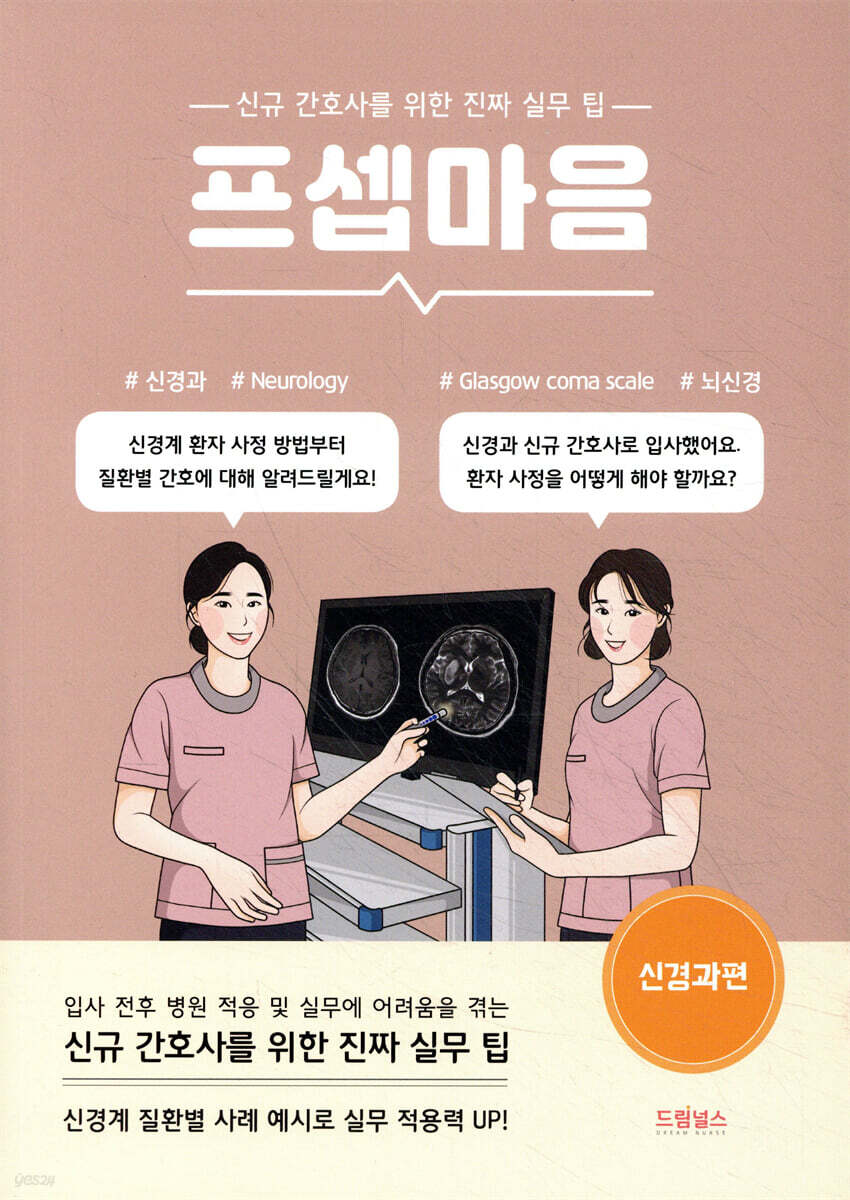
Enhanced expertise through the advice of neurologists, advanced practice nurses, and ward nurses! This practical neurology nursing guide covers everything from assessment to examination of neurological patients.
Based on actual neurological cases, it increases the sense of realism and presents coping methods and practical tips for nursing neurological patients.
Let's improve practical application skills with vivid photo data and various medical records.
Based on actual neurological cases, it increases the sense of realism and presents coping methods and practical tips for nursing neurological patients.
Let's improve practical application skills with vivid photo data and various medical records.
index
PART 1 Assessment of Neurological Patients
1.
History taking
2.
Mental status
3.
Language function: Higher cortical function
4.
Cranial nerve function
4-1) Visual field: Optic nerve
4-2) Pupillary light reflex: Optic nerve & oculomotor nerve
4-3) Extraocular muscle actions: Oculomotor nerve, trochlear nerve, and abducens nerve
4-4) Sensory function on the face: Trigeminal nerve
4-5) Motor function on the face: facial nerve
5.
Motor grade
6.
Sensory function
7.
Cerebellar function
PART 2 Neurological and Major Examinations
1.
Imaging tests (CT, MRI)
2.
Cerebral angiography
3.
Lumbar puncture (Spinal tapping) & CSF study
4.
Neurophysiological test
4-1) Electroencephalography (EEG)
4-2) Nerve conduction study (NCS) & electromyography (EMG)
5.
Neurosonography (TCD & Carotid ultrasonography)
6.
Neuropsychological test
PART 3 Major Neurological Diseases
1.
Cerebral infarction
2.
Cerebral hemorrhage
3.
Seizures & Epilepsy
4.
Meningitis & Encephalitis
5.
Bell's palsy
6.
Guillain-Barré Syndrome (GBS)
7.
Myasthenia Gravis (MG)
8.
Amyotrophic Lateral Sclerosis (ALS)
9.
Dementia
10.
Parkinson's Disease (PD)
11.
Normal Pressure Hydrocephalus (NPH)
Appendix Frequently encountered problems and nursing care in neurological patients
1.
Pain
2.
Dysphagia
3.
Dyspnea
4.
Bleeding Risk
5.
Voiding dysfunction
6.
Fall down
7.
Bedsores, Pressure ulcers
1.
History taking
2.
Mental status
3.
Language function: Higher cortical function
4.
Cranial nerve function
4-1) Visual field: Optic nerve
4-2) Pupillary light reflex: Optic nerve & oculomotor nerve
4-3) Extraocular muscle actions: Oculomotor nerve, trochlear nerve, and abducens nerve
4-4) Sensory function on the face: Trigeminal nerve
4-5) Motor function on the face: facial nerve
5.
Motor grade
6.
Sensory function
7.
Cerebellar function
PART 2 Neurological and Major Examinations
1.
Imaging tests (CT, MRI)
2.
Cerebral angiography
3.
Lumbar puncture (Spinal tapping) & CSF study
4.
Neurophysiological test
4-1) Electroencephalography (EEG)
4-2) Nerve conduction study (NCS) & electromyography (EMG)
5.
Neurosonography (TCD & Carotid ultrasonography)
6.
Neuropsychological test
PART 3 Major Neurological Diseases
1.
Cerebral infarction
2.
Cerebral hemorrhage
3.
Seizures & Epilepsy
4.
Meningitis & Encephalitis
5.
Bell's palsy
6.
Guillain-Barré Syndrome (GBS)
7.
Myasthenia Gravis (MG)
8.
Amyotrophic Lateral Sclerosis (ALS)
9.
Dementia
10.
Parkinson's Disease (PD)
11.
Normal Pressure Hydrocephalus (NPH)
Appendix Frequently encountered problems and nursing care in neurological patients
1.
Pain
2.
Dysphagia
3.
Dyspnea
4.
Bleeding Risk
5.
Voiding dysfunction
6.
Fall down
7.
Bedsores, Pressure ulcers
Detailed image

Publisher's Review
Part 1: Assessment of Neurological Patients
From assessing the level of consciousness to assessing motor function, it is essential for a neurological nurse to know
Let's understand the functional tests for each cranial nerve, focusing on cases that are frequently seen in clinical practice.
It was explained very simply.
Part 2 Neurological and Major Examinations
This is a part about frequently performed tests in the neurology department, and we carefully check before and after the test and nursing.
It contains detailed information about the prescription.
Especially for most patients in neurology
The difference between CT and MRI, which are essential brain imaging tests, is compared through actual images.
We have presented the solution and will look at how to interpret the actual test results to get a feel for the field.
It was raised even higher.
Part 3 Major Neurological Diseases
This is a case study focusing on neurological diseases that are frequently seen in clinical practice.
Yes.
Specific diseases based on actual clinical experience rather than theoretical content in textbooks
From things to watch out for when caring for patients with , to things that new nurses wonder about when seeing patients.
It covers every little question.
Appendix Frequently encountered problems and nursing care in neurological patients
Briefly describe the nursing problems frequently encountered by neurological patients and how to deal with them.
I did it.
I recommend this in this situation.
- Student nurses who want to experience clinical practice indirectly
- A new nurse about to be assigned to the neurology ward
- A new nurse who wants to study neurological nursing but doesn't know where to start.
- Junior nurses who feel the need to study more about neurological diseases
From assessing the level of consciousness to assessing motor function, it is essential for a neurological nurse to know
Let's understand the functional tests for each cranial nerve, focusing on cases that are frequently seen in clinical practice.
It was explained very simply.
Part 2 Neurological and Major Examinations
This is a part about frequently performed tests in the neurology department, and we carefully check before and after the test and nursing.
It contains detailed information about the prescription.
Especially for most patients in neurology
The difference between CT and MRI, which are essential brain imaging tests, is compared through actual images.
We have presented the solution and will look at how to interpret the actual test results to get a feel for the field.
It was raised even higher.
Part 3 Major Neurological Diseases
This is a case study focusing on neurological diseases that are frequently seen in clinical practice.
Yes.
Specific diseases based on actual clinical experience rather than theoretical content in textbooks
From things to watch out for when caring for patients with , to things that new nurses wonder about when seeing patients.
It covers every little question.
Appendix Frequently encountered problems and nursing care in neurological patients
Briefly describe the nursing problems frequently encountered by neurological patients and how to deal with them.
I did it.
I recommend this in this situation.
- Student nurses who want to experience clinical practice indirectly
- A new nurse about to be assigned to the neurology ward
- A new nurse who wants to study neurological nursing but doesn't know where to start.
- Junior nurses who feel the need to study more about neurological diseases
GOODS SPECIFICS
- Date of issue: May 6, 2022
- Page count, weight, size: 216 pages | 627g | 182*257*20mm
- ISBN13: 9791190939966
- ISBN10: 1190939967
You may also like
카테고리
korean


korean

![GQ KOREA Mark (Monthly): December [2025]](http://librairie.coreenne.fr/cdn/shop/files/8ef265dbbfbf186523ed75ba7319009d.jpg?v=1765340328&width=3840)


