

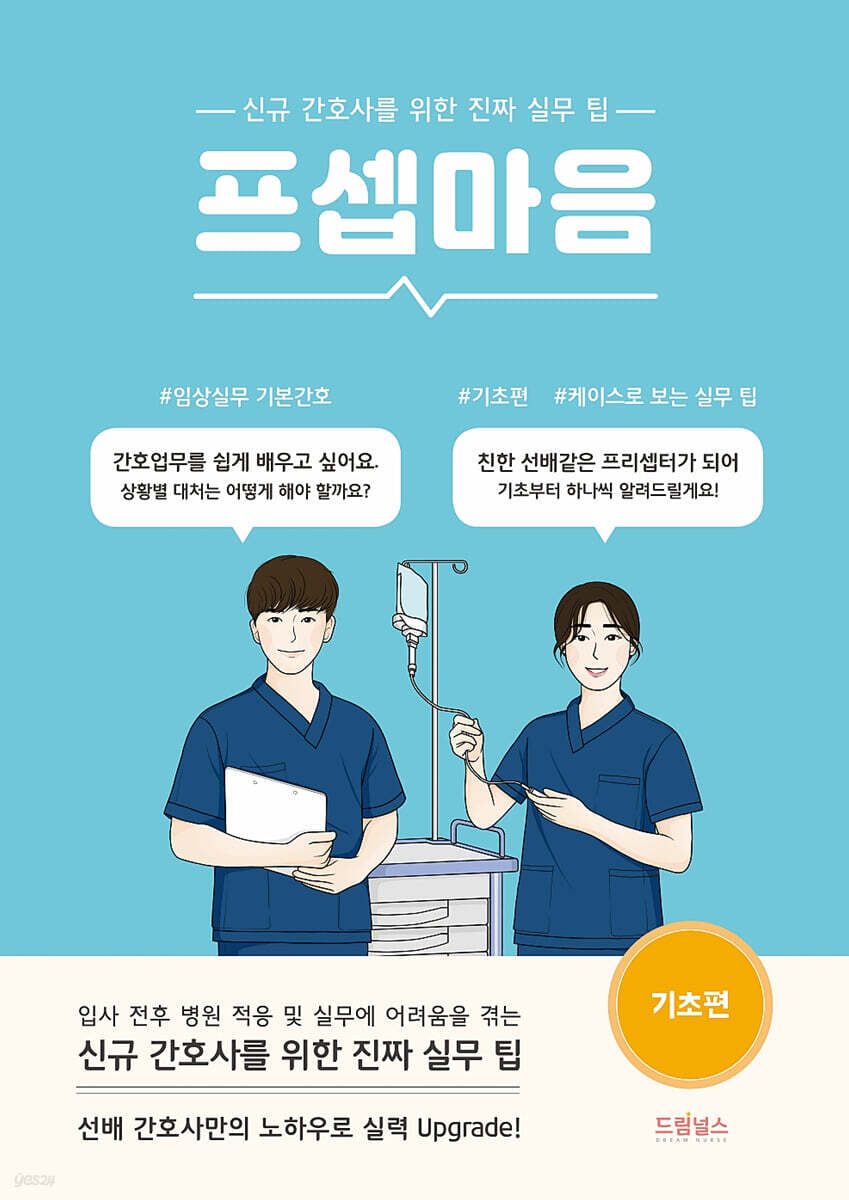
Psepmaum: Basics
 |
Description
Book Introduction
Basic clinical practice that no one taught you!
This is a "Basic Edition" that provides a solid foundation of basic nursing knowledge and practical tips for clinical beginners.
You can upgrade your clinical adaptability with practical content not found in specialized textbooks.
This basic book covers everything from small and medium-sized hospitals to nursing hospitals, and provides clear explanations of basic medical terminology.
It contains practical tips from experience in vivid and diverse cases.
This is a "Basic Edition" that provides a solid foundation of basic nursing knowledge and practical tips for clinical beginners.
You can upgrade your clinical adaptability with practical content not found in specialized textbooks.
This basic book covers everything from small and medium-sized hospitals to nursing hospitals, and provides clear explanations of basic medical terminology.
It contains practical tips from experience in vivid and diverse cases.
index
PART 1: Building a solid foundation with basic nursing
1. Vital signs
①Blood pressure (blood pressure can't only be measured in the arm, right?)
②Pulse (focus on the sensation at your fingertips!)
③ Breathing (How can I check if I am breathing well?)
④Body temperature (What is the appropriate nursing care for patients with high or low body temperature?)
2. Medication nursing
① Oral administration (Have you taken your morning pill yet?)
② Parenteral administration (visible or invisible).
Where the hell are the blood vessels?)
3. Blood collection nursing
4. Excretory care
① Simple catheterization (How do I do a urine culture test?)
② Indwelling catheterization (What if you need to measure urine accurately every hour?)
③ Enema (I haven't had a bowel movement for several days!)
5. Personal hygiene nursing
① Bathing (How do you wash a patient lying in bed?)
② Oral care (How should I brush my teeth while hospitalized?)
③ Perineal care (direction is important!)
④Hair care (patients with thick beards).
How about shaving?)
⑤ Eye, nose, ear, hand and toenail care (including tips for removing secretions and cutting toenails)
6. Skin integrity and wound care
①Wounds (each wound has a different name?)
② Bedsores (Stages of bedsores compared through photos)
7. Catheter management
① Tracheostomy tube management (How to manage the tube in the neck?)
②Central venous catheter management (from medication administration to blood collection using a central venous catheter!)
③ Drainage tube management (from PTBD to JP bag and Hemovac)
④Nasogastric tube management (You can breathe and eat through your nose?)
PART 2 Patient Safety for a Safe Hospital Life
1. Patient verification error (What is your name and date of birth?)
2. Fall (Thud, I fell!)
PART 3 Nutritional Therapy for Treatment
1. Therapeutic diet (Eating is also therapy?)
2. Meal assistance (for patients who have difficulty eating on their own)
3. Enteral nutrition (if swallowing is difficult, via nasogastric tube)
4. Total parenteral nutrition (patients receive food by injection)
5. Restricted diet (never take medicine with milk!)
PART 4 Oxygen Therapy for Efficient Breathing
1. Oxygen machine management
2. Oxygen supply devices (various methods of providing oxygen)
① Home respirator (only essential information included)
②Maintaining cleanliness of the airway
3. Suction (Do it right the first time!)
4. Nebulization therapy, inhalation therapy (nebulizer for sticky phlegm)
PART 5: Initial Emergency Response: Case Studies
1. What if I meet a patient with a neurological disorder (stroke or seizure)?
2. Endocrine Disease (What if I meet a patient with hypoglycemia or hyperglycemia?)
3. Infectious diseases (What if I encounter a patient with scabies or a high fever?)
4. Kidney disease (What if I encounter a patient with hypotension or hyperkalemia after dialysis?)
5. Respiratory Disease (What if I encounter a patient with respiratory distress?)
6. Heart disease (what if you encounter a patient in cardiac arrest?)
PART 6: Infection Control for a Clean Hospital
1. Disinfection and Cleaning (How should sterilized items be managed?)
2. Basic aseptic techniques (hand washing, hospital infection control basics!)
3. Managing Infected Patients (What is the difference between airborne precautions and droplet precautions?)
4. Laundry Management (Where do I put the bloody patient gown?)
5. Medical Waste Management (How long can medical waste be stored?)
PART 7 Senior Nurses' Tips for Dealing with Situations
1. Preparing admission/discharge documents (What is the difference between a medical opinion and a referral form?)
2. Responding to various patients (every time is new and embarrassing, with tips from seniors)
Appendix: Commonly Used Medical Terms
Basic medical terminology that opens your eyes and ears through examples
1. Vital signs
①Blood pressure (blood pressure can't only be measured in the arm, right?)
②Pulse (focus on the sensation at your fingertips!)
③ Breathing (How can I check if I am breathing well?)
④Body temperature (What is the appropriate nursing care for patients with high or low body temperature?)
2. Medication nursing
① Oral administration (Have you taken your morning pill yet?)
② Parenteral administration (visible or invisible).
Where the hell are the blood vessels?)
3. Blood collection nursing
4. Excretory care
① Simple catheterization (How do I do a urine culture test?)
② Indwelling catheterization (What if you need to measure urine accurately every hour?)
③ Enema (I haven't had a bowel movement for several days!)
5. Personal hygiene nursing
① Bathing (How do you wash a patient lying in bed?)
② Oral care (How should I brush my teeth while hospitalized?)
③ Perineal care (direction is important!)
④Hair care (patients with thick beards).
How about shaving?)
⑤ Eye, nose, ear, hand and toenail care (including tips for removing secretions and cutting toenails)
6. Skin integrity and wound care
①Wounds (each wound has a different name?)
② Bedsores (Stages of bedsores compared through photos)
7. Catheter management
① Tracheostomy tube management (How to manage the tube in the neck?)
②Central venous catheter management (from medication administration to blood collection using a central venous catheter!)
③ Drainage tube management (from PTBD to JP bag and Hemovac)
④Nasogastric tube management (You can breathe and eat through your nose?)
PART 2 Patient Safety for a Safe Hospital Life
1. Patient verification error (What is your name and date of birth?)
2. Fall (Thud, I fell!)
PART 3 Nutritional Therapy for Treatment
1. Therapeutic diet (Eating is also therapy?)
2. Meal assistance (for patients who have difficulty eating on their own)
3. Enteral nutrition (if swallowing is difficult, via nasogastric tube)
4. Total parenteral nutrition (patients receive food by injection)
5. Restricted diet (never take medicine with milk!)
PART 4 Oxygen Therapy for Efficient Breathing
1. Oxygen machine management
2. Oxygen supply devices (various methods of providing oxygen)
① Home respirator (only essential information included)
②Maintaining cleanliness of the airway
3. Suction (Do it right the first time!)
4. Nebulization therapy, inhalation therapy (nebulizer for sticky phlegm)
PART 5: Initial Emergency Response: Case Studies
1. What if I meet a patient with a neurological disorder (stroke or seizure)?
2. Endocrine Disease (What if I meet a patient with hypoglycemia or hyperglycemia?)
3. Infectious diseases (What if I encounter a patient with scabies or a high fever?)
4. Kidney disease (What if I encounter a patient with hypotension or hyperkalemia after dialysis?)
5. Respiratory Disease (What if I encounter a patient with respiratory distress?)
6. Heart disease (what if you encounter a patient in cardiac arrest?)
PART 6: Infection Control for a Clean Hospital
1. Disinfection and Cleaning (How should sterilized items be managed?)
2. Basic aseptic techniques (hand washing, hospital infection control basics!)
3. Managing Infected Patients (What is the difference between airborne precautions and droplet precautions?)
4. Laundry Management (Where do I put the bloody patient gown?)
5. Medical Waste Management (How long can medical waste be stored?)
PART 7 Senior Nurses' Tips for Dealing with Situations
1. Preparing admission/discharge documents (What is the difference between a medical opinion and a referral form?)
2. Responding to various patients (every time is new and embarrassing, with tips from seniors)
Appendix: Commonly Used Medical Terms
Basic medical terminology that opens your eyes and ears through examples
Detailed image

Publisher's Review
Basic clinical practice that no one taught you!
A solid foundation for clinical beginners, "Basic Edition" contains basic nursing knowledge and practical tips.
Improve your clinical adaptability with practical content not found in specialized textbooks!
From small and medium-sized hospitals to nursing hospitals, Auri provides clear explanations of basic medical terminology in basic textbooks.
It contains practical tips from experience in vivid and diverse cases.
Part 1: Building a solid foundation from the ground up with basic nursing
Based on the basic nursing skills that are performed, it is explained with practical tips from experience that are tailored to actual clinical situations.
Part 2 Patient Safety for a Safe Hospital Life
We have provided an easy-to-understand explanation of patient safety, which must not be overlooked while working in a hospital, focusing on patient identification errors and falls.
Part 3 Nutritional Therapy for Treatment
We explained various therapeutic nutritional therapies for patients so that they can be applied to actual work.
Part 4 Oxygen Therapy for Efficient Breathing
We have explained the oxygen machine management and airway cleanliness maintenance, which may seem difficult, so that it can be applied to actual work.
Part 5: Initial Emergency Response: Case Studies
We have included basic initial response methods tailored to clinical practice, using examples of frequently encountered emergency situations.
Part 6 Infection Control for a Clean Hospital
It presents the basic knowledge of infection control, covering everything from disinfection and cleaning, basic asepsis techniques, to medical waste management.
Part 7: Senior Nurses' Tips for Dealing with Situations
Besides nursing skills, there are embarrassing situations that can occur during nursing work.
I explained the difficulty to her at eye level, as a senior nurse.
Appendix: Commonly Used Medical Terms
We have included frequently used medical terms used in actual clinical practice, explained with examples to make them easy to understand.
I recommend this in this situation.
A new nurse at a small or medium-sized hospital who is working alone without a preceptor
ㆍNurses who require basic nursing skills for efficient work
ㆍA nurse who had no one to ask questions about nursing work because it was so basic
ㆍNurses who are curious about the field practice based on evidence from basic nursing
ㆍStudent nurses who will soon be going to the hospital for internship
ㆍStudent nurses who are curious about clinical stories not found in textbooks
A solid foundation for clinical beginners, "Basic Edition" contains basic nursing knowledge and practical tips.
Improve your clinical adaptability with practical content not found in specialized textbooks!
From small and medium-sized hospitals to nursing hospitals, Auri provides clear explanations of basic medical terminology in basic textbooks.
It contains practical tips from experience in vivid and diverse cases.
Part 1: Building a solid foundation from the ground up with basic nursing
Based on the basic nursing skills that are performed, it is explained with practical tips from experience that are tailored to actual clinical situations.
Part 2 Patient Safety for a Safe Hospital Life
We have provided an easy-to-understand explanation of patient safety, which must not be overlooked while working in a hospital, focusing on patient identification errors and falls.
Part 3 Nutritional Therapy for Treatment
We explained various therapeutic nutritional therapies for patients so that they can be applied to actual work.
Part 4 Oxygen Therapy for Efficient Breathing
We have explained the oxygen machine management and airway cleanliness maintenance, which may seem difficult, so that it can be applied to actual work.
Part 5: Initial Emergency Response: Case Studies
We have included basic initial response methods tailored to clinical practice, using examples of frequently encountered emergency situations.
Part 6 Infection Control for a Clean Hospital
It presents the basic knowledge of infection control, covering everything from disinfection and cleaning, basic asepsis techniques, to medical waste management.
Part 7: Senior Nurses' Tips for Dealing with Situations
Besides nursing skills, there are embarrassing situations that can occur during nursing work.
I explained the difficulty to her at eye level, as a senior nurse.
Appendix: Commonly Used Medical Terms
We have included frequently used medical terms used in actual clinical practice, explained with examples to make them easy to understand.
I recommend this in this situation.
A new nurse at a small or medium-sized hospital who is working alone without a preceptor
ㆍNurses who require basic nursing skills for efficient work
ㆍA nurse who had no one to ask questions about nursing work because it was so basic
ㆍNurses who are curious about the field practice based on evidence from basic nursing
ㆍStudent nurses who will soon be going to the hospital for internship
ㆍStudent nurses who are curious about clinical stories not found in textbooks
GOODS SPECIFICS
- Date of issue: July 2, 2021
- Page count, weight, size: 376 pages | 182*257*30mm
- ISBN13: 9791190939546
- ISBN10: 1190939541
You may also like
카테고리
korean


korean

![GQ KOREA Mark (Monthly): December [2025]](http://librairie.coreenne.fr/cdn/shop/files/8ef265dbbfbf186523ed75ba7319009d.jpg?v=1765340328&width=3840)


