

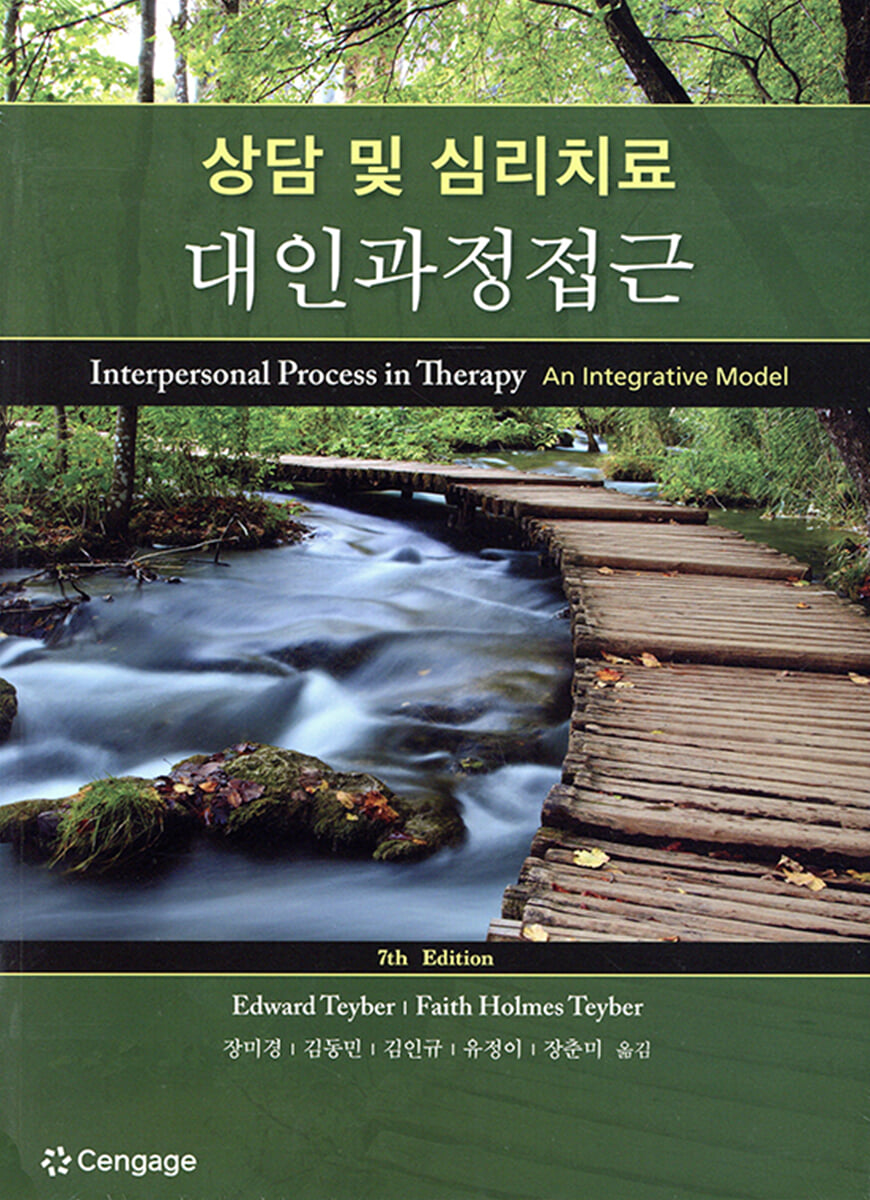
Interpersonal Process Approach to Counseling and Psychotherapy
 |
Description
Book Introduction
This book explains the major issues that arise in the counseling process through an interpersonal process approach and shows how the theory is applied in practice through case studies of counselors and clients.
This book will be of great help to beginning counselors in understanding how to utilize the counseling relationship by focusing on the current interactions or interpersonal processes occurring between counselor and client as a way to understand and intervene with the client.
In particular, the revised seventh edition develops and describes certain key concepts that run through the book, particularly empathic understanding, collaborative working and cracks and repairs in the working alliance, and guidelines for engaging clients more deeply in counseling.
We also seek to present and integrate more broadly the literature linking attachment theory to adult attachment styles and clinical settings.
Additionally, a focus is placed on providing practical assistance with supervision, case conceptualization and counseling planning, and therapeutic interventions, with richer counselor-client dialogue and case illustrations provided to aid therapeutic interventions.
This book will be of great help to beginning counselors in understanding how to utilize the counseling relationship by focusing on the current interactions or interpersonal processes occurring between counselor and client as a way to understand and intervene with the client.
In particular, the revised seventh edition develops and describes certain key concepts that run through the book, particularly empathic understanding, collaborative working and cracks and repairs in the working alliance, and guidelines for engaging clients more deeply in counseling.
We also seek to present and integrate more broadly the literature linking attachment theory to adult attachment styles and clinical settings.
Additionally, a focus is placed on providing practical assistance with supervision, case conceptualization and counseling planning, and therapeutic interventions, with richer counselor-client dialogue and case illustrations provided to aid therapeutic interventions.
index
Translator's Preface v
Author's Preface vii
About the Author xii
PART 01
Introduction and Overview
Interpersonal Process Approach 3
Beginner Counselors Struggle with Performance Anxiety 4
Counselors are more effective when they have a case conceptualization and counseling focus. 8
Key Concept 10
Course Area 10
Corrective Emotional Experience 13
Specificity of Client Responses 20
Teresa: 25 Case Studies of Core Concepts
Theoretical and Historical Context 29
Interpersonal Relationships Area 30
Cognitive domain 31
Family/Culture Area 37
Conclusion 43 | Practice Activities 44 | Recommended Reading 44
PART 02
Responding to the client
Forming a Working Alliance 47
Conceptual Overview 47
Work Alliance 48
Collaboration: 50 Alternatives to Directive and Nondirective Types
Collaboration begins with the first consultation. 56
Empathic Understanding: The Foundation of the Working Alliance 62
Client 65 who doesn't feel understood
Demonstrate your understanding clearly and specifically 69
Finding recurring themes encourages empathic understanding 77
Performance anxiety hinders the formation of working alliances 83
Empathic Understanding: A Prerequisite for Change 85
Conclusion 87 | Practice Activities 87 | Recommended Reading 88
Respecting the Client's Resistance 89
Conceptual Overview 89
Reluctance to deal with resistance 93
Counselors' reluctance to address resistance 94
Client's reluctance to deal with resistance 98
Checking Resistance 105
Establishing a Working Hypothesis to Clarify Resistance 107
Responding to Resistance 110
Dealing with Resistance During Initial Phone Contact 111
Exploring Resistance at the End of the First Session 116
Resistance during subsequent sessions 127
Shame stimulates resistance 138
Shame and Guilt 139
Self-Esteem with a Shameful Tendency 141
Shame-Anger Cycle 142
Shame-Anxiety 143
Success in Counseling Can Be a Threat 146
Conclusion 147 | Practice Activities 148 | Recommended Reading 148
Focusing Inward for Change 149
Conceptual Overview 150
Helping clients focus inward on their experiences 152
Counseling deepens when the client focuses inward 158
Hesitation to Focus Inward 159
Counselor's Hesitation 160
Access Road 163
Client's Hesitation 166
Putting the Client in Charge of Change 169
Promoting Client Initiative 169
Enlisting the client's cooperation in problem solving 179
Resolving Client Conflicts 180
Tracking Your Client's Anxiety 185
Step 1.
Recognizing Signs of Client Anxiety 185
Step 2.
Approaching the Client's Anxiety Directly 186
Step 3.
Observing what triggers the client's anxiety 188
Step 4.
189 Helping clients explore their anxiety by focusing inwardly
Conclusion 192 | Practice Activities 193 | Recommended Reading 193
Helping Clients with Their Emotions 195
Conceptual Overview 196
Responding to the Client's Emotions 197
Dealing with Ambivalence with Clients 197
Clients avoid emotions because of undesirable interpersonal outcomes 198
Accessing the Client's Most Prominent Emotions 202
Expanding and Refining the Client's Emotions 207
Identifying Your Dominant Emotions 216
Past Wounds 216
Various stressors 217
Personalized Emotions 218
Recognizing the Emotional Clusters Frequently Presented by Clients 221
Anger-Sadness-Shame 222
Sadness-Anger-Guilt 227
Attachment theory provides guidelines for responding to client stress 230
Cradling: Using Attachment Tools to Guide Intervention 234
Safe haven fosters change from within 239
The client's emotions often trigger countertransference 240
Rules and roles within the family shape the tendency for reversal. 241
Separating the Client's Problems from the Counselor's Problems 244
Conclusion 246 | Practice Activities 247 | Recommended Reading 247
PART 03
Client conceptualization and
Developing a treatment focus
Family and Developmental Factors 251
Conceptual Overview 251
Attachment Styles and Clinical Implications in Adult Counseling 252
Four Attachment Types 253
Adult clients with secure attachment styles (Quadrant 1 of Figure 6.1: Low avoidance/low anxiety) 255
Adult clients with a dismissive attachment style (quadrant 2 of Figure 6.1: high avoidance/low anxiety) 257
Adult clients with preoccupied attachment style (quadrant 3 of Figure 6.1: low avoidance/high anxiety) 263
Adult clients with fearful attachment styles (quadrant 4 of Figure 6.1: high avoidance/high anxiety) 269
Conclusions on Adult Attachment Styles 272
Parenting Style 273
Authoritarian Parents 274
Permissive Parents 277
Indifferent Parents 280
Authoritarian Parents 281
Withdrawal of Love and Conditioning of Values 284
Guidelines for Responding to Clients with Diverse Parenting Styles and Attachment Styles 289
Additional Clinical Guideline 291
Family Interaction Patterns 294
Conclusion 300 | Practice Activities 301 | Recommended Reading 301
Interpersonal Coping Strategies for Less Flexible Relationships 303
Conceptual Overview 303
Interpersonal Structure Framework for Conceptualizing Clients 305
Unmet Developmental Needs 306
Internal Working Models and Interpersonal Coping Strategies 308
Internal working models shape symptoms and problems 309
Interpersonal Coping Strategies 311
Coping Strategies for Rigid Interpersonal Relationships: Approaching, Resisting, and Disengaging 312
Coping Strategies for Rigid Interpersonal Relationships: A Virtue-Based Defense 314
Obligations to Oneself and Expectations of Others 317
Resolving the Root Conflict 318
Peter's Counseling Case Study: Approaching Others 322
Peter's Growth and the Sudden Crisis 322
Sudden crisis, maladaptive relationship patterns, and symptom development 325
Counseling Process 327
Two Case Studies Summary 330
Juan: Client 330 Against Others
Maggie: Client 335 Who Distancing Others
Conclusion 340 | Practice Activities 341 | Recommended Reading 341
Relationship Topics and Healing Experiences 343
Conceptual Overview 343
Three Ways Clients Reenact Problems They Have with Others in Counseling 344
Reaction-triggering strategy 345
Client's Experimental Behavior 355
Transfer reaction 371
Finding Balance in Interpersonal Relationships 382
Close 384
Quarantine 386
The Effective Middle Ground of Balanced Engagement 387
Ambivalence: Responding to Both Sides of a Client's Experience 393
Conclusion 399 | Practice Activities 399 | Recommended Reading 399
PART 04
Solutions and Changes
Working at the Process Level 403
Conceptual Overview 403
Problem Solving Through Interpersonal Processes 404
Responding to Client Conflicts within the Therapeutic Relationship 404
Bringing Conflict into the Therapeutic Relationship 406
Using the Process Dimension to Facilitate Change 408
Using Process Mentions to Provide Interpersonal Resolution 427
Consultants' initial hesitation about working at the process level 441
Conclusion 454 | Practice Activities 454 | Recommended Reading 455
Training and Termination 457
Conceptual Overview 457
The Process of Client Change: Overview 458
Training 462
Training Course 462
Work on the Family of Origin 473
Dream: Future 480
End 484
Client ends counseling early 484
Client and counselor talk about closure 488
Ending a Relationship 496
Conclusion 497 | Practice Activities 498 | Recommended Reading 498
Appendix A 499
Appendix B 501
■References 503
■Search 522
Author's Preface vii
About the Author xii
PART 01
Introduction and Overview
Interpersonal Process Approach 3
Beginner Counselors Struggle with Performance Anxiety 4
Counselors are more effective when they have a case conceptualization and counseling focus. 8
Key Concept 10
Course Area 10
Corrective Emotional Experience 13
Specificity of Client Responses 20
Teresa: 25 Case Studies of Core Concepts
Theoretical and Historical Context 29
Interpersonal Relationships Area 30
Cognitive domain 31
Family/Culture Area 37
Conclusion 43 | Practice Activities 44 | Recommended Reading 44
PART 02
Responding to the client
Forming a Working Alliance 47
Conceptual Overview 47
Work Alliance 48
Collaboration: 50 Alternatives to Directive and Nondirective Types
Collaboration begins with the first consultation. 56
Empathic Understanding: The Foundation of the Working Alliance 62
Client 65 who doesn't feel understood
Demonstrate your understanding clearly and specifically 69
Finding recurring themes encourages empathic understanding 77
Performance anxiety hinders the formation of working alliances 83
Empathic Understanding: A Prerequisite for Change 85
Conclusion 87 | Practice Activities 87 | Recommended Reading 88
Respecting the Client's Resistance 89
Conceptual Overview 89
Reluctance to deal with resistance 93
Counselors' reluctance to address resistance 94
Client's reluctance to deal with resistance 98
Checking Resistance 105
Establishing a Working Hypothesis to Clarify Resistance 107
Responding to Resistance 110
Dealing with Resistance During Initial Phone Contact 111
Exploring Resistance at the End of the First Session 116
Resistance during subsequent sessions 127
Shame stimulates resistance 138
Shame and Guilt 139
Self-Esteem with a Shameful Tendency 141
Shame-Anger Cycle 142
Shame-Anxiety 143
Success in Counseling Can Be a Threat 146
Conclusion 147 | Practice Activities 148 | Recommended Reading 148
Focusing Inward for Change 149
Conceptual Overview 150
Helping clients focus inward on their experiences 152
Counseling deepens when the client focuses inward 158
Hesitation to Focus Inward 159
Counselor's Hesitation 160
Access Road 163
Client's Hesitation 166
Putting the Client in Charge of Change 169
Promoting Client Initiative 169
Enlisting the client's cooperation in problem solving 179
Resolving Client Conflicts 180
Tracking Your Client's Anxiety 185
Step 1.
Recognizing Signs of Client Anxiety 185
Step 2.
Approaching the Client's Anxiety Directly 186
Step 3.
Observing what triggers the client's anxiety 188
Step 4.
189 Helping clients explore their anxiety by focusing inwardly
Conclusion 192 | Practice Activities 193 | Recommended Reading 193
Helping Clients with Their Emotions 195
Conceptual Overview 196
Responding to the Client's Emotions 197
Dealing with Ambivalence with Clients 197
Clients avoid emotions because of undesirable interpersonal outcomes 198
Accessing the Client's Most Prominent Emotions 202
Expanding and Refining the Client's Emotions 207
Identifying Your Dominant Emotions 216
Past Wounds 216
Various stressors 217
Personalized Emotions 218
Recognizing the Emotional Clusters Frequently Presented by Clients 221
Anger-Sadness-Shame 222
Sadness-Anger-Guilt 227
Attachment theory provides guidelines for responding to client stress 230
Cradling: Using Attachment Tools to Guide Intervention 234
Safe haven fosters change from within 239
The client's emotions often trigger countertransference 240
Rules and roles within the family shape the tendency for reversal. 241
Separating the Client's Problems from the Counselor's Problems 244
Conclusion 246 | Practice Activities 247 | Recommended Reading 247
PART 03
Client conceptualization and
Developing a treatment focus
Family and Developmental Factors 251
Conceptual Overview 251
Attachment Styles and Clinical Implications in Adult Counseling 252
Four Attachment Types 253
Adult clients with secure attachment styles (Quadrant 1 of Figure 6.1: Low avoidance/low anxiety) 255
Adult clients with a dismissive attachment style (quadrant 2 of Figure 6.1: high avoidance/low anxiety) 257
Adult clients with preoccupied attachment style (quadrant 3 of Figure 6.1: low avoidance/high anxiety) 263
Adult clients with fearful attachment styles (quadrant 4 of Figure 6.1: high avoidance/high anxiety) 269
Conclusions on Adult Attachment Styles 272
Parenting Style 273
Authoritarian Parents 274
Permissive Parents 277
Indifferent Parents 280
Authoritarian Parents 281
Withdrawal of Love and Conditioning of Values 284
Guidelines for Responding to Clients with Diverse Parenting Styles and Attachment Styles 289
Additional Clinical Guideline 291
Family Interaction Patterns 294
Conclusion 300 | Practice Activities 301 | Recommended Reading 301
Interpersonal Coping Strategies for Less Flexible Relationships 303
Conceptual Overview 303
Interpersonal Structure Framework for Conceptualizing Clients 305
Unmet Developmental Needs 306
Internal Working Models and Interpersonal Coping Strategies 308
Internal working models shape symptoms and problems 309
Interpersonal Coping Strategies 311
Coping Strategies for Rigid Interpersonal Relationships: Approaching, Resisting, and Disengaging 312
Coping Strategies for Rigid Interpersonal Relationships: A Virtue-Based Defense 314
Obligations to Oneself and Expectations of Others 317
Resolving the Root Conflict 318
Peter's Counseling Case Study: Approaching Others 322
Peter's Growth and the Sudden Crisis 322
Sudden crisis, maladaptive relationship patterns, and symptom development 325
Counseling Process 327
Two Case Studies Summary 330
Juan: Client 330 Against Others
Maggie: Client 335 Who Distancing Others
Conclusion 340 | Practice Activities 341 | Recommended Reading 341
Relationship Topics and Healing Experiences 343
Conceptual Overview 343
Three Ways Clients Reenact Problems They Have with Others in Counseling 344
Reaction-triggering strategy 345
Client's Experimental Behavior 355
Transfer reaction 371
Finding Balance in Interpersonal Relationships 382
Close 384
Quarantine 386
The Effective Middle Ground of Balanced Engagement 387
Ambivalence: Responding to Both Sides of a Client's Experience 393
Conclusion 399 | Practice Activities 399 | Recommended Reading 399
PART 04
Solutions and Changes
Working at the Process Level 403
Conceptual Overview 403
Problem Solving Through Interpersonal Processes 404
Responding to Client Conflicts within the Therapeutic Relationship 404
Bringing Conflict into the Therapeutic Relationship 406
Using the Process Dimension to Facilitate Change 408
Using Process Mentions to Provide Interpersonal Resolution 427
Consultants' initial hesitation about working at the process level 441
Conclusion 454 | Practice Activities 454 | Recommended Reading 455
Training and Termination 457
Conceptual Overview 457
The Process of Client Change: Overview 458
Training 462
Training Course 462
Work on the Family of Origin 473
Dream: Future 480
End 484
Client ends counseling early 484
Client and counselor talk about closure 488
Ending a Relationship 496
Conclusion 497 | Practice Activities 498 | Recommended Reading 498
Appendix A 499
Appendix B 501
■References 503
■Search 522
Detailed image

Publisher's Review
It has been a long time since the translators translated 『Interpersonal Process in Therapy: An Integrative Model』, which they studied and received great help from while working at the Korea Youth Counseling Institute (now the Korea Youth Counseling Welfare Development Institute).
What inspired us to translate this book was its powerful and moving guidance through the counseling process, which felt like meeting a kind and insightful supervisor.
In particular, this book explains the major issues that arise in the counseling process through the interpersonal process approach and shows how the theory is applied in practice through case studies of counselors and clients.
What appealed to me was that it guided the reader to experience a specific therapeutic counseling relationship based on the author's vivid counseling experience and the deep insight embedded within it.
It is well known that the success of counseling depends on the quality of human relationships, that is, the relationship between the counselor and the client.
However, our counselors have not had many opportunities to learn specifically about the process of actually building a good counseling relationship and using it to bring about change in the client.
Although many books on counseling cover the skills and techniques of counseling, it is difficult to shake the impression that most books on the theory and process of counseling leave it up to the counselor or individual to integrate and apply these principles to the practice of counseling.
This book will be of great help to beginning counselors in understanding how to utilize the counseling relationship by focusing on the current interactions or interpersonal processes occurring between counselor and client as a way to understand and intervene with the client.
In particular, the revised seventh edition develops and describes certain key concepts that run through the book, particularly empathic understanding, collaborative working and cracks and repairs in the working alliance, and guidelines for engaging clients more deeply in counseling.
We also seek to present and integrate more broadly the literature linking attachment theory to adult attachment styles and clinical settings.
Additionally, a focus is placed on providing practical assistance with supervision, case conceptualization and counseling planning, and therapeutic interventions, with richer counselor-client dialogue and case illustrations provided to aid therapeutic interventions.
Therefore, I have no doubt that this will be of great help to both novice counselors and those with some experience in developing their own personal counseling style with flexibility from various theoretical perspectives.
What inspired us to translate this book was its powerful and moving guidance through the counseling process, which felt like meeting a kind and insightful supervisor.
In particular, this book explains the major issues that arise in the counseling process through the interpersonal process approach and shows how the theory is applied in practice through case studies of counselors and clients.
What appealed to me was that it guided the reader to experience a specific therapeutic counseling relationship based on the author's vivid counseling experience and the deep insight embedded within it.
It is well known that the success of counseling depends on the quality of human relationships, that is, the relationship between the counselor and the client.
However, our counselors have not had many opportunities to learn specifically about the process of actually building a good counseling relationship and using it to bring about change in the client.
Although many books on counseling cover the skills and techniques of counseling, it is difficult to shake the impression that most books on the theory and process of counseling leave it up to the counselor or individual to integrate and apply these principles to the practice of counseling.
This book will be of great help to beginning counselors in understanding how to utilize the counseling relationship by focusing on the current interactions or interpersonal processes occurring between counselor and client as a way to understand and intervene with the client.
In particular, the revised seventh edition develops and describes certain key concepts that run through the book, particularly empathic understanding, collaborative working and cracks and repairs in the working alliance, and guidelines for engaging clients more deeply in counseling.
We also seek to present and integrate more broadly the literature linking attachment theory to adult attachment styles and clinical settings.
Additionally, a focus is placed on providing practical assistance with supervision, case conceptualization and counseling planning, and therapeutic interventions, with richer counselor-client dialogue and case illustrations provided to aid therapeutic interventions.
Therefore, I have no doubt that this will be of great help to both novice counselors and those with some experience in developing their own personal counseling style with flexibility from various theoretical perspectives.
GOODS SPECIFICS
- Date of issue: July 30, 2020
- Page count, weight, size: 544 pages | 190*260*35mm
- ISBN13: 9788962184907
- ISBN10: 8962184907
You may also like
카테고리
korean


korean

![GQ KOREA Mark (Monthly): December [2025]](http://librairie.coreenne.fr/cdn/shop/files/8ef265dbbfbf186523ed75ba7319009d.jpg?v=1765340328&width=3840)


