

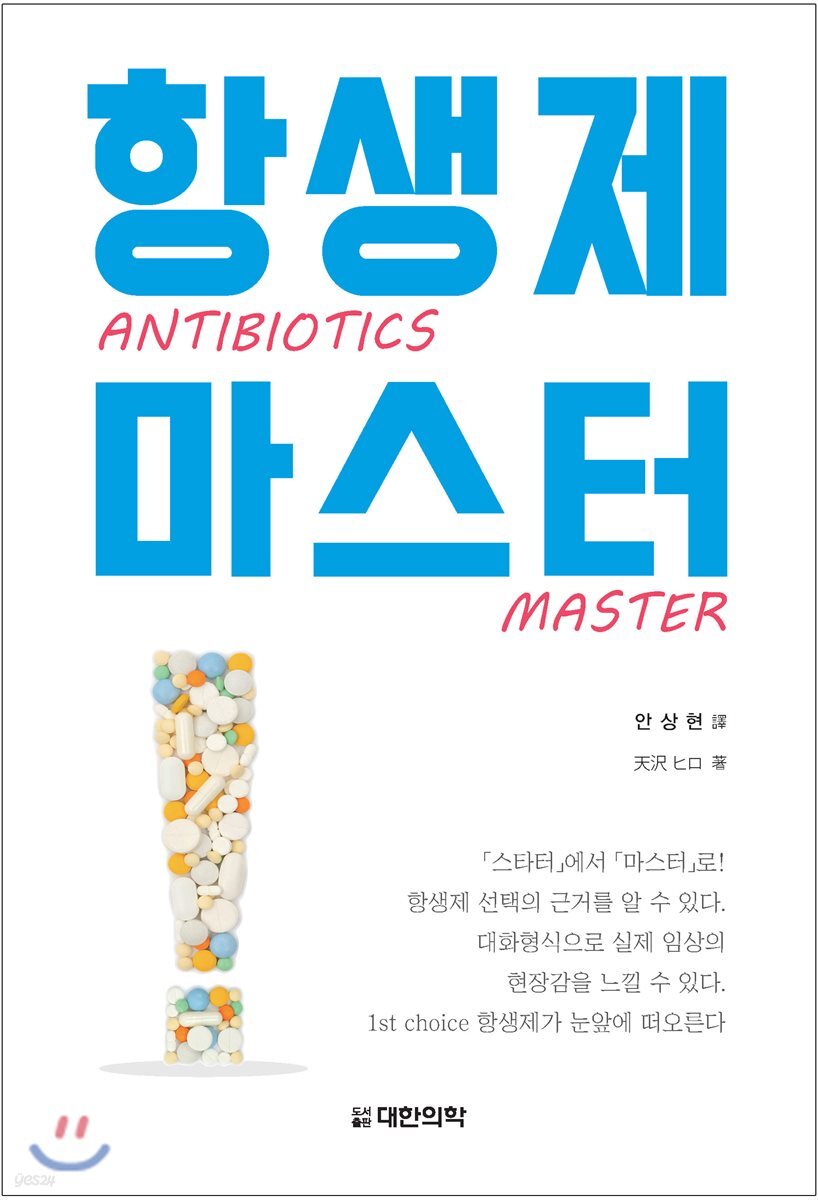
Antibiotic Master
 |
Description
Book Introduction
The development of antibiotics is slow, but the problem of antibiotic resistance, such as superbugs, continues to worsen, and new infectious diseases are on the rise.
Additionally, the translator has also experienced the difficulty of using antibiotics properly while practicing at university hospitals, general hospitals, and clinics.
This book expands on the knowledge from the previous book, "Antibiotic Starter," and provides easy-to-understand explanations so you can apply them immediately in the field.
It is suitable for not only medical professionals such as doctors and nurses who are currently doing their best on the front lines, but also medical and nursing students who want to learn more about antibiotics.
If you still have vague anxiety or fear about antibiotics, study this book right now.
I recommend this book not simply because I am the translator of the book, but also as a senior who has already set foot on the clinical path.
Additionally, the translator has also experienced the difficulty of using antibiotics properly while practicing at university hospitals, general hospitals, and clinics.
This book expands on the knowledge from the previous book, "Antibiotic Starter," and provides easy-to-understand explanations so you can apply them immediately in the field.
It is suitable for not only medical professionals such as doctors and nurses who are currently doing their best on the front lines, but also medical and nursing students who want to learn more about antibiotics.
If you still have vague anxiety or fear about antibiotics, study this book right now.
I recommend this book not simply because I am the translator of the book, but also as a senior who has already set foot on the clinical path.
index
Chapter 1: Learning About Infectious Diseases in a Fun Way
1 Why is it called an infection? ─ When thinking about infection
2.
On the Book of Infectious Diseases - Thoughts from Hiro Amasawa
3.
On the Gram Stain - One More Thought from Hiro Amasawa
Chapter 2: The Ins and Outs of Bacteria as Seen Through Gram Staining
1.
Differentiation through Gram staining is key! ─ Gram-positive cocci
2.
Each requires specific treatment ─ Gram-positive bacilli ·
3.
Knowing Moraxella, License Initiation - Gram-negative cocci
4.
Are there really so many types of GNR? ─ Gram-negative bacilli...
5.
Let's review! ─ Atypical bacteria
6.
In clinical practice, they are often lumped together as anaerobic bacteria.
7.
Various Resistance Problems ─ SPACE ·
8.
Syphilis can occur from anything - spirochete
Chapter 3: Antibiotic Master
1.
If you give up, that's where antibiotics end - penicillin.
2.
Distinguishing between penicillins and cephalosporins is key
3.
There are limited situations in which it should be used ─ carbapenems ·
4.
How to Distinguish Between Clarithromycin and Azithromycin? ─ Macrolides
5.
Another rather unusual antibiotic - tetracycline
6.
When should I use it? ─ Newquinolones
7.
Restricting non-specialist use of aminoglycosides
8.
Expanding the scope of clinical practice - Other antibiotics to remember
9. MRSA → Vancomycin is the representative! What about the rest? ─ Anti-MRSA agents
Chapter 4: Fighting Infectious Diseases: Learning from Case Studies
1.
Let's cherish the feeling of first impressions ─ before fighting the infection.
2.
My throat hurts!
3.
I have phlegm!
4.
My head hurts!
5.
My knees hurt!
6.
My legs hurt!
7.
My ears hurt!
8.
I have severe diarrhea!
9.
I only have a fever! (1)
10.
I only have a fever! (2) ··
11.
I only have a fever! (3)
12.
Antibiotic Review
1 Why is it called an infection? ─ When thinking about infection
2.
On the Book of Infectious Diseases - Thoughts from Hiro Amasawa
3.
On the Gram Stain - One More Thought from Hiro Amasawa
Chapter 2: The Ins and Outs of Bacteria as Seen Through Gram Staining
1.
Differentiation through Gram staining is key! ─ Gram-positive cocci
2.
Each requires specific treatment ─ Gram-positive bacilli ·
3.
Knowing Moraxella, License Initiation - Gram-negative cocci
4.
Are there really so many types of GNR? ─ Gram-negative bacilli...
5.
Let's review! ─ Atypical bacteria
6.
In clinical practice, they are often lumped together as anaerobic bacteria.
7.
Various Resistance Problems ─ SPACE ·
8.
Syphilis can occur from anything - spirochete
Chapter 3: Antibiotic Master
1.
If you give up, that's where antibiotics end - penicillin.
2.
Distinguishing between penicillins and cephalosporins is key
3.
There are limited situations in which it should be used ─ carbapenems ·
4.
How to Distinguish Between Clarithromycin and Azithromycin? ─ Macrolides
5.
Another rather unusual antibiotic - tetracycline
6.
When should I use it? ─ Newquinolones
7.
Restricting non-specialist use of aminoglycosides
8.
Expanding the scope of clinical practice - Other antibiotics to remember
9. MRSA → Vancomycin is the representative! What about the rest? ─ Anti-MRSA agents
Chapter 4: Fighting Infectious Diseases: Learning from Case Studies
1.
Let's cherish the feeling of first impressions ─ before fighting the infection.
2.
My throat hurts!
3.
I have phlegm!
4.
My head hurts!
5.
My knees hurt!
6.
My legs hurt!
7.
My ears hurt!
8.
I have severe diarrhea!
9.
I only have a fever! (1)
10.
I only have a fever! (2) ··
11.
I only have a fever! (3)
12.
Antibiotic Review
GOODS SPECIFICS
- Date of publication: May 11, 2018
- Page count, weight, size: 262 pages | 498g | 153*223*20mm
- ISBN13: 9791155900925
- ISBN10: 1155900928
You may also like
카테고리
korean


korean

![ELLE 엘르 스페셜 에디션 A형 : 12월 [2025]](http://librairie.coreenne.fr/cdn/shop/files/b8e27a3de6c9538896439686c6b0e8fb.jpg?v=1766436872&width=3840)


