

Rorschach Comprehensive System
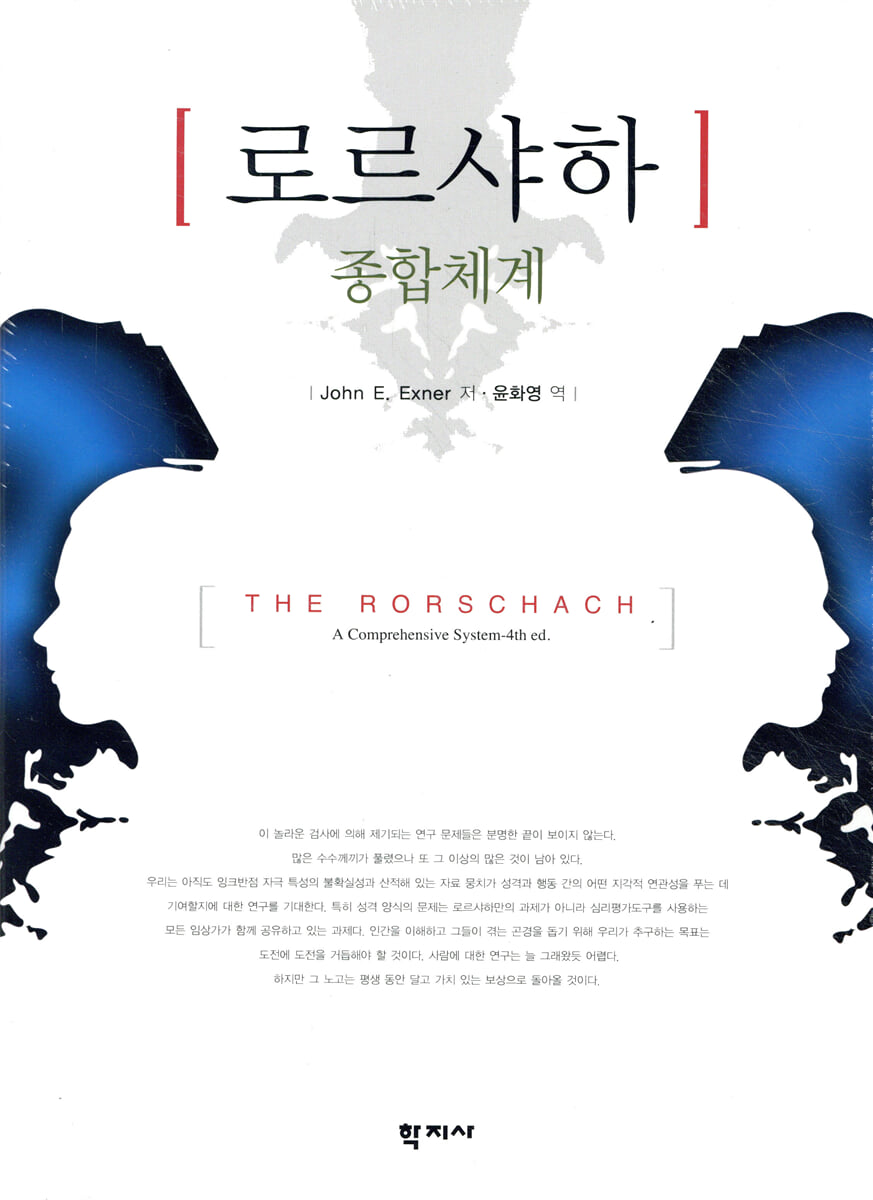 |
Description
Book Introduction
A friendly guide to the systematic principles of careful and clear scoring and interpretation of the Rorschach test.
As with all psychological tests, we must recognize the importance of their role in the process of selection, administration, scoring, interpretation, and treatment. Dr. Exner's point and emphasis on the knowledge, attitude, and experience of the person using the tool for accurate and specific diagnostic decisions cannot be overemphasized.
It would be extremely reckless and irresponsible to think that studying only this book or through personal study is the end all for administering, scoring, and interpreting the Rorschach.
However, through the guidance and supervision of a clinical psychologist with recognized expertise and experience, this book will serve as a textbook for us to gain a more humble, honest, and surprising experience of understanding a profound and wondrous individual.
This book will also serve as an opportunity to deeply reflect on the clinician's responsibility and sense of calling, from step-by-step interpretation and the interpreter's decision, to an integrated perspective and diagnostic decision, and ultimately, to therapeutic recommendations.
As with all psychological tests, we must recognize the importance of their role in the process of selection, administration, scoring, interpretation, and treatment. Dr. Exner's point and emphasis on the knowledge, attitude, and experience of the person using the tool for accurate and specific diagnostic decisions cannot be overemphasized.
It would be extremely reckless and irresponsible to think that studying only this book or through personal study is the end all for administering, scoring, and interpreting the Rorschach.
However, through the guidance and supervision of a clinical psychologist with recognized expertise and experience, this book will serve as a textbook for us to gain a more humble, honest, and surprising experience of understanding a profound and wondrous individual.
This book will also serve as an opportunity to deeply reflect on the clinician's responsibility and sense of calling, from step-by-step interpretation and the interpreter's decision, to an integrated perspective and diagnostic decision, and ultimately, to therapeutic recommendations.
index
Translator's Preface
Recommendation
Author's Preface
The Short Life of Hermann Rorschach
Part 1: The History and Development of Rorschach
Chapter 1 Overview
Chapter 2: Development of the Test: The Rorschach System
Chapter 3: Discussion, Critique, and Decision
Part 2: Rorschach Administration and Scoring
Chapter 4: Rorschach Implementation: Decisions and Procedures
Chapter 5 Scoring: Rorschach Languages
Chapter 6: Response Domains and Developmental Qualities: Symbolization and Reference
Chapter 7 Decision-makers: Symbolization and Reference
Chapter 8: Form, Content, Ordinary Responses, and Organized Activities
Chapter 9 Special Points
Chapter 10 Structural Summary
Part 3: The Essence of Rorschach
Chapter 11 Reaction Process
Chapter 12 Normative Data
Part 4: Interpreting Rorschach
Chapter 13 General Guidelines on Interpretation
Chapter 14: Control and Stress Tolerance/Resilience
Chapter 15: Situational Stress
Chapter 16 Jeongdong
Chapter 17 Information Processing
Chapter 18 Cognitive Mediation Process
Chapter 19: Formation of Ideas
Chapter 20 Self-Perception
Chapter 21 Interpersonal Perception and Behavior
Chapter 22 Integration of Interpretation Results
Appendix I Morphological Criteria
ⅡReference Materials for Non-Patient Groups in Children and Adolescents
ⅢTranslator's Appendix
Recommendation
Author's Preface
The Short Life of Hermann Rorschach
Part 1: The History and Development of Rorschach
Chapter 1 Overview
Chapter 2: Development of the Test: The Rorschach System
Chapter 3: Discussion, Critique, and Decision
Part 2: Rorschach Administration and Scoring
Chapter 4: Rorschach Implementation: Decisions and Procedures
Chapter 5 Scoring: Rorschach Languages
Chapter 6: Response Domains and Developmental Qualities: Symbolization and Reference
Chapter 7 Decision-makers: Symbolization and Reference
Chapter 8: Form, Content, Ordinary Responses, and Organized Activities
Chapter 9 Special Points
Chapter 10 Structural Summary
Part 3: The Essence of Rorschach
Chapter 11 Reaction Process
Chapter 12 Normative Data
Part 4: Interpreting Rorschach
Chapter 13 General Guidelines on Interpretation
Chapter 14: Control and Stress Tolerance/Resilience
Chapter 15: Situational Stress
Chapter 16 Jeongdong
Chapter 17 Information Processing
Chapter 18 Cognitive Mediation Process
Chapter 19: Formation of Ideas
Chapter 20 Self-Perception
Chapter 21 Interpersonal Perception and Behavior
Chapter 22 Integration of Interpretation Results
Appendix I Morphological Criteria
ⅡReference Materials for Non-Patient Groups in Children and Adolescents
ⅢTranslator's Appendix
GOODS SPECIFICS
- Date of issue: February 10, 2011
- Page count, weight, size: 935 pages | 2,037g | 188*254*40mm
- ISBN13: 9788963304502
- ISBN10: 8963304507
You may also like
카테고리
korean


korean

![GQ KOREA Mark (Monthly): December [2025]](http://librairie.coreenne.fr/cdn/shop/files/8ef265dbbfbf186523ed75ba7319009d.jpg?v=1765340328&width=3840)


