

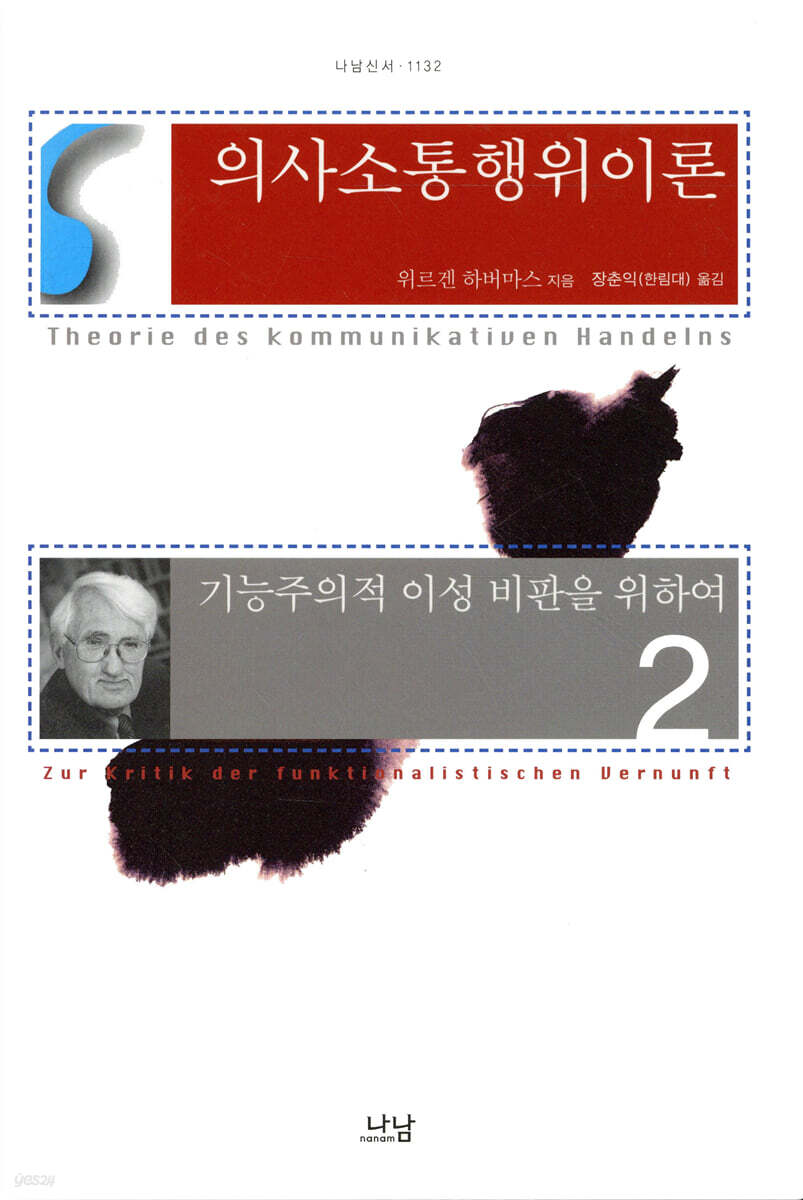
Communication Behavior Theory 2
 |
Description
Book Introduction
The most representative work of 20th century modern social theory is undoubtedly Habermas's "Theory of Communicative Action."
This book contains numerous ideological touchstones that can serve as a guide for exploring our modern history, or even our intellectual history, which is saturated with discourses of Westernization and modernization.
Habermas is conducting in-depth discussions on the differences between "primitive thinking" and "scientific thinking of modern man" raised by French structuralist Levi-Strauss while exploring "wild thinking," the issue of "rationality," which is a very important concept in establishing the boundary between the West and the non-West and has thus become a political concept, the issues of modernity and social modernization that have become hot potatoes in our academic world, postmodernism, neoconservatism, etc.
In this book, Habermas systematically accepts the theoretical history of sociology, from Marx, Weber, Durkheim, Mead, and Parsons, while on the other hand, he comprehensively covers modern social theory, ranging from cognitive psychology to linguistic theory, action theory, cultural anthropology, and systems theory.
This book contains numerous ideological touchstones that can serve as a guide for exploring our modern history, or even our intellectual history, which is saturated with discourses of Westernization and modernization.
Habermas is conducting in-depth discussions on the differences between "primitive thinking" and "scientific thinking of modern man" raised by French structuralist Levi-Strauss while exploring "wild thinking," the issue of "rationality," which is a very important concept in establishing the boundary between the West and the non-West and has thus become a political concept, the issues of modernity and social modernization that have become hot potatoes in our academic world, postmodernism, neoconservatism, etc.
In this book, Habermas systematically accepts the theoretical history of sociology, from Marx, Weber, Durkheim, Mead, and Parsons, while on the other hand, he comprehensively covers modern social theory, ranging from cognitive psychology to linguistic theory, action theory, cultural anthropology, and systems theory.
index
V.
The Paradigm Shift in Mead and Durkheim: From Purposeful Activities to Communicative Acts
Preliminary Considerations
1.
Foundation of Social Science through Communication Theory
1) Problem setting of Mead's communication theory
2) The transition from prehuman gestural language to symbol-mediated interaction: taking on the attitude of the other.
3) Further considerations: Elaborating Mead's theory of meaning with Wittgenstein's ideas on rule-following.
4) Transition from interaction mediated by symbols to interaction performed according to norms (role-playing)
5) Complementary composition of the social world and the subjective world
(1) Propositions and perception of objects
(2) Norms and role behavior
(3) Identity and desire tendencies
2.
The authority of the sacred and the normative background of communicative acts
1) Durkheim's consideration of the sacred roots of morality
2) Weaknesses of Durkheim's theory
3) Additional Considerations: Three Roots of Communication
(1) Propositional element
(2) Expressive elements
(3) Illustrative elements
(4) Reflective forms of understanding-oriented behavior and reflective self-relationships
3.
The rational structure of the verbalization of the sacred
1) Changes in legal development and social integration
(1) Non-contractual basis of the contract
(2) From mechanical solidarity to organic solidarity
2) The logic of changes in social integration formats, examined using the hypothetical extreme case of a fully integrated society as an example.
3) The foundation of discussion ethics by Mead
4) Additional Considerations: Identity and Individualization
Numerical, grammatical, and qualitative self-identification of the person (Henrich, Tugendhat)
5) Two reservations about Mead's social theory
Ⅵ.
Second Interim Reflection: Systems and Lifeworlds
Preliminary Considerations:
Social integration and system integration based on Durkheim's division of labor theory
1.
The concept of the life world and the hermeneutic idealism of the understanding society
1) Lifeworld as the horizon and background of communication acts
2) The concept of social phenomenology and life world in light of communication theory
3) From the formal pragmatic concept of lifeworld to the narrative concept of lifeworld to the sociological concept of lifeworld
4) The function of various understanding-oriented actions in the reproduction of the life world.
Multiple Dimensions of Rationalization of Life
5) The limitations of sociology of understanding that equates the life world with society.
2.
Separation of the system and the life world
1) Tribal society as a sociocultural life world
2) Tribal society as a self-regulating system
3) Four mechanisms of system differentiation
4) How the system integration mechanism is institutionally established in the living world.
5) Rationalization of the living world versus technologization of the living world
Reducing the burden of everyday language through de-verbalized communication media
6) Separation of the system and the life world, and the reconstruction of the reification proposition
(1) Concept of mutual understanding
(2) Systematic classification of mutual understanding forms
Ⅶ.
Parsons: The Problem of Constructing Social Theory
Preliminary Considerations: Parsons' Place in the History of Theory
1.
From normative action theory to a systems theory of society
1) The 1937 Action Theory Project
(1) The concept of conscious action
(2) Normative concept of action
(3) The dilemma of utilitarianism
(4) Hobbesian problem
(5) Social interaction.
The problem of coordinating actions under conditions of double contingency: A first theoretical power decision
2) Behavioral theory in the early middle period
(1) Combination of motivation and values
(2) How do culture, society, and personality determine behavioral attitudes?
(3) Introduction of "type variables": the second theoretical strategic decision
3) Refinement of the concept of systems and abandonment of the primacy of action theory:
Third Theory Strategic Decision
2.
Development of systems theory
1) Theory development process since (working paper)
(1) Leveling the gap between social integration and functional integration
(2) Formation of a four-function diagram and system
(3) Modification of type variables to fit the 4-function diagram
(4) Reinterpreting cultural values using cybernetic criteria
(5) Cultural determinism
2) The vulnerability of post-philosophy with an anthropological tendency and the compromise between systems theory and action theory.
3) Control media theory
(1) A way to reduce the burden of communication - Interaction mediated by media: Technologization of the life world
(2) Structural characteristics, qualitative properties, and system-forming effects of monetary media
(3) Difficulties in transferring media knowledge to power relations
(4) The problem of overgeneralization: influence and value constraints versus money and power.
(5) Parsons' action-theoretic explanation of the media.
Generalized communication formats versus controlled media
3.
Modernity theory
1) The distinction between rationalization of the life world and increased system complexity is canceled.
2) Additional Notes: On Attempts to Re-Kantianize Parsons
Ⅷ.
Conclusion: From Parsons to Weber to Marx
Preliminary considerations
1.
A Retrospective on Weber's Theory of Modernity
1) Weber's bureaucratization proposition expressed in the concepts of system and life world.
2) Reconstruction of Weber's explanation of the emergence of capitalism
3) Colonization of the Lifeworld: A Reconsideration of Weber's Diagnosis of the Age
(1) Exchange relationship between the system and the life world in modern society
(2) The drying up of the political public sphere due to a one-sided lifestyle and bureaucracy
(3) Marx vs. Weber: Developmental Dynamics vs. Developmental Logic
(4) Proposition to be organized
2.
Marx and the internal colonization proposition
1) Factualization of real abstractions or socially integrated action connections
(1) Public service of value theory
(2) Some weaknesses of value theory
2) Model of exchange relationship between system and life world
(1) State interventionism, popular democracy, and the welfare state
(2) Welfare state compromise
(3) The decline of ideology and fragmented daily consciousness
3) Legislation trends (four stages of legislation)
(1) Bourgeois state
(2) Rule of law
(3) Democratic constitutional state
(4) Legislation in an interventionist state: The ambivalence of freedom guarantee and freedom deprivation
3.
The Task of Critical Social Theory
1) Topics of early critical theory
2) Connection with communication behavior theory
(1) The integrated form of post-liberal society
(2) Socialization and self-development in the family
(3) Mass media and popular culture
(4) New resistance potential
3) The theory of rationality and historical context, rejection of fundamentalist claims
References
Search
The Paradigm Shift in Mead and Durkheim: From Purposeful Activities to Communicative Acts
Preliminary Considerations
1.
Foundation of Social Science through Communication Theory
1) Problem setting of Mead's communication theory
2) The transition from prehuman gestural language to symbol-mediated interaction: taking on the attitude of the other.
3) Further considerations: Elaborating Mead's theory of meaning with Wittgenstein's ideas on rule-following.
4) Transition from interaction mediated by symbols to interaction performed according to norms (role-playing)
5) Complementary composition of the social world and the subjective world
(1) Propositions and perception of objects
(2) Norms and role behavior
(3) Identity and desire tendencies
2.
The authority of the sacred and the normative background of communicative acts
1) Durkheim's consideration of the sacred roots of morality
2) Weaknesses of Durkheim's theory
3) Additional Considerations: Three Roots of Communication
(1) Propositional element
(2) Expressive elements
(3) Illustrative elements
(4) Reflective forms of understanding-oriented behavior and reflective self-relationships
3.
The rational structure of the verbalization of the sacred
1) Changes in legal development and social integration
(1) Non-contractual basis of the contract
(2) From mechanical solidarity to organic solidarity
2) The logic of changes in social integration formats, examined using the hypothetical extreme case of a fully integrated society as an example.
3) The foundation of discussion ethics by Mead
4) Additional Considerations: Identity and Individualization
Numerical, grammatical, and qualitative self-identification of the person (Henrich, Tugendhat)
5) Two reservations about Mead's social theory
Ⅵ.
Second Interim Reflection: Systems and Lifeworlds
Preliminary Considerations:
Social integration and system integration based on Durkheim's division of labor theory
1.
The concept of the life world and the hermeneutic idealism of the understanding society
1) Lifeworld as the horizon and background of communication acts
2) The concept of social phenomenology and life world in light of communication theory
3) From the formal pragmatic concept of lifeworld to the narrative concept of lifeworld to the sociological concept of lifeworld
4) The function of various understanding-oriented actions in the reproduction of the life world.
Multiple Dimensions of Rationalization of Life
5) The limitations of sociology of understanding that equates the life world with society.
2.
Separation of the system and the life world
1) Tribal society as a sociocultural life world
2) Tribal society as a self-regulating system
3) Four mechanisms of system differentiation
4) How the system integration mechanism is institutionally established in the living world.
5) Rationalization of the living world versus technologization of the living world
Reducing the burden of everyday language through de-verbalized communication media
6) Separation of the system and the life world, and the reconstruction of the reification proposition
(1) Concept of mutual understanding
(2) Systematic classification of mutual understanding forms
Ⅶ.
Parsons: The Problem of Constructing Social Theory
Preliminary Considerations: Parsons' Place in the History of Theory
1.
From normative action theory to a systems theory of society
1) The 1937 Action Theory Project
(1) The concept of conscious action
(2) Normative concept of action
(3) The dilemma of utilitarianism
(4) Hobbesian problem
(5) Social interaction.
The problem of coordinating actions under conditions of double contingency: A first theoretical power decision
2) Behavioral theory in the early middle period
(1) Combination of motivation and values
(2) How do culture, society, and personality determine behavioral attitudes?
(3) Introduction of "type variables": the second theoretical strategic decision
3) Refinement of the concept of systems and abandonment of the primacy of action theory:
Third Theory Strategic Decision
2.
Development of systems theory
1) Theory development process since (working paper)
(1) Leveling the gap between social integration and functional integration
(2) Formation of a four-function diagram and system
(3) Modification of type variables to fit the 4-function diagram
(4) Reinterpreting cultural values using cybernetic criteria
(5) Cultural determinism
2) The vulnerability of post-philosophy with an anthropological tendency and the compromise between systems theory and action theory.
3) Control media theory
(1) A way to reduce the burden of communication - Interaction mediated by media: Technologization of the life world
(2) Structural characteristics, qualitative properties, and system-forming effects of monetary media
(3) Difficulties in transferring media knowledge to power relations
(4) The problem of overgeneralization: influence and value constraints versus money and power.
(5) Parsons' action-theoretic explanation of the media.
Generalized communication formats versus controlled media
3.
Modernity theory
1) The distinction between rationalization of the life world and increased system complexity is canceled.
2) Additional Notes: On Attempts to Re-Kantianize Parsons
Ⅷ.
Conclusion: From Parsons to Weber to Marx
Preliminary considerations
1.
A Retrospective on Weber's Theory of Modernity
1) Weber's bureaucratization proposition expressed in the concepts of system and life world.
2) Reconstruction of Weber's explanation of the emergence of capitalism
3) Colonization of the Lifeworld: A Reconsideration of Weber's Diagnosis of the Age
(1) Exchange relationship between the system and the life world in modern society
(2) The drying up of the political public sphere due to a one-sided lifestyle and bureaucracy
(3) Marx vs. Weber: Developmental Dynamics vs. Developmental Logic
(4) Proposition to be organized
2.
Marx and the internal colonization proposition
1) Factualization of real abstractions or socially integrated action connections
(1) Public service of value theory
(2) Some weaknesses of value theory
2) Model of exchange relationship between system and life world
(1) State interventionism, popular democracy, and the welfare state
(2) Welfare state compromise
(3) The decline of ideology and fragmented daily consciousness
3) Legislation trends (four stages of legislation)
(1) Bourgeois state
(2) Rule of law
(3) Democratic constitutional state
(4) Legislation in an interventionist state: The ambivalence of freedom guarantee and freedom deprivation
3.
The Task of Critical Social Theory
1) Topics of early critical theory
2) Connection with communication behavior theory
(1) The integrated form of post-liberal society
(2) Socialization and self-development in the family
(3) Mass media and popular culture
(4) New resistance potential
3) The theory of rationality and historical context, rejection of fundamentalist claims
References
Search
GOODS SPECIFICS
- Date of issue: March 5, 2006
- Page count, weight, size: 672 pages | 153*224*35mm
- ISBN13: 9788930081320
- ISBN10: 8930081320
You may also like
카테고리
korean


korean

![GQ KOREA Mark (Monthly): December [2025]](http://librairie.coreenne.fr/cdn/shop/files/8ef265dbbfbf186523ed75ba7319009d.jpg?v=1765340328&width=3840)


