

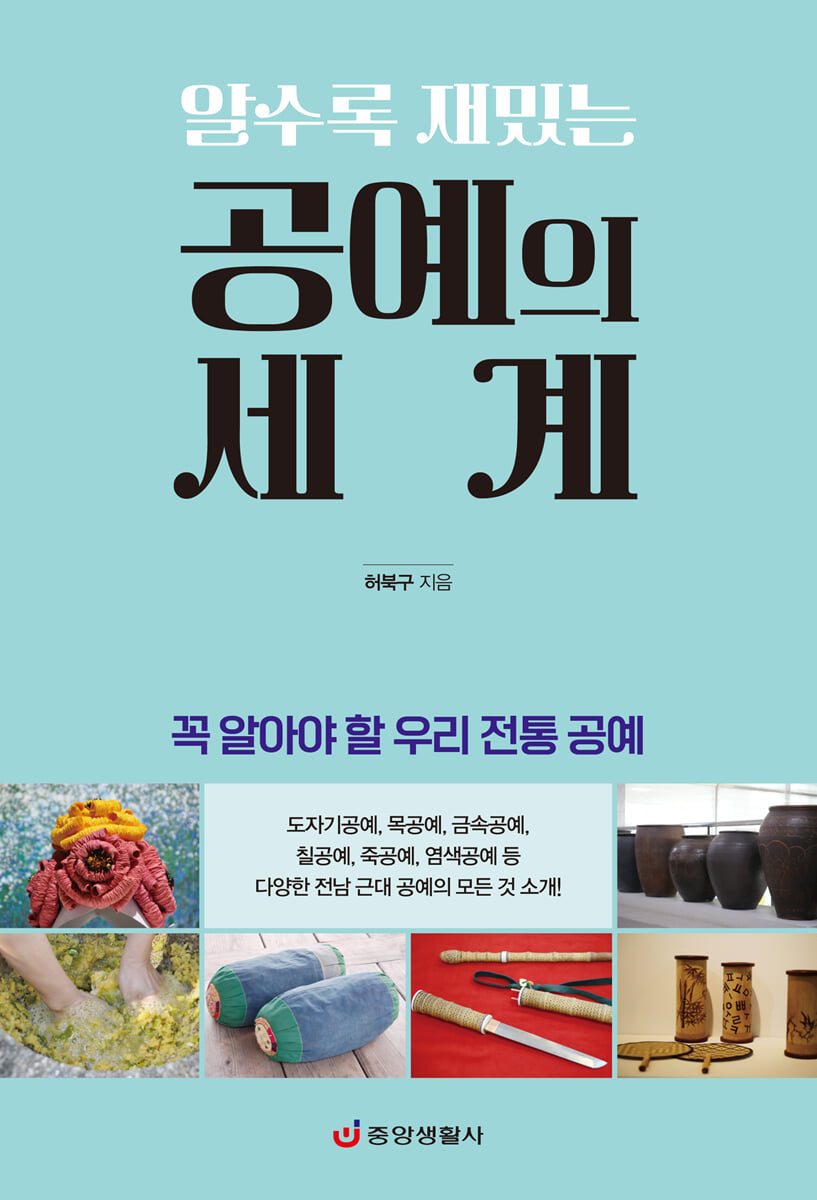
The World of Crafts (The More You Know, the More Fun) : Our Traditional Crafts You Must Know
 |
Description
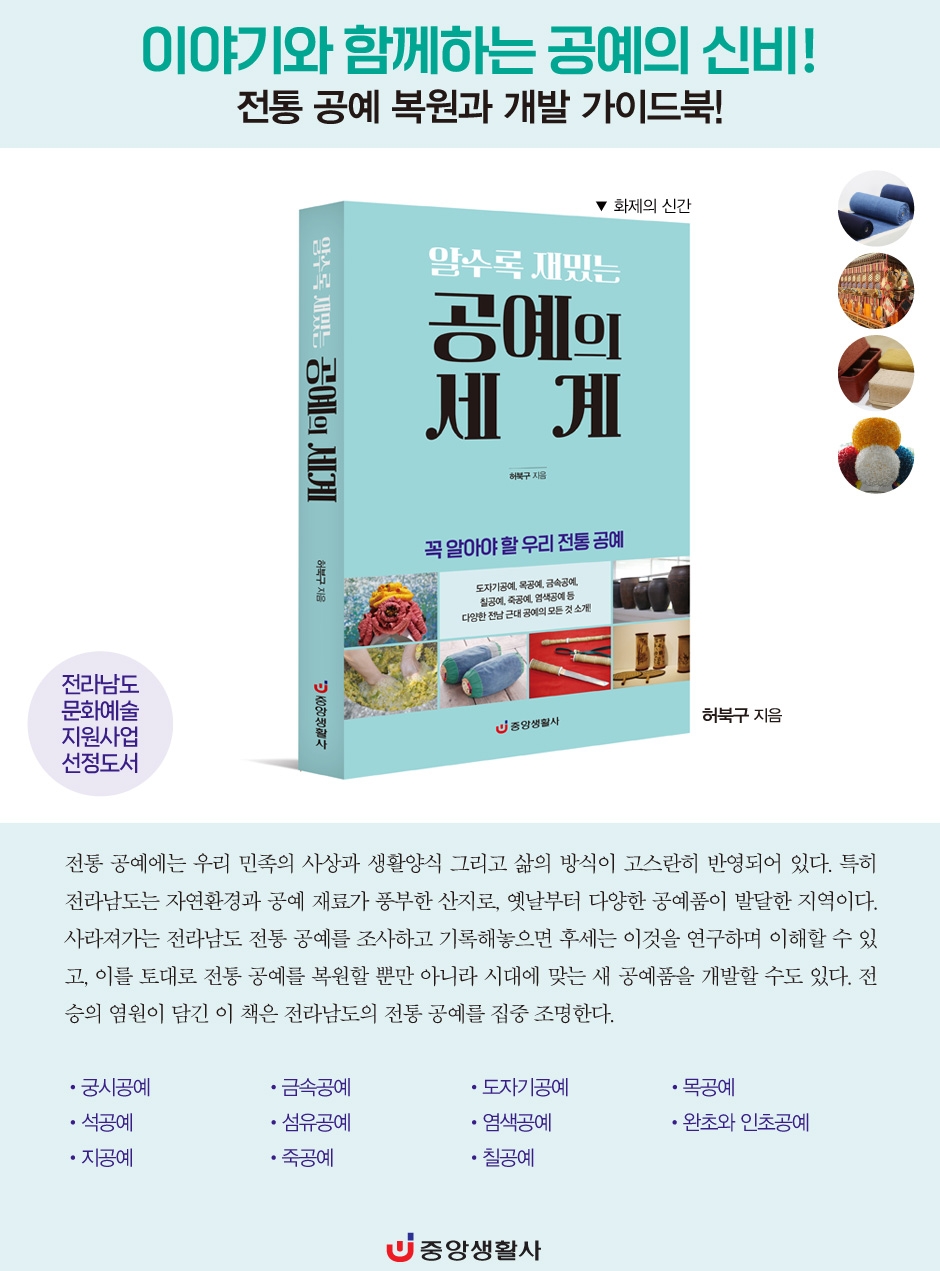
Book Introduction
* Our traditional crafts you must know!
* Books selected for the Jeollanam-do Culture and Arts Support Project!
The author, Heo Buk-gu, is a horticultural and agricultural expert and a first-class curator at the Ministry of Culture, Sports and Tourism, with a high reputation both domestically and internationally.
He has lectured on horticulture at several domestic universities, served as a columnist for agricultural media, and as a director of academic societies. He has also been invited to lecture abroad several times by UNESCO Jakarta Office, universities in Taiwan, and the Textile and Craft Museum, and has been actively involved in various activities.
Despite such an outstanding career, the author continued to devote himself to writing and wrote this book.
This is a compilation of various traditional crafts of Jeollanam-do, including Gangjin pottery, Damyang bamboo crafts, and Naju indigo dyeing and fans, which were directly explored.
This book, which contains a deep knowledge and affection for local culture, was noticed by Jeollanam-do and the Jeollanam-do Cultural Foundation, and was supported for publication as a work selected for the Jeollanam-do Cultural Arts Support Project.
Therefore, this book can be said to be a special work among the author's 130 domestic and foreign books, 350 papers, and 2,500 columns.
* Books selected for the Jeollanam-do Culture and Arts Support Project!
The author, Heo Buk-gu, is a horticultural and agricultural expert and a first-class curator at the Ministry of Culture, Sports and Tourism, with a high reputation both domestically and internationally.
He has lectured on horticulture at several domestic universities, served as a columnist for agricultural media, and as a director of academic societies. He has also been invited to lecture abroad several times by UNESCO Jakarta Office, universities in Taiwan, and the Textile and Craft Museum, and has been actively involved in various activities.
Despite such an outstanding career, the author continued to devote himself to writing and wrote this book.
This is a compilation of various traditional crafts of Jeollanam-do, including Gangjin pottery, Damyang bamboo crafts, and Naju indigo dyeing and fans, which were directly explored.
This book, which contains a deep knowledge and affection for local culture, was noticed by Jeollanam-do and the Jeollanam-do Cultural Foundation, and was supported for publication as a work selected for the Jeollanam-do Cultural Arts Support Project.
Therefore, this book can be said to be a special work among the author's 130 domestic and foreign books, 350 papers, and 2,500 columns.
- You can preview some of the book's contents.
Preview
index
Header
Chapter 1 Archery Crafts
1.
Archery and Gwangyang Archery
2.
Gwangyang Archery
Chapter 2 Metal Crafts
1.
Jangdo
Long sword and paedo | Types and uses of paedo
2.
Gwangyang Jangdo
The legacy of Gwangyang Jangdojang | Gwangyang Paedo and Jangdojang's expansion into the metropolitan area | Gwangyang Paedo, a craft of Seongnam
3.
Gokseong Nakjukjangdo
Chapter 3 Ceramic Crafts
1.
ceramic
Historical ceramic production sites in Jeollanam-do | Yeongam glazed pottery and Haenam's green celadon | Gangjin Goryeo celadon | Buncheong ware from Goheung and Muan | Ceramics from Mokpo and Muan | Ceramics from Hahan-ri, Jukgok-myeon, Gokseong-gun
2.
earthenware
Onggi and the Onggi Tomb of Jeollanam-do|Onggi Culture and Onggi Crafts|Onggi and Cheotbawi Taerim of Jeollanam-do|Onggi and Place Names of Various Regions of Jeollanam-do|Onggi of Gwangyang|Onggi of Boseong|Onggi of Chilryang-myeon, Gangjin
Chapter 4 Woodworking
1.
Gangjin wooden bier
2.
Soban and Najuban
The meaning and types of soban | Main production areas of soban | Styles of soban | Connections between the rim and legs of Najuban | Materials of soban | Najuban artisans during the Japanese colonial period
3.
Hwasun Dongbok Somok
Chapter 5 Stonework
1.
Jade crafts
Jade and Jadeite|Mahan's Jade Crafts
2.
Haenam jade crafts
Jade production site, Okmaesan Mountain and Okdong-ri in Haenam | Haenam, a famous jade production site | Haenam Jade Craft Street
Chapter 6: Textile Crafts
1.
Naju Seomok and Saetgolnai
Naju Saetgol Details|Luxury Unknown, Naju Saetgol Details
2.
Embroidery on pillows and pillowcases
Origin and types of pillows | Pillow composition | Pillow embroidery and symbols | Jeollanam-do's Yukgol pillow | Naju Gongsan-myeon strawberry pattern pillow | Naju Bannam-myeon indigo-dyed pillow
3.
Traditional shoes, Hwa-hye
Traditional Shoes|Hwahye of Suncheon
Chapter 7 Dyeing Crafts
1.
Persimmon dyeing
Jeonnam's Persimmon Dyeing|Modern Jeonnam's Persimmon Dyeing Methods|Usage of Persimmon Dyeing in Jindo|How Persimmons Were Used in Jindo|Modern Persimmon Mud Dyeing in Jindo
2.
Net and net dyeing
Fishing gear dyeing culture | Jeollanam-do's net and net dyeing culture | The net dyeing method of Yeongsan River fishermen
3.
Dyeing of fabric using woody plants
Dyeing with chestnut trees | Dyeing with pine bark | Dyeing with pine bark
4.
Gardenia for weaving hemp and dyeing
5.
Indigo dyeing
Jeonnam and Indigo Dyeing | Indigo Dyeing in Naju | Indigo Dyeing Period and Method in Naju | Indigo Dye Prices and Where to Buy | Transactions and Dyeing Costs of Indigo Dyeing Fabrics | Indigo Dyeing Designated as a National Intangible Cultural Property
6.
Yellow dyeing
Chapter 8: The Craft of Wancho and Manchurian
1.
King's bones and reeds
The uses of the rhizome and the rhizome
2.
Naju's golpul and wanggol crafts
Naju, a famous producer of wanggol and hwamunseok | The influx of Japanese people into Naju Yeongsanpo and the art of rhododendron crafts | Naju Yeongsanpo, once the largest rhododendron craft village in Korea
3.
Hampyeong Wanggol Mat
Chapter 9: Paper Crafts
1.
Jihwa Crafts
The meaning and origin of Jihwa | Jihwa used on Nongak hats in Jeollanam-do | Jihwa used on biers in Jeollanam-do
2.
Korean paper
Jigok-ri, Gwangyang-si and Gu Sa-jin Hye-hyeon, Jangseong, a production site of Joseon paper during the Japanese colonial period | Mulberry bark for papermaking | Jangseong Hanji workshop during the Japanese colonial period | Jangseong Hanji after liberation
Chapter 10 Bamboo Crafts
1.
Naju Bamboo Crafts
Jeonnam Bamboo Crafts|Naju Bamboo Crafts|Naju Craft Factory|Naju Salted Wood Products
2.
Damyang Bamboo Crafts
Damyang Bamboo Crafts | Damyang Bamboo Market and Bamboo Crafts | Damyang's Bamboo Curtains
3.
Nakjuk
Falling bamboo and fallen flowers | Damyang falling bamboo
4.
Damyang Vegetable Market
5.
fan
Fans and production sites in ancient literature | Fan production sites in Byeolgeongon, Naju and Damyang | Geumseongseon in Naju | The decline of Naju fans | Naju fan production sites, Nampyeong and Seokjeong-ri | Naju fan artisans specializing in Naju fans | Naju fans at the Tokyo National Museum | Naju fans from the Joseon Dynasty at the British Museum | Damyang fans
6.
Jinso (true comb)
Jinso, Jukjul, and Chambit | Jinso of Jeollanam-do | Jinso of Damyang | Jinso of Yeongam
Chapter 11: Lacquerware
1.
Naju lacquerware
2.
Hwangchil
Chapter 12: Where to Find Modern Jeonnam Crafts
1.
Gwangju History and Folklore Museum
2.
Muan Traditional Lifestyle Culture Theme Park
3.
Suncheon City Deep-Rooted Tree Museum
4.
Yeosu Folk Exhibition Hall
5.
Jangheung Bangchon Relics Exhibition Hall
6.
Jeollanam-do Agricultural Museum
7.
Korea Bamboo Museum
8.
Korea Natural Dyeing Museum
9.
Hampyeong Living Relics Exhibition Hall
References
Chapter 1 Archery Crafts
1.
Archery and Gwangyang Archery
2.
Gwangyang Archery
Chapter 2 Metal Crafts
1.
Jangdo
Long sword and paedo | Types and uses of paedo
2.
Gwangyang Jangdo
The legacy of Gwangyang Jangdojang | Gwangyang Paedo and Jangdojang's expansion into the metropolitan area | Gwangyang Paedo, a craft of Seongnam
3.
Gokseong Nakjukjangdo
Chapter 3 Ceramic Crafts
1.
ceramic
Historical ceramic production sites in Jeollanam-do | Yeongam glazed pottery and Haenam's green celadon | Gangjin Goryeo celadon | Buncheong ware from Goheung and Muan | Ceramics from Mokpo and Muan | Ceramics from Hahan-ri, Jukgok-myeon, Gokseong-gun
2.
earthenware
Onggi and the Onggi Tomb of Jeollanam-do|Onggi Culture and Onggi Crafts|Onggi and Cheotbawi Taerim of Jeollanam-do|Onggi and Place Names of Various Regions of Jeollanam-do|Onggi of Gwangyang|Onggi of Boseong|Onggi of Chilryang-myeon, Gangjin
Chapter 4 Woodworking
1.
Gangjin wooden bier
2.
Soban and Najuban
The meaning and types of soban | Main production areas of soban | Styles of soban | Connections between the rim and legs of Najuban | Materials of soban | Najuban artisans during the Japanese colonial period
3.
Hwasun Dongbok Somok
Chapter 5 Stonework
1.
Jade crafts
Jade and Jadeite|Mahan's Jade Crafts
2.
Haenam jade crafts
Jade production site, Okmaesan Mountain and Okdong-ri in Haenam | Haenam, a famous jade production site | Haenam Jade Craft Street
Chapter 6: Textile Crafts
1.
Naju Seomok and Saetgolnai
Naju Saetgol Details|Luxury Unknown, Naju Saetgol Details
2.
Embroidery on pillows and pillowcases
Origin and types of pillows | Pillow composition | Pillow embroidery and symbols | Jeollanam-do's Yukgol pillow | Naju Gongsan-myeon strawberry pattern pillow | Naju Bannam-myeon indigo-dyed pillow
3.
Traditional shoes, Hwa-hye
Traditional Shoes|Hwahye of Suncheon
Chapter 7 Dyeing Crafts
1.
Persimmon dyeing
Jeonnam's Persimmon Dyeing|Modern Jeonnam's Persimmon Dyeing Methods|Usage of Persimmon Dyeing in Jindo|How Persimmons Were Used in Jindo|Modern Persimmon Mud Dyeing in Jindo
2.
Net and net dyeing
Fishing gear dyeing culture | Jeollanam-do's net and net dyeing culture | The net dyeing method of Yeongsan River fishermen
3.
Dyeing of fabric using woody plants
Dyeing with chestnut trees | Dyeing with pine bark | Dyeing with pine bark
4.
Gardenia for weaving hemp and dyeing
5.
Indigo dyeing
Jeonnam and Indigo Dyeing | Indigo Dyeing in Naju | Indigo Dyeing Period and Method in Naju | Indigo Dye Prices and Where to Buy | Transactions and Dyeing Costs of Indigo Dyeing Fabrics | Indigo Dyeing Designated as a National Intangible Cultural Property
6.
Yellow dyeing
Chapter 8: The Craft of Wancho and Manchurian
1.
King's bones and reeds
The uses of the rhizome and the rhizome
2.
Naju's golpul and wanggol crafts
Naju, a famous producer of wanggol and hwamunseok | The influx of Japanese people into Naju Yeongsanpo and the art of rhododendron crafts | Naju Yeongsanpo, once the largest rhododendron craft village in Korea
3.
Hampyeong Wanggol Mat
Chapter 9: Paper Crafts
1.
Jihwa Crafts
The meaning and origin of Jihwa | Jihwa used on Nongak hats in Jeollanam-do | Jihwa used on biers in Jeollanam-do
2.
Korean paper
Jigok-ri, Gwangyang-si and Gu Sa-jin Hye-hyeon, Jangseong, a production site of Joseon paper during the Japanese colonial period | Mulberry bark for papermaking | Jangseong Hanji workshop during the Japanese colonial period | Jangseong Hanji after liberation
Chapter 10 Bamboo Crafts
1.
Naju Bamboo Crafts
Jeonnam Bamboo Crafts|Naju Bamboo Crafts|Naju Craft Factory|Naju Salted Wood Products
2.
Damyang Bamboo Crafts
Damyang Bamboo Crafts | Damyang Bamboo Market and Bamboo Crafts | Damyang's Bamboo Curtains
3.
Nakjuk
Falling bamboo and fallen flowers | Damyang falling bamboo
4.
Damyang Vegetable Market
5.
fan
Fans and production sites in ancient literature | Fan production sites in Byeolgeongon, Naju and Damyang | Geumseongseon in Naju | The decline of Naju fans | Naju fan production sites, Nampyeong and Seokjeong-ri | Naju fan artisans specializing in Naju fans | Naju fans at the Tokyo National Museum | Naju fans from the Joseon Dynasty at the British Museum | Damyang fans
6.
Jinso (true comb)
Jinso, Jukjul, and Chambit | Jinso of Jeollanam-do | Jinso of Damyang | Jinso of Yeongam
Chapter 11: Lacquerware
1.
Naju lacquerware
2.
Hwangchil
Chapter 12: Where to Find Modern Jeonnam Crafts
1.
Gwangju History and Folklore Museum
2.
Muan Traditional Lifestyle Culture Theme Park
3.
Suncheon City Deep-Rooted Tree Museum
4.
Yeosu Folk Exhibition Hall
5.
Jangheung Bangchon Relics Exhibition Hall
6.
Jeollanam-do Agricultural Museum
7.
Korea Bamboo Museum
8.
Korea Natural Dyeing Museum
9.
Hampyeong Living Relics Exhibition Hall
References
Detailed image
Into the book
Our country's traditional crafts fully reflect our people's thoughts, lifestyle, and way of life.
Jeollanam-do crafts have also been passed down while reflecting the humanities characteristics of the people of the southern region, their lifestyles, and the characteristics of materials produced in the region.
In particular, Jeollanam-do is a mountainous region rich in natural environment and craft materials, and has been a region where various crafts have developed since ancient times.
--- p.4
The 'Sanggam method', which involves engraving or stamping a pattern before completely drying the porcelain, filling the mark with white clay or red clay, firing it first, and then applying celadon glaze and firing it, is a unique Korean method.
Additionally, the subtle blue color of the celadon boasts a unique color that is difficult to imitate anywhere in the world.
Gangjin was a world-class producer of Goryeo celadon, with 70% of the celadon designated as national treasures and treasures being produced in Gangjin.
--- p.54
Even now, there are people who are trying to carry on the tradition of Haenam jade crafts and maintain its reputation.
Along with producing expensive pieces, they are also making crafts that are easily accessible to the general public, such as seals, nameplates, and seals, that suit the tastes of customers, and are making every effort to preserve the jade craft.
Haenam County also recognized these efforts and designated and preserved three jade craftsmen as local cultural heritage of Haenam County in 2015.
--- p.115
A survey of elderly people living in Jeollanam-do on indigo dyeing revealed that indigo dyeing was practiced throughout Jeollanam-do until the 1940s.
In 2016, many seniors over 90 years old had experience with dyeing their hair.
In the case of Jidong Village, Yongjeon-ri, Bonghwang-myeon, Naju-si, it was found that in the 1940s, more than 80% of households grew indigo and dyed it with indigo water.
--- p.173
Damyang is a representative region in Korea where bamboo crafts have developed.
The background to the development of Damyang's bamboo crafts is the climatic conditions and abundance of materials suitable for creating bamboo forests.
This region has gained a reputation as a unique bamboo craft production area through a combination of factors, including the transmission and dissemination of techniques for making the materials, scaling up and division of labor in response to diverse and growing demand, comparative advantages in productivity in terms of geography and means of livelihood, and policy support.
Jeollanam-do crafts have also been passed down while reflecting the humanities characteristics of the people of the southern region, their lifestyles, and the characteristics of materials produced in the region.
In particular, Jeollanam-do is a mountainous region rich in natural environment and craft materials, and has been a region where various crafts have developed since ancient times.
--- p.4
The 'Sanggam method', which involves engraving or stamping a pattern before completely drying the porcelain, filling the mark with white clay or red clay, firing it first, and then applying celadon glaze and firing it, is a unique Korean method.
Additionally, the subtle blue color of the celadon boasts a unique color that is difficult to imitate anywhere in the world.
Gangjin was a world-class producer of Goryeo celadon, with 70% of the celadon designated as national treasures and treasures being produced in Gangjin.
--- p.54
Even now, there are people who are trying to carry on the tradition of Haenam jade crafts and maintain its reputation.
Along with producing expensive pieces, they are also making crafts that are easily accessible to the general public, such as seals, nameplates, and seals, that suit the tastes of customers, and are making every effort to preserve the jade craft.
Haenam County also recognized these efforts and designated and preserved three jade craftsmen as local cultural heritage of Haenam County in 2015.
--- p.115
A survey of elderly people living in Jeollanam-do on indigo dyeing revealed that indigo dyeing was practiced throughout Jeollanam-do until the 1940s.
In 2016, many seniors over 90 years old had experience with dyeing their hair.
In the case of Jidong Village, Yongjeon-ri, Bonghwang-myeon, Naju-si, it was found that in the 1940s, more than 80% of households grew indigo and dyed it with indigo water.
--- p.173
Damyang is a representative region in Korea where bamboo crafts have developed.
The background to the development of Damyang's bamboo crafts is the climatic conditions and abundance of materials suitable for creating bamboo forests.
This region has gained a reputation as a unique bamboo craft production area through a combination of factors, including the transmission and dissemination of techniques for making the materials, scaling up and division of labor in response to diverse and growing demand, comparative advantages in productivity in terms of geography and means of livelihood, and policy support.
--- p.240
Publisher's Review
* Traditional crafts as living tools!
* Guidebook for Restoring and Developing Traditional Crafts!
There are many books related to crafts.
However, most of the books are about hobbies and practical activities, such as knitting and embroidery, that provide friendly guidance so that we can easily follow along in our daily lives.
It is rare to find a book that comprehensively examines traditional crafts.
It may be because traditional crafts have become difficult to come across in everyday life these days, but in fact, traditional crafts were originally practical everyday tools and were commonly found around us in the past.
Depending on the material, there were various types such as metalwork, stonework, etc.
These traditional crafts are particularly significant as clues to understanding the lives of our ancestors, as they fully reflect the thoughts, lifestyles, and ways of life of our people.
Moreover, by utilizing traditional crafts, we can develop crafts and technologies that effectively respond to the new era and globalization.
To ensure the continued preservation of this precious heritage, traditional crafts, the author completed this book by researching records of modern and post-modern crafts in Jeollanam-do and interviewing senior citizens directly.
* Introducing various modern crafts from Jeonnam!
* The mystery of crafts with stories!
Even though the research area was limited to Jeollanam-do Province and not the entire country, the author covered a wide variety of crafts in this book, enough to fill a whole book.
This is a famous book that can greatly contribute to understanding and restoring Jeollanam-do's modern traditional crafts.
Chapter 1, Archery Crafts, introduces the archery crafts of Gwangyang, famous for its archery, and Chapter 2, Metal Crafts, examines Gwangyang's Jangdo and Paedo, and Gokseong's Nakjuk Jangdo.
Chapter 3, Ceramic Crafts, covers Goryeo celadon from Gangjin, Buncheong ware from Muan, and earthenware from various parts of Jeollanam-do, while Chapter 4, Woodcrafts, covers wooden biers from Gangjin and small trays from Naju.
Chapter 5, Stone Crafts, covers Haenam jade crafts, and Chapter 6, Textile Crafts, covers Naju’s Semok and Suncheon’s Hwahye.
Chapter 7, Dyeing Crafts, provides an overview of various dyeing crafts from all over Jeollanam-do, including persimmon dyeing, net and net dyeing, indigo dyeing, and yellow earth dyeing. Chapter 8, Wancho and Insect Crafts, examines Naju mats made using plants called wanggol and golpul.
In 'Chapter 9 Paper Crafts', you can learn about paper flower crafts, which involve making artificial flowers with paper, and Jangseong's Hanji.
Chapter 10, Bamboo Crafts, covers bamboo crafts from Naju and Damyang, as well as bamboo fans, combs, and other bamboo crafts. Chapter 11, Lacquer Crafts, covers Naju lacquerware.
In Chapter 12, “Where to Find Modern Jeollanam-do Crafts,” we summarize several museums that exhibit modern Jeollanam-do crafts offline, including the Gwangju History and Folklore Museum.
* Guidebook for Restoring and Developing Traditional Crafts!
There are many books related to crafts.
However, most of the books are about hobbies and practical activities, such as knitting and embroidery, that provide friendly guidance so that we can easily follow along in our daily lives.
It is rare to find a book that comprehensively examines traditional crafts.
It may be because traditional crafts have become difficult to come across in everyday life these days, but in fact, traditional crafts were originally practical everyday tools and were commonly found around us in the past.
Depending on the material, there were various types such as metalwork, stonework, etc.
These traditional crafts are particularly significant as clues to understanding the lives of our ancestors, as they fully reflect the thoughts, lifestyles, and ways of life of our people.
Moreover, by utilizing traditional crafts, we can develop crafts and technologies that effectively respond to the new era and globalization.
To ensure the continued preservation of this precious heritage, traditional crafts, the author completed this book by researching records of modern and post-modern crafts in Jeollanam-do and interviewing senior citizens directly.
* Introducing various modern crafts from Jeonnam!
* The mystery of crafts with stories!
Even though the research area was limited to Jeollanam-do Province and not the entire country, the author covered a wide variety of crafts in this book, enough to fill a whole book.
This is a famous book that can greatly contribute to understanding and restoring Jeollanam-do's modern traditional crafts.
Chapter 1, Archery Crafts, introduces the archery crafts of Gwangyang, famous for its archery, and Chapter 2, Metal Crafts, examines Gwangyang's Jangdo and Paedo, and Gokseong's Nakjuk Jangdo.
Chapter 3, Ceramic Crafts, covers Goryeo celadon from Gangjin, Buncheong ware from Muan, and earthenware from various parts of Jeollanam-do, while Chapter 4, Woodcrafts, covers wooden biers from Gangjin and small trays from Naju.
Chapter 5, Stone Crafts, covers Haenam jade crafts, and Chapter 6, Textile Crafts, covers Naju’s Semok and Suncheon’s Hwahye.
Chapter 7, Dyeing Crafts, provides an overview of various dyeing crafts from all over Jeollanam-do, including persimmon dyeing, net and net dyeing, indigo dyeing, and yellow earth dyeing. Chapter 8, Wancho and Insect Crafts, examines Naju mats made using plants called wanggol and golpul.
In 'Chapter 9 Paper Crafts', you can learn about paper flower crafts, which involve making artificial flowers with paper, and Jangseong's Hanji.
Chapter 10, Bamboo Crafts, covers bamboo crafts from Naju and Damyang, as well as bamboo fans, combs, and other bamboo crafts. Chapter 11, Lacquer Crafts, covers Naju lacquerware.
In Chapter 12, “Where to Find Modern Jeollanam-do Crafts,” we summarize several museums that exhibit modern Jeollanam-do crafts offline, including the Gwangju History and Folklore Museum.
GOODS SPECIFICS
- Date of issue: November 17, 2025
- Page count, weight, size: 332 pages | 500g | 153*225*17mm
- ISBN13: 9788961413282
- ISBN10: 8961413287
You may also like
카테고리
korean


korean

![GQ KOREA Mark (Monthly): December [2025]](http://librairie.coreenne.fr/cdn/shop/files/8ef265dbbfbf186523ed75ba7319009d.jpg?v=1765340328&width=3840)


