

Introduction to Packaging
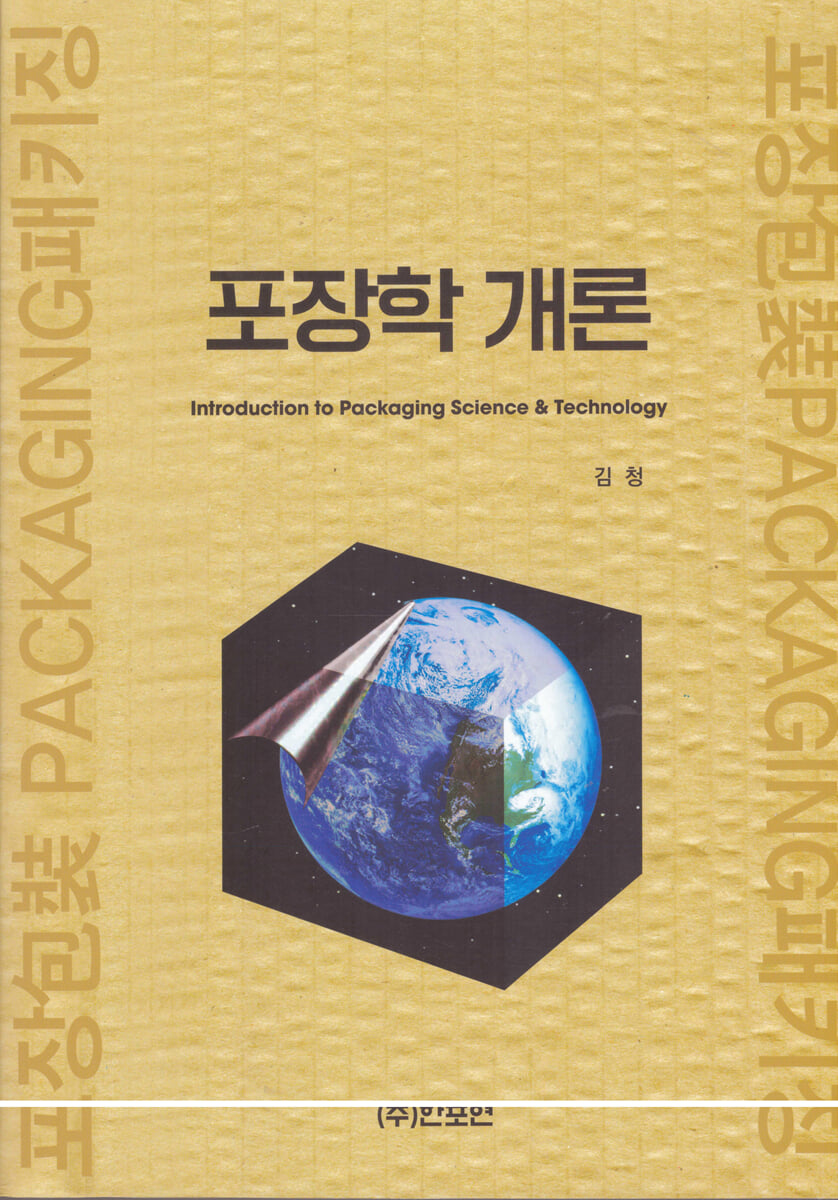 |
Description
index
Chapter 1 Packaging and Packaging
Ⅰ.
Understanding Packaging and Packaging
1.
Packaging Terminology and Understanding _1
2.
Packaging Evolution and Packaging Revolution _3
3.
Modernization of Packaging in Korea _10
4.
Definition of Packaging _11
5.
Packaging Classification _14
Ⅱ.
The function, role, and sociality of packaging
1.
Functions and Roles of Packaging _19
2.
Overpackaging and Underpackaging _26
3.
Packaging and the Social Environment - Packaging Optimization Movement _28
4.
Usefulness of Packaging _30
5.
Packaging and Food Loss Problems _32
6.
The Need for Packaging and the Role of the Packer _35
7.
Packaging and Packaging Charter Contributing to Social Development _37
8.
Packaging Science/Packaging Technology
1.
Packaging Industry Structure _45
2.
Size of the Packaging Industry _51
Ⅳ.
Systematization of Packaging Science: Packaging Science and Packaging Engineering
1.
Packaging Science and Packaging Engineering _52
2.
Establishment of the Department of Packaging and Packaging Science System _53
3.
Packaging Science System _58
V.
The world's packaging industry, packaging-related organizations, and standards
1.
Packaging Material Consumption by Country _63
2.
World Packaging Materials Manufacturers _64
3.
The world's leading packaging organizations _71
4.
Packaging Laws and Regulations Around the World _75
Ⅵ.
Packaging and Environment
1.
Environmental Conservation and Packaging _91
2.
Environmentally Friendly and Sustainable Development - Global Environmental Issues and the UN _96
3.
Waste Management Policy _101
4.
Understanding the Arterial and Vein Industries _115
5.
LCA and Eco-Balance of Packaging _127
6.
Modern Packaging and Eco-Friendly Optimized Packaging _138
7.
Recycling Mark _139
Ⅶ.
Packaging and Logistics
1.
Defining Logistics: Physical Distribution and Logistics _141
2.
Logistics Packaging: Logistics Packaging _143
3.
Customer Satisfaction and Logistics _146
4. SCM _148
5.
Logistics Information Systems and Automatic Recognition and Identification Technology _150
6.
Logistics Rationalization and Packaging Standardization _156
Ⅷ.
Packaging design
1.
Structural and graphic design of packaging _163
2.
Packaging Design and Merchandising Planning _165
3.
Barrier-Free Packaging and Universal Design _171
Chapter 2 Packaging Materials and Processing
Ⅰ.
paper products
1.
Characteristics and Classification of Paper Materials _183
2.
General packaging _186
3.
Paper Bag _190
4.
Paperware _191
5.
Paper containers for liquids (paper containers for liquids): composite containers _202
6.
Cardboard and Cardboard Boxes _209
Ⅱ.
Plastics - containers and bottles, sheets and films
1.
Plastic Terminology and Properties _239
2.
Classification and Characteristics of Plastics _240
3.
Container Packaging and Film Packaging _243
4.
Types and Uses of Plastic Molded Containers _244
5.
Method for manufacturing plastic molded containers _245
6.
Characteristics of General Purpose Plastics _256
7.
Modification of Plastic Molding Materials and Additives _264
8.
Single-Piece Film/Sheet Materials and Composite Technology _265
9.
Characteristics of Plastic Films, Molding Manufacturing Methods, Functionalization, and Compounding _276
10.
Shape and Complex Design of Soft Packaging Film _292
11.
Functional Plastic Packaging Materials _294
12.
Related technologies for flexible packaging processing _297
Ⅲ.
metal container
1.
Characteristics of Metal Cans _298
2.
Classification and Types of Metal Cans _299
3.
Metal Can Specifications and Dimensions _302
4.
Materials for metal containers (cans) _303
5.
Types, tempering grades, and tin content of tin-plated steel sheets _307
6.
Types of Metal Cans and Canning Methods _311
7.
Aerosol Can _316
8.
Drum and Pale _321
9.
Metal Tube _322
10.
Plastic tubes and laminated tubes _324
11.
Metal Foil and Packaging _325
Ⅳ.
Ceramic and glass containers
1.
Characteristics of Glass Containers _327
2.
Composition and types of glass _328
3.
Types of Glass Bottles _331
4.
Glass Bottle Manufacturing Process _335
5.
The shape of the bottle, the route, and the dispatch of troops _342
6.
Quality and Technology Trends in Glass Bottles _344
V.
Closure and stopper
1.
Clojure and Plug Terminology _347
2.
Types of Clojure _348
3.
Closure's Closure and Marking _353
4.
Clojure Function _354
5.
Clojure's Composition Materials and Manufacturing _358
6.
Tamper-evident packaging: PP cap and TE cap _359
7.
Child-resistant packaging and elderly-resistant packaging _360
8.
Intelligent Packaging and Cap Sealing, Shrink Labels _362
Ⅵ.
wood products
1.
Characteristics and Properties of Wooden Box Packaging _369
2.
Wooden Boxes and Wooden Products _370
3.
Wooden boxes for export packaging (KS T 1087) _373
4.
Allowable bending load of load bearing _377
5. Method for Calculating Test Strength and Allowable Strength of Wood Used in Packaging Containers _379
6.
Frame box for export packaging (KS T 1088) _380
7.
Fixation Technique _381
8.
Wooden Flat Pallet _381
9.
Quarantine Issues for Wood Packaging Materials _382
Ⅶ.
Cotton fabric containers, cushioning materials, auxiliary materials, and other packaging materials
1.
Cotton Fabric Container _385
2.
Plastic Net _386
3.
Buffering material _386
4.
Functional Packaging Materials _390
5.
Other Accessories _394
Chapter 3 Packaging Design Techniques and Packaging Systems
Ⅰ.
Packaging development and packaging design
1.
Product Development and Packaging Design _399
2.
Packaging strength design _400
3.
Design of Consumer Packaging _401
4.
Transport Packaging Design _405
5.
Buffer packaging design _411
6.
Design of anti-corrosion packaging _418
7.
Waterproof and Moisture-Proof Packaging Design _422
8.
Design of Hazardous Materials Packaging _424
9.
Eco-Friendly Packaging and Product Design _427
Ⅱ.
Trends in the development of packaging techniques and technologies
1.
Packaging Techniques _430
2.
Developments and Trends in Packaging Techniques and Technologies _431
Ⅲ.
Packaging Testing and Evaluation
1.
Characteristics and Evaluation of Packaging Materials _455
2.
Evaluation and Testing of Transport Packages _456
Ⅳ.
Packaging and Printing
1.
Printing and Color Reproduction _463
2.
Types and characteristics of printing methods _466
3.
Printing Ink _479
4.
Print Quality and Print Defects _493
V.
Packaging systems and packaging machines
1.
Packaging Systems, Packaging Machines, and Packaging Processes _495
2.
The Need for Packaging Systemization _497
3.
Filling and Packaging Machine _499
4.
Auxiliary work on the basic form of the packaging machine _520
5.
Packaging device utilizing the properties of plastic film _524
6.
Automation of Packaging Operations _529
7.
Handling and Mechanical Properties of Packaging Materials and Goods _531
8.
Intelligent Packaging Machinery _534
9.
The Emergence of Packaging Robots _535
10.
Points to note in packaging automation _536
11.
Points to note in packaging line systemization _537
Appendix Ⅰ Explanation of Basic Packaging Terms _540
Appendix II: Key Abbreviations Related to Packaging _571
References _585
Search _587
Ⅰ.
Understanding Packaging and Packaging
1.
Packaging Terminology and Understanding _1
2.
Packaging Evolution and Packaging Revolution _3
3.
Modernization of Packaging in Korea _10
4.
Definition of Packaging _11
5.
Packaging Classification _14
Ⅱ.
The function, role, and sociality of packaging
1.
Functions and Roles of Packaging _19
2.
Overpackaging and Underpackaging _26
3.
Packaging and the Social Environment - Packaging Optimization Movement _28
4.
Usefulness of Packaging _30
5.
Packaging and Food Loss Problems _32
6.
The Need for Packaging and the Role of the Packer _35
7.
Packaging and Packaging Charter Contributing to Social Development _37
8.
Packaging Science/Packaging Technology
1.
Packaging Industry Structure _45
2.
Size of the Packaging Industry _51
Ⅳ.
Systematization of Packaging Science: Packaging Science and Packaging Engineering
1.
Packaging Science and Packaging Engineering _52
2.
Establishment of the Department of Packaging and Packaging Science System _53
3.
Packaging Science System _58
V.
The world's packaging industry, packaging-related organizations, and standards
1.
Packaging Material Consumption by Country _63
2.
World Packaging Materials Manufacturers _64
3.
The world's leading packaging organizations _71
4.
Packaging Laws and Regulations Around the World _75
Ⅵ.
Packaging and Environment
1.
Environmental Conservation and Packaging _91
2.
Environmentally Friendly and Sustainable Development - Global Environmental Issues and the UN _96
3.
Waste Management Policy _101
4.
Understanding the Arterial and Vein Industries _115
5.
LCA and Eco-Balance of Packaging _127
6.
Modern Packaging and Eco-Friendly Optimized Packaging _138
7.
Recycling Mark _139
Ⅶ.
Packaging and Logistics
1.
Defining Logistics: Physical Distribution and Logistics _141
2.
Logistics Packaging: Logistics Packaging _143
3.
Customer Satisfaction and Logistics _146
4. SCM _148
5.
Logistics Information Systems and Automatic Recognition and Identification Technology _150
6.
Logistics Rationalization and Packaging Standardization _156
Ⅷ.
Packaging design
1.
Structural and graphic design of packaging _163
2.
Packaging Design and Merchandising Planning _165
3.
Barrier-Free Packaging and Universal Design _171
Chapter 2 Packaging Materials and Processing
Ⅰ.
paper products
1.
Characteristics and Classification of Paper Materials _183
2.
General packaging _186
3.
Paper Bag _190
4.
Paperware _191
5.
Paper containers for liquids (paper containers for liquids): composite containers _202
6.
Cardboard and Cardboard Boxes _209
Ⅱ.
Plastics - containers and bottles, sheets and films
1.
Plastic Terminology and Properties _239
2.
Classification and Characteristics of Plastics _240
3.
Container Packaging and Film Packaging _243
4.
Types and Uses of Plastic Molded Containers _244
5.
Method for manufacturing plastic molded containers _245
6.
Characteristics of General Purpose Plastics _256
7.
Modification of Plastic Molding Materials and Additives _264
8.
Single-Piece Film/Sheet Materials and Composite Technology _265
9.
Characteristics of Plastic Films, Molding Manufacturing Methods, Functionalization, and Compounding _276
10.
Shape and Complex Design of Soft Packaging Film _292
11.
Functional Plastic Packaging Materials _294
12.
Related technologies for flexible packaging processing _297
Ⅲ.
metal container
1.
Characteristics of Metal Cans _298
2.
Classification and Types of Metal Cans _299
3.
Metal Can Specifications and Dimensions _302
4.
Materials for metal containers (cans) _303
5.
Types, tempering grades, and tin content of tin-plated steel sheets _307
6.
Types of Metal Cans and Canning Methods _311
7.
Aerosol Can _316
8.
Drum and Pale _321
9.
Metal Tube _322
10.
Plastic tubes and laminated tubes _324
11.
Metal Foil and Packaging _325
Ⅳ.
Ceramic and glass containers
1.
Characteristics of Glass Containers _327
2.
Composition and types of glass _328
3.
Types of Glass Bottles _331
4.
Glass Bottle Manufacturing Process _335
5.
The shape of the bottle, the route, and the dispatch of troops _342
6.
Quality and Technology Trends in Glass Bottles _344
V.
Closure and stopper
1.
Clojure and Plug Terminology _347
2.
Types of Clojure _348
3.
Closure's Closure and Marking _353
4.
Clojure Function _354
5.
Clojure's Composition Materials and Manufacturing _358
6.
Tamper-evident packaging: PP cap and TE cap _359
7.
Child-resistant packaging and elderly-resistant packaging _360
8.
Intelligent Packaging and Cap Sealing, Shrink Labels _362
Ⅵ.
wood products
1.
Characteristics and Properties of Wooden Box Packaging _369
2.
Wooden Boxes and Wooden Products _370
3.
Wooden boxes for export packaging (KS T 1087) _373
4.
Allowable bending load of load bearing _377
5. Method for Calculating Test Strength and Allowable Strength of Wood Used in Packaging Containers _379
6.
Frame box for export packaging (KS T 1088) _380
7.
Fixation Technique _381
8.
Wooden Flat Pallet _381
9.
Quarantine Issues for Wood Packaging Materials _382
Ⅶ.
Cotton fabric containers, cushioning materials, auxiliary materials, and other packaging materials
1.
Cotton Fabric Container _385
2.
Plastic Net _386
3.
Buffering material _386
4.
Functional Packaging Materials _390
5.
Other Accessories _394
Chapter 3 Packaging Design Techniques and Packaging Systems
Ⅰ.
Packaging development and packaging design
1.
Product Development and Packaging Design _399
2.
Packaging strength design _400
3.
Design of Consumer Packaging _401
4.
Transport Packaging Design _405
5.
Buffer packaging design _411
6.
Design of anti-corrosion packaging _418
7.
Waterproof and Moisture-Proof Packaging Design _422
8.
Design of Hazardous Materials Packaging _424
9.
Eco-Friendly Packaging and Product Design _427
Ⅱ.
Trends in the development of packaging techniques and technologies
1.
Packaging Techniques _430
2.
Developments and Trends in Packaging Techniques and Technologies _431
Ⅲ.
Packaging Testing and Evaluation
1.
Characteristics and Evaluation of Packaging Materials _455
2.
Evaluation and Testing of Transport Packages _456
Ⅳ.
Packaging and Printing
1.
Printing and Color Reproduction _463
2.
Types and characteristics of printing methods _466
3.
Printing Ink _479
4.
Print Quality and Print Defects _493
V.
Packaging systems and packaging machines
1.
Packaging Systems, Packaging Machines, and Packaging Processes _495
2.
The Need for Packaging Systemization _497
3.
Filling and Packaging Machine _499
4.
Auxiliary work on the basic form of the packaging machine _520
5.
Packaging device utilizing the properties of plastic film _524
6.
Automation of Packaging Operations _529
7.
Handling and Mechanical Properties of Packaging Materials and Goods _531
8.
Intelligent Packaging Machinery _534
9.
The Emergence of Packaging Robots _535
10.
Points to note in packaging automation _536
11.
Points to note in packaging line systemization _537
Appendix Ⅰ Explanation of Basic Packaging Terms _540
Appendix II: Key Abbreviations Related to Packaging _571
References _585
Search _587
Publisher's Review
Packaging has been around since primitive times, playing a role in protecting, preserving, storing, distributing, and bartering goods in daily life, and has developed along with human history as a form of wisdom for life.
Entering the 21st century, with the changes in lifestyles, functional packaging is in demand, and especially in the era of a resource-recycling society, the need for sustainable and environmentally friendly packaging and its public importance are greatly increasing, and packaging is now in a position to greatly contribute to improving the quality of human life.
That is why, under the slogan 'Better Life through Better Packaging', we emphasize that the quality of packaging must improve in order to improve the quality of life enjoyed by mankind.
Modern packaging must fulfill its mission by defining itself as a holistic concept: an organically integrated system that promotes the rationalization and productivity of product production, distribution, sales, and consumption, promotes environmental friendliness when disposed of, and creates products that contribute to social welfare.
Furthermore, packaging should be established as a field of study that understands packaging as an interdisciplinary field connected to many industries, as an interdisciplinary field of study connected to many scientific disciplines and technologies, and as a technology-fusion industry that integrates related sciences and technologies.
In advanced countries, packaging is defined as 'technology, science, engineering, and art', and many books related to packaging are being published.
However, the reality is that this is not the case in our country.
As an introductory book on the science and engineering of packaging, it covers the entire spectrum of packaging, from the definition, function, role and sociality of packaging, to the systematization of packaging science, to the environment, logistics, marketing and design, packaging materials, packaging development and design, packaging technology and techniques, printing, packaging systems and machines.
Entering the 21st century, with the changes in lifestyles, functional packaging is in demand, and especially in the era of a resource-recycling society, the need for sustainable and environmentally friendly packaging and its public importance are greatly increasing, and packaging is now in a position to greatly contribute to improving the quality of human life.
That is why, under the slogan 'Better Life through Better Packaging', we emphasize that the quality of packaging must improve in order to improve the quality of life enjoyed by mankind.
Modern packaging must fulfill its mission by defining itself as a holistic concept: an organically integrated system that promotes the rationalization and productivity of product production, distribution, sales, and consumption, promotes environmental friendliness when disposed of, and creates products that contribute to social welfare.
Furthermore, packaging should be established as a field of study that understands packaging as an interdisciplinary field connected to many industries, as an interdisciplinary field of study connected to many scientific disciplines and technologies, and as a technology-fusion industry that integrates related sciences and technologies.
In advanced countries, packaging is defined as 'technology, science, engineering, and art', and many books related to packaging are being published.
However, the reality is that this is not the case in our country.
As an introductory book on the science and engineering of packaging, it covers the entire spectrum of packaging, from the definition, function, role and sociality of packaging, to the systematization of packaging science, to the environment, logistics, marketing and design, packaging materials, packaging development and design, packaging technology and techniques, printing, packaging systems and machines.
GOODS SPECIFICS
- Date of issue: September 20, 2025
- Page count, weight, size: 597 pages | 188*256*35mm
- ISBN13: 9791197707490
- ISBN10: 1197707492
You may also like
카테고리
korean


korean

![GQ KOREA Mark (Monthly): December [2025]](http://librairie.coreenne.fr/cdn/shop/files/8ef265dbbfbf186523ed75ba7319009d.jpg?v=1765340328&width=3840)


