

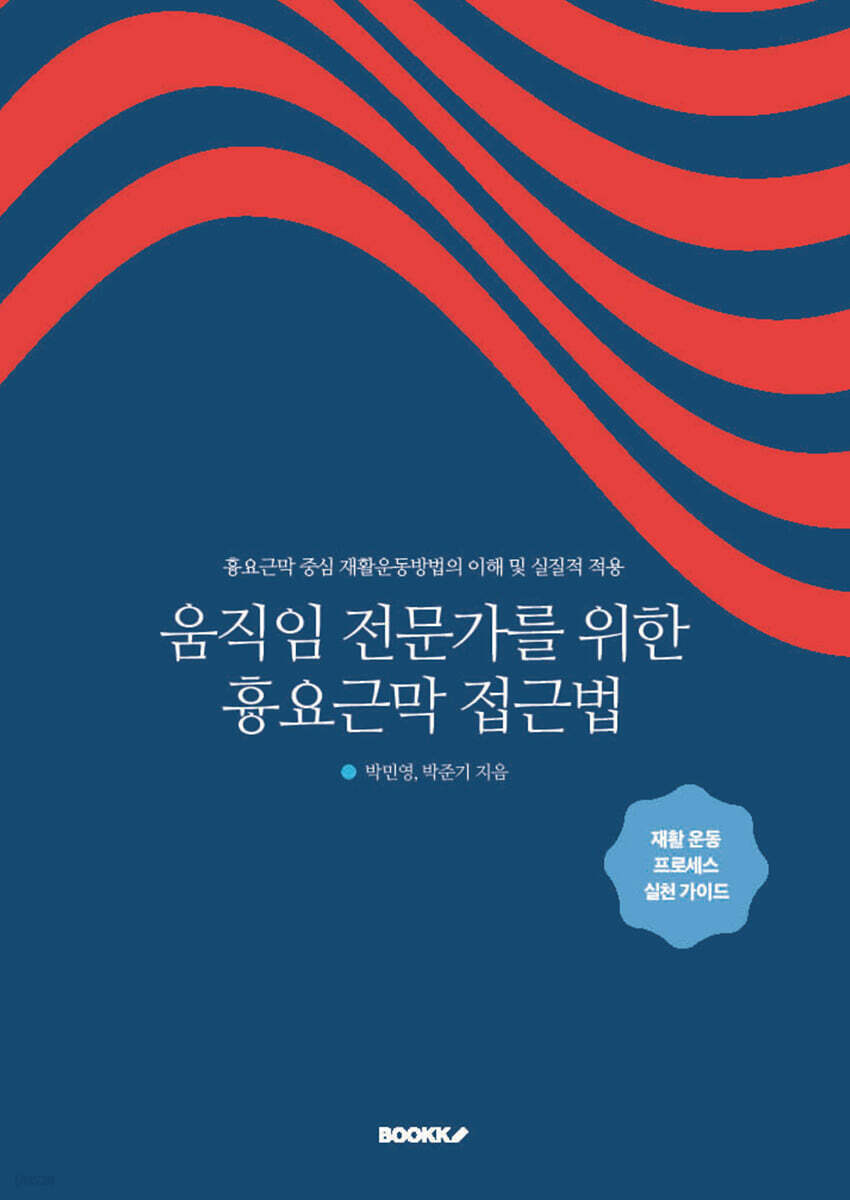
Thoracolumbar Fascial Approach for Movement Specialists
 |
Description
Book Introduction
Thoracolumbar Fascial Approach for Movement Specialists
Understanding and Practical Application of Thoracopsoas Fascia-Centered Rehabilitation Exercise Methods
A new perspective that changes the paradigm of modern rehabilitation exercise begins with an integrated movement approach centered on the thoracolumbar fascia.
This book goes beyond simply listing anatomical knowledge or exercise techniques.
Movement experts address real-world challenges—pain, functional decline, inefficient movement patterns—by focusing on the core structure known as the thoracolumbar fascia, offering fundamental solutions.
The thoracolumbar fascia is the central axis of the body that connects the upper and lower body and coordinates stability and movement simultaneously.
However, it is also an area that has not been sufficiently highlighted domestically or internationally despite its importance.
This book fills that gap, providing an in-depth understanding of the structural and functional roles of the thoracolumbar fascia, a key area of knowledge for movement professionals.
Features of this book:
- Practical rehabilitation exercise application based on anatomical understanding
- Step-by-step exercise strategies tailored to various cases
- Applicable to various fields such as yoga, Pilates, training, and physical therapy
- Easy for anyone to access with a focus on practice rather than complex theory
- An integrated approach to body shape correction, pain relief, and functional improvement through the thoracolumbar fascia.
This book is not just a simple 'exercise how-to book'.
This is a guide to changing the way you see movement and redefining the direction of rehabilitation.
Whether you're a trainer seeking to deepen your understanding as a movement professional, a therapist seeking a fresh perspective in your practice, or a movement enthusiast seeking to understand the body, this book will provide new insights and a practical tool for you.
If rehabilitation up to now has dealt with 'parts', now is the time to understand 'connections'.
Restore your body's true movement, focusing on the thoracolumbar fascia.
Understanding and Practical Application of Thoracopsoas Fascia-Centered Rehabilitation Exercise Methods
A new perspective that changes the paradigm of modern rehabilitation exercise begins with an integrated movement approach centered on the thoracolumbar fascia.
This book goes beyond simply listing anatomical knowledge or exercise techniques.
Movement experts address real-world challenges—pain, functional decline, inefficient movement patterns—by focusing on the core structure known as the thoracolumbar fascia, offering fundamental solutions.
The thoracolumbar fascia is the central axis of the body that connects the upper and lower body and coordinates stability and movement simultaneously.
However, it is also an area that has not been sufficiently highlighted domestically or internationally despite its importance.
This book fills that gap, providing an in-depth understanding of the structural and functional roles of the thoracolumbar fascia, a key area of knowledge for movement professionals.
Features of this book:
- Practical rehabilitation exercise application based on anatomical understanding
- Step-by-step exercise strategies tailored to various cases
- Applicable to various fields such as yoga, Pilates, training, and physical therapy
- Easy for anyone to access with a focus on practice rather than complex theory
- An integrated approach to body shape correction, pain relief, and functional improvement through the thoracolumbar fascia.
This book is not just a simple 'exercise how-to book'.
This is a guide to changing the way you see movement and redefining the direction of rehabilitation.
Whether you're a trainer seeking to deepen your understanding as a movement professional, a therapist seeking a fresh perspective in your practice, or a movement enthusiast seeking to understand the body, this book will provide new insights and a practical tool for you.
If rehabilitation up to now has dealt with 'parts', now is the time to understand 'connections'.
Restore your body's true movement, focusing on the thoracolumbar fascia.
index
prolog
Part I: Structure and Importance of the Thoracopsoas Fascia
Biomechanics and stability mechanisms of the lumbar spine
Anatomy and Functional Structure of the Thoracolumbar Fascia
Muscle groups anatomically related to the thoracolumbar fascia
Thoracolumbar fascia and proprioceptive integration
Interaction between proprioceptors and the thoracolumbar fascia
The sense that directs our movements: proprioception
Problems that arise when sensory integration fails
Retraining Strategies for Integration
Kinematic significance and mechanisms
Spinal stability
Interaction between abdominal pressure regulation and the thoracolumbar fascia
Power transmission and energy storage
Core stability and posture maintenance
Lifting movements and muscle coordination
Methods for assessing thoracolumbar fascia dysfunction
Thoracolumbar Fascial Dysfunction: Assessment and Interpretation
Problems with damage and functional impairment
About the mechanism of back pain
Myofascial pain and trigger points
Problems arising from movement when function is impaired
Functional connectivity of the thoracolumbar fascia, pelvis, and iliotibial band
Connection between the thoracolumbar fascia and the pelvis
Connection between the thoracolumbar fascia and the iliotibial band
Structure and function of the iliotibial band
Functional Interaction of the Thoracopsoas Fascia and the Iliotibial Band
Part II Advanced Rehabilitation Program
Redefining Rehabilitation
Overview of the Intensive Rehabilitation Program
The principles and step-by-step flow of the advanced rehabilitation program
Assessment and Exercise Composition Strategies
The actual composition flow of advanced rehabilitation
Neurophysiology of the sensory nervous system and movement learning
Sensory input and cortical activation
Conditions for neuroplasticity and movement relearning
Clinical Applications of Sensory-Motor Integration
Step-by-step exercise strategies and clinical application tips
Educational Perspectives and Practice Challenges of Movement Leaders
Practical Applications of Motion Awareness Training
Reorganization of abnormal movement patterns and persistence of change
Application examples and evaluation items for movement pattern changes
Strategies for tracking change and reinforcing action
Core Principles of Movement Program Design and Clinical Application Guide
5 Steps to Motion Recognition Training for Beginners
5-Step Integrated Exercises for Advanced Rehabilitation
4-Week Thoracolumbar Fascia-Based Intensive Rehabilitation Program
Lumbar stabilization strategies utilizing the thoracolumbar fascia
Example of a 4-week program
Suggestions for sense and movement
Examples of related forms
Parking-specific self-inspection checklist (example)
Daily Self-Healing Journal Template (Example)
Evaluation Criteria Linked to Exercise Prescription (Example)
Client Evaluation Report (Example)
Thoracolumbar Fascia-Centered Routine for Beginner Builders
Beyond recovery, to the completion of reconstruction
Epilogue
References
Part I: Structure and Importance of the Thoracopsoas Fascia
Biomechanics and stability mechanisms of the lumbar spine
Anatomy and Functional Structure of the Thoracolumbar Fascia
Muscle groups anatomically related to the thoracolumbar fascia
Thoracolumbar fascia and proprioceptive integration
Interaction between proprioceptors and the thoracolumbar fascia
The sense that directs our movements: proprioception
Problems that arise when sensory integration fails
Retraining Strategies for Integration
Kinematic significance and mechanisms
Spinal stability
Interaction between abdominal pressure regulation and the thoracolumbar fascia
Power transmission and energy storage
Core stability and posture maintenance
Lifting movements and muscle coordination
Methods for assessing thoracolumbar fascia dysfunction
Thoracolumbar Fascial Dysfunction: Assessment and Interpretation
Problems with damage and functional impairment
About the mechanism of back pain
Myofascial pain and trigger points
Problems arising from movement when function is impaired
Functional connectivity of the thoracolumbar fascia, pelvis, and iliotibial band
Connection between the thoracolumbar fascia and the pelvis
Connection between the thoracolumbar fascia and the iliotibial band
Structure and function of the iliotibial band
Functional Interaction of the Thoracopsoas Fascia and the Iliotibial Band
Part II Advanced Rehabilitation Program
Redefining Rehabilitation
Overview of the Intensive Rehabilitation Program
The principles and step-by-step flow of the advanced rehabilitation program
Assessment and Exercise Composition Strategies
The actual composition flow of advanced rehabilitation
Neurophysiology of the sensory nervous system and movement learning
Sensory input and cortical activation
Conditions for neuroplasticity and movement relearning
Clinical Applications of Sensory-Motor Integration
Step-by-step exercise strategies and clinical application tips
Educational Perspectives and Practice Challenges of Movement Leaders
Practical Applications of Motion Awareness Training
Reorganization of abnormal movement patterns and persistence of change
Application examples and evaluation items for movement pattern changes
Strategies for tracking change and reinforcing action
Core Principles of Movement Program Design and Clinical Application Guide
5 Steps to Motion Recognition Training for Beginners
5-Step Integrated Exercises for Advanced Rehabilitation
4-Week Thoracolumbar Fascia-Based Intensive Rehabilitation Program
Lumbar stabilization strategies utilizing the thoracolumbar fascia
Example of a 4-week program
Suggestions for sense and movement
Examples of related forms
Parking-specific self-inspection checklist (example)
Daily Self-Healing Journal Template (Example)
Evaluation Criteria Linked to Exercise Prescription (Example)
Client Evaluation Report (Example)
Thoracolumbar Fascia-Centered Routine for Beginner Builders
Beyond recovery, to the completion of reconstruction
Epilogue
References
GOODS SPECIFICS
- Date of issue: September 9, 2025
- Page count, weight, size: 152 pages | 188*257*20mm
- ISBN13: 9791112051424
You may also like
카테고리
korean


korean

![GQ KOREA Mark (Monthly): December [2025]](http://librairie.coreenne.fr/cdn/shop/files/8ef265dbbfbf186523ed75ba7319009d.jpg?v=1765340328&width=3840)


