

Introduction to Chemical Management
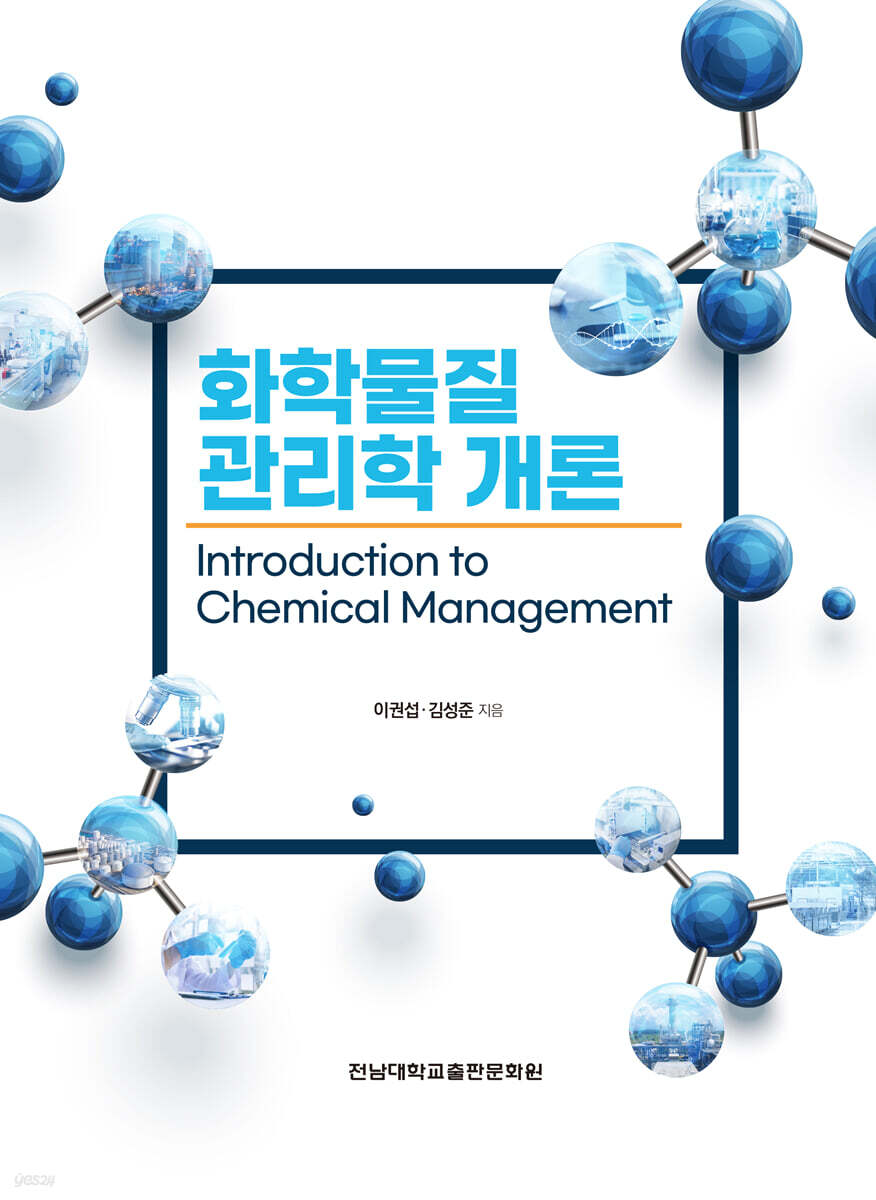 |
Description
Book Introduction
The Chemical Substances Control Act was recently revised and implemented on August 7, 2025. The categories of toxic substances were differentiated into acutely hazardous substances to the human body, chronically hazardous substances to the human body, and ecologically hazardous substances. In addition, a special exception was created to allow consumers to be exempted from the general handling and management obligations for hazardous chemicals when they use them in their daily lives.
We have strengthened the chemical accident prevention and response system by reorganizing the domestic and international export and import permit and reporting regulations for prohibited, restricted, and permitted substances, and by reorganizing the regulations related to the cycle of regular inspections and safety diagnosis, such as exempting hazardous chemicals classified only as chronically hazardous to the human body from regular inspections. We have also made efforts to improve and supplement some of the shortcomings in the operation of the current system.
Based on this social background, in the current domestic reality where there is a lack of systematic specialized books on chemical substance safety management, we hope that this book will be used as a specialized textbook for training experts at universities, and we hope that it will be helpful in cultivating the technical knowledge for comprehensive chemical substance management for many technical personnel and hazardous chemical substance managers engaged in chemical substance safety management work in industrial sites.
We have strengthened the chemical accident prevention and response system by reorganizing the domestic and international export and import permit and reporting regulations for prohibited, restricted, and permitted substances, and by reorganizing the regulations related to the cycle of regular inspections and safety diagnosis, such as exempting hazardous chemicals classified only as chronically hazardous to the human body from regular inspections. We have also made efforts to improve and supplement some of the shortcomings in the operation of the current system.
Based on this social background, in the current domestic reality where there is a lack of systematic specialized books on chemical substance safety management, we hope that this book will be used as a specialized textbook for training experts at universities, and we hope that it will be helpful in cultivating the technical knowledge for comprehensive chemical substance management for many technical personnel and hazardous chemical substance managers engaged in chemical substance safety management work in industrial sites.
index
Seo Moon / 06
Part 1: Trends in International Chemical Safety Management
Chapter 1 Multilateral International and Regional Environmental Agreements / 14
Chapter 2: Trends in Chemical Safety Management in International Organizations / 21
Chapter 3: Green Transition and Enhancing Sustainability / 30
Part 2: Chemical Substance Management System of the Industrial Safety and Health Act
Chapter 1: Overview of the Industrial Safety and Health Act / 42
Chapter 2: Chemical Safety and Health Management Regulations of the Industrial Safety and Health Act / 48
Chapter 3: Measures against Hazardous and Dangerous Substances / 52
Chapter 4: Work Environment Measurement and Special Health Examinations for Worker Health Management / 66
Chapter 5 Preparation and Submission of Material Safety Data Sheets, etc. / 74
Chapter 6: Hazard Prevention Measures / 93
Chapter 7: Other Industrial Accidents and Health Disaster Prevention Measures / 109
Part 3 Chemical Substances Management Act Chemical Substances Management System
Chapter 1: Introduction of the Chemical Substances Control Act and Response to Chemical Accidents / 116
Chapter 2: Structure and Scope of the Chemical Substances Control Act / 126
Chapter 3: Chemical Distribution and Emission Management / 135
Chapter 4: Safe Handling and Management of Hazardous Chemicals / 149
Chapter 5: Installation and Operation of Hazardous Chemical Handling Facilities / 172
Chapter 6 Safety Management of Hazardous Chemical Handling Facilities, etc. / 199
Chapter 7 Management of Hazardous Chemicals Operators / 206
Chapter 8: Preparing for and Responding to Chemical Accidents / 228
Part 4 Chemical Substances Registration and Evaluation Act Chemical Substances Management System
Chapter 1: Background and Key Contents of the "Chemical Substance Registration and Evaluation Act" / 242
Chapter 2: Purpose and Key Terms of the Chemical Substance Registration and Evaluation Act / 257
Chapter 3: Registration and Reporting of Chemical Substances / 266
Chapter 4: Hazard Analysis and Risk Assessment of Chemical Substances / 288
Chapter 5 Designation and Change of Permitted, Restricted, and Prohibited Substances / 296
Chapter 6: Management of Chemical-Containing Products / 299
Chapter 7: Providing Chemical Information / 302
Appendix List of Priority Management Substances under the Chemical Substance Registration and Evaluation Act / 311
?Search / 330
Part 1: Trends in International Chemical Safety Management
Chapter 1 Multilateral International and Regional Environmental Agreements / 14
Chapter 2: Trends in Chemical Safety Management in International Organizations / 21
Chapter 3: Green Transition and Enhancing Sustainability / 30
Part 2: Chemical Substance Management System of the Industrial Safety and Health Act
Chapter 1: Overview of the Industrial Safety and Health Act / 42
Chapter 2: Chemical Safety and Health Management Regulations of the Industrial Safety and Health Act / 48
Chapter 3: Measures against Hazardous and Dangerous Substances / 52
Chapter 4: Work Environment Measurement and Special Health Examinations for Worker Health Management / 66
Chapter 5 Preparation and Submission of Material Safety Data Sheets, etc. / 74
Chapter 6: Hazard Prevention Measures / 93
Chapter 7: Other Industrial Accidents and Health Disaster Prevention Measures / 109
Part 3 Chemical Substances Management Act Chemical Substances Management System
Chapter 1: Introduction of the Chemical Substances Control Act and Response to Chemical Accidents / 116
Chapter 2: Structure and Scope of the Chemical Substances Control Act / 126
Chapter 3: Chemical Distribution and Emission Management / 135
Chapter 4: Safe Handling and Management of Hazardous Chemicals / 149
Chapter 5: Installation and Operation of Hazardous Chemical Handling Facilities / 172
Chapter 6 Safety Management of Hazardous Chemical Handling Facilities, etc. / 199
Chapter 7 Management of Hazardous Chemicals Operators / 206
Chapter 8: Preparing for and Responding to Chemical Accidents / 228
Part 4 Chemical Substances Registration and Evaluation Act Chemical Substances Management System
Chapter 1: Background and Key Contents of the "Chemical Substance Registration and Evaluation Act" / 242
Chapter 2: Purpose and Key Terms of the Chemical Substance Registration and Evaluation Act / 257
Chapter 3: Registration and Reporting of Chemical Substances / 266
Chapter 4: Hazard Analysis and Risk Assessment of Chemical Substances / 288
Chapter 5 Designation and Change of Permitted, Restricted, and Prohibited Substances / 296
Chapter 6: Management of Chemical-Containing Products / 299
Chapter 7: Providing Chemical Information / 302
Appendix List of Priority Management Substances under the Chemical Substance Registration and Evaluation Act / 311
?Search / 330
Into the book
Part 1: Trends in International Chemical Safety Management
Chapter 1 Multilateral International and Regional Environmental Agreements
Currently, there are approximately 200,000 chemical substances distributed worldwide, and approximately 3,000 new chemical substances are developed and commercialized every year. The chemical industry is expected to continue to grow in the future.
Environmental pollution by artificial chemicals poses a major threat to humans and the environment.
To address global environmental issues related to chemicals and waste, various multilateral, international, and regional environmental agreements (International Conventions on the Environment) have been concluded.
Multilateral Environmental Agreements (MEAs) related to chemicals include the Basel Convention, which regulates the transboundary movement and trade of hazardous wastes; the Rotterdam Convention on the Prior Informed Consent Procedure for Certain Hazardous Chemicals and Pesticides in International Trade; the Stockholm Convention on Persistent Organic Pollutants (POPs); and the Minamata Convention on Mercury.
1.
Minamata Convention on Mercury
In 2009, the United Nations Environment Programme (UNEP) decided to establish an international convention on mercury (Hg), and after intergovernmental discussions, the “Minamata Convention on Mercury” was adopted in October 2013.
The Minamata Convention on Mercury (Minamata Convention) is the world's first convention to manage the entire process from production to storage, use, discharge, and disposal of a single chemical substance in order to reduce the harm to humans and the environment caused by mercury, a representative hazardous substance with high bioaccumulation potential.
1) Significance and main contents of the agreement
(1) Characteristics of mercury
Mercury (Hg) exists on Earth in three forms: metallic element, inorganic mercury, and organic compounds. Inorganic mercury is problematic when exposed to high concentrations through inhalation, and organic mercury can cause serious effects on the central nervous system and kidneys through ingestion of food, etc.
In 1956, organic mercury leaked into the sea from a fertilizer factory in Minamata, Japan, and about 2,000 local residents who consumed seafood contaminated with the mercury discharged into the sea developed diseases such as paralysis and speech impediment.
This incident was revealed to be caused by Minamata disease due to mercury poisoning. In 1971, in Iraq, there was an incident where thousands of people were poisoned and over 200 died after eating bread made from wheat contaminated with mercury-based pesticides. In Korea, in March 2015, 12 workers at the Namyoung Electric Company's Gwangju factory were poisoned by mercury during the removal of fluorescent lamp equipment.
Mercury enters our bodies primarily through the consumption of contaminated seafood, causing serious diseases such as central nervous system disorders, kidney and liver disorders.
Mercury is a persistent, long-distance mobile, and toxic chemical in the environment.
Mercury can be classified into elemental mercury, inorganic mercury, and organic mercury, and also exists as mercury compounds (mercuric chloride (HgCl2), mercurous chloride (Hg2Cl2, calomel), mercuric sulfide (HgS, cinnabar), etc.).
Mercury emitted into the atmosphere travels long distances in a gaseous state in the atmosphere or is deposited into water systems, is converted into methylmercury by microorganisms, bioconcentrates in fish and shellfish, or accumulates in the human body when ingested.
Mercury emission sources can be divided into 'intentional mercury sources' and 'unintentional mercury sources'. The former refers to mercury generated from discarded products, such as those with artificially added mercury, such as mercury thermometers and fluorescent lamps. The latter refers to mercury contained as an impurity in coal, zinc ore, or limestone, etc., that is emitted during combustion or smelting processes.
(2) Significance and course of the agreement
In March 1989, the United Nations Environment Program (UNEP) adopted the Basel Convention on the Control of Transboundary Movements of Hazardous Wastes and Their Disposal to regulate the transboundary movement and trade of hazardous wastes.
According to the Basel Convention, prior notification must be given to the destination country when moving hazardous wastes between countries.
The Basel Accord came into force in May 1992.
In February 2009, the United Nations Environment Programme (UNEP) decided to establish the Minamata Convention, and after five rounds of intergovernmental negotiations, the text of the convention was completed in Geneva, Switzerland in January 2013. The Minamata Convention was adopted at an international conference held in Kumamoto, Japan in October 2013.
This agreement entered into force internationally on August 16, 2017, and by 2019, 114 countries, including signatory and non-signatory states, had ratified it.
The Minamata Convention aims to limit the use of mercury and reduce emissions. It is the world's first convention to manage the entire life cycle of mercury, from production to storage, use, emissions, and disposal of a single chemical substance, in order to reduce the harm to people and the environment caused by mercury, a representative hazardous substance with high long-distance transport and bioaccumulation.
(3) Main contents of the agreement
The Minamata Convention consists of a total of 35 articles and 5 annexes, the main contents of which are as shown in Table 1-3.
Article 3 regulates the supply and trade (import/export) of mercury.
New mercury mines are prohibited, and existing mines are permitted only for 15 years from the date of entry into force of the Convention, and only for permitted purposes (use in permitted mercury products) or with certificates guaranteeing environmentally sound treatment when trading (import/export).
Article 4 stipulates that mercury-added products are divided into three categories: phased-out products, reduced-use products, and permitted-use products. The nine phased-out product categories (batteries, switches and relays, compact fluorescent lamps, linear fluorescent lamps, high-pressure mercury vapor lamps, mercury-containing LCD lamps, cosmetics (including soap), pesticides, biocides, topical disinfectants, and measuring instruments) will be prohibited from manufacturing, importing, and exporting after 2020.
And, reduced-use products (dental amalgam) can be used after taking measures to reduce use.
Article 8 stipulates that for air emission facilities such as coal-fired power plants, coal-fired industrial boilers, waste incinerators, non-ferrous metal production facilities, and cement clinker manufacturing facilities, new facilities must apply ① BAT22)/BEP23) (best available technology/best environmental practice) or ② emission standards within 5 years from the entry into force of the Convention, and existing facilities must apply one of the following within 10 years from the entry into force of the Convention: ① emission reduction targets, ② emission standards, ③ BAT/BEP, ④ multi-pollutant management strategies such as SOx and NOx, or ⑤ other alternatives. Article 9 stipulates reduction measures such as investigation of emissions from water and soil sources and application of emission standards.
Article 11 stipulates that mercury waste (substances and objects composed of or contaminated with mercury and mercury compounds) shall be disposed of in accordance with environmentally friendly treatment guidelines and standards established after entry into force, and that recovery and treatment standards shall be adopted later in accordance with Article 27.
For reference, under our country's Waste Management Act, waste is classified into household waste and industrial waste, and industrial waste is classified into designated waste and other industrial waste.
The business operator discharging the industrial waste must dispose of it himself or entrust it to a person who has obtained a waste disposal business license, a person who has reported waste disposal, a person who installs and operates waste disposal facilities, a person who has obtained a construction waste disposal business license, or a person who has registered a waste ocean discharge business (Article 18, Paragraph 1 of the Waste Management Act).
In addition, for landfill of mercury-containing waste, waste such as sewage treatment sludge and fly ash with high mercury concentrations should be collected and treated as waste contaminated with mercury or mercury compounds.
Meanwhile, Article 12 of the Agreement stipulates that polluted sites be investigated and evaluated through risk assessments, etc., and managed according to priority.
Article 16 also stipulates that measures to reduce mercury exposure, such as health impact assessments on the mercury-exposed population, setting and managing exposure reduction targets, and operating education programs, be encouraged, and that health management services, such as prevention and treatment, be promoted for vulnerable workers.
Article 17 stipulates that each Party shall exchange scientific, technical, economic, and legal information on mercury and mercury compounds, and on measures to reduce or eliminate the production, use, trade, and emissions of mercury and mercury compounds.
Article 18 requires that information be made available to the public on the health and environmental impacts of mercury and mercury compounds, alternatives to mercury and mercury compounds, the results of research, development and monitoring under Article 19, and activities to implement obligations under the Convention, and that education, training and public awareness be promoted on the effects of exposure to mercury and mercury compounds on human health.
Article 19 provides for research, development, and monitoring, and Article 20 stipulates that each Party shall, after an initial assessment, develop and implement an action plan to meet its obligations under the Convention, taking into account its domestic circumstances, and shall review and update the action plan.
Article 21 stipulates that the Conference of the Parties shall report on the measures taken to implement the provisions of the Convention and on the effectiveness of such measures, and Article 22 stipulates that the Conference of the Parties shall evaluate the effectiveness of the Convention within six years of its entry into force and thereafter at regular intervals to be determined by the Conference of the Parties.
Article 23 provides for the Conference of the Parties, and Article 24 provides for the Secretariat.
The United Nations Environment Programme (UNEP) will convene the first Conference of the Parties within one year of the entry into force of the Convention, and thereafter, ordinary sessions of the Conference of the Parties will be held at regular intervals determined by the Conference of the Parties.
The Conference of the Parties shall continually review and evaluate the implementation of the Convention and perform the functions assigned to it by the Convention.
The Secretariat's function is to prepare for meetings of the Conference of the Parties and its subsidiary bodies and to provide services required by the Conference of the Parties and its subsidiary bodies.
It also facilitates assistance to Parties, especially developing countries, coordinates with the secretariats of relevant international organizations, and assists Parties in the exchange of information related to the implementation of the Convention.
To prepare and make available to the Parties periodic reports based on the information collected pursuant to Articles 15 and 21 and other available information, and to perform other secretariat functions specified in the Convention.
Unless the Conference of the Parties decides by a majority of three-quarters or more to entrust the secretariat of the Convention to one or more other international organizations, the Executive Director of the United Nations Environment Programme shall perform the secretariat functions of the Convention.
The Conference of the Parties shall, in consultation with appropriate international organizations, provide for enhanced cooperation and coordination between the Secretariat and the secretariats of other Chemicals and Wastes Conventions.
Article 25 provides for the resolution of disputes, stipulating that the parties shall endeavor to resolve disputes through negotiation and other peaceful means chosen by the parties, and that compulsory dispute resolution methods shall be arbitration in accordance with Annex E or referral to the International Court of Justice.
Article 26 provides for amendments to the Agreement.
Any Party may propose amendments to the Convention, which shall be adopted at a meeting of the Conference of the Parties, provided that the proposed amendments are communicated to the Parties at least six months prior to the meeting at which they are adopted.
Any amendments to the Convention that have been adopted shall be notified to the Parties so that they may ratify or approve them.
Article 27 provides for the adoption and amendment of annexes, Article 28 for the right to vote, Article 29 for signature, Article 30 for ratification of the Convention, Article 31 for the entry into force of the Convention, Article 32 for reservations, Article 33 for withdrawal, and Article 34 for deposit.
Finally, Article 35 stipulates that the official texts of the Convention documents shall be in Arabic, Chinese, English, French, Russian and Spanish.
2.
Stockholm Convention on the Management of Persistent Organic Pollutants
1) Management of persistent organic pollutants (POPs)
Persistent organic pollutants (POPs) are substances such as DDT, PCBs, and dioxins that are highly toxic and do not decompose well in the natural environment, persist for a long time, accumulate in high concentrations in living organisms, and cause great harm to humans and the ecosystem.
The United Nations Environment Programme (UNEP) adopted the Stockholm Convention on the Prohibition of Production and Use of Persistent Organic Pollutants, which are particularly toxic and harmful among hazardous chemicals, in 2001 to regulate them internationally. The Convention came into effect in 2004, and Korea ratified the Convention in January 2007.
South Korea has been managing dioxin in waste incineration facilities under the Waste Management Act since 1997, before ratifying the convention. Since 2001, the country has further strengthened emission management by including industries that emit dioxin, such as steel and non-ferrous metals, in the emission facilities and calculating and announcing the national dioxin emission amount (emission list). In addition, in order to properly manage and safely treat PCBs, a representative persistent organic pollutant along with dioxin, South Korea has been making efforts to reduce the harm of persistent organic pollutants by signing the 'Voluntary Agreement for the Eradication of PCBs' in October 2004 with seven power generation companies, including KEPCO, and civic groups, and forming the PCBs Policy Council.
The Ministry of Environment enacted the Persistent Pollutants Management Act (Persistent Pollutants Act) in January 2007 to protect the public's health and the environment from the harm of persistent pollutants and promote international cooperation by stipulating matters necessary for the management of persistent pollutants, such as dioxin, mercury, and mercury compounds, as stipulated in the Stockholm Convention on Persistent Organic Pollutants and the Minamata Convention on Mercury, and implemented it in January 2008.
Chapter 1 Multilateral International and Regional Environmental Agreements
Currently, there are approximately 200,000 chemical substances distributed worldwide, and approximately 3,000 new chemical substances are developed and commercialized every year. The chemical industry is expected to continue to grow in the future.
Environmental pollution by artificial chemicals poses a major threat to humans and the environment.
To address global environmental issues related to chemicals and waste, various multilateral, international, and regional environmental agreements (International Conventions on the Environment) have been concluded.
Multilateral Environmental Agreements (MEAs) related to chemicals include the Basel Convention, which regulates the transboundary movement and trade of hazardous wastes; the Rotterdam Convention on the Prior Informed Consent Procedure for Certain Hazardous Chemicals and Pesticides in International Trade; the Stockholm Convention on Persistent Organic Pollutants (POPs); and the Minamata Convention on Mercury.
1.
Minamata Convention on Mercury
In 2009, the United Nations Environment Programme (UNEP) decided to establish an international convention on mercury (Hg), and after intergovernmental discussions, the “Minamata Convention on Mercury” was adopted in October 2013.
The Minamata Convention on Mercury (Minamata Convention) is the world's first convention to manage the entire process from production to storage, use, discharge, and disposal of a single chemical substance in order to reduce the harm to humans and the environment caused by mercury, a representative hazardous substance with high bioaccumulation potential.
1) Significance and main contents of the agreement
(1) Characteristics of mercury
Mercury (Hg) exists on Earth in three forms: metallic element, inorganic mercury, and organic compounds. Inorganic mercury is problematic when exposed to high concentrations through inhalation, and organic mercury can cause serious effects on the central nervous system and kidneys through ingestion of food, etc.
In 1956, organic mercury leaked into the sea from a fertilizer factory in Minamata, Japan, and about 2,000 local residents who consumed seafood contaminated with the mercury discharged into the sea developed diseases such as paralysis and speech impediment.
This incident was revealed to be caused by Minamata disease due to mercury poisoning. In 1971, in Iraq, there was an incident where thousands of people were poisoned and over 200 died after eating bread made from wheat contaminated with mercury-based pesticides. In Korea, in March 2015, 12 workers at the Namyoung Electric Company's Gwangju factory were poisoned by mercury during the removal of fluorescent lamp equipment.
Mercury enters our bodies primarily through the consumption of contaminated seafood, causing serious diseases such as central nervous system disorders, kidney and liver disorders.
Mercury is a persistent, long-distance mobile, and toxic chemical in the environment.
Mercury can be classified into elemental mercury, inorganic mercury, and organic mercury, and also exists as mercury compounds (mercuric chloride (HgCl2), mercurous chloride (Hg2Cl2, calomel), mercuric sulfide (HgS, cinnabar), etc.).
Mercury emitted into the atmosphere travels long distances in a gaseous state in the atmosphere or is deposited into water systems, is converted into methylmercury by microorganisms, bioconcentrates in fish and shellfish, or accumulates in the human body when ingested.
Mercury emission sources can be divided into 'intentional mercury sources' and 'unintentional mercury sources'. The former refers to mercury generated from discarded products, such as those with artificially added mercury, such as mercury thermometers and fluorescent lamps. The latter refers to mercury contained as an impurity in coal, zinc ore, or limestone, etc., that is emitted during combustion or smelting processes.
(2) Significance and course of the agreement
In March 1989, the United Nations Environment Program (UNEP) adopted the Basel Convention on the Control of Transboundary Movements of Hazardous Wastes and Their Disposal to regulate the transboundary movement and trade of hazardous wastes.
According to the Basel Convention, prior notification must be given to the destination country when moving hazardous wastes between countries.
The Basel Accord came into force in May 1992.
In February 2009, the United Nations Environment Programme (UNEP) decided to establish the Minamata Convention, and after five rounds of intergovernmental negotiations, the text of the convention was completed in Geneva, Switzerland in January 2013. The Minamata Convention was adopted at an international conference held in Kumamoto, Japan in October 2013.
This agreement entered into force internationally on August 16, 2017, and by 2019, 114 countries, including signatory and non-signatory states, had ratified it.
The Minamata Convention aims to limit the use of mercury and reduce emissions. It is the world's first convention to manage the entire life cycle of mercury, from production to storage, use, emissions, and disposal of a single chemical substance, in order to reduce the harm to people and the environment caused by mercury, a representative hazardous substance with high long-distance transport and bioaccumulation.
(3) Main contents of the agreement
The Minamata Convention consists of a total of 35 articles and 5 annexes, the main contents of which are as shown in Table 1-3.
Article 3 regulates the supply and trade (import/export) of mercury.
New mercury mines are prohibited, and existing mines are permitted only for 15 years from the date of entry into force of the Convention, and only for permitted purposes (use in permitted mercury products) or with certificates guaranteeing environmentally sound treatment when trading (import/export).
Article 4 stipulates that mercury-added products are divided into three categories: phased-out products, reduced-use products, and permitted-use products. The nine phased-out product categories (batteries, switches and relays, compact fluorescent lamps, linear fluorescent lamps, high-pressure mercury vapor lamps, mercury-containing LCD lamps, cosmetics (including soap), pesticides, biocides, topical disinfectants, and measuring instruments) will be prohibited from manufacturing, importing, and exporting after 2020.
And, reduced-use products (dental amalgam) can be used after taking measures to reduce use.
Article 8 stipulates that for air emission facilities such as coal-fired power plants, coal-fired industrial boilers, waste incinerators, non-ferrous metal production facilities, and cement clinker manufacturing facilities, new facilities must apply ① BAT22)/BEP23) (best available technology/best environmental practice) or ② emission standards within 5 years from the entry into force of the Convention, and existing facilities must apply one of the following within 10 years from the entry into force of the Convention: ① emission reduction targets, ② emission standards, ③ BAT/BEP, ④ multi-pollutant management strategies such as SOx and NOx, or ⑤ other alternatives. Article 9 stipulates reduction measures such as investigation of emissions from water and soil sources and application of emission standards.
Article 11 stipulates that mercury waste (substances and objects composed of or contaminated with mercury and mercury compounds) shall be disposed of in accordance with environmentally friendly treatment guidelines and standards established after entry into force, and that recovery and treatment standards shall be adopted later in accordance with Article 27.
For reference, under our country's Waste Management Act, waste is classified into household waste and industrial waste, and industrial waste is classified into designated waste and other industrial waste.
The business operator discharging the industrial waste must dispose of it himself or entrust it to a person who has obtained a waste disposal business license, a person who has reported waste disposal, a person who installs and operates waste disposal facilities, a person who has obtained a construction waste disposal business license, or a person who has registered a waste ocean discharge business (Article 18, Paragraph 1 of the Waste Management Act).
In addition, for landfill of mercury-containing waste, waste such as sewage treatment sludge and fly ash with high mercury concentrations should be collected and treated as waste contaminated with mercury or mercury compounds.
Meanwhile, Article 12 of the Agreement stipulates that polluted sites be investigated and evaluated through risk assessments, etc., and managed according to priority.
Article 16 also stipulates that measures to reduce mercury exposure, such as health impact assessments on the mercury-exposed population, setting and managing exposure reduction targets, and operating education programs, be encouraged, and that health management services, such as prevention and treatment, be promoted for vulnerable workers.
Article 17 stipulates that each Party shall exchange scientific, technical, economic, and legal information on mercury and mercury compounds, and on measures to reduce or eliminate the production, use, trade, and emissions of mercury and mercury compounds.
Article 18 requires that information be made available to the public on the health and environmental impacts of mercury and mercury compounds, alternatives to mercury and mercury compounds, the results of research, development and monitoring under Article 19, and activities to implement obligations under the Convention, and that education, training and public awareness be promoted on the effects of exposure to mercury and mercury compounds on human health.
Article 19 provides for research, development, and monitoring, and Article 20 stipulates that each Party shall, after an initial assessment, develop and implement an action plan to meet its obligations under the Convention, taking into account its domestic circumstances, and shall review and update the action plan.
Article 21 stipulates that the Conference of the Parties shall report on the measures taken to implement the provisions of the Convention and on the effectiveness of such measures, and Article 22 stipulates that the Conference of the Parties shall evaluate the effectiveness of the Convention within six years of its entry into force and thereafter at regular intervals to be determined by the Conference of the Parties.
Article 23 provides for the Conference of the Parties, and Article 24 provides for the Secretariat.
The United Nations Environment Programme (UNEP) will convene the first Conference of the Parties within one year of the entry into force of the Convention, and thereafter, ordinary sessions of the Conference of the Parties will be held at regular intervals determined by the Conference of the Parties.
The Conference of the Parties shall continually review and evaluate the implementation of the Convention and perform the functions assigned to it by the Convention.
The Secretariat's function is to prepare for meetings of the Conference of the Parties and its subsidiary bodies and to provide services required by the Conference of the Parties and its subsidiary bodies.
It also facilitates assistance to Parties, especially developing countries, coordinates with the secretariats of relevant international organizations, and assists Parties in the exchange of information related to the implementation of the Convention.
To prepare and make available to the Parties periodic reports based on the information collected pursuant to Articles 15 and 21 and other available information, and to perform other secretariat functions specified in the Convention.
Unless the Conference of the Parties decides by a majority of three-quarters or more to entrust the secretariat of the Convention to one or more other international organizations, the Executive Director of the United Nations Environment Programme shall perform the secretariat functions of the Convention.
The Conference of the Parties shall, in consultation with appropriate international organizations, provide for enhanced cooperation and coordination between the Secretariat and the secretariats of other Chemicals and Wastes Conventions.
Article 25 provides for the resolution of disputes, stipulating that the parties shall endeavor to resolve disputes through negotiation and other peaceful means chosen by the parties, and that compulsory dispute resolution methods shall be arbitration in accordance with Annex E or referral to the International Court of Justice.
Article 26 provides for amendments to the Agreement.
Any Party may propose amendments to the Convention, which shall be adopted at a meeting of the Conference of the Parties, provided that the proposed amendments are communicated to the Parties at least six months prior to the meeting at which they are adopted.
Any amendments to the Convention that have been adopted shall be notified to the Parties so that they may ratify or approve them.
Article 27 provides for the adoption and amendment of annexes, Article 28 for the right to vote, Article 29 for signature, Article 30 for ratification of the Convention, Article 31 for the entry into force of the Convention, Article 32 for reservations, Article 33 for withdrawal, and Article 34 for deposit.
Finally, Article 35 stipulates that the official texts of the Convention documents shall be in Arabic, Chinese, English, French, Russian and Spanish.
2.
Stockholm Convention on the Management of Persistent Organic Pollutants
1) Management of persistent organic pollutants (POPs)
Persistent organic pollutants (POPs) are substances such as DDT, PCBs, and dioxins that are highly toxic and do not decompose well in the natural environment, persist for a long time, accumulate in high concentrations in living organisms, and cause great harm to humans and the ecosystem.
The United Nations Environment Programme (UNEP) adopted the Stockholm Convention on the Prohibition of Production and Use of Persistent Organic Pollutants, which are particularly toxic and harmful among hazardous chemicals, in 2001 to regulate them internationally. The Convention came into effect in 2004, and Korea ratified the Convention in January 2007.
South Korea has been managing dioxin in waste incineration facilities under the Waste Management Act since 1997, before ratifying the convention. Since 2001, the country has further strengthened emission management by including industries that emit dioxin, such as steel and non-ferrous metals, in the emission facilities and calculating and announcing the national dioxin emission amount (emission list). In addition, in order to properly manage and safely treat PCBs, a representative persistent organic pollutant along with dioxin, South Korea has been making efforts to reduce the harm of persistent organic pollutants by signing the 'Voluntary Agreement for the Eradication of PCBs' in October 2004 with seven power generation companies, including KEPCO, and civic groups, and forming the PCBs Policy Council.
The Ministry of Environment enacted the Persistent Pollutants Management Act (Persistent Pollutants Act) in January 2007 to protect the public's health and the environment from the harm of persistent pollutants and promote international cooperation by stipulating matters necessary for the management of persistent pollutants, such as dioxin, mercury, and mercury compounds, as stipulated in the Stockholm Convention on Persistent Organic Pollutants and the Minamata Convention on Mercury, and implemented it in January 2008.
--- From the text
GOODS SPECIFICS
- Date of issue: September 15, 2025
- Page count, weight, size: 336 pages | 176*248*30mm
- ISBN13: 9791194716235
- ISBN10: 1194716237
You may also like
카테고리
korean


korean

![GQ KOREA Mark (Monthly): December [2025]](http://librairie.coreenne.fr/cdn/shop/files/8ef265dbbfbf186523ed75ba7319009d.jpg?v=1765340328&width=3840)


