

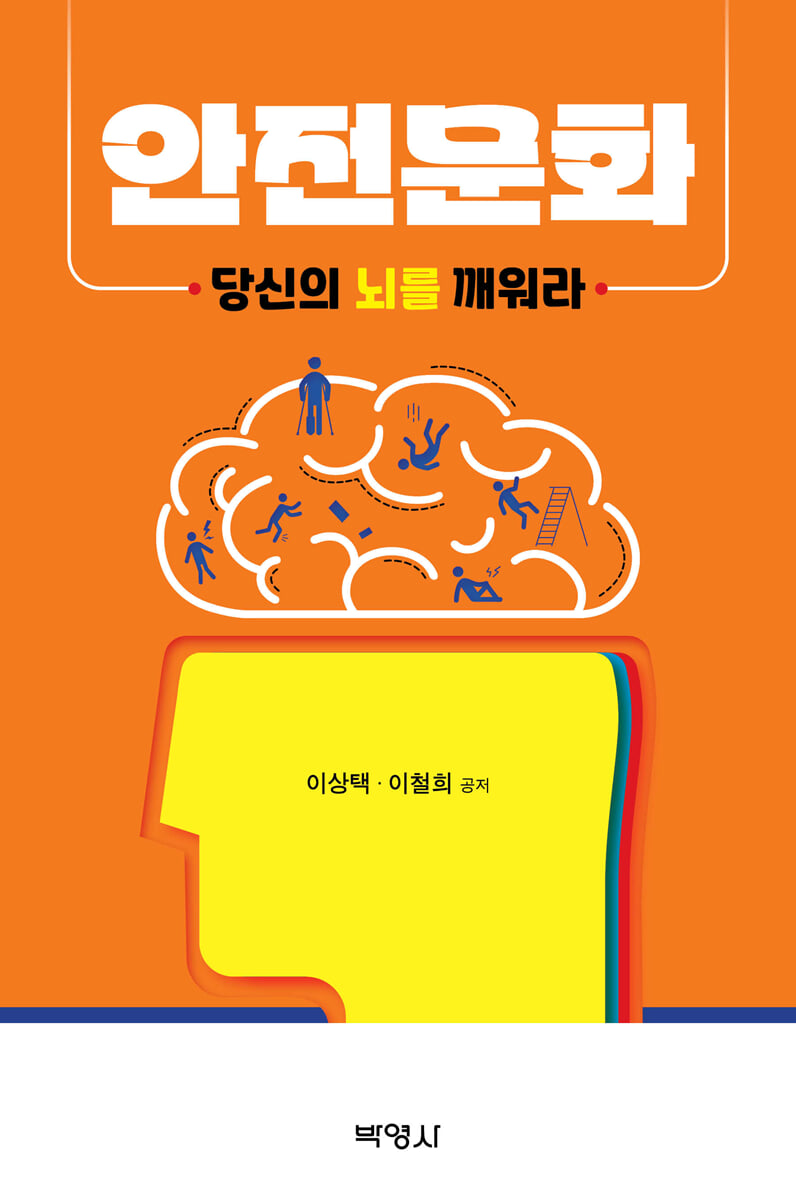
Safety Culture: Wake Up Your Brain
 |
Description
Book Introduction
Why do we have to kill ten times as many people as the UK, doing the same thing? This simple yet uncomfortable question is the starting point and motivation for this book.
Britain, like us, has suffered numerous major accidents.
Ship sinkings, subway fires, offshore platform explosions, crowd stampedes, etc… But they were different.
The government, businesses, and labor unions worked together to create a "self-regulatory-based safety management system," and now the country is one of the safest in the world.
This book academically analyzes the history and philosophy of change, explains why we keep repeating failures, and explains how we must change.
Britain, like us, has suffered numerous major accidents.
Ship sinkings, subway fires, offshore platform explosions, crowd stampedes, etc… But they were different.
The government, businesses, and labor unions worked together to create a "self-regulatory-based safety management system," and now the country is one of the safest in the world.
This book academically analyzes the history and philosophy of change, explains why we keep repeating failures, and explains how we must change.
- You can preview some of the book's contents.
Preview
index
Part 01: Learning from the History of Britain, the "Safety Powerhouse"
Chapter 01: Asking for the Path to Safety
Britain, a leading country in safety
Corporate Manslaughter and Corporate Homicide Act
Robens Report
The birth of safety
UK Corporate Autonomy and Safety Culture
The Road to Safety: Why Britain?
Part 02 Implementing a Safety Culture
Chapter 02 Establishing a Behavior-Based Autonomous Safety Management System (Safety Culture 1)
The Birth of Behavior-Based Safety (BBS)
Roadmap for Reducing Major Disasters
Establishment of an autonomous safety management system
Risk assessment
Behavior-Based Safety Management
Top-down safety culture creation strategy
Chapter 03 Building a Psychologically-Based Safety Culture (Safety Culture 2)
Humanity's Lucky Neuroplasticity
Neuroscience-based safety education
Insights into rational emotive behavior
Safety Culture Coaching
Mindfulness Safety Meditation
Building a Psychologically-Based Safety Culture
Part 03 Safety Culture
Chapter 04 106 Years of Safety Development
Development of sequential dynamical system models
Practical Application of Accident Analysis Models
Chapter 05 47 Years of Safety Culture Development
The emergence of a safety culture
People Environment Behavior Safety Culture Model
Safety Psychology Culture Model
The debate between Safety I and Safety II and rational alternatives
30 years of safety culture maturity
Chapter 06 Safety Culture Measurement and Evaluation
Safety Culture Measurement Errors Bias Wisdom
The illusion of identity between safety culture and safety climate
Safety Culture Measurement and Evaluation
Operation of behavior-based safety observation evaluation
Measuring Resilience Safety Culture
Part 04 Korean Safety Culture
Chapter 07 The Paradox and Illusion of Safety
The paradox of safety first
The Myth of the Safety Pyramid
Delusion and overconfidence
The Illusion of Perfection: Human Error
NASA's Safety DNA
Chapter 08 Korean Safety Culture Implementation Strategy
Koreans, the path to safety
The social conformity effect of culture
Safety and production awareness and self-reliance
Establishing and implementing a Korean-style safety culture
The Stop That Saved Me, the SOS Survival Model
Coming out
annotation
Chapter 01: Asking for the Path to Safety
Britain, a leading country in safety
Corporate Manslaughter and Corporate Homicide Act
Robens Report
The birth of safety
UK Corporate Autonomy and Safety Culture
The Road to Safety: Why Britain?
Part 02 Implementing a Safety Culture
Chapter 02 Establishing a Behavior-Based Autonomous Safety Management System (Safety Culture 1)
The Birth of Behavior-Based Safety (BBS)
Roadmap for Reducing Major Disasters
Establishment of an autonomous safety management system
Risk assessment
Behavior-Based Safety Management
Top-down safety culture creation strategy
Chapter 03 Building a Psychologically-Based Safety Culture (Safety Culture 2)
Humanity's Lucky Neuroplasticity
Neuroscience-based safety education
Insights into rational emotive behavior
Safety Culture Coaching
Mindfulness Safety Meditation
Building a Psychologically-Based Safety Culture
Part 03 Safety Culture
Chapter 04 106 Years of Safety Development
Development of sequential dynamical system models
Practical Application of Accident Analysis Models
Chapter 05 47 Years of Safety Culture Development
The emergence of a safety culture
People Environment Behavior Safety Culture Model
Safety Psychology Culture Model
The debate between Safety I and Safety II and rational alternatives
30 years of safety culture maturity
Chapter 06 Safety Culture Measurement and Evaluation
Safety Culture Measurement Errors Bias Wisdom
The illusion of identity between safety culture and safety climate
Safety Culture Measurement and Evaluation
Operation of behavior-based safety observation evaluation
Measuring Resilience Safety Culture
Part 04 Korean Safety Culture
Chapter 07 The Paradox and Illusion of Safety
The paradox of safety first
The Myth of the Safety Pyramid
Delusion and overconfidence
The Illusion of Perfection: Human Error
NASA's Safety DNA
Chapter 08 Korean Safety Culture Implementation Strategy
Koreans, the path to safety
The social conformity effect of culture
Safety and production awareness and self-reliance
Establishing and implementing a Korean-style safety culture
The Stop That Saved Me, the SOS Survival Model
Coming out
annotation
Detailed image
Publisher's Review
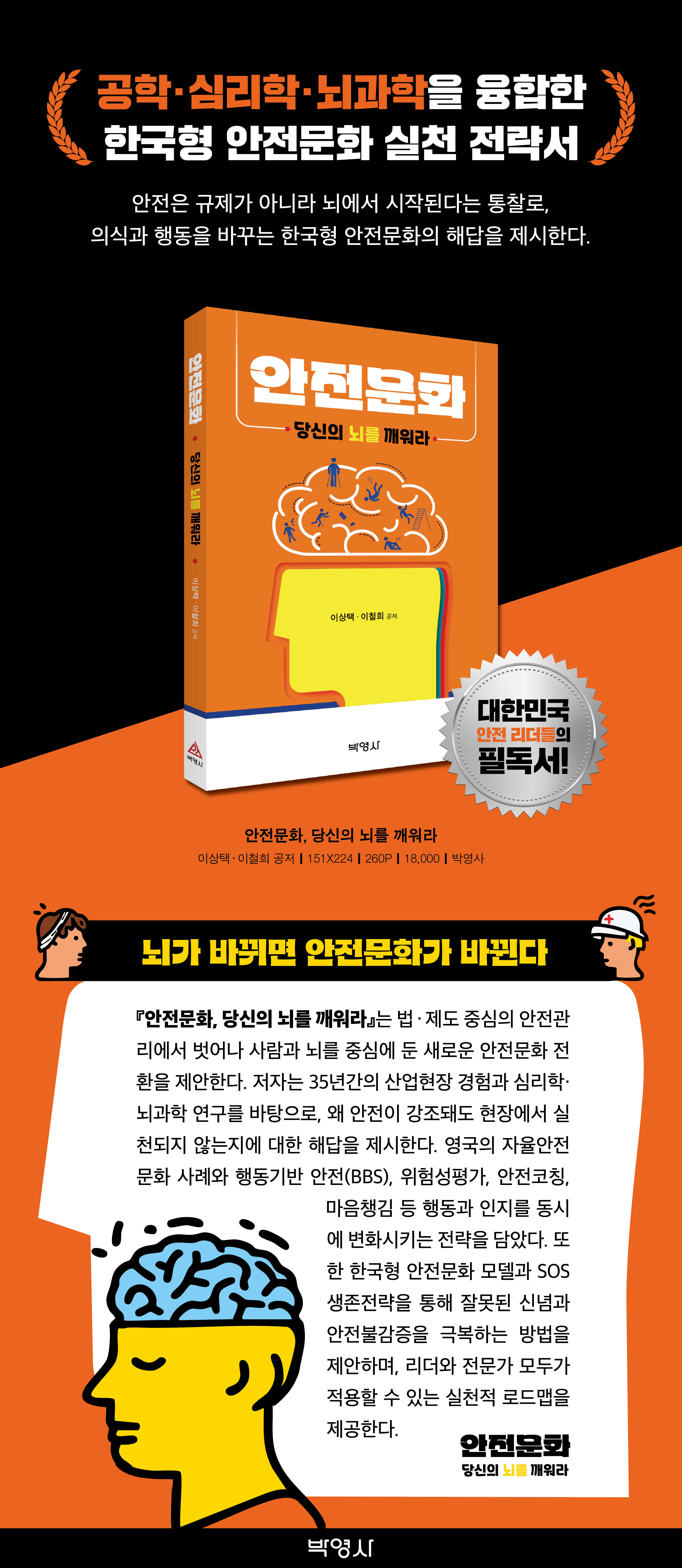
Why do we have to kill ten times as many people as the UK, doing the same thing? This simple yet uncomfortable question is the starting point and motivation for this book.
Britain, like us, has suffered numerous major accidents.
Ship sinkings, subway fires, offshore platform explosions, crowd stampedes, etc… But they were different.
The government, businesses, and labor unions worked together to create a "self-regulatory-based safety management system," and now the country is one of the safest in the world.
This book academically analyzes the history and philosophy of change, explains why we keep repeating failures, and explains how we must change.
Safety starts in the brain
Many people believe that “people change when they are educated.”
However, the author was repeatedly denied this in industrial settings.
People do not change through simple instructions or repetitive training.
Change is only possible through ‘action’, and the root of that action lies in the ‘brain’.
Ultimately, safety culture is about 'building safety DNA in your brain.'
This book covers engineering, physics, psychology, and brain science, and approaches human nature and the unconscious.
Beyond just systems or educational curricula, we aim to answer the deeper question of why we sometimes choose to take risks.
The Author's Story - A Journey That Started from a Burning Heart
The author has been in constant conflict between production and safety while directing industrial sites for decades.
One day, near the end of the project, I absentmindedly wrote this in a note:
“Mentally, physically, totally burned out”
Feeling exhausted and exhausted.
I felt a sense of mission to restore myself, and I asked myself why humans make risky choices even when they recognize the danger.
This question led me to psychology and neuroscience.
From an engineering perspective, accidents are 'unsafe behaviors'.
From a psychological perspective, it is an 'illusion of the brain'.
This is why safety must be approached as a science that goes beyond the realm of engineering and understands human nature and consciousness.
This is the essential question the author poses.
Britain, like us, has suffered numerous major accidents.
Ship sinkings, subway fires, offshore platform explosions, crowd stampedes, etc… But they were different.
The government, businesses, and labor unions worked together to create a "self-regulatory-based safety management system," and now the country is one of the safest in the world.
This book academically analyzes the history and philosophy of change, explains why we keep repeating failures, and explains how we must change.
Safety starts in the brain
Many people believe that “people change when they are educated.”
However, the author was repeatedly denied this in industrial settings.
People do not change through simple instructions or repetitive training.
Change is only possible through ‘action’, and the root of that action lies in the ‘brain’.
Ultimately, safety culture is about 'building safety DNA in your brain.'
This book covers engineering, physics, psychology, and brain science, and approaches human nature and the unconscious.
Beyond just systems or educational curricula, we aim to answer the deeper question of why we sometimes choose to take risks.
The Author's Story - A Journey That Started from a Burning Heart
The author has been in constant conflict between production and safety while directing industrial sites for decades.
One day, near the end of the project, I absentmindedly wrote this in a note:
“Mentally, physically, totally burned out”
Feeling exhausted and exhausted.
I felt a sense of mission to restore myself, and I asked myself why humans make risky choices even when they recognize the danger.
This question led me to psychology and neuroscience.
From an engineering perspective, accidents are 'unsafe behaviors'.
From a psychological perspective, it is an 'illusion of the brain'.
This is why safety must be approached as a science that goes beyond the realm of engineering and understands human nature and consciousness.
This is the essential question the author poses.
GOODS SPECIFICS
- Date of issue: September 6, 2025
- Page count, weight, size: 260 pages | 153*224*20mm
- ISBN13: 9791130322865
- ISBN10: 1130322866
You may also like
카테고리
korean


korean

![GQ KOREA Mark (Monthly): December [2025]](http://librairie.coreenne.fr/cdn/shop/files/8ef265dbbfbf186523ed75ba7319009d.jpg?v=1765340328&width=3840)


