

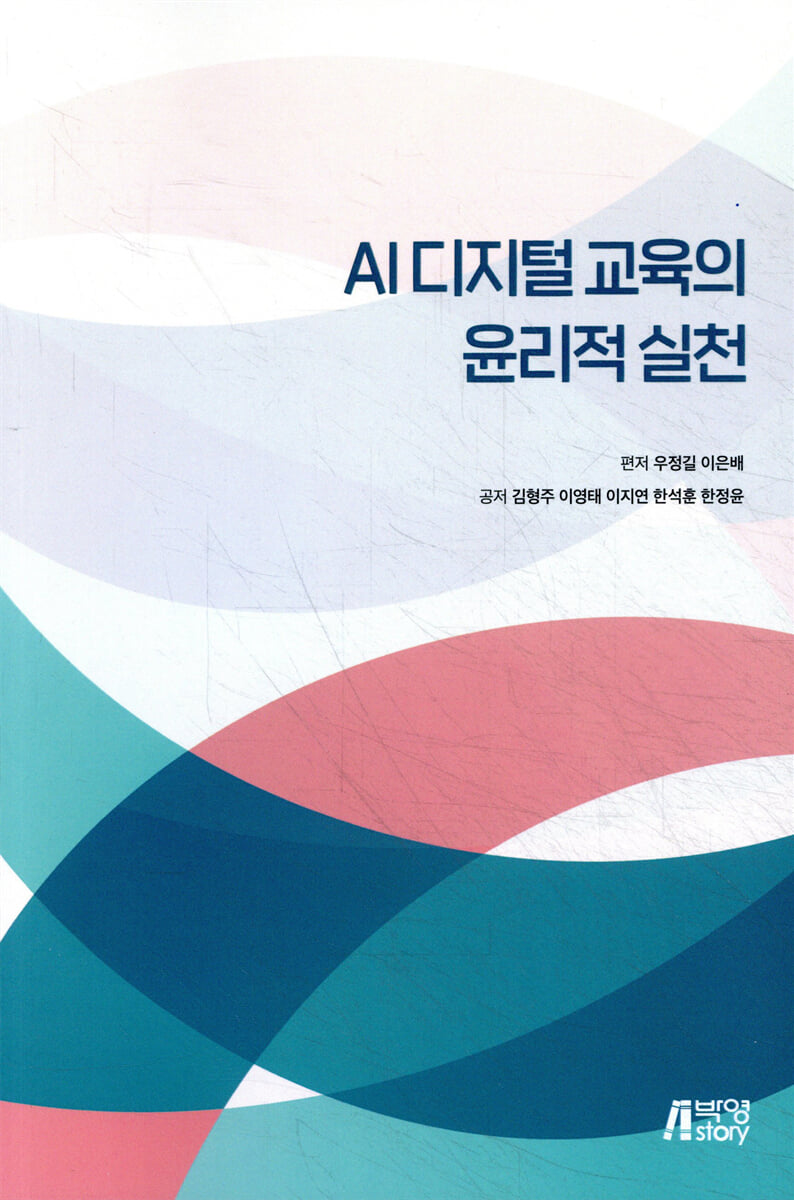
Ethical Practices in AI Digital Education
 |
Description
Book Introduction
This book contains the contents presented and discussed at the forum “Ethics and Guidelines in the AI Digital Age,” jointly hosted by the Graduate School of Education and the Institute for Educational Development at Kyung Hee University on February 7, 2025.
- You can preview some of the book's contents.
Preview
index
Chapter 1 [Introduction] The Road to Friendship
Ethical Practices in AI Digital Education: On the Context and Meaning of Discourse 1
Ⅰ.
Introduction - Social Science Concerns Surrounding Humans and Education 3
Ⅱ-1.
New Materialism and the De-anthropocentric Tendency in Education 5
Ⅱ-2.
Enhancement Discourse and the Encroachment of Education 11
Ⅲ.
Forum on "Ethical Practices in AI Digital Education" and the Aesthetics of "Pause" 21
Ⅳ.
Conclusion 29
Chapter 2 Han Jeong-yun
Ethical Responsibilities and Challenges of Using AI for Personalized Education 35
Ⅰ.
Digital Transformation: Changing Our Daily Lives and Education 37
Ⅱ.
The intersection of AI for personalized education: observation, diagnosis, and treatment 40
III. The Need for Ethical Considerations in the Educational Use of AI 45
Ⅳ.
Ethical Issues Arising from the Use of AI for Personalized Education 48
V.
60 Responsibilities and Tasks Given to Us
Chapter 3 Kim Hyung-joo
Ethical Issues and Use of AI Digital Textbooks 65
Ⅰ.
A New Trend in Education: AI Digital Textbooks 67
II. Overview of AI Digital Textbooks 69
III. AI Ethics and Digital Education Norms 75
IV. Ethical Issues in AI Digital Textbooks 78
V. Suggestions for Ethical Use of AI Digital Textbooks - Developers, Teachers, and Students 85
Chapter 4: Han Seok-hoon
AI Digital Education and Student Personal Growth: Educational Goal 93
I. What a Philosopher's Perspective on the Introduction of AI Digital Textbooks 95
II. What if we opened Pandora's box called AIDT? 99
Ⅲ.
The Terminator, The Matrix, Asilomar, and the 2024 Nobel Prize in Physics: 112 Winners
Chapter 5 Lee Ji-yeon
Generative AI Classes and Assignments from a Learning Ethics Perspective 117
Ⅰ.
The Advent of Generative AI and the Shift in the Education Paradigm 120
Ⅱ.
123 Great Lessons and Assignments to Promote Learning
Ⅲ.
Challenges and Response Strategies Facing Professors in the Age of Generative AI 131
Chapter 6 Lee Young-tae
A Discussion on Learning Ethics for Implementing Metaverse Classes in Elementary and Middle Schools 141
Ⅰ.
Metaverse-Based Classroom Innovation: Education Policy and Reality 144
Ⅱ.
Coexistence with Metaverse Classes: From the Beginning of Learning Ethics 152
Ⅲ.
A New Standard for Learning Coexistence: Learning Ethics Guidelines 160
Ⅳ.
In Conclusion - 163 Suggestions for an Inclusive Learning Ethics That Leaves No Child Behind
Chapter 7 Lee Eun-bae
Guidelines for Ethical Practice in AI Digital Education 169
Ⅰ.
In an Age of Chaos, Education is an Ethical Practice 171
Ⅱ.
Back to Basics: The Value and Purpose of Education 173
III. Ethical Practices in AI Development and Educational Use 181
Ⅳ.
Ethical Practice Guidelines and Recommendations for AI Digital Education for Teachers and Teacher Training Institutions 193
Ethical Practices in AI Digital Education: On the Context and Meaning of Discourse 1
Ⅰ.
Introduction - Social Science Concerns Surrounding Humans and Education 3
Ⅱ-1.
New Materialism and the De-anthropocentric Tendency in Education 5
Ⅱ-2.
Enhancement Discourse and the Encroachment of Education 11
Ⅲ.
Forum on "Ethical Practices in AI Digital Education" and the Aesthetics of "Pause" 21
Ⅳ.
Conclusion 29
Chapter 2 Han Jeong-yun
Ethical Responsibilities and Challenges of Using AI for Personalized Education 35
Ⅰ.
Digital Transformation: Changing Our Daily Lives and Education 37
Ⅱ.
The intersection of AI for personalized education: observation, diagnosis, and treatment 40
III. The Need for Ethical Considerations in the Educational Use of AI 45
Ⅳ.
Ethical Issues Arising from the Use of AI for Personalized Education 48
V.
60 Responsibilities and Tasks Given to Us
Chapter 3 Kim Hyung-joo
Ethical Issues and Use of AI Digital Textbooks 65
Ⅰ.
A New Trend in Education: AI Digital Textbooks 67
II. Overview of AI Digital Textbooks 69
III. AI Ethics and Digital Education Norms 75
IV. Ethical Issues in AI Digital Textbooks 78
V. Suggestions for Ethical Use of AI Digital Textbooks - Developers, Teachers, and Students 85
Chapter 4: Han Seok-hoon
AI Digital Education and Student Personal Growth: Educational Goal 93
I. What a Philosopher's Perspective on the Introduction of AI Digital Textbooks 95
II. What if we opened Pandora's box called AIDT? 99
Ⅲ.
The Terminator, The Matrix, Asilomar, and the 2024 Nobel Prize in Physics: 112 Winners
Chapter 5 Lee Ji-yeon
Generative AI Classes and Assignments from a Learning Ethics Perspective 117
Ⅰ.
The Advent of Generative AI and the Shift in the Education Paradigm 120
Ⅱ.
123 Great Lessons and Assignments to Promote Learning
Ⅲ.
Challenges and Response Strategies Facing Professors in the Age of Generative AI 131
Chapter 6 Lee Young-tae
A Discussion on Learning Ethics for Implementing Metaverse Classes in Elementary and Middle Schools 141
Ⅰ.
Metaverse-Based Classroom Innovation: Education Policy and Reality 144
Ⅱ.
Coexistence with Metaverse Classes: From the Beginning of Learning Ethics 152
Ⅲ.
A New Standard for Learning Coexistence: Learning Ethics Guidelines 160
Ⅳ.
In Conclusion - 163 Suggestions for an Inclusive Learning Ethics That Leaves No Child Behind
Chapter 7 Lee Eun-bae
Guidelines for Ethical Practice in AI Digital Education 169
Ⅰ.
In an Age of Chaos, Education is an Ethical Practice 171
Ⅱ.
Back to Basics: The Value and Purpose of Education 173
III. Ethical Practices in AI Development and Educational Use 181
Ⅳ.
Ethical Practice Guidelines and Recommendations for AI Digital Education for Teachers and Teacher Training Institutions 193
Publisher's Review
introduction
This book contains the contents presented and discussed at the forum “Ethics and Guidelines in the AI Digital Age,” jointly hosted by the Graduate School of Education and the Institute for Educational Development at Kyung Hee University on February 7, 2025.
The forum's two objectives, in line with the purpose of the Graduate School of Education, which operates to train and retrain teachers, were as follows:
First, we will review existing discussions on the ethical foundations and boundaries that must be maintained during the training and retraining of teachers in the AI digital age and explore the possibility of a tentative agreement. Second, we will explore and propose standards of educational ethics that teachers who will stand in the classroom in the AI digital age must adhere to in their individual educational practices.
The forum, which was planned with this purpose in mind, can be broadly said to have been planned with the rapid development of AI digital technology as the historical background for its development.
We are currently witnessing technological advancements at an unprecedented pace.
And this phenomenon of technological progress is fundamentally welcome.
Moreover, as history has proven, this is something that cannot be avoided or stopped, and this massive trend will not disappear simply because one individual or group closes their eyes.
Nevertheless, there is some concern in our society that this massive discourse that engulfs all future plans of our society is weakening the foundation of human beings, education, and teacher education for human education.
In fact, the biggest topic in the education (academic) world these days is clearly AI digital, regardless of the wishes of the members of the Korean educational community, and its repercussions are expected to continue for the time being.
At the same time, these concerns are quite valid from the perspective of humanity and education, core values of pedagogy. While AI digital technology was invented by humans and is undergoing rapid evolution, humans themselves, as nature itself, are experiencing a certain alienation amidst this near-rapid progress. Consequently, human education is also bound to become a part of this lag.
Therefore, social concerns surrounding humans, education, and human education in the midst of the AI digital civilization are quite valid.
In this introduction, I would like to briefly introduce two major currents in 21st-century social science discourse that underlie these social concerns.
This is about the current of discourse within the social sciences, namely, the trend toward de-anthropocentrism and the encroachment of education, which is accelerating simultaneously with, or even more so than, the rapid development of AI digital technology, which is the comprehensive trigger of this book.
I would like to express my sincere gratitude to the authors who provided me with an opportunity to “pause” through this book.
This “pause” does not mean a physical stop in time.
It involves questions about educational decisions being made despite uncertainty, and includes expert, multi-perspective guidance for a multi-layered world that is constantly changing between the present and the future.
Especially today, when the ontological status of humans is weakening in response to the grand narrative's call to break away from anthropocentrism, and in the 21st century, when skepticism about the efficacy and significance of education is deepening, I am confident that we will be able to encounter the meaning of humanity and education and the direction of human education through the questions and suggestions raised by the authors of this book under the heading of "ethical practice."
This book contains the contents presented and discussed at the forum “Ethics and Guidelines in the AI Digital Age,” jointly hosted by the Graduate School of Education and the Institute for Educational Development at Kyung Hee University on February 7, 2025.
The forum's two objectives, in line with the purpose of the Graduate School of Education, which operates to train and retrain teachers, were as follows:
First, we will review existing discussions on the ethical foundations and boundaries that must be maintained during the training and retraining of teachers in the AI digital age and explore the possibility of a tentative agreement. Second, we will explore and propose standards of educational ethics that teachers who will stand in the classroom in the AI digital age must adhere to in their individual educational practices.
The forum, which was planned with this purpose in mind, can be broadly said to have been planned with the rapid development of AI digital technology as the historical background for its development.
We are currently witnessing technological advancements at an unprecedented pace.
And this phenomenon of technological progress is fundamentally welcome.
Moreover, as history has proven, this is something that cannot be avoided or stopped, and this massive trend will not disappear simply because one individual or group closes their eyes.
Nevertheless, there is some concern in our society that this massive discourse that engulfs all future plans of our society is weakening the foundation of human beings, education, and teacher education for human education.
In fact, the biggest topic in the education (academic) world these days is clearly AI digital, regardless of the wishes of the members of the Korean educational community, and its repercussions are expected to continue for the time being.
At the same time, these concerns are quite valid from the perspective of humanity and education, core values of pedagogy. While AI digital technology was invented by humans and is undergoing rapid evolution, humans themselves, as nature itself, are experiencing a certain alienation amidst this near-rapid progress. Consequently, human education is also bound to become a part of this lag.
Therefore, social concerns surrounding humans, education, and human education in the midst of the AI digital civilization are quite valid.
In this introduction, I would like to briefly introduce two major currents in 21st-century social science discourse that underlie these social concerns.
This is about the current of discourse within the social sciences, namely, the trend toward de-anthropocentrism and the encroachment of education, which is accelerating simultaneously with, or even more so than, the rapid development of AI digital technology, which is the comprehensive trigger of this book.
I would like to express my sincere gratitude to the authors who provided me with an opportunity to “pause” through this book.
This “pause” does not mean a physical stop in time.
It involves questions about educational decisions being made despite uncertainty, and includes expert, multi-perspective guidance for a multi-layered world that is constantly changing between the present and the future.
Especially today, when the ontological status of humans is weakening in response to the grand narrative's call to break away from anthropocentrism, and in the 21st century, when skepticism about the efficacy and significance of education is deepening, I am confident that we will be able to encounter the meaning of humanity and education and the direction of human education through the questions and suggestions raised by the authors of this book under the heading of "ethical practice."
GOODS SPECIFICS
- Date of issue: August 15, 2025
- Page count, weight, size: 276 pages | 153*224*20mm
- ISBN13: 9791172791308
- ISBN10: 1172791309
You may also like
카테고리
korean


korean

![GQ KOREA Mark (Monthly): December [2025]](http://librairie.coreenne.fr/cdn/shop/files/8ef265dbbfbf186523ed75ba7319009d.jpg?v=1765340328&width=3840)


