

Basic Power Electronics
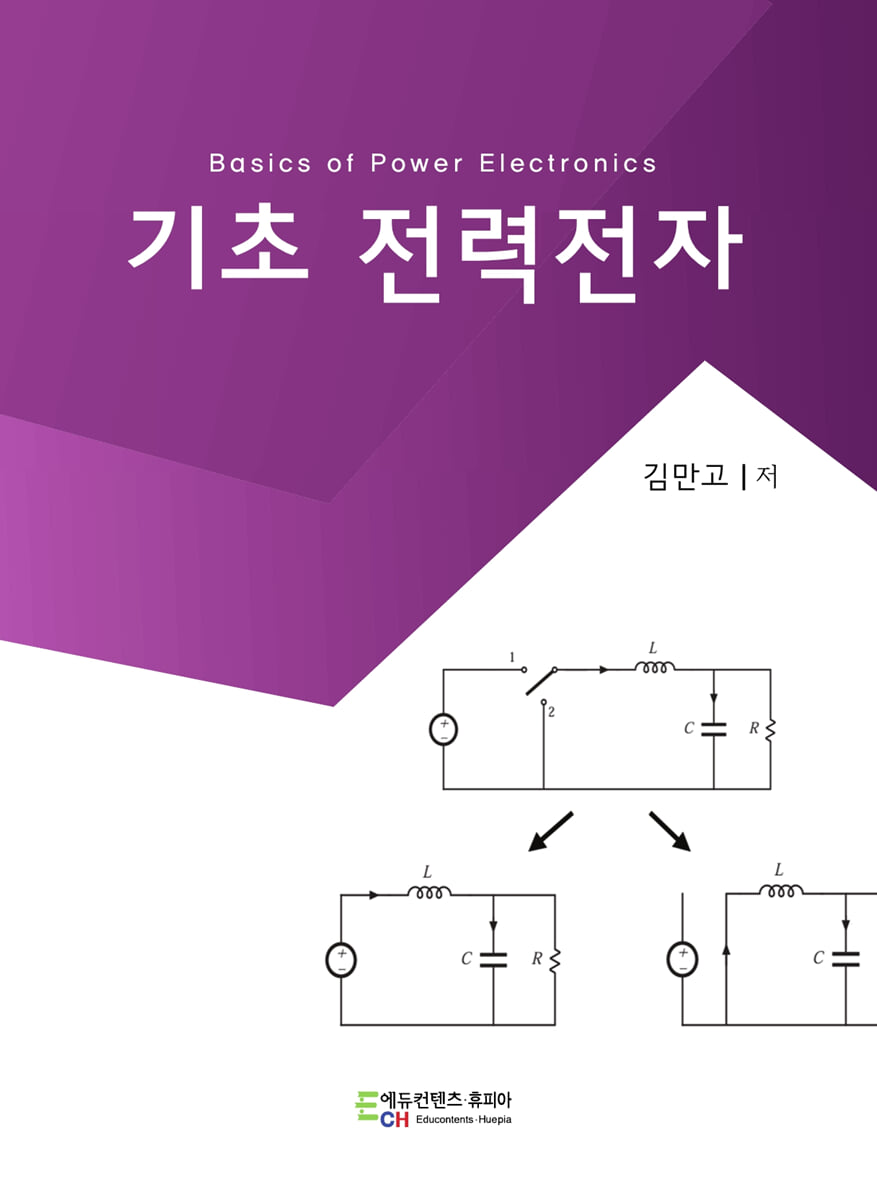 |
Description
Book Introduction
Power Electronics is the English word for power electronics.
Power is energy per time, so integration gives energy.
There are many types of energy, but generally speaking, it refers to electrical energy.
Power is the product of current and voltage.
Power, which is handled in power electronics, is a waveform that repeats with a certain cycle.
Therefore, the current and voltage waveforms used in power electronics are repetitive, and the repetitive waveforms can be expanded into a Fourier series.
That is, the developed waveform contains harmonic components in addition to the repeating fundamental period.
The power that is dealt with in power electronics is closely related to the fundamental wave component, and harmonics are unwanted components that cannot contribute to power transmission.
The element that controls the flow of power is a semiconductor switch.
Semiconductor switches are key components that make up power electronics systems.
Advances in semiconductor switches have always driven innovation in power electronics technology.
Although mercury rectifiers were introduced around 1900 and vacuum tubes were later used as switches, the invention of the silicon transistor in 1948 can be said to have been the beginning of a revolution in power electronics.
In particular, the advent of SCR in 1958 served as a catalyst for accelerating the development of power electronics.
Since the 1980s, power electronics have been used in all facilities that use electrical energy, and their applications are so diverse that it is impossible to list them all.
Just think of power electronics as being used everywhere that uses electricity.
The signal controlling the semiconductor switch is generated by the output feedback controller.
The controller controls the semiconductor switch by generating a control signal by compensating for the error signal between the reference signal and the actual output.
The circuits that make up the controller are being tested using either analog or digital controllers.
Recently, many control ICs have been developed and are being widely used.
The development of these controllers is also playing a pivotal role in the advancement of the power electronics field.
Power is energy per time, so integration gives energy.
There are many types of energy, but generally speaking, it refers to electrical energy.
Power is the product of current and voltage.
Power, which is handled in power electronics, is a waveform that repeats with a certain cycle.
Therefore, the current and voltage waveforms used in power electronics are repetitive, and the repetitive waveforms can be expanded into a Fourier series.
That is, the developed waveform contains harmonic components in addition to the repeating fundamental period.
The power that is dealt with in power electronics is closely related to the fundamental wave component, and harmonics are unwanted components that cannot contribute to power transmission.
The element that controls the flow of power is a semiconductor switch.
Semiconductor switches are key components that make up power electronics systems.
Advances in semiconductor switches have always driven innovation in power electronics technology.
Although mercury rectifiers were introduced around 1900 and vacuum tubes were later used as switches, the invention of the silicon transistor in 1948 can be said to have been the beginning of a revolution in power electronics.
In particular, the advent of SCR in 1958 served as a catalyst for accelerating the development of power electronics.
Since the 1980s, power electronics have been used in all facilities that use electrical energy, and their applications are so diverse that it is impossible to list them all.
Just think of power electronics as being used everywhere that uses electricity.
The signal controlling the semiconductor switch is generated by the output feedback controller.
The controller controls the semiconductor switch by generating a control signal by compensating for the error signal between the reference signal and the actual output.
The circuits that make up the controller are being tested using either analog or digital controllers.
Recently, many control ICs have been developed and are being widely used.
The development of these controllers is also playing a pivotal role in the advancement of the power electronics field.
index
Preface iii
Chapter 1 Introduction 3
1.1 History of Power Electronics 6
1.2 Power Semiconductor Devices 7
1.3 Types of Power Electronics Circuits 8
1.4 Waveform Analysis 10
1.5 Ten cornerstones of power electronics 17
Chapter 2 Power Semiconductor Switches 19
2.1 Diode 20
2.2 Power Transistors 32
2.2.1 Power MOSFET 32
2.2.2 IGBT 34
2.2.3 Losses in Power Semiconductor Switches 40
2.3 Analysis of Circuits with Semiconductor Switches 42
A2.
A Fast Separation Algorithm for Time-Domain Simulation of a Two-Switch Forward Converter with Serial Input and Parallel Output Connections 46
Chapter 3 Diode Rectifiers 59
3.1 Single-phase full-wave rectifier 63
3.2 Three-phase bridge rectifier 68
3.3 Rectifier circuit and input/output filter 72
Rectifier 73 with 3.4 RL load
3.5 Power factor improvement 76
A3.
Slope Compensation Design of a Buck AC/DC LED Driver Based on Discrete Time Domain Analysis 77
Chapter 4 DC-DC Converter 93
4.1 Buck Converter 96
4.2 Boost Converter 100
4.3 Buck-Boost Converter 104
4.4 State-Space Averaging Modeling 110
A4.
Efficient Clamp 112 for Reducing Switch Voltage Stress in Forward Converters
Chapter 5 PWM Inverter 131
5.1 Motion Parameters 133
5.2 Single-phase bridge inverter 135
5.3 3-phase inverter 139
5.4 Voltage Control of Single-Phase Inverters 148
5.4.1 Multi-pulse width modulation 149
5.4.2 Sinusoidal pulse width modulation 152
5.4.3 Modified Sinusoidal Pulse Width Modulation 157
5.4.4 Phase Shift Control 160
5.5 Voltage Control of a Three-Phase Inverter 161
5.5.1 Sinusoidal PWM 162
Chapter 6 Resonant Converter 165
6.1 Series Resonant Converter 166
6.2 Parallel Resonant Converter 173
6.3 Series-Parallel Resonant Converter 176
6.4 Parallel Resonant Inverter 179
6.5 Zero-Current Switching Resonant Converter 182
6.7 Zero-voltage switching resonant converter 186
Chapter 7 Power Supply 191
7.1 Overview 192
7.2 Flyback Converter 192
7.3 Forward Converter 197
A7.
A Novel Soft-Switching Two-Switch Flyback Converter with Wide Operating Range and Regenerative Clamping 213
Chapter 8 AC Motor Drive 229
8.1 Overview 230
8.2 Induction Motor Drive 230
8.2.1 Operating Characteristics 232
8.2.2 Stator Voltage Control 240
8.2.3 Rotor Voltage Control 243
8.2.4 Frequency Control 244
8.2.5 Voltage and Frequency Control 246
8.2.6 Current Control 248
8.2.7 Voltage, Current, and Frequency Control 251
8.3 Synchronous Motor Drive 252
8.3.1 Non-salient motor 253
8.3.2 Swing-pole motor 256
8.3.3 Reluctance Motor 259
Chapter 1 Introduction 3
1.1 History of Power Electronics 6
1.2 Power Semiconductor Devices 7
1.3 Types of Power Electronics Circuits 8
1.4 Waveform Analysis 10
1.5 Ten cornerstones of power electronics 17
Chapter 2 Power Semiconductor Switches 19
2.1 Diode 20
2.2 Power Transistors 32
2.2.1 Power MOSFET 32
2.2.2 IGBT 34
2.2.3 Losses in Power Semiconductor Switches 40
2.3 Analysis of Circuits with Semiconductor Switches 42
A2.
A Fast Separation Algorithm for Time-Domain Simulation of a Two-Switch Forward Converter with Serial Input and Parallel Output Connections 46
Chapter 3 Diode Rectifiers 59
3.1 Single-phase full-wave rectifier 63
3.2 Three-phase bridge rectifier 68
3.3 Rectifier circuit and input/output filter 72
Rectifier 73 with 3.4 RL load
3.5 Power factor improvement 76
A3.
Slope Compensation Design of a Buck AC/DC LED Driver Based on Discrete Time Domain Analysis 77
Chapter 4 DC-DC Converter 93
4.1 Buck Converter 96
4.2 Boost Converter 100
4.3 Buck-Boost Converter 104
4.4 State-Space Averaging Modeling 110
A4.
Efficient Clamp 112 for Reducing Switch Voltage Stress in Forward Converters
Chapter 5 PWM Inverter 131
5.1 Motion Parameters 133
5.2 Single-phase bridge inverter 135
5.3 3-phase inverter 139
5.4 Voltage Control of Single-Phase Inverters 148
5.4.1 Multi-pulse width modulation 149
5.4.2 Sinusoidal pulse width modulation 152
5.4.3 Modified Sinusoidal Pulse Width Modulation 157
5.4.4 Phase Shift Control 160
5.5 Voltage Control of a Three-Phase Inverter 161
5.5.1 Sinusoidal PWM 162
Chapter 6 Resonant Converter 165
6.1 Series Resonant Converter 166
6.2 Parallel Resonant Converter 173
6.3 Series-Parallel Resonant Converter 176
6.4 Parallel Resonant Inverter 179
6.5 Zero-Current Switching Resonant Converter 182
6.7 Zero-voltage switching resonant converter 186
Chapter 7 Power Supply 191
7.1 Overview 192
7.2 Flyback Converter 192
7.3 Forward Converter 197
A7.
A Novel Soft-Switching Two-Switch Flyback Converter with Wide Operating Range and Regenerative Clamping 213
Chapter 8 AC Motor Drive 229
8.1 Overview 230
8.2 Induction Motor Drive 230
8.2.1 Operating Characteristics 232
8.2.2 Stator Voltage Control 240
8.2.3 Rotor Voltage Control 243
8.2.4 Frequency Control 244
8.2.5 Voltage and Frequency Control 246
8.2.6 Current Control 248
8.2.7 Voltage, Current, and Frequency Control 251
8.3 Synchronous Motor Drive 252
8.3.1 Non-salient motor 253
8.3.2 Swing-pole motor 256
8.3.3 Reluctance Motor 259
GOODS SPECIFICS
- Date of issue: July 15, 2025
- Page count, weight, size: 262 pages | 188*254*20mm
- ISBN13: 9788963565170
- ISBN10: 8963565173
You may also like
카테고리
korean


korean

![GQ KOREA Mark (Monthly): December [2025]](http://librairie.coreenne.fr/cdn/shop/files/8ef265dbbfbf186523ed75ba7319009d.jpg?v=1765340328&width=3840)


