

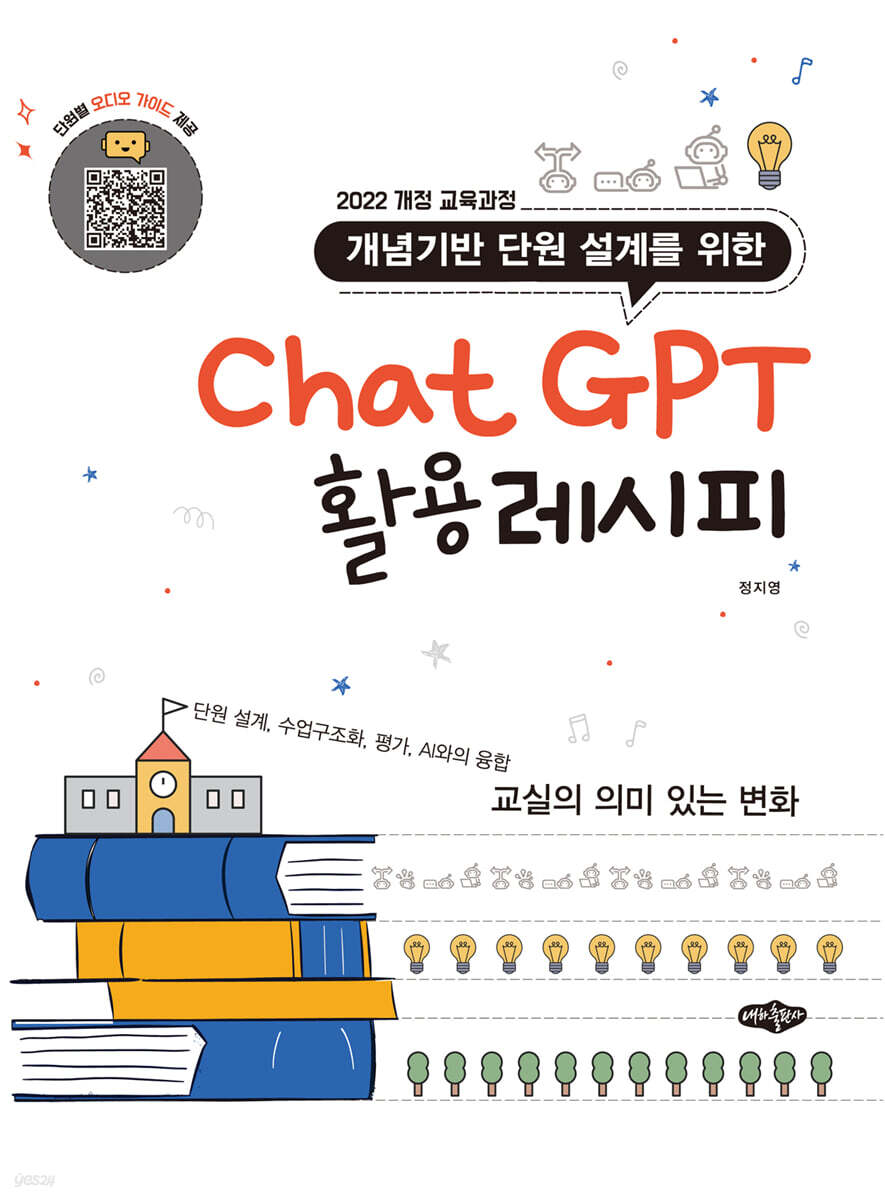
ChatGPT Recipes for Concept-Based Unit Design
 |
Description
Book Introduction
2022 Concept-Based Education
Understand the 11 steps of concept-based unit design in depth with ChatGPT.
“What and how will we teach?”
"I understand the need for change, but where and how do I begin?"
This practical guidebook is designed to fit the "11 Steps of Concept-Based Unit Design," and includes ChatGPT prompts, practical application examples, and teaching materials.
We clearly presented specific prompt writing methods and know-how using ChatGPT, as well as the limitations of using AI.
Schools are changing faster than ever.
Teachers stand at the center of this change, facing new concerns and questions every day.
The world in which students live is becoming increasingly complex amidst the deluge of knowledge.
In this reality, education can no longer be limited to simply conveying information and having it memorized.
We need new education suited to the changing times.
At that very point, the teacher is confronted head-on with the fundamental question: "What, why, and how to teach?"
Although various educational policies and teaching methods have been introduced recently, many teachers feel overwhelmed and burdened when actually applying them in the classroom.
"I know concept-based classes are good, but I don't know where or how to start," is a voice from the field that speaks volumes.
Understand the 11 steps of concept-based unit design in depth with ChatGPT.
“What and how will we teach?”
"I understand the need for change, but where and how do I begin?"
This practical guidebook is designed to fit the "11 Steps of Concept-Based Unit Design," and includes ChatGPT prompts, practical application examples, and teaching materials.
We clearly presented specific prompt writing methods and know-how using ChatGPT, as well as the limitations of using AI.
Schools are changing faster than ever.
Teachers stand at the center of this change, facing new concerns and questions every day.
The world in which students live is becoming increasingly complex amidst the deluge of knowledge.
In this reality, education can no longer be limited to simply conveying information and having it memorized.
We need new education suited to the changing times.
At that very point, the teacher is confronted head-on with the fundamental question: "What, why, and how to teach?"
Although various educational policies and teaching methods have been introduced recently, many teachers feel overwhelmed and burdened when actually applying them in the classroom.
"I know concept-based classes are good, but I don't know where or how to start," is a voice from the field that speaks volumes.
- You can preview some of the book's contents.
Preview
index
Chapter 01 Understanding Concept-Based Curriculum
01.
Why a concept-based curriculum?
02.
What is a concept-based curriculum?
03.
Differences from traditional curriculum
04.
The meaning and role of 'concept' and 'generalization'
05.
Constructivism and cognitive psychology foundations
06.
Views of major theorists: Lynn Erickson, Lanning, Jacobs, etc.
07.
International applications: IB, Finland, Singapore, etc.
08.
Changes in the Korean Curriculum and Concept-Based Approaches
09.
The effectiveness and value of concept-based education
10.
Misconceptions and Concerns in the Field: Answering Frequently Asked Questions
11.
Towards understanding-centered education
Chapter 02 The First Step in Concept-Based Inquiry Classes: Unit Design
01.
The meaning and role of concept-based unit design
02.
Flow and procedure of concept-based unit design
03.
Difficulties in field application
04.
Using ChatGPT to Design Concept-Centric Units
05.
Usage Tips and Notes
Chapter 03: Concept-Based Unit Design: 11-Step Overview
01.
Step 1: Decide on a Unit Name (Focus or Context)
02.
Step 2: Identifying a Conceptual Lens
03.
Step 3: Identifying Unit Strands
04.
Step 4: Connecting Materials and Concepts by Strand (Creating a Unit Network)
05.
Writing a General Statement (Key Concept Understanding Statement)
06.
Step 6: Create a Guiding Question
07.
Step 7: Identify the Key Takeaways (What Students Need to Know)
08.
Step 8: Identifying Core Functions (What Students Should Be Able to Do)
09.
Step 9: Create a Final Assessment and Rubric
10.
Step 10: Designing Learning Activities
11.
Step 11: Write a Unit Outline
Chapter 04 Step 1: Deciding on a Unit Name (Setting Focus or Context)
01.
Check textbook unit names
02.
Check the curriculum achievement standards
03.
Extracting concepts and generalizations
04.
Select a unit name
ㆍ Unit Summary
Chapter 05 Step 2: Understanding the Conceptual Lens
01.
Definition and examples of conceptual lenses
02.
Types of conceptual lenses
03.
Conceptual Lens Extraction
04.
Conceptual Lens Step Batch Extraction and Selection
ㆍ Unit Summary
Chapter 06 Step 3: Identifying Unit Strands
01.
The concept and role of strands
02.
Strand extraction method using ChatGPT
03.
Example of the final composition of the unit strand
04.
Implications for Lesson Design
ㆍ Unit Summary
Chapter 07 Step 4: Weaving Unit Materials and Concepts Within Strands
01.
Find subtopics and related concepts within a strand
02.
Visualize with a mind map
ㆍ Unit Summary
Chapter 08 Step 5: Writing Generalizations
01.
The concept and importance of generalization
02.
Generating Generalized Sentences Using ChatGPT
03.
Adjust the number of generalized sentences and review their difficulty level.
04.
Classification of types of generalized sentences and how to use them
05.
Practical Tips for Teachers to Consider
ㆍ Unit Summary
Chapter 09 Step 6: Creating Guide Questions
01.
Creating Guiding Questions: Theory and Practice of Concept-Based Unit Design
02.
The concept and educational significance of guiding questions
03.
Types of Guiding Questions and Their Theoretical Background
04.
Linking guiding questions and generalization sentences
05.
Procedure for creating guidance questions using ChatGPT
06.
Check and edit ChatGPT responses
07.
Prompt Design Strategies and Examples
08.
Revise questions to improve quality and check expected answers
09.
Using Guided Questions in Teaching and Assessment
ㆍ Unit Summary
Chapter 10 Step 7: Identifying the Important Content
01.
Definition and educational significance of 'important content'
02.
Generalization, guiding questions, and linking structure with unit strands
03.
Three perspectives for selecting important content
04.
Extracting "Important Content" Strategies and Prompt Design Using ChatGPT
05.
Interpreting ChatGPT Response Results and Utilizing Them in Lesson Design
06.
Using the data
07.
Feedback strategies for adjusting question levels and diagnosing misconceptions
ㆍ Unit Summary
Chapter 11 Step 8: Identifying Core Functions
01.
What is a 'core function'?
02.
The 'Curriculum/Function' element and unit design of the curriculum document
03.
Why Identifying Unit's "Core Functions" Is Important
04.
Extracting Core Features Using ChatGPT
05.
Writing ChatGPT Prompts: A Step-by-Step Guide with Examples
06.
Examples of ChatGPT Usage by Subject
07.
Summary of key principles for writing prompts
08.
Leveraging ChatGPT Results in Lesson Design: Next Steps
ㆍ Unit Summary
Chapter 12 Step 9: Creating a Summative Assessment and Rubric
01.
What is concept-based summative assessment?
02.
Using 4 Essential Information for Designing Summative Assessment Assignments
03.
How to Create Concept-Based Summative Assessment Assignments Using ChatGPT
04. Designing a Performance Evaluation Using the GRASPS Framework (Using ChatGPT Prompts)
05.
Creating Concept-Based Rubrics with ChatGPT (Including 4-Level Achievement Examples)
06.
ChatGPT Prompt Writing Guidelines and the Teacher's Ultimate Role
ㆍ Unit Summary
Chapter 13 Step 10: Designing Learning Activities
01.
Core Principles of Activity Design
02.
Unit Structuring Strategy
03.
Generating activity ideas using ChatGPT
04.
Example of activity composition by week in the 'Sound' unit
05.
Emphasize consistency between learning activities and assessment
06.
Continuously improving classes using ChatGPT
ㆍ Unit Summary
Chapter 14 Step 11: Writing a Unit Outline
01.
Essential Elements of a Unit Outline
02.
How to Write a Unit Outline Using ChatGPT
03.
Example of writing a unit outline
04.
finish
ㆍ Unit Summary
Chapter 15: Summary and Examples of Concept-Based Unit Design
01.
Example: 6th grade social studies "Global conflict cases"
02.
Full finish
01.
Why a concept-based curriculum?
02.
What is a concept-based curriculum?
03.
Differences from traditional curriculum
04.
The meaning and role of 'concept' and 'generalization'
05.
Constructivism and cognitive psychology foundations
06.
Views of major theorists: Lynn Erickson, Lanning, Jacobs, etc.
07.
International applications: IB, Finland, Singapore, etc.
08.
Changes in the Korean Curriculum and Concept-Based Approaches
09.
The effectiveness and value of concept-based education
10.
Misconceptions and Concerns in the Field: Answering Frequently Asked Questions
11.
Towards understanding-centered education
Chapter 02 The First Step in Concept-Based Inquiry Classes: Unit Design
01.
The meaning and role of concept-based unit design
02.
Flow and procedure of concept-based unit design
03.
Difficulties in field application
04.
Using ChatGPT to Design Concept-Centric Units
05.
Usage Tips and Notes
Chapter 03: Concept-Based Unit Design: 11-Step Overview
01.
Step 1: Decide on a Unit Name (Focus or Context)
02.
Step 2: Identifying a Conceptual Lens
03.
Step 3: Identifying Unit Strands
04.
Step 4: Connecting Materials and Concepts by Strand (Creating a Unit Network)
05.
Writing a General Statement (Key Concept Understanding Statement)
06.
Step 6: Create a Guiding Question
07.
Step 7: Identify the Key Takeaways (What Students Need to Know)
08.
Step 8: Identifying Core Functions (What Students Should Be Able to Do)
09.
Step 9: Create a Final Assessment and Rubric
10.
Step 10: Designing Learning Activities
11.
Step 11: Write a Unit Outline
Chapter 04 Step 1: Deciding on a Unit Name (Setting Focus or Context)
01.
Check textbook unit names
02.
Check the curriculum achievement standards
03.
Extracting concepts and generalizations
04.
Select a unit name
ㆍ Unit Summary
Chapter 05 Step 2: Understanding the Conceptual Lens
01.
Definition and examples of conceptual lenses
02.
Types of conceptual lenses
03.
Conceptual Lens Extraction
04.
Conceptual Lens Step Batch Extraction and Selection
ㆍ Unit Summary
Chapter 06 Step 3: Identifying Unit Strands
01.
The concept and role of strands
02.
Strand extraction method using ChatGPT
03.
Example of the final composition of the unit strand
04.
Implications for Lesson Design
ㆍ Unit Summary
Chapter 07 Step 4: Weaving Unit Materials and Concepts Within Strands
01.
Find subtopics and related concepts within a strand
02.
Visualize with a mind map
ㆍ Unit Summary
Chapter 08 Step 5: Writing Generalizations
01.
The concept and importance of generalization
02.
Generating Generalized Sentences Using ChatGPT
03.
Adjust the number of generalized sentences and review their difficulty level.
04.
Classification of types of generalized sentences and how to use them
05.
Practical Tips for Teachers to Consider
ㆍ Unit Summary
Chapter 09 Step 6: Creating Guide Questions
01.
Creating Guiding Questions: Theory and Practice of Concept-Based Unit Design
02.
The concept and educational significance of guiding questions
03.
Types of Guiding Questions and Their Theoretical Background
04.
Linking guiding questions and generalization sentences
05.
Procedure for creating guidance questions using ChatGPT
06.
Check and edit ChatGPT responses
07.
Prompt Design Strategies and Examples
08.
Revise questions to improve quality and check expected answers
09.
Using Guided Questions in Teaching and Assessment
ㆍ Unit Summary
Chapter 10 Step 7: Identifying the Important Content
01.
Definition and educational significance of 'important content'
02.
Generalization, guiding questions, and linking structure with unit strands
03.
Three perspectives for selecting important content
04.
Extracting "Important Content" Strategies and Prompt Design Using ChatGPT
05.
Interpreting ChatGPT Response Results and Utilizing Them in Lesson Design
06.
Using the data
07.
Feedback strategies for adjusting question levels and diagnosing misconceptions
ㆍ Unit Summary
Chapter 11 Step 8: Identifying Core Functions
01.
What is a 'core function'?
02.
The 'Curriculum/Function' element and unit design of the curriculum document
03.
Why Identifying Unit's "Core Functions" Is Important
04.
Extracting Core Features Using ChatGPT
05.
Writing ChatGPT Prompts: A Step-by-Step Guide with Examples
06.
Examples of ChatGPT Usage by Subject
07.
Summary of key principles for writing prompts
08.
Leveraging ChatGPT Results in Lesson Design: Next Steps
ㆍ Unit Summary
Chapter 12 Step 9: Creating a Summative Assessment and Rubric
01.
What is concept-based summative assessment?
02.
Using 4 Essential Information for Designing Summative Assessment Assignments
03.
How to Create Concept-Based Summative Assessment Assignments Using ChatGPT
04. Designing a Performance Evaluation Using the GRASPS Framework (Using ChatGPT Prompts)
05.
Creating Concept-Based Rubrics with ChatGPT (Including 4-Level Achievement Examples)
06.
ChatGPT Prompt Writing Guidelines and the Teacher's Ultimate Role
ㆍ Unit Summary
Chapter 13 Step 10: Designing Learning Activities
01.
Core Principles of Activity Design
02.
Unit Structuring Strategy
03.
Generating activity ideas using ChatGPT
04.
Example of activity composition by week in the 'Sound' unit
05.
Emphasize consistency between learning activities and assessment
06.
Continuously improving classes using ChatGPT
ㆍ Unit Summary
Chapter 14 Step 11: Writing a Unit Outline
01.
Essential Elements of a Unit Outline
02.
How to Write a Unit Outline Using ChatGPT
03.
Example of writing a unit outline
04.
finish
ㆍ Unit Summary
Chapter 15: Summary and Examples of Concept-Based Unit Design
01.
Example: 6th grade social studies "Global conflict cases"
02.
Full finish
Publisher's Review
Finding the Answer in ChatGPT
This book provides an answer to this very feeling of helplessness.
We've fleshed out the concept-based curriculum philosophy into a "step-by-step manual immediately applicable to the classroom," and we propose ChatGPT, a generative AI, as a reliable companion for unit design and lesson preparation.
Concept-based education is characterized by designing the entire 'unit' rather than individual lessons as the basic unit.
Moving beyond the mere transmission of fragmented facts or information, we aim to cultivate the ability for students to understand concepts on their own and apply them to real-world situations through a process of inquiry in which they voluntarily participate.
In this way, you will delve deeply into core concepts within the flow of the entire unit, and this book provides helpful guidance on how to design such units.
The unit design process involves challenging tasks such as 'identifying key concepts,' 'creating inquiry questions that expand student thinking,' and 'creating lesson materials.'
However, by applying the 11-step unit design method and prompt utilization method, these difficulties can be solved step by step.
Above all, utilizing generative AI significantly expands teachers' lesson planning capabilities, freeing them from repetitive and time-consuming tasks and allowing them to focus more on creative and essential teaching and learning.
In the AI era, teachers' expertise shines even brighter.
AI won't solve everything.
The results provided by ChatGPT only gain meaning when reinterpreted and supplemented based on the teacher's critical perspective and expertise. While AI is a "capable assistant" that expands teachers' thinking and reduces repetitive tasks, the teacher is always the main character and final decision-maker of the class.
This book presents concrete ways to further enhance teachers' expertise through collaboration with AI.
It also honestly points out the limitations and cautions of using AI.
Field-focused, step-by-step practical guide
The most significant feature of this book is that it suggests practical methods to bridge the gap between theory and practice.
Beyond a simple introduction to theory, we provide a practical manual that can be immediately applied in the classroom, including ChatGPT prompts aligned with the "11 Steps of Concept-Based Unit Design," real-world application examples, assessment rubrics, and activity examples.
Additionally, we've systematically structured everything from curriculum interpretation to unit design, inquiry question development, and assessment item and rubric creation, so you can implement it step by step with the help of ChatGPT.
Guide and companion in practice
At the beginning of each chapter, we included a virtual conversation about the concerns of teachers in the field, aiming to help readers understand the field and build empathy with them.
We've also prepared an audio guide summarizing the key content, and provide it as a QR code so you can listen to it anytime, anywhere.
The audio guide was created using Google Notebook LM's 'AI Audio Overview' feature, allowing busy teachers to quickly and easily review key content.
We hope this book will serve as a guide and a reliable companion on the journey of new classroom innovations created by teachers and AI together.
I sincerely hope that this small book will become a starting point for courage and practical action that will lead to the realization that "I can do it too."
This book provides an answer to this very feeling of helplessness.
We've fleshed out the concept-based curriculum philosophy into a "step-by-step manual immediately applicable to the classroom," and we propose ChatGPT, a generative AI, as a reliable companion for unit design and lesson preparation.
Concept-based education is characterized by designing the entire 'unit' rather than individual lessons as the basic unit.
Moving beyond the mere transmission of fragmented facts or information, we aim to cultivate the ability for students to understand concepts on their own and apply them to real-world situations through a process of inquiry in which they voluntarily participate.
In this way, you will delve deeply into core concepts within the flow of the entire unit, and this book provides helpful guidance on how to design such units.
The unit design process involves challenging tasks such as 'identifying key concepts,' 'creating inquiry questions that expand student thinking,' and 'creating lesson materials.'
However, by applying the 11-step unit design method and prompt utilization method, these difficulties can be solved step by step.
Above all, utilizing generative AI significantly expands teachers' lesson planning capabilities, freeing them from repetitive and time-consuming tasks and allowing them to focus more on creative and essential teaching and learning.
In the AI era, teachers' expertise shines even brighter.
AI won't solve everything.
The results provided by ChatGPT only gain meaning when reinterpreted and supplemented based on the teacher's critical perspective and expertise. While AI is a "capable assistant" that expands teachers' thinking and reduces repetitive tasks, the teacher is always the main character and final decision-maker of the class.
This book presents concrete ways to further enhance teachers' expertise through collaboration with AI.
It also honestly points out the limitations and cautions of using AI.
Field-focused, step-by-step practical guide
The most significant feature of this book is that it suggests practical methods to bridge the gap between theory and practice.
Beyond a simple introduction to theory, we provide a practical manual that can be immediately applied in the classroom, including ChatGPT prompts aligned with the "11 Steps of Concept-Based Unit Design," real-world application examples, assessment rubrics, and activity examples.
Additionally, we've systematically structured everything from curriculum interpretation to unit design, inquiry question development, and assessment item and rubric creation, so you can implement it step by step with the help of ChatGPT.
Guide and companion in practice
At the beginning of each chapter, we included a virtual conversation about the concerns of teachers in the field, aiming to help readers understand the field and build empathy with them.
We've also prepared an audio guide summarizing the key content, and provide it as a QR code so you can listen to it anytime, anywhere.
The audio guide was created using Google Notebook LM's 'AI Audio Overview' feature, allowing busy teachers to quickly and easily review key content.
We hope this book will serve as a guide and a reliable companion on the journey of new classroom innovations created by teachers and AI together.
I sincerely hope that this small book will become a starting point for courage and practical action that will lead to the realization that "I can do it too."
GOODS SPECIFICS
- Date of issue: August 1, 2025
- Page count, weight, size: 302 pages | 190*260*30mm
- ISBN13: 9788957176139
- ISBN10: 8957176136
You may also like
카테고리
korean


korean

![GQ KOREA Mark (Monthly): December [2025]](http://librairie.coreenne.fr/cdn/shop/files/8ef265dbbfbf186523ed75ba7319009d.jpg?v=1765340328&width=3840)


