

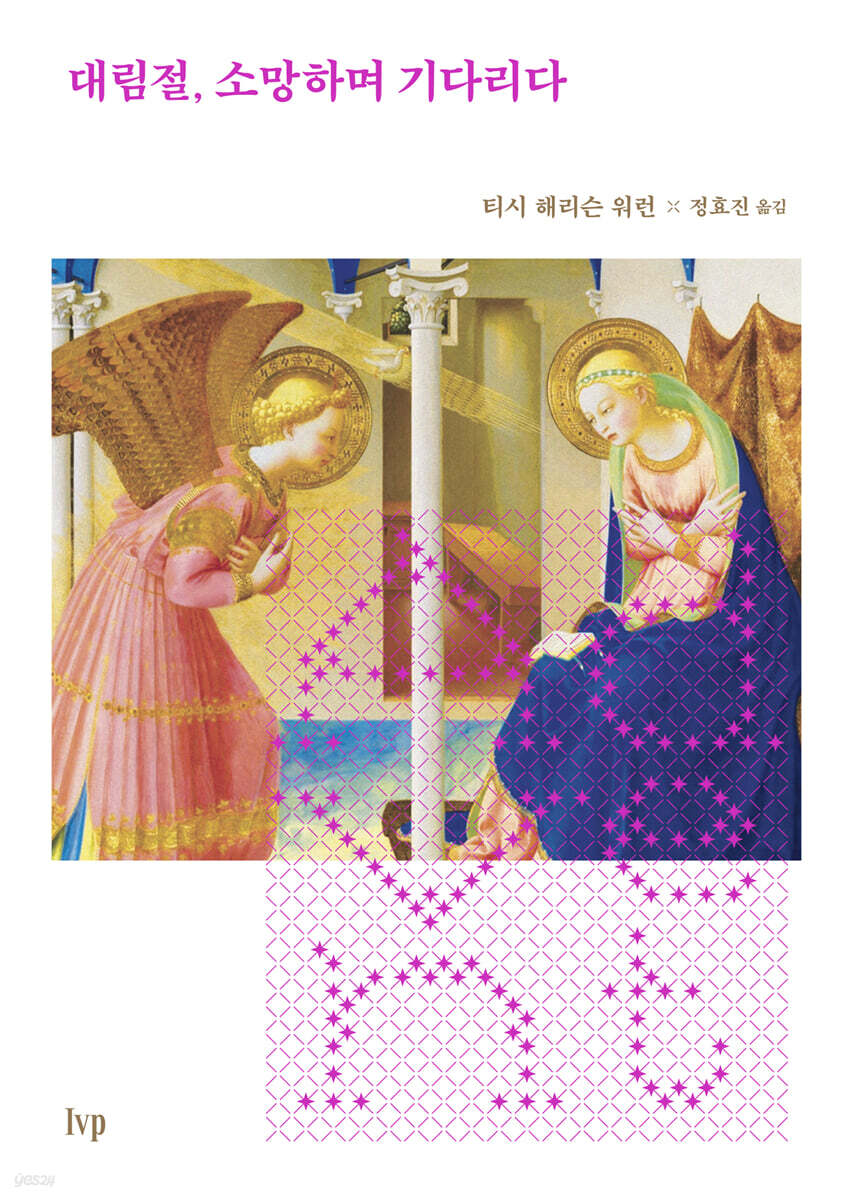
Advent, waiting with hope
 |
Description
Book Introduction
An in-depth guide to thinking about the essence of Advent.
Tish Harrison Warren, who invites readers into a deeper world of faith by incorporating theological reflections and autobiographical insights into elegant prose in works like "Today's Worship" and "Prayer at Night," guides us through an Advent meditation that opens the church calendar.
In Advent, when the church season begins, we look honestly at the darkness.
In the time of 'Kairos' where the past, present, and future become one, we become different beings and enter 'Chronos', the time of everyday life.
The author explores the essence and meaning of Advent and vividly experiences what it means to wait for the King, Jesus, here and now.
Tish Harrison Warren, who invites readers into a deeper world of faith by incorporating theological reflections and autobiographical insights into elegant prose in works like "Today's Worship" and "Prayer at Night," guides us through an Advent meditation that opens the church calendar.
In Advent, when the church season begins, we look honestly at the darkness.
In the time of 'Kairos' where the past, present, and future become one, we become different beings and enter 'Chronos', the time of everyday life.
The author explores the essence and meaning of Advent and vividly experiences what it means to wait for the King, Jesus, here and now.
- You can preview some of the book's contents.
Preview
index
Series Preface
1.
Hope - The Three Comings of Christ
2.
Longing - Four Themes of Advent
3.
Shouting - Two Prophets of Advent
4.
Arouse - Four Prayers of Advent
5.
Draw Close - Eight Exercises of Advent
Conclusion
Acknowledgements
main
1.
Hope - The Three Comings of Christ
2.
Longing - Four Themes of Advent
3.
Shouting - Two Prophets of Advent
4.
Arouse - Four Prayers of Advent
5.
Draw Close - Eight Exercises of Advent
Conclusion
Acknowledgements
main
Detailed image

Into the book
The church calendar begins with waiting.
We do not begin the year with frenzied activity or energy, with the excitement of Christmas or the triumph of Easter, with the ministry of the church or the Great Commission.
Our starting point is a place of desire.
We wait for the king to come.
--- 「1.
From "The Three Comings of Christ"
The key to discipleship is learning to wait with hope.
According to Paul, the church must be a people of faith, hope, and love (see 1 Corinthians 13:13).
He says that the greatest of these three is love.
Why? We will finally see with our own eyes what we believed.
You will eventually meet the object of your desire.
In eternity these virtues will no longer be needed.
These are like maternity clothes, which are no longer needed after eternity is born within us (or we are born into eternity).
The only thing that lasts is love.
Therefore, faith and hope can be said to be virtues of waiting, and it is for this very reason that these virtues are so desperately needed here and now.
The practice of the church calendar is a training in waiting with faith, hope, and love amidst the suffering of life and the tragedy of history.
--- 「2.
Longing - From the Four Themes of Advent
The fact that John plays a prominent role in Advent reminds us that this season has political and ascetic implications in a surprisingly countercultural way.
To heed his warning, we must recognize that the world's problems are not simply 'out there,' among those presumed to be particularly evil and politically and ideologically opposed to us.
The problem is within us and flows out from within us.
--- 「3.
Shouting - From "Two Prophets of Advent"
Advent prayers combine preparation for the Incarnation, meditation on the Second Coming in glory, and celebration of the means of grace that sustain us in the meantime.
The prayer offered during Advent is a prayer of ‘between.’
These prayers teach us how to live in the present moment, which is full of trials.
The time between the kingdom that came through Christ's ministry and the climax of his coming judgment.
--- 「4.
Arouse - From the Four Prayers of Advent
The various disciplines of Advent are not so much checklists as gracious invitations.
There is no requirement to perform all the exercises.
The core of all Christian discipline (worship, prayer, liturgy, etc.) is to “provoke to love and good works,” as Hebrews 10:24 says.
It may be a bit disappointing for those who are high achievers in everything they do, but Advent has no scorecard.
There is no such thing as an Advent honor roll.
For this reason, the most important question about Advent is not how to observe it correctly, but whether it produces love and good deeds in us.
We do not begin the year with frenzied activity or energy, with the excitement of Christmas or the triumph of Easter, with the ministry of the church or the Great Commission.
Our starting point is a place of desire.
We wait for the king to come.
--- 「1.
From "The Three Comings of Christ"
The key to discipleship is learning to wait with hope.
According to Paul, the church must be a people of faith, hope, and love (see 1 Corinthians 13:13).
He says that the greatest of these three is love.
Why? We will finally see with our own eyes what we believed.
You will eventually meet the object of your desire.
In eternity these virtues will no longer be needed.
These are like maternity clothes, which are no longer needed after eternity is born within us (or we are born into eternity).
The only thing that lasts is love.
Therefore, faith and hope can be said to be virtues of waiting, and it is for this very reason that these virtues are so desperately needed here and now.
The practice of the church calendar is a training in waiting with faith, hope, and love amidst the suffering of life and the tragedy of history.
--- 「2.
Longing - From the Four Themes of Advent
The fact that John plays a prominent role in Advent reminds us that this season has political and ascetic implications in a surprisingly countercultural way.
To heed his warning, we must recognize that the world's problems are not simply 'out there,' among those presumed to be particularly evil and politically and ideologically opposed to us.
The problem is within us and flows out from within us.
--- 「3.
Shouting - From "Two Prophets of Advent"
Advent prayers combine preparation for the Incarnation, meditation on the Second Coming in glory, and celebration of the means of grace that sustain us in the meantime.
The prayer offered during Advent is a prayer of ‘between.’
These prayers teach us how to live in the present moment, which is full of trials.
The time between the kingdom that came through Christ's ministry and the climax of his coming judgment.
--- 「4.
Arouse - From the Four Prayers of Advent
The various disciplines of Advent are not so much checklists as gracious invitations.
There is no requirement to perform all the exercises.
The core of all Christian discipline (worship, prayer, liturgy, etc.) is to “provoke to love and good works,” as Hebrews 10:24 says.
It may be a bit disappointing for those who are high achievers in everything they do, but Advent has no scorecard.
There is no such thing as an Advent honor roll.
For this reason, the most important question about Advent is not how to observe it correctly, but whether it produces love and good deeds in us.
--- 「5.
From “Getting Close - The Eight Trainings of Advent”
From “Getting Close - The Eight Trainings of Advent”
Publisher's Review
“Before we celebrate the birth of Christ, we remember the pain of childbirth.
“We face darkness before we celebrate the dawn.”
Deep and quiet meditation on the essence of Advent
At the end of the year, the Church commemorates the birth of Christ and begins the new year of the church calendar.
Christmas is a day of joy celebrating the Savior who came as light to the world, but outside the church, it is considered a festival full of excitement and consumption.
But for this news to truly bring joy, we must first deeply recognize the darkness of the world and vividly yearn for the Messiah.
The fact that the church calendar begins with Advent, not Christmas, reminds us that the essential attitude that Christians living on this earth must have is none other than waiting.
The church year begins with a deep longing for the coming of the King.
In works like "Today's Worship" and "Prayer at Night," Tish Harrison Warren has invited readers into a deeper world of faith by incorporating theological reflections and autobiographical insights into her elegant prose.
Now, through "Advent, Waiting in Hope," the author guides us through an Advent meditation that opens the church calendar while contemplating the essence of Advent.
It guides us to thoroughly examine the meaning of Advent and vividly experience what it means to wait for King Jesus here and now.
In the quiet season, looking at eternity in everyday life
A Guide for Pilgrims in Waiting
Advent, which comes from the Latin word 'adventus' meaning 'coming', is a period of preparation and anticipation for the coming of Christ.
Beginning on the Sunday four weeks before Christmas, this season does not simply await the coming of the Incarnation, born as a baby in Bethlehem two thousand years ago.
The author reveals that historically the church has anticipated three comings.
The coming of Christ incarnate (the coming of redemption), the coming as the victorious King in the last days (the coming in glory), and the coming now on this earth through the ministry of the Holy Spirit and the Word and sacraments (the coming of holiness).
In other words, Advent is “an extremely paradoxical season in which the past, present, and future exist simultaneously” (p. 16), and it is a time of “kairos” that looks to eternity from outside of time while being within “chronos,” the time of everyday life.
The author guides us through Advent, offering insights to the pilgrim who looks to eternity in everyday life.
In Advent, when the church season begins, we look honestly at the darkness.
We painfully face a world damaged by sin, and together with Israel, we long for God's shalom in a world without peace.
We long for God's healing to be revealed in our lives today, which is filled with pain and sorrow.
I feel helpless sorrow over the world being torn apart by war and political conflict, and I long for Christ to come in glory and bring about God's restoration throughout the world.
In a world still in need of healing, we begin the church year with a time of waiting, born of faith and hope.
Come join us in the richness of church time!
Faith Recovered in a Season of Waiting
Practicing the church calendar is one way of living out God's word and confessing through our lives that we belong to the church's time, not the world's time.
As most people approach the end of the year filled with excitement and busyness, Advent calls us to slow down, enter into silence, stillness, and rest, and prepare space in our hearts for Christ.
When we practice Advent rather than think about it, we can get closer to the essence of this waiting.
The author introduces the prayers and disciplines of Advent, demonstrating that living according to the rhythm of the church calendar is not a burdensome task but a gracious invitation.
In this modern culture where efficiency and productivity are paramount, it is difficult to maintain slow and long patience.
But waiting exposes our limitations and teaches us the beauty of inefficiency.
Just as a baby is formed in the mother's womb, God forms each Christian in the waiting of the church.
Especially for Christians who are tired of life and want to restore their spiritual rhythm, Advent is a good season for a new beginning.
"Advent, Waiting in Hope" will be a guide to help us welcome Advent, the season of waiting for our coming King, with vivid hope, and a guidebook that encourages a balanced life of faith that values both the content and form of faith.
■ Features of this book
- A readable and in-depth guide to the nature and meaning of Advent.
-Religious reflection through beautiful sentences and honest life experiences
-A rich interpretation of waiting, an important theme in Christianity.
-Re-examining the church's traditions of the church calendar, seasons, and liturgy.
- Encourage a balanced life of faith that values both the content and form of faith.
■ Target audience
-Christians who want to renew their spiritual rhythm by remembering the season of Advent.
- Readers who wish to consider the meaning of Christ's coming in the world and in our lives.
- Readers who want to fully understand the church calendar and seasons and use them as an opportunity to mature in their faith.
- Readers who want to remember and live the eternal nature of the Kingdom of God in their daily lives.
- Pastors, teachers, and small group leaders who want to gain background knowledge and application for Advent.
“We face darkness before we celebrate the dawn.”
Deep and quiet meditation on the essence of Advent
At the end of the year, the Church commemorates the birth of Christ and begins the new year of the church calendar.
Christmas is a day of joy celebrating the Savior who came as light to the world, but outside the church, it is considered a festival full of excitement and consumption.
But for this news to truly bring joy, we must first deeply recognize the darkness of the world and vividly yearn for the Messiah.
The fact that the church calendar begins with Advent, not Christmas, reminds us that the essential attitude that Christians living on this earth must have is none other than waiting.
The church year begins with a deep longing for the coming of the King.
In works like "Today's Worship" and "Prayer at Night," Tish Harrison Warren has invited readers into a deeper world of faith by incorporating theological reflections and autobiographical insights into her elegant prose.
Now, through "Advent, Waiting in Hope," the author guides us through an Advent meditation that opens the church calendar while contemplating the essence of Advent.
It guides us to thoroughly examine the meaning of Advent and vividly experience what it means to wait for King Jesus here and now.
In the quiet season, looking at eternity in everyday life
A Guide for Pilgrims in Waiting
Advent, which comes from the Latin word 'adventus' meaning 'coming', is a period of preparation and anticipation for the coming of Christ.
Beginning on the Sunday four weeks before Christmas, this season does not simply await the coming of the Incarnation, born as a baby in Bethlehem two thousand years ago.
The author reveals that historically the church has anticipated three comings.
The coming of Christ incarnate (the coming of redemption), the coming as the victorious King in the last days (the coming in glory), and the coming now on this earth through the ministry of the Holy Spirit and the Word and sacraments (the coming of holiness).
In other words, Advent is “an extremely paradoxical season in which the past, present, and future exist simultaneously” (p. 16), and it is a time of “kairos” that looks to eternity from outside of time while being within “chronos,” the time of everyday life.
The author guides us through Advent, offering insights to the pilgrim who looks to eternity in everyday life.
In Advent, when the church season begins, we look honestly at the darkness.
We painfully face a world damaged by sin, and together with Israel, we long for God's shalom in a world without peace.
We long for God's healing to be revealed in our lives today, which is filled with pain and sorrow.
I feel helpless sorrow over the world being torn apart by war and political conflict, and I long for Christ to come in glory and bring about God's restoration throughout the world.
In a world still in need of healing, we begin the church year with a time of waiting, born of faith and hope.
Come join us in the richness of church time!
Faith Recovered in a Season of Waiting
Practicing the church calendar is one way of living out God's word and confessing through our lives that we belong to the church's time, not the world's time.
As most people approach the end of the year filled with excitement and busyness, Advent calls us to slow down, enter into silence, stillness, and rest, and prepare space in our hearts for Christ.
When we practice Advent rather than think about it, we can get closer to the essence of this waiting.
The author introduces the prayers and disciplines of Advent, demonstrating that living according to the rhythm of the church calendar is not a burdensome task but a gracious invitation.
In this modern culture where efficiency and productivity are paramount, it is difficult to maintain slow and long patience.
But waiting exposes our limitations and teaches us the beauty of inefficiency.
Just as a baby is formed in the mother's womb, God forms each Christian in the waiting of the church.
Especially for Christians who are tired of life and want to restore their spiritual rhythm, Advent is a good season for a new beginning.
"Advent, Waiting in Hope" will be a guide to help us welcome Advent, the season of waiting for our coming King, with vivid hope, and a guidebook that encourages a balanced life of faith that values both the content and form of faith.
■ Features of this book
- A readable and in-depth guide to the nature and meaning of Advent.
-Religious reflection through beautiful sentences and honest life experiences
-A rich interpretation of waiting, an important theme in Christianity.
-Re-examining the church's traditions of the church calendar, seasons, and liturgy.
- Encourage a balanced life of faith that values both the content and form of faith.
■ Target audience
-Christians who want to renew their spiritual rhythm by remembering the season of Advent.
- Readers who wish to consider the meaning of Christ's coming in the world and in our lives.
- Readers who want to fully understand the church calendar and seasons and use them as an opportunity to mature in their faith.
- Readers who want to remember and live the eternal nature of the Kingdom of God in their daily lives.
- Pastors, teachers, and small group leaders who want to gain background knowledge and application for Advent.
GOODS SPECIFICS
- Date of issue: November 7, 2025
- Page count, weight, size: 144 pages | 128*180*20mm
- ISBN13: 9788932823836
- ISBN10: 8932823839
You may also like
카테고리
korean


korean

![GQ KOREA Mark (Monthly): December [2025]](http://librairie.coreenne.fr/cdn/shop/files/8ef265dbbfbf186523ed75ba7319009d.jpg?v=1765340328&width=3840)


