

The Amazing Chemistry That Moves the World
 |
Description
Book Introduction
“Everything in the world was an element!”
The smallest and most powerful map that explains the universe,
An Everyday Science Adventure with the Periodic Table
Have you ever imagined yourself sipping lemonade by the fireplace, encountering elements from the periodic table like hydrogen, helium, and lithium? The authors of this book take readers on a journey through that very fantasy.
It is an exciting journey into the world of living and moving elements, following the 'scientist's map' of the periodic table.
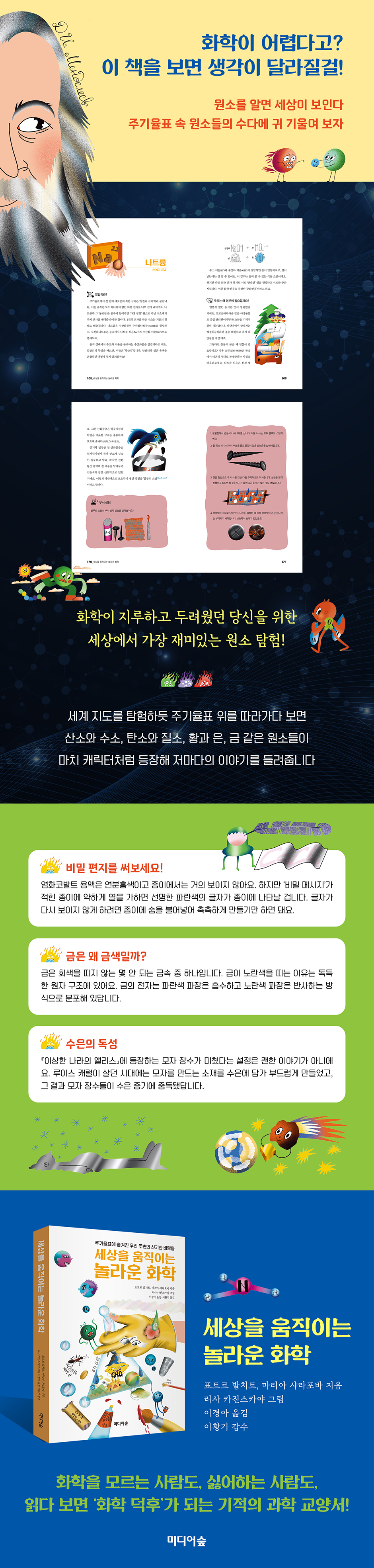
Why is charred meat bad for you? Why does salt water conduct electricity better? How can you tell the difference between gold and brass? This book answers these questions not with simple explanations, but with 'stories and experiments.'
Starting with the simplest element, hydrogen, to the origins of the sun for helium, the lemonade for lithium, the emeralds containing beryllium, and even borax, which makes slime… each element appears as a living character, and the mistakes and discoveries of scientists are as exciting as an adventure story.
In between, readers experiment with electrical conductivity in the kitchen, drop acid into egg whites, and write secret letters with silver ink, gradually becoming closer to science.
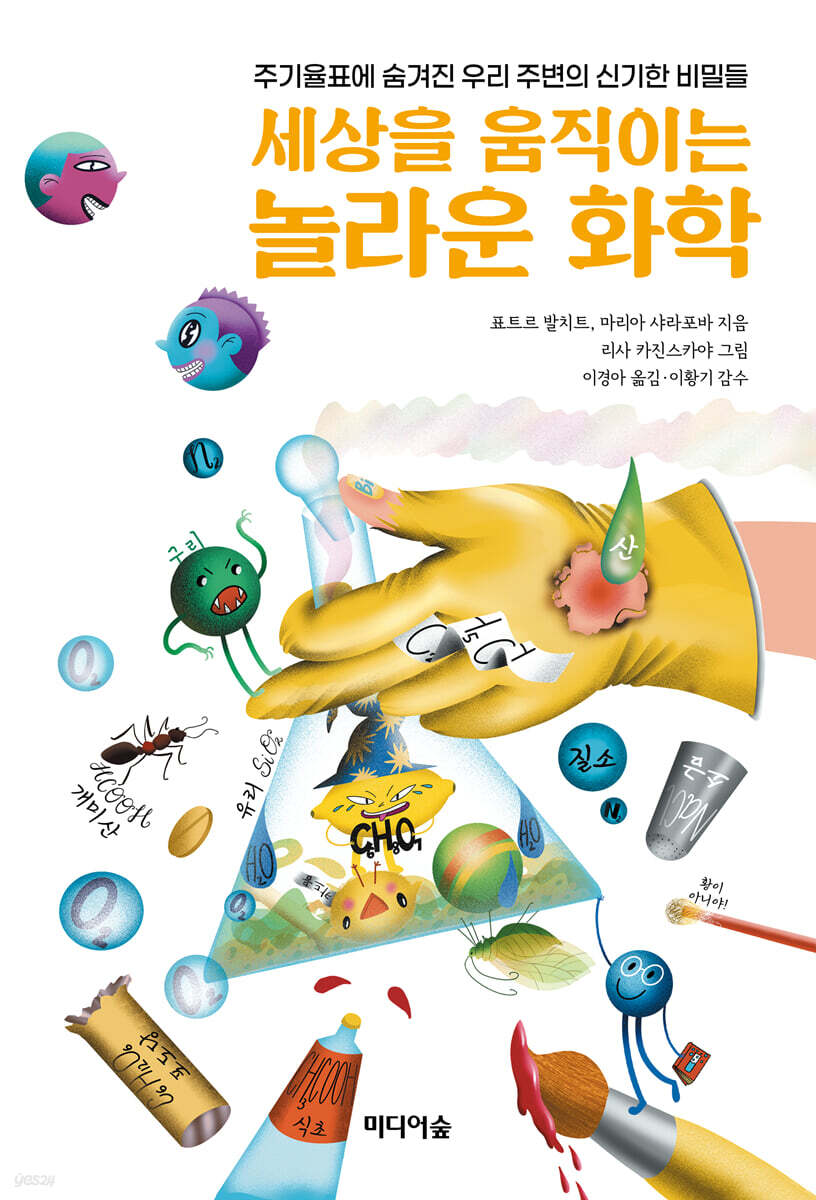
Plus, all of this explanation is accompanied by wonderful illustrations that are witty, friendly, and full of personality.
Readers who were afraid of the periodic table or gave up in front of cryptic formulas will find themselves turning the pages, laughing, surprised, and learning as they read this book.
This book will be the best introduction to science for young people, will awaken a forgotten scientific sense in adults, and will serve as a basic science textbook for those who feel they lack a "science brain."
The smallest and most powerful map that explains the universe,
An Everyday Science Adventure with the Periodic Table
Have you ever imagined yourself sipping lemonade by the fireplace, encountering elements from the periodic table like hydrogen, helium, and lithium? The authors of this book take readers on a journey through that very fantasy.
It is an exciting journey into the world of living and moving elements, following the 'scientist's map' of the periodic table.
Why is charred meat bad for you? Why does salt water conduct electricity better? How can you tell the difference between gold and brass? This book answers these questions not with simple explanations, but with 'stories and experiments.'
Starting with the simplest element, hydrogen, to the origins of the sun for helium, the lemonade for lithium, the emeralds containing beryllium, and even borax, which makes slime… each element appears as a living character, and the mistakes and discoveries of scientists are as exciting as an adventure story.
In between, readers experiment with electrical conductivity in the kitchen, drop acid into egg whites, and write secret letters with silver ink, gradually becoming closer to science.
Plus, all of this explanation is accompanied by wonderful illustrations that are witty, friendly, and full of personality.
Readers who were afraid of the periodic table or gave up in front of cryptic formulas will find themselves turning the pages, laughing, surprised, and learning as they read this book.
This book will be the best introduction to science for young people, will awaken a forgotten scientific sense in adults, and will serve as a basic science textbook for those who feel they lack a "science brain."
- You can preview some of the book's contents.
Preview
index
To begin with
- Hydrogen (H)
- Helium (He)
- Lithium (Li)
- Beryllium (Be)
- Boron (B)
- Carbon (C)
- Organic chemistry
- Polymer
- Hydrophobic and hydrophilic
- Color Chemistry
- Chemistry in cooking
- Medicines and perfumes
- Nitrogen (N)
- Oxygen (O)
- Fluorine (F)
- Noble gases: Neon (Ne), Arcon (Ar), Krypton (Kr), Xenon (Xe), Radon (Rn)
- Sodium (Na)
- Magnesium (Mg)
- Aluminum (Al)
- Silicon (Si)
- Person (P)
- Hwang (S)
- Chlorine (Cl)
- Potassium (K)
- Calcium (Ca)
- Scandium (Sc), Titanium (Ti), Vanadium (V)
- Chromium (Cr), manganese (Mn)
- Iron (Fe)
- Cobalt (Co), Nickel (Ni)
- Copper (Cu)
- Zinc (Zn)
- Gallium (Ga)
- Germanium (Ge)
- Arsenic (As)
- Selenium (Se)
- Bromine (Br)
- Rubidium (Rb), cesium (Cs), francium (Fr)
- Strontium (Sr), Barium (Ba)
- Yttrium (Y), zirconium (Zr), niobium (Nb), molybdenum (Mo)
- Technetium (Tc)
- Ruthenium (Ru), Rhodium (Rh), Palladium (Pd)
- Silver (Ag)
- Cadmium (Cd), Indium (In)
- Sn
- Antimony (Sb), tellurium (Te)
- Iodine (I)
- Lanthanide
- Hafnium (Hf), tantalum (Ta), tungsten (W)
- Rhenium (Re), Osmium (Os), Iridium (Ir)
- Platinum (Pt)
- Gold (Au)
- Mercury (Hg), thallium (Tl)
- Lead (Pb)
- Bismuth (Bi), polonium (Po), astatine (At), radium (Ra)
- Actinides
- Uranium (U)
In conclusion
- Hydrogen (H)
- Helium (He)
- Lithium (Li)
- Beryllium (Be)
- Boron (B)
- Carbon (C)
- Organic chemistry
- Polymer
- Hydrophobic and hydrophilic
- Color Chemistry
- Chemistry in cooking
- Medicines and perfumes
- Nitrogen (N)
- Oxygen (O)
- Fluorine (F)
- Noble gases: Neon (Ne), Arcon (Ar), Krypton (Kr), Xenon (Xe), Radon (Rn)
- Sodium (Na)
- Magnesium (Mg)
- Aluminum (Al)
- Silicon (Si)
- Person (P)
- Hwang (S)
- Chlorine (Cl)
- Potassium (K)
- Calcium (Ca)
- Scandium (Sc), Titanium (Ti), Vanadium (V)
- Chromium (Cr), manganese (Mn)
- Iron (Fe)
- Cobalt (Co), Nickel (Ni)
- Copper (Cu)
- Zinc (Zn)
- Gallium (Ga)
- Germanium (Ge)
- Arsenic (As)
- Selenium (Se)
- Bromine (Br)
- Rubidium (Rb), cesium (Cs), francium (Fr)
- Strontium (Sr), Barium (Ba)
- Yttrium (Y), zirconium (Zr), niobium (Nb), molybdenum (Mo)
- Technetium (Tc)
- Ruthenium (Ru), Rhodium (Rh), Palladium (Pd)
- Silver (Ag)
- Cadmium (Cd), Indium (In)
- Sn
- Antimony (Sb), tellurium (Te)
- Iodine (I)
- Lanthanide
- Hafnium (Hf), tantalum (Ta), tungsten (W)
- Rhenium (Re), Osmium (Os), Iridium (Ir)
- Platinum (Pt)
- Gold (Au)
- Mercury (Hg), thallium (Tl)
- Lead (Pb)
- Bismuth (Bi), polonium (Po), astatine (At), radium (Ra)
- Actinides
- Uranium (U)
In conclusion
Detailed image
Publisher's Review
Peer into the world's secrets through the lens of chemistry.
My first ever chemistry journey along the periodic table.
The book begins with things familiar to us: a glass of water, a piece of soap, a drop of perfume.
Once we realize that the everyday objects we pass by without a second thought are actually part of the grand story of chemistry, the world begins to look completely different.
"The Amazing Chemistry That Moves the World" is a science textbook co-written by Latvian science communicator Pyotr Balchit and Russian chemist and forensic scientist Maria Sharapova.
This book is designed to be easily readable by anyone, even non-science majors, adults traumatized by textbooks, and elementary school students still unfamiliar with chemistry.
The greatest appeal of this book is its narrative style: a journey along the periodic table.
As you follow the periodic table as if exploring a world map, elements like oxygen, hydrogen, carbon, nitrogen, sulfur, silver, and gold appear like characters, each telling their own story.
The lives, experiments, mistakes, and discoveries of legendary scientists such as Marie Curie, Mendeleev, Rutherford, Priestley, and Oersted are also depicted with witty illustrations, captivating readers' attention.
There are no complicated formulas or calculations in this book.
Instead, it is full of questions that everyone has probably wondered about at least once.
And the answer to that question is surprisingly simple, and sometimes downright delightful.
The book is filled with experiments that can be easily performed at home, and its strength lies in the fact that it is structured so that children and parents can read and experiment together.
Scenes such as writing secret letters with silver ink, distinguishing acids and bases with red cabbage reagent, making slime, and conducting fire experiments are surprisingly fun for children and bring back the forgotten excitement of science for adults.
Pictures are also another main character in this book.
The vivid, expressive elemental characters, the humorous illustrations depicting experimental scenes, and the emotional worldview that seems to be a mixture of alchemists and chemists make this book not just a science book, but a "book you want to read."
Ultimately, this book asks us:
“What is the true force that moves the world?” This book firmly answers that question for those who are curious.
“It’s chemistry.
And it's a lot more fun than you might think."
Recommended for these types of people!
● Youth who want to develop scientific knowledge to prepare for the essay test
Parents who want to develop their children's scientific minds
● Teachers looking for an introductory chemistry book to read with their students
● People who are interested in chemistry but have always found it difficult
Curriculum linkage
[Secondary Education Curriculum]
1st Grade Common Science 05.
Change of state of matter
2nd Grade Common Science 01.
Composition of matter
2nd grade common science 06.
Properties of matter
My first ever chemistry journey along the periodic table.
The book begins with things familiar to us: a glass of water, a piece of soap, a drop of perfume.
Once we realize that the everyday objects we pass by without a second thought are actually part of the grand story of chemistry, the world begins to look completely different.
"The Amazing Chemistry That Moves the World" is a science textbook co-written by Latvian science communicator Pyotr Balchit and Russian chemist and forensic scientist Maria Sharapova.
This book is designed to be easily readable by anyone, even non-science majors, adults traumatized by textbooks, and elementary school students still unfamiliar with chemistry.
The greatest appeal of this book is its narrative style: a journey along the periodic table.
As you follow the periodic table as if exploring a world map, elements like oxygen, hydrogen, carbon, nitrogen, sulfur, silver, and gold appear like characters, each telling their own story.
The lives, experiments, mistakes, and discoveries of legendary scientists such as Marie Curie, Mendeleev, Rutherford, Priestley, and Oersted are also depicted with witty illustrations, captivating readers' attention.
There are no complicated formulas or calculations in this book.
Instead, it is full of questions that everyone has probably wondered about at least once.
And the answer to that question is surprisingly simple, and sometimes downright delightful.
The book is filled with experiments that can be easily performed at home, and its strength lies in the fact that it is structured so that children and parents can read and experiment together.
Scenes such as writing secret letters with silver ink, distinguishing acids and bases with red cabbage reagent, making slime, and conducting fire experiments are surprisingly fun for children and bring back the forgotten excitement of science for adults.
Pictures are also another main character in this book.
The vivid, expressive elemental characters, the humorous illustrations depicting experimental scenes, and the emotional worldview that seems to be a mixture of alchemists and chemists make this book not just a science book, but a "book you want to read."
Ultimately, this book asks us:
“What is the true force that moves the world?” This book firmly answers that question for those who are curious.
“It’s chemistry.
And it's a lot more fun than you might think."
Recommended for these types of people!
● Youth who want to develop scientific knowledge to prepare for the essay test
Parents who want to develop their children's scientific minds
● Teachers looking for an introductory chemistry book to read with their students
● People who are interested in chemistry but have always found it difficult
Curriculum linkage
[Secondary Education Curriculum]
1st Grade Common Science 05.
Change of state of matter
2nd Grade Common Science 01.
Composition of matter
2nd grade common science 06.
Properties of matter
GOODS SPECIFICS
- Date of issue: June 10, 2025
- Page count, weight, size: 288 pages | 629g | 153*225*20mm
- ISBN13: 9791158742539
- ISBN10: 1158742533
You may also like
카테고리
korean


korean

![GQ KOREA Mark (Monthly): December [2025]](http://librairie.coreenne.fr/cdn/shop/files/8ef265dbbfbf186523ed75ba7319009d.jpg?v=1765340328&width=3840)


