

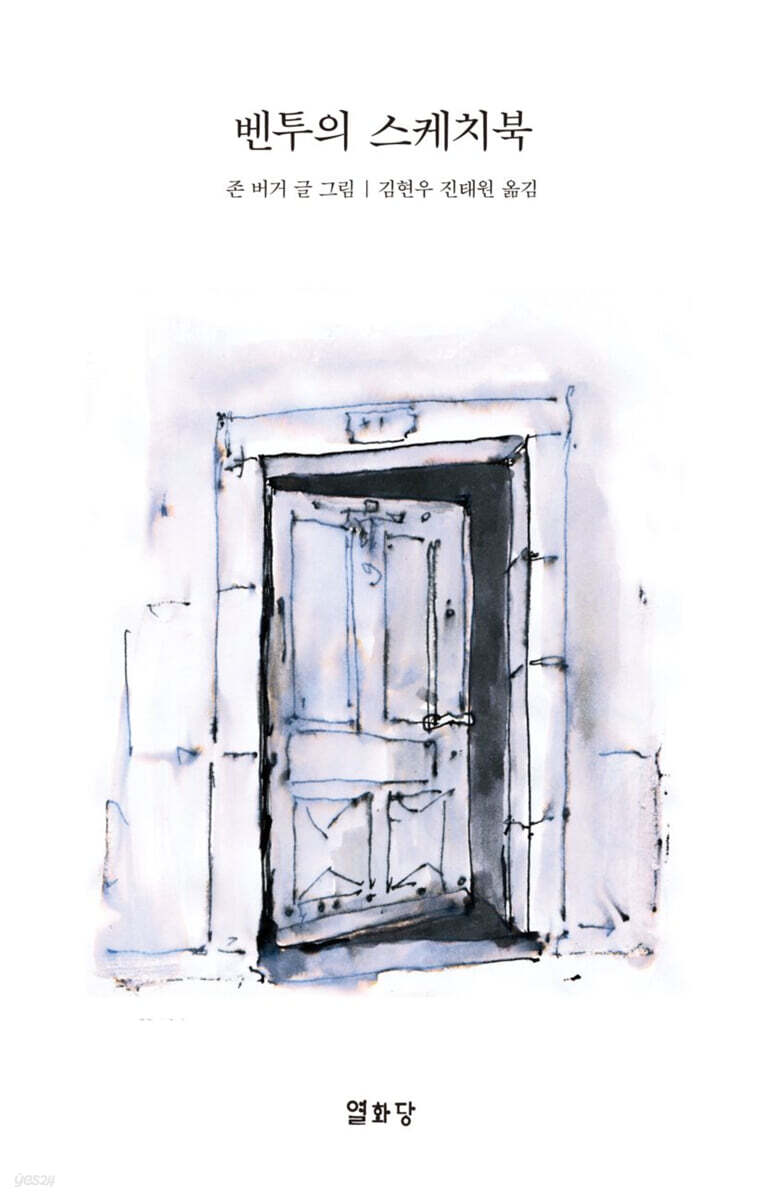
Bento's Sketchbook
 |
Description
Book Introduction
John Berger, an art critic, novelist, documentary filmmaker, and social critic, continues to farm and write even now, in his eighties.
For a long time, John Berger fantasized about finding Spinoza's sketchbook.
I wanted to be able to look at what the philosopher Spinoza, who left behind amazing propositions, observed with his own eyes.
One day, John Berger received a beautiful sketchbook as a gift and began to draw in it from the perspective of Spinoza.
The result is 『Bento's Sketchbook』.
John Berger captures his daily life, the people around him, and the small experiences he has with them with meticulous attention.
Insignificant and trivial things.
Fragments of life scattered throughout.
Burger elegantly transfers them to the page in words or pictures.
The story of being kicked out of an art gallery for copying paintings, the plight of a retired mechanic worried about his wife's nursing bills, and an exile fleeing political oppression, the drawing of irises that he himself called "the essence of architectural structure," and the fragments of history that Berger remembers and interprets—Käthe Kollwitz, Andrei Platonov, Anton Chekhov, Bertolt Brecht, Arundhati Roy—each strand flows naturally together to complete the entire sketchbook.
For a long time, John Berger fantasized about finding Spinoza's sketchbook.
I wanted to be able to look at what the philosopher Spinoza, who left behind amazing propositions, observed with his own eyes.
One day, John Berger received a beautiful sketchbook as a gift and began to draw in it from the perspective of Spinoza.
The result is 『Bento's Sketchbook』.
John Berger captures his daily life, the people around him, and the small experiences he has with them with meticulous attention.
Insignificant and trivial things.
Fragments of life scattered throughout.
Burger elegantly transfers them to the page in words or pictures.
The story of being kicked out of an art gallery for copying paintings, the plight of a retired mechanic worried about his wife's nursing bills, and an exile fleeing political oppression, the drawing of irises that he himself called "the essence of architectural structure," and the fragments of history that Berger remembers and interprets—Käthe Kollwitz, Andrei Platonov, Anton Chekhov, Bertolt Brecht, Arundhati Roy—each strand flows naturally together to complete the entire sketchbook.
- You can preview some of the book's contents.
Preview
index
In lieu of the preface to the Korean edition, a drawing sent by John Berger along with the text.
Bento's Sketchbook
Brief biography
Acknowledgements
Translator's note
Translator's Note
Bento's Sketchbook
Brief biography
Acknowledgements
Translator's note
Translator's Note
Publisher's Review
“But as time went on, the two of us? Bento and I? became increasingly indistinguishable.
In the act of looking, in the act of asking questions with our eyes, we have become able to replace each other to some extent.
“What makes this possible, I think, is that we share an awareness of somewhere, or something, that the act of drawing leads to.” (p. 12)
The world seen through Spinoza's eyes
Philosopher Spinoza (B.
Spinoza).
Spinoza (also known as Baruch, Benedictus, or Bento), a Dutch-born Portuguese-Jewish man, explored philosophy from outside the realm of philosophy.
Although he lived in the same era as Descartes, Spinoza's philosophy was established by criticizing Descartes.
Spinoza viewed humans as a part of nature, and thought of a monistic worldview that went beyond Descartes' dichotomy.
Throughout his short life, Spinoza read, thought, debated, and wrote with tireless enthusiasm.
In addition to his philosophical activities, he earned a living by working as a lens cutter and often drew.
I always carried a sketchbook with me, but I don't have it anymore.
John Berger, an art critic, novelist, documentary filmmaker, and social critic, continues to farm and write even now, in his eighties.
For a long time, John Berger fantasized about finding Spinoza's sketchbook.
I wanted to be able to look at what the philosopher Spinoza, who left behind amazing propositions, observed with his own eyes.
One day, John Berger received a beautiful sketchbook as a gift and began to draw in it from the perspective of Spinoza.
The result is 『Bento's Sketchbook』.
The power of solidarity in triviality
In "Bentu's Sketchbook," John Berger meticulously captures his daily life, the people around him, and the small experiences he has with them.
Insignificant and trivial things.
Fragments of life scattered throughout.
Burger elegantly transfers them to the page in words or pictures.
The story of being kicked out of an art gallery for copying paintings, the plight of a retired mechanic worried about his wife's nursing bills, and an exile fleeing political oppression, the drawing of irises that he himself called "the essence of architectural structure," and the fragments of history that Berger remembers and interprets—Käthe Kollwitz, Andrei Platonov, Anton Chekhov, Bertolt Brecht, Arundhati Roy—each strand flows naturally together to complete the entire sketchbook.
The act of drawing becomes a link that connects us to the world.
To draw something, you have to look at it, and looking is discovery and interest.
But drawing is not complete in itself.
John Berger says:
“Nature’s fixed outlines are all arbitrary and impermanent.” (p. 119) It also defines:
“Drawing is correction.” (Main text p.14)
“Often the images in my head are clearer than the images on paper.
I drew again and again.
As I changed this and that and erased it again, the paper turned gray.
The drawing didn't get any better, but (...) my efforts to correct it and the paper that endured it finally began to resemble the elasticity of Maria's body.
(…) Those of us who draw do not draw to show others what we have observed, but to accompany something invisible until it reaches an incalculable destination.” (p. 20)
The time of establishing oneself as one being, moving towards a state that is not refined, and the 'effort (conatus)' towards unity that leads to that path is an extended process.
When the subject of the act of seeing and its object, standing on different horizons, meet, the law of omnipresence, as Spinoza thought, applies equally to both.
The 17th century, when Spinoza was active, was the dawn of the modern era, when humans had just begun to break away from God and look at the world through their own eyes.
What did Spinoza see as he sharpened his lens and drew? In the unitary world he discovered, could "we" unite through the trivial act of "seeing"?
The book's intimate appeals for resistance to oppression and solidarity, found throughout, could be seen as Berger's own answer to these questions.
Also, between the text and the pictures, there are quotes from Spinoza's works, including Ethics. Spinoza's sentences are harmoniously combined with John Berger's text and pictures to create a complete meaning, serve as a bridge connecting the texts before and after, and present us with a proposition in itself.
The translation of this book was a collaborative effort by two people: Kim Hyun-woo translated John Berger's essays, and Jin Tae-won translated the quotations from Spinoza's works, including Ethics.
For the Spinoza quotes, we chose to retranslate the most authoritative 1925 Latin edition, taking into account the accuracy of the translation and style.
“This book, I hope, is about looking at the real world we live in today as it is.
“It’s a world that’s terrifying in many ways, but also has some incredibly beautiful moments.”
- John Berger, in a 2011 interview with the BBC.
In the act of looking, in the act of asking questions with our eyes, we have become able to replace each other to some extent.
“What makes this possible, I think, is that we share an awareness of somewhere, or something, that the act of drawing leads to.” (p. 12)
The world seen through Spinoza's eyes
Philosopher Spinoza (B.
Spinoza).
Spinoza (also known as Baruch, Benedictus, or Bento), a Dutch-born Portuguese-Jewish man, explored philosophy from outside the realm of philosophy.
Although he lived in the same era as Descartes, Spinoza's philosophy was established by criticizing Descartes.
Spinoza viewed humans as a part of nature, and thought of a monistic worldview that went beyond Descartes' dichotomy.
Throughout his short life, Spinoza read, thought, debated, and wrote with tireless enthusiasm.
In addition to his philosophical activities, he earned a living by working as a lens cutter and often drew.
I always carried a sketchbook with me, but I don't have it anymore.
John Berger, an art critic, novelist, documentary filmmaker, and social critic, continues to farm and write even now, in his eighties.
For a long time, John Berger fantasized about finding Spinoza's sketchbook.
I wanted to be able to look at what the philosopher Spinoza, who left behind amazing propositions, observed with his own eyes.
One day, John Berger received a beautiful sketchbook as a gift and began to draw in it from the perspective of Spinoza.
The result is 『Bento's Sketchbook』.
The power of solidarity in triviality
In "Bentu's Sketchbook," John Berger meticulously captures his daily life, the people around him, and the small experiences he has with them.
Insignificant and trivial things.
Fragments of life scattered throughout.
Burger elegantly transfers them to the page in words or pictures.
The story of being kicked out of an art gallery for copying paintings, the plight of a retired mechanic worried about his wife's nursing bills, and an exile fleeing political oppression, the drawing of irises that he himself called "the essence of architectural structure," and the fragments of history that Berger remembers and interprets—Käthe Kollwitz, Andrei Platonov, Anton Chekhov, Bertolt Brecht, Arundhati Roy—each strand flows naturally together to complete the entire sketchbook.
The act of drawing becomes a link that connects us to the world.
To draw something, you have to look at it, and looking is discovery and interest.
But drawing is not complete in itself.
John Berger says:
“Nature’s fixed outlines are all arbitrary and impermanent.” (p. 119) It also defines:
“Drawing is correction.” (Main text p.14)
“Often the images in my head are clearer than the images on paper.
I drew again and again.
As I changed this and that and erased it again, the paper turned gray.
The drawing didn't get any better, but (...) my efforts to correct it and the paper that endured it finally began to resemble the elasticity of Maria's body.
(…) Those of us who draw do not draw to show others what we have observed, but to accompany something invisible until it reaches an incalculable destination.” (p. 20)
The time of establishing oneself as one being, moving towards a state that is not refined, and the 'effort (conatus)' towards unity that leads to that path is an extended process.
When the subject of the act of seeing and its object, standing on different horizons, meet, the law of omnipresence, as Spinoza thought, applies equally to both.
The 17th century, when Spinoza was active, was the dawn of the modern era, when humans had just begun to break away from God and look at the world through their own eyes.
What did Spinoza see as he sharpened his lens and drew? In the unitary world he discovered, could "we" unite through the trivial act of "seeing"?
The book's intimate appeals for resistance to oppression and solidarity, found throughout, could be seen as Berger's own answer to these questions.
Also, between the text and the pictures, there are quotes from Spinoza's works, including Ethics. Spinoza's sentences are harmoniously combined with John Berger's text and pictures to create a complete meaning, serve as a bridge connecting the texts before and after, and present us with a proposition in itself.
The translation of this book was a collaborative effort by two people: Kim Hyun-woo translated John Berger's essays, and Jin Tae-won translated the quotations from Spinoza's works, including Ethics.
For the Spinoza quotes, we chose to retranslate the most authoritative 1925 Latin edition, taking into account the accuracy of the translation and style.
“This book, I hope, is about looking at the real world we live in today as it is.
“It’s a world that’s terrifying in many ways, but also has some incredibly beautiful moments.”
- John Berger, in a 2011 interview with the BBC.
GOODS SPECIFICS
- Date of publication: November 20, 2012
- Format: Hardcover book binding method guide
- Page count, weight, size: 184 pages | 148*210*20mm
- ISBN13: 9788930104357
- ISBN10: 8930104355
You may also like
카테고리
korean


korean

![GQ KOREA Mark (Monthly): December [2025]](http://librairie.coreenne.fr/cdn/shop/files/8ef265dbbfbf186523ed75ba7319009d.jpg?v=1765340328&width=3840)


