

Paper Bag Princess
 |
Description
Book Introduction
A "politically correct" feminist fairy tale.
It is a new story about a princess who can be happy without a prince, breaking away from the male-centered gaze.
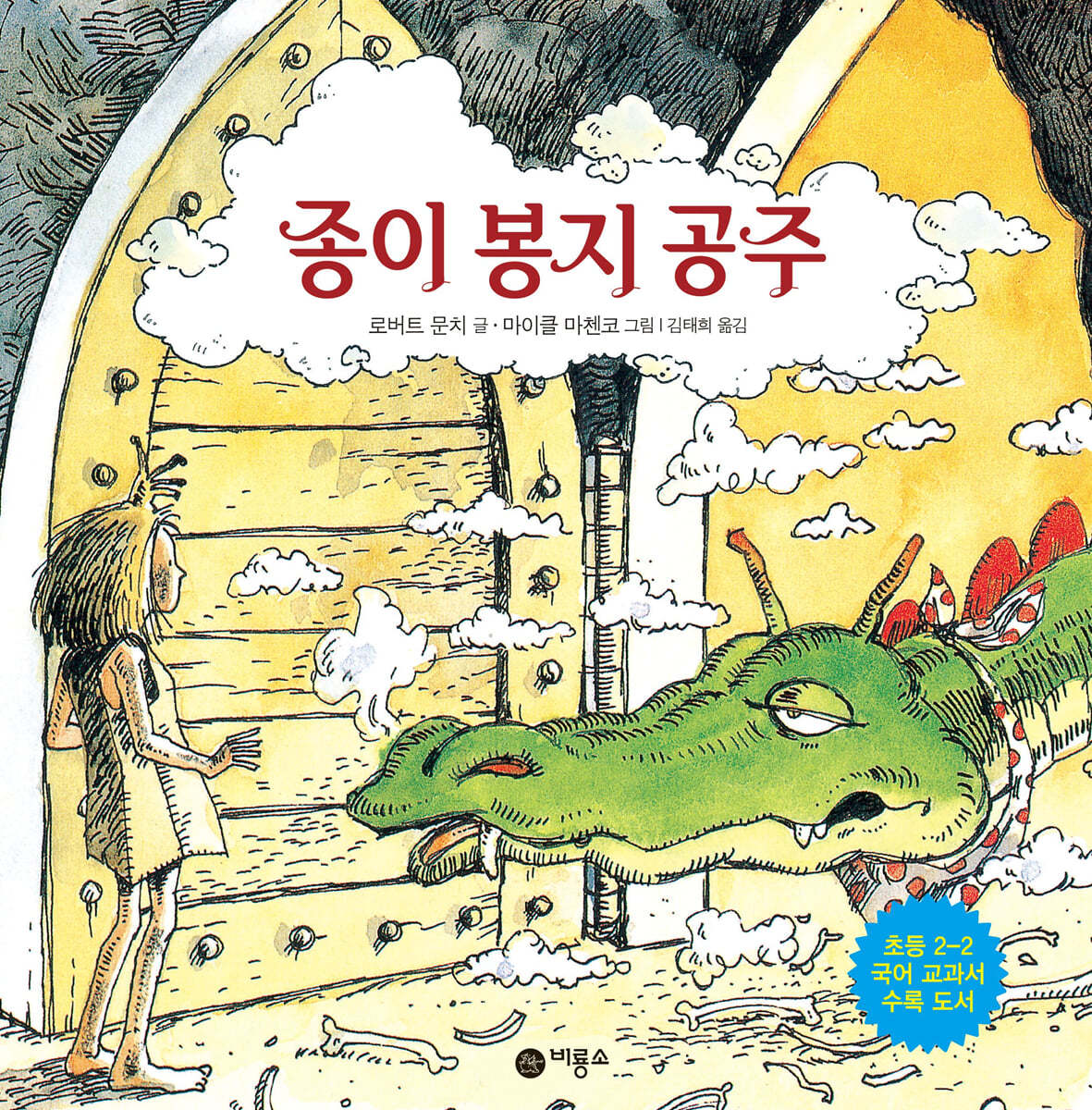
A wicked dragon appears and burns down the land of the beautiful and intelligent princess, and the prospective groom, the prince, is captured by the dragon.
Eventually, the princess saves the prince, but instead of being grateful, the prince scolds her for her disheveled appearance and the paper bag she is wearing.
The princess then realizes that her prospective groom is a fool who only sees the outside and cannot see the jewel inside a person, so she does not marry him.
A story about a confident modern-day princess who declares that she is the master of her own life!
It is a new story about a princess who can be happy without a prince, breaking away from the male-centered gaze.
A wicked dragon appears and burns down the land of the beautiful and intelligent princess, and the prospective groom, the prince, is captured by the dragon.
Eventually, the princess saves the prince, but instead of being grateful, the prince scolds her for her disheveled appearance and the paper bag she is wearing.
The princess then realizes that her prospective groom is a fool who only sees the outside and cannot see the jewel inside a person, so she does not marry him.
A story about a confident modern-day princess who declares that she is the master of her own life!
- You can preview some of the book's contents.
Preview
Publisher's Review
A fairy tale that breaks free from conventional values
The old tales passed down orally contain the universal emotions, values, and hopes of the people of the time.
Andersen, a figure from the early 19th century, collected about 150 fairy tales that were passed down by word of mouth from the people throughout Europe at the time, and left behind “Andersen’s Fairy Tales,” which has had a great influence on modern children’s literature.
However, when reexamined from a feminist perspective today, it is difficult to avoid the accusation that some of Andersen's old tales are overly conventional because they are written from a male-centered perspective.
A Breeze in the World of Children's Literature: Revisiting Old Tales
Since the 1980s, there has been a fairly active movement in the world of children's literature to reinterpret or parody old tales by Andersen, the Brothers Grimm, and Charles Perrault.
These rewritten fairy tales are called “fractured fairytales,” and there are many talented writers and artists who have made a name for themselves in this field and have attracted a global audience of children.
The fairy tales by John Sciezska and Lane Smith, published in the United States in 1989, and the fairy tales by Robert Munczy and Michael Marchenko, published in Canada in 1980, were hugely successful not only in their home countries but also in the global market. In Germany, a collection of parody fairy tales by Janoch, a writer and artist, was also published.
Unlike the fairy tales of John Szeszka and Janosch, which simultaneously aimed for lively parody and nonsense effects, this one, which approaches with a more easy humor, has a much wider readership and has already entered the million-seller fairy tale zone in terms of copies sold worldwide.
Robert Munsch, the best storyteller who accurately reads children's minds
Robert Munsch is an entertainer with great acting skills before becoming a writer.
He is currently active as a top storyteller in Canada, renting out large concert halls and telling stories directly with facial expressions, movements, and dialogue, gaining explosive popularity among children.
Before publishing his story as a book, he recited it in front of children dozens of times and revised the manuscript while observing their reactions.
It's no wonder that children love his fairy tales whenever they are published.
This is a story that has been told orally for about 7 to 8 years.
This story began after Munchi's wife, listening to her husband's story, raised the question, "Why do you only tell stories about princes saving princesses? What if the princess saves the prince?" This new fairy tale was loved by both boys and girls.
Plot: A proud modern-day princess who declares that she is the master of her own life.
There is a pretty and smart princess.
This princess has wealth and a handsome groom, so if she gets married, she will be happy for a long time.
But then a terrible dragon appears and burns down the princess's happy home.
The prospective groom, the prince, is captured by a dragon, and the princess, who has always worn only beautiful and expensive clothes, runs out to rescue the prince, wearing a large paper bag over her head because she has no clothes.
The princess uses her wits to defeat the dragon and save the prince, but instead of being grateful, the prince scolds her for her mischievous behavior.
The princess then realizes that her prospective groom is a fool who only sees the outside and cannot see the jewel inside a person, and decides not to marry him.
A fairy tale born in the presence of children
When retelling old stories, concepts like “classic,” “traditional,” and “old” often weigh on the minds of writers and artists, often resulting in rather serious picture books. However, this picture book is incredibly light from the very first page.
Robert Munsch and his partner decided not to view writing and illustrating fairy tales as a form of artistic expression.
What matters to them is not the artistic perfection achieved in solitary confinement, but the communication with children in the field where they are.
Watercolors with a lot of water, cartoon-style drawings open the way wide and comfortably into this fairy tale.
It's ominous from the first page.
The prince with his eyes downcast, and the princess who is appealing to his love by blowing heart balloons.
The unfamiliar sight of courtship piques my curiosity.
The next page shows the princess's almost naked body to attract children's attention.
The princess's body, wearing a paper bag over her head and going off to defeat the dragon, is so delicate.
However, the princess has a weapon called “Giji” that can make a fat dragon wearing a red muffler and wielding power collapse from exhaustion.
A New Happy Ending - A Free Departure Alone
The author presents a happy ending different from that of old stories.
It is a happy ending, not “a happy reconciliation for two, but a free departure alone.”
On the last page, the princess, who carelessly throws off her burnt crown and runs toward the sun, looks incredibly happy, whether or not her marriage is broken.
The wise princess was finally freed from both shackles.
From physical violence that directly harms one's body, and verbal violence that inflicts fatal damage on one's mind.
The old tales passed down orally contain the universal emotions, values, and hopes of the people of the time.
Andersen, a figure from the early 19th century, collected about 150 fairy tales that were passed down by word of mouth from the people throughout Europe at the time, and left behind “Andersen’s Fairy Tales,” which has had a great influence on modern children’s literature.
However, when reexamined from a feminist perspective today, it is difficult to avoid the accusation that some of Andersen's old tales are overly conventional because they are written from a male-centered perspective.
A Breeze in the World of Children's Literature: Revisiting Old Tales
Since the 1980s, there has been a fairly active movement in the world of children's literature to reinterpret or parody old tales by Andersen, the Brothers Grimm, and Charles Perrault.
These rewritten fairy tales are called “fractured fairytales,” and there are many talented writers and artists who have made a name for themselves in this field and have attracted a global audience of children.
The fairy tales by John Sciezska and Lane Smith, published in the United States in 1989, and the fairy tales by Robert Munczy and Michael Marchenko, published in Canada in 1980, were hugely successful not only in their home countries but also in the global market. In Germany, a collection of parody fairy tales by Janoch, a writer and artist, was also published.
Unlike the fairy tales of John Szeszka and Janosch, which simultaneously aimed for lively parody and nonsense effects, this one, which approaches with a more easy humor, has a much wider readership and has already entered the million-seller fairy tale zone in terms of copies sold worldwide.
Robert Munsch, the best storyteller who accurately reads children's minds
Robert Munsch is an entertainer with great acting skills before becoming a writer.
He is currently active as a top storyteller in Canada, renting out large concert halls and telling stories directly with facial expressions, movements, and dialogue, gaining explosive popularity among children.
Before publishing his story as a book, he recited it in front of children dozens of times and revised the manuscript while observing their reactions.
It's no wonder that children love his fairy tales whenever they are published.
This is a story that has been told orally for about 7 to 8 years.
This story began after Munchi's wife, listening to her husband's story, raised the question, "Why do you only tell stories about princes saving princesses? What if the princess saves the prince?" This new fairy tale was loved by both boys and girls.
Plot: A proud modern-day princess who declares that she is the master of her own life.
There is a pretty and smart princess.
This princess has wealth and a handsome groom, so if she gets married, she will be happy for a long time.
But then a terrible dragon appears and burns down the princess's happy home.
The prospective groom, the prince, is captured by a dragon, and the princess, who has always worn only beautiful and expensive clothes, runs out to rescue the prince, wearing a large paper bag over her head because she has no clothes.
The princess uses her wits to defeat the dragon and save the prince, but instead of being grateful, the prince scolds her for her mischievous behavior.
The princess then realizes that her prospective groom is a fool who only sees the outside and cannot see the jewel inside a person, and decides not to marry him.
A fairy tale born in the presence of children
When retelling old stories, concepts like “classic,” “traditional,” and “old” often weigh on the minds of writers and artists, often resulting in rather serious picture books. However, this picture book is incredibly light from the very first page.
Robert Munsch and his partner decided not to view writing and illustrating fairy tales as a form of artistic expression.
What matters to them is not the artistic perfection achieved in solitary confinement, but the communication with children in the field where they are.
Watercolors with a lot of water, cartoon-style drawings open the way wide and comfortably into this fairy tale.
It's ominous from the first page.
The prince with his eyes downcast, and the princess who is appealing to his love by blowing heart balloons.
The unfamiliar sight of courtship piques my curiosity.
The next page shows the princess's almost naked body to attract children's attention.
The princess's body, wearing a paper bag over her head and going off to defeat the dragon, is so delicate.
However, the princess has a weapon called “Giji” that can make a fat dragon wearing a red muffler and wielding power collapse from exhaustion.
A New Happy Ending - A Free Departure Alone
The author presents a happy ending different from that of old stories.
It is a happy ending, not “a happy reconciliation for two, but a free departure alone.”
On the last page, the princess, who carelessly throws off her burnt crown and runs toward the sun, looks incredibly happy, whether or not her marriage is broken.
The wise princess was finally freed from both shackles.
From physical violence that directly harms one's body, and verbal violence that inflicts fatal damage on one's mind.
GOODS SPECIFICS
- Date of issue: December 22, 1998
- Format: Hardcover book binding method guide
- Page count, weight, size: 50 pages | 306g | 188*254*15mm
- ISBN13: 9788949110479
- ISBN10: 8949110474
You may also like
카테고리
korean


korean

![GQ KOREA Mark (Monthly): December [2025]](http://librairie.coreenne.fr/cdn/shop/files/8ef265dbbfbf186523ed75ba7319009d.jpg?v=1765340328&width=3840)


