

Joseon's crossroads
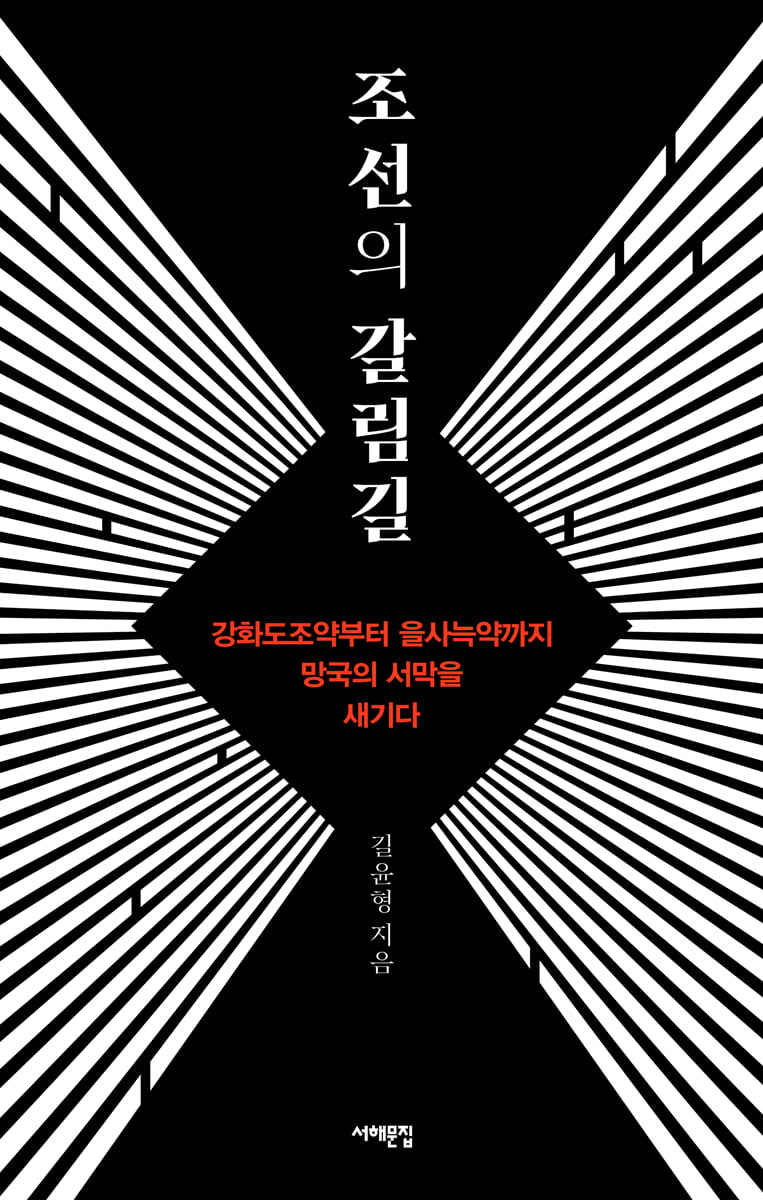 |
Description
Book Introduction
“The national disgrace and the people’s humiliation have reached this point.”
The struggle between neighboring countries for control of the Korean Peninsula in chaos, Joseon at a crossroads of survival and ruin, from the Treaty of Ganghwa to the Eulsa Treaty, a 30-year history puzzle piece pieced together from a vast amount of historical materials.
On the same day 120 years ago (1905) from the publication date of this book (November 17, 2025), Joseon lost its diplomatic rights due to the Eulsa Treaty and entered the path of national ruin.
Author Gil Yun-hyeong, who has captured moments of history with a keen eye and tenacious persistence, has completed another historical documentary.
“Joseon’s Crossroads” is the result of refining and supplementing “Gil Yun-hyeong’s Joseon’s Crossroads,” which was serialized in “Hankyoreh” for about a year.
From the Ganghwa Treaty (1876) to the Eulsa Treaty (1905), we take a close look at the choices Joseon made and how it lost its way amidst the great waves of modern times over the past 30 years.
In particular, by examining and piecing together not only domestic historical materials such as the Annals of the Joseon Dynasty and various diaries, but also a vast amount of documentary materials such as the Japanese Diplomatic Documents, the Records of the Japanese Embassy in Korea, and the Russian Diplomatic Documents, we examine the political and diplomatic choices of the time in a three-dimensional manner.
Through this, the complex and difficult process and meaning of Joseon's constant wavering between 'isolation and openness,' 'reform and conservatism,' and 'independence and dependence,' ultimately leading to its downfall, were meticulously retraced in three parts and 26 chapters.
The struggle between neighboring countries for control of the Korean Peninsula in chaos, Joseon at a crossroads of survival and ruin, from the Treaty of Ganghwa to the Eulsa Treaty, a 30-year history puzzle piece pieced together from a vast amount of historical materials.
On the same day 120 years ago (1905) from the publication date of this book (November 17, 2025), Joseon lost its diplomatic rights due to the Eulsa Treaty and entered the path of national ruin.
Author Gil Yun-hyeong, who has captured moments of history with a keen eye and tenacious persistence, has completed another historical documentary.
“Joseon’s Crossroads” is the result of refining and supplementing “Gil Yun-hyeong’s Joseon’s Crossroads,” which was serialized in “Hankyoreh” for about a year.
From the Ganghwa Treaty (1876) to the Eulsa Treaty (1905), we take a close look at the choices Joseon made and how it lost its way amidst the great waves of modern times over the past 30 years.
In particular, by examining and piecing together not only domestic historical materials such as the Annals of the Joseon Dynasty and various diaries, but also a vast amount of documentary materials such as the Japanese Diplomatic Documents, the Records of the Japanese Embassy in Korea, and the Russian Diplomatic Documents, we examine the political and diplomatic choices of the time in a three-dimensional manner.
Through this, the complex and difficult process and meaning of Joseon's constant wavering between 'isolation and openness,' 'reform and conservatism,' and 'independence and dependence,' ultimately leading to its downfall, were meticulously retraced in three parts and 26 chapters.
- You can preview some of the book's contents.
Preview
index
Prologue_ At the Bottom of Frustration
rigid state
01 Oh Kyung-seok's Sad Betrayal
02 Joseon, Plunging into the Modern Treaty Order
03 Qing, squeezing Joseon's lifeline
04 Im-o Incident: Qing and Japan clash fiercely in Joseon
05 Kim Ok-gyun's Adventures: Sowing the Seeds of Hatred in Joseon
06 Emperor Gojong's "approach to Russia" plunges Joseon into a crisis.
07 Japan Reveals Its Ambitions: "Our 'Interest Line' Focuses on North Korea"
Crossroads of choice
08 Donghak Revolution Ignites the Sino-Japanese War
09 Japan pushes for war
10 Japan and the 'Japan Party' collude
11. King Gojong and the people resist the Gabo Reforms.
Empress Myeongseong's death turns Gojong and reformists into bitter enemies.
13. The A-Gwan Pacheon and Emperor Gojong Slaughter "Reform"
14. Emperor Gojong's second attempt to approach Russia failed.
15 Emperor Gojong's confusion, Japan's reversal
16 The Independence Association's Struggles, Japan Shouts "Manse"
17. The Independence Association's political reform efforts ultimately failed.
The path to ruin
The Boxer Rebellion of 18th Century: Shattered the Frozen Balance Between Russia and Japan
19 The Korean Empire stands at the crossroads of neutrality and subjugation to Japan.
20 Japan rejects Russia's neutralization proposal
21 The Anglo-Japanese Alliance, Binding the Korean Empire
22 Russia responds with a 'new course'
23 The Korean Empire stakes its fate on the "Declaration of Wartime Neutrality."
The 24th Korea-Japan Protocol: A Grasp of the Korean Empire's Neck
25 “Consider Korea as part of our empire.”
26 The Eulsa Treaty is signed
Epilogue: Reflecting on the Causes of National Destruction
Acknowledgements
main
References
rigid state
01 Oh Kyung-seok's Sad Betrayal
02 Joseon, Plunging into the Modern Treaty Order
03 Qing, squeezing Joseon's lifeline
04 Im-o Incident: Qing and Japan clash fiercely in Joseon
05 Kim Ok-gyun's Adventures: Sowing the Seeds of Hatred in Joseon
06 Emperor Gojong's "approach to Russia" plunges Joseon into a crisis.
07 Japan Reveals Its Ambitions: "Our 'Interest Line' Focuses on North Korea"
Crossroads of choice
08 Donghak Revolution Ignites the Sino-Japanese War
09 Japan pushes for war
10 Japan and the 'Japan Party' collude
11. King Gojong and the people resist the Gabo Reforms.
Empress Myeongseong's death turns Gojong and reformists into bitter enemies.
13. The A-Gwan Pacheon and Emperor Gojong Slaughter "Reform"
14. Emperor Gojong's second attempt to approach Russia failed.
15 Emperor Gojong's confusion, Japan's reversal
16 The Independence Association's Struggles, Japan Shouts "Manse"
17. The Independence Association's political reform efforts ultimately failed.
The path to ruin
The Boxer Rebellion of 18th Century: Shattered the Frozen Balance Between Russia and Japan
19 The Korean Empire stands at the crossroads of neutrality and subjugation to Japan.
20 Japan rejects Russia's neutralization proposal
21 The Anglo-Japanese Alliance, Binding the Korean Empire
22 Russia responds with a 'new course'
23 The Korean Empire stakes its fate on the "Declaration of Wartime Neutrality."
The 24th Korea-Japan Protocol: A Grasp of the Korean Empire's Neck
25 “Consider Korea as part of our empire.”
26 The Eulsa Treaty is signed
Epilogue: Reflecting on the Causes of National Destruction
Acknowledgements
main
References
Detailed image

Publisher's Review
The Rigid State, 1876–1893
In the late 19th century, when the world was engulfed in the whirlpool of imperialism, Joseon was still bound to the Chinese order.
Interpreter Oh Gyeong-seok, who witnessed the decline of the Qing Dynasty and the arrival of Western civilization, called for the opening of the country, but the ruling class of Joseon branded him a "traitor."
Eventually, in 1876, Japan caused the Unyo Incident and forced the signing of the Ganghwa Island Treaty, dragging Joseon into the modern international order.
Under the shackles of unequal treaties, sovereignty is weakened, and the Qing Dynasty seeks to take advantage of this to treat Joseon as a vassal state again.
When the Im-o Incident caused internal chaos in Joseon, the Qing and Japan dispatched troops, and Joseon's military sovereignty virtually disappeared.
Kim Ok-gyun's Gapsin Coup was the last desperate attempt at modernization, but it failed due to Qing intervention, and the reformist forces were branded as pro-Japanese.
Gojong reached out to Russia to avoid Qing interference, but his lack of diplomatic ability forced Joseon into competition with foreign powers.
With a political system bound by tradition, an indecisive monarch, and a divided elite, Joseon failed to adapt to the changing times.
In this way, Joseon stumbled at the first gateway to modernity as a 'rigid nation', unable to open or close the 'door of reform'.
“I don’t know whether Joseon is now an independent country or a vassal state.”
“Why don’t you know about your own business?”
“Although we have been granted independence by signing treaties with Japan and the United States, we are treated as a vassal state by sending troops to Seoul.”
_ Page 97
Crossroads, 1894–1899
The Donghak Peasant Revolution of 1894 sparked a surge of reform among the Korean people, but it became the spark for war when both China and Japan simultaneously dispatched troops to the Korean Peninsula under the pretext of suppressing it.
As a result of Japan's victory in the Sino-Japanese War, Joseon's modernization was promoted in a distorted form called the "Gabo Reforms" led by Japan.
The abolition of the caste system and the reorganization of the system were carried out, but the reforms that resulted in the loss of sovereignty were nothing more than an empty shell.
In 1895, when Empress Myeongseong was assassinated by Japanese forces, Emperor Gojong fled to Russia out of hatred for Japan, and the government was reorganized into a pro-Russian regime.
After the Akgwan Pacheon incident, reforms were completely halted, and Gojong went against the times by proclaiming the 'Korean Empire' to strengthen the imperial power.
During this time, the Independence Association emerged and advocated for a constitutional monarchy and civil rights, but was disbanded due to King Gojong's distrust and oppression.
The reformists lost their way between dependence on foreign powers and internal reform, and Joseon politics fell into chaos again.
In this way, Joseon twice kicked away the opportunity for reform, and instead of pursuing independence, it fell into the swamp of dependence on foreign powers.
At the 'crossroads of choice', Joseon became a country that was unable to decide its future and was swayed by the calculations of others.
“God and others believe that for a nation to function as a nation, it must meet two conditions: first, it must be self-reliant and not depend on other nations; second, it must cultivate itself and enforce government and laws throughout the nation.
These two are one great authority granted to our Majesty from heaven.
Without this authority, the country would not exist.”
_ Page 276
The Road to National Ruin, 1900–1905
After the Boxer Rebellion, the Qing Dynasty collapsed and Russia took control of Manchuria, disrupting the balance of power in East Asia.
The Korean Empire claimed neutrality but had no real power, and Japan's rule over Korea was internationally recognized in 1902 with the Anglo-Japanese Alliance.
Meanwhile, as negotiations between Russia and Japan broke down, Japan chose war.
When the Russo-Japanese War broke out in 1904, Emperor Gojong declared neutrality, but Japan ignored this and turned the Korean Peninsula into a supply base.
Through the 'Korea-Japan Protocol,' Japan took control of Joseon's diplomacy and military power, and later completely controlled finances, communications, and even railroads.
The fate of Korea was sealed with Japan's victory in the Battle of Tsushima in 1905 and Russia's recognition of Japanese rule over Korea in the Treaty of Portsmouth.
Japan declared Korea to be part of its empire and pushed for the establishment of a Residency-General.
On November 17th of the same year, Japan forced the Eulsa Treaty into effect through force and intimidation, depriving the Korean Empire of its diplomatic rights.
At that moment, Joseon was nominally an independent country, but in reality it was a protectorate, that is, on the verge of becoming a colony.
In the end, with both reform and diplomacy failing, Joseon was swept away by the waves of modernity for which it was unprepared and disappeared from history.
The cause of the nation's downfall was not only external forces, but also internal failures that resulted from repeated wrong choices at historical crossroads.
In today's international situation surrounding the Korean Peninsula, it is time to look back on the choices made by Joseon 120 years ago.
“Oh! The shame of the nation and the disgrace of the people have reached this point.
Our people will all die and disappear in the struggle for survival.
“Those who wish to live will surely die, and those who are prepared to die will surely live. How can you not know this?”
_ Page 444
In the late 19th century, when the world was engulfed in the whirlpool of imperialism, Joseon was still bound to the Chinese order.
Interpreter Oh Gyeong-seok, who witnessed the decline of the Qing Dynasty and the arrival of Western civilization, called for the opening of the country, but the ruling class of Joseon branded him a "traitor."
Eventually, in 1876, Japan caused the Unyo Incident and forced the signing of the Ganghwa Island Treaty, dragging Joseon into the modern international order.
Under the shackles of unequal treaties, sovereignty is weakened, and the Qing Dynasty seeks to take advantage of this to treat Joseon as a vassal state again.
When the Im-o Incident caused internal chaos in Joseon, the Qing and Japan dispatched troops, and Joseon's military sovereignty virtually disappeared.
Kim Ok-gyun's Gapsin Coup was the last desperate attempt at modernization, but it failed due to Qing intervention, and the reformist forces were branded as pro-Japanese.
Gojong reached out to Russia to avoid Qing interference, but his lack of diplomatic ability forced Joseon into competition with foreign powers.
With a political system bound by tradition, an indecisive monarch, and a divided elite, Joseon failed to adapt to the changing times.
In this way, Joseon stumbled at the first gateway to modernity as a 'rigid nation', unable to open or close the 'door of reform'.
“I don’t know whether Joseon is now an independent country or a vassal state.”
“Why don’t you know about your own business?”
“Although we have been granted independence by signing treaties with Japan and the United States, we are treated as a vassal state by sending troops to Seoul.”
_ Page 97
Crossroads, 1894–1899
The Donghak Peasant Revolution of 1894 sparked a surge of reform among the Korean people, but it became the spark for war when both China and Japan simultaneously dispatched troops to the Korean Peninsula under the pretext of suppressing it.
As a result of Japan's victory in the Sino-Japanese War, Joseon's modernization was promoted in a distorted form called the "Gabo Reforms" led by Japan.
The abolition of the caste system and the reorganization of the system were carried out, but the reforms that resulted in the loss of sovereignty were nothing more than an empty shell.
In 1895, when Empress Myeongseong was assassinated by Japanese forces, Emperor Gojong fled to Russia out of hatred for Japan, and the government was reorganized into a pro-Russian regime.
After the Akgwan Pacheon incident, reforms were completely halted, and Gojong went against the times by proclaiming the 'Korean Empire' to strengthen the imperial power.
During this time, the Independence Association emerged and advocated for a constitutional monarchy and civil rights, but was disbanded due to King Gojong's distrust and oppression.
The reformists lost their way between dependence on foreign powers and internal reform, and Joseon politics fell into chaos again.
In this way, Joseon twice kicked away the opportunity for reform, and instead of pursuing independence, it fell into the swamp of dependence on foreign powers.
At the 'crossroads of choice', Joseon became a country that was unable to decide its future and was swayed by the calculations of others.
“God and others believe that for a nation to function as a nation, it must meet two conditions: first, it must be self-reliant and not depend on other nations; second, it must cultivate itself and enforce government and laws throughout the nation.
These two are one great authority granted to our Majesty from heaven.
Without this authority, the country would not exist.”
_ Page 276
The Road to National Ruin, 1900–1905
After the Boxer Rebellion, the Qing Dynasty collapsed and Russia took control of Manchuria, disrupting the balance of power in East Asia.
The Korean Empire claimed neutrality but had no real power, and Japan's rule over Korea was internationally recognized in 1902 with the Anglo-Japanese Alliance.
Meanwhile, as negotiations between Russia and Japan broke down, Japan chose war.
When the Russo-Japanese War broke out in 1904, Emperor Gojong declared neutrality, but Japan ignored this and turned the Korean Peninsula into a supply base.
Through the 'Korea-Japan Protocol,' Japan took control of Joseon's diplomacy and military power, and later completely controlled finances, communications, and even railroads.
The fate of Korea was sealed with Japan's victory in the Battle of Tsushima in 1905 and Russia's recognition of Japanese rule over Korea in the Treaty of Portsmouth.
Japan declared Korea to be part of its empire and pushed for the establishment of a Residency-General.
On November 17th of the same year, Japan forced the Eulsa Treaty into effect through force and intimidation, depriving the Korean Empire of its diplomatic rights.
At that moment, Joseon was nominally an independent country, but in reality it was a protectorate, that is, on the verge of becoming a colony.
In the end, with both reform and diplomacy failing, Joseon was swept away by the waves of modernity for which it was unprepared and disappeared from history.
The cause of the nation's downfall was not only external forces, but also internal failures that resulted from repeated wrong choices at historical crossroads.
In today's international situation surrounding the Korean Peninsula, it is time to look back on the choices made by Joseon 120 years ago.
“Oh! The shame of the nation and the disgrace of the people have reached this point.
Our people will all die and disappear in the struggle for survival.
“Those who wish to live will surely die, and those who are prepared to die will surely live. How can you not know this?”
_ Page 444
GOODS SPECIFICS
- Date of issue: November 17, 2025
- Page count, weight, size: 528 pages | 702g | 140*220*30mm
- ISBN13: 9791194413714
- ISBN10: 1194413714
You may also like
카테고리
korean


korean

![GQ KOREA Mark (Monthly): December [2025]](http://librairie.coreenne.fr/cdn/shop/files/8ef265dbbfbf186523ed75ba7319009d.jpg?v=1765340328&width=3840)


