

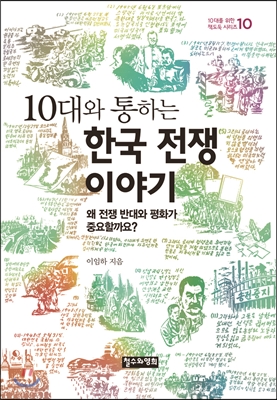
A Korean War Story for Teenagers
 |
Description
Book Introduction
The Korean War from a Young Person's Perspective
What do war and peace mean to us?
The Korean War is the most important keyword for properly understanding modern Korean history.
Only by properly understanding the Korean War can we gain a proper understanding of modern history, and enable the South and the North to move beyond confrontation and open the path to reconciliation and peace.
However, the absence of proper historical education for youth and the proliferation of extreme right-wing historical interpretations are leading to a distorted distortion of modern Korean history.
There are even claims that dictator Chun Doo-hwan is being portrayed as a patriot and that the May 18 Gwangju Democratization Movement was a riot involving North Korean troops.
The people of North and South Korea still cannot escape the wounds and hatred of the Korean War, and they have different interpretations and judgments about the causes and process of the war.
Because of this, modern Korean history is being interpreted solely through the lens of whether it is ‘left-wing’ or ‘right-wing.’
If we do not look at the Korean War as it was, our perspective on modern Korean history will inevitably be biased.
According to the 『Korean War Casualty Statistics』 published by the Ministry of National Defense, 621,479 soldiers and 999,688 civilians were injured during the war.
At least 1.6 million people were killed, injured or missing.
If we expand to include North Korea, the number of victims will exceed 3 million.
If war were to break out on the Korean Peninsula again today, the damage would be difficult to estimate.
However, the distorted perception of modern history further increases the possibility of a dangerous war.
The Korean War, which broke out in 1950, is still ongoing.
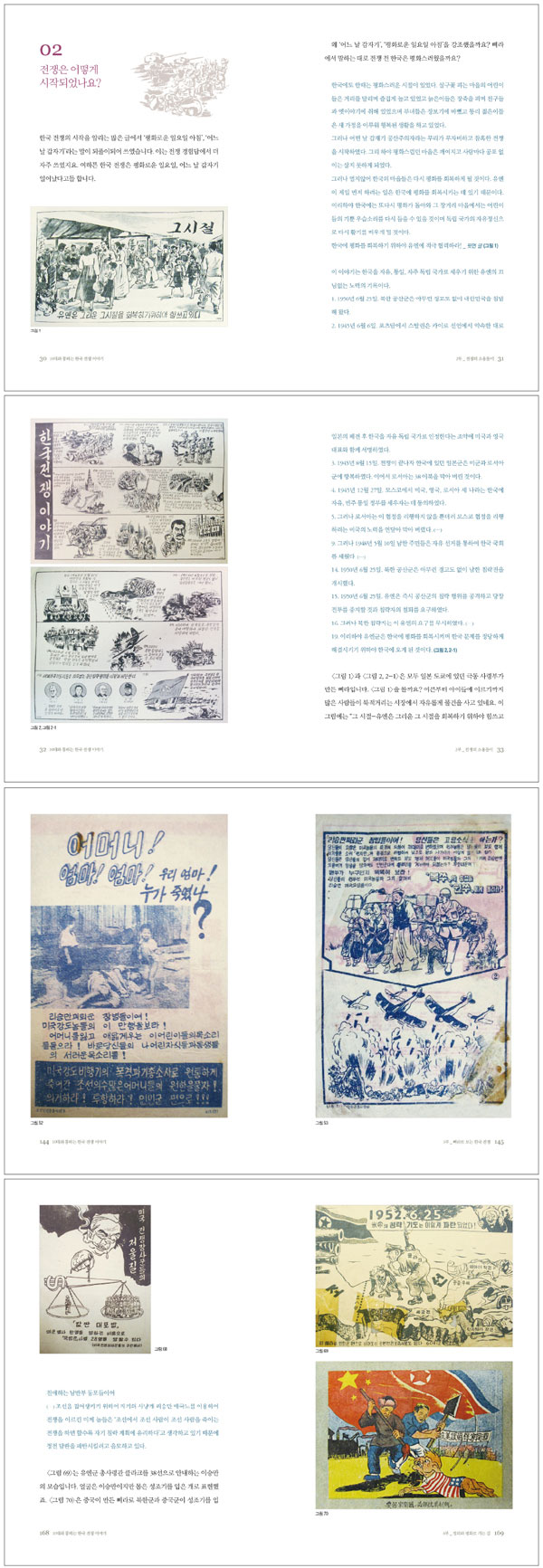
This book examines the causes, process, and impact of the Korean War through leaflets distributed by the South and North, tailored to the perspective of young people, and points out that modern Korean history should be viewed from a peaceful perspective.
This book was published to commemorate the 60th anniversary of the armistice agreement that ended the Korean War.
What do war and peace mean to us?
The Korean War is the most important keyword for properly understanding modern Korean history.
Only by properly understanding the Korean War can we gain a proper understanding of modern history, and enable the South and the North to move beyond confrontation and open the path to reconciliation and peace.
However, the absence of proper historical education for youth and the proliferation of extreme right-wing historical interpretations are leading to a distorted distortion of modern Korean history.
There are even claims that dictator Chun Doo-hwan is being portrayed as a patriot and that the May 18 Gwangju Democratization Movement was a riot involving North Korean troops.
The people of North and South Korea still cannot escape the wounds and hatred of the Korean War, and they have different interpretations and judgments about the causes and process of the war.
Because of this, modern Korean history is being interpreted solely through the lens of whether it is ‘left-wing’ or ‘right-wing.’
If we do not look at the Korean War as it was, our perspective on modern Korean history will inevitably be biased.
According to the 『Korean War Casualty Statistics』 published by the Ministry of National Defense, 621,479 soldiers and 999,688 civilians were injured during the war.
At least 1.6 million people were killed, injured or missing.
If we expand to include North Korea, the number of victims will exceed 3 million.
If war were to break out on the Korean Peninsula again today, the damage would be difficult to estimate.
However, the distorted perception of modern history further increases the possibility of a dangerous war.
The Korean War, which broke out in 1950, is still ongoing.
This book examines the causes, process, and impact of the Korean War through leaflets distributed by the South and North, tailored to the perspective of young people, and points out that modern Korean history should be viewed from a peaceful perspective.
This book was published to commemorate the 60th anniversary of the armistice agreement that ended the Korean War.
- You can preview some of the book's contents.
Preview
index
As we publish the book _ What does peace mean to us?
Part 1.
Our country, free from colonialism
1.
What was our country like after liberation?
2.
How did military rule begin?
3.
Why two countries were established on the Korean Peninsula
Part 2.
The whirlwind of war
1.
What is a leaflet?
2.
How did the war start?
3.
What did the president do?
4.
How far down have the North Korean troops come?
5.
How was the Incheon Landing Operation carried out?
6.
What was the Allied Forces' plan for advancing north?
7.
What were the Chinese army's tactics?
8.
Why was the battle for the high ground so fierce?
9.
How did the armistice negotiations come about?
Part 3.
The Korean War Through Leaflets
1.
Where did the refugees go?
2.
Why did the citizens become war collaborators?
3.
Why was operational control of the Korean military transferred to the United States?
4.
What were the occupation policies of North and South Korea?
5.
What was the purpose of the aerial bombardment?
6.
How did leaflets promote epidemic prevention?
7.
Under what circumstances was martial law declared?
8.
What was life like as a prisoner of war?
9.
Who are the partisans?
10.
Why were civilians killed?
Part 4.
The Path to Justice and Peace
1.
Find the lookalike flyers
2.
Monsters appearing in flyers
3.
Cold War worldview
4.
Those who say it is a 'just war'
5.
The United States borrowed the name of the United Nations
6.
The importance of opposing war and promoting peace
Korean War in Chronology
References
Part 1.
Our country, free from colonialism
1.
What was our country like after liberation?
2.
How did military rule begin?
3.
Why two countries were established on the Korean Peninsula
Part 2.
The whirlwind of war
1.
What is a leaflet?
2.
How did the war start?
3.
What did the president do?
4.
How far down have the North Korean troops come?
5.
How was the Incheon Landing Operation carried out?
6.
What was the Allied Forces' plan for advancing north?
7.
What were the Chinese army's tactics?
8.
Why was the battle for the high ground so fierce?
9.
How did the armistice negotiations come about?
Part 3.
The Korean War Through Leaflets
1.
Where did the refugees go?
2.
Why did the citizens become war collaborators?
3.
Why was operational control of the Korean military transferred to the United States?
4.
What were the occupation policies of North and South Korea?
5.
What was the purpose of the aerial bombardment?
6.
How did leaflets promote epidemic prevention?
7.
Under what circumstances was martial law declared?
8.
What was life like as a prisoner of war?
9.
Who are the partisans?
10.
Why were civilians killed?
Part 4.
The Path to Justice and Peace
1.
Find the lookalike flyers
2.
Monsters appearing in flyers
3.
Cold War worldview
4.
Those who say it is a 'just war'
5.
The United States borrowed the name of the United Nations
6.
The importance of opposing war and promoting peace
Korean War in Chronology
References
Detailed image
Into the book
An opportunity to reflect on the Korean War and modern Korean history.
This book deals with the facts of the Korean War and the hidden meaning behind it, based on leaflets distributed during the war.
However, it should not end with just finding hidden meanings.
Because the Korean Peninsula is still a place where war has not ended, and peace on the Korean Peninsula affects many countries around the world.
Because the Korean War will soon show us how we should live.
I hope that this book will provide readers with an opportunity to reflect on the Korean War and modern Korean history.
History is not about memorizing past events, but rather a guide that helps us understand our current lives and thoughts.
This book deals with the facts of the Korean War and the hidden meaning behind it, based on leaflets distributed during the war.
However, it should not end with just finding hidden meanings.
Because the Korean Peninsula is still a place where war has not ended, and peace on the Korean Peninsula affects many countries around the world.
Because the Korean War will soon show us how we should live.
I hope that this book will provide readers with an opportunity to reflect on the Korean War and modern Korean history.
History is not about memorizing past events, but rather a guide that helps us understand our current lives and thoughts.
---From the text
Publisher's Review
The Facts and Hidden Stories of the Korean War: A Closer Look
The book is made up of four corners.
The first chapter is about the 'cause of the Korean War' before the war broke out, and deals with the process of division and conflict on the Korean Peninsula.
The second section divides the Korean War into military operations and chronological order: ‘Invasion → Incheon Landing Operation → Advance → Retreat → Armistice.’
The third point shows that war is not just about soldiers.
The Korean War was a battlefield in every corner of the country, with no clear distinction between the rear and the rear, so it contains stories of people who survived the war.
The fourth section covered the impact of the Korean War on Korean society, the worldview conveyed by the leaflets, and why opposition to war and peace are important.
The book is made up of four corners.
The first chapter is about the 'cause of the Korean War' before the war broke out, and deals with the process of division and conflict on the Korean Peninsula.
The second section divides the Korean War into military operations and chronological order: ‘Invasion → Incheon Landing Operation → Advance → Retreat → Armistice.’
The third point shows that war is not just about soldiers.
The Korean War was a battlefield in every corner of the country, with no clear distinction between the rear and the rear, so it contains stories of people who survived the war.
The fourth section covered the impact of the Korean War on Korean society, the worldview conveyed by the leaflets, and why opposition to war and peace are important.
GOODS SPECIFICS
- Date of publication: June 25, 2013
- Page count, weight, size: 208 pages | 400g | 153*224*20mm
- ISBN13: 9788993463439
- ISBN10: 8993463433
You may also like
카테고리
korean


korean

![GQ KOREA Mark (Monthly): December [2025]](http://librairie.coreenne.fr/cdn/shop/files/8ef265dbbfbf186523ed75ba7319009d.jpg?v=1765340328&width=3840)


