

China Star Song
 |
Description
Book Introduction
Publication of "China Star Song - The Shadow of Chinese Civilization"
The Design and Shadow of Chinese Civilization as Read Through the Metaphors of Moonlight Spy
『China Star Song - The Shadow of Chinese Civilization』 is a book that provides insight into the dark side of Chinese civilization.
Based on decades of field reporting and research, as well as the Chosun Ilbo serial "China Star Song," author Yoo Gwang-jong reveals in a multi-layered way how Chinese society ingeniously interweaves power and obedience, language and emotion, and daily life and order to form today's China.
This book does not simply criticize or praise China.
The author defines this as “neither anti-China nor hackneyed pro-China, but knowledge of China,” and presents a framework of thought necessary for understanding China’s rise as a great power.
From the ancient Art of War and Go, and heroic epics like the Romance of the Three Kingdoms, to the power of the modern Communist Party, the controlled daily life, language, and diplomatic strategies, it traces the secret order that has sustained Chinese civilization.
The Design and Shadow of Chinese Civilization as Read Through the Metaphors of Moonlight Spy
『China Star Song - The Shadow of Chinese Civilization』 is a book that provides insight into the dark side of Chinese civilization.
Based on decades of field reporting and research, as well as the Chosun Ilbo serial "China Star Song," author Yoo Gwang-jong reveals in a multi-layered way how Chinese society ingeniously interweaves power and obedience, language and emotion, and daily life and order to form today's China.
This book does not simply criticize or praise China.
The author defines this as “neither anti-China nor hackneyed pro-China, but knowledge of China,” and presents a framework of thought necessary for understanding China’s rise as a great power.
From the ancient Art of War and Go, and heroic epics like the Romance of the Three Kingdoms, to the power of the modern Communist Party, the controlled daily life, language, and diplomatic strategies, it traces the secret order that has sustained Chinese civilization.
- You can preview some of the book's contents.
Preview
index
introduction.
The Land and Civilization of 'Moonlight Spy'
Chapter 1.
Red Order: How Power Works
The Chinese Communist Party's weakened verbal skills
The loneliness sung by 'Jim'
The lonely exit of the 'big brothers'
Heaven for executives
A sea of power and trickery
The slave's face and knees
A society prone to corruption
The dark and secretive behind-the-scenes of China
One word from the elders is enough
The Communist Party has moved away from traditional wisdom.
Good Emperor Complex
The Chinese Communist Party's spell
Trickster
Rule and Obedience
The Emperor and the Red Capitalists
Emperor and obedient people
Chapter 2.
Life on the Grid: How Control Shapes Everyday Life
tattling culture
Gateway
A wall within a wall
A heart trapped in walls and fences
The exclusive consciousness of a wall builder
Chinese people jumping over the wall
Wind and rain of the continent
Continental bluff
Pork and Chinese
Very worldly Chinese values
Very (rain)
dusty world
People's livelihood and charcoal-coating
Division and Unification
Siheyuan (四合院)
Samgyetang (Ginseng Chicken Soup) and Chinese people
The sad history of cannibalism
The Three Gorges Dam and the Chinese View of Nature
The gold, silver, and bronze of the Chinese these days
A land of disaster and hunger
The fate of China's wealthy
Rain in China
China's modern 'middle-aged women'
China's wok and blame shifting
The largest surname in China
Scene in front of the Chinese gate
Three hardships of modern Chinese people's livelihood
Chapter 3.
The Politics of Emotion: The Censored Mind, the Structure of Anxiety
Wolf dream
The Chinese who thought of war even in the fall
A sense of worry and concern
Self-consciousness bound by exaggeration techniques
Giwoo (杞憂), a gaze fixed only on the ground
China's love of deformities
Chinese intellectual society fostered a slave mentality
Land where plague is a concern
A tradition of constant informing
Chinese sentiments toward the castle
China's "Live Well"
China's cloud weather map
The bitterness of the land of Chu
Intelligence and wisdom
Chinese thoughts hidden behind curtains
Taiping complex
Chapter 4.
The Gaze of the Border: A Dual Self-Consciousness of the World
Chinese forces in the Korean War
Liangshanbo and Hong Kong in 'Water Margin'
Crosswise and Sinocentrism
Humanities of Guangdong and Hong Kong
road
Dongryu (東流)
Reading the US-China Conflict Through Go and Chess
Hong Kong, a wind-sheltered harbor
Change
The limits of complex fighting techniques
City walls and bridges
China's diplomacy is losing flexibility
The fore and aft waves of the Yangtze River
China's protracted war strategy
Chinese, Hua people, and Tang people
China that falls short of China
Evolution vs. Nature
Friends of Korea, Fengyou of China
Chapter 5.
The Trap of Letters: How Language Entraps Thought
The era of Confucian classics that lasted for 2000 years
Fakes, counterfeits, and the tradition of pseudo-ancient
The names of Deng Xiaoping and Xi Jinping
Mandarin and Putonghua
Orchids on the red wall of the Forbidden City
The inside story of Zhuge Liang syndrome
Why there are so many secret weapons in China
Flowers loved by Chinese people
Gourds and Chinese National Day
Chapter 6.
Landscapes Beyond the Border: Where the Cracks Begin
China in 2025
Fire across the river
The Chinese folk world of Jianghu
A spy tradition forged in moonlight
China's face hardens
A land of 'babies' that are only big in size
Chinese martial arts without power
Three Swords and the Chinese Entrepreneurship Fever
The sword hidden behind etiquette
Chinese leaders misread tradition
The power that Zhu Yuanzhang established the Ming Dynasty
China's black society
It dragged on and on and on
The Land and Civilization of 'Moonlight Spy'
Chapter 1.
Red Order: How Power Works
The Chinese Communist Party's weakened verbal skills
The loneliness sung by 'Jim'
The lonely exit of the 'big brothers'
Heaven for executives
A sea of power and trickery
The slave's face and knees
A society prone to corruption
The dark and secretive behind-the-scenes of China
One word from the elders is enough
The Communist Party has moved away from traditional wisdom.
Good Emperor Complex
The Chinese Communist Party's spell
Trickster
Rule and Obedience
The Emperor and the Red Capitalists
Emperor and obedient people
Chapter 2.
Life on the Grid: How Control Shapes Everyday Life
tattling culture
Gateway
A wall within a wall
A heart trapped in walls and fences
The exclusive consciousness of a wall builder
Chinese people jumping over the wall
Wind and rain of the continent
Continental bluff
Pork and Chinese
Very worldly Chinese values
Very (rain)
dusty world
People's livelihood and charcoal-coating
Division and Unification
Siheyuan (四合院)
Samgyetang (Ginseng Chicken Soup) and Chinese people
The sad history of cannibalism
The Three Gorges Dam and the Chinese View of Nature
The gold, silver, and bronze of the Chinese these days
A land of disaster and hunger
The fate of China's wealthy
Rain in China
China's modern 'middle-aged women'
China's wok and blame shifting
The largest surname in China
Scene in front of the Chinese gate
Three hardships of modern Chinese people's livelihood
Chapter 3.
The Politics of Emotion: The Censored Mind, the Structure of Anxiety
Wolf dream
The Chinese who thought of war even in the fall
A sense of worry and concern
Self-consciousness bound by exaggeration techniques
Giwoo (杞憂), a gaze fixed only on the ground
China's love of deformities
Chinese intellectual society fostered a slave mentality
Land where plague is a concern
A tradition of constant informing
Chinese sentiments toward the castle
China's "Live Well"
China's cloud weather map
The bitterness of the land of Chu
Intelligence and wisdom
Chinese thoughts hidden behind curtains
Taiping complex
Chapter 4.
The Gaze of the Border: A Dual Self-Consciousness of the World
Chinese forces in the Korean War
Liangshanbo and Hong Kong in 'Water Margin'
Crosswise and Sinocentrism
Humanities of Guangdong and Hong Kong
road
Dongryu (東流)
Reading the US-China Conflict Through Go and Chess
Hong Kong, a wind-sheltered harbor
Change
The limits of complex fighting techniques
City walls and bridges
China's diplomacy is losing flexibility
The fore and aft waves of the Yangtze River
China's protracted war strategy
Chinese, Hua people, and Tang people
China that falls short of China
Evolution vs. Nature
Friends of Korea, Fengyou of China
Chapter 5.
The Trap of Letters: How Language Entraps Thought
The era of Confucian classics that lasted for 2000 years
Fakes, counterfeits, and the tradition of pseudo-ancient
The names of Deng Xiaoping and Xi Jinping
Mandarin and Putonghua
Orchids on the red wall of the Forbidden City
The inside story of Zhuge Liang syndrome
Why there are so many secret weapons in China
Flowers loved by Chinese people
Gourds and Chinese National Day
Chapter 6.
Landscapes Beyond the Border: Where the Cracks Begin
China in 2025
Fire across the river
The Chinese folk world of Jianghu
A spy tradition forged in moonlight
China's face hardens
A land of 'babies' that are only big in size
Chinese martial arts without power
Three Swords and the Chinese Entrepreneurship Fever
The sword hidden behind etiquette
Chinese leaders misread tradition
The power that Zhu Yuanzhang established the Ming Dynasty
China's black society
It dragged on and on and on
Into the book
From the letters that depict 'moonlight streaming through the cracks in the door', a very specific and bold method of spy operation was conceived.
The Art of War, which he wrote, is a world-famous 'fighting guide'.
…Baduk is a high-level war game played by reading the detailed layout and situation.
This book seeks to ask what the relationship is between numerous authors of military strategy, including Sun Tzu, and the ancient masterpiece of "Made in China," Go.
--- pp.4-5
China is a place where the ruling structure of the old dynasty continues unchanged to this day.
The fact that the harsh techniques of controlling people, namely the methods and ideas of "controlling people" from the past dynastic era are being so dazzlingly implemented by the ruling Communist Party today cannot but be a clear regression of Chinese civilization.
Moreover, the endless greed and corruption of the Chinese Communist Party elite, the upper echelons of society, is the biggest foundation for many of China's "problems" today.
Moreover, the problem of the "foolishness" of the majority of the Chinese public, who are becoming increasingly alienated from various benefits of knowledge, information, economy, and culture, is also very serious.
--- p.6
It is an old Chinese thought pattern called ‘power and strategy’.
It is not a fighting style that allows you to decide the winner head-on.
It is closer to a dark struggle based on deception and sorcery.
The term "scheme" refers to a random and very arbitrary scheme, and the method of creating it by adding all kinds of ingenuity based on it.
It is one of the worst tricks that people come up with.
In Chinese history, the place where such power and trickery were most prevalent was the imperial court.
--- p.32
China's cultural foundation clearly distinguishes between the public and the private.
They have a strong ability to distinguish between what to say or do publicly and what to say or do secretly behind their backs.
The art form of theater is often cited by the Chinese when distinguishing between the outside and the inside.
--- p.42
The mood in China has changed dramatically these days, with the economy in decline and all-out friction with the United States.
The streets are now filled with unemployed and homeless people, a sight that was once rare.
In the large shopping mall where countless people used to come and go, there is hardly any trace of people or warmth.
Although these are said to be phenomena that have emerged due to the strengthening of the one-man rule system, the true nature of the situation is obscured by countless walls and cannot be seen.
--- p.79
In China, pigs also symbolize vitality, good luck, and fortune.
The environment was ideal for raising pigs due to the long-standing farming customs.
Therefore, pork is the most popular meat among Chinese people.
Among the various Chinese foods, pork is special.
Su Dongpo, a famous writer and politician of the Northern Song Dynasty, introduced a pork dish he made specially when he was serving as a local official.
This is the so-called 'Dongpo pork'.
--- pp.96-97
Sometimes there are Chinese women who stand at the center of world topics.
It's the so-called 'Tama (大?)'.
If we interpret it in our own way, 'ajumma' is the correct term.
It is quite different from the image of a quiet and reserved traditional Chinese woman.
It corresponds to a group that represents the image of modern Chinese people.
It would be good to think of it as an unspecified group of 'Chinese housewives'.
--- p.140
There is a story called the 'Three Snakes' that became popular among urban Chinese people in the 2000s.
This is quite useful information for looking into the aspects of modern Chinese society.
The three snakes are the black snake, the white snake, and the spectacled snake.
The name "optician" is also commonly used to refer to a snake called a cobra.
These three snakes are the ones that plague the Chinese people in the city.
--- p.153
Northern China has long been a source of invasion.
In particular, as invasions from the north became more frequent in the fall, the harvest season, the Tang Dynasty began to establish the 'Fangchu' system to prepare for autumn wars.
It was a matter of recruiting troops from the southern frontier region and deploying them to border areas where war was likely to break out.
--- p.164
Women's foot binding is also a long and widespread shadow that has been cast over China's long history.
This foot binding involves binding a young woman's feet with cloth to a certain size.
A woman's feet are made very small by this tangled cloth.
The shrunken woman's feet were even described as 'three-inch golden lotus flowers'.
--- pp.176-177
Even if you manage to climb over the wall built by the Chinese and then climb over the wall surrounding the house to enter the house, there is still one more barrier left.
It is a folding screen or curtain.
This time, it's the story of the Chinese people's curtain.
A curtain that goes up and down is usually written as a curtain.
It is possible to open and close it from left to right.
This is an ancient Chinese distinction.
In China's culture of "covering and concealing," where walls surround homes and even national borders, curtains are the ultimate device for concealing oneself.
--- p.204
Mao Zedong, who founded China, published an article titled “On Protracted War” in 1938.
This is a famous article that discusses Japan's invasion, Soviet ambitions, and China's strategic choices in the face of the war clouds of World War II.
But the key was still the mobilization of the people.
More than anything else, it emphasizes the need for a nationwide mobilization system to protect the country from external invasion by establishing an enemy outside the country.
--- pp.257-258
The term gyeongwi refers to the vertical and horizontal lines of a loom used to weave cloth.
From then on, these letters further referred to the roads connecting the north and south and the roads running east and west, respectively.
This also appears later in translations of Western words expressing the Earth's coordinates.
--- p.273
I don't care if someone else's house burns down.
Also, I honestly don't like the altruistic act of helping people whose houses are on fire.
It's like I'm calculating and thinking about what action I should take next.
There is an atmosphere of greater interest in the 'fisherman's profit', which is the benefit gained without one's own effort in the process of a fire breaking out and being put out and someone stepping in to clean up the situation.
--- p.306
If you fill the glass to the right size, it is called a sip.
It is good to think of it as a middle ground between following too much and following too little.
So, the process of calculating various situations and setting an appropriate level is called ‘guessing.’
Similarly, if you fill your glass after carefully considering the pros and cons, it is considered a good idea.
Finally, when the glass is properly filled, it is time to drink.
It is the ‘resolution’ that is used when one is criticized for “doing something recklessly.”
If someone offers me a drink, I should pour it back.
It is compensation and response.
The Art of War, which he wrote, is a world-famous 'fighting guide'.
…Baduk is a high-level war game played by reading the detailed layout and situation.
This book seeks to ask what the relationship is between numerous authors of military strategy, including Sun Tzu, and the ancient masterpiece of "Made in China," Go.
--- pp.4-5
China is a place where the ruling structure of the old dynasty continues unchanged to this day.
The fact that the harsh techniques of controlling people, namely the methods and ideas of "controlling people" from the past dynastic era are being so dazzlingly implemented by the ruling Communist Party today cannot but be a clear regression of Chinese civilization.
Moreover, the endless greed and corruption of the Chinese Communist Party elite, the upper echelons of society, is the biggest foundation for many of China's "problems" today.
Moreover, the problem of the "foolishness" of the majority of the Chinese public, who are becoming increasingly alienated from various benefits of knowledge, information, economy, and culture, is also very serious.
--- p.6
It is an old Chinese thought pattern called ‘power and strategy’.
It is not a fighting style that allows you to decide the winner head-on.
It is closer to a dark struggle based on deception and sorcery.
The term "scheme" refers to a random and very arbitrary scheme, and the method of creating it by adding all kinds of ingenuity based on it.
It is one of the worst tricks that people come up with.
In Chinese history, the place where such power and trickery were most prevalent was the imperial court.
--- p.32
China's cultural foundation clearly distinguishes between the public and the private.
They have a strong ability to distinguish between what to say or do publicly and what to say or do secretly behind their backs.
The art form of theater is often cited by the Chinese when distinguishing between the outside and the inside.
--- p.42
The mood in China has changed dramatically these days, with the economy in decline and all-out friction with the United States.
The streets are now filled with unemployed and homeless people, a sight that was once rare.
In the large shopping mall where countless people used to come and go, there is hardly any trace of people or warmth.
Although these are said to be phenomena that have emerged due to the strengthening of the one-man rule system, the true nature of the situation is obscured by countless walls and cannot be seen.
--- p.79
In China, pigs also symbolize vitality, good luck, and fortune.
The environment was ideal for raising pigs due to the long-standing farming customs.
Therefore, pork is the most popular meat among Chinese people.
Among the various Chinese foods, pork is special.
Su Dongpo, a famous writer and politician of the Northern Song Dynasty, introduced a pork dish he made specially when he was serving as a local official.
This is the so-called 'Dongpo pork'.
--- pp.96-97
Sometimes there are Chinese women who stand at the center of world topics.
It's the so-called 'Tama (大?)'.
If we interpret it in our own way, 'ajumma' is the correct term.
It is quite different from the image of a quiet and reserved traditional Chinese woman.
It corresponds to a group that represents the image of modern Chinese people.
It would be good to think of it as an unspecified group of 'Chinese housewives'.
--- p.140
There is a story called the 'Three Snakes' that became popular among urban Chinese people in the 2000s.
This is quite useful information for looking into the aspects of modern Chinese society.
The three snakes are the black snake, the white snake, and the spectacled snake.
The name "optician" is also commonly used to refer to a snake called a cobra.
These three snakes are the ones that plague the Chinese people in the city.
--- p.153
Northern China has long been a source of invasion.
In particular, as invasions from the north became more frequent in the fall, the harvest season, the Tang Dynasty began to establish the 'Fangchu' system to prepare for autumn wars.
It was a matter of recruiting troops from the southern frontier region and deploying them to border areas where war was likely to break out.
--- p.164
Women's foot binding is also a long and widespread shadow that has been cast over China's long history.
This foot binding involves binding a young woman's feet with cloth to a certain size.
A woman's feet are made very small by this tangled cloth.
The shrunken woman's feet were even described as 'three-inch golden lotus flowers'.
--- pp.176-177
Even if you manage to climb over the wall built by the Chinese and then climb over the wall surrounding the house to enter the house, there is still one more barrier left.
It is a folding screen or curtain.
This time, it's the story of the Chinese people's curtain.
A curtain that goes up and down is usually written as a curtain.
It is possible to open and close it from left to right.
This is an ancient Chinese distinction.
In China's culture of "covering and concealing," where walls surround homes and even national borders, curtains are the ultimate device for concealing oneself.
--- p.204
Mao Zedong, who founded China, published an article titled “On Protracted War” in 1938.
This is a famous article that discusses Japan's invasion, Soviet ambitions, and China's strategic choices in the face of the war clouds of World War II.
But the key was still the mobilization of the people.
More than anything else, it emphasizes the need for a nationwide mobilization system to protect the country from external invasion by establishing an enemy outside the country.
--- pp.257-258
The term gyeongwi refers to the vertical and horizontal lines of a loom used to weave cloth.
From then on, these letters further referred to the roads connecting the north and south and the roads running east and west, respectively.
This also appears later in translations of Western words expressing the Earth's coordinates.
--- p.273
I don't care if someone else's house burns down.
Also, I honestly don't like the altruistic act of helping people whose houses are on fire.
It's like I'm calculating and thinking about what action I should take next.
There is an atmosphere of greater interest in the 'fisherman's profit', which is the benefit gained without one's own effort in the process of a fire breaking out and being put out and someone stepping in to clean up the situation.
--- p.306
If you fill the glass to the right size, it is called a sip.
It is good to think of it as a middle ground between following too much and following too little.
So, the process of calculating various situations and setting an appropriate level is called ‘guessing.’
Similarly, if you fill your glass after carefully considering the pros and cons, it is considered a good idea.
Finally, when the glass is properly filled, it is time to drink.
It is the ‘resolution’ that is used when one is criticized for “doing something recklessly.”
If someone offers me a drink, I should pour it back.
It is compensation and response.
--- p.327
Publisher's Review
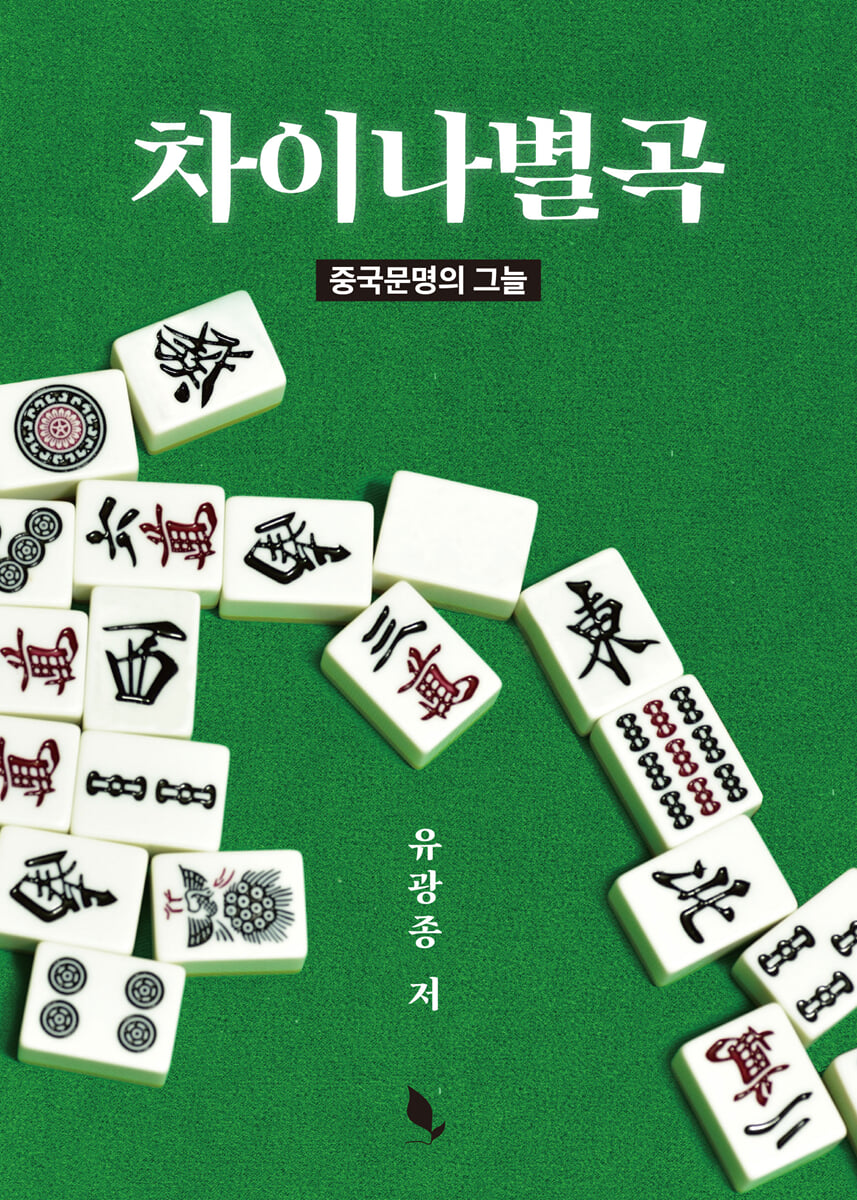
The book cover features mahjong tiles, a traditional Chinese game.
Mahjong is not just a simple pastime; it is a psychological battle involving memory, strategy, luck, and probability, and at the same time, it is a social activity that fosters 'relationships'.
The '發' (Bal) on the cover symbolizes economic growth, '中' (Jung) symbolizes Sinocentrism, '白' symbolizes the duality of being clean on the outside but unknowable on the inside, and '東南西北' symbolizes region and direction.
The scattered pieces are a metaphor for “the scattered pieces that will help us interpret China,” and the text shows us how to connect those pieces.
The text consists of six chapters.
The first chapter covers the techniques of power and the codes of governance that passed from the emperor to the communist party, while the second chapter deals with the control structures that permeated social institutions and daily life.
The third chapter analyzes the politics of emotion shaped by self-censorship and anxiety, and the fourth chapter analyzes China's self-consciousness and dissonance as it faces the world.
The fifth chapter explores how Chinese characters and language were tools of power that confined thought, and the sixth chapter explores the two faces of China revealed through rifts and contradictions.
『China Star Song』 is not just a book for understanding China.
It functions as a humanities and political book that makes us reflect on universal issues of power, civilization, and human society.
This journey, which begins with the metaphor of a moonlight spy, will serve as a small window for readers to read the essence of the power that sustains a society, and to see both its light and shadow simultaneously.
Mahjong is not just a simple pastime; it is a psychological battle involving memory, strategy, luck, and probability, and at the same time, it is a social activity that fosters 'relationships'.
The '發' (Bal) on the cover symbolizes economic growth, '中' (Jung) symbolizes Sinocentrism, '白' symbolizes the duality of being clean on the outside but unknowable on the inside, and '東南西北' symbolizes region and direction.
The scattered pieces are a metaphor for “the scattered pieces that will help us interpret China,” and the text shows us how to connect those pieces.
The text consists of six chapters.
The first chapter covers the techniques of power and the codes of governance that passed from the emperor to the communist party, while the second chapter deals with the control structures that permeated social institutions and daily life.
The third chapter analyzes the politics of emotion shaped by self-censorship and anxiety, and the fourth chapter analyzes China's self-consciousness and dissonance as it faces the world.
The fifth chapter explores how Chinese characters and language were tools of power that confined thought, and the sixth chapter explores the two faces of China revealed through rifts and contradictions.
『China Star Song』 is not just a book for understanding China.
It functions as a humanities and political book that makes us reflect on universal issues of power, civilization, and human society.
This journey, which begins with the metaphor of a moonlight spy, will serve as a small window for readers to read the essence of the power that sustains a society, and to see both its light and shadow simultaneously.
GOODS SPECIFICS
- Date of issue: August 29, 2025
- Page count, weight, size: 342 pages | Checking size
- ISBN13: 9788997170760
- ISBN10: 8997170767
You may also like
카테고리
korean


korean

![ELLE 엘르 스페셜 에디션 A형 : 12월 [2025]](http://librairie.coreenne.fr/cdn/shop/files/b8e27a3de6c9538896439686c6b0e8fb.jpg?v=1766436872&width=3840)


