

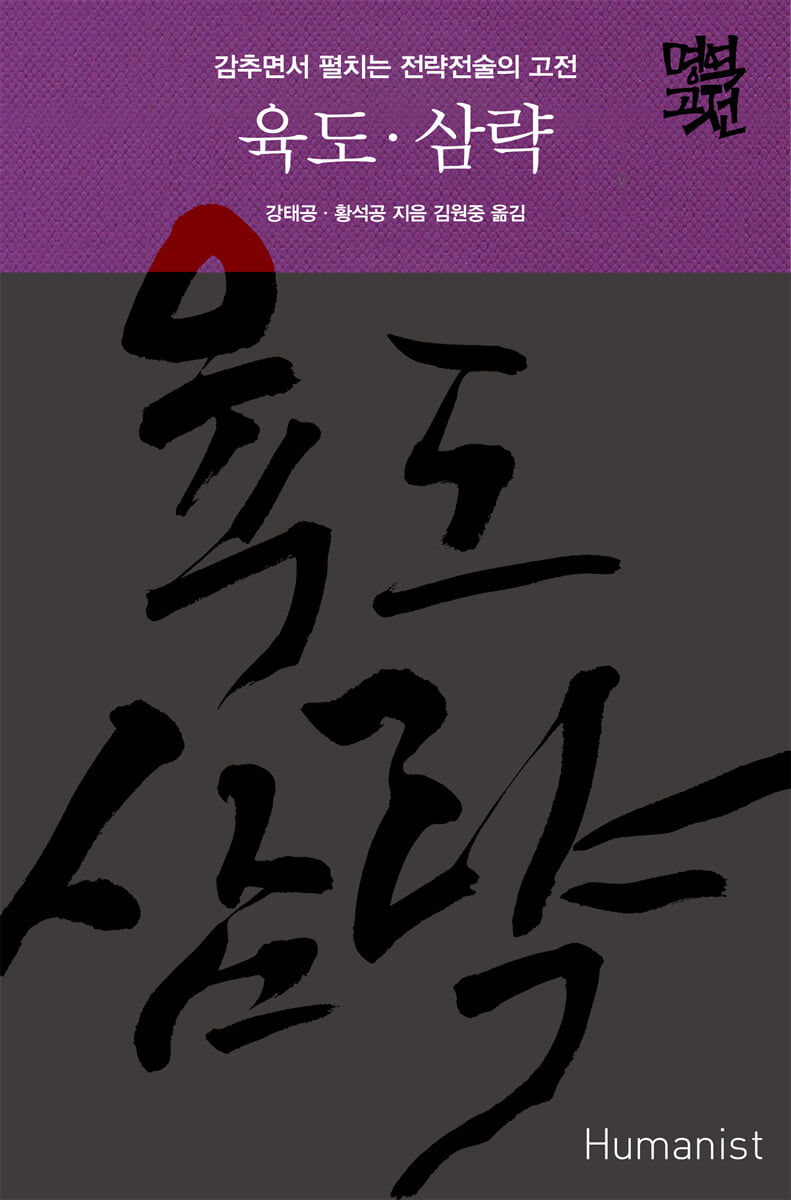
Six Paths and Three Strategies
 |
Description
Book Introduction
The secrets of military strategy, imperialism, and world management are here!
A secret book among secret books that contain the essence of victory along with 『The Art of War』
The Six Secrets, said to have been written by Jiang Taigong, who made great contributions to subduing the tyrannical Zhou King of ancient China and establishing the Zhou Dynasty, and the Three Strategies, said to have been obtained by Zhang Liang from Huang Shigong, who helped Liu Bang, the founder of the Han Dynasty, achieve the great feat of unifying the country, are widely recognized as strategic books containing the political philosophy, ruling strategies, and human understanding of the Spring and Autumn Period and the Warring States Period.
『The Six Paths and Three Strategies』, a book of governance that teaches us how to subdue tyrants and save the people in distress, and a book of strategies that teaches us how to win based on the harmony of literature and martial arts, has been read for thousands of years in China and in our history, along with 『The Art of War』.
Professor Kim Won-joong, an authority on translating Oriental classics, has translated 『Six Paths and Three Strategies』 with elegance and meticulous care. This book combines the wisdom of military strategy and the study of kingship. It is a classic of strategy and tactics for all who wish to closely read and respond to the international situation and social changes where norms are rapidly shifting.
A secret book among secret books that contain the essence of victory along with 『The Art of War』
The Six Secrets, said to have been written by Jiang Taigong, who made great contributions to subduing the tyrannical Zhou King of ancient China and establishing the Zhou Dynasty, and the Three Strategies, said to have been obtained by Zhang Liang from Huang Shigong, who helped Liu Bang, the founder of the Han Dynasty, achieve the great feat of unifying the country, are widely recognized as strategic books containing the political philosophy, ruling strategies, and human understanding of the Spring and Autumn Period and the Warring States Period.
『The Six Paths and Three Strategies』, a book of governance that teaches us how to subdue tyrants and save the people in distress, and a book of strategies that teaches us how to win based on the harmony of literature and martial arts, has been read for thousands of years in China and in our history, along with 『The Art of War』.
Professor Kim Won-joong, an authority on translating Oriental classics, has translated 『Six Paths and Three Strategies』 with elegance and meticulous care. This book combines the wisdom of military strategy and the study of kingship. It is a classic of strategy and tactics for all who wish to closely read and respond to the international situation and social changes where norms are rapidly shifting.
- You can preview some of the book's contents.
Preview
index
Translator's Preface_The art of war and the study of kingship, the secrets of governing the world, 《Six Paths》 and 《Three Strategies》 Six Paths Volume 1, Mentu Part 1, The Scholar of Letters: King Wen's Teacher | Part 2, The Vigor and Emptiness: Fullness and Emptiness | Part 3, The State Affairs: The Work of the Nation | Part 4, The Great Rituals: Courtesy Between the Ruler and His Subjects | Part 5, The Clear Transmission: Clearly Transmitting | Part 6, The Six Guards: Six Preservations | Part 7, The Defenders of the Territory: Defending the Territory | Part 8, The Defenders of the Nation: Defending the Nation | Part 9, The Sage: Respecting the Wise | Part 10, The Advocates of the Wise | Part 11, Rewards and Punishments: Rewarding and Punishing | Part 12 The Way of War: Principles of Military Conduct Volume 2 The Way of the Martial Arts Part 13 Balgye: Develop and Instruct | Part 14 Mungye: Guidance through Civilization | Part 15 Munbeol: Conquer through Civilization | Part 16 Sungye: Guidance according to the will of the people | Part 17 Samui: Three Doubts Volume 3 Yongyong (龍韜) Part 18 Wangik: The King's Throne | Part 19 Nonjang: Discussing Generals | Part 20 Seonjang: Selecting Generals | Part 21 Ipjang: Establishing Generals | Part 22 Jangwi: The Dignity of Generals | Part 23 Yeogun Encouragement: Encouraging the Army | Chapter 24 Yin Talisman: Secret Talismans | Chapter 25 Yin Book: Secret Documents | Chapter 26 Military Formation: The Formation of the Army | Chapter 27 Cavalry: The Operation of Cavalry | Chapter 28 Five Sounds: Five Kinds of Sounds | Chapter 29 Military Signs: Omens of Victory and Defeat for the Army | Chapter 30 Farming Tools: Farming and Weapons, Volume 4, Tiger's Embrace | Chapter 31 Military Use: The Operation of the Army's Equipment | Chapter 32 Three Formations: Three Types of Battle | Chapter 33 Quick Battle: Fight Quickly | Chapter 34 Must Escape: Be Sure to Escape | Chapter 35 Military Strategy: The Strategy of a [Marching] Army | Chapter 36: Reaching the Border | Chapter 37: Movement and Stillness | Chapter 38: Gongs and Drums | Chapter 39: The Way | Chapter 40: Attacking the Enemy's Territory | Chapter 41: Fighting with Fire | Chapter 42: If the Enemy's Fortress is Empty | Volume 5: Leopard-Shaking | Chapter 43: Forest Warfare | Chapter 44: Charge | Chapter 45: Enemy Strength | Chapter 46: Enemy Warfare | Chapter 47: Cloud-Shaking Mountain Brigade | Chapter 48: Wuuntaekbyeong (Wooun-taek-byeong): Wuun-jin method in the swamp | Chapter 49: So-so? (Little Soldier): Fighting many enemies with few soldiers | Chapter 50: Bun-heom (Dispersion in Rough Ground) Volume 6: Gyeon-do (Insect-like Steed) Chapter 51: Bun-hap (Dispersion and Concentration): Dispersion and Concentration | Chapter 52: Wu-bong (Wu-bong): Vanguards with Martial Arts | Chapter 53: Yeon-sa (Yeon-sa): Selecting Soldiers | Chapter 54: Engagement? (Battle): Teach Tactics | Chapter 55: Gyun-byeong (Gyun-byeong): Distribute Troops Evenly | Chapter 56: Wu-geo-sa (Wu-geo-sa): Brave Chariot Soldiers | Chapter 57: Wu-mushi (Wu-mu-sa): Brave Horsemen | Chapter 58: Chariot Warfare | Chapter 59: Jeon-gi (Jeon-gi): Cavalry Warfare | Part 60: Battle Steps: Infantry Warfare Three Strategies, Summary 1.
In all things, acquiring talent comes first | 2.
The power of gentleness and weakness is the virtue that a king's teacher must possess. | 3.
Lean on the wise and be sincere to the people | 4.
The hero of the country is a scholar | 5.
The key to commanding the military and the means of recruiting talented people | 6.
The general should do everything together with his soldiers | 7.
The Secret of General's Dignity and Complete Victory | 8.
The Weary Army | 9.
Be strict with rewards and punishments | 10.
Make rewards and punishments just | 11.
A monarch must trust his generals | 12.
Qualities a General Should Have | 13.
The secret of a general's scheme is paramount | 14.
Four things a general avoids | 15.
How to command and keep loyal scholars and soldiers | 16.
The Power of Grace and the People | 17.
Why the country should not be empty and the people should not be poor | 18.
The concept of a ruined country | 19.
Clues to theft | 20.
Source of Trouble | 21.
The Root of Dizziness | 22.
The enemy of the country | 23.
In case of being a detriment to the country | 24.
The Principle of Promotion and Resignation | 25.
The path that leads to the downfall of the country | 26.
What happens when you hire a sycophantic and flattering minister | 27.
Beware of those who block and obscure the eyes and ears of the monarch. Omitted 1.
Different governance styles depending on the role | 2.
The monarch should not interfere in the affairs of the generals. | 3.
The Five Subtleties of Military Power | 4.
Do not mislead the public or keep your subordinates away | 5.
Do not allow shamans or fortune tellers | 6.
Do not try to exploit a righteous scholar with wealth | 7.
Virtue is the priority for both the monarch and the subject | 8.
Improvisation, trickery, and outlandish schemes are paramount | 9.
The essence of the Three Strategies and the reasons why a monarch must know the Three Strategies (omitted) 1.
Govern with virtue and attract talent | 2.
Be a virtuous ruler and make others happy | 3.
Lead smoothly to a comfortable relationship | 4.
Tao, virtue, humanity, righteousness, and propriety, the five are one body | 5.
The Trinity of Royal Command, Order, and Politics | 6.
Welcome the wise man from a thousand miles away | 7.
Give good government to the innocent people | 8.
Controlling doubt and delusion is essential for stability | 9.
Don't go against the heavens | 10.
If one who offends his superiors becomes noble | 11.
The conduct of a subject who waits for his time | 12.
Weapons are not auspicious, but they must be used when necessary. | 13.
Control the Heroes | 14.
Don't lose your sense of propriety | 15.
The monarch is the monarch, the subject is the subject | 16.
Keep wise men by your side | 17.
Whether it's beneficial or detrimental, it's one person who matters. Find references.
In all things, acquiring talent comes first | 2.
The power of gentleness and weakness is the virtue that a king's teacher must possess. | 3.
Lean on the wise and be sincere to the people | 4.
The hero of the country is a scholar | 5.
The key to commanding the military and the means of recruiting talented people | 6.
The general should do everything together with his soldiers | 7.
The Secret of General's Dignity and Complete Victory | 8.
The Weary Army | 9.
Be strict with rewards and punishments | 10.
Make rewards and punishments just | 11.
A monarch must trust his generals | 12.
Qualities a General Should Have | 13.
The secret of a general's scheme is paramount | 14.
Four things a general avoids | 15.
How to command and keep loyal scholars and soldiers | 16.
The Power of Grace and the People | 17.
Why the country should not be empty and the people should not be poor | 18.
The concept of a ruined country | 19.
Clues to theft | 20.
Source of Trouble | 21.
The Root of Dizziness | 22.
The enemy of the country | 23.
In case of being a detriment to the country | 24.
The Principle of Promotion and Resignation | 25.
The path that leads to the downfall of the country | 26.
What happens when you hire a sycophantic and flattering minister | 27.
Beware of those who block and obscure the eyes and ears of the monarch. Omitted 1.
Different governance styles depending on the role | 2.
The monarch should not interfere in the affairs of the generals. | 3.
The Five Subtleties of Military Power | 4.
Do not mislead the public or keep your subordinates away | 5.
Do not allow shamans or fortune tellers | 6.
Do not try to exploit a righteous scholar with wealth | 7.
Virtue is the priority for both the monarch and the subject | 8.
Improvisation, trickery, and outlandish schemes are paramount | 9.
The essence of the Three Strategies and the reasons why a monarch must know the Three Strategies (omitted) 1.
Govern with virtue and attract talent | 2.
Be a virtuous ruler and make others happy | 3.
Lead smoothly to a comfortable relationship | 4.
Tao, virtue, humanity, righteousness, and propriety, the five are one body | 5.
The Trinity of Royal Command, Order, and Politics | 6.
Welcome the wise man from a thousand miles away | 7.
Give good government to the innocent people | 8.
Controlling doubt and delusion is essential for stability | 9.
Don't go against the heavens | 10.
If one who offends his superiors becomes noble | 11.
The conduct of a subject who waits for his time | 12.
Weapons are not auspicious, but they must be used when necessary. | 13.
Control the Heroes | 14.
Don't lose your sense of propriety | 15.
The monarch is the monarch, the subject is the subject | 16.
Keep wise men by your side | 17.
Whether it's beneficial or detrimental, it's one person who matters. Find references.
Detailed image

Publisher's Review
1.
The Six Paths and Three Strategies, a secret book to overcome the age of chaos - The Six Paths, composed of fundamental dialogues of martial arts that appeared like legends and were used for thousands of years, and the Three Strategies, a collection of proverbs, are strange books that were written separately but can be read together.
It is said that the Six Paths were written by Jiang Taigong, who defeated the tyrannical King Zhou of the late Shang Dynasty and played a key role in the overall governance of the Zhou Dynasty.
Meanwhile, it is known that the book "Three Strategies" was taught to Zhang Liang, who was living in hiding after failing in an attempt to assassinate Qin Shi Huang, who ended the Warring States Period, when he met an eccentric named Huang Shigong.
Both stories were recorded by Sima Qian in the Records of the Grand Historian, and there has been a long-standing controversy over their original authors and the time of their writing.
However, judging from the bamboo slips unearthed in the 1970s, it would not be unreasonable to believe that Jiang Taigong and Huang Shigong each wrote them based on the Records of the Grand Historian.
Such legends and controversies are inseparable from the history of the Six Paths and Three Strategies, which emerged during a time of chaos.
《The Six Paths》 is related to the period when the center of the world shifted from the Shang Dynasty to the Zhou Dynasty, and 《The Three Strategies》 is related to the period when China, which had entered war again after the end of the Warring States Period, was unified under the Han Dynasty.
The book "Six Paths and Three Strategies" contains the struggles of those who sought to end chaos and create a peaceful world, and the wisdom gained in the process of making this a reality.
In this context, “The Six Paths and the Three Strategies” were grouped together with “The Art of War” as the Seven Books of Martial Arts and became textbooks in China as well as Goryeo and Joseon, establishing themselves as the foundation of martial studies.
《The Six Paths》 and 《The Three Strategies》 are not simply military strategy books, but are widely recognized as strategic books that contain the political philosophy, ruling strategies, and human understanding of the Spring and Autumn Period and the Warring States Period.
In that respect, it was natural that “Yukdo” and “Samryak” were brought into our country and read.
(…) In the early Goryeo Dynasty when Buddhism was flourishing, Wang Rong, a figure, wrote in a royal edict to Kim Bu that he kept “Yukdo” and “Samryak” in his heart, and in Lee Gyu-bo’s “Dongguk Yisanggukjip” there is even a passage that he read the strategies of “Yongdo”, so we can see that it was widely read as a textbook on military strategy.
During the Joseon Dynasty, when the government upheld the rule of civil and military affairs, King Taejo, Yi Seong-gye, held a memorial service for Taegong and introduced the military service examination. King Taejong, who followed in his footsteps, also respected the Yukdo and Samryak as one of the Seven Classics of Military Science, officially acknowledging their value by including them in the military service examination.
- 〈Explanation_The Art of War and the Study of Imperialism, the Secrets of Governing the World, 《The Six Paths》 and 《The Three Strategies》〉, pp. 39-40 2.
The Way of the Emperor, which goes beyond how to conduct war well and pursues better governance - Why you should read "The Six Ways and the Three Strategies" together with "The Art of War" "The Six Ways" and "The Three Strategies" are books that teach you how to approach war and win.
But the two books aren't just about winning.
Even if you win a war, if it is unclear what you are fighting for, or if it is simply a fight to satisfy the ruler, it is not only extremely empty but also harmful.
First of all, the Six Paths emphasize that the world does not belong to one ruler, but to all the people.
In the Six Paths, which is structured as a dialogue between Jiang Taigong and King Wen and King Wu of Zhou, Jiang Taigong emphasizes that victory is for the purpose of creating a world of peace for all, saying, “Those who share the interests of the world will gain the world, and those who do what they please will lose the world.”
Meanwhile, the Samryak clearly highlights the destructiveness of war and its aftermath, saying, “In essence, weapons are inauspicious instruments. The way of heaven hates them, but it has no choice but to use them. This is the way of heaven.”
In this way, “The Six Paths and Three Strategies” repeatedly emphasizes that the greatest weapon of a monarch is morality, and that if he loses the hearts of the people, the country cannot stand upright.
In that respect, this book shares the same subject matter as The Art of War, but they complement each other.
For example, The Art of War defines war as “a major matter of state,” while The Six Ways defines war from a broader perspective as a means of adjusting the chaos and conflicts in the world and restoring order.
Also, just like The Art of War, which saw the cruel nature of war by saying, “War is a way of deception,” The Six Ways emphasize the need to deceive the opponent through means such as bewitchment, sowing discord, and bribery, and The Three Strategies emphasizes secrecy and cunning by saying, “Without secret strategy, no achievement can be made.”
In addition, the Six Paths and Three Strategies, which contain the main contents of the Art of War, such as knowing oneself and the enemy, the mutual benefit of the unusual and the right, and strategic attacks, are a comprehensive collection of military tactics and the study of kingship to eliminate tyrants and suppress chaos, and when read together with the Art of War, they provide readers with an incomparable enlightenment.
Taekong answered.
“The world is not the world of one [monarch], but the world of all the people.
Those who share the world's benefits will gain the world, and those who use the world's benefits as they please will lose the world.
There is a time in heaven and wealth on earth. Sharing it with others is benevolence. Where there is benevolence, the people of the world return.
Virtue is what saves others from death, helps them out of their difficulties, relieves them of their worries, and relieves them of their urgency. Where there is virtue, the world revolves.
To share others' worries, joys, likes, and dislikes is righteousness. Where there is righteousness, the people of the world will flock to it.
All people hate death and enjoy being alive, love virtue and return to benefit.
“The Way is what can bring benefit, and where there is the Way, the world revolves.” King Wen bowed twice and said.
“Your words are just, how could I not accept the command of Heaven!” Then he put [Taigong] in the carriage and returned with him, establishing him as his teacher.
- 《Six Paths》 Volume 1 《The Way of the Scholar》 〈Part 1: The Scholar of Confucius: King Wen's Teacher〉, pages 55-56 The reason why one does not advance because one is generous, leisurely, clear, and calm is because one is careful not to harm people or things.
The great weapon is an inauspicious object, and although the way of heaven hates it, it has no choice but to use it, so this is the way of heaven.
For a person to be in the Way is like a fish to be in water; [a fish] lives when it gains water, and dies when it loses water.
Therefore, a gentleman must always be fearful and not lose sight of the Way.
- 《Three Strategies》 (omitted), page 340, 3.
A classic of strategy and tactics read in depth with excellent translation and over 330 annotations - The charm of 《Six Paths and Three Strategies》 conveyed by Professor Kim Won-joong, a master of Oriental classics. Starting with the publication of 《Han Feizi》 in 2016, and continuing with 《The Art of War》, 《Mingxin Bojian》, 《The Analects of Confucius》, and 《Lao Tzu Tao Te Ching》, 《Professor Kim Won-joong's Famous Classics of Our Time》 is a representative series of Oriental classics trusted by readers in bookstores.
Translator Professor Kim Won-joong published Mencius in 2021 and Zhuangzi in 2023, making greater efforts to make Eastern classics, which had previously been perceived as difficult, more accessible to a wider audience.
The newly released "Six Paths and Three Strategies" focuses on presenting ancient Chinese strategy and tactics in a more nuanced and profound way, through dialogues and concise proverbs that reflect the times.
In addition to the excellent translation, the book provides an overview of the entire content of "The Six Paths and the Three Strategies," summarizes various stories surrounding the book, provides a direction for reading, and provides an abundance of related works such as "The Art of War" and "The Tao Te Ching." Through over 330 footnotes, readers will be able to fully enjoy the delights of this classic work of strategy and tactics that unfolds while remaining hidden.
The Six Paths and Three Strategies, a secret book to overcome the age of chaos - The Six Paths, composed of fundamental dialogues of martial arts that appeared like legends and were used for thousands of years, and the Three Strategies, a collection of proverbs, are strange books that were written separately but can be read together.
It is said that the Six Paths were written by Jiang Taigong, who defeated the tyrannical King Zhou of the late Shang Dynasty and played a key role in the overall governance of the Zhou Dynasty.
Meanwhile, it is known that the book "Three Strategies" was taught to Zhang Liang, who was living in hiding after failing in an attempt to assassinate Qin Shi Huang, who ended the Warring States Period, when he met an eccentric named Huang Shigong.
Both stories were recorded by Sima Qian in the Records of the Grand Historian, and there has been a long-standing controversy over their original authors and the time of their writing.
However, judging from the bamboo slips unearthed in the 1970s, it would not be unreasonable to believe that Jiang Taigong and Huang Shigong each wrote them based on the Records of the Grand Historian.
Such legends and controversies are inseparable from the history of the Six Paths and Three Strategies, which emerged during a time of chaos.
《The Six Paths》 is related to the period when the center of the world shifted from the Shang Dynasty to the Zhou Dynasty, and 《The Three Strategies》 is related to the period when China, which had entered war again after the end of the Warring States Period, was unified under the Han Dynasty.
The book "Six Paths and Three Strategies" contains the struggles of those who sought to end chaos and create a peaceful world, and the wisdom gained in the process of making this a reality.
In this context, “The Six Paths and the Three Strategies” were grouped together with “The Art of War” as the Seven Books of Martial Arts and became textbooks in China as well as Goryeo and Joseon, establishing themselves as the foundation of martial studies.
《The Six Paths》 and 《The Three Strategies》 are not simply military strategy books, but are widely recognized as strategic books that contain the political philosophy, ruling strategies, and human understanding of the Spring and Autumn Period and the Warring States Period.
In that respect, it was natural that “Yukdo” and “Samryak” were brought into our country and read.
(…) In the early Goryeo Dynasty when Buddhism was flourishing, Wang Rong, a figure, wrote in a royal edict to Kim Bu that he kept “Yukdo” and “Samryak” in his heart, and in Lee Gyu-bo’s “Dongguk Yisanggukjip” there is even a passage that he read the strategies of “Yongdo”, so we can see that it was widely read as a textbook on military strategy.
During the Joseon Dynasty, when the government upheld the rule of civil and military affairs, King Taejo, Yi Seong-gye, held a memorial service for Taegong and introduced the military service examination. King Taejong, who followed in his footsteps, also respected the Yukdo and Samryak as one of the Seven Classics of Military Science, officially acknowledging their value by including them in the military service examination.
- 〈Explanation_The Art of War and the Study of Imperialism, the Secrets of Governing the World, 《The Six Paths》 and 《The Three Strategies》〉, pp. 39-40 2.
The Way of the Emperor, which goes beyond how to conduct war well and pursues better governance - Why you should read "The Six Ways and the Three Strategies" together with "The Art of War" "The Six Ways" and "The Three Strategies" are books that teach you how to approach war and win.
But the two books aren't just about winning.
Even if you win a war, if it is unclear what you are fighting for, or if it is simply a fight to satisfy the ruler, it is not only extremely empty but also harmful.
First of all, the Six Paths emphasize that the world does not belong to one ruler, but to all the people.
In the Six Paths, which is structured as a dialogue between Jiang Taigong and King Wen and King Wu of Zhou, Jiang Taigong emphasizes that victory is for the purpose of creating a world of peace for all, saying, “Those who share the interests of the world will gain the world, and those who do what they please will lose the world.”
Meanwhile, the Samryak clearly highlights the destructiveness of war and its aftermath, saying, “In essence, weapons are inauspicious instruments. The way of heaven hates them, but it has no choice but to use them. This is the way of heaven.”
In this way, “The Six Paths and Three Strategies” repeatedly emphasizes that the greatest weapon of a monarch is morality, and that if he loses the hearts of the people, the country cannot stand upright.
In that respect, this book shares the same subject matter as The Art of War, but they complement each other.
For example, The Art of War defines war as “a major matter of state,” while The Six Ways defines war from a broader perspective as a means of adjusting the chaos and conflicts in the world and restoring order.
Also, just like The Art of War, which saw the cruel nature of war by saying, “War is a way of deception,” The Six Ways emphasize the need to deceive the opponent through means such as bewitchment, sowing discord, and bribery, and The Three Strategies emphasizes secrecy and cunning by saying, “Without secret strategy, no achievement can be made.”
In addition, the Six Paths and Three Strategies, which contain the main contents of the Art of War, such as knowing oneself and the enemy, the mutual benefit of the unusual and the right, and strategic attacks, are a comprehensive collection of military tactics and the study of kingship to eliminate tyrants and suppress chaos, and when read together with the Art of War, they provide readers with an incomparable enlightenment.
Taekong answered.
“The world is not the world of one [monarch], but the world of all the people.
Those who share the world's benefits will gain the world, and those who use the world's benefits as they please will lose the world.
There is a time in heaven and wealth on earth. Sharing it with others is benevolence. Where there is benevolence, the people of the world return.
Virtue is what saves others from death, helps them out of their difficulties, relieves them of their worries, and relieves them of their urgency. Where there is virtue, the world revolves.
To share others' worries, joys, likes, and dislikes is righteousness. Where there is righteousness, the people of the world will flock to it.
All people hate death and enjoy being alive, love virtue and return to benefit.
“The Way is what can bring benefit, and where there is the Way, the world revolves.” King Wen bowed twice and said.
“Your words are just, how could I not accept the command of Heaven!” Then he put [Taigong] in the carriage and returned with him, establishing him as his teacher.
- 《Six Paths》 Volume 1 《The Way of the Scholar》 〈Part 1: The Scholar of Confucius: King Wen's Teacher〉, pages 55-56 The reason why one does not advance because one is generous, leisurely, clear, and calm is because one is careful not to harm people or things.
The great weapon is an inauspicious object, and although the way of heaven hates it, it has no choice but to use it, so this is the way of heaven.
For a person to be in the Way is like a fish to be in water; [a fish] lives when it gains water, and dies when it loses water.
Therefore, a gentleman must always be fearful and not lose sight of the Way.
- 《Three Strategies》 (omitted), page 340, 3.
A classic of strategy and tactics read in depth with excellent translation and over 330 annotations - The charm of 《Six Paths and Three Strategies》 conveyed by Professor Kim Won-joong, a master of Oriental classics. Starting with the publication of 《Han Feizi》 in 2016, and continuing with 《The Art of War》, 《Mingxin Bojian》, 《The Analects of Confucius》, and 《Lao Tzu Tao Te Ching》, 《Professor Kim Won-joong's Famous Classics of Our Time》 is a representative series of Oriental classics trusted by readers in bookstores.
Translator Professor Kim Won-joong published Mencius in 2021 and Zhuangzi in 2023, making greater efforts to make Eastern classics, which had previously been perceived as difficult, more accessible to a wider audience.
The newly released "Six Paths and Three Strategies" focuses on presenting ancient Chinese strategy and tactics in a more nuanced and profound way, through dialogues and concise proverbs that reflect the times.
In addition to the excellent translation, the book provides an overview of the entire content of "The Six Paths and the Three Strategies," summarizes various stories surrounding the book, provides a direction for reading, and provides an abundance of related works such as "The Art of War" and "The Tao Te Ching." Through over 330 footnotes, readers will be able to fully enjoy the delights of this classic work of strategy and tactics that unfolds while remaining hidden.
GOODS SPECIFICS
- Date of issue: August 25, 2025
- Format: Hardcover book binding method guide
- Page count, weight, size: 360 pages | 554g | 140*210*17mm
- ISBN13: 9791170873723
You may also like
카테고리
korean


korean

![GQ KOREA Mark (Monthly): December [2025]](http://librairie.coreenne.fr/cdn/shop/files/8ef265dbbfbf186523ed75ba7319009d.jpg?v=1765340328&width=3840)


