

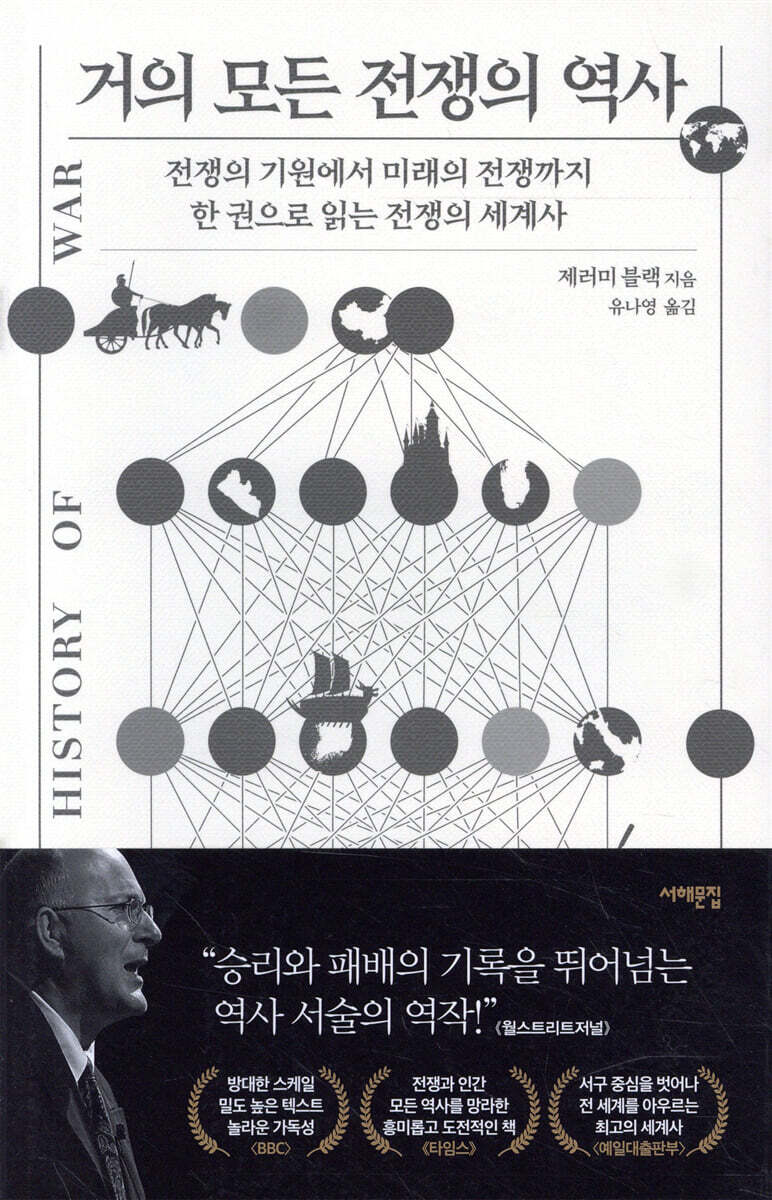
The history of almost every war
 |
Description
Book Introduction
- A word from MD
-
The Flow of World History Through the History of WarMany military histories focus on the West.
The narrative style is also centered on individual events.
Jeremy Black's book, "A History of Nearly Every War," covers both Eastern and Western wars.
By analyzing the impact each war had on the development of world history, this book is designed to help readers understand the flow of world history in one volume.
May 27, 2022. History PD Son Min-gyu
A masterpiece of historical narrative that transcends the record of victory and defeat!_ [Wall Street Journal]
Massive scale, dense text, and stunning readability_ BBC
A fascinating and challenging book that covers war, humanity, and all of history_ [Times]
The ultimate world history, encompassing the entire world beyond the Western centricity_Yale University Press
For thousands of years, war has violently transformed the social, political, and religious aspects of human life.
All cultures speak of past, present, and future wars to establish and strengthen common goals, but how a community understands past wars can have tragic consequences.
In this wide-ranging yet accessible book, Jeremy Black examines war as a global phenomenon, from the Han Dynasty to Assyria, the Roman Empire to Napoleonic France, and Vietnam to Afghanistan, exploring themes such as the origins of war, early fortresses and castles, and nineteenth-century imperialism.
We are still living in an age of war.
The news coming in real time from the horrific war raging in Ukraine due to Russia's invasion makes us, who live in the midst of a war that is not yet over, even more heartbreaking.
In this context, this book shows how war has shaped and changed history, and based on this, what kind of future we should move toward.
Massive scale, dense text, and stunning readability_ BBC
A fascinating and challenging book that covers war, humanity, and all of history_ [Times]
The ultimate world history, encompassing the entire world beyond the Western centricity_Yale University Press
For thousands of years, war has violently transformed the social, political, and religious aspects of human life.
All cultures speak of past, present, and future wars to establish and strengthen common goals, but how a community understands past wars can have tragic consequences.
In this wide-ranging yet accessible book, Jeremy Black examines war as a global phenomenon, from the Han Dynasty to Assyria, the Roman Empire to Napoleonic France, and Vietnam to Afghanistan, exploring themes such as the origins of war, early fortresses and castles, and nineteenth-century imperialism.
We are still living in an age of war.
The news coming in real time from the horrific war raging in Ukraine due to Russia's invasion makes us, who live in the midst of a war that is not yet over, even more heartbreaking.
In this context, this book shows how war has shaped and changed history, and based on this, what kind of future we should move toward.
- You can preview some of the book's contents.
Preview
index
Acknowledgements
1.
Origins of War
2.
War and the Early State
3.
Egypt, Assyria, Persia
4.
War in early China
5.
Greece and Macedonia
6.
War in India
7.
Rome and Hannibal
8.
The Roman Empire and its fall
9.
Dark Ages
10 Wars of the Feudal Era
11.
castle
12.
crusades
13.
Mongolia and Timur
14.
Early war in Japan
15.
Wars in the New World before 1500
16.
war in africa
17.
War in Oceania
18.
Gunpowder weapons in land warfare
19.
A new style of fortress
20.
Sea power changed the world, 1400–1763
21.
Geography of the battlefield
22.
The great Ottoman Empire
23.
Imjin War
24.
The Age of the Sailing Ship, 1588–1827
25.
China, Russia, and the End of Nomadic Power
26.
The collapse of Europe's New World colonies, 1775–1825
27.
Napoleonic Wars
28.
Wars within the West, 1816–1913
29.
19th century imperialism
30.
China: From Crisis to Unification, 1839–1949
31.
World War I
32.
The Interwar Period: How Was the Threat of Coming War Assessed?
33.
World War II
34.
cold war
35.
decolonization war
36.
Post-Cold War War
37.
War Today: Conflicts Within Nations
38.
Confrontation between great powers
39.
Military history theories
conclusion
More books to read
Translator's Note
Search
1.
Origins of War
2.
War and the Early State
3.
Egypt, Assyria, Persia
4.
War in early China
5.
Greece and Macedonia
6.
War in India
7.
Rome and Hannibal
8.
The Roman Empire and its fall
9.
Dark Ages
10 Wars of the Feudal Era
11.
castle
12.
crusades
13.
Mongolia and Timur
14.
Early war in Japan
15.
Wars in the New World before 1500
16.
war in africa
17.
War in Oceania
18.
Gunpowder weapons in land warfare
19.
A new style of fortress
20.
Sea power changed the world, 1400–1763
21.
Geography of the battlefield
22.
The great Ottoman Empire
23.
Imjin War
24.
The Age of the Sailing Ship, 1588–1827
25.
China, Russia, and the End of Nomadic Power
26.
The collapse of Europe's New World colonies, 1775–1825
27.
Napoleonic Wars
28.
Wars within the West, 1816–1913
29.
19th century imperialism
30.
China: From Crisis to Unification, 1839–1949
31.
World War I
32.
The Interwar Period: How Was the Threat of Coming War Assessed?
33.
World War II
34.
cold war
35.
decolonization war
36.
Post-Cold War War
37.
War Today: Conflicts Within Nations
38.
Confrontation between great powers
39.
Military history theories
conclusion
More books to read
Translator's Note
Search
Detailed image
Publisher's Review
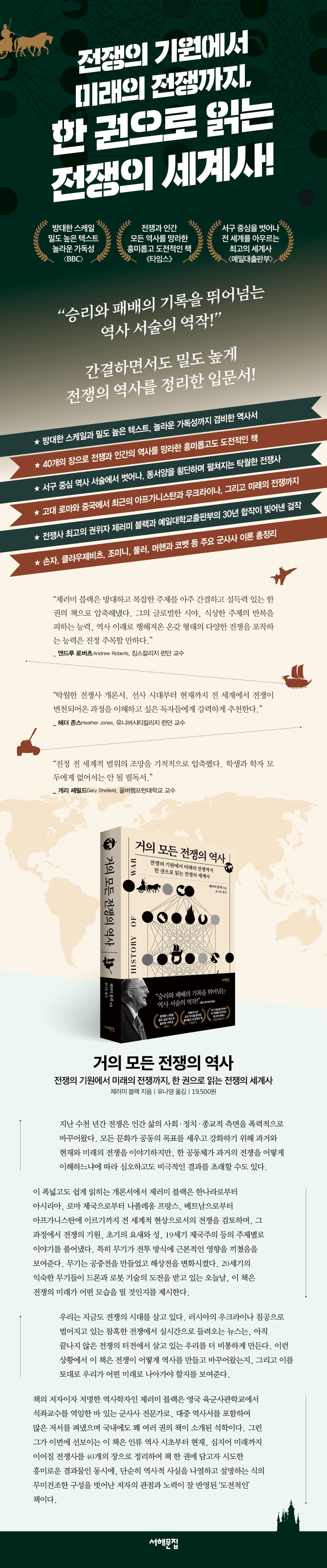
The result of 30 years of collaboration between Jeremy Black, the leading authority on military history, and Yale University Press!
A concise yet dense text, encompassing the history of war and humanity in 40 chapters!
The author of the book, Jeremy Black, a renowned historian, is a military history expert who served as a professor at the Royal Military Academy in the UK. He has published many books, including popular history books, and is a renowned scholar who has had quite a few of his books introduced in Korea.
This book, which he is presenting through Yale University Press this time, is an interesting result of his attempt to organize the history of war from the beginning of human history to the present and even the future into 40 chapters and include them in one book. At the same time, it is a 'challenging' book that excellently reflects his own perspective and efforts, breaking away from the dry structure of simply listing and explaining historical facts.
“As in the past, to gain a clearer understanding of war and its future, we need to look far beyond the West.”
_ Page 366
An outstanding "world history of war" that transcends Western-centric perspectives and encompasses the entire world.
In particular, the most striking aspect of this book's content and perspective is that it devotes a chapter to wars in regions that are not often covered or only briefly touched upon in existing war history books, such as Africa, Latin America before the Spanish conquest, and Australia.
For example, when dealing with the history of wars in the Islamic world, this book focuses on the wars between the Ottoman and Persian powers, unlike previous books on wars written in the West that focused on the battles between the Ottoman and European powers.
The author is also critical of the assumption that there is a hierarchy of military capabilities among nations or civilizations.
A representative explanation is that the reason why innovations in fortress construction did not occur in China or the Ottoman Empire as much as in the West was not because their military capabilities were inferior, but because their environments were less exposed to external attacks and their strategic priorities were different.
“The focus on the Ottoman Empire’s military campaigns in Europe tends to ignore other fronts, particularly the war with the Safavids in 1578–1590, but this was in fact the main focus of the Ottoman Empire’s attention.
Persia, under constant pressure from the Ottomans, was forced to negotiate peace and cede to the Ottomans the territories it had conquered in Azerbaijan, the Caucasus, and western Iran.
As a result, the Ottoman Empire gained the largest territory in history.
The war with Persia resumed in the early 17th and early 18th centuries.”
_ Page 228
“The reason why the Ottomans did not re-examine their fortifications to the extent that the West did in terms of cost investment or innovation in style was not because the Ottomans failed to keep up with Western developments, but because the Ottomans were exposed to far fewer attacks during this period.
This also applies to China.
The Ottoman Empire focused on field forces and mobility, and was more concerned with expansion, so it paid less attention to defending fixed positions.
As is often the case, the core context for assessing competence was purposefulness, and this remains true today.”
_ Page 202
Criticism of the theories of major military theorists such as Sun Tzu, Clausewitz, and Jomini
This book clearly distinguishes between tactical, operational, and strategic dimensions in the history of war, cautioning against reducing the history of war to the history of weapons and combat techniques. It also focuses on strategic aspects such as the role of alliances and betrayals, the dynamics of international politics, and the administrative and logistical support capabilities of a nation.
In the process of imperial expansion, such as the Spanish conquest of Latin America and the British colonization of India, the assistance of some local people played as important a role as military capability.
The author's critique of the conventional military historiography's assessment of Napoleon and the German army during World War II is also based on this strategic perspective.
The Qing Dynasty was able to subdue the threat of nomadic empires and achieve its golden age thanks to its administrative power, which connected agricultural productivity from its fertile territory with logistical support from its borders.
It also emphasizes the need to consider the battles as a whole rather than focusing on a specific “decisive battle” that changed the course of the war.
Finally, it is refreshing to note that World War II, which we today perceive as the prototype of modern warfare, was in fact a highly unusual and unprecedented form of war, and that since the 1990s, internal conflicts have far outstripped regular warfare between nations in terms of casualties and troop levels, yet it does not fit within the framework of conventional military history narratives.
And the discussion of how governments of each country perceived and prepared for the possibility and danger of an impending war(s) during the interwar period between World Wars I and II is especially noteworthy in the current situation where we may be plunged into another world war.
“As the Inca Empire expanded, so too did the assistance of local people play a huge role when Spain conquered the Aztec Empire, Guatemala, and northern Yucatan.
In fact, this is a classic form of imperial expansion, found even in the Mughal Empire and the British colonization of India, and it somewhat hinders attempts to clearly contrast and juxtapose combat styles.”
_ Page 163
“There is mainly discussion about battles, and smaller conflicts or ‘small wars’ (or naval blockades) are not discussed much, despite their frequency and importance.
“Since World War II, these types of conflicts have become increasingly important, and in this context, a ‘decisive battle’-centric approach is less useful.”
_ Page 391
“A more robust understanding of war can only develop if sufficient attention is paid to internal conflicts within nations and to non-Western regions.”
_ Page 403
A concise yet dense text, encompassing the history of war and humanity in 40 chapters!
The author of the book, Jeremy Black, a renowned historian, is a military history expert who served as a professor at the Royal Military Academy in the UK. He has published many books, including popular history books, and is a renowned scholar who has had quite a few of his books introduced in Korea.
This book, which he is presenting through Yale University Press this time, is an interesting result of his attempt to organize the history of war from the beginning of human history to the present and even the future into 40 chapters and include them in one book. At the same time, it is a 'challenging' book that excellently reflects his own perspective and efforts, breaking away from the dry structure of simply listing and explaining historical facts.
“As in the past, to gain a clearer understanding of war and its future, we need to look far beyond the West.”
_ Page 366
An outstanding "world history of war" that transcends Western-centric perspectives and encompasses the entire world.
In particular, the most striking aspect of this book's content and perspective is that it devotes a chapter to wars in regions that are not often covered or only briefly touched upon in existing war history books, such as Africa, Latin America before the Spanish conquest, and Australia.
For example, when dealing with the history of wars in the Islamic world, this book focuses on the wars between the Ottoman and Persian powers, unlike previous books on wars written in the West that focused on the battles between the Ottoman and European powers.
The author is also critical of the assumption that there is a hierarchy of military capabilities among nations or civilizations.
A representative explanation is that the reason why innovations in fortress construction did not occur in China or the Ottoman Empire as much as in the West was not because their military capabilities were inferior, but because their environments were less exposed to external attacks and their strategic priorities were different.
“The focus on the Ottoman Empire’s military campaigns in Europe tends to ignore other fronts, particularly the war with the Safavids in 1578–1590, but this was in fact the main focus of the Ottoman Empire’s attention.
Persia, under constant pressure from the Ottomans, was forced to negotiate peace and cede to the Ottomans the territories it had conquered in Azerbaijan, the Caucasus, and western Iran.
As a result, the Ottoman Empire gained the largest territory in history.
The war with Persia resumed in the early 17th and early 18th centuries.”
_ Page 228
“The reason why the Ottomans did not re-examine their fortifications to the extent that the West did in terms of cost investment or innovation in style was not because the Ottomans failed to keep up with Western developments, but because the Ottomans were exposed to far fewer attacks during this period.
This also applies to China.
The Ottoman Empire focused on field forces and mobility, and was more concerned with expansion, so it paid less attention to defending fixed positions.
As is often the case, the core context for assessing competence was purposefulness, and this remains true today.”
_ Page 202
Criticism of the theories of major military theorists such as Sun Tzu, Clausewitz, and Jomini
This book clearly distinguishes between tactical, operational, and strategic dimensions in the history of war, cautioning against reducing the history of war to the history of weapons and combat techniques. It also focuses on strategic aspects such as the role of alliances and betrayals, the dynamics of international politics, and the administrative and logistical support capabilities of a nation.
In the process of imperial expansion, such as the Spanish conquest of Latin America and the British colonization of India, the assistance of some local people played as important a role as military capability.
The author's critique of the conventional military historiography's assessment of Napoleon and the German army during World War II is also based on this strategic perspective.
The Qing Dynasty was able to subdue the threat of nomadic empires and achieve its golden age thanks to its administrative power, which connected agricultural productivity from its fertile territory with logistical support from its borders.
It also emphasizes the need to consider the battles as a whole rather than focusing on a specific “decisive battle” that changed the course of the war.
Finally, it is refreshing to note that World War II, which we today perceive as the prototype of modern warfare, was in fact a highly unusual and unprecedented form of war, and that since the 1990s, internal conflicts have far outstripped regular warfare between nations in terms of casualties and troop levels, yet it does not fit within the framework of conventional military history narratives.
And the discussion of how governments of each country perceived and prepared for the possibility and danger of an impending war(s) during the interwar period between World Wars I and II is especially noteworthy in the current situation where we may be plunged into another world war.
“As the Inca Empire expanded, so too did the assistance of local people play a huge role when Spain conquered the Aztec Empire, Guatemala, and northern Yucatan.
In fact, this is a classic form of imperial expansion, found even in the Mughal Empire and the British colonization of India, and it somewhat hinders attempts to clearly contrast and juxtapose combat styles.”
_ Page 163
“There is mainly discussion about battles, and smaller conflicts or ‘small wars’ (or naval blockades) are not discussed much, despite their frequency and importance.
“Since World War II, these types of conflicts have become increasingly important, and in this context, a ‘decisive battle’-centric approach is less useful.”
_ Page 391
“A more robust understanding of war can only develop if sufficient attention is paid to internal conflicts within nations and to non-Western regions.”
_ Page 403
GOODS SPECIFICS
- Publication date: May 25, 2022
- Page count, weight, size: 416 pages | 570g | 140*220*30mm
- ISBN13: 9791192085265
- ISBN10: 1192085264
You may also like
카테고리
korean


korean

![ELLE 엘르 스페셜 에디션 A형 : 12월 [2025]](http://librairie.coreenne.fr/cdn/shop/files/b8e27a3de6c9538896439686c6b0e8fb.jpg?v=1766436872&width=3840)


