

Jewish stories
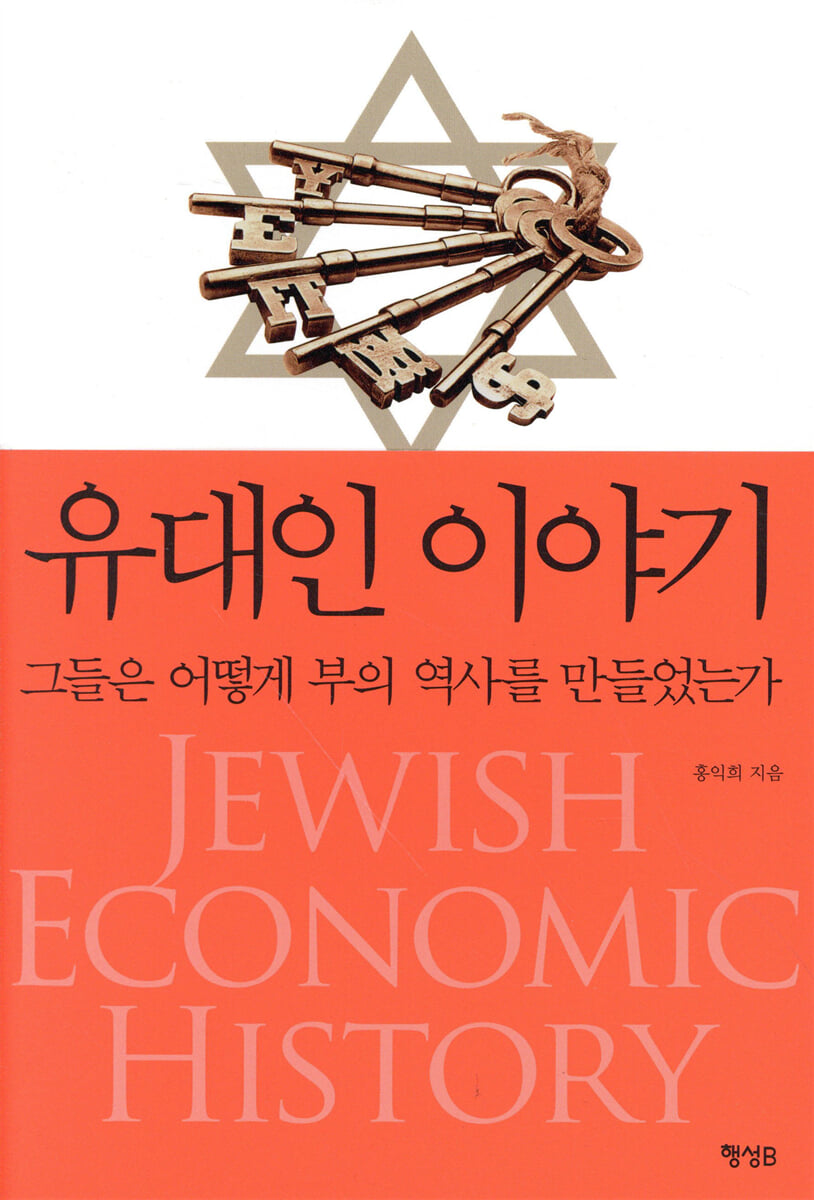 |
Description
Book Introduction
The secret power of the Jews that influences the world economy
Revealed in the flow of history
Israel's economic performance is dazzling.
Even amidst the global economic crisis, it is showing indicators such as the lowest unemployment rate, a booming real estate market, and the world's highest ratio of R&D investment to GDP.
How did the wealth of the Jewish people, who control the economic powerhouse of the United States, come about in a country not rich in resources and gripped by the constant fear of war with Islamic states? Having worked at KORTA for 22 years and experienced diverse economic environments around the world, the author offers a panoramic view of how the Jewish people, who have shaped economic history, achieved their current success.
This book is a documentary written in an easy and concise style.
Rather than a brief description of a phenomenon or event, it examines world history horizontally, starting from the Sumerian civilization where Abraham, the ancestor of the Jews, lived, through ancient, medieval, and modern times to the present day, and then vertically weaves together the development of science and technology within that larger flow to provide a three-dimensional understanding of economic history.
Additionally, the book separately selects the history of topics that would be of interest to general readers, such as 'salt' and 'diamonds', which shook the world economy, and explains the role played by Jews and the significance of these in economic history, connecting them to the chronological flow.
This historical fact-focused narrative might at first raise the question of whether this book is simply a history book. However, through a narrative style that is easily accessible to the general reader, it provides deep and broad insights that allow us to see at a glance the characteristics of the Jews and the flow of world economic history that we previously did not know much about.
While existing economics books have presented narrow narratives limited to the United States, Europe, China, and Japan, this book seeks to understand the present and foundation of the global economy through the history of Jews and Jews, and presents solutions and problems for how we can overcome the economic crisis and find economic power in the 21st century.
Revealed in the flow of history
Israel's economic performance is dazzling.
Even amidst the global economic crisis, it is showing indicators such as the lowest unemployment rate, a booming real estate market, and the world's highest ratio of R&D investment to GDP.
How did the wealth of the Jewish people, who control the economic powerhouse of the United States, come about in a country not rich in resources and gripped by the constant fear of war with Islamic states? Having worked at KORTA for 22 years and experienced diverse economic environments around the world, the author offers a panoramic view of how the Jewish people, who have shaped economic history, achieved their current success.
This book is a documentary written in an easy and concise style.
Rather than a brief description of a phenomenon or event, it examines world history horizontally, starting from the Sumerian civilization where Abraham, the ancestor of the Jews, lived, through ancient, medieval, and modern times to the present day, and then vertically weaves together the development of science and technology within that larger flow to provide a three-dimensional understanding of economic history.
Additionally, the book separately selects the history of topics that would be of interest to general readers, such as 'salt' and 'diamonds', which shook the world economy, and explains the role played by Jews and the significance of these in economic history, connecting them to the chronological flow.
This historical fact-focused narrative might at first raise the question of whether this book is simply a history book. However, through a narrative style that is easily accessible to the general reader, it provides deep and broad insights that allow us to see at a glance the characteristics of the Jews and the flow of world economic history that we previously did not know much about.
While existing economics books have presented narrow narratives limited to the United States, Europe, China, and Japan, this book seeks to understand the present and foundation of the global economy through the history of Jews and Jews, and presents solutions and problems for how we can overcome the economic crisis and find economic power in the 21st century.
- You can preview some of the book's contents.
Preview
index
Part 1 | The Jews Who Overcame a History of Suffering and Tribulation
1.
Eternal Covenant
Jewish history aligns with the Bible.
Jewish history is intertwined with world economic history.
Legacies of the Sumerian civilization
Abraham, the chosen one, from Ur to Canaan
2.
A History of Suffering, Exodus
The Jews who migrated to Egypt, the beginning of the 12 tribes
Egyptian Jews become construction slaves
Exodus, the Escape from Egypt
3.
The commercial struggle between Phoenicia, Israel, and Greece
Phoenicia, the Canaanites who led maritime trade
Israel is building a democracy faster than Greece.
David's era: developing the technology to build a wealthy nation and a strong military.
Solomon's reign, Israel's greatest golden age
After Solomon, the kingdom split in two.
Greece, a latecomer to maritime trade
Athenian silver becomes a reserve currency
Solon's reforms, democracy, and land ownership
4.
The Beginning of the Jewish Exile: The Babylonian Exile
The fall of the Kingdom of Judah and the first and second Babylonian exiles
The Rebirth of Judaism: Transformation into a Mobile Religion
The Fall of Babylon and the Return of the Jews
Ezra's Reforms: Setting Judaism Straight
5.
Jews of the Hellenistic period in Greece
The Persian Wars brought Jews under Greek rule.
The Rise and Fall of the Hasmonean Dynasty
6.
The Rise of Rome and the Jews
Caesar, who was tolerant of Jews in the early Roman Empire
Jewish communities abroad and Jewish life in Palestine
Jesus Breaks Down the Wall Between Jews and Gentiles
The Economic History of Salt
7.
The First and Second Jewish-Roman Wars and the Beginning of Two Thousand Years of Wandering
The Beginning of the Jewish Revolt and the First Jewish-Roman War
Jewish life after the First Roman-Jewish War
Jewish resistance that never gave in
8.
The Late Roman Period and the Jews after the Second Divorce
The persecution of the Jews begins
The Fall of the Roman Empire from an Economic Historical Perspective
Talmud
9.
Films of the Iberian Peninsula and the Jews of Islam
Powers that advanced into the Iberian Peninsula
Jews who helped the Islamic kingdom's glory
Jewish life in the medieval Iberian Peninsula
The Rise of Islamic Fundamentalism and the Jewish Passion
10.
Medieval Europe: Jewish Trade and Finance in the East
The Origins of Jewish Moneylending, Born from the Christian Ban on Moneylending
The formation of medieval cities and the emergence of merchant power
Why Jews Dominated Commerce
The European economy and Jewish finance revived by Eastern trade
Jews who contributed to the birth of the Renaissance
The Crusades and the Massacre of the Jews in the Middle Ages
Part 2 | The Jewish World: A Leading Figure in Economic History
1.
The Glory and Fall of the Spanish Empire
Queen Isabella unifies Spain
The Black Death and the Holocaust
Imperialist expansionism destroys the Spanish Empire
2.
Two Sides of the Same Coin: Mercantilism and the Jews
Jews focused on transit trade during the Bruges period
Antwerp becomes a center of diamond distribution during the Antwerp era.
The Amsterdam Era, the Reformation, and the Jewish Golden Age
The Netherlands conquers the world
Jews who laid the foundation for modern capitalism
The establishment of the West India Company and the diversification of financial techniques
The Thirty Years' War: Changing the Status of the Jews
The Jewish-led jewelry industry
3.
Jews Cooking the Orient
The Spice Wars and the East India Route
Asian trade: Making money through currency arbitrage rather than commodity trading
Why gold and silver intermediary trade was possible between China and Japan
Europe's fascination with Oriental magnetism
4.
Jews Lay the Foundation for the Industrial Revolution
How a pirate nation became the world's strongest
Cromwell's England Welcomes the Jews
The birth of a privately owned central bank
Jews Changing the World Through Customer Satisfaction Management
British capitalism fostered by the sugar and slave trade
The birth of the Jewish cotton textile industry
5.
The eternal financial emperor, Rothschild
The dawn of full-fledged international Jewish capital
The driving force of the Industrial Revolution, Rothschild's capital
The dazzling performance of the Rothschild descendants
6.
Morgan and Rockefeller, the two pillars of American industrial history
The birth of American industry and capitalism
JP Morgan Focuses on Quick Information
The emergence of Rockefeller, who dominated the global oil market
Marcus Samuel, who designed the world's first oil tanker
America Overcame the Great Depression, Giving Birth to Conglomerates
Establishment of the Bank for International Settlements
7.
Today's Jews Who Move America
Citigroup, America's first financial department store
JPMorgan Chase, Wall Street's leading financial group
Goldman Sachs, a symbol of Jewish capital
The Global Financial Industry's Transformation: The Rise of Hedge Funds
George Soros, the living legend of speculation
John Paulson, who hit the jackpot by detecting the financial crisis
Jews in the Washington administration
The dollar crisis and the currency war
1.
Eternal Covenant
Jewish history aligns with the Bible.
Jewish history is intertwined with world economic history.
Legacies of the Sumerian civilization
Abraham, the chosen one, from Ur to Canaan
2.
A History of Suffering, Exodus
The Jews who migrated to Egypt, the beginning of the 12 tribes
Egyptian Jews become construction slaves
Exodus, the Escape from Egypt
3.
The commercial struggle between Phoenicia, Israel, and Greece
Phoenicia, the Canaanites who led maritime trade
Israel is building a democracy faster than Greece.
David's era: developing the technology to build a wealthy nation and a strong military.
Solomon's reign, Israel's greatest golden age
After Solomon, the kingdom split in two.
Greece, a latecomer to maritime trade
Athenian silver becomes a reserve currency
Solon's reforms, democracy, and land ownership
4.
The Beginning of the Jewish Exile: The Babylonian Exile
The fall of the Kingdom of Judah and the first and second Babylonian exiles
The Rebirth of Judaism: Transformation into a Mobile Religion
The Fall of Babylon and the Return of the Jews
Ezra's Reforms: Setting Judaism Straight
5.
Jews of the Hellenistic period in Greece
The Persian Wars brought Jews under Greek rule.
The Rise and Fall of the Hasmonean Dynasty
6.
The Rise of Rome and the Jews
Caesar, who was tolerant of Jews in the early Roman Empire
Jewish communities abroad and Jewish life in Palestine
Jesus Breaks Down the Wall Between Jews and Gentiles
The Economic History of Salt
7.
The First and Second Jewish-Roman Wars and the Beginning of Two Thousand Years of Wandering
The Beginning of the Jewish Revolt and the First Jewish-Roman War
Jewish life after the First Roman-Jewish War
Jewish resistance that never gave in
8.
The Late Roman Period and the Jews after the Second Divorce
The persecution of the Jews begins
The Fall of the Roman Empire from an Economic Historical Perspective
Talmud
9.
Films of the Iberian Peninsula and the Jews of Islam
Powers that advanced into the Iberian Peninsula
Jews who helped the Islamic kingdom's glory
Jewish life in the medieval Iberian Peninsula
The Rise of Islamic Fundamentalism and the Jewish Passion
10.
Medieval Europe: Jewish Trade and Finance in the East
The Origins of Jewish Moneylending, Born from the Christian Ban on Moneylending
The formation of medieval cities and the emergence of merchant power
Why Jews Dominated Commerce
The European economy and Jewish finance revived by Eastern trade
Jews who contributed to the birth of the Renaissance
The Crusades and the Massacre of the Jews in the Middle Ages
Part 2 | The Jewish World: A Leading Figure in Economic History
1.
The Glory and Fall of the Spanish Empire
Queen Isabella unifies Spain
The Black Death and the Holocaust
Imperialist expansionism destroys the Spanish Empire
2.
Two Sides of the Same Coin: Mercantilism and the Jews
Jews focused on transit trade during the Bruges period
Antwerp becomes a center of diamond distribution during the Antwerp era.
The Amsterdam Era, the Reformation, and the Jewish Golden Age
The Netherlands conquers the world
Jews who laid the foundation for modern capitalism
The establishment of the West India Company and the diversification of financial techniques
The Thirty Years' War: Changing the Status of the Jews
The Jewish-led jewelry industry
3.
Jews Cooking the Orient
The Spice Wars and the East India Route
Asian trade: Making money through currency arbitrage rather than commodity trading
Why gold and silver intermediary trade was possible between China and Japan
Europe's fascination with Oriental magnetism
4.
Jews Lay the Foundation for the Industrial Revolution
How a pirate nation became the world's strongest
Cromwell's England Welcomes the Jews
The birth of a privately owned central bank
Jews Changing the World Through Customer Satisfaction Management
British capitalism fostered by the sugar and slave trade
The birth of the Jewish cotton textile industry
5.
The eternal financial emperor, Rothschild
The dawn of full-fledged international Jewish capital
The driving force of the Industrial Revolution, Rothschild's capital
The dazzling performance of the Rothschild descendants
6.
Morgan and Rockefeller, the two pillars of American industrial history
The birth of American industry and capitalism
JP Morgan Focuses on Quick Information
The emergence of Rockefeller, who dominated the global oil market
Marcus Samuel, who designed the world's first oil tanker
America Overcame the Great Depression, Giving Birth to Conglomerates
Establishment of the Bank for International Settlements
7.
Today's Jews Who Move America
Citigroup, America's first financial department store
JPMorgan Chase, Wall Street's leading financial group
Goldman Sachs, a symbol of Jewish capital
The Global Financial Industry's Transformation: The Rise of Hedge Funds
George Soros, the living legend of speculation
John Paulson, who hit the jackpot by detecting the financial crisis
Jews in the Washington administration
The dollar crisis and the currency war
Into the book
The strength of the Jewish people stems entirely from Judaism.
The characteristic of Judaism is that it is a religion of covenant.
For them, a contract is an obligation that must be kept at the risk of their lives.
This is why they value not only contracts with God but also commercial contracts.
They were able to shape world economic history through exchanges based on commercial and financial contracts between distant Jewish communities.
Judaism also values learning.
To understand God's providence, we must learn at least one more thing.
Therefore, Judaism considers learning to be a religious life, just like prayer.
This is another reason why the Jews were able to demonstrate their power in world history, differentiating them from other peoples.
Furthermore, Judaism teaches through the Torah that all Jews are brothers.
The Law commands unity and cooperation among Jews in brotherly love.
A strong community spirit, rooted in the power of faith, is what enabled them to endure through a history of suffering.
---From "Jewish History Corresponds to the Bible"
The four thousand years of Jewish history can be summed up in one word: a history of wandering.
The 400 years of slavery in Egypt, the 40 years spent in the wilderness after escaping from Egypt, the period of captivity when the nation was taken from Assyria and Babylon, and the 2,000 years of being scattered around the world by the Roman Empire were all a history of wandering and persecution.
This journey of trial and wandering was a difficult and arduous journey for them at the time, but in economic history, it was also a 'path of grace' that created the wealth and influence of the Jews today.
---From "Abraham the Chosen, From Ur to Canaan"
Exodus is a Greek word meaning escape.
In Jewish history, the Exodus, the great escape of the Jews from Egypt led by Moses, is the most important focal point of Jewish faith.
This event also holds an important place in Israeli history and culture.
Through this, Israel finally establishes its identity.
---From "Exodus, Escape from Egypt"
Even today, historians are accustomed to writing history centered on states and monarchs.
However, the Phoenicians, Israelites, and Greeks valued individual life, not the state or monarchy.
They believed that all humans were equal, except slaves and foreigners.
He believed that the accumulation of wealth was necessary for humans to achieve freedom.
Moreover, they believed that poverty was a kind of threat, and that rather, developing and accumulating material wealth was the way to secure a free life and get closer to God.
In a word, the Phoenicians, the Israelites, and the Greeks were people who believed that the future of humanity should and could be better than the present through human free will.
History was able to progress thanks to them.
Thus, the Phoenicians, Israelites, and Greeks revered freedom and considered the accumulation of wealth a blessing from God.
This idea became the basis of Greek and Hebrew thought that formed capitalism.
Economic history has largely overlooked their enterprising overseas market exploration and commercial activities, confining them to the time frame of antiquity.
However, it is only by reexamining them as the starting point of capitalism that we can truly call it economic history.
---From "The Commercial Struggle Between Phoenicia, Israel, and Greece"
Solon attempted to cancel debts by imitating the Jewish Jubilee.
The Jubilee is a Jewish institution that occurs every 50 years, during which all debts are forgiven, land is returned to its original owners, and all slaves are freed.
Leviticus 25:8-55 of the Old Testament provides detailed explanations of the 'Jubilee calculation method', 'the proclamation of the Day of Atonement', 'the regulations regarding the fallow period', and 'the liberation of slaves'.
It is said that the Jubilee signifies the restoration of the equal community that was the ideal of the Israelites.
They hoped to build an equal kingdom of God once again through the Jubilee Law.
So, during the Jubilee, debts were forgiven, slaves were set free, and prisoners were pardoned.
Furthermore, he gave a time of rest to livestock and land.
---From "Solon's Reforms, Democracy and Land Private Property"
Throughout history, Christians have been largely illiterate for a long time.
Only the priests knew how to write.
So, in Christianity, iconography was developed to help illiterate believers understand the contents of the Bible at a glance.
On the other hand, Judaism transformed into a moving religion through a history of suffering and tribulation, and because of the responsibility to keep the religion, everyone was required to read the Bible after the bar mitzvah at the age of thirteen.
This is precisely why Jews were able to dominate commerce in the Middle Ages.
One of the most important daily tasks of a medieval Jewish merchant was writing.
They were required to write at least three or four letters a week and, in addition, to keep detailed ledgers of their business activities.
When receiving and shipping goods, relevant supporting documents had to be enclosed, and a list of goods sold in the market had to be prepared, the prices had to be checked regularly, and these had to be sent to business associates or rabbis.
---From "The Rebirth of Judaism, Its Transformation into a Moving Religion"
In Jewish society, the welfare system for poor fellow countrymen was strengthened.
Since the Temple period, Jewish communities have had free lodgings.
In addition, every synagogue had a collection box called a 'kuppah'.
This fundraiser is the focal point of the Jewish welfare community.
The synagogue had a charity worker who would go around the market and ordinary households every Friday morning to collect money and supplies, and distribute the collected items on the same day.
Those in need of temporary relief received enough to survive, while those in need of permanent relief received two meals a day, fourteen meals a week.
This relief fund was called 'Kupa' or 'Gwangjuri Fund', and in this way, poor Jews in the Jewish community had the 'right' to receive relief.
---From "The Fall of Babylon and the Return of the Jews"
Anti-Semitism can be classified into three categories: theological (anti-Judaism), racial (anti-Semitism), and political (anti-Zionism) anti-Semitism.
Everyone is working towards the common goal of exterminating the Jews.
In fact, this movement began with the emergence of the Jewish people.
Most rulers of areas where Jews lived pursued anti-Jewish policies.
The Egyptian Pharaoh Ramses II tried to exterminate the ancient Jews who lived within his kingdom when they became a nation.
It was because they had become so numerous that they felt they were a threat to him.
Also, Haman, the minister of King Xerxes of Persia, made every effort to eradicate all Jews as the influence of Persian Jews grew.
---From "The Beginning of the Jewish Riots, the First Jewish-Roman War"
Jewish commercial and trading activities led to the development of consumer industries.
The development of the silk, leather, and ceramic industries, as well as the gold, silver, and glass industries, brought in merchants from outside, along with talented technicians and scientists.
At that time, the Iberian Peninsula was far superior to any other region in Europe in terms of commerce, culture, and science.
Afterwards, the Islamic kingdoms of the Iberian Peninsula not only enjoyed cultural prosperity but also accumulated enormous wealth by dominating Mediterranean trade.
The world's wealth, including gold from Africa, spices from Asia, and wheat from Europe, flocked here.
---“Jewish Life in the Medieval Iberian Peninsula”
If you look at the history of money, new types of currency or economic systems have always been objects of fear.
The appearance of the first gold and silver coins, the first paper money, and the introduction of the first bill of exchange were long regarded with suspicion by the people until they became established.
There was concern that the emergence of a new monetary system might become the seed of bankruptcy.
All these doubts, worries, and anxieties are distrust.
The people who could allay this distrust were the Jews.
They valued their contracts as much as their lives.
The bill of exchange system was able to emerge because the Jews scattered throughout the world had a strong sense of homogeneity as a people and a high level of trust in contracts.
New inventions and advanced methods in finance and accounting have always come from Jews --- from "Jewish Life in the Medieval Iberian Peninsula"
Successful Jewish merchants often form groups to raise funds and provide business information and ideas to help other Jews.
In their society, there has long been an 'interest-free loan system' to help poor compatriots who want to do business.
For anyone looking to start a business or trying to get back on track after a failure, financing is a critical need.
In that respect, it is quite noteworthy that a system of lending business funds without interest existed historically in Jewish society.
This tradition continues to this day, and the success of the Jewish people was possible because of this institutional support.
A representative example is the 'Hebrew Interest-Free Loan Society' that existed in Europe since the 18th century.
This tradition continued even after Jews immigrated to America.
Even today, successful Jews take it for granted that they should donate.
There are over 200 fundraising groups and other community organizations in the United States alone.
---From "Why Jews Dominated Commerce"
In the European market, credit transactions were possible among Jews who valued credit and contracts more than anything else.
It was common to take goods on credit and pay for them at the next market opening or at a market in another country.
At this time, merchants who took goods on credit wrote these details on a piece of paper and gave it as a voucher.
This certificate later developed into a form of forced loan certificate and was used as a substitute for money among Jewish merchants.
During this process, Jewish bankers invented the bill of exchange, which was a document in which one party promised to pay another party a certain amount of money within a certain period of time.
A bill of exchange was different from a letter of credit or a promissory note.
A letter of credit is written in the name of the depositor, and while a promissory note is a promise by the issuer to pay, a bill of exchange is a bill of exchange in which payment is guaranteed by a third party (payer), such as a foreign bank, and is mainly used in international trade transactions.
The circulation of bills of exchange eliminated the need to carry large amounts of cash for overseas trade, making it relatively safe and convenient.
---"The European Economy Revitalized by Eastern Trade and Jewish Finance"
Among the Jewish gem trades, diamonds were the most profitable.
Then, Jewish jewelers collaborated with the Jewish community in India to import rough diamonds directly, process them, and sell them.
From the 3rd century BC for two thousand years, India was the world's only diamond producer.
After Vincent Peruzzi, a Venetian Jew, developed the unique 'brilliant cut' cutting method for diamonds in the late 17th century, diamonds truly became the most precious gem.
(…) As the Antwerp Jews' supply of jewels grew, they began to export the processed goods in collaboration with Jewish communities abroad.
As a result, the diamond industry became a monopoly industry among the Jewish community, with Jews controlling the entire 'import-processing-export-distribution' process.
Because it was a monopoly, it was expensive to call.
The Jews had a firm grip on this market.
---From "The Antwerp Era: Becoming the Center of Diamond Distribution"
Meanwhile, the Dutch government felt the need to protect its people's commercial competitiveness as the Jewish population grew rapidly.
Accordingly, in 1632, a law was passed prohibiting Jews from joining guilds.
At that time, the guild was an organization for monopolizing the relevant industry.
Working hours, types of work, and quality of goods were regulated in detail, and those who did not belong to the guild were not allowed to make or sell goods.
Jews were only permitted to engage in foreign trade and finance, pharmacists, doctors, and the publication of Hebrews, which were less likely to conflict with or compete with their own citizens.
As a result, Jews flocked to the textile and diamond industries, where there were no unions.
The ban on guild membership was a particular blow to Ashkenazi Jews, as Sephardic Jews had already grown large and operated outside the guilds as wholesalers.
However, these restrictions by the Dutch government actually proved to be a tonic for the Jews.
As the scale of industry and trade grew, Jews, excluded from commerce, focused their efforts on the financial industry that supported the real economy, and naturally, they led the financial and securities industries.
Afterwards, as the financial industry led the real economy, Jewish capital accumulation progressed rapidly.
---From "The Jews Who Built the Foundation of Modern Capitalism"
After the Puritan Revolution in England, Jews were like fish in water.
The reason is that the Puritan spirit had a Jewish character.
The Puritans inherited the spirit of the Old Testament and sought God in it.
This is one of the reasons why the Puritans were called the 'Jewish sect'.
There was a great deal in common between Puritans and Judaism.
The world's religions teach us to reject wealth and curb greed.
Catholicism teaches not to be greedy for money and wealth, Buddhism preaches 'non-possession', which means to give up all material desires and empty the mind, and Hinduism teaches that one should not possess anything at all.
Islam also demands the abandonment of material desires.
While most religions teach the abandonment of material desires, only two religions recognize wealth and emphasize the doctrine that it is okay to be rich.
These two religions are Judaism and Puritanism.
Calvin emphasized the 'clean rich', and Judaism also has in common the emphasis that the rich are blessed.
However, Judaism did not forget the warning that wealth can make people arrogant and forget God, and that greed for money leads people to injustice and corruption.
---From "Cromwell's England Welcomes the Jews"
In short, they constantly sought 'better, easier, cheaper, and faster' ways based on comprehensive information in the 18th-century economic system.
And in this process, ‘rationalism’ was pursued.
This was an early understanding of the principle that wealth in the world is created by helping others.
Since ancient times, Jews have been faithful to the 'entrepreneurial spirit' of identifying and satisfying customers' needs and desires faster than competitors.
Therefore, accumulating wealth means satisfying customers by providing much better value than competitors.
It was the so-called 'customer satisfaction management' discussed in modern management studies.
The Jewish commercial talent and customer-oriented management were also evident in their ability to neutralize the British craftsmen's guilds, which were bound by tradition and norms, in the late 17th century.
The characteristic of Judaism is that it is a religion of covenant.
For them, a contract is an obligation that must be kept at the risk of their lives.
This is why they value not only contracts with God but also commercial contracts.
They were able to shape world economic history through exchanges based on commercial and financial contracts between distant Jewish communities.
Judaism also values learning.
To understand God's providence, we must learn at least one more thing.
Therefore, Judaism considers learning to be a religious life, just like prayer.
This is another reason why the Jews were able to demonstrate their power in world history, differentiating them from other peoples.
Furthermore, Judaism teaches through the Torah that all Jews are brothers.
The Law commands unity and cooperation among Jews in brotherly love.
A strong community spirit, rooted in the power of faith, is what enabled them to endure through a history of suffering.
---From "Jewish History Corresponds to the Bible"
The four thousand years of Jewish history can be summed up in one word: a history of wandering.
The 400 years of slavery in Egypt, the 40 years spent in the wilderness after escaping from Egypt, the period of captivity when the nation was taken from Assyria and Babylon, and the 2,000 years of being scattered around the world by the Roman Empire were all a history of wandering and persecution.
This journey of trial and wandering was a difficult and arduous journey for them at the time, but in economic history, it was also a 'path of grace' that created the wealth and influence of the Jews today.
---From "Abraham the Chosen, From Ur to Canaan"
Exodus is a Greek word meaning escape.
In Jewish history, the Exodus, the great escape of the Jews from Egypt led by Moses, is the most important focal point of Jewish faith.
This event also holds an important place in Israeli history and culture.
Through this, Israel finally establishes its identity.
---From "Exodus, Escape from Egypt"
Even today, historians are accustomed to writing history centered on states and monarchs.
However, the Phoenicians, Israelites, and Greeks valued individual life, not the state or monarchy.
They believed that all humans were equal, except slaves and foreigners.
He believed that the accumulation of wealth was necessary for humans to achieve freedom.
Moreover, they believed that poverty was a kind of threat, and that rather, developing and accumulating material wealth was the way to secure a free life and get closer to God.
In a word, the Phoenicians, the Israelites, and the Greeks were people who believed that the future of humanity should and could be better than the present through human free will.
History was able to progress thanks to them.
Thus, the Phoenicians, Israelites, and Greeks revered freedom and considered the accumulation of wealth a blessing from God.
This idea became the basis of Greek and Hebrew thought that formed capitalism.
Economic history has largely overlooked their enterprising overseas market exploration and commercial activities, confining them to the time frame of antiquity.
However, it is only by reexamining them as the starting point of capitalism that we can truly call it economic history.
---From "The Commercial Struggle Between Phoenicia, Israel, and Greece"
Solon attempted to cancel debts by imitating the Jewish Jubilee.
The Jubilee is a Jewish institution that occurs every 50 years, during which all debts are forgiven, land is returned to its original owners, and all slaves are freed.
Leviticus 25:8-55 of the Old Testament provides detailed explanations of the 'Jubilee calculation method', 'the proclamation of the Day of Atonement', 'the regulations regarding the fallow period', and 'the liberation of slaves'.
It is said that the Jubilee signifies the restoration of the equal community that was the ideal of the Israelites.
They hoped to build an equal kingdom of God once again through the Jubilee Law.
So, during the Jubilee, debts were forgiven, slaves were set free, and prisoners were pardoned.
Furthermore, he gave a time of rest to livestock and land.
---From "Solon's Reforms, Democracy and Land Private Property"
Throughout history, Christians have been largely illiterate for a long time.
Only the priests knew how to write.
So, in Christianity, iconography was developed to help illiterate believers understand the contents of the Bible at a glance.
On the other hand, Judaism transformed into a moving religion through a history of suffering and tribulation, and because of the responsibility to keep the religion, everyone was required to read the Bible after the bar mitzvah at the age of thirteen.
This is precisely why Jews were able to dominate commerce in the Middle Ages.
One of the most important daily tasks of a medieval Jewish merchant was writing.
They were required to write at least three or four letters a week and, in addition, to keep detailed ledgers of their business activities.
When receiving and shipping goods, relevant supporting documents had to be enclosed, and a list of goods sold in the market had to be prepared, the prices had to be checked regularly, and these had to be sent to business associates or rabbis.
---From "The Rebirth of Judaism, Its Transformation into a Moving Religion"
In Jewish society, the welfare system for poor fellow countrymen was strengthened.
Since the Temple period, Jewish communities have had free lodgings.
In addition, every synagogue had a collection box called a 'kuppah'.
This fundraiser is the focal point of the Jewish welfare community.
The synagogue had a charity worker who would go around the market and ordinary households every Friday morning to collect money and supplies, and distribute the collected items on the same day.
Those in need of temporary relief received enough to survive, while those in need of permanent relief received two meals a day, fourteen meals a week.
This relief fund was called 'Kupa' or 'Gwangjuri Fund', and in this way, poor Jews in the Jewish community had the 'right' to receive relief.
---From "The Fall of Babylon and the Return of the Jews"
Anti-Semitism can be classified into three categories: theological (anti-Judaism), racial (anti-Semitism), and political (anti-Zionism) anti-Semitism.
Everyone is working towards the common goal of exterminating the Jews.
In fact, this movement began with the emergence of the Jewish people.
Most rulers of areas where Jews lived pursued anti-Jewish policies.
The Egyptian Pharaoh Ramses II tried to exterminate the ancient Jews who lived within his kingdom when they became a nation.
It was because they had become so numerous that they felt they were a threat to him.
Also, Haman, the minister of King Xerxes of Persia, made every effort to eradicate all Jews as the influence of Persian Jews grew.
---From "The Beginning of the Jewish Riots, the First Jewish-Roman War"
Jewish commercial and trading activities led to the development of consumer industries.
The development of the silk, leather, and ceramic industries, as well as the gold, silver, and glass industries, brought in merchants from outside, along with talented technicians and scientists.
At that time, the Iberian Peninsula was far superior to any other region in Europe in terms of commerce, culture, and science.
Afterwards, the Islamic kingdoms of the Iberian Peninsula not only enjoyed cultural prosperity but also accumulated enormous wealth by dominating Mediterranean trade.
The world's wealth, including gold from Africa, spices from Asia, and wheat from Europe, flocked here.
---“Jewish Life in the Medieval Iberian Peninsula”
If you look at the history of money, new types of currency or economic systems have always been objects of fear.
The appearance of the first gold and silver coins, the first paper money, and the introduction of the first bill of exchange were long regarded with suspicion by the people until they became established.
There was concern that the emergence of a new monetary system might become the seed of bankruptcy.
All these doubts, worries, and anxieties are distrust.
The people who could allay this distrust were the Jews.
They valued their contracts as much as their lives.
The bill of exchange system was able to emerge because the Jews scattered throughout the world had a strong sense of homogeneity as a people and a high level of trust in contracts.
New inventions and advanced methods in finance and accounting have always come from Jews --- from "Jewish Life in the Medieval Iberian Peninsula"
Successful Jewish merchants often form groups to raise funds and provide business information and ideas to help other Jews.
In their society, there has long been an 'interest-free loan system' to help poor compatriots who want to do business.
For anyone looking to start a business or trying to get back on track after a failure, financing is a critical need.
In that respect, it is quite noteworthy that a system of lending business funds without interest existed historically in Jewish society.
This tradition continues to this day, and the success of the Jewish people was possible because of this institutional support.
A representative example is the 'Hebrew Interest-Free Loan Society' that existed in Europe since the 18th century.
This tradition continued even after Jews immigrated to America.
Even today, successful Jews take it for granted that they should donate.
There are over 200 fundraising groups and other community organizations in the United States alone.
---From "Why Jews Dominated Commerce"
In the European market, credit transactions were possible among Jews who valued credit and contracts more than anything else.
It was common to take goods on credit and pay for them at the next market opening or at a market in another country.
At this time, merchants who took goods on credit wrote these details on a piece of paper and gave it as a voucher.
This certificate later developed into a form of forced loan certificate and was used as a substitute for money among Jewish merchants.
During this process, Jewish bankers invented the bill of exchange, which was a document in which one party promised to pay another party a certain amount of money within a certain period of time.
A bill of exchange was different from a letter of credit or a promissory note.
A letter of credit is written in the name of the depositor, and while a promissory note is a promise by the issuer to pay, a bill of exchange is a bill of exchange in which payment is guaranteed by a third party (payer), such as a foreign bank, and is mainly used in international trade transactions.
The circulation of bills of exchange eliminated the need to carry large amounts of cash for overseas trade, making it relatively safe and convenient.
---"The European Economy Revitalized by Eastern Trade and Jewish Finance"
Among the Jewish gem trades, diamonds were the most profitable.
Then, Jewish jewelers collaborated with the Jewish community in India to import rough diamonds directly, process them, and sell them.
From the 3rd century BC for two thousand years, India was the world's only diamond producer.
After Vincent Peruzzi, a Venetian Jew, developed the unique 'brilliant cut' cutting method for diamonds in the late 17th century, diamonds truly became the most precious gem.
(…) As the Antwerp Jews' supply of jewels grew, they began to export the processed goods in collaboration with Jewish communities abroad.
As a result, the diamond industry became a monopoly industry among the Jewish community, with Jews controlling the entire 'import-processing-export-distribution' process.
Because it was a monopoly, it was expensive to call.
The Jews had a firm grip on this market.
---From "The Antwerp Era: Becoming the Center of Diamond Distribution"
Meanwhile, the Dutch government felt the need to protect its people's commercial competitiveness as the Jewish population grew rapidly.
Accordingly, in 1632, a law was passed prohibiting Jews from joining guilds.
At that time, the guild was an organization for monopolizing the relevant industry.
Working hours, types of work, and quality of goods were regulated in detail, and those who did not belong to the guild were not allowed to make or sell goods.
Jews were only permitted to engage in foreign trade and finance, pharmacists, doctors, and the publication of Hebrews, which were less likely to conflict with or compete with their own citizens.
As a result, Jews flocked to the textile and diamond industries, where there were no unions.
The ban on guild membership was a particular blow to Ashkenazi Jews, as Sephardic Jews had already grown large and operated outside the guilds as wholesalers.
However, these restrictions by the Dutch government actually proved to be a tonic for the Jews.
As the scale of industry and trade grew, Jews, excluded from commerce, focused their efforts on the financial industry that supported the real economy, and naturally, they led the financial and securities industries.
Afterwards, as the financial industry led the real economy, Jewish capital accumulation progressed rapidly.
---From "The Jews Who Built the Foundation of Modern Capitalism"
After the Puritan Revolution in England, Jews were like fish in water.
The reason is that the Puritan spirit had a Jewish character.
The Puritans inherited the spirit of the Old Testament and sought God in it.
This is one of the reasons why the Puritans were called the 'Jewish sect'.
There was a great deal in common between Puritans and Judaism.
The world's religions teach us to reject wealth and curb greed.
Catholicism teaches not to be greedy for money and wealth, Buddhism preaches 'non-possession', which means to give up all material desires and empty the mind, and Hinduism teaches that one should not possess anything at all.
Islam also demands the abandonment of material desires.
While most religions teach the abandonment of material desires, only two religions recognize wealth and emphasize the doctrine that it is okay to be rich.
These two religions are Judaism and Puritanism.
Calvin emphasized the 'clean rich', and Judaism also has in common the emphasis that the rich are blessed.
However, Judaism did not forget the warning that wealth can make people arrogant and forget God, and that greed for money leads people to injustice and corruption.
---From "Cromwell's England Welcomes the Jews"
In short, they constantly sought 'better, easier, cheaper, and faster' ways based on comprehensive information in the 18th-century economic system.
And in this process, ‘rationalism’ was pursued.
This was an early understanding of the principle that wealth in the world is created by helping others.
Since ancient times, Jews have been faithful to the 'entrepreneurial spirit' of identifying and satisfying customers' needs and desires faster than competitors.
Therefore, accumulating wealth means satisfying customers by providing much better value than competitors.
It was the so-called 'customer satisfaction management' discussed in modern management studies.
The Jewish commercial talent and customer-oriented management were also evident in their ability to neutralize the British craftsmen's guilds, which were bound by tradition and norms, in the late 17th century.
---From "Jews, Changing the World with Customer Satisfaction Management"
Publisher's Review
Overcoming the history of glory and shame from the biblical times to the present day
Uncover the source of the Jewish power that created the power of wealth,
Now they ask us what!
The global financial crisis that began with the subprime mortgage crisis in the United States in 2007 is still a global concern as of 2013.
News of the economic recession originating in Europe reaches our homes, and the stock market falters every time.
On the other hand, Israel's economic performance is dazzling.
Unlike the global economy, which is struggling in a swamp, it shows indicators such as the lowest unemployment rate, a booming real estate market, and the world's highest ratio of R&D investment to GDP.
What could have happened in a country that is not rich in resources and is gripped by the daily fear of war with Islamic countries?
Where does the wealth and power of the Jewish community, which is widespread not only in their own country but also around the world, and especially the economy of the United States, a major economic powerhouse, come from?
The secret power of the Jews that influences the world economy
Revealed in the flow of history
Having worked at KORTA for 22 years and experienced diverse economic environments in trade sites from New York, Milan, Madrid, and São Paulo, the author has focused on the Jews who, in return for their suffering and hardship, have opened their eyes to 'wealth'.
Jews have always been at the center of the service industry, including the financial industry, and throughout history, it has been confirmed that most of the founders and key players in the distribution, finance, and service industries were Jews.
This is why the author believes that world economic history follows the same path as the Jewish people.
Until now, what we know about the Jews has been extremely fragmentary.
There was also little written about Jewish history or information about Jews from our perspective.
Many people talk about 'learning from the Jews', finding similarities with our people such as 'they have great national pride and a high level of enthusiasm for education despite the harsh environment', but the truth is that what we actually know about the Jews is extremely fragmented and superficial.
In that respect, the author attempted to approach the substantive history of the Jews from a different perspective than existing books on Jews.
This book is a documentary written in an easy and concise style.
Rather than a brief description of a phenomenon or event, it examines world history horizontally, starting from the Sumerian civilization where Abraham, the ancestor of the Jews, lived, through ancient, medieval, and modern times to the present day, and then vertically weaves together the development of science and technology within that larger flow to provide a three-dimensional understanding of economic history.
This is a panoramic view of how the Jews, who led the history of the economy, were able to achieve their current success.
In this process, they interestingly quote the Old Testament, the 'Jewish history book' they believe in, to understand the causal relationships in Jewish history and their consciousness structure.
Additionally, the book separately selects the history of topics that would be of interest to general readers, such as 'salt' and 'diamonds', which shook the world economy, and explains the role played by Jews and the significance of these in economic history, connecting them to the chronological flow.
This historical fact-focused narrative might at first raise the question of whether this book is simply a history book. However, through a narrative style that is easily accessible to the general reader, it provides deep and broad insights that allow us to see at a glance the characteristics of the Jews and the flow of world economic history that we previously did not know much about.
Jewish keywords created by 4,000 years of wandering
Speaking of 'faith,' 'learning and education,' 'freedom and openness,' and 'trust and credibility.'
Usually, a defeated nation mixes with people from other countries and becomes absorbed into their culture in the process, becoming part of that nation over time.
This is the general flow of history.
However, throughout the four thousand years of wandering since Abraham left Canaan, the Jewish people have constantly confronted history with their own unique faith and unique ideals.
And to this day, the 'history of wealth' has been written without rest.
As we go through history, we see that the dynasties and countries that persecuted and expelled the Jews went down the path of economic decline, while the regions to which Jews flocked in large numbers experienced economic revival.
So, where does the power that has enabled Jews to create a 'history of wealth' lie?
First, as you know, Jews are very religious.
Historically, the reason Jews were unable to mix with other ethnic groups and suffered all kinds of persecution and wandered was to protect their religion.
But Judaism, contrary to our imagination, is not a rigid and authoritarian religion.
Rather, their belief that everyone is equal except for God created a practical, communicative society where anyone can have a face-to-face discussion instead of a top-down order.
Second, Jewish scriptures, including the Talmud, present a positive view of wealth and teach about credit.
This contrasts with existing religions that teach negative views on economic values and activities.
A positive attitude toward economic activity has laid the foundation for developing new markets and industries.
This is the biggest reason why they were able to control the world's purse strings through the Dark Ages, the modern era, and even the persecution of the Nazi era.
Meanwhile, the most outstanding historical observation in this book is that the most brilliant period in the countries where Jews fled to escape persecution, such as Spain, the Netherlands, England, and the United States, was when Jews were able to freely engage in economic activities there.
Third, because we value learning and education, the community puts effort into fostering creative talent.
Another advantage of the Jews was that their culture of free discussion facilitated smooth communication between generations, and the close ties among the diaspora (Jewish communities) spread across the world allowed for rapid information gathering and utilization.
This is a tradition that dates back to the Old Testament era, and even today, most companies in the world's most advanced IT industry are founded by Jews.
The final factor cited in this book is the strong bond between communities.
Historically, it was a matter of national survival, but for religious reasons as well, they have always been considerate of their poor neighbors and the socially disadvantaged, and this has helped to strengthen the solidarity between communities and to strengthen the power of Jews around the world through astronomical donations.
While existing economics books have presented narrow narratives limited to the United States, Europe, China, and Japan, this book seeks to understand the present and foundation of the global economy through the history of Jews and Jews, and presents solutions and problems for how we can overcome the economic crisis and find economic power in the 21st century.
In this respect, this is a must-read book to prepare for the changes in the new global market.
Uncover the source of the Jewish power that created the power of wealth,
Now they ask us what!
The global financial crisis that began with the subprime mortgage crisis in the United States in 2007 is still a global concern as of 2013.
News of the economic recession originating in Europe reaches our homes, and the stock market falters every time.
On the other hand, Israel's economic performance is dazzling.
Unlike the global economy, which is struggling in a swamp, it shows indicators such as the lowest unemployment rate, a booming real estate market, and the world's highest ratio of R&D investment to GDP.
What could have happened in a country that is not rich in resources and is gripped by the daily fear of war with Islamic countries?
Where does the wealth and power of the Jewish community, which is widespread not only in their own country but also around the world, and especially the economy of the United States, a major economic powerhouse, come from?
The secret power of the Jews that influences the world economy
Revealed in the flow of history
Having worked at KORTA for 22 years and experienced diverse economic environments in trade sites from New York, Milan, Madrid, and São Paulo, the author has focused on the Jews who, in return for their suffering and hardship, have opened their eyes to 'wealth'.
Jews have always been at the center of the service industry, including the financial industry, and throughout history, it has been confirmed that most of the founders and key players in the distribution, finance, and service industries were Jews.
This is why the author believes that world economic history follows the same path as the Jewish people.
Until now, what we know about the Jews has been extremely fragmentary.
There was also little written about Jewish history or information about Jews from our perspective.
Many people talk about 'learning from the Jews', finding similarities with our people such as 'they have great national pride and a high level of enthusiasm for education despite the harsh environment', but the truth is that what we actually know about the Jews is extremely fragmented and superficial.
In that respect, the author attempted to approach the substantive history of the Jews from a different perspective than existing books on Jews.
This book is a documentary written in an easy and concise style.
Rather than a brief description of a phenomenon or event, it examines world history horizontally, starting from the Sumerian civilization where Abraham, the ancestor of the Jews, lived, through ancient, medieval, and modern times to the present day, and then vertically weaves together the development of science and technology within that larger flow to provide a three-dimensional understanding of economic history.
This is a panoramic view of how the Jews, who led the history of the economy, were able to achieve their current success.
In this process, they interestingly quote the Old Testament, the 'Jewish history book' they believe in, to understand the causal relationships in Jewish history and their consciousness structure.
Additionally, the book separately selects the history of topics that would be of interest to general readers, such as 'salt' and 'diamonds', which shook the world economy, and explains the role played by Jews and the significance of these in economic history, connecting them to the chronological flow.
This historical fact-focused narrative might at first raise the question of whether this book is simply a history book. However, through a narrative style that is easily accessible to the general reader, it provides deep and broad insights that allow us to see at a glance the characteristics of the Jews and the flow of world economic history that we previously did not know much about.
Jewish keywords created by 4,000 years of wandering
Speaking of 'faith,' 'learning and education,' 'freedom and openness,' and 'trust and credibility.'
Usually, a defeated nation mixes with people from other countries and becomes absorbed into their culture in the process, becoming part of that nation over time.
This is the general flow of history.
However, throughout the four thousand years of wandering since Abraham left Canaan, the Jewish people have constantly confronted history with their own unique faith and unique ideals.
And to this day, the 'history of wealth' has been written without rest.
As we go through history, we see that the dynasties and countries that persecuted and expelled the Jews went down the path of economic decline, while the regions to which Jews flocked in large numbers experienced economic revival.
So, where does the power that has enabled Jews to create a 'history of wealth' lie?
First, as you know, Jews are very religious.
Historically, the reason Jews were unable to mix with other ethnic groups and suffered all kinds of persecution and wandered was to protect their religion.
But Judaism, contrary to our imagination, is not a rigid and authoritarian religion.
Rather, their belief that everyone is equal except for God created a practical, communicative society where anyone can have a face-to-face discussion instead of a top-down order.
Second, Jewish scriptures, including the Talmud, present a positive view of wealth and teach about credit.
This contrasts with existing religions that teach negative views on economic values and activities.
A positive attitude toward economic activity has laid the foundation for developing new markets and industries.
This is the biggest reason why they were able to control the world's purse strings through the Dark Ages, the modern era, and even the persecution of the Nazi era.
Meanwhile, the most outstanding historical observation in this book is that the most brilliant period in the countries where Jews fled to escape persecution, such as Spain, the Netherlands, England, and the United States, was when Jews were able to freely engage in economic activities there.
Third, because we value learning and education, the community puts effort into fostering creative talent.
Another advantage of the Jews was that their culture of free discussion facilitated smooth communication between generations, and the close ties among the diaspora (Jewish communities) spread across the world allowed for rapid information gathering and utilization.
This is a tradition that dates back to the Old Testament era, and even today, most companies in the world's most advanced IT industry are founded by Jews.
The final factor cited in this book is the strong bond between communities.
Historically, it was a matter of national survival, but for religious reasons as well, they have always been considerate of their poor neighbors and the socially disadvantaged, and this has helped to strengthen the solidarity between communities and to strengthen the power of Jews around the world through astronomical donations.
While existing economics books have presented narrow narratives limited to the United States, Europe, China, and Japan, this book seeks to understand the present and foundation of the global economy through the history of Jews and Jews, and presents solutions and problems for how we can overcome the economic crisis and find economic power in the 21st century.
In this respect, this is a must-read book to prepare for the changes in the new global market.
GOODS SPECIFICS
- Date of issue: January 20, 2013
- Page count, weight, size: 664 pages | 990g | 152*225*35mm
- ISBN13: 9788997132287
- ISBN10: 8997132288
You may also like
카테고리
korean


korean

![GQ KOREA Mark (Monthly): December [2025]](http://librairie.coreenne.fr/cdn/shop/files/8ef265dbbfbf186523ed75ba7319009d.jpg?v=1765340328&width=3840)


