

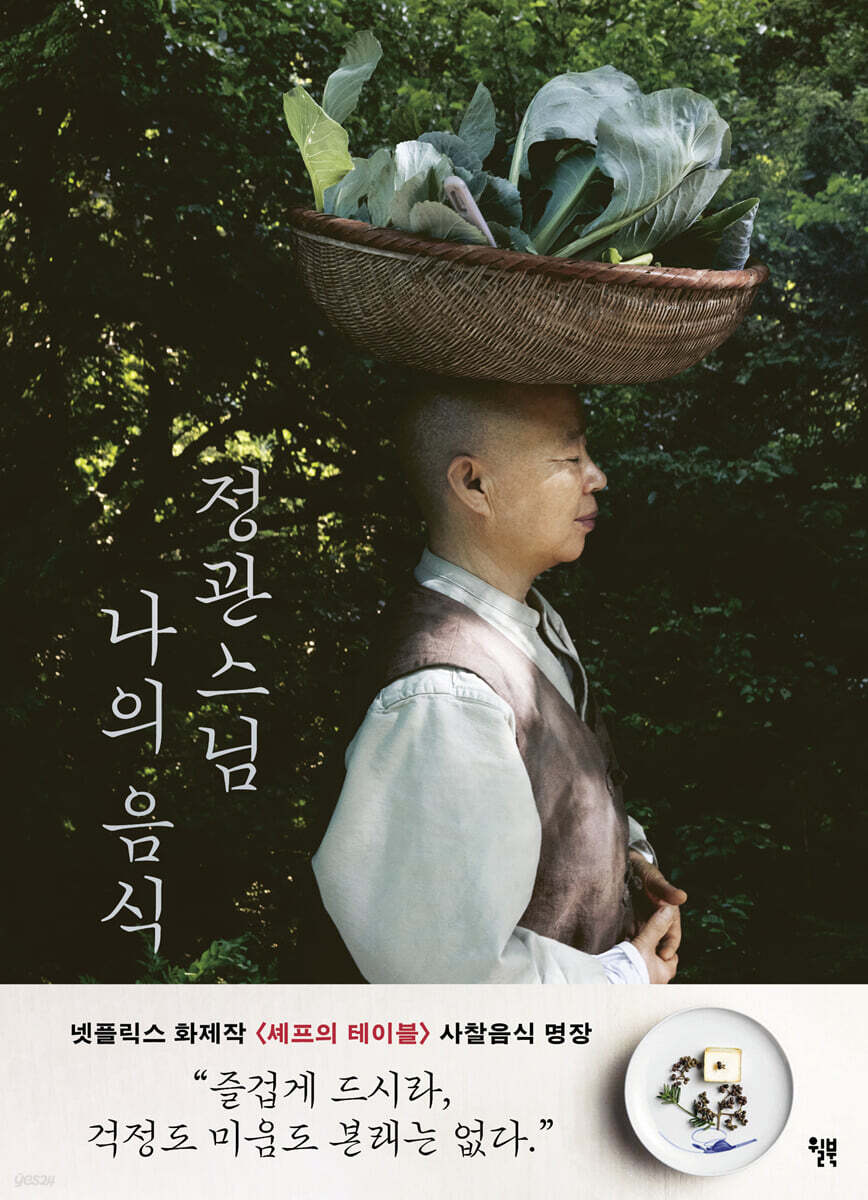
Monk Jeonggwan, my food
 |
Description
Book Introduction
- A word from MD
-
Master of temple cuisine, the chef of chefs, Monk JeonggwanThe first culinary essay by Monk Jeonggwan, a temple cuisine master who gained worldwide attention through Netflix's "Chef's Table."
It contains 58 recipes for each season, capturing the essence of Monk Jeonggwan's life and 50 years of temple food practice.
Monk Jeonggwan's special recipes, which teach us how to cultivate a refined life through food, provide quiet comfort in our busy daily lives.
March 28, 2025. Baek Jeong-min, PD of Home Life
“Eat happily, for there is no worry or hatred in the first place.”
The world's most famous temple food master
The star of the Netflix documentary "Chef's Table"
A special essay on the life of Monk Jeonggwan and his recipes for each of the four seasons.
The first essay by the world's most famous temple cuisine master, Monk Jeonggwan, is published.
It contains 58 recipes for all four seasons, carefully organized and filled with wisdom contained in a single bowl of food, along with beautiful photos.
Monk Jeonggwan talks about what and how to eat to become healthier and happier, as if having a lively conversation.
A quiet joy, like drinking a cup of fragrant tea, permeates every bookcase.
Since becoming a monk at the age of seventeen, Monk Jeonggwan has dedicated himself to creating and promoting temple food that purifies the body and mind for over 50 years.
Appearing on Netflix's hit series, Chef's Table, has become an opportunity to introduce Monk Jeonggwan and his food not only in Korea but also around the world.
The New York Times introduced Monk Jeonggwan as a “philosopher chef” and praised him, saying, “If you want to taste the world’s most rare foods, you should go to Cheonjinam, where the monk lives.”
Now, hundreds of visitors and Michelin-starred chefs from around the world come to Cheonjinam every year to taste and learn from the monks' cuisine.
This book is even more special because it is the first to reveal the recipes that Monk Jeonggwan painstakingly wrote one by one.
From the monk's signature dish, 'Simmered Shiitake Mushrooms in Soy Sauce', to summer tomato pickles, autumn burdock seasoned with red pepper paste, and even the various seasonings and pickling methods that the monk considers the secret to his cooking.
Experience the joy of nature with your whole body, learn about the most nutritious vegetables of each season, and discover how to bring out the unique flavors and tastes of ingredients while infusing your food with healthy energy.
Temple food is food of wisdom that helps anyone on the path of life to live a better life.
Monk Jeonggwan says that cooking is also a form of practice.
Focusing on the moment, putting your heart and soul into each ingredient, and not just adding more, but taking away.
As the monk said, “Food prepared this way brings great strength to life.” Perhaps what the monk teaches us is not a recipe, but how to take good care of our own lives.
The world's most famous temple food master
The star of the Netflix documentary "Chef's Table"
A special essay on the life of Monk Jeonggwan and his recipes for each of the four seasons.
The first essay by the world's most famous temple cuisine master, Monk Jeonggwan, is published.
It contains 58 recipes for all four seasons, carefully organized and filled with wisdom contained in a single bowl of food, along with beautiful photos.
Monk Jeonggwan talks about what and how to eat to become healthier and happier, as if having a lively conversation.
A quiet joy, like drinking a cup of fragrant tea, permeates every bookcase.
Since becoming a monk at the age of seventeen, Monk Jeonggwan has dedicated himself to creating and promoting temple food that purifies the body and mind for over 50 years.
Appearing on Netflix's hit series, Chef's Table, has become an opportunity to introduce Monk Jeonggwan and his food not only in Korea but also around the world.
The New York Times introduced Monk Jeonggwan as a “philosopher chef” and praised him, saying, “If you want to taste the world’s most rare foods, you should go to Cheonjinam, where the monk lives.”
Now, hundreds of visitors and Michelin-starred chefs from around the world come to Cheonjinam every year to taste and learn from the monks' cuisine.
This book is even more special because it is the first to reveal the recipes that Monk Jeonggwan painstakingly wrote one by one.
From the monk's signature dish, 'Simmered Shiitake Mushrooms in Soy Sauce', to summer tomato pickles, autumn burdock seasoned with red pepper paste, and even the various seasonings and pickling methods that the monk considers the secret to his cooking.
Experience the joy of nature with your whole body, learn about the most nutritious vegetables of each season, and discover how to bring out the unique flavors and tastes of ingredients while infusing your food with healthy energy.
Temple food is food of wisdom that helps anyone on the path of life to live a better life.
Monk Jeonggwan says that cooking is also a form of practice.
Focusing on the moment, putting your heart and soul into each ingredient, and not just adding more, but taking away.
As the monk said, “Food prepared this way brings great strength to life.” Perhaps what the monk teaches us is not a recipe, but how to take good care of our own lives.
- You can preview some of the book's contents.
Preview
index
Part 1: The Story of Monk Jeonggwan | Hunam Selman
The time it takes for the tangerines to ripen
A monk's daily life at Cheonjinam
The story of Monk Jeonggwan
Part 2: Temple Food Stories | Monk Jeonggwan * Hunam Selman
Enlightenment Food for Practitioners
The virtues of rice
victory
tofu
Wild vegetables
kimchi
Meju and soy sauce
Pickled vegetables
jean
seasoning
car
My food
Part 3: Four Seasons Recipes | Monk Jeonggwan * Hunam Selman
spring
summer
autumn
winter
Postscript | Hunan Selman
Food Story
The time it takes for the tangerines to ripen
A monk's daily life at Cheonjinam
The story of Monk Jeonggwan
Part 2: Temple Food Stories | Monk Jeonggwan * Hunam Selman
Enlightenment Food for Practitioners
The virtues of rice
victory
tofu
Wild vegetables
kimchi
Meju and soy sauce
Pickled vegetables
jean
seasoning
car
My food
Part 3: Four Seasons Recipes | Monk Jeonggwan * Hunam Selman
spring
summer
autumn
winter
Postscript | Hunan Selman
Food Story
Detailed image
.jpg)
Into the book
Some stories have a magical power that resonates with us through time.
That was the story of Monk Jeonggwan.
---From the "first sentence"
“You need to know each plant well so you can prepare.
You need to know carefully when it grows and blooms, when it tastes, and when it's best to harvest it.
“This way, you can use ingredients that are soft or chewy, sweet or bitter in the right places.” The monk cuts pumpkin, bamboo shoots, and lotus root to show their cross-sections, talking about how different they are from each other and how beautiful each is.
I fill my basket with all kinds of vegetables and taste them little by little here and there.
---From "A Monk's Daily Life at Cheonjinam"
“I am not a chef, I am a practitioner,” Monk Jeonggwan often emphasizes.
A practitioner is someone who strives to change their behavior and habits.
It would be great if we could always cultivate good habits, a positive mindset, and the right attitude toward others, following the Buddha's teachings, but in reality, it is by no means easy.
Therefore, practice is not a result achieved in an instant, but a process that requires continuous effort throughout one's life.
We are all performers of our own lives.
'Food for practitioners' is perhaps food for all those who strive to transform themselves in life.
---From "A Monk's Daily Life at Cheonjinam"
Seven years after I became a monk, my father came to the temple to see me for the first time.
At that time, I was at Gangwon (Joongang Buddhist University), a Buddhist school in Suwon, not Donghwasa Temple, and the letter came saying that my father had come to see me.
(...) So, I went up the mountain with my father, carrying a pot, shiitake mushrooms, sesame oil, soy sauce, and seasoning.
I asked my father to light a fire, and I prepared some braised shiitake mushrooms.
Braised food is a dish that requires time and care.
My father finished a bowl of braised shiitake mushrooms and said he had no idea such delicious food existed, and that it was even tastier than meat.
My father seemed to be thinking about something on his own.
---From "The Story of Monk Jeonggwan"
In the temple, the noodle dish is called 'seungso'.
It means 'monk's smile'.
“Shall we have noodles today?” Someone says this, and once the dinner menu is decided, everyone gets busy with a smile on their face.
A large cauldron is boiled with water, anpan and red bean paste are taken out and noodle dough is rolled out, and someone goes to the garden to pick zucchini and mushrooms.
Someone takes out some cool pickled radish kimchi from the earthenware pot, and someone runs to get more firewood.
While the old man, who is good at cooking noodles, stands next to the cauldron and supervises the cooking process with a bit of show, the monk asks this question.
“Monk, should I add sliced green chili peppers to the seasoning sauce?”
---From "Victory"
Monks have traditionally bathed and washed their robes twice a month (nowadays they usually do this once every ten days).
This day is a day to get your hair cut, and also a day to eat golden brown tofu grilled on an iron pot lid.
Shaving your hair is not only energy-consuming, it actually strips your body of protein.
So, on the day of their head-shaving, the monks all eat grilled tofu together to replenish their protein.
Place a cast iron pot lid on a wood fire and pour in plenty of sesame oil.
And then fry the tofu.
At this time, not just anyone can fry tofu.
The character for grilling (炙) is used to indicate purple, meaning a monk who grills tofu is grilling tofu.
Then, the savory smell of tofu being fried in sesame oil spreads throughout the temple.
A temple delicacy is to eat well-cooked tofu topped with pickled prickly ash.
---From "Tofu"
I am Jangajji Monk, Jjanji Monk.
I make pickled vegetables all year round using seasonal ingredients.
There are three major types of pickled vegetables for monks: spring pickled zephyr leaves, pickled bamboo shoots, and autumn pickled prickly ash.
Among them, the pickled persimmon is made from the first shoots that grow in mid-April to early May.
(...) Kimchi made with radish and cabbage during the kimchi season is a truly delicious side dish to rice.
Here's a sneak peek at how it's made.
Cut the autumn kimchi radish in half lengthwise and stack it in a jar.
Pour salt on top as high as the radish.
After about 10 days, the radish will be pickled in salt and the water from the radish will fill up.
If you let it mature in the heat of the three hottest days of summer and open the lid in the fall, the inside will have turned yellow.
After maturing for a year, the product is taken out and dried in the sun.
Then...
That was the story of Monk Jeonggwan.
---From the "first sentence"
“You need to know each plant well so you can prepare.
You need to know carefully when it grows and blooms, when it tastes, and when it's best to harvest it.
“This way, you can use ingredients that are soft or chewy, sweet or bitter in the right places.” The monk cuts pumpkin, bamboo shoots, and lotus root to show their cross-sections, talking about how different they are from each other and how beautiful each is.
I fill my basket with all kinds of vegetables and taste them little by little here and there.
---From "A Monk's Daily Life at Cheonjinam"
“I am not a chef, I am a practitioner,” Monk Jeonggwan often emphasizes.
A practitioner is someone who strives to change their behavior and habits.
It would be great if we could always cultivate good habits, a positive mindset, and the right attitude toward others, following the Buddha's teachings, but in reality, it is by no means easy.
Therefore, practice is not a result achieved in an instant, but a process that requires continuous effort throughout one's life.
We are all performers of our own lives.
'Food for practitioners' is perhaps food for all those who strive to transform themselves in life.
---From "A Monk's Daily Life at Cheonjinam"
Seven years after I became a monk, my father came to the temple to see me for the first time.
At that time, I was at Gangwon (Joongang Buddhist University), a Buddhist school in Suwon, not Donghwasa Temple, and the letter came saying that my father had come to see me.
(...) So, I went up the mountain with my father, carrying a pot, shiitake mushrooms, sesame oil, soy sauce, and seasoning.
I asked my father to light a fire, and I prepared some braised shiitake mushrooms.
Braised food is a dish that requires time and care.
My father finished a bowl of braised shiitake mushrooms and said he had no idea such delicious food existed, and that it was even tastier than meat.
My father seemed to be thinking about something on his own.
---From "The Story of Monk Jeonggwan"
In the temple, the noodle dish is called 'seungso'.
It means 'monk's smile'.
“Shall we have noodles today?” Someone says this, and once the dinner menu is decided, everyone gets busy with a smile on their face.
A large cauldron is boiled with water, anpan and red bean paste are taken out and noodle dough is rolled out, and someone goes to the garden to pick zucchini and mushrooms.
Someone takes out some cool pickled radish kimchi from the earthenware pot, and someone runs to get more firewood.
While the old man, who is good at cooking noodles, stands next to the cauldron and supervises the cooking process with a bit of show, the monk asks this question.
“Monk, should I add sliced green chili peppers to the seasoning sauce?”
---From "Victory"
Monks have traditionally bathed and washed their robes twice a month (nowadays they usually do this once every ten days).
This day is a day to get your hair cut, and also a day to eat golden brown tofu grilled on an iron pot lid.
Shaving your hair is not only energy-consuming, it actually strips your body of protein.
So, on the day of their head-shaving, the monks all eat grilled tofu together to replenish their protein.
Place a cast iron pot lid on a wood fire and pour in plenty of sesame oil.
And then fry the tofu.
At this time, not just anyone can fry tofu.
The character for grilling (炙) is used to indicate purple, meaning a monk who grills tofu is grilling tofu.
Then, the savory smell of tofu being fried in sesame oil spreads throughout the temple.
A temple delicacy is to eat well-cooked tofu topped with pickled prickly ash.
---From "Tofu"
I am Jangajji Monk, Jjanji Monk.
I make pickled vegetables all year round using seasonal ingredients.
There are three major types of pickled vegetables for monks: spring pickled zephyr leaves, pickled bamboo shoots, and autumn pickled prickly ash.
Among them, the pickled persimmon is made from the first shoots that grow in mid-April to early May.
(...) Kimchi made with radish and cabbage during the kimchi season is a truly delicious side dish to rice.
Here's a sneak peek at how it's made.
Cut the autumn kimchi radish in half lengthwise and stack it in a jar.
Pour salt on top as high as the radish.
After about 10 days, the radish will be pickled in salt and the water from the radish will fill up.
If you let it mature in the heat of the three hottest days of summer and open the lid in the fall, the inside will have turned yellow.
After maturing for a year, the product is taken out and dried in the sun.
Then...
---From "Jangajji"
Publisher's Review
“Everyone can make their life healthy and happy through food.
“I wanted to show that change is possible.”
Everything about Monk Jeonggwan and temple food that has captivated the world
When the world thinks of 'temple food,' it immediately brings to mind Monk Jeonggwan.
Since being featured in a Netflix documentary in 2017, Monk Jeonggwan has received requests from people around the world to write books.
I had been refusing to share my name, but after much deliberation, I finally picked up the pen in response to numerous requests to share the wisdom contained in the monk's story and temple food.
With the sole hope that everyone in the world can achieve a balance of body and mind through healthy food and live better lives, Venerable Jeonggwan wrote and organized this book over the course of three years with Swiss journalist Hunam Selman, who writes about Korean culture.
This book will be published first in Switzerland and then in Korea, the United States, and other countries.
Monk Jeonggwan learned cooking from his mother, who was an excellent cook. He became a monk at the age of seventeen and has been making and researching temple food for 50 years.
This book captures the essence and efforts of Monk Jeonggwan.
It includes cabbage kimchi with the monk's special seasoning that people come to learn from all over the world, refreshing summer water kimchi, steamed aged kimchi, zucchini kalguksu that the monk tried and exclaimed, "Is there such a delicious kalguksu in the world!", various pickled vegetables that are like medicine that saves my body, homemade tofu that is rich in flavor and nutrition, and even methods for making meju and soy sauce, omija cheong, maesil cheong, tangerine cheong, and bokbunja cheong.
The book also includes hundreds of delicate photographs taken by Swiss photographer Veronica Höger during her year-long stay with the monk.
When you open the book, the beautiful scenery of Baekyangsa Temple's Cheonjinam, located at the foot of Naejangsan Mountain in Jeollanam-do, and the monks harvesting vegetables in the fields and making soy sauce and kimchi with people unfold like a painting.
When I listen to the monk's stories about nature, people, practice, and food, I naturally come to know what and how to eat for myself and nature, and for a healthier and happier life.
“Food that is medicine for my body”
Just changing your diet can change your body, mind, and life.
The world's most popular health and slow-aging diet
If you've ever wondered how monks live with such clear faces and peaceful minds, the answer lies in food.
In temples, they say food is medicine.
Since ancient times, monks have had to control their diet to maintain good health, and they also had to learn how to heal themselves with various foods when they were sick.
In other words, temple food is a diet that has been designed and developed by gathering the wisdom of many generations so that monks can practice without getting sick and with a healthy body and clear mind.
This is probably why temple food is attracting attention not only in our country but also around the world as the healthiest diet, a ‘slow-aging diet’, and a sustainable diet that is considerate of our bodies and nature.
Monk Jeonggwan says that just by changing your diet, your body, mind, and life can change.
The secret to a clear face and a peaceful mind lies in food.
From braised shiitake mushrooms to pickled perilla leaves and fried ginseng…
Monk Jeonggwan's special recipe that awakens the soul with taste and flavor.
“Everyone was amazed after tasting Monk Jeonggwan’s food.
“It was because the taste was incomparable to that of any high-end restaurant in the world,” said the food critic of The New York Times after tasting Monk Jeonggwan’s food.
The highlight of this book is, above all, the 58 recipes for each of the four seasons, painstakingly compiled by Monk Jeonggwan.
Monk Jeonggwan's food completely shatters the stereotype that 'temple food is good for the body but tastes bland.'
While following the tradition of temple cuisine, Monk Jeonggwan explores ingredients and creates food in his own unique way, emphasizing that the most important thing in cooking is to bring out the original flavor and taste of the ingredients.
The monk's unique recipes are based on his extensive knowledge of the ingredients, including what each vegetable tastes like in which season, how to pick, wash, and cook it, and which seasonings go best with it.
Sweet and deep-flavored spring shiitake mushroom stew, golden-brown tofu fried in sesame oil and refreshing prickly ash pickles, bugak, the flower of temple cuisine, refreshing and beautiful summer tomato pickles, burdock seasoned with gochujang and grilled in the fall when vegetables store nutrients in their roots, all-purpose tofu paste, a natural plant-based cheese, and winter neungi mushroom dumplings made with sesame shoots and neungi mushrooms.
These foods are not only nutritious but also sweet in flavor.
Anyone can follow along using easy-to-find ingredients, and it feels like passing on wisdom that can be cherished for a long time.
Wisdom in a Bowl of Food
Food of Wisdom to Help You Find Stillness and Peace
A story worth listening to at any juncture in life.
Monk Jeonggwan captivated the world in 2017 when he appeared in the Netflix documentary Chef's Table.
The monk's food, which embodies the philosophy of balance and circulation between humans and nature, has surprised the world, which strives for a sustainable food culture.
Leading experts from home and abroad, including Michelin star chefs from various countries, the head of Le Cordon Bleu in France, and representatives of Ottogi and Pulmuone in Korea, visited Cheonjinam in Baekyangsa Temple, where the monk resides, to learn about cooking, which became a hot topic.
Food is a matter of life.
Because what and how you eat is directly related to how you live your life.
Listening to the story of Monk Jeonggwan, we come to realize that we should not simply seek what is palatable, convenient, and easy, but rather eat to fill our lives more fully and live happily.
Nothing makes people happier than good food.
It's time to discover the wisdom of food that helps us coexist with nature, nourish our bodies and minds, and find peace and tranquility.
Preface by Monk Jeonggwan
When I was young, I would walk to the well and fetch water around lunchtime.
I returned home with a bucket full of water on my head, and offered a bowl of cool water to my father who had just finished his morning work in the fields.
Putting all your heart and soul into even a bowl of water.
That is the spirit of offering.
This book also has
I put that kind of feeling into it.
Cooking is a practice that leads to enlightenment.
Food, like life, is better when you focus on the present, put your heart into every gesture, and take away instead of adding to it.
Food prepared in this way is good for the body and mind.
You don't need to eat a lot.
It is abundant even if it is not overflowing.
Food is completed when it is infused with the energy of the person who makes it.
When you eat food with a happy heart, that energy is reflected in the food.
I hope that everyone who reads this book will appreciate the value of life and cook with joy and gratitude.
If you can cook rice like that and feel joy and sorrow from it, it will be a great strength in life.
Temple food is food of wisdom that helps practitioners find inner peace and attain enlightenment.
It is food that helps anyone on the path of life to live a better life.
If you understand the value of temple food and can live as your true self by aligning your body and mind with food, there is nothing more to wish for.
I hope you stay healthy and free from illness, and that you take good care of yourself and live a life where you don't skimp on even a single meal.
“I wanted to show that change is possible.”
Everything about Monk Jeonggwan and temple food that has captivated the world
When the world thinks of 'temple food,' it immediately brings to mind Monk Jeonggwan.
Since being featured in a Netflix documentary in 2017, Monk Jeonggwan has received requests from people around the world to write books.
I had been refusing to share my name, but after much deliberation, I finally picked up the pen in response to numerous requests to share the wisdom contained in the monk's story and temple food.
With the sole hope that everyone in the world can achieve a balance of body and mind through healthy food and live better lives, Venerable Jeonggwan wrote and organized this book over the course of three years with Swiss journalist Hunam Selman, who writes about Korean culture.
This book will be published first in Switzerland and then in Korea, the United States, and other countries.
Monk Jeonggwan learned cooking from his mother, who was an excellent cook. He became a monk at the age of seventeen and has been making and researching temple food for 50 years.
This book captures the essence and efforts of Monk Jeonggwan.
It includes cabbage kimchi with the monk's special seasoning that people come to learn from all over the world, refreshing summer water kimchi, steamed aged kimchi, zucchini kalguksu that the monk tried and exclaimed, "Is there such a delicious kalguksu in the world!", various pickled vegetables that are like medicine that saves my body, homemade tofu that is rich in flavor and nutrition, and even methods for making meju and soy sauce, omija cheong, maesil cheong, tangerine cheong, and bokbunja cheong.
The book also includes hundreds of delicate photographs taken by Swiss photographer Veronica Höger during her year-long stay with the monk.
When you open the book, the beautiful scenery of Baekyangsa Temple's Cheonjinam, located at the foot of Naejangsan Mountain in Jeollanam-do, and the monks harvesting vegetables in the fields and making soy sauce and kimchi with people unfold like a painting.
When I listen to the monk's stories about nature, people, practice, and food, I naturally come to know what and how to eat for myself and nature, and for a healthier and happier life.
“Food that is medicine for my body”
Just changing your diet can change your body, mind, and life.
The world's most popular health and slow-aging diet
If you've ever wondered how monks live with such clear faces and peaceful minds, the answer lies in food.
In temples, they say food is medicine.
Since ancient times, monks have had to control their diet to maintain good health, and they also had to learn how to heal themselves with various foods when they were sick.
In other words, temple food is a diet that has been designed and developed by gathering the wisdom of many generations so that monks can practice without getting sick and with a healthy body and clear mind.
This is probably why temple food is attracting attention not only in our country but also around the world as the healthiest diet, a ‘slow-aging diet’, and a sustainable diet that is considerate of our bodies and nature.
Monk Jeonggwan says that just by changing your diet, your body, mind, and life can change.
The secret to a clear face and a peaceful mind lies in food.
From braised shiitake mushrooms to pickled perilla leaves and fried ginseng…
Monk Jeonggwan's special recipe that awakens the soul with taste and flavor.
“Everyone was amazed after tasting Monk Jeonggwan’s food.
“It was because the taste was incomparable to that of any high-end restaurant in the world,” said the food critic of The New York Times after tasting Monk Jeonggwan’s food.
The highlight of this book is, above all, the 58 recipes for each of the four seasons, painstakingly compiled by Monk Jeonggwan.
Monk Jeonggwan's food completely shatters the stereotype that 'temple food is good for the body but tastes bland.'
While following the tradition of temple cuisine, Monk Jeonggwan explores ingredients and creates food in his own unique way, emphasizing that the most important thing in cooking is to bring out the original flavor and taste of the ingredients.
The monk's unique recipes are based on his extensive knowledge of the ingredients, including what each vegetable tastes like in which season, how to pick, wash, and cook it, and which seasonings go best with it.
Sweet and deep-flavored spring shiitake mushroom stew, golden-brown tofu fried in sesame oil and refreshing prickly ash pickles, bugak, the flower of temple cuisine, refreshing and beautiful summer tomato pickles, burdock seasoned with gochujang and grilled in the fall when vegetables store nutrients in their roots, all-purpose tofu paste, a natural plant-based cheese, and winter neungi mushroom dumplings made with sesame shoots and neungi mushrooms.
These foods are not only nutritious but also sweet in flavor.
Anyone can follow along using easy-to-find ingredients, and it feels like passing on wisdom that can be cherished for a long time.
Wisdom in a Bowl of Food
Food of Wisdom to Help You Find Stillness and Peace
A story worth listening to at any juncture in life.
Monk Jeonggwan captivated the world in 2017 when he appeared in the Netflix documentary Chef's Table.
The monk's food, which embodies the philosophy of balance and circulation between humans and nature, has surprised the world, which strives for a sustainable food culture.
Leading experts from home and abroad, including Michelin star chefs from various countries, the head of Le Cordon Bleu in France, and representatives of Ottogi and Pulmuone in Korea, visited Cheonjinam in Baekyangsa Temple, where the monk resides, to learn about cooking, which became a hot topic.
Food is a matter of life.
Because what and how you eat is directly related to how you live your life.
Listening to the story of Monk Jeonggwan, we come to realize that we should not simply seek what is palatable, convenient, and easy, but rather eat to fill our lives more fully and live happily.
Nothing makes people happier than good food.
It's time to discover the wisdom of food that helps us coexist with nature, nourish our bodies and minds, and find peace and tranquility.
Preface by Monk Jeonggwan
When I was young, I would walk to the well and fetch water around lunchtime.
I returned home with a bucket full of water on my head, and offered a bowl of cool water to my father who had just finished his morning work in the fields.
Putting all your heart and soul into even a bowl of water.
That is the spirit of offering.
This book also has
I put that kind of feeling into it.
Cooking is a practice that leads to enlightenment.
Food, like life, is better when you focus on the present, put your heart into every gesture, and take away instead of adding to it.
Food prepared in this way is good for the body and mind.
You don't need to eat a lot.
It is abundant even if it is not overflowing.
Food is completed when it is infused with the energy of the person who makes it.
When you eat food with a happy heart, that energy is reflected in the food.
I hope that everyone who reads this book will appreciate the value of life and cook with joy and gratitude.
If you can cook rice like that and feel joy and sorrow from it, it will be a great strength in life.
Temple food is food of wisdom that helps practitioners find inner peace and attain enlightenment.
It is food that helps anyone on the path of life to live a better life.
If you understand the value of temple food and can live as your true self by aligning your body and mind with food, there is nothing more to wish for.
I hope you stay healthy and free from illness, and that you take good care of yourself and live a life where you don't skimp on even a single meal.
GOODS SPECIFICS
- Date of issue: April 25, 2025
- Page count, weight, size: 416 pages | 722g | 152*210*30mm
- ISBN13: 9791155818015
- ISBN10: 1155818016
You may also like
카테고리
korean


korean

![GQ KOREA Mark (Monthly): December [2025]](http://librairie.coreenne.fr/cdn/shop/files/8ef265dbbfbf186523ed75ba7319009d.jpg?v=1765340328&width=3840)


