

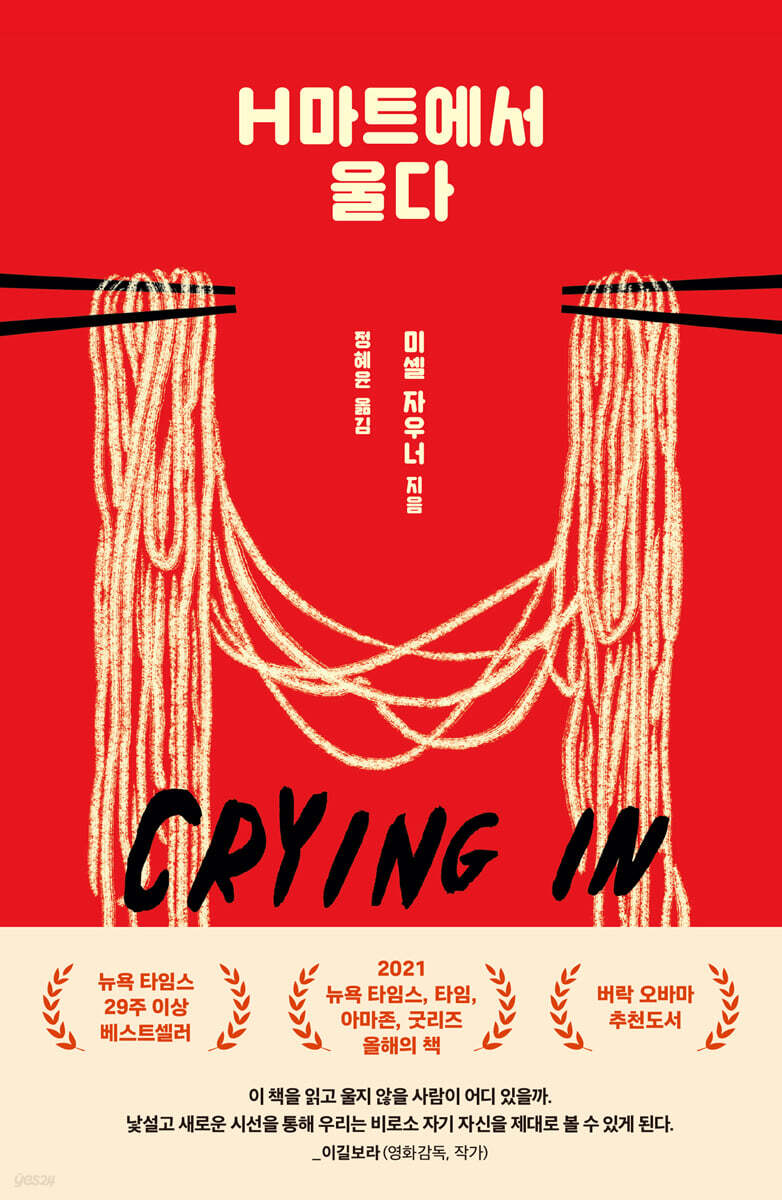
Crying at H Mart
 |
Description
Book Introduction
“Can I still be Korean when my mother is no longer with me?”
The new rock musician who has captivated the world
A powerful story about family, food, grief, and love.
A nationwide bestseller that captivated the nation
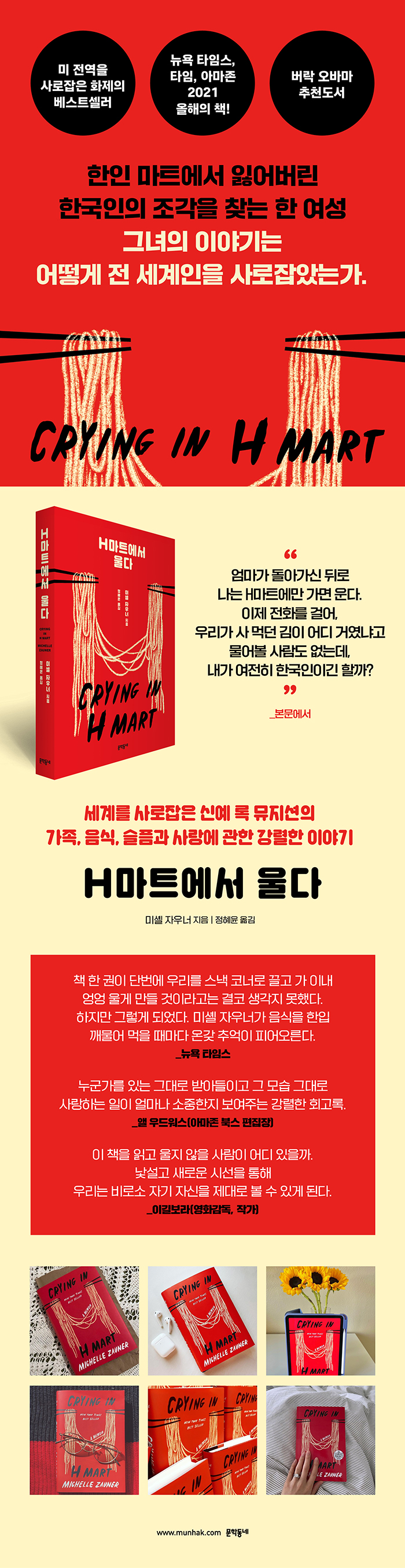
"Crying at H Mart" is a touching essay about growing up by Michelle Zauner, a Korean-American vocalist for the indie pop band Japanese Breakfast.
This book, which became a bestseller in American bookstores immediately after its publication, was selected as a book of the year in 2021 by major media outlets such as The New York Times, NPR, and Amazon, and was also selected as a book recommended by Barack Obama.
“Why is my mom like this?” The daughter, who couldn’t understand her Korean mother, who was different from other American mothers, grew further and further away from her as she pursued the path of a musician… … When the author was 25, her mother suddenly contracted cancer and died after a long battle with the disease.
One day, after losing her mother, who had exposed her to Korean culture since childhood, and feeling that her identity as a Korean was fading away, the author regained vivid memories of her mother while buying groceries at a Korean supermarket and cooking for herself. 『Crying at H Mart』 is a delicate and touching essay that calmly writes about the comfort she received from this and her own unique identity.
The new rock musician who has captivated the world
A powerful story about family, food, grief, and love.
A nationwide bestseller that captivated the nation
"Crying at H Mart" is a touching essay about growing up by Michelle Zauner, a Korean-American vocalist for the indie pop band Japanese Breakfast.
This book, which became a bestseller in American bookstores immediately after its publication, was selected as a book of the year in 2021 by major media outlets such as The New York Times, NPR, and Amazon, and was also selected as a book recommended by Barack Obama.
“Why is my mom like this?” The daughter, who couldn’t understand her Korean mother, who was different from other American mothers, grew further and further away from her as she pursued the path of a musician… … When the author was 25, her mother suddenly contracted cancer and died after a long battle with the disease.
One day, after losing her mother, who had exposed her to Korean culture since childhood, and feeling that her identity as a Korean was fading away, the author regained vivid memories of her mother while buying groceries at a Korean supermarket and cooking for herself. 『Crying at H Mart』 is a delicate and touching essay that calmly writes about the comfort she received from this and her own unique identity.
- You can preview some of the book's contents.
Preview
index
Crying at H Mart
Why are you crying?
double eyelids
New York style
Where is the wine?
dark matter
approximately
Sister
Where are we going?
Living and Dying
What is it about you that is so terrifyingly irresistible to you?
law and order
heavy hands
Lovely
My love will continue
Pine nut porridge
small axe
Mrs. Hammer and I
kimchi refrigerator
cup of coffee
Acknowledgements
Translator's Note
Why are you crying?
double eyelids
New York style
Where is the wine?
dark matter
approximately
Sister
Where are we going?
Living and Dying
What is it about you that is so terrifyingly irresistible to you?
law and order
heavy hands
Lovely
My love will continue
Pine nut porridge
small axe
Mrs. Hammer and I
kimchi refrigerator
cup of coffee
Acknowledgements
Translator's Note
Detailed image
Into the book
Since my mom passed away, I cry whenever I go to H Mart.
(…) Now that there is no one to call and ask where the seaweed we used to buy came from, am I still Korean?
--- pp.9~10
Food was my mother's way of expressing her love.
(…) I could clearly feel how much my mother hated me when she packed my lunch or set the table to suit my taste.
--- p.11
I've lost both my aunt and my mother to cancer in the last five years.
So, when I go to H Mart, it's not just to buy cuttlefish or three bunches of $1 green onions.
It's also a way to find memories of the two of you.
Even though the two of them have passed away, I am trying to find evidence that the Korean part of my identity, half of it, has not died.
--- p.22
I happily spread out my palm, placed a leaf of lettuce on it, and piled up the food in my own way.
A piece of ribs with a glossy sheen, a spoonful of warm rice, a little ssamjang, and a slice of thinly sliced raw garlic, one after the other.
Then, he gently put it in his mouth, closed his eyes, and chewed it, savoring the taste.
My tongue and stomach, starved of home-cooked meals for months, finally found a deep sense of satisfaction.
The meal itself was a wonderful reunion.
--- p.123
“It’s okay, it’s okay,” said Mom.
Korean is so familiar to me.
That gentle whisper I've been hearing my whole life.
Words that assure me that all pain will eventually pass.
My mother comforted me even as she died.
My mother's maternal instinct had overcome the immense fear she must have felt but skillfully concealed.
My mother was the only person in the world who could tell me that everything would work out somehow.
It was like the eye of a typhoon, calmly watching the shipwreck until it disappeared into the maelstrom and was out of sight.
--- p.203
This is all I wanted.
After days of cooking elaborate and expensive meat dishes, shellfish dishes, and various potato dishes with different combinations of butter, cheese, and cream, I finally realized.
This is the dish I really wanted.
This simple porridge was the first dish in my life that gave me such deep satisfaction.
(…) I closed my eyes, scooped up the last spoonful, and put it in my mouth, imagining the moment when the round porridge gently wrapped around my mother’s forked tongue.
And as the warm liquid slowly went down my throat, I slowly savored the aftertaste.
--- pp.319~320
When I got on stage, I stood for a moment and looked around the hall.
Even when my ambitions were at their peak, I never imagined I would be able to perform a concert in my mother's home country, the city where I was born.
How wonderful it would have been if my mother had seen me like this.
How proud my mother must have been to see me, the woman I was, the career I had built, the things she had worried for so long that I would never achieve.
The fact that all the success we'd tasted was centered around my mother's death, and that every song I sang was in her memory, made me long for her to be there at the concert, even though it was completely contradictory.
(…) Now that there is no one to call and ask where the seaweed we used to buy came from, am I still Korean?
--- pp.9~10
Food was my mother's way of expressing her love.
(…) I could clearly feel how much my mother hated me when she packed my lunch or set the table to suit my taste.
--- p.11
I've lost both my aunt and my mother to cancer in the last five years.
So, when I go to H Mart, it's not just to buy cuttlefish or three bunches of $1 green onions.
It's also a way to find memories of the two of you.
Even though the two of them have passed away, I am trying to find evidence that the Korean part of my identity, half of it, has not died.
--- p.22
I happily spread out my palm, placed a leaf of lettuce on it, and piled up the food in my own way.
A piece of ribs with a glossy sheen, a spoonful of warm rice, a little ssamjang, and a slice of thinly sliced raw garlic, one after the other.
Then, he gently put it in his mouth, closed his eyes, and chewed it, savoring the taste.
My tongue and stomach, starved of home-cooked meals for months, finally found a deep sense of satisfaction.
The meal itself was a wonderful reunion.
--- p.123
“It’s okay, it’s okay,” said Mom.
Korean is so familiar to me.
That gentle whisper I've been hearing my whole life.
Words that assure me that all pain will eventually pass.
My mother comforted me even as she died.
My mother's maternal instinct had overcome the immense fear she must have felt but skillfully concealed.
My mother was the only person in the world who could tell me that everything would work out somehow.
It was like the eye of a typhoon, calmly watching the shipwreck until it disappeared into the maelstrom and was out of sight.
--- p.203
This is all I wanted.
After days of cooking elaborate and expensive meat dishes, shellfish dishes, and various potato dishes with different combinations of butter, cheese, and cream, I finally realized.
This is the dish I really wanted.
This simple porridge was the first dish in my life that gave me such deep satisfaction.
(…) I closed my eyes, scooped up the last spoonful, and put it in my mouth, imagining the moment when the round porridge gently wrapped around my mother’s forked tongue.
And as the warm liquid slowly went down my throat, I slowly savored the aftertaste.
--- pp.319~320
When I got on stage, I stood for a moment and looked around the hall.
Even when my ambitions were at their peak, I never imagined I would be able to perform a concert in my mother's home country, the city where I was born.
How wonderful it would have been if my mother had seen me like this.
How proud my mother must have been to see me, the woman I was, the career I had built, the things she had worried for so long that I would never achieve.
The fact that all the success we'd tasted was centered around my mother's death, and that every song I sang was in her memory, made me long for her to be there at the concert, even though it was completely contradictory.
--- pp.386~387
Publisher's Review
H Mart, the place that brings tears to my eyes when I think of my mom
This book began as a poignant essay.
Michelle Zauner's article "Crying at H Mart," in which she wrote about her memories and longing for her mother while shopping at a Korean supermarket, resonated with countless readers as soon as it was published in The New Yorker.
H Mart is a large discount grocery store in the United States that specializes in Asian food ingredients, and H is an abbreviation for 'Hanareum'.
As the name suggests, 'large enough to be embraced with both arms', there is no Korean food that is not there, such as dumpling skins, seaweed, puffed rice cakes, jjoripong, and various side dishes.
H Mart, with over 70 locations across 14 states, is therefore a treasure trove for Korean Americans seeking a taste of home.
On the second floor, there is a Korean restaurant that serves stew in earthenware pots and sells tteokbokki, as well as a Korean-Chinese restaurant that sells tangsuyuk, jjambbong, fried rice, and jajangmyeon.
People come here with their own memories and stories.
At the place he went to after losing his mother, Zauna is moved to tears by the sight of a grandmother eating seafood jjambbong with her daughter.
At H Mart, mom is everywhere.
My mom's nagging about not putting too much gochujang in my bibimbap, the sight of her waving a sweet Jjanggu snack between her fingers, and the memories of the round puffed rice cakes my mom and I would nibble on are all vivid here.
In this way, at H Mart, Zauner finds solace and recovers by rediscovering the tastes that his mother had so vividly engraved in his taste buds.
How a mother who is a terrible nagger conveys her love
Although they were a mother and daughter who were more affectionate than anyone else, their deep love sometimes turned into love and hate.
A mother who immigrated to Eugene, Oregon, USA, where there were no Koreans to be found, with her one-year-old baby, raises her daughter strictly.
To the young Zauner, it seemed that American mothers tried to give their children the freedom to make their own decisions and to protect their self-esteem, but his own mother was far from that.
He just kept nagging her about making her the best version of herself.
A mother who interferes with her daughter's appearance, makeup, clothes, and studies.
If I got hurt, my mom would get angry like fire and worry about the scars first.
Instead of comforting himself as he sobbed, he said, “Why are you crying?
“Your mother isn’t even dead,” he said, pressing her.
Zauner couldn't understand his mother's harsh and harsh words at all.
But my mother showed her love with food instead of words.
On my birthday, I made seaweed soup for him, grilled thick pork belly on a hot iron plate on the terrace, and made pork belly wraps.
Whenever Zauna sucked on soy sauce marinated crab or dipped live octopus in gochujang and put it in her mouth, her mother was amazed.
“You are truly Korean.”
I think I can finally understand my mom now…
My mother's sudden battle with cancer
Fate is difficult to understand.
At the age of twenty-five, when the writer was finally beginning to understand his mother, and when his mother was beginning to support her daughter's path as an artist, his previously healthy mother was diagnosed with cancer.
The author, desperate to do anything, records the medicine his mother takes and the food she eats every day, and tries to make Korean food for his mother, who has lost most of her hair and has shrunk in size.
In order to make her mother happy while she is alive, she decides to get married to her beloved boyfriend.
The mother miraculously holds on until that moment, as if to see her daughter's wedding.
But there was no escape from fate.
However, the memory of the food my mother used to make remained vivid.
Although his mother is no longer with him, Jauner searches the internet and YouTube to make soybean paste stew, pine nut porridge, and kimchi.
He recovers by soothing his longing for his mother through her Korean food.
A song of loss, recovery, and love
The author went on a honeymoon to Korea, where her mother took her every two years when she was young, and now experiences Korea with her husband, just as her mother taught her about Korean culture.
On her birthday, she eats seaweed soup made by her aunt, shares unfinished memories of her mother with her relatives, and gradually establishes her own identity by accepting and recovering from her sadness.
This book is more than enough to read as a story of an artist's growth.
Translator Jeong Hye-yoon, who translated this book, said, “Jauner vividly records the innocent days when he first fell in love with music.
He also candidly shares the trials faced by many young artists, such as intense parental opposition, financial hardship, and the anxiety of an uncertain future.
“It also discusses another kind of frustration and confusion I face as a mixed-race Asian female artist living in America.”
Japanese Breakfast, a band led by Zauner, was nominated for Best New Artist and Best Alternative Album at the 2021 Grammy Awards.
This book began as a poignant essay.
Michelle Zauner's article "Crying at H Mart," in which she wrote about her memories and longing for her mother while shopping at a Korean supermarket, resonated with countless readers as soon as it was published in The New Yorker.
H Mart is a large discount grocery store in the United States that specializes in Asian food ingredients, and H is an abbreviation for 'Hanareum'.
As the name suggests, 'large enough to be embraced with both arms', there is no Korean food that is not there, such as dumpling skins, seaweed, puffed rice cakes, jjoripong, and various side dishes.
H Mart, with over 70 locations across 14 states, is therefore a treasure trove for Korean Americans seeking a taste of home.
On the second floor, there is a Korean restaurant that serves stew in earthenware pots and sells tteokbokki, as well as a Korean-Chinese restaurant that sells tangsuyuk, jjambbong, fried rice, and jajangmyeon.
People come here with their own memories and stories.
At the place he went to after losing his mother, Zauna is moved to tears by the sight of a grandmother eating seafood jjambbong with her daughter.
At H Mart, mom is everywhere.
My mom's nagging about not putting too much gochujang in my bibimbap, the sight of her waving a sweet Jjanggu snack between her fingers, and the memories of the round puffed rice cakes my mom and I would nibble on are all vivid here.
In this way, at H Mart, Zauner finds solace and recovers by rediscovering the tastes that his mother had so vividly engraved in his taste buds.
How a mother who is a terrible nagger conveys her love
Although they were a mother and daughter who were more affectionate than anyone else, their deep love sometimes turned into love and hate.
A mother who immigrated to Eugene, Oregon, USA, where there were no Koreans to be found, with her one-year-old baby, raises her daughter strictly.
To the young Zauner, it seemed that American mothers tried to give their children the freedom to make their own decisions and to protect their self-esteem, but his own mother was far from that.
He just kept nagging her about making her the best version of herself.
A mother who interferes with her daughter's appearance, makeup, clothes, and studies.
If I got hurt, my mom would get angry like fire and worry about the scars first.
Instead of comforting himself as he sobbed, he said, “Why are you crying?
“Your mother isn’t even dead,” he said, pressing her.
Zauner couldn't understand his mother's harsh and harsh words at all.
But my mother showed her love with food instead of words.
On my birthday, I made seaweed soup for him, grilled thick pork belly on a hot iron plate on the terrace, and made pork belly wraps.
Whenever Zauna sucked on soy sauce marinated crab or dipped live octopus in gochujang and put it in her mouth, her mother was amazed.
“You are truly Korean.”
I think I can finally understand my mom now…
My mother's sudden battle with cancer
Fate is difficult to understand.
At the age of twenty-five, when the writer was finally beginning to understand his mother, and when his mother was beginning to support her daughter's path as an artist, his previously healthy mother was diagnosed with cancer.
The author, desperate to do anything, records the medicine his mother takes and the food she eats every day, and tries to make Korean food for his mother, who has lost most of her hair and has shrunk in size.
In order to make her mother happy while she is alive, she decides to get married to her beloved boyfriend.
The mother miraculously holds on until that moment, as if to see her daughter's wedding.
But there was no escape from fate.
However, the memory of the food my mother used to make remained vivid.
Although his mother is no longer with him, Jauner searches the internet and YouTube to make soybean paste stew, pine nut porridge, and kimchi.
He recovers by soothing his longing for his mother through her Korean food.
A song of loss, recovery, and love
The author went on a honeymoon to Korea, where her mother took her every two years when she was young, and now experiences Korea with her husband, just as her mother taught her about Korean culture.
On her birthday, she eats seaweed soup made by her aunt, shares unfinished memories of her mother with her relatives, and gradually establishes her own identity by accepting and recovering from her sadness.
This book is more than enough to read as a story of an artist's growth.
Translator Jeong Hye-yoon, who translated this book, said, “Jauner vividly records the innocent days when he first fell in love with music.
He also candidly shares the trials faced by many young artists, such as intense parental opposition, financial hardship, and the anxiety of an uncertain future.
“It also discusses another kind of frustration and confusion I face as a mixed-race Asian female artist living in America.”
Japanese Breakfast, a band led by Zauner, was nominated for Best New Artist and Best Alternative Album at the 2021 Grammy Awards.
GOODS SPECIFICS
- Publication date: February 28, 2022
- Page count, weight, size: 408 pages | 474g | 130*200*18mm
- ISBN13: 9788954683371
- ISBN10: 8954683371
You may also like
카테고리
korean


korean

![GQ KOREA Mark (Monthly): December [2025]](http://librairie.coreenne.fr/cdn/shop/files/8ef265dbbfbf186523ed75ba7319009d.jpg?v=1765340328&width=3840)


