

voyager
 |
Description
Book Introduction
In the darkness of history, following those who went before
A journey of reflection that illuminates the power of memory
"The light of the past settles into the present, illuminating the terrible darkness like a beacon."
Exploring memory and justice beyond the remnants of Pinochet's military dictatorship
The first autobiographical essay by Chilean writer Nona Fernández
Nona Fernández is a writer who has consistently reflected on Chilean society and the lives of Chileans since the era of Pinochet, the worst dictator in history.
As a “daughter of dictatorship” who grew up and became an adult during the military dictatorship, she has raised issues of common memory and justice.
She was highly praised for her unique writing style of piecing together the shattered present in light of the past of the “broken country” she had to live in, and in 2016 she won the Sor Juana Inés de la Cruz Award, which is awarded to Spanish-speaking female writers.
"Voyager" is Fernandez's first autobiographical essay, and it is a good gateway for Korean readers to enter the world of his works, as it fully reveals the author's self-reflective position and view of history.
It weaves together multiple dimensions of memory, telling the stories of victims secretly executed in the Atacama Desert by the Pinochet regime and the story of an ordinary citizen, a mother, who survived those harsh times.
And finally, we pay tribute to the lives of each and every person who continues to tell the truth, and we want to give courage to the next people.
A journey of reflection that illuminates the power of memory
"The light of the past settles into the present, illuminating the terrible darkness like a beacon."
Exploring memory and justice beyond the remnants of Pinochet's military dictatorship
The first autobiographical essay by Chilean writer Nona Fernández
Nona Fernández is a writer who has consistently reflected on Chilean society and the lives of Chileans since the era of Pinochet, the worst dictator in history.
As a “daughter of dictatorship” who grew up and became an adult during the military dictatorship, she has raised issues of common memory and justice.
She was highly praised for her unique writing style of piecing together the shattered present in light of the past of the “broken country” she had to live in, and in 2016 she won the Sor Juana Inés de la Cruz Award, which is awarded to Spanish-speaking female writers.
"Voyager" is Fernandez's first autobiographical essay, and it is a good gateway for Korean readers to enter the world of his works, as it fully reveals the author's self-reflective position and view of history.
It weaves together multiple dimensions of memory, telling the stories of victims secretly executed in the Atacama Desert by the Pinochet regime and the story of an ordinary citizen, a mother, who survived those harsh times.
And finally, we pay tribute to the lives of each and every person who continues to tell the truth, and we want to give courage to the next people.
- You can preview some of the book's contents.
Preview
index
Southern Cross
www.constelaciondeloscaidos.cl
Cancer
Wenu Mapu
www.constelaciondeloscaidos.cl
Scorpio
www.constelaciondeloscaidos.cl
Pisces
Hamnia
Aries
www.constelaciondeloscaidos.cl
Gemini
Acknowledgements
Recommendation
Background of publication
www.constelaciondeloscaidos.cl
Cancer
Wenu Mapu
www.constelaciondeloscaidos.cl
Scorpio
www.constelaciondeloscaidos.cl
Pisces
Hamnia
Aries
www.constelaciondeloscaidos.cl
Gemini
Acknowledgements
Recommendation
Background of publication
Detailed image

Into the book
One summer night, as we sat in the yard smoking a cigarette, my mother said that there were little people in the far night sky trying to communicate with us through mirrors.
It was said that it transmitted messages by reflecting light, like a kind of glowing Morse code.
I don't remember why my mother said that.
Perhaps it was an impromptu answer to my question.
What I clearly remember is that as a child I thought the little people's light from the sky was a greeting, a message confirming their presence across the vast distance and darkness.
Hello, we are here.
We are small people, don't forget us.
Their greetings never faded.
They were always there, even though they weren't visible during the day.
It didn't matter if we didn't look up.
It didn't matter if I was trapped in a city home, enveloped in polluted air, blinded by neon lights and billboards, and oblivious to what was going on above my head.
The greetings of those little people have been there every night of our lives, and always will be.
The light of the past settles into the present, illuminating the terrible darkness like a lighthouse.
--- pp.17-18
Since humans first recorded their memories, women and men have witnessed infinity.
Astronomy books tell of our Stone Age ancestors carving the various phases of the moon onto animal bones.
Sunrise and sunset, eclipses, the changing phases of the moon, and the positions of the stars pointed the way, and the sky became a map.
I read that the arrangement of the stars on that map allowed humans to measure time and the length of a season, and that navigators and merchants used it as a guide when crossing the sea or desert at night.
Connecting stars to form shapes and creating legends and folktales that symbolize those shapes made it easier to distinguish stars and memorize the paths to follow.
It is said that this is how the constellations were born.
With the mission of a shining compass in the darkness.
--- pp.30-31
When a star dies, it returns some of its material back into space.
This is also material from other stars of the previous generation.
Stars are made from the stardust of dead stars.
They illuminate our present, the experiences of countless generations spanning billions of years in the universe.
In this relay of light, death is merely a passing stop.
--- pp.53-54
In the afternoon heat, a mirage appears over the distant road.
An illusion of a flowing water landscape that does not exist but is observed from a distance.
An optical illusion, a peculiar sense of a watery future just out there, where no matter how close we got to the van, it seemed to be receding.
We are crossing mysterious territory.
A mirror zone reflecting scenes flying from the edge of time.
When I close my eyes, I hear the sound of helicopters flying over the desert.
If you concentrate more, you can hear the terrible melody played by the military band.
I seem to hear the voices of new arrivals disembarking from the ship.
The sound of their heavy boots hitting the cement floor.
A greatsword hanging from their waist belt adorns their rough battle attire.
Perhaps you will hear a welcoming speech and a formal salute.
Later, you will hear the engine of a truck passing through the streets of Kalama, the tense footsteps of prisoners leaving the prison, their gasping breaths, and a few unanswered questions.
This is followed by the sounds of moving into the desert, shouting, gunfire, and machine gun fire.
These are old, old sounds.
Even if I don't want to hear it, it is definitely here, wandering the empty hills.
It's impossible to escape that sound.
--- p.87
In 1990, after more than a decade of tirelessly searching for family remains, Violetta and the women searched the pampas until they found something.
Fragments, tiny parts, loosely scattered pieces, they seemed like memories stored haphazardly in a corner of the hypothalamus.
Fragments of those beings who no longer exist, but who are part of something within them, stored deep inside, tied together and connected to their bodies and brains.
--- p.89
A piece of Mario's jaw was found among his remains.
I don't want a chin, said Violetta.
They took him whole, so give him back whole.
--- p.91
Among all the women—wives, sisters, daughters-in-law, daughters—Violetta stands up and walks towards the young astronomer.
Violetta, exhausted, approaches him to hug him.
She was a comforting expert, and her words whispered in his ear as if everyone could hear them.
He nods.
He nods at her, and she wipes his tears away with her wrinkled, old-woman hands.
With the same hands that groped the desert.
The young man could be her son or her grandson.
He was only a few years older than Mario at the time of his death.
The two are locked in a long embrace, and we watch in silence.
Two fish with their tails tied together.
--- pp.98-99
There are black holes that hide messages from our eyes, as if some cosmic law were censoring the contents of celestial bodies.
But just because we can't see it doesn't mean it doesn't exist.
It was said that it transmitted messages by reflecting light, like a kind of glowing Morse code.
I don't remember why my mother said that.
Perhaps it was an impromptu answer to my question.
What I clearly remember is that as a child I thought the little people's light from the sky was a greeting, a message confirming their presence across the vast distance and darkness.
Hello, we are here.
We are small people, don't forget us.
Their greetings never faded.
They were always there, even though they weren't visible during the day.
It didn't matter if we didn't look up.
It didn't matter if I was trapped in a city home, enveloped in polluted air, blinded by neon lights and billboards, and oblivious to what was going on above my head.
The greetings of those little people have been there every night of our lives, and always will be.
The light of the past settles into the present, illuminating the terrible darkness like a lighthouse.
--- pp.17-18
Since humans first recorded their memories, women and men have witnessed infinity.
Astronomy books tell of our Stone Age ancestors carving the various phases of the moon onto animal bones.
Sunrise and sunset, eclipses, the changing phases of the moon, and the positions of the stars pointed the way, and the sky became a map.
I read that the arrangement of the stars on that map allowed humans to measure time and the length of a season, and that navigators and merchants used it as a guide when crossing the sea or desert at night.
Connecting stars to form shapes and creating legends and folktales that symbolize those shapes made it easier to distinguish stars and memorize the paths to follow.
It is said that this is how the constellations were born.
With the mission of a shining compass in the darkness.
--- pp.30-31
When a star dies, it returns some of its material back into space.
This is also material from other stars of the previous generation.
Stars are made from the stardust of dead stars.
They illuminate our present, the experiences of countless generations spanning billions of years in the universe.
In this relay of light, death is merely a passing stop.
--- pp.53-54
In the afternoon heat, a mirage appears over the distant road.
An illusion of a flowing water landscape that does not exist but is observed from a distance.
An optical illusion, a peculiar sense of a watery future just out there, where no matter how close we got to the van, it seemed to be receding.
We are crossing mysterious territory.
A mirror zone reflecting scenes flying from the edge of time.
When I close my eyes, I hear the sound of helicopters flying over the desert.
If you concentrate more, you can hear the terrible melody played by the military band.
I seem to hear the voices of new arrivals disembarking from the ship.
The sound of their heavy boots hitting the cement floor.
A greatsword hanging from their waist belt adorns their rough battle attire.
Perhaps you will hear a welcoming speech and a formal salute.
Later, you will hear the engine of a truck passing through the streets of Kalama, the tense footsteps of prisoners leaving the prison, their gasping breaths, and a few unanswered questions.
This is followed by the sounds of moving into the desert, shouting, gunfire, and machine gun fire.
These are old, old sounds.
Even if I don't want to hear it, it is definitely here, wandering the empty hills.
It's impossible to escape that sound.
--- p.87
In 1990, after more than a decade of tirelessly searching for family remains, Violetta and the women searched the pampas until they found something.
Fragments, tiny parts, loosely scattered pieces, they seemed like memories stored haphazardly in a corner of the hypothalamus.
Fragments of those beings who no longer exist, but who are part of something within them, stored deep inside, tied together and connected to their bodies and brains.
--- p.89
A piece of Mario's jaw was found among his remains.
I don't want a chin, said Violetta.
They took him whole, so give him back whole.
--- p.91
Among all the women—wives, sisters, daughters-in-law, daughters—Violetta stands up and walks towards the young astronomer.
Violetta, exhausted, approaches him to hug him.
She was a comforting expert, and her words whispered in his ear as if everyone could hear them.
He nods.
He nods at her, and she wipes his tears away with her wrinkled, old-woman hands.
With the same hands that groped the desert.
The young man could be her son or her grandson.
He was only a few years older than Mario at the time of his death.
The two are locked in a long embrace, and we watch in silence.
Two fish with their tails tied together.
--- pp.98-99
There are black holes that hide messages from our eyes, as if some cosmic law were censoring the contents of celestial bodies.
But just because we can't see it doesn't mean it doesn't exist.
--- p.139
Publisher's Review
★ What do memory and literature do in the darkness of history?
The persistent questions of life in the face of the trauma of military dictatorship
★ "The most contemporary Chilean writer since Roberto Bolaño" (GQ) - Nona Fernández's first publication in Korea
Voyager is an autobiographical essay by Chilean writer Nona Fernández, who critically and creatively describes life and society under the Augusto Pinochet regime and its impact on the present.
Pinochet, one of the worst dictators in history, seized power through a military coup in 1973 and held the country under the yoke of tyranny for 17 long years. The deep-rooted legacy of Pinochet's rule is so deep that Chile still struggles to come to terms with its past, even 35 years after a civilian government took power.
Fernández, a member of the "sons and daughters of dictatorship" generation who grew up and came of age during the dictatorship, has published works that raise questions of memory and justice while retracing and reflecting on Chile's stained and torn past.
In the author's 2019 autobiographical work, Voyager, the experiences of the previous generation, including his mother and grandmother, and the next generation, his son, are encompassed, conveying thoughts on the meaning of each person's life that supports history through interconnectedness.
The story begins when one day her elderly mother begins to faint, often losing her memory for a few minutes.
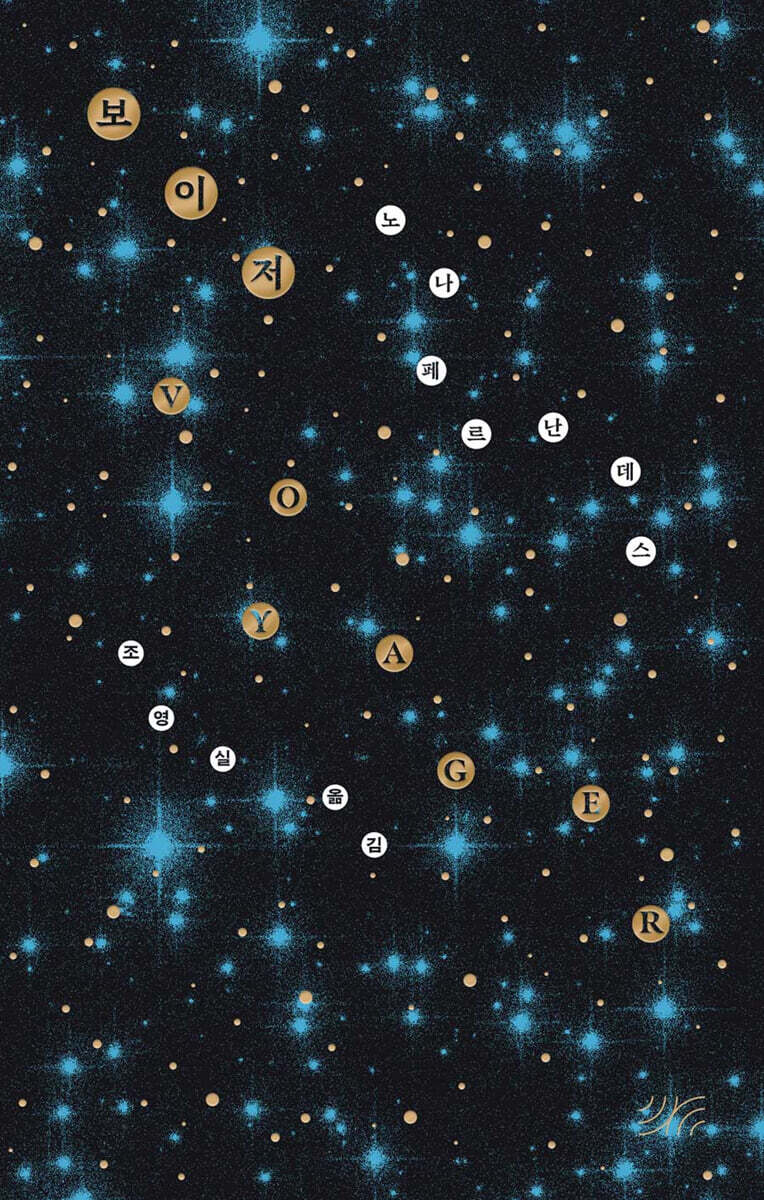
Fernandez conducts neurological examinations of his mother's brain to determine the cause, and the light and movement of neurons displayed on the monitor screen conjures up images of a star-filled night sky.
The idea that a person's life memories exist in a kind of constellation in the brain takes him to the Atacama Desert.
It is the perfect place for stargazing, but also the place where twenty-six political prisoners under the Pinochet regime were secretly executed by the special forces unit, the 'Death Caravan'.
Amnesty International is promoting a project to create a “cosmic monument” by naming 26 stars of the victims so that their deaths will not be forgotten, and the author will serve as the godmother of one of them.
In this way, the loss of two areas that seemed unlikely to meet is juxtaposed through the motif of 'star'.
The moments my mother lost, and the lives of those who were killed.
How can those black holes be connected back to the present context?
Fernandez follows this question as it unfolds.
In the world Fernandez witnesses, recognizing that humans are beings made up of small, everyday memories and recognizing that humans are beings who make history together are not separate things.
The constellation proclamation ceremony held in the desert in the middle of the story seems to encapsulate the author's view of history.
When a grandmother who spent her life searching for the remains of her husband, a victim, embraces a young astronomer who has come to remember the victims, and when the people gathered around them cry along with them, memory becomes an event that transcends the boundaries of the private sphere and becomes a shared realm.
This scene is perhaps the author's suggestion to draw out the deep wounds left by the past on Chilean society, the intimate darkness that cannot be erased from each life, no matter how far we move toward democratization, and embrace it as part of the present and future.
It is also an attempt to reclaim the place of the "little people" who were often erased from the history of the fathers, and a ritual to pay tribute to the ordinary lives of those who endured harsh times by fighting in their own way.
The author is trying to say that this is the land where the ethics of democracy take root, before the slogans like flags or the flawless system.
★ “The courage to recognize the ghosts of fading memories, people, and ideals” - Richard Beard (author)
★ Thoughts on the power of memory to revive lives that have been pushed aside and to overcome harsh times together
Fernandez's work constantly renews the meaning of memory.
Memory as an active, not passive, memory as an act toward justice and ethics.
When Voyager was translated into English and published in 2023, British and American critics also paid special attention to this point.
The book was praised for its many aspects: “Fernandez calls for individual acts of resistance, suggesting that preserving memory is one way of resisting” (Chicago Review of Books); “A moving reminder that to prevent past crimes from happening again, the histories of violence and the names of those responsible must remain in our internal archives” (Big Issue); and “It offers a story that goes beyond the rigid and incomplete history recorded by the Truth and Reconciliation Commission” (New York Magazine).
Of course, this is not Fernandez's sole mission.
The Chilean writers of the "sons and daughters of dictatorship" generation, from the late 1990s to the early 2000s, empowered the community's demands for a new era through various forms of memory narratives.
It was a turning point in the reckoning with the past, with the late Pinochet imprisoned in London and returning to Chile where he died.
The narratives of memory from this period, written by writers who overcame the oppression and doubts internalized during their formative years, contributed significantly to publicizing the meaning of communal memory, which goes beyond the limitations of grand narratives that present national challenges to overcome and delves into the specific issues of individuals and humanity.
In today's world, where a wave of right-wing extremism is sweeping across the globe, the significance of memory and the role of living, breathing narratives of memory come across with a weighty dimension.
Fernandez echoes his son's concern that "if we fail to renew the meaning and power of memory for the present, my generation will pay the price."
The self-imposed responsibility of documentation by Fernández's generation of writers is becoming increasingly important in Chile today, where the population of a generation that did not directly experience the dictatorship is growing.
★ “I am still thrilled and grateful to have become the first Korean reader of Voyager.” - Kim Soom (novelist)
★ A tribute to the ordinary lives that make history, a message of respect from a faraway place.
These questions are not unfamiliar to Korean society either.
In 2025, we are realizing once again that the remnants of the past military dictatorship are persistent and lurking everywhere.
The unresolved specter of the past has long haunted society, exposing the vulnerabilities of the democratic foundations upon which we stand.
Moreover, for Korean readers who find memory increasingly difficult to accomplish amidst the vortex of recurring political strife and the rapid pace of capitalism, the Chilean reality Fernández conveys will feel as vivid as their own.
At this very moment, from a distant but close neighbor, Chile, the message of encouragement and respect from writer Nona Fernández, who carries on the legacy of Chilean history and people, is most welcome.
Voyager emphasizes:
Literature, which illuminates the present through the past, is not simply a transcription; it is an archive of things that the present generation has cherished and will pass on through the long chain of history, things that have been barely grasped by tracing their traces, things that will remain until the very end, and ultimately, questions and suggestions about what makes humans human.
And that each and every one of us is a cosmic being carrying it into the future.
The book's title, 'Voyager,' is the name of two space probes launched by NASA in 1977 with the mission of "storing the memories of stars."
This is in line with Fernandez's self-imposed calling as a writer who faces history.
Fernandez describes himself as a “recording device,” much like Voyager, and writes in the hope that “one day, in a future I will never know, in another life, someone will take up the baton of memory and continue the relay.”
After reading the book, Korean readers will surely want to respond to that earnest desire.
There is probably no one who knows the value of memory as well as we do.
The persistent questions of life in the face of the trauma of military dictatorship
★ "The most contemporary Chilean writer since Roberto Bolaño" (GQ) - Nona Fernández's first publication in Korea
Voyager is an autobiographical essay by Chilean writer Nona Fernández, who critically and creatively describes life and society under the Augusto Pinochet regime and its impact on the present.
Pinochet, one of the worst dictators in history, seized power through a military coup in 1973 and held the country under the yoke of tyranny for 17 long years. The deep-rooted legacy of Pinochet's rule is so deep that Chile still struggles to come to terms with its past, even 35 years after a civilian government took power.
Fernández, a member of the "sons and daughters of dictatorship" generation who grew up and came of age during the dictatorship, has published works that raise questions of memory and justice while retracing and reflecting on Chile's stained and torn past.
In the author's 2019 autobiographical work, Voyager, the experiences of the previous generation, including his mother and grandmother, and the next generation, his son, are encompassed, conveying thoughts on the meaning of each person's life that supports history through interconnectedness.
The story begins when one day her elderly mother begins to faint, often losing her memory for a few minutes.
Fernandez conducts neurological examinations of his mother's brain to determine the cause, and the light and movement of neurons displayed on the monitor screen conjures up images of a star-filled night sky.
The idea that a person's life memories exist in a kind of constellation in the brain takes him to the Atacama Desert.
It is the perfect place for stargazing, but also the place where twenty-six political prisoners under the Pinochet regime were secretly executed by the special forces unit, the 'Death Caravan'.
Amnesty International is promoting a project to create a “cosmic monument” by naming 26 stars of the victims so that their deaths will not be forgotten, and the author will serve as the godmother of one of them.
In this way, the loss of two areas that seemed unlikely to meet is juxtaposed through the motif of 'star'.
The moments my mother lost, and the lives of those who were killed.
How can those black holes be connected back to the present context?
Fernandez follows this question as it unfolds.
In the world Fernandez witnesses, recognizing that humans are beings made up of small, everyday memories and recognizing that humans are beings who make history together are not separate things.
The constellation proclamation ceremony held in the desert in the middle of the story seems to encapsulate the author's view of history.
When a grandmother who spent her life searching for the remains of her husband, a victim, embraces a young astronomer who has come to remember the victims, and when the people gathered around them cry along with them, memory becomes an event that transcends the boundaries of the private sphere and becomes a shared realm.
This scene is perhaps the author's suggestion to draw out the deep wounds left by the past on Chilean society, the intimate darkness that cannot be erased from each life, no matter how far we move toward democratization, and embrace it as part of the present and future.
It is also an attempt to reclaim the place of the "little people" who were often erased from the history of the fathers, and a ritual to pay tribute to the ordinary lives of those who endured harsh times by fighting in their own way.
The author is trying to say that this is the land where the ethics of democracy take root, before the slogans like flags or the flawless system.
★ “The courage to recognize the ghosts of fading memories, people, and ideals” - Richard Beard (author)
★ Thoughts on the power of memory to revive lives that have been pushed aside and to overcome harsh times together
Fernandez's work constantly renews the meaning of memory.
Memory as an active, not passive, memory as an act toward justice and ethics.
When Voyager was translated into English and published in 2023, British and American critics also paid special attention to this point.
The book was praised for its many aspects: “Fernandez calls for individual acts of resistance, suggesting that preserving memory is one way of resisting” (Chicago Review of Books); “A moving reminder that to prevent past crimes from happening again, the histories of violence and the names of those responsible must remain in our internal archives” (Big Issue); and “It offers a story that goes beyond the rigid and incomplete history recorded by the Truth and Reconciliation Commission” (New York Magazine).
Of course, this is not Fernandez's sole mission.
The Chilean writers of the "sons and daughters of dictatorship" generation, from the late 1990s to the early 2000s, empowered the community's demands for a new era through various forms of memory narratives.
It was a turning point in the reckoning with the past, with the late Pinochet imprisoned in London and returning to Chile where he died.
The narratives of memory from this period, written by writers who overcame the oppression and doubts internalized during their formative years, contributed significantly to publicizing the meaning of communal memory, which goes beyond the limitations of grand narratives that present national challenges to overcome and delves into the specific issues of individuals and humanity.
In today's world, where a wave of right-wing extremism is sweeping across the globe, the significance of memory and the role of living, breathing narratives of memory come across with a weighty dimension.
Fernandez echoes his son's concern that "if we fail to renew the meaning and power of memory for the present, my generation will pay the price."
The self-imposed responsibility of documentation by Fernández's generation of writers is becoming increasingly important in Chile today, where the population of a generation that did not directly experience the dictatorship is growing.
★ “I am still thrilled and grateful to have become the first Korean reader of Voyager.” - Kim Soom (novelist)
★ A tribute to the ordinary lives that make history, a message of respect from a faraway place.
These questions are not unfamiliar to Korean society either.
In 2025, we are realizing once again that the remnants of the past military dictatorship are persistent and lurking everywhere.
The unresolved specter of the past has long haunted society, exposing the vulnerabilities of the democratic foundations upon which we stand.
Moreover, for Korean readers who find memory increasingly difficult to accomplish amidst the vortex of recurring political strife and the rapid pace of capitalism, the Chilean reality Fernández conveys will feel as vivid as their own.
At this very moment, from a distant but close neighbor, Chile, the message of encouragement and respect from writer Nona Fernández, who carries on the legacy of Chilean history and people, is most welcome.
Voyager emphasizes:
Literature, which illuminates the present through the past, is not simply a transcription; it is an archive of things that the present generation has cherished and will pass on through the long chain of history, things that have been barely grasped by tracing their traces, things that will remain until the very end, and ultimately, questions and suggestions about what makes humans human.
And that each and every one of us is a cosmic being carrying it into the future.
The book's title, 'Voyager,' is the name of two space probes launched by NASA in 1977 with the mission of "storing the memories of stars."
This is in line with Fernandez's self-imposed calling as a writer who faces history.
Fernandez describes himself as a “recording device,” much like Voyager, and writes in the hope that “one day, in a future I will never know, in another life, someone will take up the baton of memory and continue the relay.”
After reading the book, Korean readers will surely want to respond to that earnest desire.
There is probably no one who knows the value of memory as well as we do.
GOODS SPECIFICS
- Date of issue: August 1, 2025
- Page count, weight, size: 192 pages | 196g | 116*182*13mm
- ISBN13: 9791199048126
- ISBN10: 1199048127
You may also like
카테고리
korean


korean

![GQ KOREA Mark (Monthly): December [2025]](http://librairie.coreenne.fr/cdn/shop/files/8ef265dbbfbf186523ed75ba7319009d.jpg?v=1765340328&width=3840)


