

Golden bells
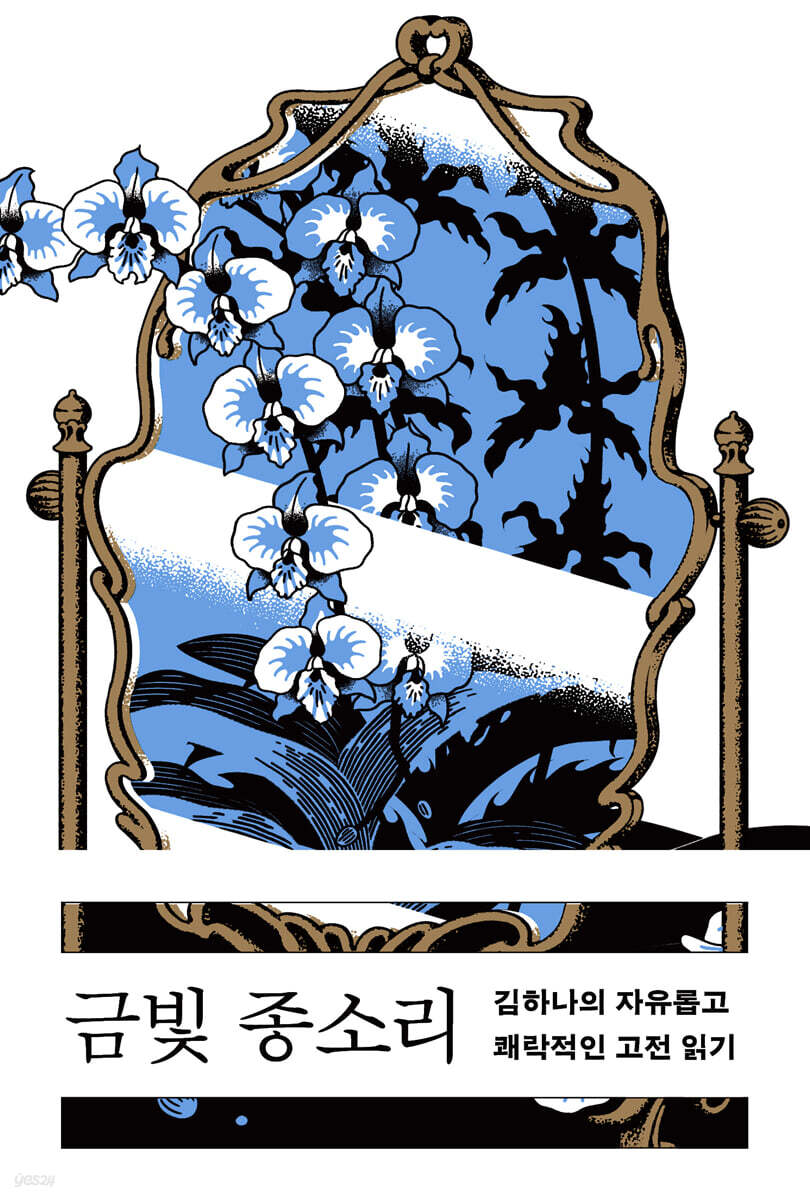 |
Description
Book Introduction
- A word from MD
-
Kim Ha-na's Free Classic Reading WalkReading essay by Kim Hana, a person who reads, writes, listens, and speaks.
Introducing five works of world literature, the book explores what it means to read classics in this day and age, and captures the meaningful joy that reading classics can bring.
Let's follow the author's footsteps as he freely strolls through the vast city of classical literature, a timeless book that transcends time.
July 5, 2024. Essay PD Lee Ju-eun
“I am a walker in the great city of world literature.
The appearance of this city
It changes every hour, and in some window there is a new classic.
It is being used.
“From far away, the sound of golden bells is heard.”
▶Writer Kim Ha-na meticulously examines Kafka's work, connecting it to classics and popular writings and films, making it more accessible.
It is a comfort to our times that there is a solid writer who brings Kafka closer to us by reading him in this way.
- Jeon Yeong-ae (German literature scholar)
▶The only place we can meet is right here.
Paper graveyard.
book.
I see you reading this right now, touching it.
Looks brave.
I want to welcome you.
All this heart is contained here.
- Park Sparrow (poet)
A person who reads, writes, listens, and speaks.
Kim Ha-na's 'Reading Classics' essay is different!
Author Kim Ha-na, who has published steady sellers such as 『Speaking About Speaking』, 『Your and My Ideas』, and 『The Art of Letting Go』, hosted the Yes24 podcast 〈Book Readout: Kim Ha-na's Side Breakthrough〉, and is currently producing [Yeodu Talk: Two Women Are Talking] and communicating affectionately with 'Toktoro' fans, has published 『Golden Bell Sound_Kim Ha-na's Free and Pleasant Reading of Classics』 with Minumsa.
The world literature introduced by author Kim Ha-na is five classic works included in Minumsa's World Literature Collection: Carlos Fuentes's Aura, Edith Wharton's The Age of Innocence, Marguerite Yourcenar's Memoirs of Hadrian, Shakespeare's Macbeth, and Franz Kafka's The Metamorphosis and the Country Doctor.
With these five works as the center, author Kim Ha-na becomes a classic walking guide and walks the alleys of 'reading classics' with readers 'freely and pleasantly'.
We take a leisurely stroll through the vast city of books, often telling amusing stories to liven up the walk and offering some tips on reading classics to keep you from getting tired and wandering.
The appearance of this city
It changes every hour, and in some window there is a new classic.
It is being used.
“From far away, the sound of golden bells is heard.”
▶Writer Kim Ha-na meticulously examines Kafka's work, connecting it to classics and popular writings and films, making it more accessible.
It is a comfort to our times that there is a solid writer who brings Kafka closer to us by reading him in this way.
- Jeon Yeong-ae (German literature scholar)
▶The only place we can meet is right here.
Paper graveyard.
book.
I see you reading this right now, touching it.
Looks brave.
I want to welcome you.
All this heart is contained here.
- Park Sparrow (poet)
A person who reads, writes, listens, and speaks.
Kim Ha-na's 'Reading Classics' essay is different!
Author Kim Ha-na, who has published steady sellers such as 『Speaking About Speaking』, 『Your and My Ideas』, and 『The Art of Letting Go』, hosted the Yes24 podcast 〈Book Readout: Kim Ha-na's Side Breakthrough〉, and is currently producing [Yeodu Talk: Two Women Are Talking] and communicating affectionately with 'Toktoro' fans, has published 『Golden Bell Sound_Kim Ha-na's Free and Pleasant Reading of Classics』 with Minumsa.
The world literature introduced by author Kim Ha-na is five classic works included in Minumsa's World Literature Collection: Carlos Fuentes's Aura, Edith Wharton's The Age of Innocence, Marguerite Yourcenar's Memoirs of Hadrian, Shakespeare's Macbeth, and Franz Kafka's The Metamorphosis and the Country Doctor.
With these five works as the center, author Kim Ha-na becomes a classic walking guide and walks the alleys of 'reading classics' with readers 'freely and pleasantly'.
We take a leisurely stroll through the vast city of books, often telling amusing stories to liven up the walk and offering some tips on reading classics to keep you from getting tired and wandering.
- You can preview some of the book's contents.
Preview
index
prolog
The sound of golden bells is heard 7
Chapter 1: Aura, Your Aura 31
Aura ─ Carlos Fuentes
Chapter 2: My Savior Who Came to Ruin My Life 87
The Age of Innocence ─ Edith Wharton
Chapter 3: The Dream of Becoming a River 155
Memoirs of the Emperor Hadrian ─ Marguerite Yourcenar
Chapter 4: Come, Night, Destruction 215
Macbeth ─ Shakespeare
Chapter 5: A Low, Flat Death 279
The Metamorphosis: A Country Doctor ─ Franz Kafka
Recommendation 321
The sound of golden bells is heard 7
Chapter 1: Aura, Your Aura 31
Aura ─ Carlos Fuentes
Chapter 2: My Savior Who Came to Ruin My Life 87
The Age of Innocence ─ Edith Wharton
Chapter 3: The Dream of Becoming a River 155
Memoirs of the Emperor Hadrian ─ Marguerite Yourcenar
Chapter 4: Come, Night, Destruction 215
Macbeth ─ Shakespeare
Chapter 5: A Low, Flat Death 279
The Metamorphosis: A Country Doctor ─ Franz Kafka
Recommendation 321
Detailed image

Into the book
Perhaps this could be called the virtue of a tourist special zone.
The point is that it doesn't make reading classics into an overly serious or sublime act.
It's not like it's some homework that you have to do.
It's not about 'If you want to be cultured, you have to read the classics.' It's about having a mindset like, 'I'm bored, so I'll read the classics.'
--- p.11
Reading an old book that transcends time is imbued with a sense of resonance that is difficult to describe in words.
It is entering into the concentric waves that resonate through the volume of time between the era in which the book was written and the present moment in which it is being read.
--- p.15
Even though we live in a world filled with all kinds of things to do, there are many people who enjoy taking time to walk.
They all say the same thing.
“There is a joy in walking alone.” Even people who enjoy reading will say this.
“There is a joy that comes only from reading.”
--- pp.21-22
Reading books is such a difficult task for people these days.
To those who pour out their sorrows, I often say this:
“Just read 100 pages.”
(……) After reading 100 pages, you will become familiar with the characters and have some understanding of the space in the book.
Most importantly, once you've read 100 pages, you'll definitely get into the rhythm of the book.
--- pp.34-35
We live in a universe of science that is rapidly accelerating its achievements, but we also live, and continue to live, in a universe of stories and beliefs that have been around for a long time.
『Aura』 is a potion that awakens that very point.
It is a story like a small, mysterious pond encountered on the way to the ocean called mythology.
--- p.40
Whose dream was Felipe's? Whose dream am I? What fears will my desires lead to? What eyes will move my universe? No one knows how a single grain of sand thrown by "Aura" will solidify in the reader's heart.
The mystery of literature and the universe lies right there.
--- p.82
The gaze is a power that operates subtly.
Being able to see is power, and being the center of attention is also power.
In particular, the number of gazes directed at a woman can increase her power, but it can also restrict her range of action and even kill her.
--- p.98
For the first time, the scale was shaken.
This may be 'awakening'.
Everyone has had such a moment in their life at least once.
A moment of experience that broadens my horizons, which I had not even realized were narrow before.
Once he goes through that moment, he can never go back.
--- p.107
Even in a life where they are held captive like plants blooming in a 'stone tomb' - deprived of educational opportunities, a male-centered social system, and tightly-knit customs with no choice - women stretch out their withered tendrils toward the light and struggle with all their might to bloom resolutely like flowers.
--- pp.118-119
Accepting words that cannot be summarized.
One or two sentences that leave a lasting impression in our lives, each of which emits countless different scents.
The profound joy of reading novels is also found here.
--- p.132
The Memoirs of Hadrian are a journey along a long riverbank, a deep dive, a long and beautiful meditation, and the very essence of the great mystery of human creation.
This reading experience will remain with you for a long time.
--- p.157
We are immersed in the same river.
Hadrian, Yourcenar, me, you.
Every night, I was quietly stirred by the strange connection and return of this river.
--- p.172
To enjoy Shakespeare's 'story', it would be better to choose an easy translation that is easier to read, even if it is prose. If you want to enjoy the rhythm and implicit flavor of the lines, it would be better to choose a verse translation.
--- pp.219-220
Even when reading a book alone, the reader experiences a mixing of language that is new to him and language that he already knows.
It is 'the confluence of spring waters'.
It is a silent, flowing conversation between the author and the reader, and thus the inner linguistic spring flows again.
(……) The reason why readers naturally look for the next book is because this movement and sparkle feels beautiful and pleasant.
--- p.243
When reading leads to other readings, and the flow is rich and frequent, the reader's inner self will move like the sparkling snow of a snow globe, constantly flowing without stagnation.
It is precisely this movement and sparkle that makes readers naturally seek out the next book, and it is this feeling of beauty and delight.
--- p.247
Life is essentially futile.
Whether they are kings, queens, generals, or children, there is no meaning given to them, and in fact, there is nothing else but what we, the fools, the actors, the idiots, create for ourselves.
The only thing that can make this vain life different is the things that are precious to us.
Meaning grows as much as we believe it to, and neither power nor wealth can create it.
--- pp.270-271
Despite Kafka's desperate cry of "Please don't do that!", the "Cockroach Costume Kafka Transformation Bug Halloween Costume" is listed on Korean online shopping malls for as low as 36,960 won.
--- p.284
At the center of every story in the world is ‘change.’
At Gregor's sacrifice, Greta spreads her wings into the dazzling sunlight, like a butterfly completely metamorphosing from a caterpillar.
The point is that it doesn't make reading classics into an overly serious or sublime act.
It's not like it's some homework that you have to do.
It's not about 'If you want to be cultured, you have to read the classics.' It's about having a mindset like, 'I'm bored, so I'll read the classics.'
--- p.11
Reading an old book that transcends time is imbued with a sense of resonance that is difficult to describe in words.
It is entering into the concentric waves that resonate through the volume of time between the era in which the book was written and the present moment in which it is being read.
--- p.15
Even though we live in a world filled with all kinds of things to do, there are many people who enjoy taking time to walk.
They all say the same thing.
“There is a joy in walking alone.” Even people who enjoy reading will say this.
“There is a joy that comes only from reading.”
--- pp.21-22
Reading books is such a difficult task for people these days.
To those who pour out their sorrows, I often say this:
“Just read 100 pages.”
(……) After reading 100 pages, you will become familiar with the characters and have some understanding of the space in the book.
Most importantly, once you've read 100 pages, you'll definitely get into the rhythm of the book.
--- pp.34-35
We live in a universe of science that is rapidly accelerating its achievements, but we also live, and continue to live, in a universe of stories and beliefs that have been around for a long time.
『Aura』 is a potion that awakens that very point.
It is a story like a small, mysterious pond encountered on the way to the ocean called mythology.
--- p.40
Whose dream was Felipe's? Whose dream am I? What fears will my desires lead to? What eyes will move my universe? No one knows how a single grain of sand thrown by "Aura" will solidify in the reader's heart.
The mystery of literature and the universe lies right there.
--- p.82
The gaze is a power that operates subtly.
Being able to see is power, and being the center of attention is also power.
In particular, the number of gazes directed at a woman can increase her power, but it can also restrict her range of action and even kill her.
--- p.98
For the first time, the scale was shaken.
This may be 'awakening'.
Everyone has had such a moment in their life at least once.
A moment of experience that broadens my horizons, which I had not even realized were narrow before.
Once he goes through that moment, he can never go back.
--- p.107
Even in a life where they are held captive like plants blooming in a 'stone tomb' - deprived of educational opportunities, a male-centered social system, and tightly-knit customs with no choice - women stretch out their withered tendrils toward the light and struggle with all their might to bloom resolutely like flowers.
--- pp.118-119
Accepting words that cannot be summarized.
One or two sentences that leave a lasting impression in our lives, each of which emits countless different scents.
The profound joy of reading novels is also found here.
--- p.132
The Memoirs of Hadrian are a journey along a long riverbank, a deep dive, a long and beautiful meditation, and the very essence of the great mystery of human creation.
This reading experience will remain with you for a long time.
--- p.157
We are immersed in the same river.
Hadrian, Yourcenar, me, you.
Every night, I was quietly stirred by the strange connection and return of this river.
--- p.172
To enjoy Shakespeare's 'story', it would be better to choose an easy translation that is easier to read, even if it is prose. If you want to enjoy the rhythm and implicit flavor of the lines, it would be better to choose a verse translation.
--- pp.219-220
Even when reading a book alone, the reader experiences a mixing of language that is new to him and language that he already knows.
It is 'the confluence of spring waters'.
It is a silent, flowing conversation between the author and the reader, and thus the inner linguistic spring flows again.
(……) The reason why readers naturally look for the next book is because this movement and sparkle feels beautiful and pleasant.
--- p.243
When reading leads to other readings, and the flow is rich and frequent, the reader's inner self will move like the sparkling snow of a snow globe, constantly flowing without stagnation.
It is precisely this movement and sparkle that makes readers naturally seek out the next book, and it is this feeling of beauty and delight.
--- p.247
Life is essentially futile.
Whether they are kings, queens, generals, or children, there is no meaning given to them, and in fact, there is nothing else but what we, the fools, the actors, the idiots, create for ourselves.
The only thing that can make this vain life different is the things that are precious to us.
Meaning grows as much as we believe it to, and neither power nor wealth can create it.
--- pp.270-271
Despite Kafka's desperate cry of "Please don't do that!", the "Cockroach Costume Kafka Transformation Bug Halloween Costume" is listed on Korean online shopping malls for as low as 36,960 won.
--- p.284
At the center of every story in the world is ‘change.’
At Gregor's sacrifice, Greta spreads her wings into the dazzling sunlight, like a butterfly completely metamorphosing from a caterpillar.
--- p.316
Publisher's Review
A person who reads, writes, listens, and speaks.
Kim Ha-na's 'Reading Classics' essay is different!
Author Kim Ha-na, who has published steady sellers such as 『Speaking About Speaking』, 『Your and My Ideas』, and 『The Art of Letting Go』, hosted the Yes24 podcast 〈Book Readout: Kim Ha-na's Side Breakthrough〉, and is currently producing [Yeodu Talk: Two Women Are Talking] and communicating affectionately with 'Toktoro' fans, has published 『Golden Bell Sound_Kim Ha-na's Free and Pleasant Reading of Classics』 with Minumsa.
The world literature introduced by author Kim Ha-na is five classic works included in Minumsa's World Literature Collection: Carlos Fuentes's Aura, Edith Wharton's The Age of Innocence, Marguerite Yourcenar's Memoirs of Hadrian, Shakespeare's Macbeth, and Franz Kafka's The Metamorphosis and the Country Doctor.
With these five works as the center, author Kim Ha-na becomes a classic walking guide and walks the alleys of 'reading classics' with readers 'freely and pleasantly'.
We take a leisurely stroll through the vast city of books, often telling amusing stories to liven up the walk and offering some tips on reading classics to keep you from getting tired and wandering.
Kim Hana's reading of world literature is different! Author Kim Hana's classic reading is easy and enjoyable, lighthearted yet deeply enriching.
It seems like it's telling a classic story, but it soon branches out and leads to thoughts related to animations, music videos, paintings, movies, and comics that we enjoy listening to and watching today.
As we talk about classic stories, they slowly enter the realm of life, providing me with fun and comfort through sentences that I need right now.
The greatest virtue of Kim Ha-na's classic reading is that it doesn't just introduce a single classic, but also makes us realize what it means to "read the classics" in our lives today and why we need them now.
No matter how good a classic is, if you don't understand why you should read it in this age of overflowing content, you won't be able to bring yourself to read it.
Author Kim Ha-na says that reading old books that transcend time is imbued with a "sense of resonance that is difficult to describe in words."
If I can live at my own pace, balanced and unaffected by the flow of time, if I can find my own sense of breath and enjoyment through reading classics, wouldn't the experience of reading classics be truly useful?
Because now we live so fast that we don't have time to sense the meaning at our own pace.
“There are many people who enjoy taking time to walk even though they are enjoying this world full of all kinds of transportation.
They all say the same thing.
“There is a joy in walking alone.” Even people who enjoy reading will say this.
“There is a joy that comes only from reading.” - From “The Golden Bell”
No matter how good a classic is, if it doesn't relate to my current life, it's hard to find time to read it.
What does the classics have to do with me?
What are the advantages of classics as told by author Kim Ha-na?
The classics are,
1 (If it is a thick paper book) It acts as a pillow when you are sleepy.
2 It's good to read leisurely while thinking about summer vacation.
3 There is a unique atmosphere and we enter into it.
4 It's not just about being sleepy, it offers many layers of enjoyment.
5. It gives you access to world culture.
5-1 The world's education is biased.
Author Kim Ha-na's Advice on "Reading Classics is Difficult"
“Just read 100 pages.”
In an age where we sit on high-speed trains and receive all sorts of information on our smartphones, and where people think and act at a rapid pace and rhythm, it's not easy to read books, especially classics.
To those who express such grievances, author Kim Ha-na tells them to read 'just 100 pages' first.
Why? Just as you walk a long path and look back, realizing you've come a long way, after reading 100 pages, you become acquainted with the characters and gain a sense of the book's setting.
Above all, if you read 100 pages, you will definitely get into the 'rhythm of the book'.
The method is simple.
I deliberately set aside time just for reading.
Put your smartphone on silent mode and put it out of sight.
Get into a comfortable position.
I keep reading the book without stopping.
Even if I don't understand, I read up to page 100.
Even if I fall asleep, I continue reading when I wake up.
By reading the five classics guided by author Kim Ha-na in this way, we may perhaps find ourselves stepping into a new world of sensibility.
“It’s like accepting words that can’t be summarized.
One or two sentences that leave a lasting impression in our lives, each of which emits countless different scents.
“The profound joy of reading a novel also lies here.” - From “The Golden Bell”
What are the five Minumsa World Literature Collections introduced by author Kim Ha-na?
World Literature Collection 229: Aura - Carlos Fuentes, translated by Song Sang-gi
"Whose dream am I? What fears will my desires lead to?"
"Aura" is a short story like a red and blue plum, with the principles of mythology dripping down like drops of blood.
The reason why 『Aura』, which I read only once a long time ago, left such a strong impression on me was not because of its sublime theme or its grand narrative development, but simply because of the senses, senses, senses.
Whose dream was Felipe's? Whose dream am I? What fears will my desires lead to? What eyes will move my universe? No one knows how a single grain of sand thrown by "Aura" will solidify in the reader's heart.
The mystery of literature and the universe lies right there.
World Literature Collection 183: The Age of Innocence - Edith Wharton, translated by Song Eun-ju
“Edith Wharton’s works are the most current evidence of the saying, ‘A classic must live.’”
The Age of Innocence is a delicate blend of bitterness and the sweetest sweetness.
Peeling back a layer of its coating, the novel reads as "a story of American hypocrisy, the violence of the gaze, true passion bound by rigid values, and a man's eventual defeat."
As Newland contemplates escaping the panopticon, he and Ellen find themselves engulfed in spiderwebs.
"The Age of Innocence" is also a story about how the violence of the gaze kills something, like the hunting dogs that tore at Actaeon.
Edith Wharton's works are the most current evidence of the saying, "A classic must live."
World Literature Collection 195·196 『Memoirs of Emperor Hadrian』 - Marguerite Yourcenar, translated by Kwak Gwang-su
“It is a long and beautiful meditation, a great mystery written by man himself.”
Reading 『Memoirs』 is like immersing yourself deeply in the current and waves of the river, in other words, in its rhythm.
When you read the sentences of 『Memoirs』, you become immersed in its unique rhythm.
『Memoirs』 is not a short-term prescription.
It seems like a weighty proverb from someone who has nurtured and calmly observed life for a long time, growing steadily like a tree, becoming strong and bearing fruit.
I believe that readers who finish this book will also feel the river.
That low, long river that flows from our previous lives, passes through us, and flows endlessly toward all the lives that will follow.
World Literature Series 99: Macbeth - William Shakespeare, translated by Choi Jong-cheol
“Macbeth is not a morality play, but a narrative of destruction, and from that comes all its mysterious charm.”
When I reread Macbeth after I was 'over forty', the part that struck me most differently than before was the famous 'Tomorrow Speech'.
This line seems to have swallowed countless lives whole.
It's short and sweet.
A fool, an actor, an idiot.
A shadow or something that disappears.
Tomorrow and tomorrow are days and days, steps and steps, full of noise and madness, but without any meaning.
Although he became king, he suffered from constant anxiety and insomnia to the point of envying the fate of King Duncan, whom he had killed. He became a tyrant who killed countless innocent people, such as Lady Macduff and her children. Now, having even lost his wife, Macbeth's words about life and time seem to spit out nothingness itself.
Macbeth has a bitter, heavy, intense taste and a long finish, like a Scottish whiskey with a peat aroma.
World Literature Series 4: The Metamorphosis and the Country Doctor - Franz Kafka, translated by Jeon Yeong-ae
“At the center of every story in the world is ‘change.’
“Thanks to Gregor’s sacrifice, Grete spreads her wings.”
The protagonist of "Metamorphosis" could also be said to be Moon.
"Transformation" covers all the situations that a door can create as a symbol.
The door opens.
The door is closed.
The door is locked.
The door is locked.
The door is possibility.
The door is closed.
In the first part of this book, I mentioned Ovid's Metamorphoses.
The last work covered in this book is Kafka's "Metamorphosis."
At the center of every story in the world is ‘change.’
At Gregor's sacrifice, Grete spreads her wings into the dazzling sunlight like a butterfly undergoing a complete metamorphosis from a caterpillar.
“The questions of literature continue endlessly like the constellations in the night sky.
“The sentences we read are our steps.”
The classics, which are enjoyable to read even now and sparkle beautifully the more you savor them, the more meaning the meteor-like stories told by classical writers who looked upon the infinite universe in their own time shine in our lives, and how vast galaxies are hidden within them, and how happy it is to 'see, hear, and read' the world of classics with my own perspective.
Perhaps the country is about finding a strong mentor who protects its precious beings.
Author Kim Ha-na tells us that reading classics is not a serious or sublime act, nor is it homework for becoming a cultured person, but rather a simply enjoyable and enjoyable activity.
Author Kim Ha-na says this about reading classics:
"A classic is an eternal summer vacation!" Summer vacation, a time you anticipate, anticipate, and think about things you want to do, and even as you leisurely pass the time, unexpected memories are forged.
If you treat reading classics like summer vacation, you might be able to safely overcome the '100-page rule'.
Now, let's go hear the golden bells!
“What changes into what?
How do death and life connect?
How do night and day fight?
What is human and what is not human.
The questions of literature continue endlessly like the constellations in the night sky.
“The sentences we read are our steps.” - From “The Golden Bell”
Kim Ha-na's 'Reading Classics' essay is different!
Author Kim Ha-na, who has published steady sellers such as 『Speaking About Speaking』, 『Your and My Ideas』, and 『The Art of Letting Go』, hosted the Yes24 podcast 〈Book Readout: Kim Ha-na's Side Breakthrough〉, and is currently producing [Yeodu Talk: Two Women Are Talking] and communicating affectionately with 'Toktoro' fans, has published 『Golden Bell Sound_Kim Ha-na's Free and Pleasant Reading of Classics』 with Minumsa.
The world literature introduced by author Kim Ha-na is five classic works included in Minumsa's World Literature Collection: Carlos Fuentes's Aura, Edith Wharton's The Age of Innocence, Marguerite Yourcenar's Memoirs of Hadrian, Shakespeare's Macbeth, and Franz Kafka's The Metamorphosis and the Country Doctor.
With these five works as the center, author Kim Ha-na becomes a classic walking guide and walks the alleys of 'reading classics' with readers 'freely and pleasantly'.
We take a leisurely stroll through the vast city of books, often telling amusing stories to liven up the walk and offering some tips on reading classics to keep you from getting tired and wandering.
Kim Hana's reading of world literature is different! Author Kim Hana's classic reading is easy and enjoyable, lighthearted yet deeply enriching.
It seems like it's telling a classic story, but it soon branches out and leads to thoughts related to animations, music videos, paintings, movies, and comics that we enjoy listening to and watching today.
As we talk about classic stories, they slowly enter the realm of life, providing me with fun and comfort through sentences that I need right now.
The greatest virtue of Kim Ha-na's classic reading is that it doesn't just introduce a single classic, but also makes us realize what it means to "read the classics" in our lives today and why we need them now.
No matter how good a classic is, if you don't understand why you should read it in this age of overflowing content, you won't be able to bring yourself to read it.
Author Kim Ha-na says that reading old books that transcend time is imbued with a "sense of resonance that is difficult to describe in words."
If I can live at my own pace, balanced and unaffected by the flow of time, if I can find my own sense of breath and enjoyment through reading classics, wouldn't the experience of reading classics be truly useful?
Because now we live so fast that we don't have time to sense the meaning at our own pace.
“There are many people who enjoy taking time to walk even though they are enjoying this world full of all kinds of transportation.
They all say the same thing.
“There is a joy in walking alone.” Even people who enjoy reading will say this.
“There is a joy that comes only from reading.” - From “The Golden Bell”
No matter how good a classic is, if it doesn't relate to my current life, it's hard to find time to read it.
What does the classics have to do with me?
What are the advantages of classics as told by author Kim Ha-na?
The classics are,
1 (If it is a thick paper book) It acts as a pillow when you are sleepy.
2 It's good to read leisurely while thinking about summer vacation.
3 There is a unique atmosphere and we enter into it.
4 It's not just about being sleepy, it offers many layers of enjoyment.
5. It gives you access to world culture.
5-1 The world's education is biased.
Author Kim Ha-na's Advice on "Reading Classics is Difficult"
“Just read 100 pages.”
In an age where we sit on high-speed trains and receive all sorts of information on our smartphones, and where people think and act at a rapid pace and rhythm, it's not easy to read books, especially classics.
To those who express such grievances, author Kim Ha-na tells them to read 'just 100 pages' first.
Why? Just as you walk a long path and look back, realizing you've come a long way, after reading 100 pages, you become acquainted with the characters and gain a sense of the book's setting.
Above all, if you read 100 pages, you will definitely get into the 'rhythm of the book'.
The method is simple.
I deliberately set aside time just for reading.
Put your smartphone on silent mode and put it out of sight.
Get into a comfortable position.
I keep reading the book without stopping.
Even if I don't understand, I read up to page 100.
Even if I fall asleep, I continue reading when I wake up.
By reading the five classics guided by author Kim Ha-na in this way, we may perhaps find ourselves stepping into a new world of sensibility.
“It’s like accepting words that can’t be summarized.
One or two sentences that leave a lasting impression in our lives, each of which emits countless different scents.
“The profound joy of reading a novel also lies here.” - From “The Golden Bell”
What are the five Minumsa World Literature Collections introduced by author Kim Ha-na?
World Literature Collection 229: Aura - Carlos Fuentes, translated by Song Sang-gi
"Whose dream am I? What fears will my desires lead to?"
"Aura" is a short story like a red and blue plum, with the principles of mythology dripping down like drops of blood.
The reason why 『Aura』, which I read only once a long time ago, left such a strong impression on me was not because of its sublime theme or its grand narrative development, but simply because of the senses, senses, senses.
Whose dream was Felipe's? Whose dream am I? What fears will my desires lead to? What eyes will move my universe? No one knows how a single grain of sand thrown by "Aura" will solidify in the reader's heart.
The mystery of literature and the universe lies right there.
World Literature Collection 183: The Age of Innocence - Edith Wharton, translated by Song Eun-ju
“Edith Wharton’s works are the most current evidence of the saying, ‘A classic must live.’”
The Age of Innocence is a delicate blend of bitterness and the sweetest sweetness.
Peeling back a layer of its coating, the novel reads as "a story of American hypocrisy, the violence of the gaze, true passion bound by rigid values, and a man's eventual defeat."
As Newland contemplates escaping the panopticon, he and Ellen find themselves engulfed in spiderwebs.
"The Age of Innocence" is also a story about how the violence of the gaze kills something, like the hunting dogs that tore at Actaeon.
Edith Wharton's works are the most current evidence of the saying, "A classic must live."
World Literature Collection 195·196 『Memoirs of Emperor Hadrian』 - Marguerite Yourcenar, translated by Kwak Gwang-su
“It is a long and beautiful meditation, a great mystery written by man himself.”
Reading 『Memoirs』 is like immersing yourself deeply in the current and waves of the river, in other words, in its rhythm.
When you read the sentences of 『Memoirs』, you become immersed in its unique rhythm.
『Memoirs』 is not a short-term prescription.
It seems like a weighty proverb from someone who has nurtured and calmly observed life for a long time, growing steadily like a tree, becoming strong and bearing fruit.
I believe that readers who finish this book will also feel the river.
That low, long river that flows from our previous lives, passes through us, and flows endlessly toward all the lives that will follow.
World Literature Series 99: Macbeth - William Shakespeare, translated by Choi Jong-cheol
“Macbeth is not a morality play, but a narrative of destruction, and from that comes all its mysterious charm.”
When I reread Macbeth after I was 'over forty', the part that struck me most differently than before was the famous 'Tomorrow Speech'.
This line seems to have swallowed countless lives whole.
It's short and sweet.
A fool, an actor, an idiot.
A shadow or something that disappears.
Tomorrow and tomorrow are days and days, steps and steps, full of noise and madness, but without any meaning.
Although he became king, he suffered from constant anxiety and insomnia to the point of envying the fate of King Duncan, whom he had killed. He became a tyrant who killed countless innocent people, such as Lady Macduff and her children. Now, having even lost his wife, Macbeth's words about life and time seem to spit out nothingness itself.
Macbeth has a bitter, heavy, intense taste and a long finish, like a Scottish whiskey with a peat aroma.
World Literature Series 4: The Metamorphosis and the Country Doctor - Franz Kafka, translated by Jeon Yeong-ae
“At the center of every story in the world is ‘change.’
“Thanks to Gregor’s sacrifice, Grete spreads her wings.”
The protagonist of "Metamorphosis" could also be said to be Moon.
"Transformation" covers all the situations that a door can create as a symbol.
The door opens.
The door is closed.
The door is locked.
The door is locked.
The door is possibility.
The door is closed.
In the first part of this book, I mentioned Ovid's Metamorphoses.
The last work covered in this book is Kafka's "Metamorphosis."
At the center of every story in the world is ‘change.’
At Gregor's sacrifice, Grete spreads her wings into the dazzling sunlight like a butterfly undergoing a complete metamorphosis from a caterpillar.
“The questions of literature continue endlessly like the constellations in the night sky.
“The sentences we read are our steps.”
The classics, which are enjoyable to read even now and sparkle beautifully the more you savor them, the more meaning the meteor-like stories told by classical writers who looked upon the infinite universe in their own time shine in our lives, and how vast galaxies are hidden within them, and how happy it is to 'see, hear, and read' the world of classics with my own perspective.
Perhaps the country is about finding a strong mentor who protects its precious beings.
Author Kim Ha-na tells us that reading classics is not a serious or sublime act, nor is it homework for becoming a cultured person, but rather a simply enjoyable and enjoyable activity.
Author Kim Ha-na says this about reading classics:
"A classic is an eternal summer vacation!" Summer vacation, a time you anticipate, anticipate, and think about things you want to do, and even as you leisurely pass the time, unexpected memories are forged.
If you treat reading classics like summer vacation, you might be able to safely overcome the '100-page rule'.
Now, let's go hear the golden bells!
“What changes into what?
How do death and life connect?
How do night and day fight?
What is human and what is not human.
The questions of literature continue endlessly like the constellations in the night sky.
“The sentences we read are our steps.” - From “The Golden Bell”
GOODS SPECIFICS
- Date of issue: June 21, 2024
- Page count, weight, size: 328 pages | 420g | 127*188*20mm
- ISBN13: 9788937456770
- ISBN10: 893745677X
You may also like
카테고리
korean


korean

![GQ KOREA Mark (Monthly): December [2025]](http://librairie.coreenne.fr/cdn/shop/files/8ef265dbbfbf186523ed75ba7319009d.jpg?v=1765340328&width=3840)


