

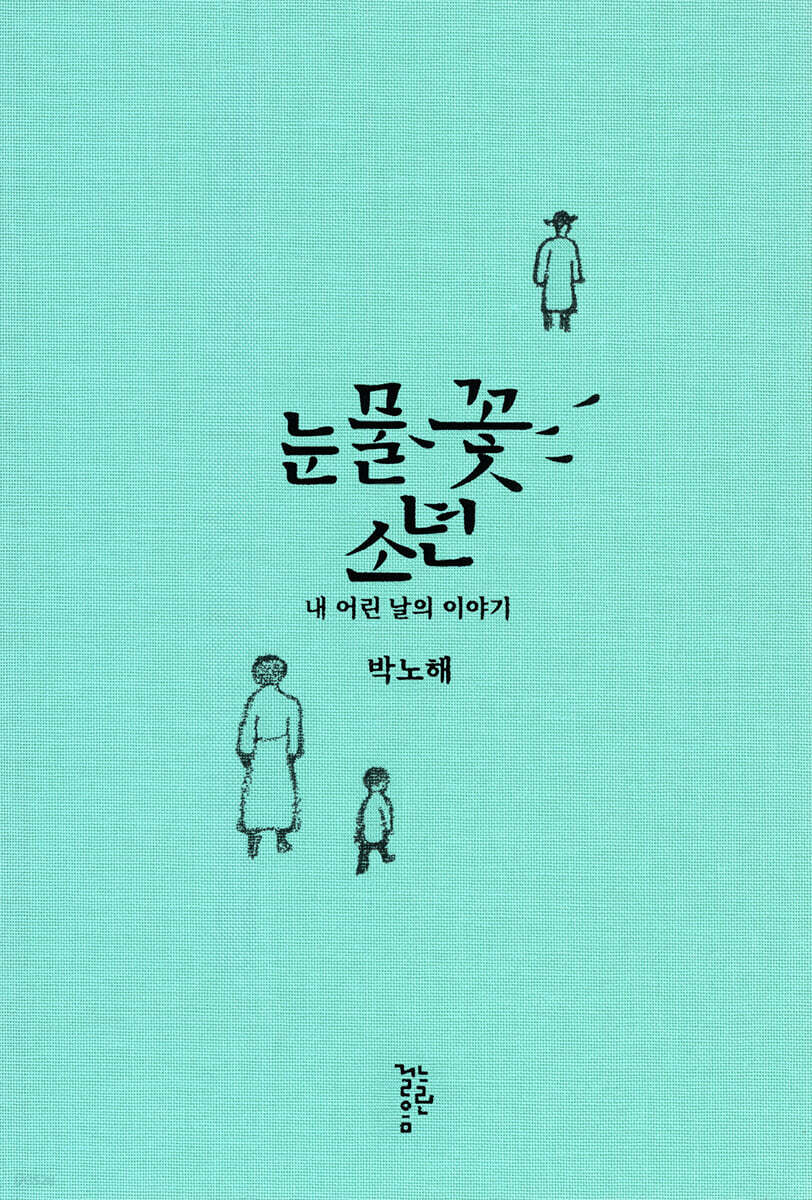
teardrop flower boy
 |
Description
Book Introduction
- A word from MD
-
Poet Park No-hae's first autobiographical essayWhat kind of childhood did a good adult have? An essay by poet Park No-hae, revealing his childhood and illuminating a dark era, has been published.
The memories of Donggang, a small village in Namdo that made the poet Park No-hae who he is today, and the story of the young “Pyeong-i” are honestly captured in 33 prose pieces and pencil drawings.
February 23, 2024. Essay PD Kim Yu-ri
Poet Park No-hae returned with the face of a 'boy'.
His first autobiographical essay, “The Boy in Tears,” is about his childhood as a boy called “Pyeong-i,” growing up in the small village of Donggang in the southern provinces until he graduated from elementary school.
It was a dark, poor, and sad time, but he says, “There was no darkness in my heart.”
This was the question readers asked him most often.
“What gave you the strength to live like that?” he asks.
“Everything for me started with ‘Tearful Boy’.”
As we get lost in the story, which is like a mother's hand stroking the back of a child, before we know it, this little child stirs our hearts with laughter and tears.
In the beautiful and delicious Jeolla dialect, the mountains, fields, and sea where he played unfold, and the scent of azaleas, roses, and camellias permeates the air depending on the season, and the dirt yards, village alleys, schools, marketplaces, small public houses, and the landscapes that raised him are depicted like a movie.
Each of the 33 articles is accompanied by a pencil drawing by poet Park No-hae himself.
“Did they do that because they wanted to?
“Don’t blame anyone and be kind to yourself.” The grandmother who embraced the young man who had committed a sin and gave him the strength to live again.
The neighbors who encouraged Pyeong-i, who lost his father at the age of seven, to walk around the neighborhood and move forward with courage.
Comrades who stood up to injustice together and cried together, saying, “It’s not that it’s not right.”
“If you find something better, teach me.” Teacher Sugri always leaned in to listen to his students.
A merchant who carried all things in the world and spoke cheerfully.
My mother taught me not through words but through her life, and she prayed with tears at my bedside while I was sleeping.
Father Jose, my friend from the small church.
The neighborhood brothers and sisters who were full of romance, style, and affection.
Even the girl of my first love who came to me with a poem and sharpened my pencil when I was lonely, saying, “Would you like to play with me?”
What makes a person what they are, what parents and children, teachers and students, neighbors and friends should be like, how should I live now? 『The Boy in Tears』 makes each of us look back on our own stories.
Let's embark on a journey into the story of "The Boy Who Cried Tears," a book that will help you grow in strength of mind and stature of spirit as you laugh and cry with "Boy Pyeong-i."
His first autobiographical essay, “The Boy in Tears,” is about his childhood as a boy called “Pyeong-i,” growing up in the small village of Donggang in the southern provinces until he graduated from elementary school.
It was a dark, poor, and sad time, but he says, “There was no darkness in my heart.”
This was the question readers asked him most often.
“What gave you the strength to live like that?” he asks.
“Everything for me started with ‘Tearful Boy’.”
As we get lost in the story, which is like a mother's hand stroking the back of a child, before we know it, this little child stirs our hearts with laughter and tears.
In the beautiful and delicious Jeolla dialect, the mountains, fields, and sea where he played unfold, and the scent of azaleas, roses, and camellias permeates the air depending on the season, and the dirt yards, village alleys, schools, marketplaces, small public houses, and the landscapes that raised him are depicted like a movie.
Each of the 33 articles is accompanied by a pencil drawing by poet Park No-hae himself.
“Did they do that because they wanted to?
“Don’t blame anyone and be kind to yourself.” The grandmother who embraced the young man who had committed a sin and gave him the strength to live again.
The neighbors who encouraged Pyeong-i, who lost his father at the age of seven, to walk around the neighborhood and move forward with courage.
Comrades who stood up to injustice together and cried together, saying, “It’s not that it’s not right.”
“If you find something better, teach me.” Teacher Sugri always leaned in to listen to his students.
A merchant who carried all things in the world and spoke cheerfully.
My mother taught me not through words but through her life, and she prayed with tears at my bedside while I was sleeping.
Father Jose, my friend from the small church.
The neighborhood brothers and sisters who were full of romance, style, and affection.
Even the girl of my first love who came to me with a poem and sharpened my pencil when I was lonely, saying, “Would you like to play with me?”
What makes a person what they are, what parents and children, teachers and students, neighbors and friends should be like, how should I live now? 『The Boy in Tears』 makes each of us look back on our own stories.
Let's embark on a journey into the story of "The Boy Who Cried Tears," a book that will help you grow in strength of mind and stature of spirit as you laugh and cry with "Boy Pyeong-i."
- You can preview some of the book's contents.
Preview
index
The Road I Found by Asking · 9
Leave it · 13
Market Day, Grandma's Words · 19
Train Travel with Father · 26
One red candy · 31
Short and Brilliant · 35
The Fire Seal of My Soul · 42
The Day the Sky Opened · 50
The Donggang Public Prosecution Service that Raised Me · 52
So pretty · 59
Studying the Thousand Character Classic · 62
A Walk Around the Neighborhood · 67
My First Cooking · 75
Shining Multiplication Table · 82
The Water Peddler on a Snowy Night · 85
Yeah, we'll see when we get older · 92
Whispers of Flower Seeds · 99
Danggol's Child · 105
My Beautiful Map · 112
You Win Today · 131
The Secret Summer of That Year · 140
Some Brothers · 148
Moon Shadow Yeon-i's Sister · 160
A Light in the Library · 168
The Return of the Youth · 173
A pair of white rubber shoes · 179
Pencil Sharpener Girl · 183
Mr. Sugri · 199
Sari's House and Rose · 202
Run, Bike · 207
In Search of a Dream · 215
Prayer of Tears · 221
The Boy Graduates That Day · 227
Author's Note · 239
Author Bio · 252
Leave it · 13
Market Day, Grandma's Words · 19
Train Travel with Father · 26
One red candy · 31
Short and Brilliant · 35
The Fire Seal of My Soul · 42
The Day the Sky Opened · 50
The Donggang Public Prosecution Service that Raised Me · 52
So pretty · 59
Studying the Thousand Character Classic · 62
A Walk Around the Neighborhood · 67
My First Cooking · 75
Shining Multiplication Table · 82
The Water Peddler on a Snowy Night · 85
Yeah, we'll see when we get older · 92
Whispers of Flower Seeds · 99
Danggol's Child · 105
My Beautiful Map · 112
You Win Today · 131
The Secret Summer of That Year · 140
Some Brothers · 148
Moon Shadow Yeon-i's Sister · 160
A Light in the Library · 168
The Return of the Youth · 173
A pair of white rubber shoes · 179
Pencil Sharpener Girl · 183
Mr. Sugri · 199
Sari's House and Rose · 202
Run, Bike · 207
In Search of a Dream · 215
Prayer of Tears · 221
The Boy Graduates That Day · 227
Author's Note · 239
Author Bio · 252
Detailed image

Into the book
It's okay if you don't know much.
Because people are long.
A person who listens well shines more than a person who speaks well, and a person who asks questions well is nobler than a person who knows well.
If you ask around, everything will work out well.
--- p.12
Are the candies sweet and delicious? I mean, Grandi.
The mountains, fields, seas, flowers, and trees all have their own unique flavor.
If you live your life with only the sweetest and most delicious things in your mouth, like candy, all the small and precious things in the world will fade away, and your body will become damaged, dull, and divided.
Baby, don't be blinded by the sweetest thing and don't be obsessed with just that one thing.
--- p.32~33
Relax! If you relax and empty your body, you will never sink.
--- p.143~144
People are spirits.
People will know what you are thinking.
Whatever you do, don't be a materialistic person.
--- p.153
Me.
I will become a good listener and a good listener.
I will become the mouth and writing of those who have a mouth but cannot speak, and who have a heart but cannot write.
--- p.166
Walking the path between the lines of the book, I wanted to have everything and have nothing, be anything and be nothing.
--- p.169
Living for others is a never-ending lack.
Isn't that the cause of all diseases?
In human terms, meaning comes first.
If you set a specific dream, its meaning becomes small and meaningless.
You have to set a big goal first.
That's all you need to do if you're sincere and consistent.
--- p.217
My mother and I were neither 'good parents' nor 'good children.'
They just stayed by each other's side in silence, offering tearful prayers to each other.
Because my mother didn't expect me to be a good child, I was able to be myself and find my own way.
--- p.225
There is a 'critical period' for humans that lasts their entire lives.
The first one is during the boy and girl years.
A time when the framework of values, outlook on life, and worldview that illuminates one's entire life is formed, and something is secretly engraved in the land of new birth and a path is paved.
It is a time to cultivate the fundamental strength to walk out into that vast world, with a flash of foreboding and a sense of your own one and only path.
The inner feeling engraved in me at that time, the encounter with the decisive event and the spark, drives me throughout my life.
--- p.239~240
In this advanced world that is too overheated, too noisy, and too dazzling, our bodies are not at peace.
Our hearts are always restless and anxious, and cannot rest.
Even children are pressured to succeed and are overprotected and expected to succeed, so they are unable to grow at their own pace.
--- p.243
The reason I am struggling to write like this today is because there is a spark of hope that has been cherished inside me for a long time.
Because I must remember and pass on the world and era I experienced, the struggles and wonders of the people I encountered, in that one corner of the universe, on Earth, at that one place and time.
Because I have my own experiences and testimonies that no one can replace, and I have the love and secret messages that have been passed down to me.
Because people are long.
A person who listens well shines more than a person who speaks well, and a person who asks questions well is nobler than a person who knows well.
If you ask around, everything will work out well.
--- p.12
Are the candies sweet and delicious? I mean, Grandi.
The mountains, fields, seas, flowers, and trees all have their own unique flavor.
If you live your life with only the sweetest and most delicious things in your mouth, like candy, all the small and precious things in the world will fade away, and your body will become damaged, dull, and divided.
Baby, don't be blinded by the sweetest thing and don't be obsessed with just that one thing.
--- p.32~33
Relax! If you relax and empty your body, you will never sink.
--- p.143~144
People are spirits.
People will know what you are thinking.
Whatever you do, don't be a materialistic person.
--- p.153
Me.
I will become a good listener and a good listener.
I will become the mouth and writing of those who have a mouth but cannot speak, and who have a heart but cannot write.
--- p.166
Walking the path between the lines of the book, I wanted to have everything and have nothing, be anything and be nothing.
--- p.169
Living for others is a never-ending lack.
Isn't that the cause of all diseases?
In human terms, meaning comes first.
If you set a specific dream, its meaning becomes small and meaningless.
You have to set a big goal first.
That's all you need to do if you're sincere and consistent.
--- p.217
My mother and I were neither 'good parents' nor 'good children.'
They just stayed by each other's side in silence, offering tearful prayers to each other.
Because my mother didn't expect me to be a good child, I was able to be myself and find my own way.
--- p.225
There is a 'critical period' for humans that lasts their entire lives.
The first one is during the boy and girl years.
A time when the framework of values, outlook on life, and worldview that illuminates one's entire life is formed, and something is secretly engraved in the land of new birth and a path is paved.
It is a time to cultivate the fundamental strength to walk out into that vast world, with a flash of foreboding and a sense of your own one and only path.
The inner feeling engraved in me at that time, the encounter with the decisive event and the spark, drives me throughout my life.
--- p.239~240
In this advanced world that is too overheated, too noisy, and too dazzling, our bodies are not at peace.
Our hearts are always restless and anxious, and cannot rest.
Even children are pressured to succeed and are overprotected and expected to succeed, so they are unable to grow at their own pace.
--- p.243
The reason I am struggling to write like this today is because there is a spark of hope that has been cherished inside me for a long time.
Because I must remember and pass on the world and era I experienced, the struggles and wonders of the people I encountered, in that one corner of the universe, on Earth, at that one place and time.
Because I have my own experiences and testimonies that no one can replace, and I have the love and secret messages that have been passed down to me.
--- p.246~247
Publisher's Review
Poet Park No-hae's first autobiographical essay
Stories from My Childhood, Part 33
“This is the story of the great gift that raised me.”
Poet Park No-hae has returned this time with the face of a 'boy'.
A poet who shook the times and souls with his vivid and vivid poetry during the harsh dictatorship.
A revolutionary who was sentenced to death and imprisoned in solitary confinement as a labor activist and democracy activist.
A friend who cries alongside the children of a global village suffering from poverty and conflict.
Poet Park No-hae, who became an adult who walked in search of light in a lost era for young people.
This was the question readers asked him most often.
“What gave you the strength to live like that?” he asks.
“Everything for me started with ‘Tearful Boy’.”
Poet Park No-hae's first autobiographical essay, "The Boy Who Cried Tears," is the first story of his childhood.
This is the story of his childhood, when he was called “Pyeong-i,” growing up in a small village in the southern province of Donggang and graduating from elementary school.
It was a dark, poor and sad time, but “there was no darkness in my heart,” he says.
“Now I realize what a great gift I have been given.
“I must tell the story of how they raised me and made me who I am.” (From “Author’s Note”) This is the source of power that ran through poet Park No-hae’s life, and the reason he conveys to us the memories he kept secretly.
“The Boy Who Cried Tears” is a vivid prose rather than condensed poetry.
The beautiful and delicious Jeolla dialect gives the writing a sentimental flavor.
As we get lost in the story, which is like a mother's hand stroking the back of a child, before we know it, this little child stirs our hearts with laughter and tears.
Between sentences that seem to awaken all the senses of the body, the mountains, fields, and sea where he played unfold, and the scent of azaleas, roses, and camellias permeates the air depending on the season, and the dirt yard, village alley, school, marketplace, small public house, and the landscapes that raised him are depicted like a movie.
The illustrations included in each of the 33 poems are pencil drawings by poet Park No-hae himself, adding warmth and a sense of nostalgia as if traveling through the landscapes of the poems.
In a world that is becoming increasingly poisonous and vicious,
I've been waiting for such a pure and noble story.
“There is a ‘critical period’ for humans that lasts their entire lives.
The first one is during the boy and girl years.
It is a time when the framework of values, outlook on life, and worldview that illuminates one's entire life is formed, and the fundamental strength to walk through that vast world is cultivated.
“A time when I already held everything that had not yet bloomed.” (From “Author’s Note”) The setting of “The Boy Who Cried Tears” was a time when there was no electricity, there were many things lacking, and there were not even books to read to one’s heart’s content.
But nature, humanity, and time were plentiful, and “pure earth-hearted people” lived on.
“Did they do that because they wanted to?
“Don’t blame anyone and be kind to yourself.” The grandmother who embraced the young man who had committed a sin and gave him the strength to live again.
The neighbors who encouraged Pyeong-i, who lost his father at the age of seven, to walk around the neighborhood and move forward with courage.
Comrades who stood up to injustice together and cried together, saying, “It’s not that it’s not right.”
“If you find something better, teach me.” Teacher Sugri always leaned in to listen to his students.
A merchant who carried all things in the world and spoke with lively wit.
My mother taught me not through words but through her life, and she prayed with tears at my bedside while I was sleeping.
Father Jose, my friend from the small parish.
The neighborhood brothers and sisters who were full of romance, style, and affection.
Even the girl of my first love who came to me with a poem and sharpened my pencil when I was lonely, saying, “Would you like to play with me?”
People who, despite being poor and uneducated, have human dignity, have relationships where they care for one another, and live truthful lives where they can speak the truth.
The story of a boy who grew up there unfolds in a simple and rich way, and the heartbreaking scenery from which one can no longer return evokes longing and hope.
“In these times when things are becoming more toxic and vicious day by day, and when blatant vulgarity and superficiality are making the soul sick” (from the “Author’s Note”), just reading the story of the extremely pure and affectionate “Tearful Boy” will calm the storm in your heart and fill you with clear and deep strength.
“I know it’s hard.
I cried a lot too.
“Those tears will become flowers, and those eyes will become a path.”
Poet Park No-hae delivers "Tearful Flowers," a message of hope and courage.
“The loss is as great and profound as the achievements, the noble human spirit and virtues are falling to the ground, and the seeds of hope are being lost and forgotten.
(…) “I must remember and pass on the world and era I experienced, and the struggles and wonders of the people I met, in that place and at that time on Earth” (from “Author’s Note”), and “The Boy in Tears” is also a legacy of memories brought up through deep reflection by poet Park No-hae, who lived through the twists and turns of modern history with his whole body.
It reminds us of “the original things that we have lost too quickly, the purity of humanity,” and conveys the “spark of hope” that has been cherished for a long time.
"It's okay if you don't know.
Because people are long.
“A person who listens well shines more than a person who speaks well, and a person who asks questions well is a noble person rather than a person who knows well.” (p. 12 “The Road Found by Asking”) “When your eyes are bright, you should take in many good things and read many good books, and when your body is young, you should work hard and do good things.
“If you don’t use it when it’s good, you’ll end up hurting people.” (p. 70 “A Walk Around the Neighborhood”) “Living for others is a never-ending lack.
Isn't that the cause of all diseases?
If you set a specific dream, its meaning becomes small and meaningless.
You have to set a big goal first.
"That's all you need to do if you're sincere and consistent." (p. 217, "In Search of a Dream") "Relax! If you relax and empty your body, you'll never sink." (p. 144, "That Secret Summer")
What makes a person what they are, what parents and children, teachers and students, neighbors and friends should be like, what moments made me who I am today, how I should live now—"The Boy Who Cried Tears" makes each of us look back on our own stories.
"What kind of adult has the boy or girl inside you become now?" The boy, Pyeong-i, runs over with a bright and cheerful face and speaks with wet eyes.
“I know it’s hard.
I cried a lot too.
But you have unknown days that no one else has, and the wonders of the journey await you.
“Those tears will become flowers, and those eyes will become a path.” (From “Author’s Note”) After reading this, let’s embark on a journey into the story of ‘Boy Pyeong-i’, whose strength of mind and spiritual stature will grow significantly.
Stories from My Childhood, Part 33
“This is the story of the great gift that raised me.”
Poet Park No-hae has returned this time with the face of a 'boy'.
A poet who shook the times and souls with his vivid and vivid poetry during the harsh dictatorship.
A revolutionary who was sentenced to death and imprisoned in solitary confinement as a labor activist and democracy activist.
A friend who cries alongside the children of a global village suffering from poverty and conflict.
Poet Park No-hae, who became an adult who walked in search of light in a lost era for young people.
This was the question readers asked him most often.
“What gave you the strength to live like that?” he asks.
“Everything for me started with ‘Tearful Boy’.”
Poet Park No-hae's first autobiographical essay, "The Boy Who Cried Tears," is the first story of his childhood.
This is the story of his childhood, when he was called “Pyeong-i,” growing up in a small village in the southern province of Donggang and graduating from elementary school.
It was a dark, poor and sad time, but “there was no darkness in my heart,” he says.
“Now I realize what a great gift I have been given.
“I must tell the story of how they raised me and made me who I am.” (From “Author’s Note”) This is the source of power that ran through poet Park No-hae’s life, and the reason he conveys to us the memories he kept secretly.
“The Boy Who Cried Tears” is a vivid prose rather than condensed poetry.
The beautiful and delicious Jeolla dialect gives the writing a sentimental flavor.
As we get lost in the story, which is like a mother's hand stroking the back of a child, before we know it, this little child stirs our hearts with laughter and tears.
Between sentences that seem to awaken all the senses of the body, the mountains, fields, and sea where he played unfold, and the scent of azaleas, roses, and camellias permeates the air depending on the season, and the dirt yard, village alley, school, marketplace, small public house, and the landscapes that raised him are depicted like a movie.
The illustrations included in each of the 33 poems are pencil drawings by poet Park No-hae himself, adding warmth and a sense of nostalgia as if traveling through the landscapes of the poems.
In a world that is becoming increasingly poisonous and vicious,
I've been waiting for such a pure and noble story.
“There is a ‘critical period’ for humans that lasts their entire lives.
The first one is during the boy and girl years.
It is a time when the framework of values, outlook on life, and worldview that illuminates one's entire life is formed, and the fundamental strength to walk through that vast world is cultivated.
“A time when I already held everything that had not yet bloomed.” (From “Author’s Note”) The setting of “The Boy Who Cried Tears” was a time when there was no electricity, there were many things lacking, and there were not even books to read to one’s heart’s content.
But nature, humanity, and time were plentiful, and “pure earth-hearted people” lived on.
“Did they do that because they wanted to?
“Don’t blame anyone and be kind to yourself.” The grandmother who embraced the young man who had committed a sin and gave him the strength to live again.
The neighbors who encouraged Pyeong-i, who lost his father at the age of seven, to walk around the neighborhood and move forward with courage.
Comrades who stood up to injustice together and cried together, saying, “It’s not that it’s not right.”
“If you find something better, teach me.” Teacher Sugri always leaned in to listen to his students.
A merchant who carried all things in the world and spoke with lively wit.
My mother taught me not through words but through her life, and she prayed with tears at my bedside while I was sleeping.
Father Jose, my friend from the small parish.
The neighborhood brothers and sisters who were full of romance, style, and affection.
Even the girl of my first love who came to me with a poem and sharpened my pencil when I was lonely, saying, “Would you like to play with me?”
People who, despite being poor and uneducated, have human dignity, have relationships where they care for one another, and live truthful lives where they can speak the truth.
The story of a boy who grew up there unfolds in a simple and rich way, and the heartbreaking scenery from which one can no longer return evokes longing and hope.
“In these times when things are becoming more toxic and vicious day by day, and when blatant vulgarity and superficiality are making the soul sick” (from the “Author’s Note”), just reading the story of the extremely pure and affectionate “Tearful Boy” will calm the storm in your heart and fill you with clear and deep strength.
“I know it’s hard.
I cried a lot too.
“Those tears will become flowers, and those eyes will become a path.”
Poet Park No-hae delivers "Tearful Flowers," a message of hope and courage.
“The loss is as great and profound as the achievements, the noble human spirit and virtues are falling to the ground, and the seeds of hope are being lost and forgotten.
(…) “I must remember and pass on the world and era I experienced, and the struggles and wonders of the people I met, in that place and at that time on Earth” (from “Author’s Note”), and “The Boy in Tears” is also a legacy of memories brought up through deep reflection by poet Park No-hae, who lived through the twists and turns of modern history with his whole body.
It reminds us of “the original things that we have lost too quickly, the purity of humanity,” and conveys the “spark of hope” that has been cherished for a long time.
"It's okay if you don't know.
Because people are long.
“A person who listens well shines more than a person who speaks well, and a person who asks questions well is a noble person rather than a person who knows well.” (p. 12 “The Road Found by Asking”) “When your eyes are bright, you should take in many good things and read many good books, and when your body is young, you should work hard and do good things.
“If you don’t use it when it’s good, you’ll end up hurting people.” (p. 70 “A Walk Around the Neighborhood”) “Living for others is a never-ending lack.
Isn't that the cause of all diseases?
If you set a specific dream, its meaning becomes small and meaningless.
You have to set a big goal first.
"That's all you need to do if you're sincere and consistent." (p. 217, "In Search of a Dream") "Relax! If you relax and empty your body, you'll never sink." (p. 144, "That Secret Summer")
What makes a person what they are, what parents and children, teachers and students, neighbors and friends should be like, what moments made me who I am today, how I should live now—"The Boy Who Cried Tears" makes each of us look back on our own stories.
"What kind of adult has the boy or girl inside you become now?" The boy, Pyeong-i, runs over with a bright and cheerful face and speaks with wet eyes.
“I know it’s hard.
I cried a lot too.
But you have unknown days that no one else has, and the wonders of the journey await you.
“Those tears will become flowers, and those eyes will become a path.” (From “Author’s Note”) After reading this, let’s embark on a journey into the story of ‘Boy Pyeong-i’, whose strength of mind and spiritual stature will grow significantly.
GOODS SPECIFICS
- Date of issue: February 22, 2024
- Format: Hardcover book binding method guide
- Page count, weight, size: 256 pages | 320g | 128*188*20mm
- ISBN13: 9788991418363
- ISBN10: 8991418368
You may also like
카테고리
korean


korean

![GQ KOREA Mark (Monthly): December [2025]](http://librairie.coreenne.fr/cdn/shop/files/8ef265dbbfbf186523ed75ba7319009d.jpg?v=1765340328&width=3840)


