

Where Your Heart Left: Stories of Hole-in-the-Wall Shops Around the World
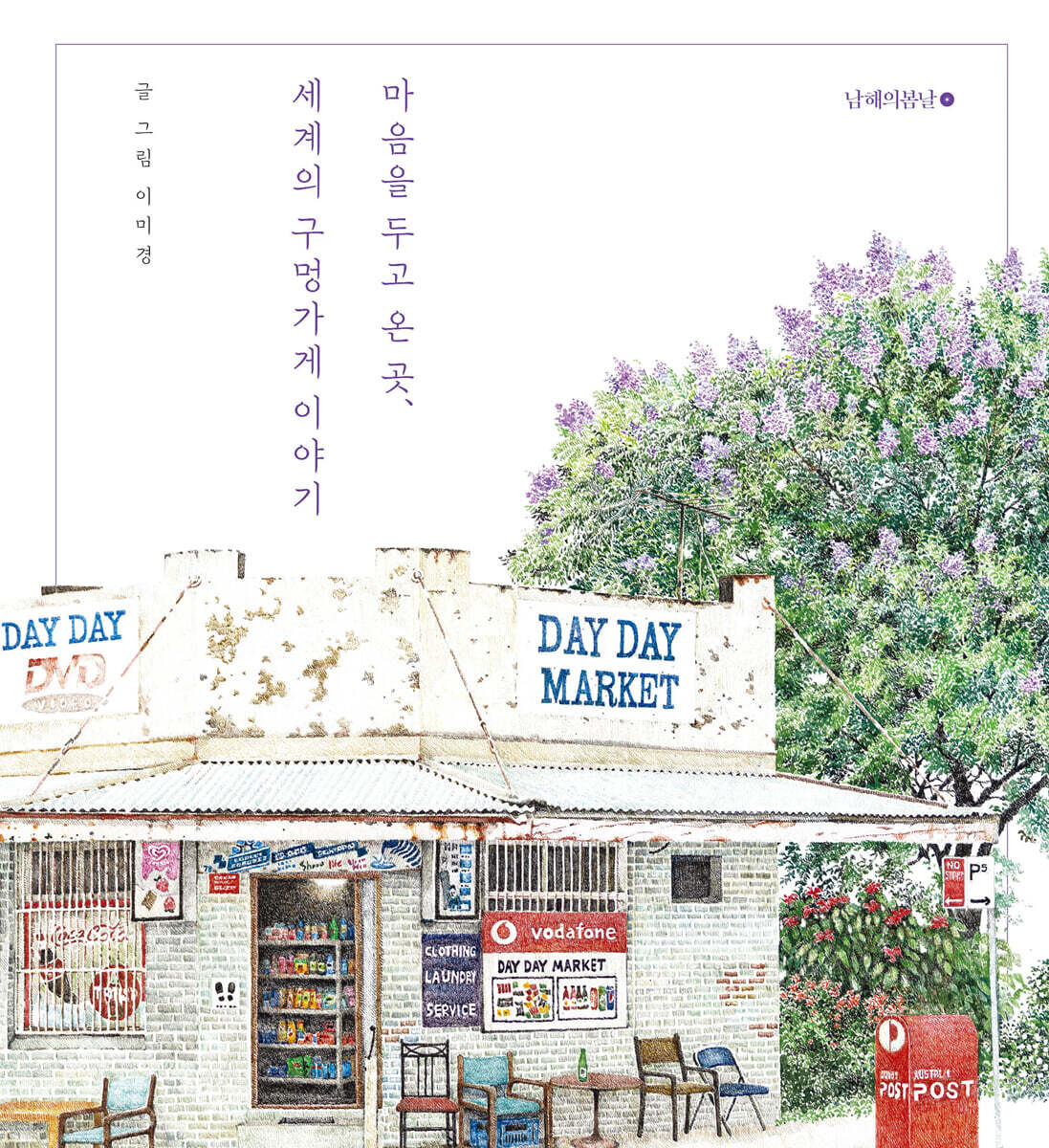 |
Description
Book Introduction
The writer who captivated the world with his hole-in-the-wall shop
A new work by author Im Ji-kyung after five years!
I met him while traveling to 19 countries in Asia and Europe for over 10 years.
A warm and cozy hole-in-the-wall shop in the world
Artist Lee Mi-kyung has been consistently loved for her charming paintings of hole-in-the-wall shops for over 25 years.
Since the publication of his first book, "The Days of a Hole-in-the-Wall Shop: Happiness with Just One Coin," in 2017, his beautiful works have garnered attention not only in Korea but also around the world, including from the BBC in the UK, and have been translated and published in France, Taiwan, and Japan.
In this book, the author has included, along with text, the exotic yet familiar world of hole-in-the-wall shops he encountered in 19 countries, including England, France, Morocco, Turkey, Mongolia, Nepal, and Indonesia, over the past decade.
When the book was published in France, Taiwan, and Japan, the author's work expanded to encompass hole-in-the-wall shops around the world, starting with depicting each of the country's hole-in-the-wall shops in the book.
Just as I visited hole-in-the-wall shops in alleyways in Korea that retained their old-fashioned charm, I traveled the world's alleyways to find hole-in-the-wall shops that serve as a community center and a place of life.
The warmth and nostalgia encountered in the world's hole-in-the-wall shops, and the feelings that had to be left behind there, are captured in writing with even more depth.
“Even if it’s a country on the other side of the globe, thousands of kilometers away,
It seems that people's lives are all the same, no different from ours.
Why does the world feel small?
“In this village called Earth, we are all friends and neighbors.”
Also, the book includes the latest works from Korean hole-in-the-wall shops at the end of the book. Through the author's works, which change into the landscape of hole-in-the-wall shops that begin to permeate the life of villages, you can appreciate the author's world of works that has become deeper and wider.
In addition, the format has been enlarged to allow for a larger and more detailed appreciation of the work, and the weight of the high-quality paper mainly used in art books and catalogs has been increased to create a thickness that does not show through, further increasing its collection value.
A new work by author Im Ji-kyung after five years!
I met him while traveling to 19 countries in Asia and Europe for over 10 years.
A warm and cozy hole-in-the-wall shop in the world
Artist Lee Mi-kyung has been consistently loved for her charming paintings of hole-in-the-wall shops for over 25 years.
Since the publication of his first book, "The Days of a Hole-in-the-Wall Shop: Happiness with Just One Coin," in 2017, his beautiful works have garnered attention not only in Korea but also around the world, including from the BBC in the UK, and have been translated and published in France, Taiwan, and Japan.
In this book, the author has included, along with text, the exotic yet familiar world of hole-in-the-wall shops he encountered in 19 countries, including England, France, Morocco, Turkey, Mongolia, Nepal, and Indonesia, over the past decade.
When the book was published in France, Taiwan, and Japan, the author's work expanded to encompass hole-in-the-wall shops around the world, starting with depicting each of the country's hole-in-the-wall shops in the book.
Just as I visited hole-in-the-wall shops in alleyways in Korea that retained their old-fashioned charm, I traveled the world's alleyways to find hole-in-the-wall shops that serve as a community center and a place of life.
The warmth and nostalgia encountered in the world's hole-in-the-wall shops, and the feelings that had to be left behind there, are captured in writing with even more depth.
“Even if it’s a country on the other side of the globe, thousands of kilometers away,
It seems that people's lives are all the same, no different from ours.
Why does the world feel small?
“In this village called Earth, we are all friends and neighbors.”
Also, the book includes the latest works from Korean hole-in-the-wall shops at the end of the book. Through the author's works, which change into the landscape of hole-in-the-wall shops that begin to permeate the life of villages, you can appreciate the author's world of works that has become deeper and wider.
In addition, the format has been enlarged to allow for a larger and more detailed appreciation of the work, and the weight of the high-quality paper mainly used in art books and catalogs has been increased to create a thickness that does not show through, further increasing its collection value.
- You can preview some of the book's contents.
Preview
index
Prologue: Finding the Hole-in-the-Wall Shops of the World
Familiarity found on an unfamiliar road
Georgian merchants
Big and small shops in Paris
Bonjour Epicerie
Blue Age
See you at the kiosk!
When you go to Ross-on-Wye
Everywhere you step
backpacking
A tree that stands guard wherever it is
Under the jacaranda tree
In Sydney's 19th century Newtown
winding furrows, furrows
Old Town
I was lucky to meet you!
A store that opens at dawn
Hole-in-the-wall shop, a traveler's shelter
How have you been, Grandma Masao?
Unfamiliar road, familiar gaze
water vending machine
Mirissa's Dream
In the meadow
Solongos
A name that will not fade away even as time passes
A scene from Casablanca
Take a blue step
One wedding and one funeral
Will carved in rock
A quiet shop
A landscape over time
A day on the water
A view beyond compare
On the way to the Blue Lagoon
The more snow piles up, the more
My loving village is back again
Hyangmae Supermarket, a painting
Relationships created by the store
Family is everything
To resemble
Normal
I miss my hometown
The sound of spring
Maze Village
Utopia in my heart
remote mountain village
In Changsin-dong
Epilogue Beyond the Boundary
Familiarity found on an unfamiliar road
Georgian merchants
Big and small shops in Paris
Bonjour Epicerie
Blue Age
See you at the kiosk!
When you go to Ross-on-Wye
Everywhere you step
backpacking
A tree that stands guard wherever it is
Under the jacaranda tree
In Sydney's 19th century Newtown
winding furrows, furrows
Old Town
I was lucky to meet you!
A store that opens at dawn
Hole-in-the-wall shop, a traveler's shelter
How have you been, Grandma Masao?
Unfamiliar road, familiar gaze
water vending machine
Mirissa's Dream
In the meadow
Solongos
A name that will not fade away even as time passes
A scene from Casablanca
Take a blue step
One wedding and one funeral
Will carved in rock
A quiet shop
A landscape over time
A day on the water
A view beyond compare
On the way to the Blue Lagoon
The more snow piles up, the more
My loving village is back again
Hyangmae Supermarket, a painting
Relationships created by the store
Family is everything
To resemble
Normal
I miss my hometown
The sound of spring
Maze Village
Utopia in my heart
remote mountain village
In Changsin-dong
Epilogue Beyond the Boundary
Detailed image
.jpg)
Into the book
Each country's shops have different characteristics and unique charms depending on their religion, culture, climate, and economic situation.
There were countries where the hole-in-the-wall shops had been around for generations and were still enjoying their heyday. Sometimes, I would go to the trouble of finding a shop that had already closed, and I would regretfully take a picture of its exterior.
Whether it was cold or hot, the temperature and time of the hole-in-the-wall store flowed differently in each country.
Still, the emotional empathy that the hole-in-the-wall store had was not much different.
--- p.7
In the aboriginal community of Tainan City in southern Taiwan, there is an old shop called 'Gruttergi' run by a Siraya grandmother.
The large, leafy Indian almond tree in front of the store provides ample shade and is spacious enough for everyone to rest comfortably.
This place, which retains the local character, serves traditional Taiwanese breakfast from the early morning by lighting a fire in a kiln.
After meal time, it becomes time for a cozy general store selling goods.
A place where people coming and going can rest comfortably, this is the stump of the village.
--- p.49
There is a vending machine I have never seen before in front of a store in an alley in Mactan.
If you put a coin in a water bottle or small plastic bag you brought, lukewarm water will come out.
Perhaps because it is a hot country, water vending machines were more common than coffee vending machines.
(…) Many homes do not have refrigerators, making it difficult to store food for a long time.
Since most residents travel by bicycle or motorcycle, they say they buy disposable necessities such as shampoo, soap, and detergent from small shops in front of their houses rather than going to large supermarkets in the city center.
There, the hole-in-the-wall shop was the place of life and the foundation of one's livelihood.
--- p.56
I rowed slowly, admiring the floating houses where past and present coexist, the faces of lively merchants, and the colorful tropical fruits. Then, a step away from the commotion, I came across a small shop.
The boat stopped for a moment, letting the waves take over.
The remnants of life reflected in the river water sparkle on the surface under the dazzling sunlight, and time flows quietly and calmly in the store waiting for customers.
--- p.87
I saw a review left on a blog by a visitor who had seen the Childari Super work.
‘A work made with life’ contains a warm hole-in-the-wall shop and a lump of hot life.
--- p.105
Even if it's a country thousands of kilometers away on the other side of the globe, people live there and it's no different from us.
Why does the world feel so small? In this village called Earth, we are all friends and neighbors.
There were countries where the hole-in-the-wall shops had been around for generations and were still enjoying their heyday. Sometimes, I would go to the trouble of finding a shop that had already closed, and I would regretfully take a picture of its exterior.
Whether it was cold or hot, the temperature and time of the hole-in-the-wall store flowed differently in each country.
Still, the emotional empathy that the hole-in-the-wall store had was not much different.
--- p.7
In the aboriginal community of Tainan City in southern Taiwan, there is an old shop called 'Gruttergi' run by a Siraya grandmother.
The large, leafy Indian almond tree in front of the store provides ample shade and is spacious enough for everyone to rest comfortably.
This place, which retains the local character, serves traditional Taiwanese breakfast from the early morning by lighting a fire in a kiln.
After meal time, it becomes time for a cozy general store selling goods.
A place where people coming and going can rest comfortably, this is the stump of the village.
--- p.49
There is a vending machine I have never seen before in front of a store in an alley in Mactan.
If you put a coin in a water bottle or small plastic bag you brought, lukewarm water will come out.
Perhaps because it is a hot country, water vending machines were more common than coffee vending machines.
(…) Many homes do not have refrigerators, making it difficult to store food for a long time.
Since most residents travel by bicycle or motorcycle, they say they buy disposable necessities such as shampoo, soap, and detergent from small shops in front of their houses rather than going to large supermarkets in the city center.
There, the hole-in-the-wall shop was the place of life and the foundation of one's livelihood.
--- p.56
I rowed slowly, admiring the floating houses where past and present coexist, the faces of lively merchants, and the colorful tropical fruits. Then, a step away from the commotion, I came across a small shop.
The boat stopped for a moment, letting the waves take over.
The remnants of life reflected in the river water sparkle on the surface under the dazzling sunlight, and time flows quietly and calmly in the store waiting for customers.
--- p.87
I saw a review left on a blog by a visitor who had seen the Childari Super work.
‘A work made with life’ contains a warm hole-in-the-wall shop and a lump of hot life.
--- p.105
Even if it's a country thousands of kilometers away on the other side of the globe, people live there and it's no different from us.
Why does the world feel so small? In this village called Earth, we are all friends and neighbors.
--- p.139
Publisher's Review
We met on the other side of the world, thousands of kilometers away
Landscapes that are unfamiliar yet nostalgic, similar to our own…
Warm comfort from the world's hole-in-the-wall shops
Artist Im Kyung-mi travels to every corner of Korea, from quiet rural villages to obscure alleyways, to find and capture on canvas the hole-in-the-wall shops that quietly stand their ground.
Even in a foreign country, his actions were consistent.
Rather than going to tourist destinations crowded with tourists, we headed to places where the culture and life of the country are alive, such as back alleys of the city center and remote villages in the countryside that are difficult to access.
There are not merchants there who haggle with tourists and sell souvenirs, but hole-in-the-wall shops that share the daily lives of local residents.
Each hole-in-the-wall shop in the world has its own unique characteristics.
The exotic architectural styles and displayed products, which embody each country's culture, religion, and climate, have a different charm from Korea.
But even if you travel thousands of kilometers to the other side of the globe, there is always something to discover.
Just like the friendly greetings and warm hearts towards customers, there is a feeling of affection that is no different from that of our hole-in-the-wall shops in the world.
That is the place of life and the center of the village.
“As cities develop and grow, we find ourselves losing the old shops that have long been a part of the local community.
“Even though I cannot keep up with the rapid changes in the world, I started to search for and draw hole-in-the-wall shops around the world with the hope that a common sense of loss will lead to loving concern and that everyone will coexist.” - From the book
Even when she has to return with a heavy heart because the hole-in-the-wall shop she went to after a long detour has closed, artist Im Kyung-mi says that she finds strength and hope in her journey to find the hole-in-the-wall shop.
Dreaming of a world where more people pay closer attention to and support beautifully aged stores...
Landscapes that are unfamiliar yet nostalgic, similar to our own…
Warm comfort from the world's hole-in-the-wall shops
Artist Im Kyung-mi travels to every corner of Korea, from quiet rural villages to obscure alleyways, to find and capture on canvas the hole-in-the-wall shops that quietly stand their ground.
Even in a foreign country, his actions were consistent.
Rather than going to tourist destinations crowded with tourists, we headed to places where the culture and life of the country are alive, such as back alleys of the city center and remote villages in the countryside that are difficult to access.
There are not merchants there who haggle with tourists and sell souvenirs, but hole-in-the-wall shops that share the daily lives of local residents.
Each hole-in-the-wall shop in the world has its own unique characteristics.
The exotic architectural styles and displayed products, which embody each country's culture, religion, and climate, have a different charm from Korea.
But even if you travel thousands of kilometers to the other side of the globe, there is always something to discover.
Just like the friendly greetings and warm hearts towards customers, there is a feeling of affection that is no different from that of our hole-in-the-wall shops in the world.
That is the place of life and the center of the village.
“As cities develop and grow, we find ourselves losing the old shops that have long been a part of the local community.
“Even though I cannot keep up with the rapid changes in the world, I started to search for and draw hole-in-the-wall shops around the world with the hope that a common sense of loss will lead to loving concern and that everyone will coexist.” - From the book
Even when she has to return with a heavy heart because the hole-in-the-wall shop she went to after a long detour has closed, artist Im Kyung-mi says that she finds strength and hope in her journey to find the hole-in-the-wall shop.
Dreaming of a world where more people pay closer attention to and support beautifully aged stores...
GOODS SPECIFICS
- Date of issue: June 27, 2025
- Format: Hardcover book binding method guide
- Page count, weight, size: 144 pages | 644g | 195*215*18mm
- ISBN13: 9791193027509
- ISBN10: 1193027500
You may also like
카테고리
korean


korean

![GQ KOREA Mark (Monthly): December [2025]](http://librairie.coreenne.fr/cdn/shop/files/8ef265dbbfbf186523ed75ba7319009d.jpg?v=1765340328&width=3840)


