

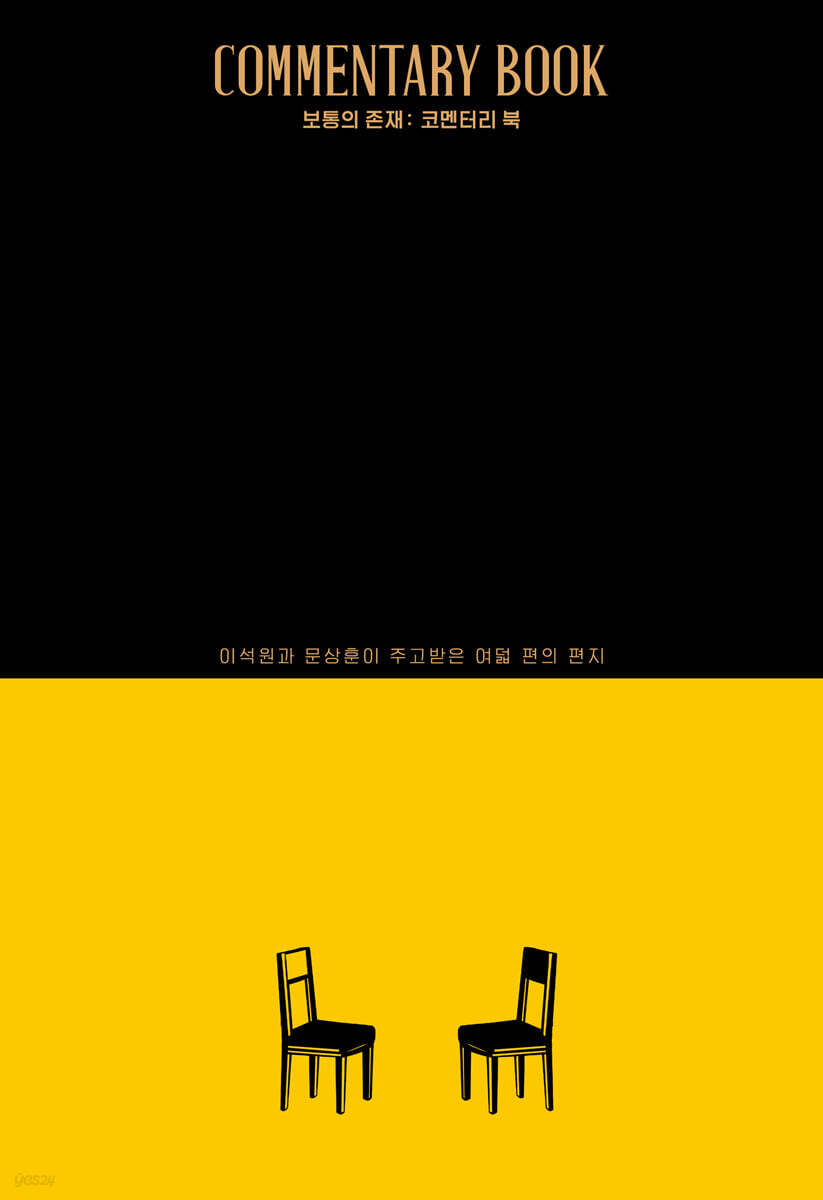
Ordinary Existence: Commentary Book
 |
Description
Book Introduction
On November 4, 2009, the first edition of 『Ordinary Existence』 was introduced to readers.
Filled with honest language about hope and despair, people and love, this book has received explosive support from readers in their twenties and thirties since its publication.
Fifteen years later, the author, now in his fifties, took up his pen again, writing his first book at the age of thirty-eight, for the sake of the “readers who believed in and supported this book” for a long time.
The “5% lies” and their true intentions, the stories that were “right then but wrong now” in the book, were added to “Ordinary Existence” in his own unique and still true handwriting.
Moreover, 『Ordinary Existence: Commentary Book』 features a special guest.
Comedian and writer Moon Sang-hoon, as a "reader's representative," has included eight letters exchanged with the author. The in-depth conversations between these two "comprehensive artists" with a 20-year age gap over 15 years will be another gift to readers.
Filled with honest language about hope and despair, people and love, this book has received explosive support from readers in their twenties and thirties since its publication.
Fifteen years later, the author, now in his fifties, took up his pen again, writing his first book at the age of thirty-eight, for the sake of the “readers who believed in and supported this book” for a long time.
The “5% lies” and their true intentions, the stories that were “right then but wrong now” in the book, were added to “Ordinary Existence” in his own unique and still true handwriting.
Moreover, 『Ordinary Existence: Commentary Book』 features a special guest.
Comedian and writer Moon Sang-hoon, as a "reader's representative," has included eight letters exchanged with the author. The in-depth conversations between these two "comprehensive artists" with a 20-year age gap over 15 years will be another gift to readers.
- You can preview some of the book's contents.
Preview
index
Part 1: Letters - A collection of letters exchanged between Lee Seok-won and Moon Sang-hoon.
There is probably no one who is truly bad at self-loathing. ¶ Moon Sang-hoon … 12
Isn't technique necessary in life too? ¶ Lee Seok-won … 16
I'm increasingly finding myself saying things that I can't do without, and things I can't do without. ¶ Moon Sang-hoon... 22
The Heart of an Honest Merchant ¶ Lee Seok-won … 28
About the box office hit, and I keep getting squeezed ¶ Moon Sang-hoon … 34
That's fine with me ¶ Lee Seok-won … 40
For all ordinary beings ¶ Moon Sang-hoon … 48
I thought I'd end up living my whole life as a coward. ¶ Lee Seok-won … 52
Part 2 Commentary - Sentences Added to Time
Without even being able to properly hold hands… 66
Beautiful thing… 76
The person I loved… 90
Dream…92
Endoscopy…97
Letter … 106
Old Road… 108
The Law of Life… 122
Up… 124
Sunflower… 126
Friends… 132
I run slowly today too… 136
You… 139
Marriage… 142
How to Find Your True Friends… 156
Proposal… 162
He said with a smile… 176
A lingering feeling that lasts longer than the trip… 178
Reversal… 193
My side… 196
Walk… 200
Bow … 218
What I want to do… 222
Au Revoir … 228
An ordinary being… 232
Author's Note 1.
The book "Ordinary Existence" or About a Lie... 250
Author's Note 2.
Being together… 256
There is probably no one who is truly bad at self-loathing. ¶ Moon Sang-hoon … 12
Isn't technique necessary in life too? ¶ Lee Seok-won … 16
I'm increasingly finding myself saying things that I can't do without, and things I can't do without. ¶ Moon Sang-hoon... 22
The Heart of an Honest Merchant ¶ Lee Seok-won … 28
About the box office hit, and I keep getting squeezed ¶ Moon Sang-hoon … 34
That's fine with me ¶ Lee Seok-won … 40
For all ordinary beings ¶ Moon Sang-hoon … 48
I thought I'd end up living my whole life as a coward. ¶ Lee Seok-won … 52
Part 2 Commentary - Sentences Added to Time
Without even being able to properly hold hands… 66
Beautiful thing… 76
The person I loved… 90
Dream…92
Endoscopy…97
Letter … 106
Old Road… 108
The Law of Life… 122
Up… 124
Sunflower… 126
Friends… 132
I run slowly today too… 136
You… 139
Marriage… 142
How to Find Your True Friends… 156
Proposal… 162
He said with a smile… 176
A lingering feeling that lasts longer than the trip… 178
Reversal… 193
My side… 196
Walk… 200
Bow … 218
What I want to do… 222
Au Revoir … 228
An ordinary being… 232
Author's Note 1.
The book "Ordinary Existence" or About a Lie... 250
Author's Note 2.
Being together… 256
Into the book
I think the reason I loved Seokwon's book is because he honestly and sympathetically expressed emotions like anxiety and selfishness that everyone has but cannot express clearly, as if shaking off a blanket.
… When the words of confession first reached readers, including myself, the joy and empathy were great.
--- From "There is probably no truly bad person who hates themselves (Moon Sang-hoon)"
I initially considered myself a businessman rather than an artist, but even that choice ultimately only revealed who I was.
Sanghoon Moon also confessed that he sometimes rationalized his choices in the name of making a living, going back and forth between being humble and popular, but I think that no matter which path he takes, the identity of 'Sanghoon Moon' will inevitably be revealed in the end.
Because no matter what I think of myself, I cannot hide it and must be revealed to the world. That is who I am.
--- From "That's fine with me (Lee Seok-won)"
I am grateful that this space remains exactly where it is.
… okay.
Some moments remain like photographs and never disappear.
--- From "I've Never Held Your Hand Properly"
Isn't it amazing?
The moment I was reminiscing about old memories, as time passed, became another new memory in itself.
The moment I longed for has become another new longing.
--- From "Old Road"
The reason I emphasize the importance of luck is not to advise you to live your life knowing that this is the reality.
When something doesn't go well for anyone and they are labeled a failure, I think it's because they want to live with a little less blame on themselves.
--- From "The Laws of Life"
It's too late.
Now, everyone is so old that they have no more opportunities or abilities to do well.
Just as you are no longer young when you know what is precious, enlightenment always brings regret.
--- From "How to Choose a True Friend"
Looking back now, I feel a bit regretful about the time I spent as a young person, not knowing the value of time alone.
What if you went back to your high school self and said this to me?
Don't be afraid of standing alone on the bus.
You have much more important things to do right now.
But if I do that, my past self might scold me, saying, 'Have you forgotten how important and realistic this problem is? Why are you suddenly appearing from nowhere and talking nonsense at your age?' So I'd better not do that.
--- From "A Longer Aftertaste Than a Journey"
There are people in the world who live with unusually thick phone books, but that doesn't mean they are happier or less lonely than me.
Maybe loneliness isn't just a numbers thing.
--- From "My Side"
Maybe this is why I write.
Once we write about something, we can live the same day twice, watch a movie we've already seen again, and experience the miracle of countless ordinary things that we'd previously overlooked finding meaning in.
--- From "Walk"
Now, experiencing the process of forming a bond not just as a nephew but as a human being was by no means a small thing for me.
It means I love you.
--- From "Bau"
There is also an expectation that this time something will be different.
Rather than being overwhelmed by the sadness of the passing years by visiting places where fond memories of youth remain, wouldn't it be a truly worthwhile journey if you could experience things that can only be seen and felt at this age?
--- From "Things I Want to Do"
I often used this "let's meet again" greeting to people I would find difficult to meet again.
… This contradictory greeting, my own, of wishing well-being to someone I will never see again and promising a reunion, may have been the best greeting I could offer in a world full of contradictions and spite.
--- From "Au Revoir"
I even began to think that perhaps it was a kind of nature and habit for people to exaggerate their age.
And if it really is some kind of habit, then it's a bad habit that needs to be kicked a long time ago.
Otherwise, like me, at 55, I might end up living each day as if I were 65 or 70.
--- From "An Ordinary Being"
I'm sure it'll be difficult for me to live my life without telling any lies, but I want to be remembered as someone who never stopped trying.
Before anyone else, let's be honest with ourselves, even if it's just once, without any shame.
Embarrassingly, at a celebration of the fact that my first book survived in bookstores for a full 15 years, I suddenly made this promise to myself:
… When the words of confession first reached readers, including myself, the joy and empathy were great.
--- From "There is probably no truly bad person who hates themselves (Moon Sang-hoon)"
I initially considered myself a businessman rather than an artist, but even that choice ultimately only revealed who I was.
Sanghoon Moon also confessed that he sometimes rationalized his choices in the name of making a living, going back and forth between being humble and popular, but I think that no matter which path he takes, the identity of 'Sanghoon Moon' will inevitably be revealed in the end.
Because no matter what I think of myself, I cannot hide it and must be revealed to the world. That is who I am.
--- From "That's fine with me (Lee Seok-won)"
I am grateful that this space remains exactly where it is.
… okay.
Some moments remain like photographs and never disappear.
--- From "I've Never Held Your Hand Properly"
Isn't it amazing?
The moment I was reminiscing about old memories, as time passed, became another new memory in itself.
The moment I longed for has become another new longing.
--- From "Old Road"
The reason I emphasize the importance of luck is not to advise you to live your life knowing that this is the reality.
When something doesn't go well for anyone and they are labeled a failure, I think it's because they want to live with a little less blame on themselves.
--- From "The Laws of Life"
It's too late.
Now, everyone is so old that they have no more opportunities or abilities to do well.
Just as you are no longer young when you know what is precious, enlightenment always brings regret.
--- From "How to Choose a True Friend"
Looking back now, I feel a bit regretful about the time I spent as a young person, not knowing the value of time alone.
What if you went back to your high school self and said this to me?
Don't be afraid of standing alone on the bus.
You have much more important things to do right now.
But if I do that, my past self might scold me, saying, 'Have you forgotten how important and realistic this problem is? Why are you suddenly appearing from nowhere and talking nonsense at your age?' So I'd better not do that.
--- From "A Longer Aftertaste Than a Journey"
There are people in the world who live with unusually thick phone books, but that doesn't mean they are happier or less lonely than me.
Maybe loneliness isn't just a numbers thing.
--- From "My Side"
Maybe this is why I write.
Once we write about something, we can live the same day twice, watch a movie we've already seen again, and experience the miracle of countless ordinary things that we'd previously overlooked finding meaning in.
--- From "Walk"
Now, experiencing the process of forming a bond not just as a nephew but as a human being was by no means a small thing for me.
It means I love you.
--- From "Bau"
There is also an expectation that this time something will be different.
Rather than being overwhelmed by the sadness of the passing years by visiting places where fond memories of youth remain, wouldn't it be a truly worthwhile journey if you could experience things that can only be seen and felt at this age?
--- From "Things I Want to Do"
I often used this "let's meet again" greeting to people I would find difficult to meet again.
… This contradictory greeting, my own, of wishing well-being to someone I will never see again and promising a reunion, may have been the best greeting I could offer in a world full of contradictions and spite.
--- From "Au Revoir"
I even began to think that perhaps it was a kind of nature and habit for people to exaggerate their age.
And if it really is some kind of habit, then it's a bad habit that needs to be kicked a long time ago.
Otherwise, like me, at 55, I might end up living each day as if I were 65 or 70.
--- From "An Ordinary Being"
I'm sure it'll be difficult for me to live my life without telling any lies, but I want to be remembered as someone who never stopped trying.
Before anyone else, let's be honest with ourselves, even if it's just once, without any shame.
Embarrassingly, at a celebration of the fact that my first book survived in bookstores for a full 15 years, I suddenly made this promise to myself:
--- 「Author's Note 1.
From the book “Ordinary Existence” or “On a Lie”
From the book “Ordinary Existence” or “On a Lie”
Publisher's Review
It was so trivial, so trivial that it was all the more precious
A letter to my ordinary days 15 years ago
“The reason we loved Seokwon’s book is….”
A very special meeting between Lee Seok-won and Moon Sang-hoon, both "comprehensive artists."
Musician Lee Seok-won, who first appeared in front of the public as a member of the band 'Unnie's Barbershop', left a definite impression on the publishing world as 'writer Lee Seok-won' in 2009 with the publication of his prose collection 'Ordinary Existence'.
In the book, he candidly confesses that he was “a child who would fall asleep at night, hoping that tomorrow would never come,” that he would spend all day in his adolescence looking in the mirror and repeating, “Who made me look like this?” and that he clearly “thought deeply about my mother,” but “strangely, something would come up (when my mother spoke to me).”
Upon its publication in 2009, young readers in their twenties and thirties enthusiastically welcomed his writing, and Moon Sang-hoon, then a twenty-year-old actor, comedian, and essayist, answered the question as follows:
“I think it’s because the book honestly and sympathetically expressed emotions like anxiety and selfishness that everyone has but couldn’t express clearly, as if shaking out the blanket for laundry.
…the joy and empathy felt when the words, like confessions, first reached readers, including me.”_Page 13
Among the countless books that sing of hope and dreams, the author captivated readers in an instant by saying, “I really wonder when I see people who say they are overflowing with hope.”
Along with the surprise of 'How can someone be this honest?', readers experienced a secret empathy of 'I actually had these thoughts too.'
In this way, 『Ordinary Existence』 became a steady seller and was loved by many.
The author, who became a writer at the age of thirty-eight, has published 『Ordinary Existence』 again today, in his fifties, for the sake of “the readers who have believed in, relied on, and supported this book for 15 years.”
The bright and empty days of my childhood and the warm comfort I found in despair were still the same, and were a beautiful record in themselves, so I decided to write another honest letter for myself and other 'ordinary beings who are thankful for being the same.'
This time, I will leave comments on each sentence of 『Ordinary Existence』.
My first book written at the age of thirty-eight
5% of lies and honest sentences added to time, revealed 15 years later.
While preparing 『Ordinary Existence: A Commentary Book』, the author receives a refreshing shock.
Because I discovered the “5% lies” and “the history of shameful lies” written in past books.
Eventually, he candidly admits in his comments that he "realized that my memory was faulty," and corrects his own sentences, saying, "Why did I write this? It's not true."
“I got both jobs that allowed me to live by lying.
The story of how I went around joking about being the leader of a band that didn't even exist and then ended up actually forming a band is well known.
But I don't know if people know that publishing a book was possible through a similar process.”_Page 250
The author confessed that he felt confused when he published his first book (with lies), but strangely enough, everyone who read the book said in unison, 'The author is too honest,' and he couldn't figure out what kind of harmony this was. But in the end, he realized that this whole process was a journey between what was forgotten and what remained, between what was misremembered and what was still vivid.
In the retrospective of time, the author witnessed that even as time passes, the pieces that make up 'me' remain the same, to the point that "even when I look at it, it's so similar to me that I can't help but laugh in vain," and that the more solid those pieces become, the more my existence cannot help but be me.
A congratulatory message for the 'us' that remains the same!
The author confesses this in the “Author’s Note.”
“Please, just once, let’s be honest without any shame.”
Whether it was 15 years ago or now, that pledge still confronts us as a sincere and sincere sentence.
Places, sentences, and people that remain unchanged even in a rapidly changing world.
That is also why this book was able to return to readers.
Ultimately, 『Ordinary Existence: A Commentary Book』 is more than just a commemorative edition; it is a congratulatory message that simultaneously contains memory and oblivion, lies and truth, change and continuity.
In the last letter that writer Moon Sang-hoon sent to the author, he asked, “How is Seok-won different now from when you first wrote the book, and how is he still the same?”
To this the author replied:
“I thought I would live my whole life as a coward and end my life, but I unexpectedly found courage even at this age. To this extent, I feel like I have become a slightly different person, but at the same time, I still can’t completely let go of my anxiety about box office success, so it seems like I am still the same.”_Page 62
The author puts down his pen like this, and only one question remains for the reader who has finished reading his lengthy confession.
“How have I changed from my past self to my present self, and how have I remained the same?” What kind of response can we give to this letter, which the author sent over the course of 15 years?
A letter to my ordinary days 15 years ago
“The reason we loved Seokwon’s book is….”
A very special meeting between Lee Seok-won and Moon Sang-hoon, both "comprehensive artists."
Musician Lee Seok-won, who first appeared in front of the public as a member of the band 'Unnie's Barbershop', left a definite impression on the publishing world as 'writer Lee Seok-won' in 2009 with the publication of his prose collection 'Ordinary Existence'.
In the book, he candidly confesses that he was “a child who would fall asleep at night, hoping that tomorrow would never come,” that he would spend all day in his adolescence looking in the mirror and repeating, “Who made me look like this?” and that he clearly “thought deeply about my mother,” but “strangely, something would come up (when my mother spoke to me).”
Upon its publication in 2009, young readers in their twenties and thirties enthusiastically welcomed his writing, and Moon Sang-hoon, then a twenty-year-old actor, comedian, and essayist, answered the question as follows:
“I think it’s because the book honestly and sympathetically expressed emotions like anxiety and selfishness that everyone has but couldn’t express clearly, as if shaking out the blanket for laundry.
…the joy and empathy felt when the words, like confessions, first reached readers, including me.”_Page 13
Among the countless books that sing of hope and dreams, the author captivated readers in an instant by saying, “I really wonder when I see people who say they are overflowing with hope.”
Along with the surprise of 'How can someone be this honest?', readers experienced a secret empathy of 'I actually had these thoughts too.'
In this way, 『Ordinary Existence』 became a steady seller and was loved by many.
The author, who became a writer at the age of thirty-eight, has published 『Ordinary Existence』 again today, in his fifties, for the sake of “the readers who have believed in, relied on, and supported this book for 15 years.”
The bright and empty days of my childhood and the warm comfort I found in despair were still the same, and were a beautiful record in themselves, so I decided to write another honest letter for myself and other 'ordinary beings who are thankful for being the same.'
This time, I will leave comments on each sentence of 『Ordinary Existence』.
My first book written at the age of thirty-eight
5% of lies and honest sentences added to time, revealed 15 years later.
While preparing 『Ordinary Existence: A Commentary Book』, the author receives a refreshing shock.
Because I discovered the “5% lies” and “the history of shameful lies” written in past books.
Eventually, he candidly admits in his comments that he "realized that my memory was faulty," and corrects his own sentences, saying, "Why did I write this? It's not true."
“I got both jobs that allowed me to live by lying.
The story of how I went around joking about being the leader of a band that didn't even exist and then ended up actually forming a band is well known.
But I don't know if people know that publishing a book was possible through a similar process.”_Page 250
The author confessed that he felt confused when he published his first book (with lies), but strangely enough, everyone who read the book said in unison, 'The author is too honest,' and he couldn't figure out what kind of harmony this was. But in the end, he realized that this whole process was a journey between what was forgotten and what remained, between what was misremembered and what was still vivid.
In the retrospective of time, the author witnessed that even as time passes, the pieces that make up 'me' remain the same, to the point that "even when I look at it, it's so similar to me that I can't help but laugh in vain," and that the more solid those pieces become, the more my existence cannot help but be me.
A congratulatory message for the 'us' that remains the same!
The author confesses this in the “Author’s Note.”
“Please, just once, let’s be honest without any shame.”
Whether it was 15 years ago or now, that pledge still confronts us as a sincere and sincere sentence.
Places, sentences, and people that remain unchanged even in a rapidly changing world.
That is also why this book was able to return to readers.
Ultimately, 『Ordinary Existence: A Commentary Book』 is more than just a commemorative edition; it is a congratulatory message that simultaneously contains memory and oblivion, lies and truth, change and continuity.
In the last letter that writer Moon Sang-hoon sent to the author, he asked, “How is Seok-won different now from when you first wrote the book, and how is he still the same?”
To this the author replied:
“I thought I would live my whole life as a coward and end my life, but I unexpectedly found courage even at this age. To this extent, I feel like I have become a slightly different person, but at the same time, I still can’t completely let go of my anxiety about box office success, so it seems like I am still the same.”_Page 62
The author puts down his pen like this, and only one question remains for the reader who has finished reading his lengthy confession.
“How have I changed from my past self to my present self, and how have I remained the same?” What kind of response can we give to this letter, which the author sent over the course of 15 years?
GOODS SPECIFICS
- Date of issue: October 15, 2025
- Format: Hardcover book binding method guide
- Page count, weight, size: 264 pages | 494g | 135*200*22mm
- ISBN13: 9791158162009
- ISBN10: 1158162006
You may also like
카테고리
korean


korean

![GQ KOREA Mark (Monthly): December [2025]](http://librairie.coreenne.fr/cdn/shop/files/8ef265dbbfbf186523ed75ba7319009d.jpg?v=1765340328&width=3840)


