

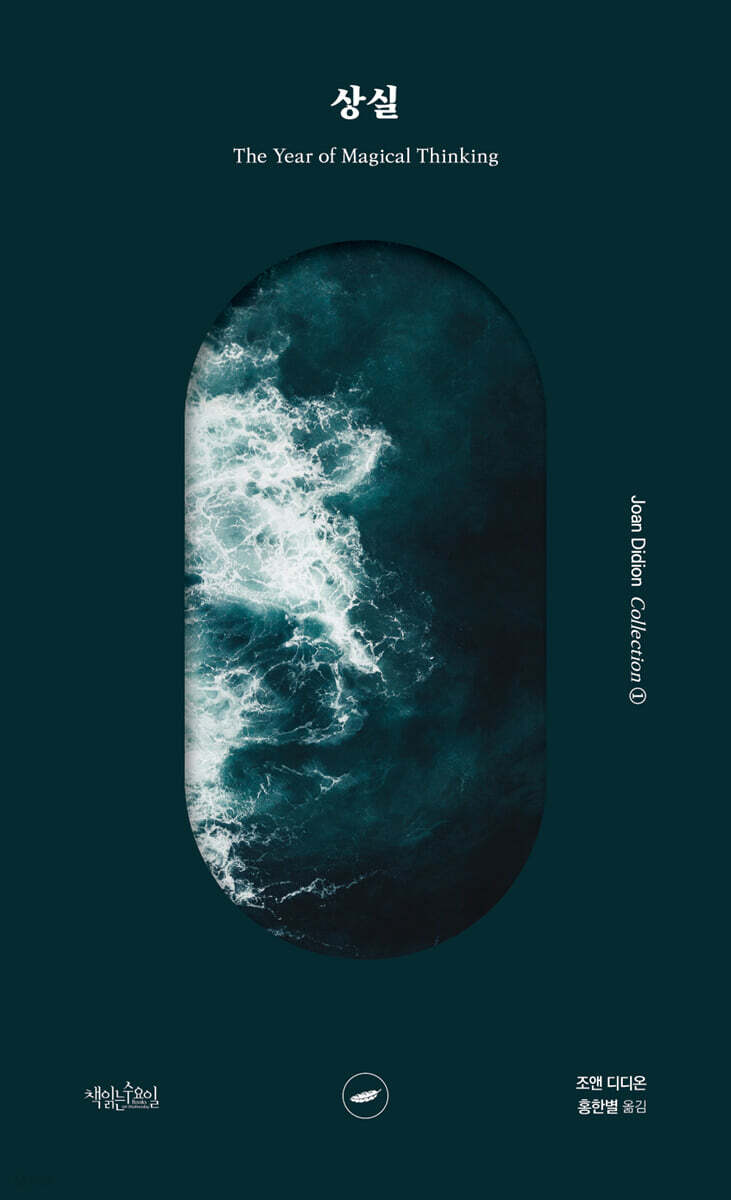
loss
 |
Description
Book Introduction
Winner of the 2005 National Book Award!
2013 National Humanities Medal Winner!
The masterpiece of Joan Didion, the writer of writers
『Loss』 Renewed and Republished!
It is said that the pain of losing a family member is a pain that cannot be compared to anything else.
Moreover, the sorrow of losing someone who has always been with you in your daily life will be a pain so great that it cannot be expressed in words.
Those who have not experienced that pain firsthand will not be able to truly understand it.
How great the pain is, how seriously it will affect the rest of your life.
But the grief of losing a family member is a pain that everyone must experience.
Pain that no one can avoid, pain that no one has experienced yet but will experience someday.
The pain, sorrow, and grief that was foretold.
Joan Didion, who was respected by countless writers to the point that it would be no exaggeration to call her a writer's writer, had a significant impact on society through her novels, essays, columns, and other writings.
Her masterpiece, The Year of Magical Thinking, is a record of the year she spent writing after losing her husband, John Gregory Dunn.
She wrote about her grief over the loss of her husband in her own unique language, plainly and vividly.
For this work, Joan Didion won the National Book Award.
Joan Didion lost her husband on December 30, 2003.
He died suddenly of a heart attack after returning from visiting his daughter Quintana, who had contracted sepsis after her flu worsened.
Joan Didion, the guardian who seemed to be handling the situation more calmly than anyone else, was actually enduring the reality with magical thinking.
The hope that her husband could be brought back to life, that he might come back alive.
Even her daughter, who seemed to be recovering from illness, is bedridden again.
As sudden and unforeseen as her husband's death.
She constantly tries not to lose herself.
I try to look at my situation and condition objectively and analytically, and I try hard not to get caught up in the waves of emotions that come my way.
We struggle to survive without collapsing, without even trying to escape from the magical thinking that never goes away.
Anyone who watches it can only feel sad and heartbroken.
Readers who admired her will inevitably feel even greater regret at having to witness the weakness of a writer with such cool-headedness, analysis, and keen insight.
But also, seeing the attitude of a writer who does not lose his unique sharpness even in his own perspective, naturally a sense of respect wells up.
Her deep thoughts on life and death, along with his, give us a chance to reflect on life.
Readers will find themselves captivated by the special charm of Joan Didion's writing.
2013 National Humanities Medal Winner!
The masterpiece of Joan Didion, the writer of writers
『Loss』 Renewed and Republished!
It is said that the pain of losing a family member is a pain that cannot be compared to anything else.
Moreover, the sorrow of losing someone who has always been with you in your daily life will be a pain so great that it cannot be expressed in words.
Those who have not experienced that pain firsthand will not be able to truly understand it.
How great the pain is, how seriously it will affect the rest of your life.
But the grief of losing a family member is a pain that everyone must experience.
Pain that no one can avoid, pain that no one has experienced yet but will experience someday.
The pain, sorrow, and grief that was foretold.
Joan Didion, who was respected by countless writers to the point that it would be no exaggeration to call her a writer's writer, had a significant impact on society through her novels, essays, columns, and other writings.
Her masterpiece, The Year of Magical Thinking, is a record of the year she spent writing after losing her husband, John Gregory Dunn.
She wrote about her grief over the loss of her husband in her own unique language, plainly and vividly.
For this work, Joan Didion won the National Book Award.
Joan Didion lost her husband on December 30, 2003.
He died suddenly of a heart attack after returning from visiting his daughter Quintana, who had contracted sepsis after her flu worsened.
Joan Didion, the guardian who seemed to be handling the situation more calmly than anyone else, was actually enduring the reality with magical thinking.
The hope that her husband could be brought back to life, that he might come back alive.
Even her daughter, who seemed to be recovering from illness, is bedridden again.
As sudden and unforeseen as her husband's death.
She constantly tries not to lose herself.
I try to look at my situation and condition objectively and analytically, and I try hard not to get caught up in the waves of emotions that come my way.
We struggle to survive without collapsing, without even trying to escape from the magical thinking that never goes away.
Anyone who watches it can only feel sad and heartbroken.
Readers who admired her will inevitably feel even greater regret at having to witness the weakness of a writer with such cool-headedness, analysis, and keen insight.
But also, seeing the attitude of a writer who does not lose his unique sharpness even in his own perspective, naturally a sense of respect wells up.
Her deep thoughts on life and death, along with his, give us a chance to reflect on life.
Readers will find themselves captivated by the special charm of Joan Didion's writing.
- You can preview some of the book's contents.
Preview
index
1~22
Detailed image
Into the book
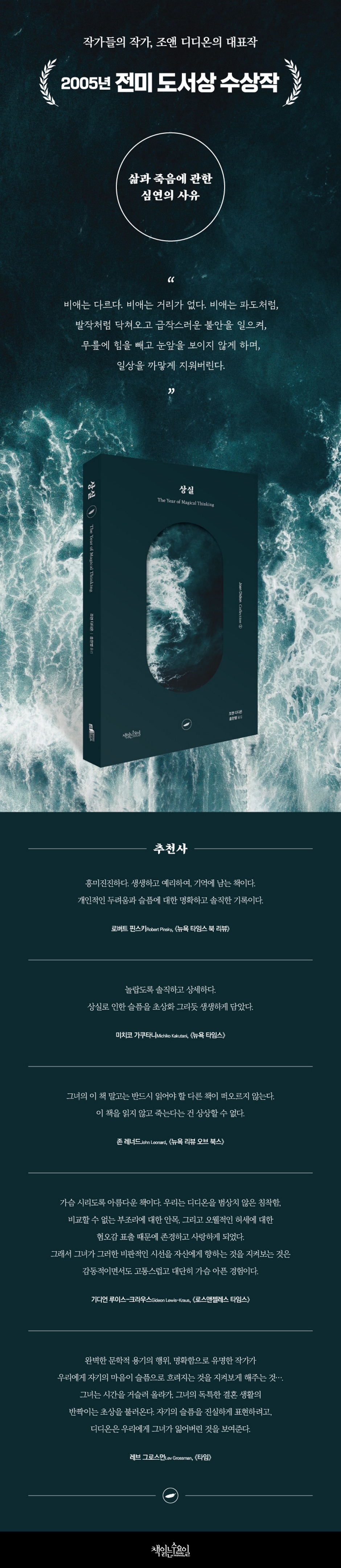
Sorrow is different.
Sorrow has no distance.
Grief comes in waves, like a fit, causing a sudden anxiety that leaves you weak at the knees, blinds you, and obscures your daily life.
Almost everyone who has experienced grief through the loss of a loved one says they have experienced this 'wave' phenomenon.
--- p.40
I could accept an 'autopsy', but I haven't thought about an 'obituary' yet.
An 'autopsy' was something between me, John, and the hospital, but an 'obituary' meant that it really happened.
I never found it logically absurd to wonder if that could have happened in Los Angeles.
I was calculating what time John died and whether it was the same time in Los Angeles.
--- p.44
"You're safe now," I whispered to Quintana when I first saw him in the UCLA intensive care unit.
Mom is here.
It'll be okay now.
Half of Quintana's head was shaved short because of surgery.
A long incision was visible, along with metal staples used to close the incision.
Quintana was breathing through an endotracheal tube.
Mom is here.
It'll be okay now.
--- p.131
Until then, I had only been sad, but not able to mourn.
The sorrow was passive.
The sorrow arose spontaneously.
However, mourning, the act of dealing with grief, could require focused attention.
Until now, there has been an urgent need to distract ourselves from what we should be paying attention to, to push our thoughts away, and to recharge our adrenaline to get us through the day-to-day crises.
--- p.192~193
Sorrow was a place that no one knew until they got there.
We anticipate (and know) that someone close to us may die, but we don't think about what life will be like in the days or weeks immediately following that imagined death.
In fact, those few days or weeks were different from what I thought.
When death comes suddenly, we expect to be shocked, but we do not know that this shock will completely destroy our bodies and minds and leave us in disarray.
I expect you to feel exhausted, sad, and like you're going crazy.
We don't actually expect to go crazy.
--- p.248
We are imperfect and finite beings, and we cannot help but be aware of our finitude, even if we try to ignore it.
Because we are complex beings.
When we grieve loss, we are wired to mourn ourselves, whether we like it or not.
Our previous appearance.
Now, I can't go back to myself.
An existence that will one day disappear forever.
--- p.261
When I was proofreading my writing, I was shocked and shaken by how many mistakes I had made.
They were simple mistakes, like copying something wrong or putting a name or date wrong.
I tried to convince myself that it was just a temporary phenomenon, a case of cognitive impairment due to reduced motor skills and stress or grief, but I still felt uneasy.
Will I ever be normal again? Will I ever be able to believe I'm not wrong again? Why do you always have to be right? John had said.
Can't you consider the possibility that you might be wrong?
Sorrow has no distance.
Grief comes in waves, like a fit, causing a sudden anxiety that leaves you weak at the knees, blinds you, and obscures your daily life.
Almost everyone who has experienced grief through the loss of a loved one says they have experienced this 'wave' phenomenon.
--- p.40
I could accept an 'autopsy', but I haven't thought about an 'obituary' yet.
An 'autopsy' was something between me, John, and the hospital, but an 'obituary' meant that it really happened.
I never found it logically absurd to wonder if that could have happened in Los Angeles.
I was calculating what time John died and whether it was the same time in Los Angeles.
--- p.44
"You're safe now," I whispered to Quintana when I first saw him in the UCLA intensive care unit.
Mom is here.
It'll be okay now.
Half of Quintana's head was shaved short because of surgery.
A long incision was visible, along with metal staples used to close the incision.
Quintana was breathing through an endotracheal tube.
Mom is here.
It'll be okay now.
--- p.131
Until then, I had only been sad, but not able to mourn.
The sorrow was passive.
The sorrow arose spontaneously.
However, mourning, the act of dealing with grief, could require focused attention.
Until now, there has been an urgent need to distract ourselves from what we should be paying attention to, to push our thoughts away, and to recharge our adrenaline to get us through the day-to-day crises.
--- p.192~193
Sorrow was a place that no one knew until they got there.
We anticipate (and know) that someone close to us may die, but we don't think about what life will be like in the days or weeks immediately following that imagined death.
In fact, those few days or weeks were different from what I thought.
When death comes suddenly, we expect to be shocked, but we do not know that this shock will completely destroy our bodies and minds and leave us in disarray.
I expect you to feel exhausted, sad, and like you're going crazy.
We don't actually expect to go crazy.
--- p.248
We are imperfect and finite beings, and we cannot help but be aware of our finitude, even if we try to ignore it.
Because we are complex beings.
When we grieve loss, we are wired to mourn ourselves, whether we like it or not.
Our previous appearance.
Now, I can't go back to myself.
An existence that will one day disappear forever.
--- p.261
When I was proofreading my writing, I was shocked and shaken by how many mistakes I had made.
They were simple mistakes, like copying something wrong or putting a name or date wrong.
I tried to convince myself that it was just a temporary phenomenon, a case of cognitive impairment due to reduced motor skills and stress or grief, but I still felt uneasy.
Will I ever be normal again? Will I ever be able to believe I'm not wrong again? Why do you always have to be right? John had said.
Can't you consider the possibility that you might be wrong?
--- p.284
Publisher's Review
Writer's writer, icon of American literature
With numerous modifiers
Joan Didion's masterpiece, "Loss"
The titles “writer’s writer” and “writer respected by writers” are probably the most honorable titles a writer can receive.
And changing society through writing and actively leading the public will is not something that just anyone, no matter how famous, can do.
Joan Didion was just that kind of writer.
As a journalist, she was one of the pioneers of New Journalism in the 1960s.
Through new journalism, he created a trend of journalism that went beyond the simple listing of facts as a reporter and actively expressed opinions and subjectivity.
Although New Journalism has now faded, it is clear that she elevated the role of reporter to that of a writer who leads the change of the times.
As a writer, she has been creative in various fields, writing several novels, non-fiction, and screenplays.
The author used a unique and highly polished writing style that even the author wanted to imitate.
Not only did she have a readership that devoured her writing, but there was also a public that admired her lifestyle.
There was a group of women who followed not only her fashion but also her way of life.
The term 'icon of American literature' also describes her.
Another adjective that Penguin Random House, her publisher, used when announcing Joan Didion's death in 2021 is also the one that best describes her as a writer.
'America's most astute writer and observer.'
Joan Didion's works have largely remained unknown to domestic readers.
However, as the Netflix documentary about Joan Didion's life was released and celebrities began recommending her work, her name gradually became known, and more people began seeking out her work.
In particular, the title “Loss” will be familiar to many readers.
When it was first published in Korea in 2006, readers and celebrities who had read it first recommended this work among Joan Didion's works, and word of mouth spread to readers who had not yet encountered it.
Since this book went out of print, many readers have sought it out.
So at one point, the used price rose to more than ten times the original publication price.
Many readers have been waiting for the re-publication of 『Loss』.
Now, we can present it to our readers with a new translation and design.
Joan Didion's masterpiece, Loss, was selected as the book of the year by the New York Times at the time of its publication and won the National Book Award in 2005.
She also received the National Humanity Medal in 2013.
By republishing this work, I hope that the great writer Joan Didion will become known to more Korean readers.
The pain of losing a family member
Struggling to overcome
A record of a year's journey
"Loss" is an essay written by Joan Didion about a year after the sudden death of her husband, John Gregory Dunn.
She wrote about the painful days she had to endure due to separation from her lover in a relatively calm manner.
But in reality, that calmness is just one aspect of her that she shows to hold on and not lose herself.
She is tormented by the constant reminders of her husband, whether a single word or a single place, and she is compelled to unfold her thoughts, unfiltered and unfiltered, to the reader.
And she reveals that she was obsessed with the thought that her husband would return at that time.
She describes the unrealistic thoughts she harbors as “magical thinking.”
She herself tries to objectively analyze this unstable mental state based on various literature and materials.
The arrow of that sharp analysis is pointed right at oneself, so the viewer can only look on with a pitying heart.
In doing so, he candidly reveals the abnormal aspects of his thoughts at the time and his human weaknesses.
We also try to analyze the emotion called 'sorrow' that appears as the pain of losing a family member.
The reader will come to realize that even the effort to objectify these emotions and the phenomena they cause is a struggle to not lose oneself.
Anyone who watches such an attempt at objective analysis can only shed tears at how desperate it appears.
Rather than expressing her overwhelming emotions, the extent of her pain is more vividly felt in the way she tries to maintain the appearance of a 'calm customer'.
The emotions she felt are conveyed in waves, touching the depths of the reader's heart.
As readers watch the author, who is unable to escape the constant recurring memories of her husband and the bizarre thoughts that can be described as abnormal, they will empathize with the author's feelings and even feel a sense of heartbreak.
What is most heartbreaking is her cries, unwilling to end the time she had to spend in that confusing and painful emotion.
She is distressed by the fact that her painful wounds do not heal, but rather she becomes increasingly numb to the pain over time.
Breaking free from that magical thinking, he is tormented by the thought of forgetting his loved one.
Joan Didion also lost her daughter around the time this book was first published.
The daughter, who had fallen ill with the flu before her husband passed away, seemed to be recovering, but was taken to the hospital again and passed away.
Those who have not experienced the pain of losing a family member cannot truly know or understand the feeling.
It would be a feeling that cannot be expressed simply with words like 'sorrow' or 'sorrow'.
However, through this work, we can think about what it would be like when such a moment comes.
Ultimately, we will be able to understand, even if only a little, the emotions that everyone must experience at that moment.
How should I overcome that moment? How should I accept my fate and strive not to lose myself? How can I cross the river of sorrow and enter into true mourning? Perhaps, as I close the final chapter of this work, I will find some small answers.
Recommendation
It is a vivid, sharp and memorable book.
It is an accurate and honest account of personal fears and sorrows.
—Robert Pinsky, [New York Times Book Review]
It's surprisingly honest and detailed.
The sadness caused by loss is vividly portrayed like a portrait.
-Michiko Kakutani, [The New York Times]
I can't think of any other must-read book besides this one.
I can't imagine dying without reading this book.
-John Leonard, [New York Review of Books]
It's heartbreakingly beautiful.
We came to admire and love Didion for her almost supernatural composure, her unparalleled eye for the absurd, and her aversion to Orwellian pretension.
So watching her turn such a critical gaze on herself is a moving, painful, and deeply heartbreaking experience.
—Gideon Lewis-Kraus, Los Angeles Times
An act of consummate literary courage, for a writer renowned for clarity to allow us to watch his own mind become clouded by sorrow… .
She travels back in time, conjuring up a sparkling portrait of her unique marriage.
In an attempt to express her grief truthfully, Didion shows us what she has lost.
-Lev Grossman, [Time]
With numerous modifiers
Joan Didion's masterpiece, "Loss"
The titles “writer’s writer” and “writer respected by writers” are probably the most honorable titles a writer can receive.
And changing society through writing and actively leading the public will is not something that just anyone, no matter how famous, can do.
Joan Didion was just that kind of writer.
As a journalist, she was one of the pioneers of New Journalism in the 1960s.
Through new journalism, he created a trend of journalism that went beyond the simple listing of facts as a reporter and actively expressed opinions and subjectivity.
Although New Journalism has now faded, it is clear that she elevated the role of reporter to that of a writer who leads the change of the times.
As a writer, she has been creative in various fields, writing several novels, non-fiction, and screenplays.
The author used a unique and highly polished writing style that even the author wanted to imitate.
Not only did she have a readership that devoured her writing, but there was also a public that admired her lifestyle.
There was a group of women who followed not only her fashion but also her way of life.
The term 'icon of American literature' also describes her.
Another adjective that Penguin Random House, her publisher, used when announcing Joan Didion's death in 2021 is also the one that best describes her as a writer.
'America's most astute writer and observer.'
Joan Didion's works have largely remained unknown to domestic readers.
However, as the Netflix documentary about Joan Didion's life was released and celebrities began recommending her work, her name gradually became known, and more people began seeking out her work.
In particular, the title “Loss” will be familiar to many readers.
When it was first published in Korea in 2006, readers and celebrities who had read it first recommended this work among Joan Didion's works, and word of mouth spread to readers who had not yet encountered it.
Since this book went out of print, many readers have sought it out.
So at one point, the used price rose to more than ten times the original publication price.
Many readers have been waiting for the re-publication of 『Loss』.
Now, we can present it to our readers with a new translation and design.
Joan Didion's masterpiece, Loss, was selected as the book of the year by the New York Times at the time of its publication and won the National Book Award in 2005.
She also received the National Humanity Medal in 2013.
By republishing this work, I hope that the great writer Joan Didion will become known to more Korean readers.
The pain of losing a family member
Struggling to overcome
A record of a year's journey
"Loss" is an essay written by Joan Didion about a year after the sudden death of her husband, John Gregory Dunn.
She wrote about the painful days she had to endure due to separation from her lover in a relatively calm manner.
But in reality, that calmness is just one aspect of her that she shows to hold on and not lose herself.
She is tormented by the constant reminders of her husband, whether a single word or a single place, and she is compelled to unfold her thoughts, unfiltered and unfiltered, to the reader.
And she reveals that she was obsessed with the thought that her husband would return at that time.
She describes the unrealistic thoughts she harbors as “magical thinking.”
She herself tries to objectively analyze this unstable mental state based on various literature and materials.
The arrow of that sharp analysis is pointed right at oneself, so the viewer can only look on with a pitying heart.
In doing so, he candidly reveals the abnormal aspects of his thoughts at the time and his human weaknesses.
We also try to analyze the emotion called 'sorrow' that appears as the pain of losing a family member.
The reader will come to realize that even the effort to objectify these emotions and the phenomena they cause is a struggle to not lose oneself.
Anyone who watches such an attempt at objective analysis can only shed tears at how desperate it appears.
Rather than expressing her overwhelming emotions, the extent of her pain is more vividly felt in the way she tries to maintain the appearance of a 'calm customer'.
The emotions she felt are conveyed in waves, touching the depths of the reader's heart.
As readers watch the author, who is unable to escape the constant recurring memories of her husband and the bizarre thoughts that can be described as abnormal, they will empathize with the author's feelings and even feel a sense of heartbreak.
What is most heartbreaking is her cries, unwilling to end the time she had to spend in that confusing and painful emotion.
She is distressed by the fact that her painful wounds do not heal, but rather she becomes increasingly numb to the pain over time.
Breaking free from that magical thinking, he is tormented by the thought of forgetting his loved one.
Joan Didion also lost her daughter around the time this book was first published.
The daughter, who had fallen ill with the flu before her husband passed away, seemed to be recovering, but was taken to the hospital again and passed away.
Those who have not experienced the pain of losing a family member cannot truly know or understand the feeling.
It would be a feeling that cannot be expressed simply with words like 'sorrow' or 'sorrow'.
However, through this work, we can think about what it would be like when such a moment comes.
Ultimately, we will be able to understand, even if only a little, the emotions that everyone must experience at that moment.
How should I overcome that moment? How should I accept my fate and strive not to lose myself? How can I cross the river of sorrow and enter into true mourning? Perhaps, as I close the final chapter of this work, I will find some small answers.
Recommendation
It is a vivid, sharp and memorable book.
It is an accurate and honest account of personal fears and sorrows.
—Robert Pinsky, [New York Times Book Review]
It's surprisingly honest and detailed.
The sadness caused by loss is vividly portrayed like a portrait.
-Michiko Kakutani, [The New York Times]
I can't think of any other must-read book besides this one.
I can't imagine dying without reading this book.
-John Leonard, [New York Review of Books]
It's heartbreakingly beautiful.
We came to admire and love Didion for her almost supernatural composure, her unparalleled eye for the absurd, and her aversion to Orwellian pretension.
So watching her turn such a critical gaze on herself is a moving, painful, and deeply heartbreaking experience.
—Gideon Lewis-Kraus, Los Angeles Times
An act of consummate literary courage, for a writer renowned for clarity to allow us to watch his own mind become clouded by sorrow… .
She travels back in time, conjuring up a sparkling portrait of her unique marriage.
In an attempt to express her grief truthfully, Didion shows us what she has lost.
-Lev Grossman, [Time]
GOODS SPECIFICS
- Date of issue: December 11, 2023
- Page count, weight, size: 304 pages | 128*210*30mm
- ISBN13: 9788986022841
- ISBN10: 8986022842
You may also like
카테고리
korean


korean

![GQ KOREA Mark (Monthly): December [2025]](http://librairie.coreenne.fr/cdn/shop/files/8ef265dbbfbf186523ed75ba7319009d.jpg?v=1765340328&width=3840)


