

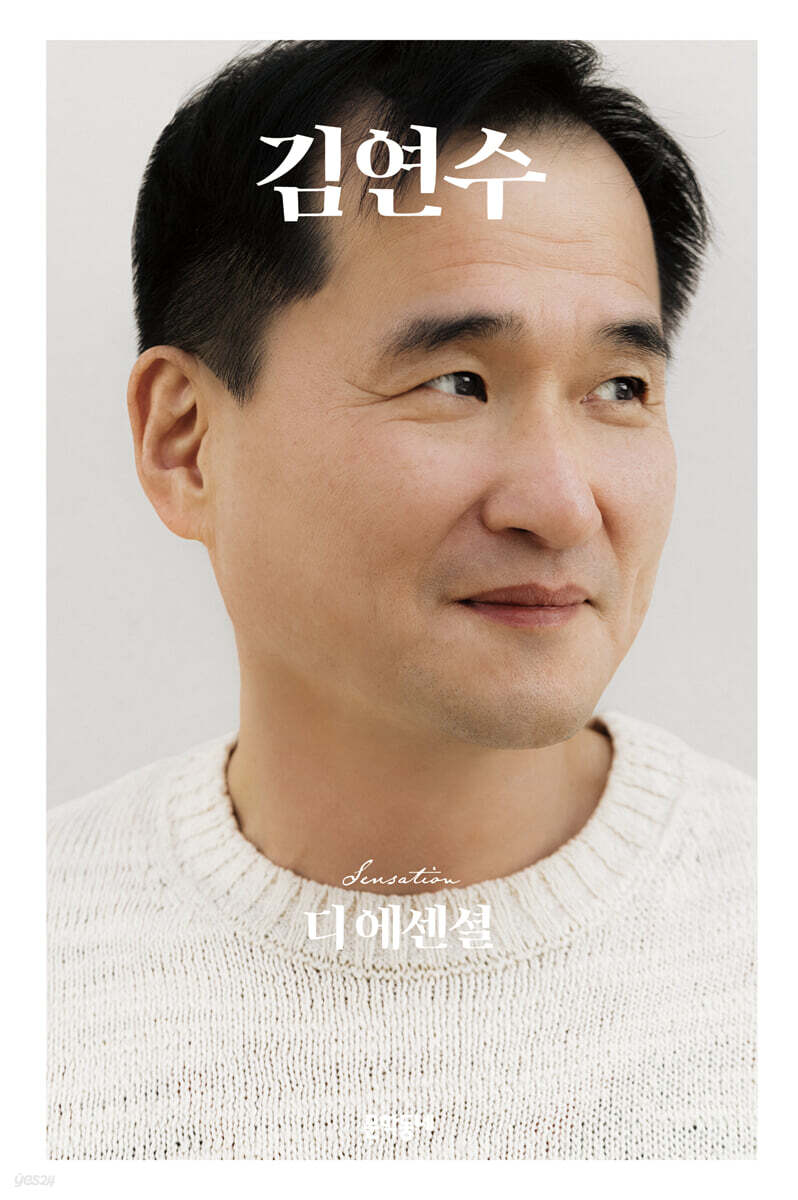
The Essential Kim Yeon-su (Wireless Edition)
 |
Description
Book Introduction
From unpublished works to the latest feature-length works,
The essence of Kim Yeon-su's world of works in just one volume!
'The Essential' is a special edition that curates the author's core works and compiles them into one volume.
The second author to be introduced, following Han Kang in 2022, is novelist Kim Yeon-su.
Kim Yeon-su, a writer who has actively worked across various fields such as novels, poetry, and prose for a long time and has become a powerful beauty representing Korean literature, has collected the works that allow you to fully enjoy the essence of his world in one volume.
In particular, it includes six unpublished poems that have never been published in a book before and seven prose pieces written under the concept of a “library stroll,” allowing readers to follow the broad scope of literature that author Kim Yeon-su has been exploring.
As the saying goes, “Reading is reading, but reading is also reading in a completely new way as the content remains the same but the context of my life changes” (Things I Like, p. 513), the process of creating new meanings by overlapping the Kim Yeon-su we have read so far with the Kim Yeon-su we have yet to read with our current lives will be a valuable change that occurs in us while reading this book.
The essence of Kim Yeon-su's world of works in just one volume!
'The Essential' is a special edition that curates the author's core works and compiles them into one volume.
The second author to be introduced, following Han Kang in 2022, is novelist Kim Yeon-su.
Kim Yeon-su, a writer who has actively worked across various fields such as novels, poetry, and prose for a long time and has become a powerful beauty representing Korean literature, has collected the works that allow you to fully enjoy the essence of his world in one volume.
In particular, it includes six unpublished poems that have never been published in a book before and seven prose pieces written under the concept of a “library stroll,” allowing readers to follow the broad scope of literature that author Kim Yeon-su has been exploring.
As the saying goes, “Reading is reading, but reading is also reading in a completely new way as the content remains the same but the context of my life changes” (Things I Like, p. 513), the process of creating new meanings by overlapping the Kim Yeon-su we have read so far with the Kim Yeon-su we have yet to read with our current lives will be a valuable change that occurs in us while reading this book.
- You can preview some of the book's contents.
Preview
index
Author's Note … 007
Part 1: Short Stories
Another month later, we cross the snowy mountains… 015
The Comedian Who Went to the Moon… 075
Deep Night, Giraffe's Words… 137
In front of the sea of Nanju… 171
Part 2 of a novel
The last of seven years… 201
Postscript│Life After… 441
Part 3 Poem
About reinforcement… 449
I remember that hill… 456
We say it's beautiful and we say it's beautiful... 458
Carp in a winter pond… 460
December pours down… 461
Graduates… 462
Time to read Jeong Ji-yong's complete works… 464
Part 4 Prose: No library is too small for me.
With the forest, I wish to stay there for a long time… 471
A happy ending I once dreamed of… 477
I like pearls… 483
It's a heart that was born, so it will soon be shattered... 489
What Failures Gain: Kindness… 495
A gift I received because I didn't know… 501
Things I like… 508
Part 1: Short Stories
Another month later, we cross the snowy mountains… 015
The Comedian Who Went to the Moon… 075
Deep Night, Giraffe's Words… 137
In front of the sea of Nanju… 171
Part 2 of a novel
The last of seven years… 201
Postscript│Life After… 441
Part 3 Poem
About reinforcement… 449
I remember that hill… 456
We say it's beautiful and we say it's beautiful... 458
Carp in a winter pond… 460
December pours down… 461
Graduates… 462
Time to read Jeong Ji-yong's complete works… 464
Part 4 Prose: No library is too small for me.
With the forest, I wish to stay there for a long time… 471
A happy ending I once dreamed of… 477
I like pearls… 483
It's a heart that was born, so it will soon be shattered... 489
What Failures Gain: Kindness… 495
A gift I received because I didn't know… 501
Things I like… 508
Into the book
When he kept writing until he could no longer write, he reached the last point he could reach.
At that point his sentence was firmly shut.
And the dream began where the sentence was cut off.
--- p.23 From “If I go another month and cross the snowy mountain”
The tears that suddenly burst out made my heart even more depressed.
Because my heart, which had been denying what had happened until I burst into tears, seemed to accept everything that had happened to me as fact after I started crying.
Mobilize everything.
Through that sentence, he realized that there are dreams in the world that cannot be achieved no matter how much effort is put into them.
Tears flowed, then the melancholy passed, and finally he came to terms with his sorrow.
The fact that he had survived such an experience and that he had to learn something else both tormented and comforted him.
So, every night when he couldn't sleep, he started reading the books he had at home, one by one.
It didn't matter to him what the content or subject was.
The important thing was to learn to deal with the sadness that had befallen me, by discarding, one by one, the naive expectations and vague hopes that I might have once had, as they appear in novels.
--- pp.31-31 From "If I go another month and cross the snowy mountain"
But what he eventually realized was that no matter how hard he tried, that is, no matter how much he 'mobilized' his memory, there were things in life that he could not put into words.
--- p.37 From “If I go another month and cross the snowy mountain”
Until I started loving someone for no particular reason, it seemed like there was nothing in this world I couldn't understand. But after we broke up for no particular reason, I couldn't even understand why the Earth rotated and created night, leaving me lying wide awake.
--- p.85 From "The Comedian Who Went to the Moon"
I read in a book I recorded a while ago that in Africa, every time an old person dies, it's like a library disappears.
I thought that was so true.
Now that I can't read books, each and every person is like a book to me.
When you become blind like me, the books you can read are limited.
Since I've never met a novelist, I've never read a book about one.
--- p.114 From "The Comedian Who Went to the Moon"
If it were just one hope among many, it would be fine whether it came true or not, but if there were only one hope left, it would be as concrete as a stone.
--- p.146 From “Deep Night, The Giraffe’s Words”
Patience meant not holding on until something was accomplished, but giving up completely.
It's not about enduring, it's about losing.
If that is the true meaning of patience that my mother discovered, then it was after that year that my mother became truly patient.
--- p.150 From "Deep Night, The Giraffe's Words"
The poems and novels he had read, and the writings he had started to write without realizing it at some point, were all the results of such efforts.
Giving symbols and creating stories to confront the merciless and meaningless nature was what Jeong-Hyeon had been obsessed with his entire life.
--- pp.178-179 From "In front of the sea of Nanju"
Only after the war broke out a few years later, and not only her father and mother, but also her friends went to the front, did Bella realize how happy she had been during those times.
Such regret and sadness led her to write.
So, the memories of those beautiful times were left in a few lines.
--- p.222 From “The Last of Seven Years”
The misfortune that fascinated Gihaeng was the result of all that he loved in those prosperous and dazzling times.
That was why I decided to write poetry again.
I'm not afraid of being unhappy as long as I can prove my love.
--- p.228 From “The Last of Seven Years”
If Korean words are dying inside you, you too must feel responsible for that death.
I have to think about death every day.
I have to think about death every morning and night.
Otherwise, you're not living properly.
I have to think about the dying words every day.
That's the poet's job.
Just like washing your face every day, without fail.
--- p.236 From “The Last of Seven Years”
At that time, the world was teeming with beautiful things.
With warm things, with things you like, with things that are affectionate.
For example, things that are as gentle as a well-trained pig and as gentle as the foothills of a tropical mountain.
At that time, I did not yet know that everything in the world is made up of two layers, that if there is love, there is hate behind it, and that joy and pain are one and the same.
--- p.383 From “The Last of Seven Years”
It is said that a thousand fires would appear spontaneously and instantly burn the entire forest, turning the trees into standing charcoal.
The slash-and-burn farmers of Dumae said that they felt a certain warmth and warmth toward life when they saw the fire.
Because a new path of life opens in the place where it was burned.
--- p.438 From “The Last of Seven Years”
As the wave receded, the boundary it had pushed through gradually disappeared and a new wave surged over it.
Each time it was a different wave, and a new shaped boundary was created.
Like some hearts that are born every morning and shatter every evening.
I want to tell myself back then, or the grandmother in the novel, that it's okay.
That's the perfect life.
A perfect life is one that includes all the imperfections, the ugly things, and the broken things.
Why do certain feelings arise? I don't know why, but I think I know that when those feelings are shattered, life becomes whole.
--- p.493 From “It’s a born heart, so it will soon break”
Now I want a peaceful and comfortable life, a life that can be found between me and others, or between me and the world.
To live in between is to believe in the possibility that things can change at any moment.
I change every moment depending on the context I'm in.
When I'm in between, I keep changing into 'me who is having a harmless conversation while eating delicious food with acquaintances', 'me who is reading an interesting book borrowed from the library', 'me who is listening to a stranger's playlist from beginning to end', etc.
If 'the me until now' was always the me in the idea that I had to be a certain person, 'the me from now on' will be the me in the relationship that changes at every moment.
This means:
You can't start a new life on your own.
A new life begins when we establish new relationships with the world and with others.
It's up to me what kind of relationship I want.
At that point his sentence was firmly shut.
And the dream began where the sentence was cut off.
--- p.23 From “If I go another month and cross the snowy mountain”
The tears that suddenly burst out made my heart even more depressed.
Because my heart, which had been denying what had happened until I burst into tears, seemed to accept everything that had happened to me as fact after I started crying.
Mobilize everything.
Through that sentence, he realized that there are dreams in the world that cannot be achieved no matter how much effort is put into them.
Tears flowed, then the melancholy passed, and finally he came to terms with his sorrow.
The fact that he had survived such an experience and that he had to learn something else both tormented and comforted him.
So, every night when he couldn't sleep, he started reading the books he had at home, one by one.
It didn't matter to him what the content or subject was.
The important thing was to learn to deal with the sadness that had befallen me, by discarding, one by one, the naive expectations and vague hopes that I might have once had, as they appear in novels.
--- pp.31-31 From "If I go another month and cross the snowy mountain"
But what he eventually realized was that no matter how hard he tried, that is, no matter how much he 'mobilized' his memory, there were things in life that he could not put into words.
--- p.37 From “If I go another month and cross the snowy mountain”
Until I started loving someone for no particular reason, it seemed like there was nothing in this world I couldn't understand. But after we broke up for no particular reason, I couldn't even understand why the Earth rotated and created night, leaving me lying wide awake.
--- p.85 From "The Comedian Who Went to the Moon"
I read in a book I recorded a while ago that in Africa, every time an old person dies, it's like a library disappears.
I thought that was so true.
Now that I can't read books, each and every person is like a book to me.
When you become blind like me, the books you can read are limited.
Since I've never met a novelist, I've never read a book about one.
--- p.114 From "The Comedian Who Went to the Moon"
If it were just one hope among many, it would be fine whether it came true or not, but if there were only one hope left, it would be as concrete as a stone.
--- p.146 From “Deep Night, The Giraffe’s Words”
Patience meant not holding on until something was accomplished, but giving up completely.
It's not about enduring, it's about losing.
If that is the true meaning of patience that my mother discovered, then it was after that year that my mother became truly patient.
--- p.150 From "Deep Night, The Giraffe's Words"
The poems and novels he had read, and the writings he had started to write without realizing it at some point, were all the results of such efforts.
Giving symbols and creating stories to confront the merciless and meaningless nature was what Jeong-Hyeon had been obsessed with his entire life.
--- pp.178-179 From "In front of the sea of Nanju"
Only after the war broke out a few years later, and not only her father and mother, but also her friends went to the front, did Bella realize how happy she had been during those times.
Such regret and sadness led her to write.
So, the memories of those beautiful times were left in a few lines.
--- p.222 From “The Last of Seven Years”
The misfortune that fascinated Gihaeng was the result of all that he loved in those prosperous and dazzling times.
That was why I decided to write poetry again.
I'm not afraid of being unhappy as long as I can prove my love.
--- p.228 From “The Last of Seven Years”
If Korean words are dying inside you, you too must feel responsible for that death.
I have to think about death every day.
I have to think about death every morning and night.
Otherwise, you're not living properly.
I have to think about the dying words every day.
That's the poet's job.
Just like washing your face every day, without fail.
--- p.236 From “The Last of Seven Years”
At that time, the world was teeming with beautiful things.
With warm things, with things you like, with things that are affectionate.
For example, things that are as gentle as a well-trained pig and as gentle as the foothills of a tropical mountain.
At that time, I did not yet know that everything in the world is made up of two layers, that if there is love, there is hate behind it, and that joy and pain are one and the same.
--- p.383 From “The Last of Seven Years”
It is said that a thousand fires would appear spontaneously and instantly burn the entire forest, turning the trees into standing charcoal.
The slash-and-burn farmers of Dumae said that they felt a certain warmth and warmth toward life when they saw the fire.
Because a new path of life opens in the place where it was burned.
--- p.438 From “The Last of Seven Years”
As the wave receded, the boundary it had pushed through gradually disappeared and a new wave surged over it.
Each time it was a different wave, and a new shaped boundary was created.
Like some hearts that are born every morning and shatter every evening.
I want to tell myself back then, or the grandmother in the novel, that it's okay.
That's the perfect life.
A perfect life is one that includes all the imperfections, the ugly things, and the broken things.
Why do certain feelings arise? I don't know why, but I think I know that when those feelings are shattered, life becomes whole.
--- p.493 From “It’s a born heart, so it will soon break”
Now I want a peaceful and comfortable life, a life that can be found between me and others, or between me and the world.
To live in between is to believe in the possibility that things can change at any moment.
I change every moment depending on the context I'm in.
When I'm in between, I keep changing into 'me who is having a harmless conversation while eating delicious food with acquaintances', 'me who is reading an interesting book borrowed from the library', 'me who is listening to a stranger's playlist from beginning to end', etc.
If 'the me until now' was always the me in the idea that I had to be a certain person, 'the me from now on' will be the me in the relationship that changes at every moment.
This means:
You can't start a new life on your own.
A new life begins when we establish new relationships with the world and with others.
It's up to me what kind of relationship I want.
--- p.509 From "Things I Like"
Publisher's Review
Short stories: "If I Go Another Month and Cross the Snowy Mountains" and "The Comedian Who Went to the Moon"
"Deep Night, the Giraffe's Words" "Before the Sea of Nanju"
This book contains four short stories personally selected by author Kim Yeon-su among the 55 short stories in six short story collections, from her first short story collection, “Twenty Years Old” (2000), to her most recent short story collection, “Such an Ordinary Future” (2022).
As the author explains, “These are my favorites among the six short story collections I’ve published so far,” these four novels hold a special significance in Kim Yeon-su’s world of work.
"If I Go Another Month and Cross the Snowy Mountains" ranked first in a survey of literary critics, literary journalists, and bookstore MDs asking for the "best short story of the 21st century." It depicts the story of a man who experiences "all aspects of love" through climbing a snowy mountain to understand the death of his lover.
“The novel also displays outstanding skill in the way it constructs a three-dimensional adventure: the adventure of existence, the adventure of meaning, and the adventure of writing, which are essential for a good novel,” and the work “The Comedian Who Went to the Moon,” which won the 7th Hwang Sun-won Literary Award, also painstakingly depicts someone’s life left with gaps.
The voice of a daughter who is finally reconstructing her life after her once-popular comedian father vanished in the most traumatic way for his family comes from none other than her ex-boyfriend.
To borrow the expression from the novel, “I think it is not the story but the subtle textures felt in the voice that tell us what kind of life that person has lived” (p. 104), someone’s life may not be revealed through their direct statements, but in the silence before a new story begins, where the voice breaks and stops.
In “Deep Night, the Giraffe’s Words,” silence is also an absolute condition for the characters.
This work, which begins by illuminating a dark street where the noise has subsided, movingly depicts how a 'rock-solid hope' can emerge from the dark and deep frustration through 'an introverted twin sister and a mute autistic boy.'
"In Front of the Sea of Nanju" interweaves the past and present of two people who reunite after 30 years, and brings back the story of someone who lived even longer ago. It speaks with a desperate and persuasive tone about the "second wind" that unexpectedly blows toward us after we have been knocked out by life and fallen.
I envy you guys.
You have experienced all the aspects of love.
Even death.
_「If we go another month and cross the snowy mountain」, page 48
I heard about the loneliness of a man who went missing in the desert one day, the desire of a woman who ran toward the desert to understand the man, and the light and darkness, heat and coolness, loneliness and sadness of the desert that the man and the woman would see.
_「The Comedian Who Went to the Moon」, p. 134
We can't see it, but there must be something like a giant ear on top of our heads.
So, no matter how trivial and insignificant the words we say, those ears will listen to them all.
That doesn't mean it can bring about an impossible love or take away the sadness inside me, so you could say it's just a big, useless ear.
But with those ears, the words we each mutter to ourselves in the deep night are neither lonely nor sad.
_「Deep Night, The Giraffe's Words」, pp. 154-155
It's all the same whether you hold on and hold on and fall.
But falling down doesn't mean it's over.
There's a next one.
You'll know when you get knocked out and lie on the ring floor.
When you fall like that, you can feel with your whole body that the air is different from before.
As the world slowly recedes, the disappointment of those who supported me is palpable, and I feel like I'm alone in this world.
Just then the wind blew.
To me.
_「In Front of the Sea of Nanju」, pp. 194-195
The novel "The Last of Seven Years"
The full-length novel 『The Last of Seven Years』(2020) encompasses all of Kim Yeon-su's core keywords of novels such as youth, love, history, and the individual, and depicts the life of the poet 'Gihaeng' who faces a world that has changed rapidly since the Korean War.
It can be inferred that Gihaeng was modeled after the widely known poet Baek Seok, who was known as a poet in the 1930s and 1940s, but after the war, he was asked to write poetry in line with the party's ideology in the North, and he worked on translating Russian literature into Korean.
Even in a desperate situation where he cannot write poetry as he wishes and must relearn “how to live without hope and dreams” (p. 260), Gihaeng tries to hold on to poetry, but he repeatedly runs into the wall of reality.
No matter how fervent one's desire for poetry, if the weight of reality that weighs down on an individual is overwhelming, will that desire ultimately be frustrated?
What can a writer do in the face of a helpless reality?
What happens to the heart that can never be abandoned, the dream that never comes true?
"The Last of Seven Years" is a novel that is like a long answer to these questions that Kim Yeon-su gave after going through a dark period as a citizen and writer.
Still, we have dreams, so our harsh life is barely bearable.
Sometimes I walk among the birch trees and think about my simple dreams.
They are small, light, white dreams that seem like they will fly into the sky if you blow on them.
_The Last of the Seven Years, p. 422
Poem "On Reinforcement" and six others
It is widely known that author Kim Yeon-su first debuted as a poet, but these six poems will be a special gift to readers who have had difficulty encountering his poetry except for his debut work, “On Ganghwa.”
The six poems being revealed for the first time this time are works written between 1993 and 1995, allowing us to meet Kim Yeon-su as a poet in her twenties, as we have never seen before.
Prose: "Together with the Forest, Stay There for a Long Time" and six other essays
During the pandemic, author Kim Yeon-su has been visiting the library more often than ever.
From the city library in Gyeongju to the open library in Cheongju, if we follow the author's leisurely pace, we will find various libraries located all over the country waiting for us.
The sight of people reading books passionately in silence and writers broadening their minds through books they stumble upon on the bookshelf naturally leads us to understand why libraries are necessary and why we should read books.
Standing among the trees and looking up at the evening light as it grows dark with them, it is a soothing sight for the world-weary mind.
It's about observing what remains for us even after everything is over.
This is the joy of an evening walk.
From the beginning, I didn't want to live happily.
No matter how difficult and cumbersome it was, no matter how unappreciative or misunderstood it was, I wanted to live so that I could die happily.
_「A Happy Ending I Once Dreamed of」, p. 478
※ The above book is a popular edition of 『The Essential Kim Yeon-su』, a limited edition product exclusively available at Kyobo Bookstore. The content is the same, but the specifications have been changed from hardcover to paperback.
For a long time I was obsessed with the expression 'the end of the world'.
I found out why after writing the novel, “The Last of Seven Years.”
When we reach the 'end of the world', we are given a natural understanding that comes from the perspective of looking back on the entire path we have taken.
This understanding makes the end a new beginning.
_From the author's note
"Deep Night, the Giraffe's Words" "Before the Sea of Nanju"
This book contains four short stories personally selected by author Kim Yeon-su among the 55 short stories in six short story collections, from her first short story collection, “Twenty Years Old” (2000), to her most recent short story collection, “Such an Ordinary Future” (2022).
As the author explains, “These are my favorites among the six short story collections I’ve published so far,” these four novels hold a special significance in Kim Yeon-su’s world of work.
"If I Go Another Month and Cross the Snowy Mountains" ranked first in a survey of literary critics, literary journalists, and bookstore MDs asking for the "best short story of the 21st century." It depicts the story of a man who experiences "all aspects of love" through climbing a snowy mountain to understand the death of his lover.
“The novel also displays outstanding skill in the way it constructs a three-dimensional adventure: the adventure of existence, the adventure of meaning, and the adventure of writing, which are essential for a good novel,” and the work “The Comedian Who Went to the Moon,” which won the 7th Hwang Sun-won Literary Award, also painstakingly depicts someone’s life left with gaps.
The voice of a daughter who is finally reconstructing her life after her once-popular comedian father vanished in the most traumatic way for his family comes from none other than her ex-boyfriend.
To borrow the expression from the novel, “I think it is not the story but the subtle textures felt in the voice that tell us what kind of life that person has lived” (p. 104), someone’s life may not be revealed through their direct statements, but in the silence before a new story begins, where the voice breaks and stops.
In “Deep Night, the Giraffe’s Words,” silence is also an absolute condition for the characters.
This work, which begins by illuminating a dark street where the noise has subsided, movingly depicts how a 'rock-solid hope' can emerge from the dark and deep frustration through 'an introverted twin sister and a mute autistic boy.'
"In Front of the Sea of Nanju" interweaves the past and present of two people who reunite after 30 years, and brings back the story of someone who lived even longer ago. It speaks with a desperate and persuasive tone about the "second wind" that unexpectedly blows toward us after we have been knocked out by life and fallen.
I envy you guys.
You have experienced all the aspects of love.
Even death.
_「If we go another month and cross the snowy mountain」, page 48
I heard about the loneliness of a man who went missing in the desert one day, the desire of a woman who ran toward the desert to understand the man, and the light and darkness, heat and coolness, loneliness and sadness of the desert that the man and the woman would see.
_「The Comedian Who Went to the Moon」, p. 134
We can't see it, but there must be something like a giant ear on top of our heads.
So, no matter how trivial and insignificant the words we say, those ears will listen to them all.
That doesn't mean it can bring about an impossible love or take away the sadness inside me, so you could say it's just a big, useless ear.
But with those ears, the words we each mutter to ourselves in the deep night are neither lonely nor sad.
_「Deep Night, The Giraffe's Words」, pp. 154-155
It's all the same whether you hold on and hold on and fall.
But falling down doesn't mean it's over.
There's a next one.
You'll know when you get knocked out and lie on the ring floor.
When you fall like that, you can feel with your whole body that the air is different from before.
As the world slowly recedes, the disappointment of those who supported me is palpable, and I feel like I'm alone in this world.
Just then the wind blew.
To me.
_「In Front of the Sea of Nanju」, pp. 194-195
The novel "The Last of Seven Years"
The full-length novel 『The Last of Seven Years』(2020) encompasses all of Kim Yeon-su's core keywords of novels such as youth, love, history, and the individual, and depicts the life of the poet 'Gihaeng' who faces a world that has changed rapidly since the Korean War.
It can be inferred that Gihaeng was modeled after the widely known poet Baek Seok, who was known as a poet in the 1930s and 1940s, but after the war, he was asked to write poetry in line with the party's ideology in the North, and he worked on translating Russian literature into Korean.
Even in a desperate situation where he cannot write poetry as he wishes and must relearn “how to live without hope and dreams” (p. 260), Gihaeng tries to hold on to poetry, but he repeatedly runs into the wall of reality.
No matter how fervent one's desire for poetry, if the weight of reality that weighs down on an individual is overwhelming, will that desire ultimately be frustrated?
What can a writer do in the face of a helpless reality?
What happens to the heart that can never be abandoned, the dream that never comes true?
"The Last of Seven Years" is a novel that is like a long answer to these questions that Kim Yeon-su gave after going through a dark period as a citizen and writer.
Still, we have dreams, so our harsh life is barely bearable.
Sometimes I walk among the birch trees and think about my simple dreams.
They are small, light, white dreams that seem like they will fly into the sky if you blow on them.
_The Last of the Seven Years, p. 422
Poem "On Reinforcement" and six others
It is widely known that author Kim Yeon-su first debuted as a poet, but these six poems will be a special gift to readers who have had difficulty encountering his poetry except for his debut work, “On Ganghwa.”
The six poems being revealed for the first time this time are works written between 1993 and 1995, allowing us to meet Kim Yeon-su as a poet in her twenties, as we have never seen before.
Prose: "Together with the Forest, Stay There for a Long Time" and six other essays
During the pandemic, author Kim Yeon-su has been visiting the library more often than ever.
From the city library in Gyeongju to the open library in Cheongju, if we follow the author's leisurely pace, we will find various libraries located all over the country waiting for us.
The sight of people reading books passionately in silence and writers broadening their minds through books they stumble upon on the bookshelf naturally leads us to understand why libraries are necessary and why we should read books.
Standing among the trees and looking up at the evening light as it grows dark with them, it is a soothing sight for the world-weary mind.
It's about observing what remains for us even after everything is over.
This is the joy of an evening walk.
From the beginning, I didn't want to live happily.
No matter how difficult and cumbersome it was, no matter how unappreciative or misunderstood it was, I wanted to live so that I could die happily.
_「A Happy Ending I Once Dreamed of」, p. 478
※ The above book is a popular edition of 『The Essential Kim Yeon-su』, a limited edition product exclusively available at Kyobo Bookstore. The content is the same, but the specifications have been changed from hardcover to paperback.
For a long time I was obsessed with the expression 'the end of the world'.
I found out why after writing the novel, “The Last of Seven Years.”
When we reach the 'end of the world', we are given a natural understanding that comes from the perspective of looking back on the entire path we have taken.
This understanding makes the end a new beginning.
_From the author's note
GOODS SPECIFICS
- Date of issue: May 15, 2025
- Page count, weight, size: 516 pages | 608g | 133*200*30mm
- ISBN13: 9791141610326
- ISBN10: 1141610329
You may also like
카테고리
korean


korean

![GQ KOREA Mark (Monthly): December [2025]](http://librairie.coreenne.fr/cdn/shop/files/8ef265dbbfbf186523ed75ba7319009d.jpg?v=1765340328&width=3840)


