

Green Tokyo
 |
Description
Book Introduction
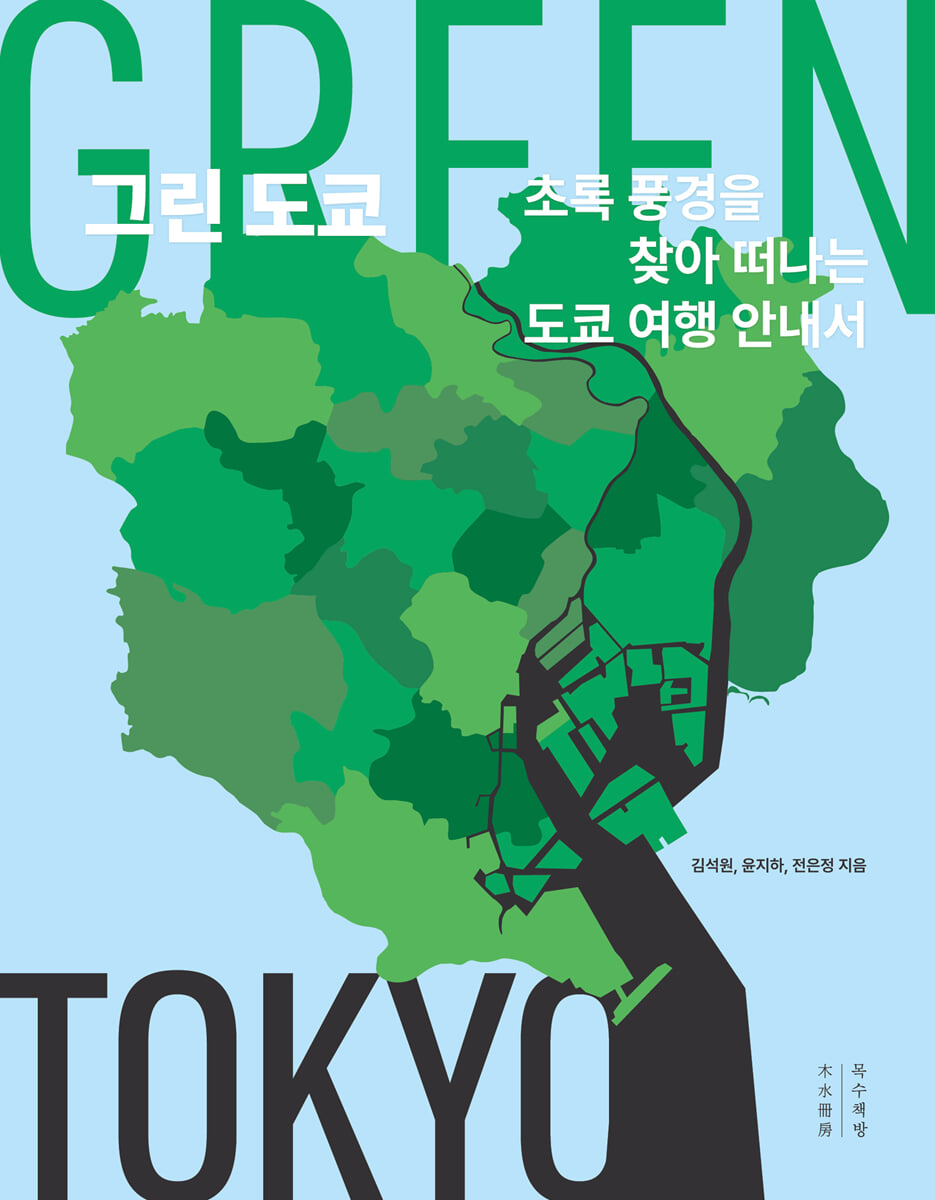
"Green Tokyo" is a book like this.
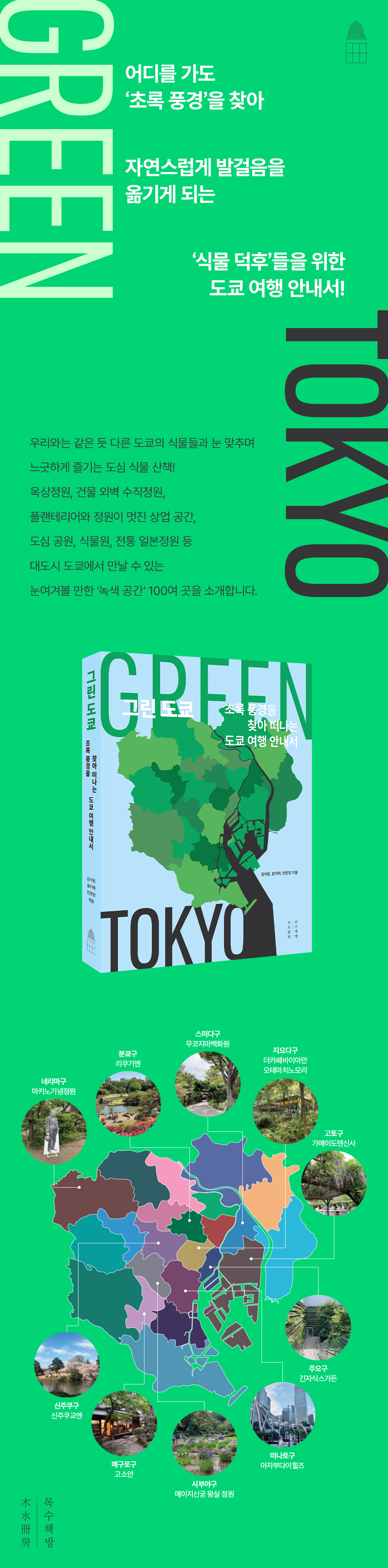
A Tokyo travel guide for plant enthusiasts who naturally find themselves drawn to "green scenery" wherever they go.
Here are over 100 noteworthy "green spaces" in the metropolis of Tokyo, including rooftop gardens, vertical gardens on building facades, commercial spaces with stunning planteriums and gardens, urban parks, botanical gardens, and traditional Japanese gardens.
A Tokyo travel guide for plant enthusiasts who naturally find themselves drawn to "green scenery" wherever they go.
Here are over 100 noteworthy "green spaces" in the metropolis of Tokyo, including rooftop gardens, vertical gardens on building facades, commercial spaces with stunning planteriums and gardens, urban parks, botanical gardens, and traditional Japanese gardens.
- You can preview some of the book's contents.
Preview
index
Introduction - In Search of Tokyo's 'Green Comma'
[Minato Ward]
Roppongi Hills and Mori Garden | Blue Bottle Coffee Roppongi | 21_21 Design Sight | Hinokicho Park | Azabu Dai Hills | Tokyo World Gate | Cafe Dining Sapu | Toranomon Hills Mori Tower | Nezu Museum and Nezu Cafe | Taro Okamoto Memorial Museum | Nono Aoyama and Aoyama Kitamichi Children's Park | Blue Bottle Coffee Aoyama | Aoyama Flower Market Greenhouse | i2cafe | Tokyo Metropolitan Teien Art Museum | Institute for Nature Education | Former Shiba Rikyu Gardens | Meiji Shrine Outer Garden Ginkgo Avenue | Share Green Minami Aoyama | Happo-en | Arisugawanomiya Memorial Park
Main styles of traditional Japanese gardens
Why We Focus on Tokyo's Urban Landscape
[Chuo Ward]
Ginza Six Garden | Ginza Sony Park | Ginza Mitsukoshi Rooftop Garden | Zuketsudo Ginza Kabukiza Branch | Tokyo Square Garden | The Palm Universal Ginza | Mitsukoshi Department Store Nihonbashi Main Branch Rooftop Garden | Coredo Muromachi Terrace Keyaki Plaza | Hamarikyu Gardens
[Chiyoda-ku]
Tokyo Station | Tokiwabashi Tower, Tokyo Tochi Terrace | Kite Garden | Marunouchi Brick Square | The Cafe By Aman, Otemachi no Mori | Uchisaiwaicho Plaza | Hibikoku Terrace | Kokyo Gaien | Ninomaru Garden, East Gardens of the Imperial Palace | Chidorigafuchi Promenade | Kitanomaru Park | Marunouchi Area | Sotobori Park | Iidabashi Riverside | Toriumi Bookstore
The pleasure of walking while making eye contact with the city's plants
[Shibuya Ward]
Higuma Donut × Coffee Light | Farmer's Market @ UNU | Zaire.Food | Tokyu Plaza Omotesando 'Omokado' Omohara Forest | Tokyu Plaza Harajuku Harakado | Omotesando Branch | Miyashita Park | Shibuya Parco Rooftop Garden | Kitaya Park & Blue Bottle Coffee Shibuya | Shibuya Ward Fureai Botanical Center | Daikanyama Tea Site & Tsutaya Bookstore | Forest Gate Daikanyama | Former Asakura Residence | Meiji Shrine & Meiji Shrine Imperial Garden | Laurence Harajuku | Yoyogi Park | Yebisu Garden Place
[Shinjuku Ward]
Suica Penguin Square | Takashimaya Times Square White Garden | Isetan Shinjuku Ai Garden | Shinjuku Marui Main Building Q Court | Shinjuku Gyoen National Garden | Kansen-en Park | Rakagu
Street trees in Tokyo
[Daito Ward]
Ueno Park | Tokyo National Museum Gardens and Tohakuda Hall | Root Books | Yanaka Garden and Yanaka Ginza | Former Iwasaki Residence Garden
[Bunkyo Ward]
Rikugien | Oriental Library Museum and Orient Cafe | Koishikawa Korakuen | Former Yasuda Kusuo Residence Garden | Hatoyama Hall | Higo Hosokawa Garden | Koishikawa Botanical Garden
A special cherry blossom viewing experience aboard the Sakura Tram
[Meguro Ward]
Meguro Sky Garden | Brocant | Gosoan | Former Maeda Residence
A path around the Meguro River, perfect for a stroll
A good place to see together with the former Maeda family residence
[Suginami Ward]
Otaguro Park
[Setagaya Ward]
Tamagawa Takashimaya | Futakotamagawa Rise Shopping Center | Gotokuji Temple | Honbutsu Joshinji Temple | Todoroki Valley Park
[Other]
Old Furukawa Garden
[Nerima Ward]
Makino Memorial Garden | Hikarigaoka Park
[Sumida Ward]
Mukojima Hyakkaen
[Itabashi Ward]
Itabashi City Tropical Plant Museum | Itabashi City Akatsuka Botanical Garden | Itabashi City Museum of Art
[Katsushika Ward]
Mizumoto Park
[Koto Ward]
Yumenoshima Tropical Botanical Garden | Kiyosumi Garden | Kameido Tenjin Shrine
[Toshima Ward]
Seibu Ikebukuro Department Store Main Branch's Colorful and Green Sky Garden 250
[Outside Tokyo's 23 wards]
Yokohama New Port Central Square Park | Yokohama Yamashita Park | Yokohama Sankeien | Yokohama Negishi Forest Park | Chofu Jindai Botanical Garden | Musashino Inokashira Park | Koganei Edo-Tokyo Open Air Architectural Institute | Kokubunji Tonogayato Garden | Machida The Farm Universal Minami-Machida Granberry Park | Inagi Hana Biyori Pit Oudolf Garden Tokyo | Hachioji Hiking Mt. Jinba, Mt. Kagenobu, Mt. Shiroyama, and Mt. Takao | Trekking in the Okutama area of Nishitama County
[Minato Ward]
Roppongi Hills and Mori Garden | Blue Bottle Coffee Roppongi | 21_21 Design Sight | Hinokicho Park | Azabu Dai Hills | Tokyo World Gate | Cafe Dining Sapu | Toranomon Hills Mori Tower | Nezu Museum and Nezu Cafe | Taro Okamoto Memorial Museum | Nono Aoyama and Aoyama Kitamichi Children's Park | Blue Bottle Coffee Aoyama | Aoyama Flower Market Greenhouse | i2cafe | Tokyo Metropolitan Teien Art Museum | Institute for Nature Education | Former Shiba Rikyu Gardens | Meiji Shrine Outer Garden Ginkgo Avenue | Share Green Minami Aoyama | Happo-en | Arisugawanomiya Memorial Park
Main styles of traditional Japanese gardens
Why We Focus on Tokyo's Urban Landscape
[Chuo Ward]
Ginza Six Garden | Ginza Sony Park | Ginza Mitsukoshi Rooftop Garden | Zuketsudo Ginza Kabukiza Branch | Tokyo Square Garden | The Palm Universal Ginza | Mitsukoshi Department Store Nihonbashi Main Branch Rooftop Garden | Coredo Muromachi Terrace Keyaki Plaza | Hamarikyu Gardens
[Chiyoda-ku]
Tokyo Station | Tokiwabashi Tower, Tokyo Tochi Terrace | Kite Garden | Marunouchi Brick Square | The Cafe By Aman, Otemachi no Mori | Uchisaiwaicho Plaza | Hibikoku Terrace | Kokyo Gaien | Ninomaru Garden, East Gardens of the Imperial Palace | Chidorigafuchi Promenade | Kitanomaru Park | Marunouchi Area | Sotobori Park | Iidabashi Riverside | Toriumi Bookstore
The pleasure of walking while making eye contact with the city's plants
[Shibuya Ward]
Higuma Donut × Coffee Light | Farmer's Market @ UNU | Zaire.Food | Tokyu Plaza Omotesando 'Omokado' Omohara Forest | Tokyu Plaza Harajuku Harakado | Omotesando Branch | Miyashita Park | Shibuya Parco Rooftop Garden | Kitaya Park & Blue Bottle Coffee Shibuya | Shibuya Ward Fureai Botanical Center | Daikanyama Tea Site & Tsutaya Bookstore | Forest Gate Daikanyama | Former Asakura Residence | Meiji Shrine & Meiji Shrine Imperial Garden | Laurence Harajuku | Yoyogi Park | Yebisu Garden Place
[Shinjuku Ward]
Suica Penguin Square | Takashimaya Times Square White Garden | Isetan Shinjuku Ai Garden | Shinjuku Marui Main Building Q Court | Shinjuku Gyoen National Garden | Kansen-en Park | Rakagu
Street trees in Tokyo
[Daito Ward]
Ueno Park | Tokyo National Museum Gardens and Tohakuda Hall | Root Books | Yanaka Garden and Yanaka Ginza | Former Iwasaki Residence Garden
[Bunkyo Ward]
Rikugien | Oriental Library Museum and Orient Cafe | Koishikawa Korakuen | Former Yasuda Kusuo Residence Garden | Hatoyama Hall | Higo Hosokawa Garden | Koishikawa Botanical Garden
A special cherry blossom viewing experience aboard the Sakura Tram
[Meguro Ward]
Meguro Sky Garden | Brocant | Gosoan | Former Maeda Residence
A path around the Meguro River, perfect for a stroll
A good place to see together with the former Maeda family residence
[Suginami Ward]
Otaguro Park
[Setagaya Ward]
Tamagawa Takashimaya | Futakotamagawa Rise Shopping Center | Gotokuji Temple | Honbutsu Joshinji Temple | Todoroki Valley Park
[Other]
Old Furukawa Garden
[Nerima Ward]
Makino Memorial Garden | Hikarigaoka Park
[Sumida Ward]
Mukojima Hyakkaen
[Itabashi Ward]
Itabashi City Tropical Plant Museum | Itabashi City Akatsuka Botanical Garden | Itabashi City Museum of Art
[Katsushika Ward]
Mizumoto Park
[Koto Ward]
Yumenoshima Tropical Botanical Garden | Kiyosumi Garden | Kameido Tenjin Shrine
[Toshima Ward]
Seibu Ikebukuro Department Store Main Branch's Colorful and Green Sky Garden 250
[Outside Tokyo's 23 wards]
Yokohama New Port Central Square Park | Yokohama Yamashita Park | Yokohama Sankeien | Yokohama Negishi Forest Park | Chofu Jindai Botanical Garden | Musashino Inokashira Park | Koganei Edo-Tokyo Open Air Architectural Institute | Kokubunji Tonogayato Garden | Machida The Farm Universal Minami-Machida Granberry Park | Inagi Hana Biyori Pit Oudolf Garden Tokyo | Hachioji Hiking Mt. Jinba, Mt. Kagenobu, Mt. Shiroyama, and Mt. Takao | Trekking in the Okutama area of Nishitama County
Detailed image
Into the book
When you fall in love with plants, no matter how many times you visit the same place, it always feels new.
Because nature never shows the same appearance for even a single moment.
Even in big cities where everything seems to be gray concrete buildings, there are plants that live alongside us.
It's just that you don't pay attention, so you can't see it.
When you are captivated by the sight of plants living in one place, you tend to look down at your feet and slow down your walking speed as you look around here and there.
If you're planning a trip to Tokyo and love plants and nature, why not try a leisurely walking tour themed around Tokyo's "green spaces"?
Tokyo has different average annual temperatures and winter minimum temperatures than Seoul, South Korea.
There is also an environmental difference in that it has a maritime climate.
Simply put, you can think of Tokyo as having a similar environment to Jeju Island.
Not only can Washington palms, Chinese maples, and cycads, which give Jeju Island's streets an exotic atmosphere, live in the heart of Tokyo, but so can pine trees, ginkgo trees, and maple trees, which are commonly seen in Seoul.
So, a cityscape is created that is similar to ours, yet not at all similar to it.
If you're interested in landscaped spaces or garden plants, it's a good idea to visit the places introduced in this book for field trips. However, don't forget that landscaped spaces are meant to be places where you can "rest and enjoy yourself."
While visiting delicious restaurants and shopping are essential parts of any trip, if time permits, consider grabbing some food and heading to one of the "green spaces" featured in this book.
Take a leisurely stroll through the park like the locals do, enjoying the warm sunshine and breeze, taking your time exploring the green spaces, and then sit on a bench and relax.
I think this is the secret to enjoying landscaped spaces to the fullest.
Because nature never shows the same appearance for even a single moment.
Even in big cities where everything seems to be gray concrete buildings, there are plants that live alongside us.
It's just that you don't pay attention, so you can't see it.
When you are captivated by the sight of plants living in one place, you tend to look down at your feet and slow down your walking speed as you look around here and there.
If you're planning a trip to Tokyo and love plants and nature, why not try a leisurely walking tour themed around Tokyo's "green spaces"?
Tokyo has different average annual temperatures and winter minimum temperatures than Seoul, South Korea.
There is also an environmental difference in that it has a maritime climate.
Simply put, you can think of Tokyo as having a similar environment to Jeju Island.
Not only can Washington palms, Chinese maples, and cycads, which give Jeju Island's streets an exotic atmosphere, live in the heart of Tokyo, but so can pine trees, ginkgo trees, and maple trees, which are commonly seen in Seoul.
So, a cityscape is created that is similar to ours, yet not at all similar to it.
If you're interested in landscaped spaces or garden plants, it's a good idea to visit the places introduced in this book for field trips. However, don't forget that landscaped spaces are meant to be places where you can "rest and enjoy yourself."
While visiting delicious restaurants and shopping are essential parts of any trip, if time permits, consider grabbing some food and heading to one of the "green spaces" featured in this book.
Take a leisurely stroll through the park like the locals do, enjoying the warm sunshine and breeze, taking your time exploring the green spaces, and then sit on a bench and relax.
I think this is the secret to enjoying landscaped spaces to the fullest.
--- From the text
Publisher's Review
Japan is the country most visited by Koreans.
Among them, Tokyo is considered one of the cities where it is relatively easy to make the decision to leave.
This book is a personalized Tokyo travel guide for those who are planning a trip to Tokyo and are naturally drawn to the "green scenery" wherever they go, and who have a special love for plants.
《Green Tokyo》 focuses on rooftop gardens in shopping malls and public spaces filled with various plants, rather than trendy shopping spaces, and on restaurants and cafes with beautiful planteriors or outdoor gardens, rather than special menus or interiors.
I looked with interest at the individual plants in various parts of Tokyo, which are similar to Seoul and yet very different from Jeju Island's weather, as well as the street trees lining the streets, the flower beds at the entrances of buildings, and someone's small garden in a residential alley.
Seokwon Kim, who majored in landscape architecture and works in gardening, recommends important landscape spaces in Tokyo that should be visited by those interested in urban landscaping and gardens.
Discover some of Tokyo's most stunning locations, where carefully designed green spaces can transform the overall atmosphere of a building, enhance its value, and, most importantly, help city dwellers appreciate the importance of nature.
Jiha Yoon, who has been working in Tokyo for over 10 years after studying in Japan and whose hobbies include walking and hiking, has compiled a list of Tokyo's "hot places" with a "plant" concept, as well as various places in Tokyo where you can leisurely stroll and gaze at plants.
Eunjeong Jeon, who is working on an ecological book at a publishing company, mainly introduces major botanical gardens, parks beloved by Tokyoites, and traditional Japanese gardens with historical significance.
The recommended places in the book are organized by category to help readers plan their own travel itinerary.
For example, if the Mori Art Museum is on your itinerary, you can choose a green space near Roppongi in Minato Ward that catches your eye and visit there together.
From the impressive bulbous plantings of Yokohama New Port Central Square Park to the Hana-Biyori Piet Oudolf Gardens Tokyo in Inagi City and the trekking course in the Okutama area of Nishitama County, we've selected some of the major green spaces on the outskirts of Tokyo that aren't part of Tokyo's 23 wards but are worth taking the time to visit.
If there is additional information worth mentioning for each location, such as a linked tourist attraction, it is listed separately next to the location.
There are also interesting reading materials for plant lovers, such as 'Major Styles of Traditional Japanese Gardens', 'Why We Focus on Urban Landscaping in Tokyo', and 'Trees You'll Encounter on Streets in Tokyo'.
Plants that exist in an artificial environment always make that place 'new'.
Even though the location may not change, the appearance of the plants that take root and live there changes every moment depending on the season and the weather.
Plants play an important role in making a place 'special', whether we know it or not.
When you start to pay attention to nature in the city, you can slow down your travels and escape the pressure of a list of places to go and things to do.
You can enrich your travel time by leisurely examining the plants at your feet, bending down to look at the plants in a small flower bed, and pausing to look up at the sky.
Above all, a trip to experience nature in the city is good because it allows you to feel connected to nature even in the city, a sense of being "alive" that we often forget when we are always busy trying to make a living.
If you love plants and nature and are planning a trip to Tokyo, let this book be your guide and embark on an exploration of "Green Tokyo" like never before.
We hope you can also enjoy the pleasure of a leisurely stroll through the botanical gardens in Tokyo, experiencing the presence of various living creatures living in the city with us.
Among them, Tokyo is considered one of the cities where it is relatively easy to make the decision to leave.
This book is a personalized Tokyo travel guide for those who are planning a trip to Tokyo and are naturally drawn to the "green scenery" wherever they go, and who have a special love for plants.
《Green Tokyo》 focuses on rooftop gardens in shopping malls and public spaces filled with various plants, rather than trendy shopping spaces, and on restaurants and cafes with beautiful planteriors or outdoor gardens, rather than special menus or interiors.
I looked with interest at the individual plants in various parts of Tokyo, which are similar to Seoul and yet very different from Jeju Island's weather, as well as the street trees lining the streets, the flower beds at the entrances of buildings, and someone's small garden in a residential alley.
Seokwon Kim, who majored in landscape architecture and works in gardening, recommends important landscape spaces in Tokyo that should be visited by those interested in urban landscaping and gardens.
Discover some of Tokyo's most stunning locations, where carefully designed green spaces can transform the overall atmosphere of a building, enhance its value, and, most importantly, help city dwellers appreciate the importance of nature.
Jiha Yoon, who has been working in Tokyo for over 10 years after studying in Japan and whose hobbies include walking and hiking, has compiled a list of Tokyo's "hot places" with a "plant" concept, as well as various places in Tokyo where you can leisurely stroll and gaze at plants.
Eunjeong Jeon, who is working on an ecological book at a publishing company, mainly introduces major botanical gardens, parks beloved by Tokyoites, and traditional Japanese gardens with historical significance.
The recommended places in the book are organized by category to help readers plan their own travel itinerary.
For example, if the Mori Art Museum is on your itinerary, you can choose a green space near Roppongi in Minato Ward that catches your eye and visit there together.
From the impressive bulbous plantings of Yokohama New Port Central Square Park to the Hana-Biyori Piet Oudolf Gardens Tokyo in Inagi City and the trekking course in the Okutama area of Nishitama County, we've selected some of the major green spaces on the outskirts of Tokyo that aren't part of Tokyo's 23 wards but are worth taking the time to visit.
If there is additional information worth mentioning for each location, such as a linked tourist attraction, it is listed separately next to the location.
There are also interesting reading materials for plant lovers, such as 'Major Styles of Traditional Japanese Gardens', 'Why We Focus on Urban Landscaping in Tokyo', and 'Trees You'll Encounter on Streets in Tokyo'.
Plants that exist in an artificial environment always make that place 'new'.
Even though the location may not change, the appearance of the plants that take root and live there changes every moment depending on the season and the weather.
Plants play an important role in making a place 'special', whether we know it or not.
When you start to pay attention to nature in the city, you can slow down your travels and escape the pressure of a list of places to go and things to do.
You can enrich your travel time by leisurely examining the plants at your feet, bending down to look at the plants in a small flower bed, and pausing to look up at the sky.
Above all, a trip to experience nature in the city is good because it allows you to feel connected to nature even in the city, a sense of being "alive" that we often forget when we are always busy trying to make a living.
If you love plants and nature and are planning a trip to Tokyo, let this book be your guide and embark on an exploration of "Green Tokyo" like never before.
We hope you can also enjoy the pleasure of a leisurely stroll through the botanical gardens in Tokyo, experiencing the presence of various living creatures living in the city with us.
GOODS SPECIFICS
- Date of issue: June 25, 2025
- Page count, weight, size: 276 pages | 446g | 152*195*16mm
- ISBN13: 9791188806690
- ISBN10: 1188806696
You may also like
카테고리
korean


korean

![GQ KOREA Mark (Monthly): December [2025]](http://librairie.coreenne.fr/cdn/shop/files/8ef265dbbfbf186523ed75ba7319009d.jpg?v=1765340328&width=3840)


