

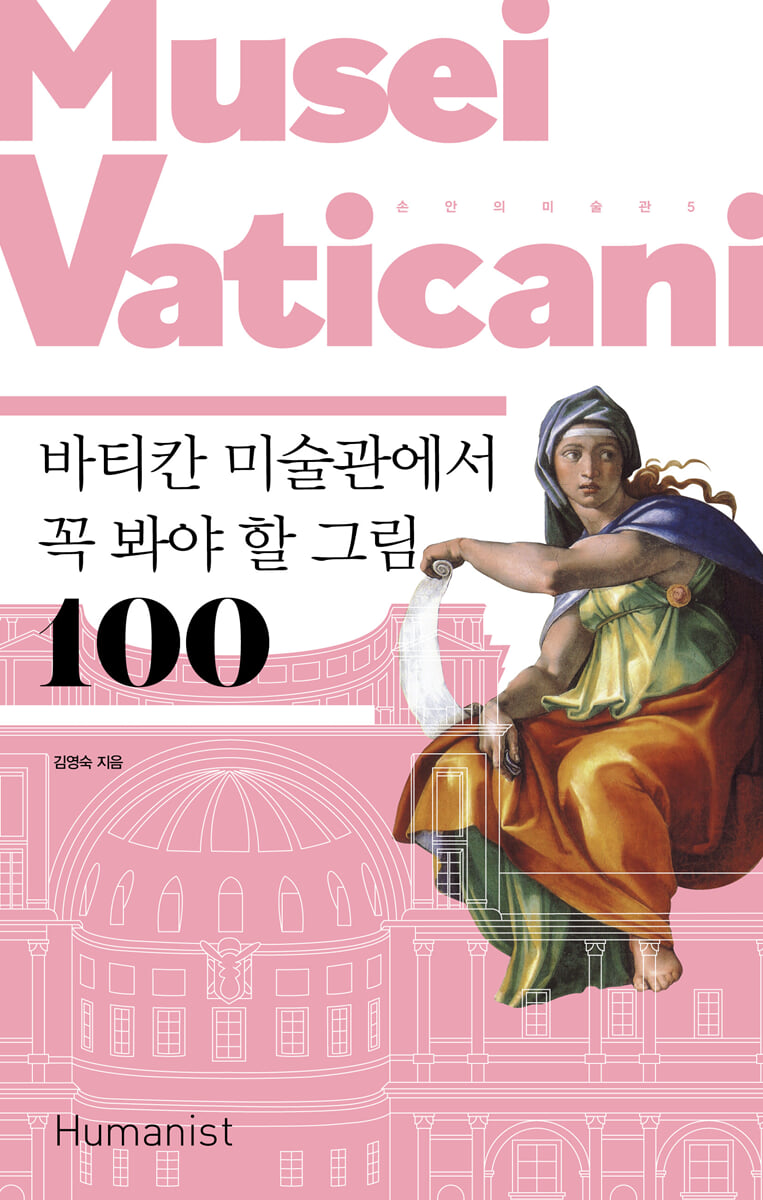
100 Must-See Paintings in the Vatican Museums
 |
Description
Book Introduction
Art Museum in Your Hand, Volume 5.
Kim Young-sook, the best art storyteller who has taught us how to read paintings in an exciting way through “Art Books That Make You Want to Go to an Art Museum” and “1 Page Art 365,” points out 100 “must-see paintings” for travelers who are pressed for time and cannot properly see the paintings.
In the hope that travelers can easily view the paintings in European art museums as if looking into the palm of their hand, we recommend works that are easily digestible.
Northwest of Rome, the city that represents Western civilization, is Vatican City, the world's smallest country, with an area of less than 50 hectares.
It is a city ruled by the Pope, the Bishop of Rome, the representative of Jesus Christ, and the highest priest of the Catholic Church, and is recognized as an important historical site of ancient Rome and the Catholic Church, and is registered as a UNESCO World Heritage Site.
The fifth place visited by the 'Museum in Your Hand' series, following the Louvre, the Orsay Museum, the National Gallery, and the Prado Museum, is the Musei Vaticani, located in Vatican City, a country that is practically a museum.
《100 Must-See Paintings in the Vatican Museums》 is organized to allow a natural understanding of painting trends from the 12th to 17th centuries and the Baroque era, focusing on major works exhibited in the Vatican Museums' Pinacoteca, Raphael Rooms, and Sistine Chapel.
This book will be an essential guide for your Vatican art tour, and a small album to remember your time there when you return to your daily life.
Kim Young-sook, the best art storyteller who has taught us how to read paintings in an exciting way through “Art Books That Make You Want to Go to an Art Museum” and “1 Page Art 365,” points out 100 “must-see paintings” for travelers who are pressed for time and cannot properly see the paintings.
In the hope that travelers can easily view the paintings in European art museums as if looking into the palm of their hand, we recommend works that are easily digestible.
Northwest of Rome, the city that represents Western civilization, is Vatican City, the world's smallest country, with an area of less than 50 hectares.
It is a city ruled by the Pope, the Bishop of Rome, the representative of Jesus Christ, and the highest priest of the Catholic Church, and is recognized as an important historical site of ancient Rome and the Catholic Church, and is registered as a UNESCO World Heritage Site.
The fifth place visited by the 'Museum in Your Hand' series, following the Louvre, the Orsay Museum, the National Gallery, and the Prado Museum, is the Musei Vaticani, located in Vatican City, a country that is practically a museum.
《100 Must-See Paintings in the Vatican Museums》 is organized to allow a natural understanding of painting trends from the 12th to 17th centuries and the Baroque era, focusing on major works exhibited in the Vatican Museums' Pinacoteca, Raphael Rooms, and Sistine Chapel.
This book will be an essential guide for your Vatican art tour, and a small album to remember your time there when you return to your daily life.
- You can preview some of the book's contents.
Preview
index
First, for those who want to go to European art museums
Things to Know Before Visiting the Vatican Museums
Pinacoteca
Pinacoteca's Painting Gallery
Niccolò and Giovanni, The Last Judgment
Simone Martini, "Jesus the Redeemer Blessing"
Giotto and His Disciples (Stephanesi Triptych)
Gentile da Fabriano, The Birth of St. Nicholas, The Miracle of the Three Girls, St. Nicholas Raising Three Dead Brothers, St. Nicholas Saving a Ship in a Storm
Fra Angelico, The Story of St. Nicholas, The Story of St. Nicholas (St. Nicholas Saving a Ship)
Fra Filippo Lippi, Coronation of the Virgin
Melozzo da Forli, Sixtus IV Appointing Bartolomeo Platina as Prefect of the Vatican Library
Melozzo da Forli, Frescoes
Lucas Cranach's Pietà
Carlo Crivelli's Pietà and Madonna and Child
Perugino's Madonna and Child with Saints
Raphael Sanzio, Coronation of the Virgin
Raphael Sanzio, Madonna of Foligno
Raphael Sanzio's "Transfiguration"
Giovanni Bellini, Lamentation of the Dead Christ
Leonardo da Vinci's "Saint Jerome"
Titian Vecellio, Madonna and Child with Saints
Paolo Veronese, Saint Helena
Federico Fiori Barozzi, Rest During the Flight into Egypt
Caravaggio's Burial
Nicolas Poussin, The Martyrdom of Saint Erasmus
Valentin de Boulogne, The Martyrdom of Saints Procesus and Martinian
Guido Reni, Crucifixion of Saint Peter
Guercino, Doubting Thomas, Mary Magdalene and Two Angels
Domenichino, The Last Communion of Saint Jerome, Pier Francesco Mola, Saint Jerome
Orazio Gentileschi, Judith and the Maid Holding the Head of Holofernes
Daniel Segers and Hendrik van Wallen, Saint Ignatius and the Crown
Giuseppe Maria Crespi, Pope Benedict XIV; Carlo Maratta, Pope Clement IX
Peter Wentzel, "The Fight of the Lion and the Tiger," "The Fight of the Leopard and the Zebra," and "Adam and Eve in the Garden of Eden"
Stanze di Raffaelo
Raphael's Room Painting Gallery
- Raphael Sanzio
- Constantine's Room
Raphael Sanzio and Giulio Romano, "The Apparition of the Cross" and Raphael Sanzio, "The Battle of the Milius Bridge"
Raphael Sanzio and Giovanni Francesco Penni, The Baptism of Constantine and The Donation of Constantine
- Room of Heliodorus
Raphael Sanzio, The Expulsion of Heliodorus
Raphael Sanzio, Mass at Bolsena, Peter Delivered from Prison
Raphael Sanzio, The Meeting of Leo and Attila
- Signature Room
Raphael Sanzio, Ceiling of the Salle dell'Accademia
Raphael Sanzio, The School of Athens
Raphael Sanzio, "Controversy over the Blessed Sacrament"
Raphael Sanzio, Parnassus
Raffaello Sanzio, Justice
- Room of the Borgo Fire
Raphael Sanzio and his disciples, The Oath of Leo III, The Coronation of Charlemagne
Raphael Sanzio, "The Fire of the Borgo" and "The Battle of Ostia"
Sistine Chapel Chapel
Sistine Chapel Painting Gallery
- Side frescoes of the Sistine Chapel painted by 15th-century masters
Perugino, The Baptism of Christ and The Journey of Moses
Perugino, Jesus Handing the Keys to Peter
Sandro Botticelli, The Punishment of Korah, Datan, and Abiram
Sandro Botticelli, The Temptation of Christ and The Stories of Moses
- Michelangelo's Sistine Chapel ceiling
- Michelangelo
Michelangelo, "The Separation of Light and Darkness," "The Creation of Plants, the Creation of the Sun and the Moon," "The Separation of Earth and Water"
Michelangelo's The Creation of Adam
Michelangelo, The Creation of Eve and The Temptation and Expulsion of Adam and Eve
Michelangelo, The Sacrifice of Noah, The Great Flood, and The Drunk Noah
Michelangelo, David and Goliath, Judith and Holofernes
Michelangelo, The Punishment of Haman and the Bronze Serpent
Michelangelo, The Prophet Zechariah, The Prophet Jonah, The Prophet Jeremiah
Michelangelo, Delphic Priestess, Cumaeus Priestess, Libyan Priestess
Michelangelo, Hezekiah, Manasseh, Amos, Salmon, Boaz, Obed, Josiah, Jechonah, Shealtiel, Jesse, David, Solomon, Eleazar and Matthan, Amminadab
Michelangelo's Inud and bronze medallion from the Delphic Priestess, Inud and bronze medallion from the Parting of Earth and Water, and bronze Inud between the Prophet Ezekiel and the Persian Priestess
- Sistine Chapel Altarpiece "The Last Judgment"
- Counter-Reformation
Michelangelo's "The Instruments of the Passion" left lunette, "The Instruments of the Passion" right lunette
Michelangelo's "Jesus and the Virgin Mary"
Michelangelo's The Blessed
Michelangelo's "Saints"
Michelangelo, Angels Blowing the Trumpets of Judgment, The Saved, The Damned
Michelangelo's "The Gates of Hell"
Michelangelo's Resurrection of the Dead
Figure annotations
Things to Know Before Visiting the Vatican Museums
Pinacoteca
Pinacoteca's Painting Gallery
Niccolò and Giovanni, The Last Judgment
Simone Martini, "Jesus the Redeemer Blessing"
Giotto and His Disciples (Stephanesi Triptych)
Gentile da Fabriano, The Birth of St. Nicholas, The Miracle of the Three Girls, St. Nicholas Raising Three Dead Brothers, St. Nicholas Saving a Ship in a Storm
Fra Angelico, The Story of St. Nicholas, The Story of St. Nicholas (St. Nicholas Saving a Ship)
Fra Filippo Lippi, Coronation of the Virgin
Melozzo da Forli, Sixtus IV Appointing Bartolomeo Platina as Prefect of the Vatican Library
Melozzo da Forli, Frescoes
Lucas Cranach's Pietà
Carlo Crivelli's Pietà and Madonna and Child
Perugino's Madonna and Child with Saints
Raphael Sanzio, Coronation of the Virgin
Raphael Sanzio, Madonna of Foligno
Raphael Sanzio's "Transfiguration"
Giovanni Bellini, Lamentation of the Dead Christ
Leonardo da Vinci's "Saint Jerome"
Titian Vecellio, Madonna and Child with Saints
Paolo Veronese, Saint Helena
Federico Fiori Barozzi, Rest During the Flight into Egypt
Caravaggio's Burial
Nicolas Poussin, The Martyrdom of Saint Erasmus
Valentin de Boulogne, The Martyrdom of Saints Procesus and Martinian
Guido Reni, Crucifixion of Saint Peter
Guercino, Doubting Thomas, Mary Magdalene and Two Angels
Domenichino, The Last Communion of Saint Jerome, Pier Francesco Mola, Saint Jerome
Orazio Gentileschi, Judith and the Maid Holding the Head of Holofernes
Daniel Segers and Hendrik van Wallen, Saint Ignatius and the Crown
Giuseppe Maria Crespi, Pope Benedict XIV; Carlo Maratta, Pope Clement IX
Peter Wentzel, "The Fight of the Lion and the Tiger," "The Fight of the Leopard and the Zebra," and "Adam and Eve in the Garden of Eden"
Stanze di Raffaelo
Raphael's Room Painting Gallery
- Raphael Sanzio
- Constantine's Room
Raphael Sanzio and Giulio Romano, "The Apparition of the Cross" and Raphael Sanzio, "The Battle of the Milius Bridge"
Raphael Sanzio and Giovanni Francesco Penni, The Baptism of Constantine and The Donation of Constantine
- Room of Heliodorus
Raphael Sanzio, The Expulsion of Heliodorus
Raphael Sanzio, Mass at Bolsena, Peter Delivered from Prison
Raphael Sanzio, The Meeting of Leo and Attila
- Signature Room
Raphael Sanzio, Ceiling of the Salle dell'Accademia
Raphael Sanzio, The School of Athens
Raphael Sanzio, "Controversy over the Blessed Sacrament"
Raphael Sanzio, Parnassus
Raffaello Sanzio, Justice
- Room of the Borgo Fire
Raphael Sanzio and his disciples, The Oath of Leo III, The Coronation of Charlemagne
Raphael Sanzio, "The Fire of the Borgo" and "The Battle of Ostia"
Sistine Chapel Chapel
Sistine Chapel Painting Gallery
- Side frescoes of the Sistine Chapel painted by 15th-century masters
Perugino, The Baptism of Christ and The Journey of Moses
Perugino, Jesus Handing the Keys to Peter
Sandro Botticelli, The Punishment of Korah, Datan, and Abiram
Sandro Botticelli, The Temptation of Christ and The Stories of Moses
- Michelangelo's Sistine Chapel ceiling
- Michelangelo
Michelangelo, "The Separation of Light and Darkness," "The Creation of Plants, the Creation of the Sun and the Moon," "The Separation of Earth and Water"
Michelangelo's The Creation of Adam
Michelangelo, The Creation of Eve and The Temptation and Expulsion of Adam and Eve
Michelangelo, The Sacrifice of Noah, The Great Flood, and The Drunk Noah
Michelangelo, David and Goliath, Judith and Holofernes
Michelangelo, The Punishment of Haman and the Bronze Serpent
Michelangelo, The Prophet Zechariah, The Prophet Jonah, The Prophet Jeremiah
Michelangelo, Delphic Priestess, Cumaeus Priestess, Libyan Priestess
Michelangelo, Hezekiah, Manasseh, Amos, Salmon, Boaz, Obed, Josiah, Jechonah, Shealtiel, Jesse, David, Solomon, Eleazar and Matthan, Amminadab
Michelangelo's Inud and bronze medallion from the Delphic Priestess, Inud and bronze medallion from the Parting of Earth and Water, and bronze Inud between the Prophet Ezekiel and the Persian Priestess
- Sistine Chapel Altarpiece "The Last Judgment"
- Counter-Reformation
Michelangelo's "The Instruments of the Passion" left lunette, "The Instruments of the Passion" right lunette
Michelangelo's "Jesus and the Virgin Mary"
Michelangelo's The Blessed
Michelangelo's "Saints"
Michelangelo, Angels Blowing the Trumpets of Judgment, The Saved, The Damned
Michelangelo's "The Gates of Hell"
Michelangelo's Resurrection of the Dead
Figure annotations
Detailed image

Publisher's Review
The smallest country in the world
The largest art museum, the Vatican Museums
Northwest of Rome, the city that represents Western civilization, is Vatican City, the world's smallest country, with an area of less than 50 hectares.
It is a city ruled by the Pope, the Bishop of Rome, the representative of Jesus Christ, and the highest priest of the Catholic Church, and is recognized as an important historical site of ancient Rome and the Catholic Church, and is registered as a UNESCO World Heritage Site.
The fifth place visited by the 'Museum in Your Hand' series, following the Louvre, the Orsay Museum, the National Gallery, and the Prado Museum, is the Musei Vaticani, located in Vatican City, a country that is practically a museum.
The 500-year history of the Vatican Museums began in 1506 when Pope Julius II opened to the public ancient sculptures, including the Laocoön, excavated from the Belvedere Gardens.
The Vatican Museums established themselves as a public art museum in the modern sense in 1773, when they began exhibiting works collected or produced during the reigns of Clement XIV and Pius VI.
With the Bioclemens Gallery as its lead, the Chiaramonti Gallery, the Braccio Nuovo Gallery, the Etruscan Gallery, the Egyptian Gallery, the Gregorian Pagan Gallery, the Pinacoteca, a gallery dedicated to paintings, and the Gallery of Modern Art opened in succession, establishing it as the world's largest art museum with a total of 24 exhibition halls.
Among the many exhibition halls in the Vatican, the most notable ones related to paintings are the Pinacoteca Gallery, the Raphael Rooms, and the Sistine Chapel.
The Pinacoteca offers a glimpse into the history of Western painting from the 12th to the 19th centuries through approximately 460 paintings collected by the Vatican over a long period of time.
The Vatican Palace, used by past popes, has walls and ceilings decorated with frescoes by Renaissance masters, and the Raphael Rooms, completed by Raphael and his disciples, and the Sistine Chapel, filled with Michelangelo's ceiling and altarpieces, showcase the essence of Western painting.
The Vatican Museums are one-way from entrance to exit, and photography is strictly prohibited in many areas, so if you don't prepare thoroughly in advance, you can easily miss some of the gems.
《100 Must-See Paintings in the Vatican Museums》 is organized to allow a natural understanding of painting trends from the 12th to 17th centuries and the Baroque era, focusing on major works exhibited in the Vatican Museums' Pinacoteca, Raphael Rooms, and Sistine Chapel.
This book will be an essential guide for your Vatican art tour, and a small album to remember your time there when you return to your daily life.
This place is filled with magnificent frescoes by Michelangelo and Raphael.
What paintings should I see in the Vatican?
At the Vatican Museums, you can see works by Renaissance masters Michelangelo and Raphael Sanzio, as well as various contemporary painters.
In addition to paintings on canvas or woodblock, the frescoes that decorate the interior of the Vatican Palace, such as the huge ceiling paintings and altarpieces, can only be seen in the Vatican.
《100 Must-See Paintings in the Vatican Museums》 is composed of three chapters: 〈Pinacoteca〉, 〈Stanze di Raffaello〉, and 〈Sistine Chapel〉, following the route of the visitor.
One or two or three works are explained in a simple, clear, yet interesting way on one page, and works that would be helpful to read together are included in the 'Illustrated Notes'.
It also includes a brief history of the Vatican Museums along with information about them, and detailed descriptions of individual paintings are included to allow a closer look at the large frescoes by Renaissance masters that adorn the Vatican Museums.
The first chapter, “Pinacoteca,” deals with various works exhibited in the Pinacoteca, a gallery dedicated to paintings.
Readers are greeted by splendid religious paintings such as the Stefanesi Triptych by Giotto and his disciples, the Coronation and Transfiguration of the Virgin by Raphael Sanzio, and the Madonna and Child with Saints by Perugino, Raphael's teacher.
Here, the main trends in Western painting history are clearly shown through works of art from the Renaissance and Baroque eras, such as Caravaggio's "Entombment," which brought Baroque art to its peak with its contrast of pitch-black background and intense light, and Orazio Gentileschi's "Judith and the Maid Holding the Head of Holofernes," which vividly shows women full of determination.
In the second chapter, “Raphael’s Rooms,” we visit the Room of Constantine, the Room of Heliodorus, the Room of the Signature, and the Room of the Fire of the Borgo, and examine the frescoes and ceiling paintings created by Raphael and his disciples.
The Hall of Constantine is filled with frescoes depicting Constantine the Great, the Roman emperor who legalized Christianity.
The Heliodorus Room covers a variety of topics, including the Old Testament Apocrypha, the Eucharistic controversy, the miracle of the Apostle Peter's release by an angel, and the negotiations between Pope Leo I and Attila the Hun.
The room of the signature displays Raphael's masterpiece, "The School of Athens," which showcases the Italian Renaissance at a glance.
In this work, we can see the essence of Renaissance art's 'Grazia', elegant beauty, by examining each Greek philosopher represented through the faces of contemporary artists.
The Borgo Fire Room, which Julius II used as a meeting place for high-ranking clergy, is decorated with frescoes on various subjects, such as the Papal authority, the Great Fire, and battle scenes, just like the Heliodorus Room.
The third chapter, “Sistine Chapel,” is designed to allow visitors to appreciate some of the 12 paintings depicting the lives of Jesus and Moses by 15th-century masters such as Perugino and Sandro Botticelli, and to provide a detailed explanation of the ceiling and altarpiece, “The Last Judgment,” which Michelangelo dedicated his artistic soul to completing.
The central painting, which divides the story of Genesis into nine parts, and the saints and ancestors of Jesus painted on the lunettes, pendentives, and spandrels boast a sculptural balance and perspective that leaves viewers unable to help but admire them.
Beyond just a portion of the cathedral ceiling painting, you can also get a detailed look at the true nature of works of art you've only encountered in name, including the "Creation of Adam," which symbolizes the meeting of ancient art and medieval religion, and the altarpiece "The Last Judgment."
《100 Must-See Paintings in the Vatican Museums》 carefully selects the must-see paintings in the Vatican Museums, and guides readers on a journey through the Vatican with refreshing illustrations and brief, detailed explanations.
For those reminiscing about their visit to the Vatican Museums, or for those eagerly anticipating their next visit, this book will be an invaluable guide.
* The revised edition of “100 Must-See Paintings from the Vatican Museums” offers even greater enjoyment of the paintings with its clearer picture quality and sophisticated layout compared to the previous edition.
We have also increased the font size of the image captions and simplified the content to greatly improve readability.
The figure annotations have also been refined to help you understand the figures more easily.
The largest art museum, the Vatican Museums
Northwest of Rome, the city that represents Western civilization, is Vatican City, the world's smallest country, with an area of less than 50 hectares.
It is a city ruled by the Pope, the Bishop of Rome, the representative of Jesus Christ, and the highest priest of the Catholic Church, and is recognized as an important historical site of ancient Rome and the Catholic Church, and is registered as a UNESCO World Heritage Site.
The fifth place visited by the 'Museum in Your Hand' series, following the Louvre, the Orsay Museum, the National Gallery, and the Prado Museum, is the Musei Vaticani, located in Vatican City, a country that is practically a museum.
The 500-year history of the Vatican Museums began in 1506 when Pope Julius II opened to the public ancient sculptures, including the Laocoön, excavated from the Belvedere Gardens.
The Vatican Museums established themselves as a public art museum in the modern sense in 1773, when they began exhibiting works collected or produced during the reigns of Clement XIV and Pius VI.
With the Bioclemens Gallery as its lead, the Chiaramonti Gallery, the Braccio Nuovo Gallery, the Etruscan Gallery, the Egyptian Gallery, the Gregorian Pagan Gallery, the Pinacoteca, a gallery dedicated to paintings, and the Gallery of Modern Art opened in succession, establishing it as the world's largest art museum with a total of 24 exhibition halls.
Among the many exhibition halls in the Vatican, the most notable ones related to paintings are the Pinacoteca Gallery, the Raphael Rooms, and the Sistine Chapel.
The Pinacoteca offers a glimpse into the history of Western painting from the 12th to the 19th centuries through approximately 460 paintings collected by the Vatican over a long period of time.
The Vatican Palace, used by past popes, has walls and ceilings decorated with frescoes by Renaissance masters, and the Raphael Rooms, completed by Raphael and his disciples, and the Sistine Chapel, filled with Michelangelo's ceiling and altarpieces, showcase the essence of Western painting.
The Vatican Museums are one-way from entrance to exit, and photography is strictly prohibited in many areas, so if you don't prepare thoroughly in advance, you can easily miss some of the gems.
《100 Must-See Paintings in the Vatican Museums》 is organized to allow a natural understanding of painting trends from the 12th to 17th centuries and the Baroque era, focusing on major works exhibited in the Vatican Museums' Pinacoteca, Raphael Rooms, and Sistine Chapel.
This book will be an essential guide for your Vatican art tour, and a small album to remember your time there when you return to your daily life.
This place is filled with magnificent frescoes by Michelangelo and Raphael.
What paintings should I see in the Vatican?
At the Vatican Museums, you can see works by Renaissance masters Michelangelo and Raphael Sanzio, as well as various contemporary painters.
In addition to paintings on canvas or woodblock, the frescoes that decorate the interior of the Vatican Palace, such as the huge ceiling paintings and altarpieces, can only be seen in the Vatican.
《100 Must-See Paintings in the Vatican Museums》 is composed of three chapters: 〈Pinacoteca〉, 〈Stanze di Raffaello〉, and 〈Sistine Chapel〉, following the route of the visitor.
One or two or three works are explained in a simple, clear, yet interesting way on one page, and works that would be helpful to read together are included in the 'Illustrated Notes'.
It also includes a brief history of the Vatican Museums along with information about them, and detailed descriptions of individual paintings are included to allow a closer look at the large frescoes by Renaissance masters that adorn the Vatican Museums.
The first chapter, “Pinacoteca,” deals with various works exhibited in the Pinacoteca, a gallery dedicated to paintings.
Readers are greeted by splendid religious paintings such as the Stefanesi Triptych by Giotto and his disciples, the Coronation and Transfiguration of the Virgin by Raphael Sanzio, and the Madonna and Child with Saints by Perugino, Raphael's teacher.
Here, the main trends in Western painting history are clearly shown through works of art from the Renaissance and Baroque eras, such as Caravaggio's "Entombment," which brought Baroque art to its peak with its contrast of pitch-black background and intense light, and Orazio Gentileschi's "Judith and the Maid Holding the Head of Holofernes," which vividly shows women full of determination.
In the second chapter, “Raphael’s Rooms,” we visit the Room of Constantine, the Room of Heliodorus, the Room of the Signature, and the Room of the Fire of the Borgo, and examine the frescoes and ceiling paintings created by Raphael and his disciples.
The Hall of Constantine is filled with frescoes depicting Constantine the Great, the Roman emperor who legalized Christianity.
The Heliodorus Room covers a variety of topics, including the Old Testament Apocrypha, the Eucharistic controversy, the miracle of the Apostle Peter's release by an angel, and the negotiations between Pope Leo I and Attila the Hun.
The room of the signature displays Raphael's masterpiece, "The School of Athens," which showcases the Italian Renaissance at a glance.
In this work, we can see the essence of Renaissance art's 'Grazia', elegant beauty, by examining each Greek philosopher represented through the faces of contemporary artists.
The Borgo Fire Room, which Julius II used as a meeting place for high-ranking clergy, is decorated with frescoes on various subjects, such as the Papal authority, the Great Fire, and battle scenes, just like the Heliodorus Room.
The third chapter, “Sistine Chapel,” is designed to allow visitors to appreciate some of the 12 paintings depicting the lives of Jesus and Moses by 15th-century masters such as Perugino and Sandro Botticelli, and to provide a detailed explanation of the ceiling and altarpiece, “The Last Judgment,” which Michelangelo dedicated his artistic soul to completing.
The central painting, which divides the story of Genesis into nine parts, and the saints and ancestors of Jesus painted on the lunettes, pendentives, and spandrels boast a sculptural balance and perspective that leaves viewers unable to help but admire them.
Beyond just a portion of the cathedral ceiling painting, you can also get a detailed look at the true nature of works of art you've only encountered in name, including the "Creation of Adam," which symbolizes the meeting of ancient art and medieval religion, and the altarpiece "The Last Judgment."
《100 Must-See Paintings in the Vatican Museums》 carefully selects the must-see paintings in the Vatican Museums, and guides readers on a journey through the Vatican with refreshing illustrations and brief, detailed explanations.
For those reminiscing about their visit to the Vatican Museums, or for those eagerly anticipating their next visit, this book will be an invaluable guide.
* The revised edition of “100 Must-See Paintings from the Vatican Museums” offers even greater enjoyment of the paintings with its clearer picture quality and sophisticated layout compared to the previous edition.
We have also increased the font size of the image captions and simplified the content to greatly improve readability.
The figure annotations have also been refined to help you understand the figures more easily.
GOODS SPECIFICS
- Date of issue: April 11, 2022
- Page count, weight, size: 236 pages | 412g | 140*220*20mm
- ISBN13: 9791160808230
- ISBN10: 1160808236
You may also like
카테고리
korean


korean

![GQ KOREA Mark (Monthly): December [2025]](http://librairie.coreenne.fr/cdn/shop/files/8ef265dbbfbf186523ed75ba7319009d.jpg?v=1765340328&width=3840)


