

A solid restaurant in Tokyo
 |
Description
Book Introduction
- A word from MD
-
A delicious and filling Tokyo food tour"As long as there are restaurants there, we can definitely live well." A story about 25 restaurants in Tokyo that fill people's stomachs.
It shows the beginnings and history of restaurants that have been around for 5 years or as long as 120 years, and tells delicious little stories created in the place.
November 21, 2025. Art PD Ahn Hyun-jae
"While repeating loss and rebirth, filling my mouth with delicious food,
Let's move forward toward tomorrow one step at a time, circulating like metabolism.
“As long as there is a proper restaurant there, we will definitely be able to live well.”
The restaurant where the lonely gourmet Yutaka Matsushige worked part-time,
Long-established restaurants that have been quietly operating for 120 years, etc.
25 Tokyo restaurants that fill your stomachs with hearty meals.
What should I eat today? Which restaurant should I go to? It's a meal we eat every day, but nothing energizes me more than a delicious, carefully prepared meal.
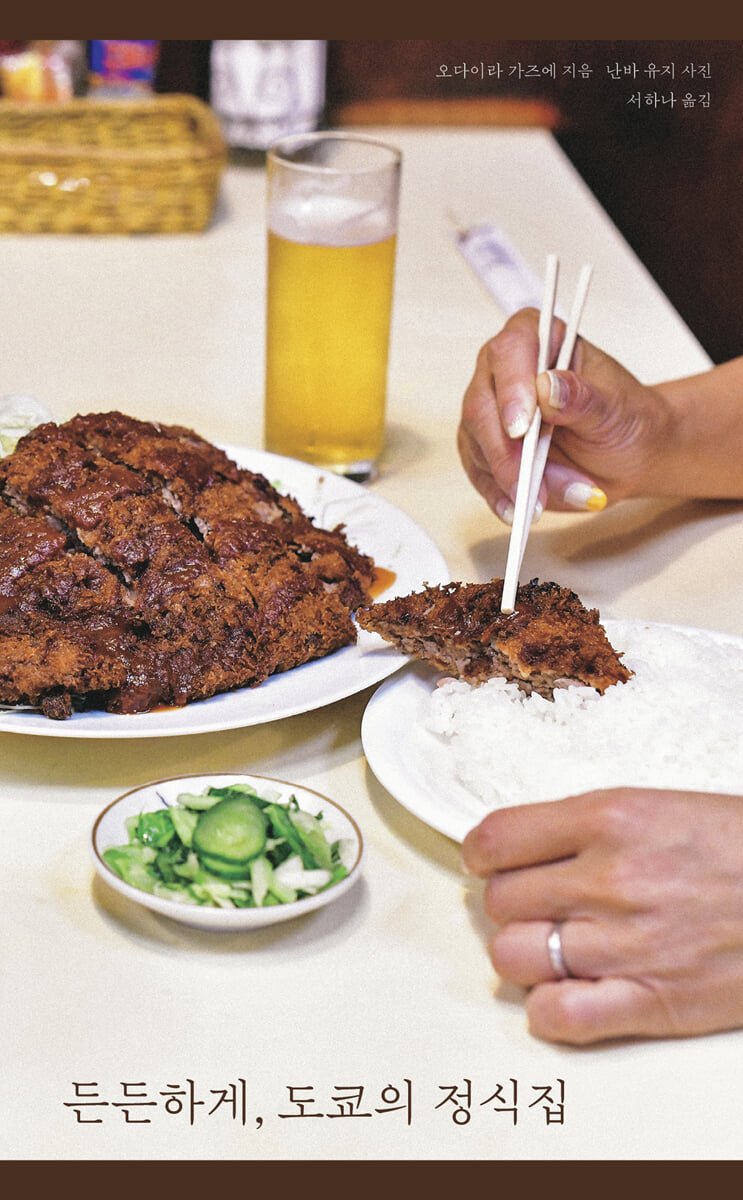
"Ten-deun-ge, Tokyo's Set Meals" is a book that contains the stories of 25 set meals that have been around for a long time in Tokyo and have filled people's stomachs.
A set meal consisting of rice topped with a small bowl of miso soup, a large main dish of fish or meat, and several small side dishes is an indispensable part of the daily lives of people living in Tokyo.
This book is full of home-style restaurant dishes that you won't get tired of eating every day, such as karaage set menus, fried mackerel set menus, and soba sets.
However, this book is not simply about introducing delicious restaurants and food.
We trace the history and beginnings of restaurants that have been around for anywhere from 5 years to 120 years, delving into the stories of the people who have permeated the place: those who have overcome crises and continued to run the business for generations, regular customers who have a love for the place, and those who have provided ingredients and worked with the restaurant for a long time.
Customers come to the store for different reasons, but there they find a moment to slow down and find solace in a meal.
By capturing these moments, the author emphasizes that restaurants are not simply places to eat, but rather small communities that connect the lives and emotions of city dwellers.
And the small society formed in this way becomes the driving force that sustains small formal houses for a long time.
Reading this book, "Ten-deun-ge-ha-ge, Tokyo's Jeongsik Restaurant," not only tells stories of food, but also of restaurants and customers who put their heart into serving plentiful and delicious food to their guests, making you think again about the meaning of a warm meal.
Let's move forward toward tomorrow one step at a time, circulating like metabolism.
“As long as there is a proper restaurant there, we will definitely be able to live well.”
The restaurant where the lonely gourmet Yutaka Matsushige worked part-time,
Long-established restaurants that have been quietly operating for 120 years, etc.
25 Tokyo restaurants that fill your stomachs with hearty meals.
What should I eat today? Which restaurant should I go to? It's a meal we eat every day, but nothing energizes me more than a delicious, carefully prepared meal.
"Ten-deun-ge, Tokyo's Set Meals" is a book that contains the stories of 25 set meals that have been around for a long time in Tokyo and have filled people's stomachs.
A set meal consisting of rice topped with a small bowl of miso soup, a large main dish of fish or meat, and several small side dishes is an indispensable part of the daily lives of people living in Tokyo.
This book is full of home-style restaurant dishes that you won't get tired of eating every day, such as karaage set menus, fried mackerel set menus, and soba sets.
However, this book is not simply about introducing delicious restaurants and food.
We trace the history and beginnings of restaurants that have been around for anywhere from 5 years to 120 years, delving into the stories of the people who have permeated the place: those who have overcome crises and continued to run the business for generations, regular customers who have a love for the place, and those who have provided ingredients and worked with the restaurant for a long time.
Customers come to the store for different reasons, but there they find a moment to slow down and find solace in a meal.
By capturing these moments, the author emphasizes that restaurants are not simply places to eat, but rather small communities that connect the lives and emotions of city dwellers.
And the small society formed in this way becomes the driving force that sustains small formal houses for a long time.
Reading this book, "Ten-deun-ge-ha-ge, Tokyo's Jeongsik Restaurant," not only tells stories of food, but also of restaurants and customers who put their heart into serving plentiful and delicious food to their guests, making you think again about the meaning of a warm meal.
- You can preview some of the book's contents.
Preview
index
Beginning - Sankaku
Restaurant Hyottoko
Maruken Restaurant
Mizuguchi Restaurant
Adachi Restaurant
Mintei
Neko Nicoban
Sasaki Restaurant
Teishoku Mimatsu
Kitsa Restaurant Nawa
Sarashina
Hishidaya
Marusho Chinese Restaurant
Shimotu Restaurant
Korean Country Home Cooking Doko
Kitchen ABC
Kisaragi-tei
Ajitome, a popular Japanese restaurant
Restaurant Naganoya
Restaurant Tsukuba
Jo Joo-an
Yashiro Restaurant
bulldog
Suimeitei
Forward - Again, Sankaku
Restaurant Hyottoko
Maruken Restaurant
Mizuguchi Restaurant
Adachi Restaurant
Mintei
Neko Nicoban
Sasaki Restaurant
Teishoku Mimatsu
Kitsa Restaurant Nawa
Sarashina
Hishidaya
Marusho Chinese Restaurant
Shimotu Restaurant
Korean Country Home Cooking Doko
Kitchen ABC
Kisaragi-tei
Ajitome, a popular Japanese restaurant
Restaurant Naganoya
Restaurant Tsukuba
Jo Joo-an
Yashiro Restaurant
bulldog
Suimeitei
Forward - Again, Sankaku
Into the book
This book tells the story of a restaurant that was beloved by the locals, but is now on the verge of extinction.
We follow the stories of restaurant owners overcoming all kinds of difficulties to keep their restaurants afloat, the customers who support them, and the exquisite dishes that shine with the spirit of craftsmanship.
This is a story of six years, including the completely unexpected COVID-19 pandemic, and it is also a record of the restaurant's rebirth as it lives on with pride and self-esteem.
The more I get to know Jeongsikjib, the more I feel like it's a neighborhood fixture that should never disappear.
Because it's delicious, can make you happy for a moment, and can give you energy.
--- p.13 From "Starting with Sankaku"
“There is a tuna seller at Tsukiji Fish Market who has a close relationship with us since generations ago.
“We import the same ingredients that go into sushi restaurants at a special price,” said Hatsune.
The vendor said he deeply sympathized with his predecessor's desire to provide delicious raw fish at a 1 yen discount to young people who find it a great pleasure to come here once a month to eat.
However, even if it is imported cheaply through wholesale, there are cases where it is sold at a high price in stores.
So one day, the fish market vendor suddenly stormed into the store to check if the fish was really being sold at a cheap price to the customer.
And in a store full of customers, you see people of all ages, men and women, happily eating tuna with their mouths full.
--- p.44-45 From "Mizuguchi Restaurant"
When asked about the reasonable price of around 1,000 yen, he said, “Many of the customers who come to our restaurant are office workers working nearby, people working in the field, and some come as families.
So I can't get it for a high price.
“There are regulars who come during the day and at night,” he said.
I'm still running with all my might.
The three people and the guest seemed to be trying hard not to think of Ryuji.
I am somehow sealing away the pain in my heart now.
It's easy to write down the phrase "a store loved by the neighborhood," but few stores are as supported by their customers as Shirashina.
--- p.109 From "Sarashina"
Any restaurant that turns its wall-mounted menus around or replaces them, or even adds them to a messy list on paper, a chalkboard, or a whiteboard, can be considered a good place.
There are more ways to judge a restaurant's quality than just its taste or low price.
Fresh seasonal ingredients are delicious on their own.
The same goes for vegetables.
A restaurant with messy walls is undoubtedly a delicious place, with a chef who knows the softness of mugwort leaves in spring, the sweetness of cherry tomatoes in summer, the taste of eggplants harvested in fall, and radishes in winter.
--- p.111 From “Observation of a Formal Restaurant 1”
Homemade radish kimchi and kimchi side dishes vary depending on the season.
Samgyetang, a traditional dish served in a large pot for one person, is a lunch menu item available on Mondays and costs 1,200 yen, served with rice, radish kimchi, and vegetables.
Most of the Tuesday lunch menu items, such as japchae bap or doenjang jjigae set menu, are 1,000 yen.
The stew set menu includes three options: tofu, kimchi, and soybean paste, and is served bubbling.
And of course, there are a lot of sheep.
“I want as many Japanese people as possible to taste Korean home cooking, which is healthy and full of nutrients.”
Mandu-guk, a dish made with flat rice cakes made from glutinous rice flour, is also a menu item that is not commonly found in other restaurants.
The white broth, like tofu, had a clean aftertaste but was rich and deep in flavor.
--- p.140 From "Korean Countryside Home Cooking Doko"
The katsudon, well-seasoned with salt and pepper, was very substantial, with the bowl filled with thick, large pork cutlets coated in egg.
As expected from a soba restaurant's katsudon, the broth was flavored with bonito flakes and kelp, and the soy sauce seasoning was well absorbed, making it soft.
This was the perfect katsudon, with an ideal golden color and quantity.
Even though the portion was huge, the seasoning was just right, so I was able to finish the white rice without getting tired of it.
“If there is too much broth, you will get tired of the taste, so I make it so that it doesn’t soak into the white rice.
Adjust the seasoning so that it is not too strong, imagining the satisfaction you will feel when you finish eating it all.
“I hope you enjoy it until the end.”
--- pp.202-203 From "Jojuan"
Bulldog's huge menchikatsu easily catches people's attention, but I recommend the 1,000 yen lunch of the day, available from 11:40 a.m. to 4 p.m. every day.
Two dishes, rice and soybean paste soup are served together.
The day I went, they served a small portion of Hayashi Beef (ハヤシビ?フ), which is beef stewed in a demi-glace sauce, along with a pork cutlet made from sirloin called rosu katsu, and a side of tonjiru (pork soup) with lots of toppings.
Thanks to the cabbage piled high like a mountain, I was able to eat every last piece of the roast beef without getting tired of it.
The donjiru contained burdock, radish, carrot, and green onion.
Because the ingredients were cut into large pieces, the textures were varied.
We serve pork in soups and main dishes to ensure that customers do not get tired of it.
The Hayashi beef served in small portions feels like a service, so both adults and children can enjoy it.
We follow the stories of restaurant owners overcoming all kinds of difficulties to keep their restaurants afloat, the customers who support them, and the exquisite dishes that shine with the spirit of craftsmanship.
This is a story of six years, including the completely unexpected COVID-19 pandemic, and it is also a record of the restaurant's rebirth as it lives on with pride and self-esteem.
The more I get to know Jeongsikjib, the more I feel like it's a neighborhood fixture that should never disappear.
Because it's delicious, can make you happy for a moment, and can give you energy.
--- p.13 From "Starting with Sankaku"
“There is a tuna seller at Tsukiji Fish Market who has a close relationship with us since generations ago.
“We import the same ingredients that go into sushi restaurants at a special price,” said Hatsune.
The vendor said he deeply sympathized with his predecessor's desire to provide delicious raw fish at a 1 yen discount to young people who find it a great pleasure to come here once a month to eat.
However, even if it is imported cheaply through wholesale, there are cases where it is sold at a high price in stores.
So one day, the fish market vendor suddenly stormed into the store to check if the fish was really being sold at a cheap price to the customer.
And in a store full of customers, you see people of all ages, men and women, happily eating tuna with their mouths full.
--- p.44-45 From "Mizuguchi Restaurant"
When asked about the reasonable price of around 1,000 yen, he said, “Many of the customers who come to our restaurant are office workers working nearby, people working in the field, and some come as families.
So I can't get it for a high price.
“There are regulars who come during the day and at night,” he said.
I'm still running with all my might.
The three people and the guest seemed to be trying hard not to think of Ryuji.
I am somehow sealing away the pain in my heart now.
It's easy to write down the phrase "a store loved by the neighborhood," but few stores are as supported by their customers as Shirashina.
--- p.109 From "Sarashina"
Any restaurant that turns its wall-mounted menus around or replaces them, or even adds them to a messy list on paper, a chalkboard, or a whiteboard, can be considered a good place.
There are more ways to judge a restaurant's quality than just its taste or low price.
Fresh seasonal ingredients are delicious on their own.
The same goes for vegetables.
A restaurant with messy walls is undoubtedly a delicious place, with a chef who knows the softness of mugwort leaves in spring, the sweetness of cherry tomatoes in summer, the taste of eggplants harvested in fall, and radishes in winter.
--- p.111 From “Observation of a Formal Restaurant 1”
Homemade radish kimchi and kimchi side dishes vary depending on the season.
Samgyetang, a traditional dish served in a large pot for one person, is a lunch menu item available on Mondays and costs 1,200 yen, served with rice, radish kimchi, and vegetables.
Most of the Tuesday lunch menu items, such as japchae bap or doenjang jjigae set menu, are 1,000 yen.
The stew set menu includes three options: tofu, kimchi, and soybean paste, and is served bubbling.
And of course, there are a lot of sheep.
“I want as many Japanese people as possible to taste Korean home cooking, which is healthy and full of nutrients.”
Mandu-guk, a dish made with flat rice cakes made from glutinous rice flour, is also a menu item that is not commonly found in other restaurants.
The white broth, like tofu, had a clean aftertaste but was rich and deep in flavor.
--- p.140 From "Korean Countryside Home Cooking Doko"
The katsudon, well-seasoned with salt and pepper, was very substantial, with the bowl filled with thick, large pork cutlets coated in egg.
As expected from a soba restaurant's katsudon, the broth was flavored with bonito flakes and kelp, and the soy sauce seasoning was well absorbed, making it soft.
This was the perfect katsudon, with an ideal golden color and quantity.
Even though the portion was huge, the seasoning was just right, so I was able to finish the white rice without getting tired of it.
“If there is too much broth, you will get tired of the taste, so I make it so that it doesn’t soak into the white rice.
Adjust the seasoning so that it is not too strong, imagining the satisfaction you will feel when you finish eating it all.
“I hope you enjoy it until the end.”
--- pp.202-203 From "Jojuan"
Bulldog's huge menchikatsu easily catches people's attention, but I recommend the 1,000 yen lunch of the day, available from 11:40 a.m. to 4 p.m. every day.
Two dishes, rice and soybean paste soup are served together.
The day I went, they served a small portion of Hayashi Beef (ハヤシビ?フ), which is beef stewed in a demi-glace sauce, along with a pork cutlet made from sirloin called rosu katsu, and a side of tonjiru (pork soup) with lots of toppings.
Thanks to the cabbage piled high like a mountain, I was able to eat every last piece of the roast beef without getting tired of it.
The donjiru contained burdock, radish, carrot, and green onion.
Because the ingredients were cut into large pieces, the textures were varied.
We serve pork in soups and main dishes to ensure that customers do not get tired of it.
The Hayashi beef served in small portions feels like a service, so both adults and children can enjoy it.
--- pp.220-221 From "Bulldog"
Publisher's Review
What is the formula for a delicious set meal that you can recognize at a glance?
Black omelet curry, red fried rice, pork cutlet rice bowl katsudon, etc.
Inexpensive and hearty home-cooked meals that captivate guests' taste buds
This book contains a formula that will instantly make you recognize a restaurant as a delicious restaurant.
First of all, the cabbage shreds served with the set menu are hand-cut, not machine-cut, and the homemade pickled vegetables are served. The menu on the wall changes frequently because it uses seasonal ingredients, and the service of adding rice or adding more rice is free. Above all, the thoughtfulness of the customers is evident in the food.
In a restaurant that welcomes guests with all these formulas, you can find common dishes such as pork ginger grilled set, katsudon, hamburger steak, soba set, and karaage set, but there are also special menus that are full of personality and dishes that are elevated with the restaurant's own taste.
The restaurant where actor Yutaka Matsushige, who appeared in the drama Solitary Gourmet, worked part-time during his college days offers delicious red fried rice that looks delicious, along with Edokko ramen topped with special ingredients. The restaurant's black omelet curry, a hidden treasure in the neighborhood, draws attention to the color of the food and immediately catches the eye and mouth.
When I see the stories behind each restaurant's menu and the way they have constantly evolved and evolved, I want to run there right away, fill my mouth with food, and smile happily.
In the ever-changing city of Tokyo
Each with their own story, keeping pace with the times
A restaurant that quietly maintains its position
This book begins at a restaurant called 'Sankaku'.
In the town of Shimokitazawa, where waves of change were surging, Sankaku, a restaurant that had been serving cheap and delicious meals to its customers, reopened after going through evictions due to the aging building and the unexpected outbreak of COVID-19, once again serving warm meals to its customers.
While waiting for its reopening, the author covers Tokyo's old yet new izakaya and falls in love with its charm and atmosphere.
The restaurants featured in the book each have their own stories to tell, such as the hardships brought about by the changing times, the pandemic that caused people to disappear from the streets, and the loss of family, and they share the history of Tokyo with the city.
Some restaurants, which started out as bars but changed their business to a formal restaurant due to COVID-19, have become beloved by many, overcoming difficulties faced by their businesses through crowdfunding, and even managing to survive with the help of customers despite the pain of losing a family member.
And there was also a restaurant that was forced to close after two Tokyo Olympics.
If you look at the path that restaurants that have been loved by people have taken, you can see countless lives piled up in them.
The familiar smell of soy sauce, the neatly arranged side dishes, the small moments of interaction between the host and the guest—these are all scenes that fill the heart, even if only for a moment, in the city.
Reading this book, you will feel the small but solid comfort of a simple meal at a regular restaurant, and empathize with the stories of the everyday spaces that remain even as they disappear, and the people within them.
Black omelet curry, red fried rice, pork cutlet rice bowl katsudon, etc.
Inexpensive and hearty home-cooked meals that captivate guests' taste buds
This book contains a formula that will instantly make you recognize a restaurant as a delicious restaurant.
First of all, the cabbage shreds served with the set menu are hand-cut, not machine-cut, and the homemade pickled vegetables are served. The menu on the wall changes frequently because it uses seasonal ingredients, and the service of adding rice or adding more rice is free. Above all, the thoughtfulness of the customers is evident in the food.
In a restaurant that welcomes guests with all these formulas, you can find common dishes such as pork ginger grilled set, katsudon, hamburger steak, soba set, and karaage set, but there are also special menus that are full of personality and dishes that are elevated with the restaurant's own taste.
The restaurant where actor Yutaka Matsushige, who appeared in the drama Solitary Gourmet, worked part-time during his college days offers delicious red fried rice that looks delicious, along with Edokko ramen topped with special ingredients. The restaurant's black omelet curry, a hidden treasure in the neighborhood, draws attention to the color of the food and immediately catches the eye and mouth.
When I see the stories behind each restaurant's menu and the way they have constantly evolved and evolved, I want to run there right away, fill my mouth with food, and smile happily.
In the ever-changing city of Tokyo
Each with their own story, keeping pace with the times
A restaurant that quietly maintains its position
This book begins at a restaurant called 'Sankaku'.
In the town of Shimokitazawa, where waves of change were surging, Sankaku, a restaurant that had been serving cheap and delicious meals to its customers, reopened after going through evictions due to the aging building and the unexpected outbreak of COVID-19, once again serving warm meals to its customers.
While waiting for its reopening, the author covers Tokyo's old yet new izakaya and falls in love with its charm and atmosphere.
The restaurants featured in the book each have their own stories to tell, such as the hardships brought about by the changing times, the pandemic that caused people to disappear from the streets, and the loss of family, and they share the history of Tokyo with the city.
Some restaurants, which started out as bars but changed their business to a formal restaurant due to COVID-19, have become beloved by many, overcoming difficulties faced by their businesses through crowdfunding, and even managing to survive with the help of customers despite the pain of losing a family member.
And there was also a restaurant that was forced to close after two Tokyo Olympics.
If you look at the path that restaurants that have been loved by people have taken, you can see countless lives piled up in them.
The familiar smell of soy sauce, the neatly arranged side dishes, the small moments of interaction between the host and the guest—these are all scenes that fill the heart, even if only for a moment, in the city.
Reading this book, you will feel the small but solid comfort of a simple meal at a regular restaurant, and empathize with the stories of the everyday spaces that remain even as they disappear, and the people within them.
GOODS SPECIFICS
- Date of issue: November 11, 2025
- Page count, weight, size: 256 pages | 250g | 115*184*15mm
- ISBN13: 9791199238824
- ISBN10: 1199238821
You may also like
카테고리
korean


korean

![GQ KOREA Mark (Monthly): December [2025]](http://librairie.coreenne.fr/cdn/shop/files/8ef265dbbfbf186523ed75ba7319009d.jpg?v=1765340328&width=3840)


