

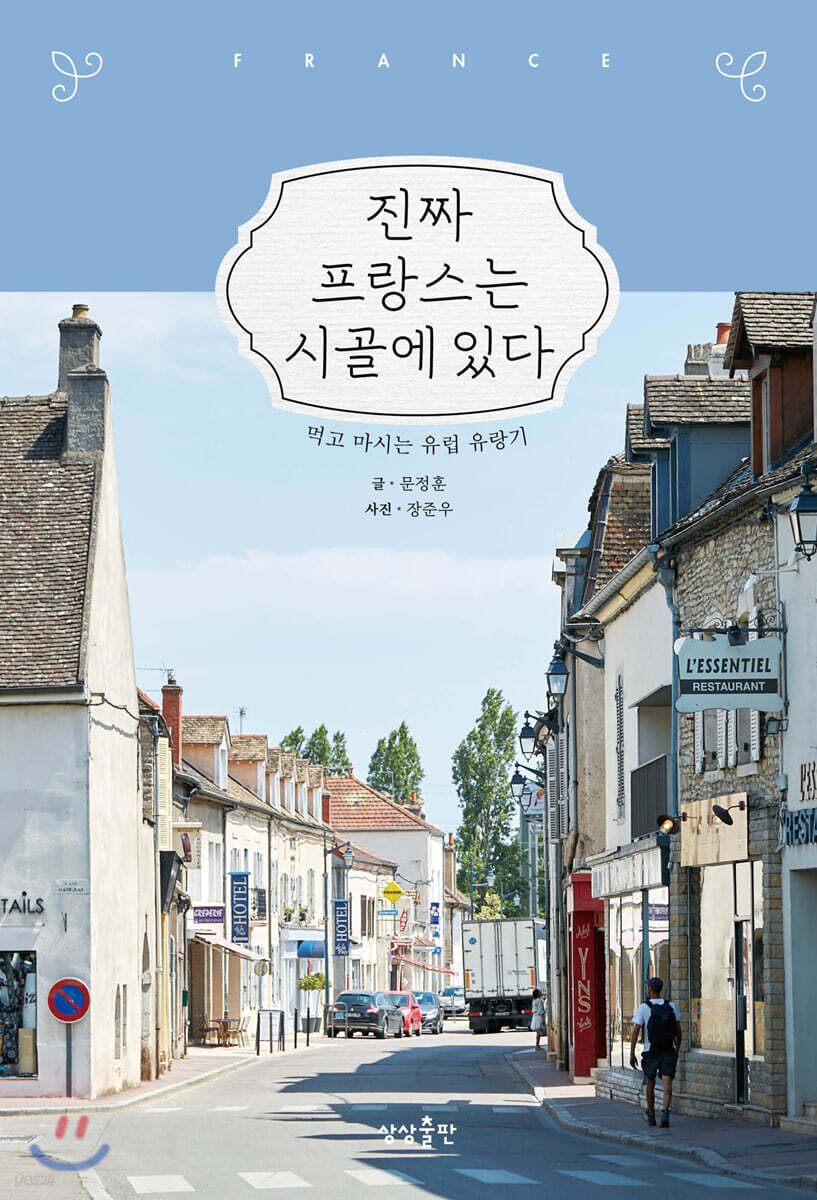
The real France is in the countryside
 |
Description
Book Introduction
Professor Moon Jeong-hoon of Seoul National University, a leader in the food trend that sparked the native chicken craze.
Chef Jang Jun-woo heads to France via Italy, Spain, and the Scandinavian Peninsula. A rural wandering by two writers who went to France in search of the true taste of Europe. Moon Jeong-hoon, a professor in the Department of Agricultural Economics and Rural Development at Seoul National University and director of the Food Business Lab, leads Korea's food trends with his sharp analytical skills. Moon Jung-hoon's approach to how Korean cuisine can become globally competitive is having a huge impact on the restaurant industry. As a writer, Moon Jeong-hoon describes himself as a self-proclaimed rural expert, and with this keen eye, he sets out for the French countryside. And Chef Jang Jun-woo accompanies us on this journey. Chef Jang Jun-woo worked as a newspaper reporter, but his passion for cooking led him to study cooking in Italy and become a chef. Currently, he runs a wine bistro called [arouz] and is very popular. In this book, Professor Moon Jeong-hoon, an authority on our food culture, takes up the pen, and Chef Jang Jun-woo, a wandering chef with a kitchen knife, takes up the camera. "The Real France is in the Countryside" is a delicious countryside trip for two people who set out to discover the history of food and ingredients and French culture. The company of Professor Moon Jeong-hoon and Chef Jang Jun-woo, who do not neglect even eating, drinking, and enjoying themselves, is filled with the scents of wine, food, and people. What is there in the 'real' France? There are escargots, coq au vin, boeuf prúguignon, bouillabaisse, Meursault wine, Pinot Noir wine, and a rosé wine called the Four Queens. There are also Georges Blanc, who worked to protect French native chickens, and Paul Bocuse, the founder of Nouvelle Cuisine. Above all, this book is a humanistic exploration by Moon Jeong-hoon and Jang Jun-woo that shows the true face of France. |
- You can preview some of the book's contents.
Preview
index
prolog
Part 1 Burgundy
1.
Macong
Rock of Solutre
Burgundian dining in the village of Morgon
Chateau de Beseoul
2, Breath
Bona Village
Georges Blanc
L'Ancienne Auberge 1900
Restaurant Georges Blanc
Cheese Cart
Breath Chicken
Uncle Dominic's Farm
Peruz village
3.
Cote d'Or
Bordeaux vs. Burgundy
Château de Meursault
Meursault, the mecca of white wine
This village
Pinot Noir, the Ruby of Burgundy
Koreans in Burgundy: Heaven and Earth
4.
Beaujolais
Leaving Burgundy for the Rhone
Beaujolais' Dream and Dilemma
Part 2 Provence
5.
Southern Rhone River
Sunset over the village of Chapenneuf-du-Pape
Dinner on the Hill
Wooden Door: Pego Brewery
A bottle of Châteauneuf-du-Pape wine
Half-Open Wooden Door: Pego Brewery
Night of the Vaqueras
6.
Provence Alps
Valensole village
La Campagne De Petre
Valensole Plateau
Rose of Provence
Herb in Bonnieu Village
7.
Provence Mediterranean
Quarry of Light
Restaurant La Chassannet
Bouillabaisse
Part 1 Burgundy
1.
Macong
Rock of Solutre
Burgundian dining in the village of Morgon
Chateau de Beseoul
2, Breath
Bona Village
Georges Blanc
L'Ancienne Auberge 1900
Restaurant Georges Blanc
Cheese Cart
Breath Chicken
Uncle Dominic's Farm
Peruz village
3.
Cote d'Or
Bordeaux vs. Burgundy
Château de Meursault
Meursault, the mecca of white wine
This village
Pinot Noir, the Ruby of Burgundy
Koreans in Burgundy: Heaven and Earth
4.
Beaujolais
Leaving Burgundy for the Rhone
Beaujolais' Dream and Dilemma
Part 2 Provence
5.
Southern Rhone River
Sunset over the village of Chapenneuf-du-Pape
Dinner on the Hill
Wooden Door: Pego Brewery
A bottle of Châteauneuf-du-Pape wine
Half-Open Wooden Door: Pego Brewery
Night of the Vaqueras
6.
Provence Alps
Valensole village
La Campagne De Petre
Valensole Plateau
Rose of Provence
Herb in Bonnieu Village
7.
Provence Mediterranean
Quarry of Light
Restaurant La Chassannet
Bouillabaisse
Detailed image

Into the book
In France, Paris is the least beautiful.
Clearly, and confidently, the true beauty of France lies in its countryside.
France is a developed country not because of its high GDP, but because its countryside is clean and beautiful.
I'm not kidding.
The more developed a country is, the cleaner its countryside is.
Countries that have not joined the ranks of developed countries, no matter how flashy and splendid their capitals and major cities may be, clearly show why they are not developed when you go to the countryside.
The countryside cannot be hidden.
--- From "The Beginning of a Journey Through the French Countryside"
In order to elevate food to the realm of art, it must first and foremost be based on ‘abundance.’
Isn't that the case with all art?
If you have to go through the trouble of gathering food to satisfy your hunger and boil and eat even the tasteless and tough parts to increase your quantity, you will only become further from art and closer to the harsh reality of survival.
---From "Cheese Cart"
Many people have a strong perception of France as being flashy, but the French sensibility in my head is something that is neither excessive nor excessive, awkward yet sophisticated, and in other words, humble when you look at it.
This is what I feel as a 'French' person.
---From "Peruz Village"
As I went down south, I asked my French friends in other regions.
What kind of people are the Burgundians?
An unexpected answer came.
There are no stereotypes about Burgundians.
Because no one knows where Burgundy is, no one goes there, and only Burgundy wines are drunk.
So, I hope that all of you who are reading this book will be proud of knowing more about Burgundy than most French people.
---From "Leaving Burgundy for the Rhone"
There were only two ways for the village of Valensole to prepare for the Lavender Festival.
The streets were cleaned and swept, and the doors and windows of each house were painted in distinctive colors.
The village of Balansoul is worth spending time wandering its alleys for these two things alone.
---From "Village of Balansol"
"hey.
“The sun is so hot and blinding, can we change seats?”
“Monsieur, don’t forget.
You are in Provence now.
“There is no way to avoid the sun in Provence.”
Clearly, and confidently, the true beauty of France lies in its countryside.
France is a developed country not because of its high GDP, but because its countryside is clean and beautiful.
I'm not kidding.
The more developed a country is, the cleaner its countryside is.
Countries that have not joined the ranks of developed countries, no matter how flashy and splendid their capitals and major cities may be, clearly show why they are not developed when you go to the countryside.
The countryside cannot be hidden.
--- From "The Beginning of a Journey Through the French Countryside"
In order to elevate food to the realm of art, it must first and foremost be based on ‘abundance.’
Isn't that the case with all art?
If you have to go through the trouble of gathering food to satisfy your hunger and boil and eat even the tasteless and tough parts to increase your quantity, you will only become further from art and closer to the harsh reality of survival.
---From "Cheese Cart"
Many people have a strong perception of France as being flashy, but the French sensibility in my head is something that is neither excessive nor excessive, awkward yet sophisticated, and in other words, humble when you look at it.
This is what I feel as a 'French' person.
---From "Peruz Village"
As I went down south, I asked my French friends in other regions.
What kind of people are the Burgundians?
An unexpected answer came.
There are no stereotypes about Burgundians.
Because no one knows where Burgundy is, no one goes there, and only Burgundy wines are drunk.
So, I hope that all of you who are reading this book will be proud of knowing more about Burgundy than most French people.
---From "Leaving Burgundy for the Rhone"
There were only two ways for the village of Valensole to prepare for the Lavender Festival.
The streets were cleaned and swept, and the doors and windows of each house were painted in distinctive colors.
The village of Balansoul is worth spending time wandering its alleys for these two things alone.
---From "Village of Balansol"
"hey.
“The sun is so hot and blinding, can we change seats?”
“Monsieur, don’t forget.
You are in Provence now.
“There is no way to avoid the sun in Provence.”
---From "The Herb of Bonnieu Village"
Publisher's Review
sun wind and earth
Stopping at a place we easily passed by
This book is divided into two chapters.
Part 1 Burgundy is a region in eastern France, fertile and ideal for farming.
It tells us about the changes that Burgundy, once a quiet region, experienced with the development of railways in the late 19th century.
Part 2 Provence is located in southeastern France.
Unlike Burgundy, which was mostly flat, the Alps rise along the border between France and Italy, and there are old mountain ranges along the Mediterranean coast.
Despite its terrain not conducive to agricultural development, Provence continues to thrive in its own way.
In this way, author Moon Jeong-hoon introduces various small cities and villages that have maintained their original appearance for a long time, even if they are rough.
In addition, it introduces the characteristics of the countryside, the things that grow based on those characteristics, and the wines and foods that vary by region.
The reason he tells his readers, "You have to touch the soil to know," is because there are things that can never be perceived from a distance.
This book will bridge that gap in an instant.
If you can catch a glimpse of the French life on a road that has been steeped in time, even if it is simple, you can say that you have encountered the real France.
In the countryside, where there is no hiding, we will finally become natural.
The splendid and dazzling city certainly evokes exclamations of admiration.
In the city, you can take amazing photos and share sophisticated experiences with others.
But why does a sudden feeling of emptiness come over me after such a trip?
The reason why modern people are growing tired in the flashy city is because we easily overlook ourselves in the midst of that flashy city.
Author Moon Jeong-hoon turns the gaze of people tired of the city to the countryside.
Slowness is not something outdated, but rather a calculated speed to preserve oneself and an aesthetic exploration.
The countryside has no secrets.
There are no awkward expressions or artificially created attitudes.
Author Moon Jeong-hoon says that the value of a country can be seen in the countryside.
Clean and neat streets, flowers on window sills, and simple but meticulously maintained neighborhoods.
That shows the true face of the country.
To spend more quality time with the people you love, to cherish those moments for a long time, you have to go to the countryside.
I hope you will have the experience of finding your own identity through the Frenchness in “The Real France is in the Countryside.”
Stopping at a place we easily passed by
This book is divided into two chapters.
Part 1 Burgundy is a region in eastern France, fertile and ideal for farming.
It tells us about the changes that Burgundy, once a quiet region, experienced with the development of railways in the late 19th century.
Part 2 Provence is located in southeastern France.
Unlike Burgundy, which was mostly flat, the Alps rise along the border between France and Italy, and there are old mountain ranges along the Mediterranean coast.
Despite its terrain not conducive to agricultural development, Provence continues to thrive in its own way.
In this way, author Moon Jeong-hoon introduces various small cities and villages that have maintained their original appearance for a long time, even if they are rough.
In addition, it introduces the characteristics of the countryside, the things that grow based on those characteristics, and the wines and foods that vary by region.
The reason he tells his readers, "You have to touch the soil to know," is because there are things that can never be perceived from a distance.
This book will bridge that gap in an instant.
If you can catch a glimpse of the French life on a road that has been steeped in time, even if it is simple, you can say that you have encountered the real France.
In the countryside, where there is no hiding, we will finally become natural.
The splendid and dazzling city certainly evokes exclamations of admiration.
In the city, you can take amazing photos and share sophisticated experiences with others.
But why does a sudden feeling of emptiness come over me after such a trip?
The reason why modern people are growing tired in the flashy city is because we easily overlook ourselves in the midst of that flashy city.
Author Moon Jeong-hoon turns the gaze of people tired of the city to the countryside.
Slowness is not something outdated, but rather a calculated speed to preserve oneself and an aesthetic exploration.
The countryside has no secrets.
There are no awkward expressions or artificially created attitudes.
Author Moon Jeong-hoon says that the value of a country can be seen in the countryside.
Clean and neat streets, flowers on window sills, and simple but meticulously maintained neighborhoods.
That shows the true face of the country.
To spend more quality time with the people you love, to cherish those moments for a long time, you have to go to the countryside.
I hope you will have the experience of finding your own identity through the Frenchness in “The Real France is in the Countryside.”
GOODS SPECIFICS
- Date of issue: January 15, 2021
- Page count, weight, size: 240 pages | 448g | 152*223*13mm
- ISBN13: 9791190938334
- ISBN10: 1190938332
You may also like
카테고리
korean


korean

![GQ KOREA Mark (Monthly): December [2025]](http://librairie.coreenne.fr/cdn/shop/files/8ef265dbbfbf186523ed75ba7319009d.jpg?v=1765340328&width=3840)


